Ximalaya has not eased Tencent Music's growth anxiety.
On November 17, Tencent Music released its 2026 Q3 financial report: total revenue reached 8.94 billion yuan, up 5.6% year-on-year, 200 million yuan below Bloomberg consensus estimates. Adjusted net profit stood at 2.53 billion yuan, up 2.1% year-on-year, slightly exceeding market expectations. Judging solely from the figures on paper, this is a mature cash cow propped up by share repurchases.
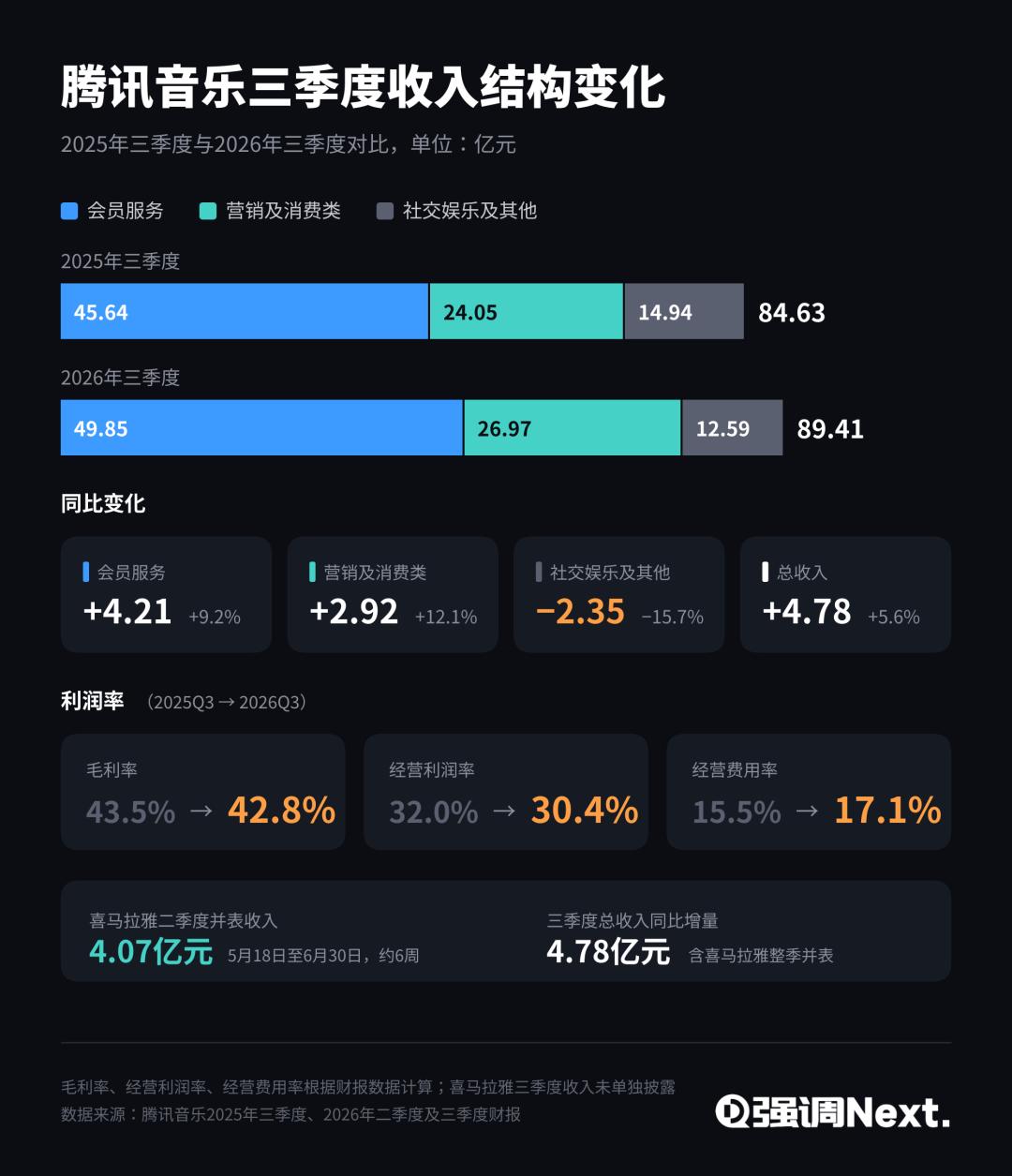
But what truly matters is where the growth comes from. This quarter, almost all incremental revenue of Tencent Music came from "outside streaming": one side is Ximalaya, which was just consolidated into its financial statements, and the other side is Wang Sulong's 10 consecutive concerts at the National Stadium (Bird's Nest). The online music subscription business, which sits in between and underpinned its valuation for a decade, has stopped growing.
This is not a cyclical slowdown of a single company. The pricing power of China's online music industry over the past decade was built on "copyright scarcity", and this premise is fading away. Once the scarcity shifts away from the music library, streaming platforms sandwiched between upstream content and downstream traffic will degrade from "rent collectors" to "intermediaries". Tencent Music's breakthrough efforts on both ends are driven by the evolution of the industrial structure.
Under Consolidation, The Midstream Streaming Segment Has Stalled
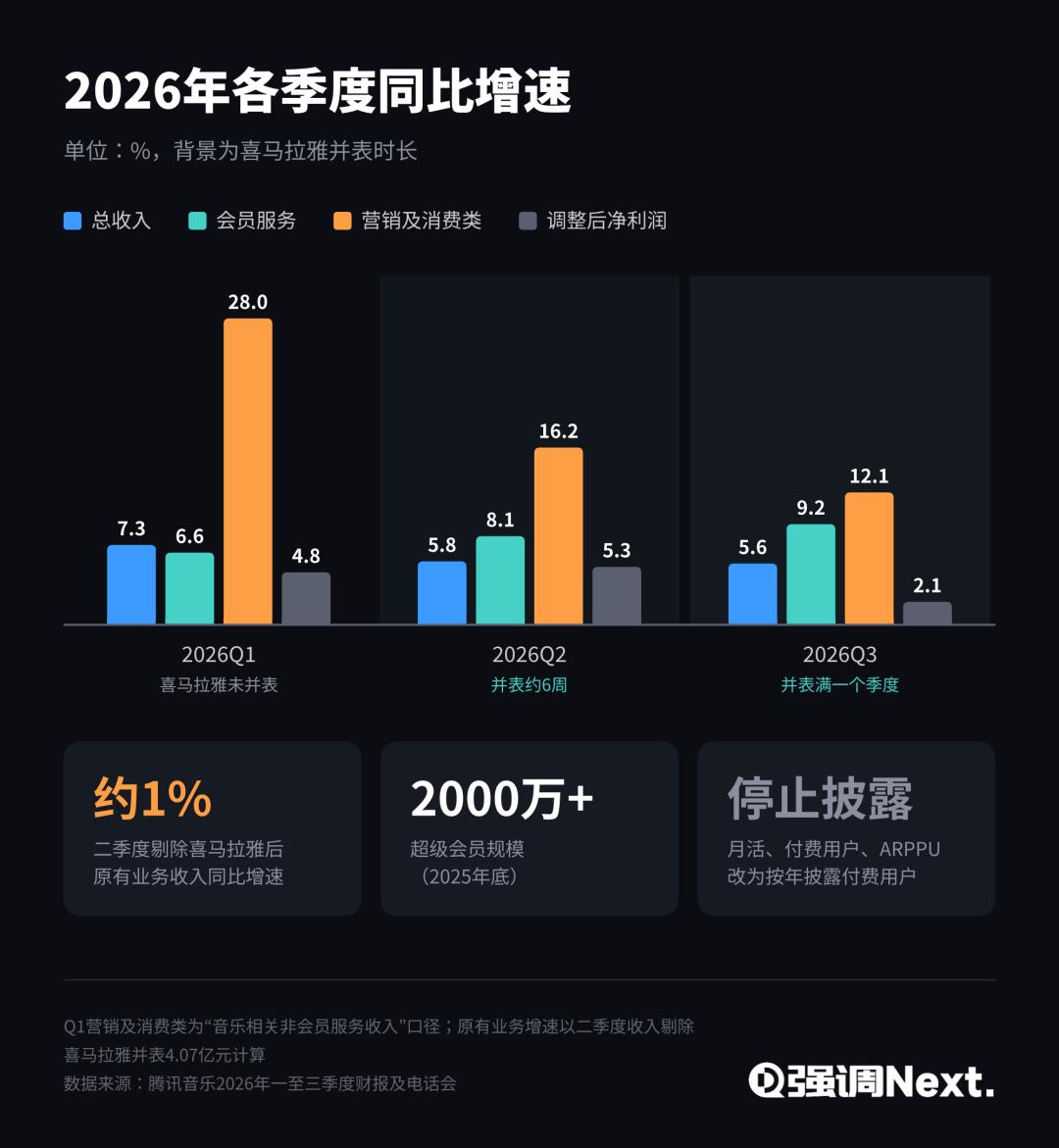
In Q3, Tencent Music's total revenue increased by 478 million yuan year-on-year. Ximalaya, which was only consolidated for one and a half months in Q2, contributed 407 million yuan. According to the scale disclosed in Ximalaya's prospectus, the company's full-year revenue as early as 2023 had reached 6.16 billion yuan. This means it is almost certain that Ximalaya, fully consolidated in Q3, contributed more than 480 million yuan. After excluding Ximalaya, the original business only saw a slight increase of about 1% in Q2, and the growth fell into negative territory in Q3.
Membership revenue rose 9.2% year-on-year, which seems to be an acceleration, but it is actually an arithmetic result of consolidation. In Q1 without Ximalaya, the membership revenue growth rate was only 6.6%; after consolidating Ximalaya for one and a half months in Q2, the growth rate rose to 8.1%; with full consolidation in Q3, it rose to 9.2%. More than half of Ximalaya's revenue comes from subscriptions, and Tencent Music's membership growth curve almost perfectly matches the length of Ximalaya's consolidation period.
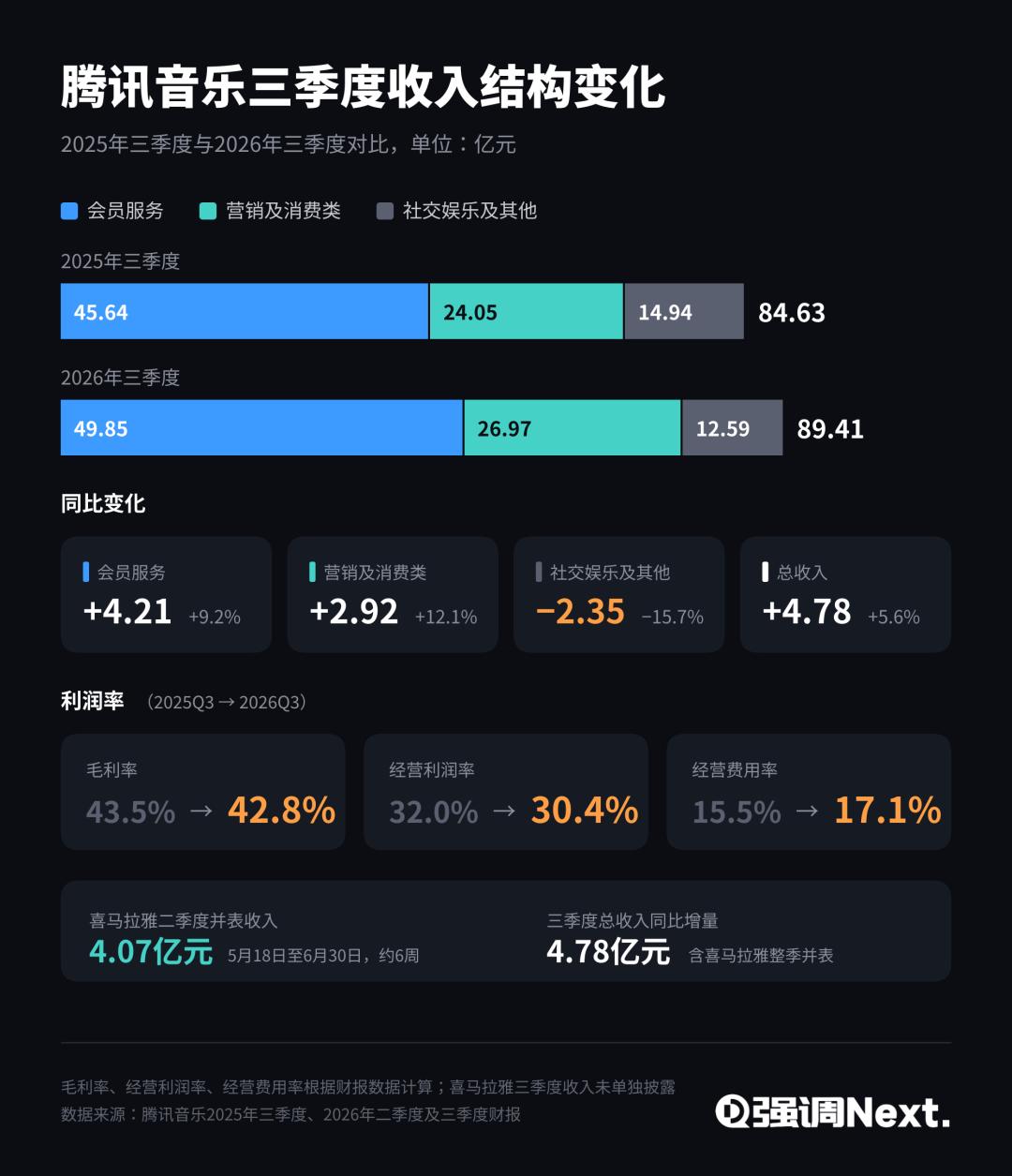
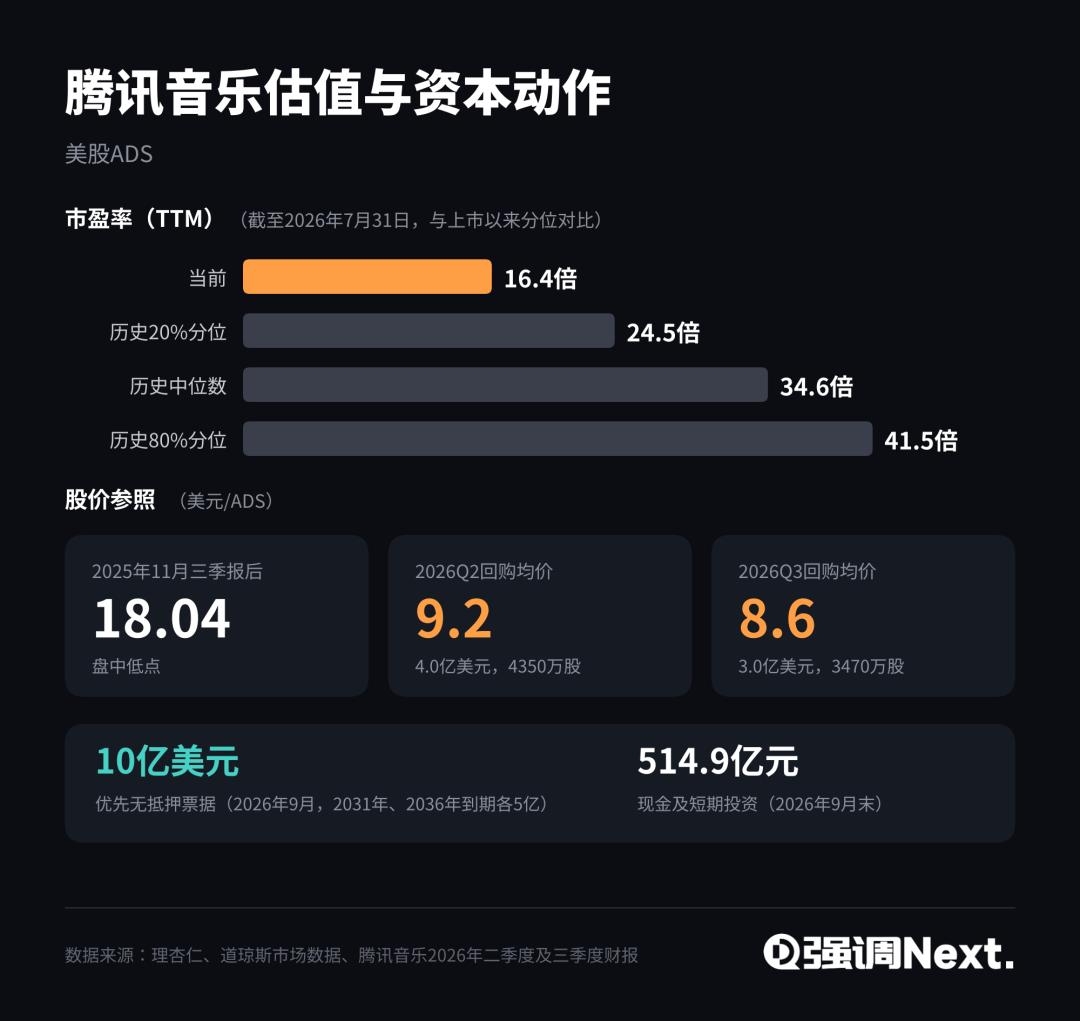
The profit statement is more straightforward. In Q3, operating profit was 2.72 billion yuan, up only 0.4% year-on-year, and the operating profit margin dropped from 32.0% to 30.4%. Gross margin fell from 43.5% to 42.8%, while the expense ratio rose from 15.5% to 17.1% — the former is due to the shrinking high-margin social entertainment business and the rising proportion of low-margin peripheral products and performances; the latter comes from the amortization of intangible assets brought by the acquisition. Earnings per share (EPS) under non-IFRS standards increased by only 0.6%, which was achieved on the premise that the company spent 300 million US dollars to repurchase 34.7 million ADS in the quarter. In September, the company had just issued 1 billion US dollars of preferred notes. As business growth slows, capital returns are becoming an important tool to support investor expectations.
Since this year, Tencent Music no longer discloses monthly active users, paying users and ARPPU (average revenue per paying user) on a quarterly basis, and will only announce the total number of paying users at the end of the year. The core indicators are hidden, but the financial structure reveals the full picture: the subscription machine can no longer push up either "volume" or "price". On the volume side, the management admitted at the Q1 earnings call that the churn of light users of KuGou has intensified, dragging down member conversion; on the price side, after the number of super members exceeded 20 million at the end of 2025, further price hikes directly collided with the free offensive of Qishui Music.
Scarcity Migration: From Music Libraries To Entrances
The business model of Tencent Music is essentially pricing for scarcity. In 2016, QQ Music, KuGou and KuWo merged, and Tencent held the vast majority of head exclusive copyrights, leaving users with only one place to listen to Jay Chou's songs. In July 2021, regulators ordered the termination of exclusive copyrights for online music, and this wall was legally demolished; but what completely disintegrated the high wall was two drastic changes in the following years.
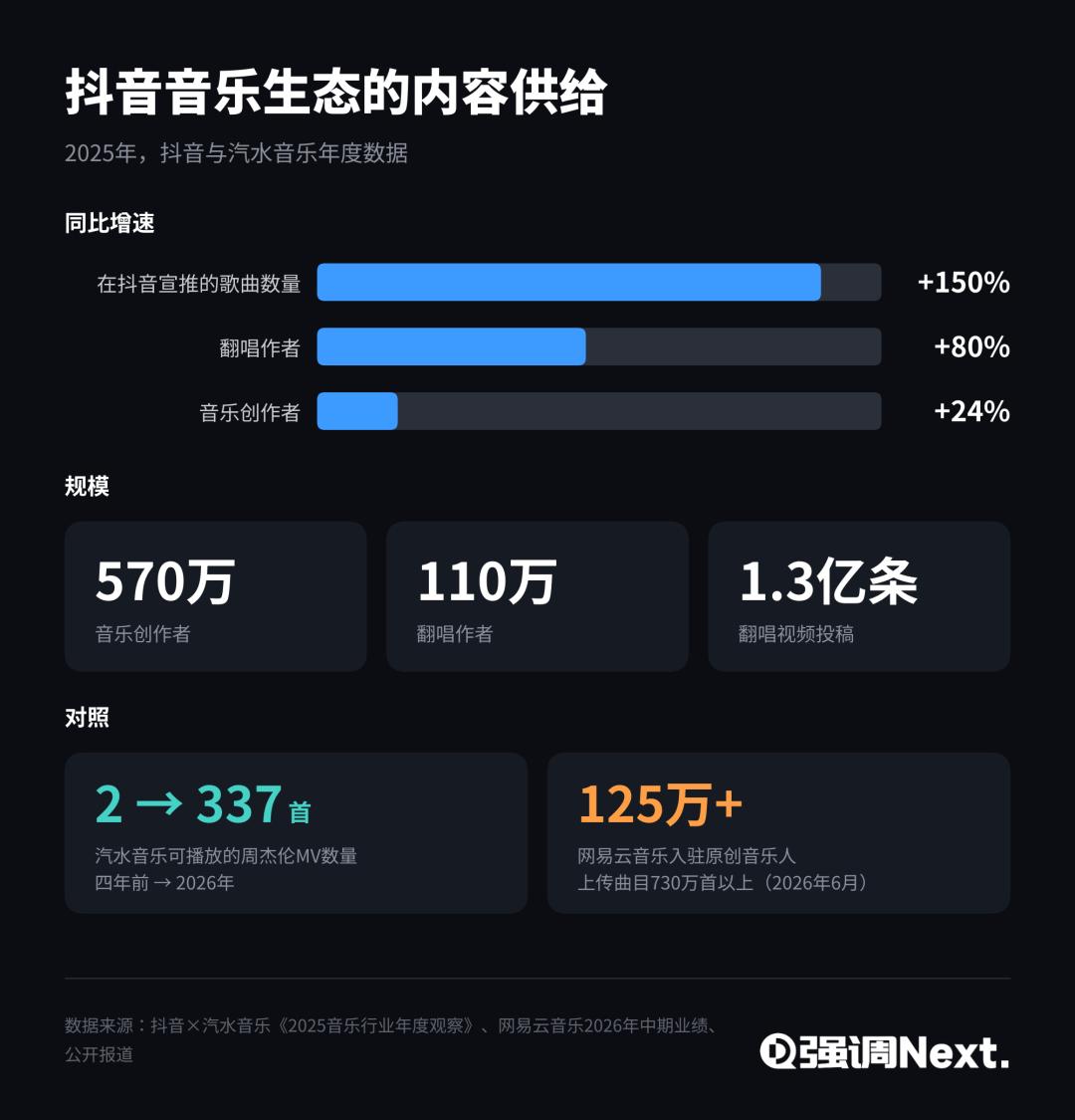
The first one is supply explosion. Data from Douyin and Qishui Music shows that in 2025, the number of music creators on Douyin increased by 24% to 5.7 million, the number of cover creators increased by 80% to 1.1 million, and the number of cover video submissions reached 130 million. AI has further reduced the production cost of a song to nearly zero. According to media reports, the AI singer "Datouzhen" gained more than a million fans on Douyin in just three months. When new songs are mass-produced industrially like short videos, the music library is no longer a moat, but a heavy cost that requires continuous rent payment.
The second one is the transfer of discovery rights. The number of songs promoted on Douyin in 2025 surged by 150%. A song will only be searched, collected and paid for after it is first heard in short videos. Paradoxically, many of the hit songs on Douyin and Qishui Music come from the self-produced music library of KuGou's affiliated companies — the content supply chain that Tencent Music is proud of is feeding ammunition to its competitor's distribution system. Four years ago, Qishui Music could only play two Jay Chou songs, but now it holds the copyright of 337 Jay Chou MVs. Copyright can be bought with money, but distribution capabilities cannot.
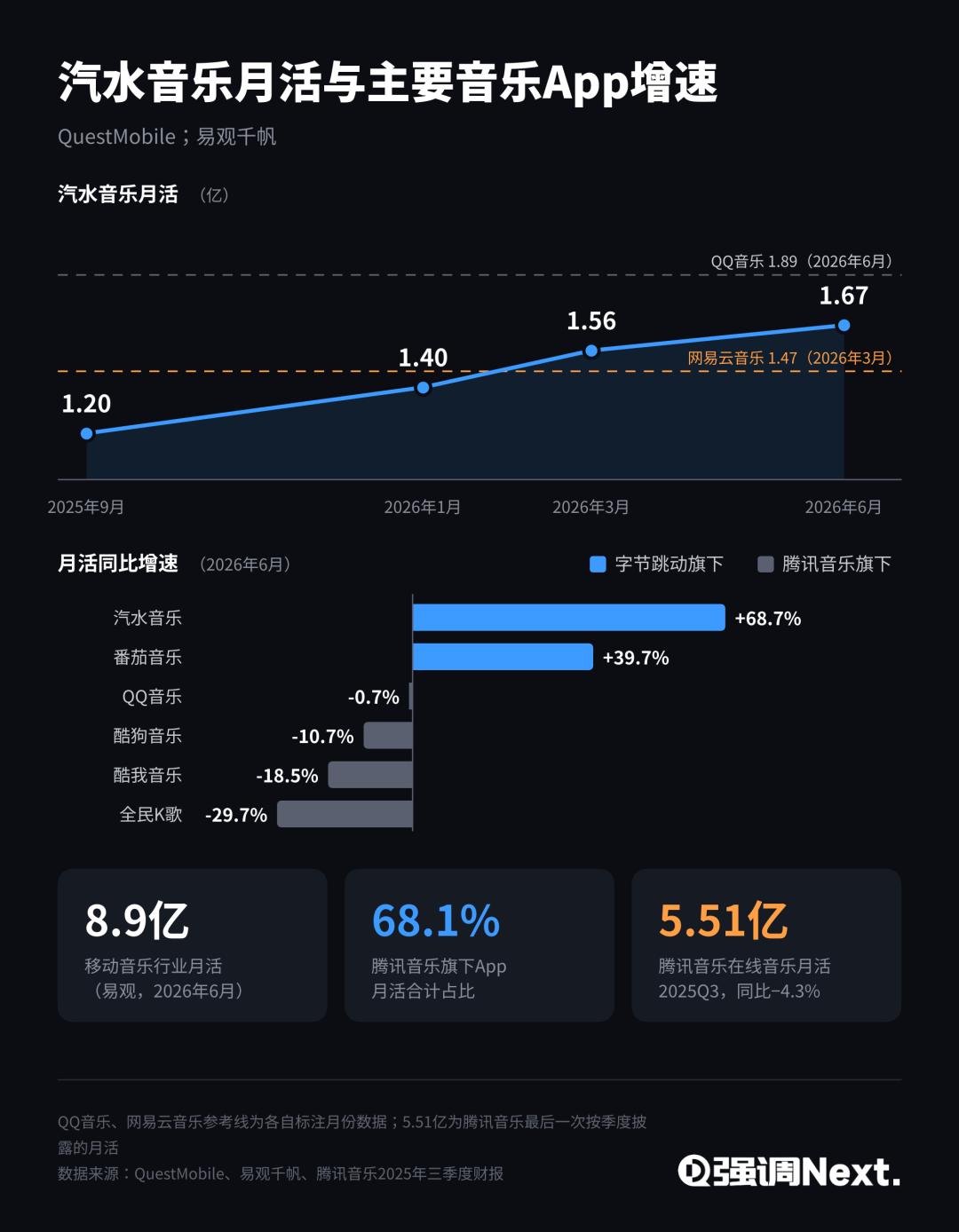
The superposition of the two factors has shifted industry value from "owning content" to "controlling the moment when a song is first heard". According to QuestMobile data, in June 2026, the monthly active users of Qishui Music reached 167 million, skyrocketing 68.7% year-on-year, surpassing NetEase Cloud Music, and only 20 million less than QQ Music's 189 million; in the same period, the monthly active users of KuGou fell by 10.7%, KuWo fell by 18.5%, and WeSing fell by 29.7%, while ByteDance's Tomato Music is growing rapidly at a rate of nearly 40%. The first groups to be eroded are precisely the sinking, light, price-sensitive users of KuGou and KuWo — which is exactly the reservoir for Tencent Music to drive paid conversion upwards.
Overseas markets are also experiencing the same technological shock, but the outcome is completely different.
In October 2025, Universal Music reached a settlement with AI music company Udio and cooperated to develop a licensing platform, followed by Warner Music, and Spotify also signed an AI cooperation agreement with the three major record companies. In Europe and the United States, upstream record companies are still the masters of the table. They have incorporated AI into the licensing system and continue to sit firmly in the rent-collecting position; while in China, record companies have weak discourse power, and platforms used to be rule makers, but now the platform that controls traffic distribution is no longer Tencent Music. At the Q1 earnings conference, Tencent Music's management publicly criticized peers for using AI-generated pirated content to quickly fill music libraries and aggressively divert traffic — the subtext of this sentence is that the rules are being rewritten by others.
Running To Both Ends: Buying User Duration, Selling Live Performances
With a clear understanding of this structure, we can understand all the moves of Tencent Music in the past two years: since the midstream streaming business is losing pricing power, it must go to both ends of the industrial chain to capture the remaining scarcity.
Upstream, what it buys is user duration. The Ximalaya acquisition, announced in June 2025 and closed in May 2026, has a total transaction value of about 2.8 billion US dollars. According to the data cited in Ximalaya's prospectus, it accounts for about 60% of the mobile online audio listening duration in China. The duration of music consumption is being cut by short videos, but the duration of audiobooks, podcasts and radio dramas is relatively stable, and can be easily packaged into super member benefits to continue to push up the unit price of membership.
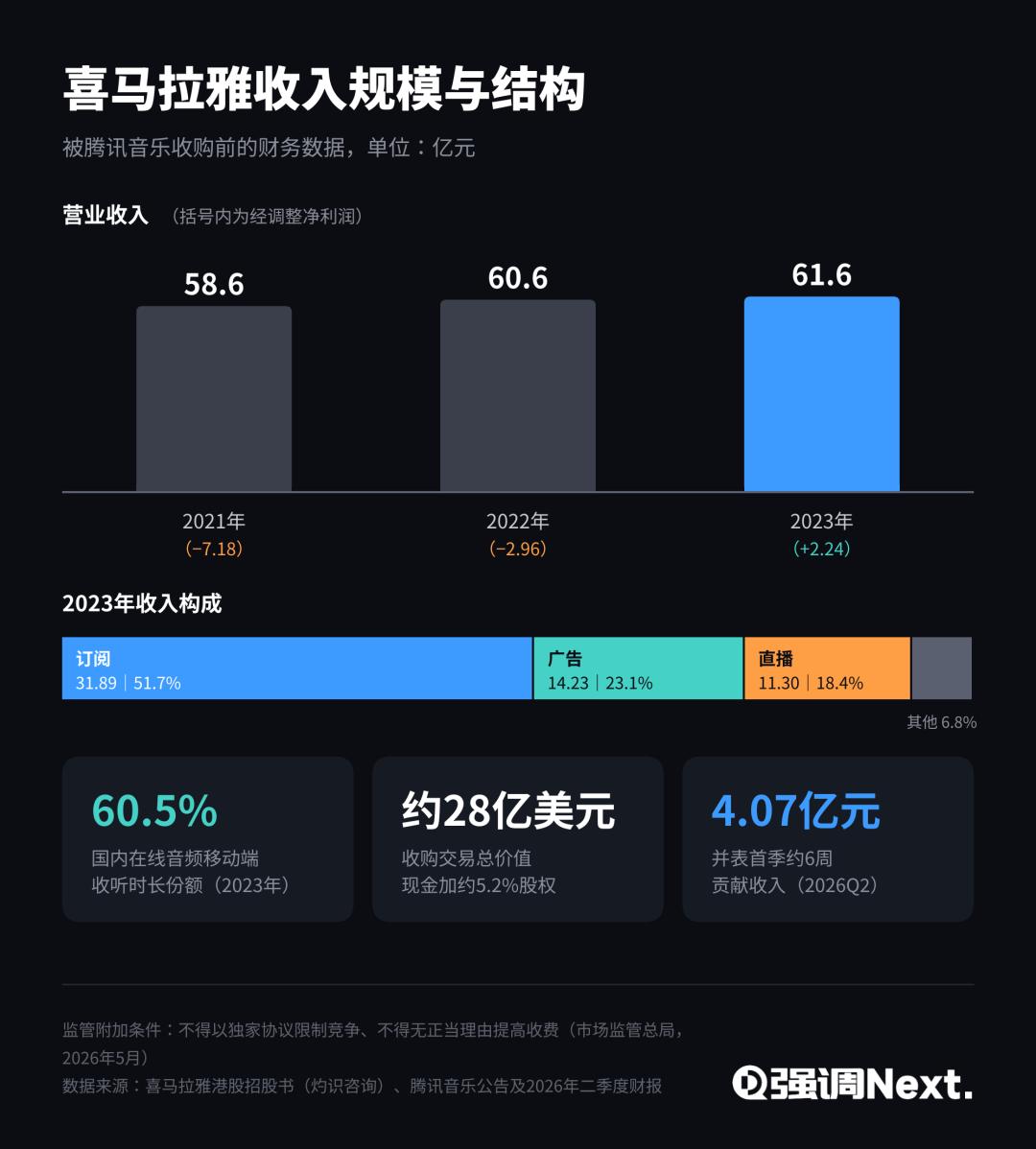
However, this transaction faces two ceilings. The first is the regulatory red line: when the State Administration for Market Regulation approved the acquisition with conditions, it clearly required that no exclusive agreements should be used to restrict competition, and no unjustified price increases should be made. Tencent Music's most handy growth weapon in the past few years — raising ARPPU — has been put on a tight rein from the first day of closing in the long audio business. The second is that the target itself lacks growth: from 2021 to 2023, Ximalaya's revenue was 5.86 billion yuan, 6.06 billion yuan and 6.16 billion yuan respectively, almost a flat line. What Tencent Music bought is a stable stock of user duration, not a new growth curve. The year-on-year incremental dividend brought by consolidation will be exhausted by Q3 2027.
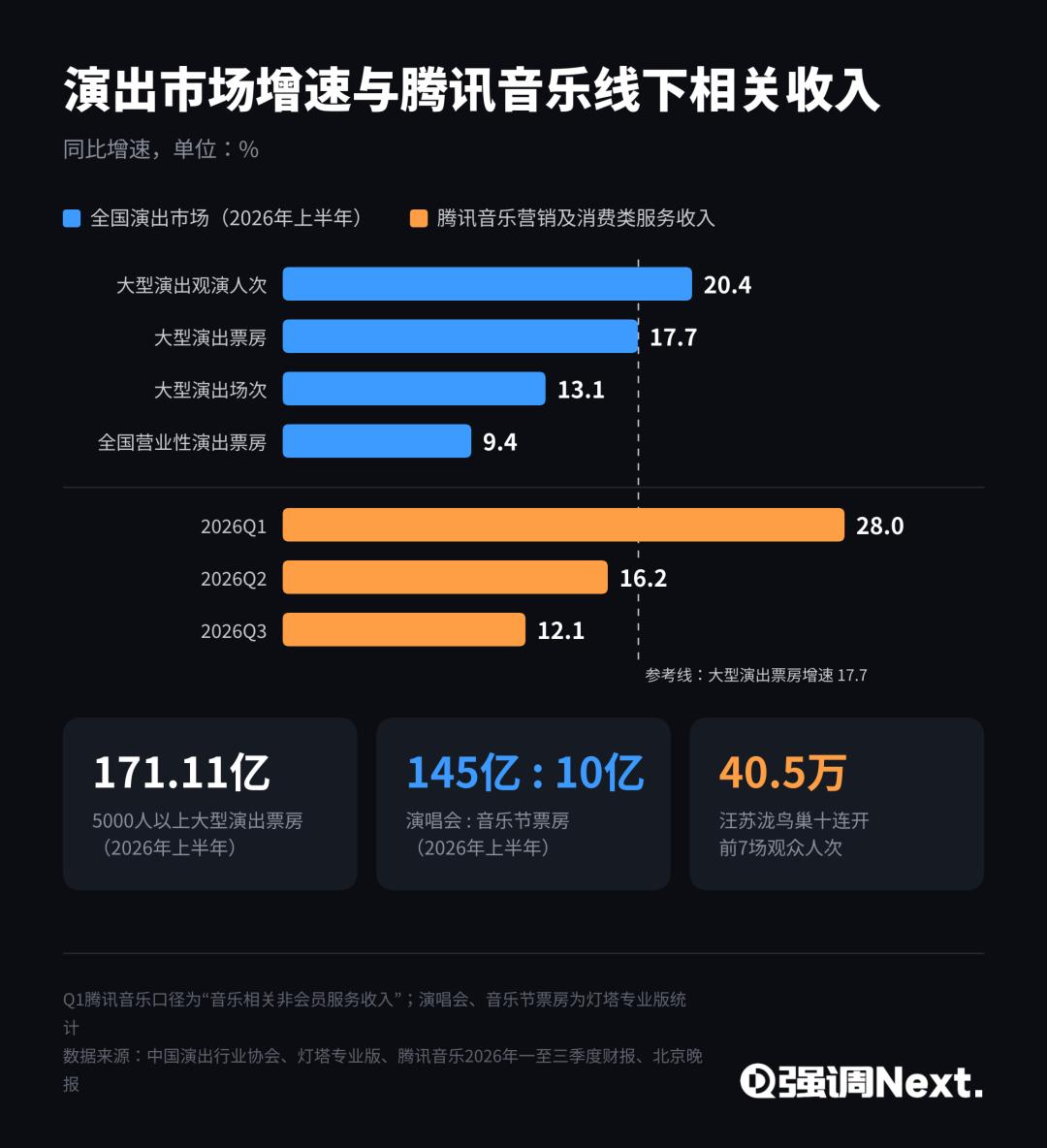
Downstream, what it sells is live performances. Data from the China Performance Industry Association shows that in the first half of 2026, the box office of large-scale performances with more than 5,000 people reached 17.111 billion yuan, up 17.7% year-on-year, and the number of audiences increased by 20.37%. Listening to music online can be replaced for free, but a Bird's Nest concert ticket, a limited peripheral product, and a priority ticket purchase right are irreplaceable. In Q3, Tencent Music's marketing and consumer revenue increased by 12.1%, and the financial report attributed the credit mainly to Wang Sulong — in August this year, he held ten consecutive concerts at the Bird's Nest, attracting 405,000 audiences in the first seven shows alone.
The problem is that the scarcity of live performances belongs to artists, not platforms. Tencent Music acts as a co-organizer, ticket agent and peripheral developer in this process, taking a smaller share of thinner gross profit, and its performance is highly constrained by the tour schedule of head artists. Financial data has sounded the alarm: the revenue growth rate of this segment dropped from 28% in Q1 to 16.2% in Q2, and further slowed to 12.1% in Q3. This is the report card delivered even after adding Wang Sulong's 10 consecutive Bird's Nest concerts and including Ximalaya's advertising revenue. Compared with the nearly 18% box office growth rate of the overall large-scale performance market, Tencent Music's offline business has fallen behind.
A company whose valuation is built on "highly certain subscription revenue" is forced to bet its growth on businesses that rely more on hits, have thinner gross margins, and lose bargaining power. The capital market's voting with feet is extremely cruel: after the release of the 2025 Q3 financial report in November, Tencent Music's US stock price was still at the 18 US dollars level; just one year later, the average repurchase price of the company in this quarter has fallen to 8.65 US dollars, the stock price has been cut in half, and the price-earnings ratio once fell to the lowest 10th percentile since its listing.
The Real Challenge Lies In The Free User Layer
Peeling off the self-rescue moves at both ends, the battlefield that Tencent Music cannot really avoid is actually the middle layer: free users.
Spotify has taken a different path. In Q3 this year, Spotify's monthly active users reached 788 million (up 11% year-on-year), paying users reached 306 million (up