Notes Written One Week After the Release of Phantom Blade Zero | Play Something Great
Text by Guopu
Talking about Phantom Blade Zero itself right now might be a little bit late. After all, the game has been officially launched for more than a full week, most players have already successfully completed their first playthrough, and public opinion around the game has also gone from a low opening to a steady upward trend.
At present, the game's positive review rate has gradually rebounded from 77% in the early launch period to 94% now, and the figure is likely to keep rising; on the PS Store, 90% of users have given full marks to the game. 72 hours after its release, the official team also announced that the total cross-platform sales have exceeded 4 million copies. Based on this performance, it is only a matter of time before the cumulative sales of the game break 10 million in the future.
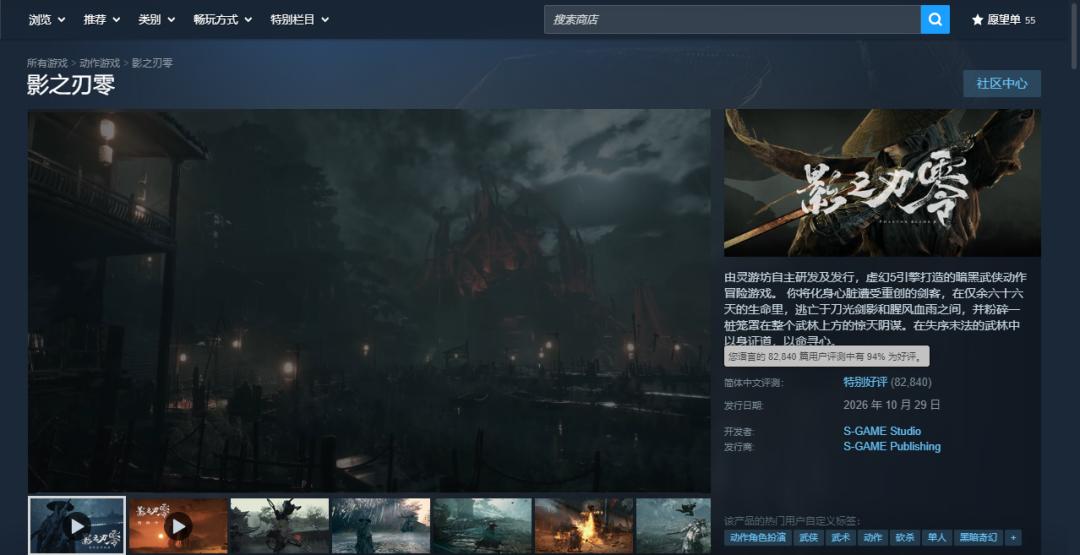
Phantom Blade Zero Steam Page
But when we look at Phantom Blade Zero today, there are still plenty of review-worthy issues that deserve further discussion and reflection.
It is undeniable that even without the "domestic single-player game" tag, Phantom Blade Zero is an excellent work by global standards.
This excellence comes not only from the quality performance of the game itself, but also from its ability to convince a large number of players and reverse the public's first impression of it under the premise of a less-than-promising start. I even witnessed my colleague, who was full of dissatisfaction with the game at the very beginning, eventually being impressed by the entire boss fight experience against Mu Xiaokui.
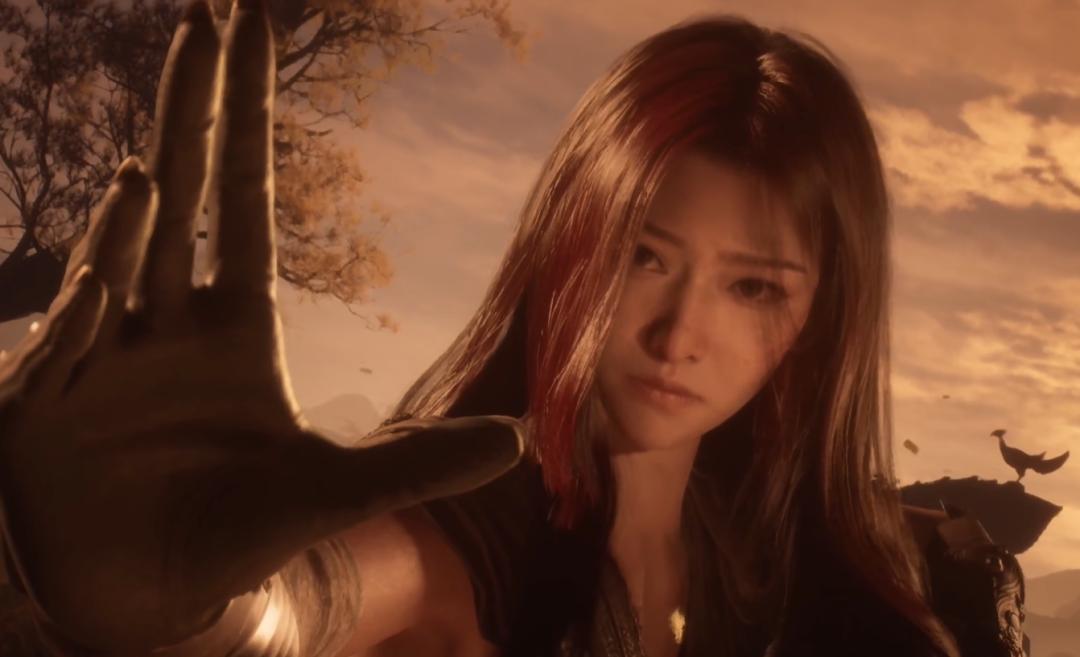
Mu Xiaokui
But more importantly, what Phantom Blade Zero embodies across the entire product is a strong sense of "growth". After all, there is no lack of all kinds of praise for it on the market, and instead I would like to talk about this product from the perspective of its shortcomings.
For many players, the playthrough experience of Phantom Blade Zero is a process full of reconciliation, acceptance, and gradual recognition.
An obvious feature is that almost no one thinks the content of the first two chapters is remarkable. On the contrary, most people's high praise comes from the amazing follow-up content, which allows them to "forgive" the shortcomings of the early chapters. Of course, as players gradually get familiar with the game, problems such as hit feedback and combat rhythm are also gradually adapted to, and the corresponding negative feedback is naturally weakened.
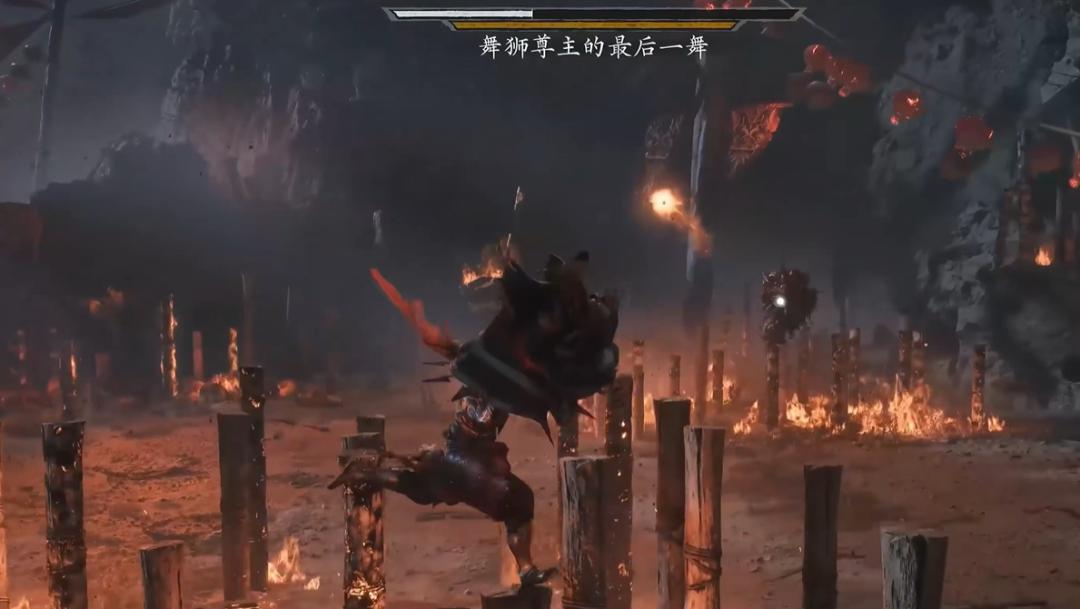
Boss Lion Dance Lord
And some stunning traditional cultural designs
But from a personal point of view, many problems have not been solved in Phantom Blade Zero, and what is more worthy of recognition is the thinking that the team of creators put into the whole process.
After all, if every product pursues the ultimate perfection, whether it is Phantom Blade Zero, or earlier titles Where Winds Meet and Black Myth: Wukong, they will only become empty talks that are far away from delivery.
The most obvious example is the entire set of action content design.
In the early feedback, the action content was the module with the most problems, for example, a large number of players complained about "insufficient hit sense" and "poor feedback". On the one hand, this problem is mainly affected by the overall content completion of the game. Elements like sound effects, movements, and various subtle technical visual performances may have a destructive impact on the hit sense. What's more, Phantom Blade Zero itself emphasizes high-speed combat and strategic play, so the importance of hit sense is relatively lower, and its completion degree is not very high.
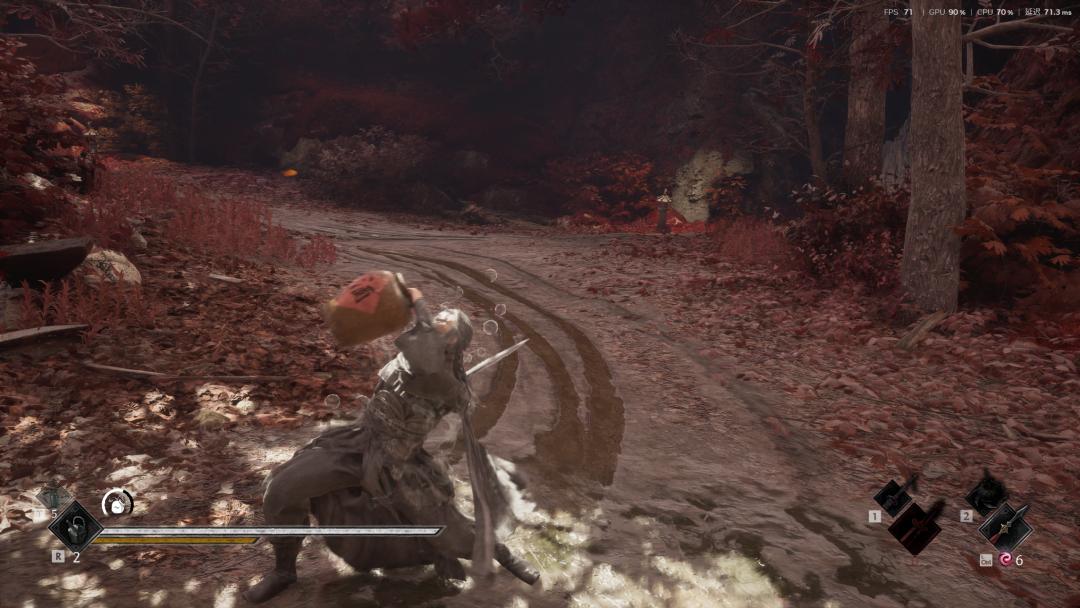
The drunken sword in the game allows players to drink alcohol
To put it bluntly, purely in terms of action content, Rise of the Ronin and Onimusha: Way of the Sword are more than qualified to be teachers of Phantom Blade Zero, while Phantom Blade Zero has an edge in texture and unique characteristics.
On the other hand, the hit sense problem is also partly attributed to the entire martial arts theme.
Many insiders tend to compare Phantom Blade Zero with God of War (2018) in discussions. The core reason is that God of War (2018) has achieved an excellent design balance between theme and immersion — to put it plainly, it has created a "Western god war" that players recognize. The reason why all the trailers of Black Myth: Wukong amazed the audience back then is that it has created a solid enough texture of Eastern mythology.
But when it comes to martial arts fights, things are completely different.
In action-focused games, conventional designs such as hit stop and frame pause can be used to highlight a sense of weight, and high-speed combos can emphasize a sense of speed and combo experience. But in the martial arts setting, Phantom Blade Zero has to ensure that the moves are unique and the strategic gameplay works, while also making each set of attacks have its own exclusive technical performance, which is obviously unrealistic. What's more, in traditional martial arts theme works, many things directly presented will feel "lightweight", or elegant, and if you forcefully add heavy hit sense, it is easier to turn killing moves into stage performances.
Therefore, the final solution that Phantom Blade Zero adopted is to "hide" the moves, and raise the importance of weapons and combat confrontation.
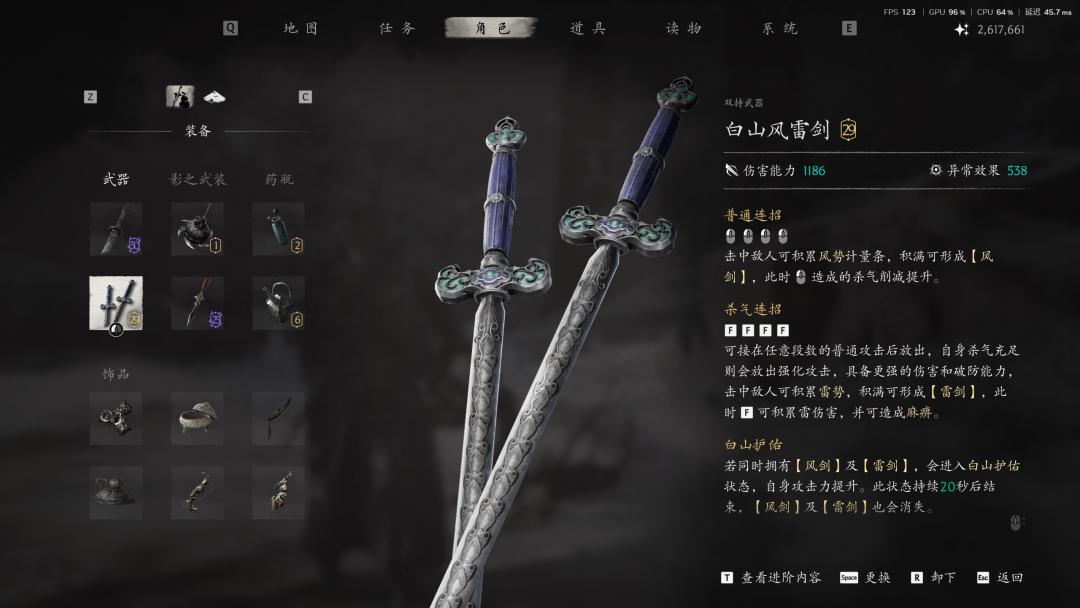
Baishan Wind-Thunder Sword
Basic moves such as sweeping attacks and kicking will be triggered naturally with attacks under specific circumstances, which allows battles in different scenarios to show different martial arts expressions, and at the same time enriches the special interactive content of the game, increasing a sense of surprise.
For more complex systematic content, the team will make them into targeted weapons, or QTE interactions in boss fights. For example, every weapon in the game has its own unique combo characteristics, and is matched with several execution animations, while the shadow armaments as "skills" further emphasize the expressive forms of different martial arts styles.
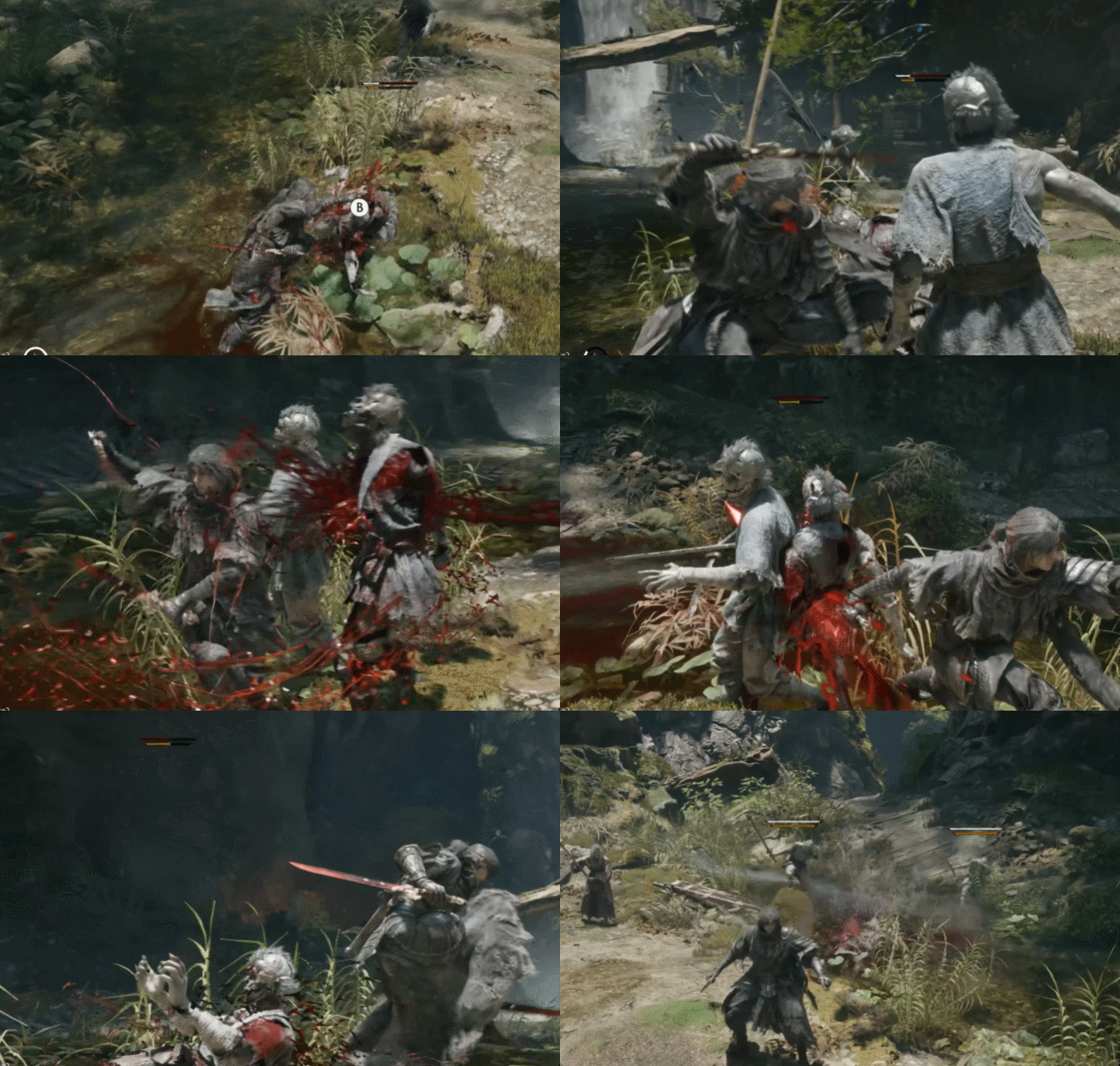
Execution skill
As the breadth of content expands, players naturally accept the regret of insufficient depth. What's more, there are not many games available today that can integrate the interactions of various martial arts moves into all kinds of battles naturally like Phantom Blade Zero. Even Naraka: Bladepoint, which was born after the classic title Meteor Butterfly Sword, basically follows the logic of skill performance, and does not have such a strong sense of interaction.
The second point is the game's flow state design.
To put it bluntly, there are certain rhythm problems in the flow state design of Phantom Blade Zero. From the perspective of map design, it adopts a Metroidvania-style sandbox map, but the connection and transition between each section of the map are basically built around high-density bells (rest points similar to bonfires in Souls games). All those high-density meaningless bells are exactly what most easily breaks the immersion of players.
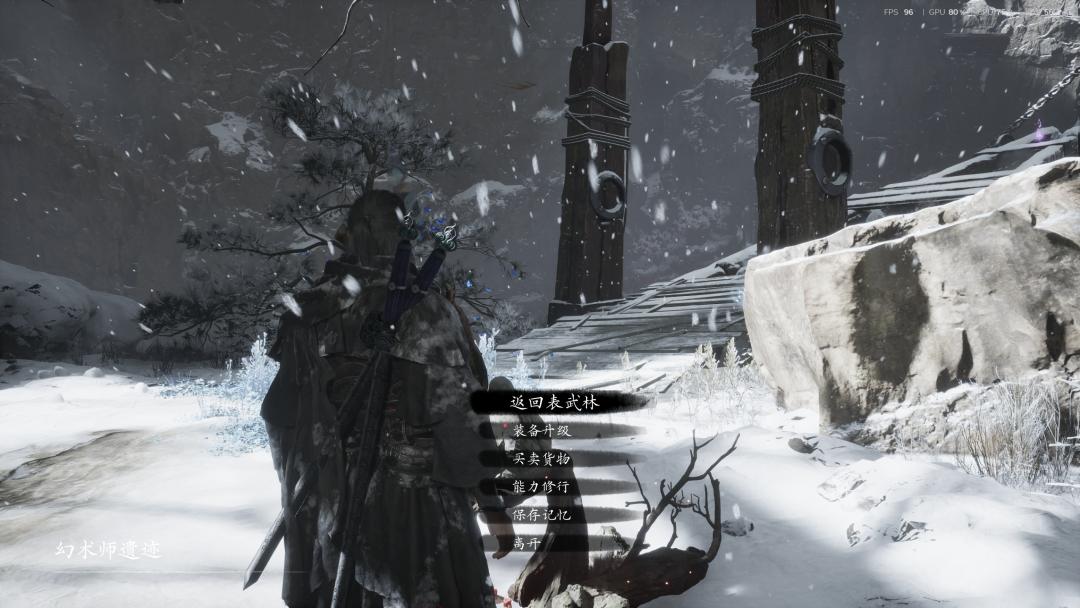
The illusion map in the game (Inner Martial World)
As for how high the density of bells is... The most exaggerated situation is that right after you finish the first boss fight in Chapter 1, you only need to walk a few steps and watch a cutscene, and you will immediately find another bell.
Therefore, what brings players a sense of progression in each map is neither the changing scenery, nor the surprise of discovering new paths, but the question of "where is the next bell".
Admittedly, high-density bells greatly reduce the cost for players to run around the map and find their way, but it is also a relatively crude solution at the map design level. For example, "Pang Town", the most important map in Phantom Blade Zero, its underlying movement logic is not as exquisite as that of the previous chapter "Lu Village", it basically just connects multiple important building blocks with bells.
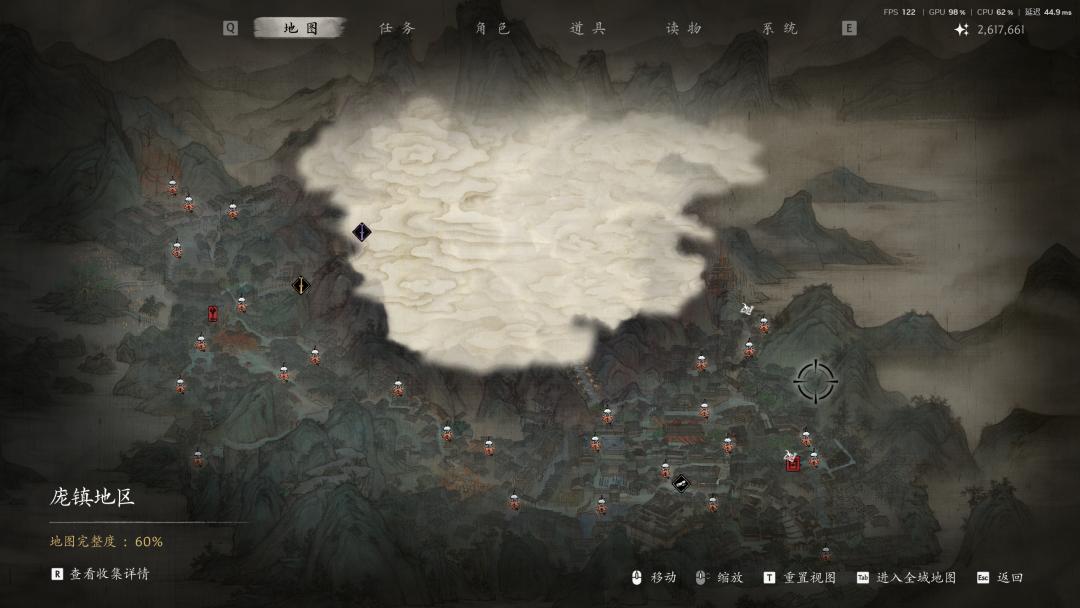
Pang Town, the most important area in the game
That is to say, there are only two wayfinding logics for players in this game: first, to judge whether you have activated the bell and cleared the map fog; second, to check whether the collectibles and small enemies in the corresponding place have been cleared.
Purely from the design level, compared with pure environmental guidance, this kind of design will definitely damage the flow state more, and is a more opportunistic solution. But from the player's point of view, if possible, I actually hope that 80% of games choose this design method, after all, it is not difficult, easy to use, and... more realistic.
This is exactly the valuable part of Phantom Blade Zero.
Phantom Blade Zero is undoubtedly ambitious, whether from a commercial or IP perspective. But over the past many years, players have experienced too many high-quality masterpieces, and many people ignore how difficult game design actually is. It is not until recent years, as the number of stunning global AAA masterpieces from overseas decreases, that many developers gradually realize this point.
To take the game itself as a direct example, it is like when you want to defeat a boss, the easier choice for 80% of players is to find a relatively simple combat routine, rather than balancing performance, no-damage clear and boss interaction like the videos of the UP streamer Chunhei. A set of poorly designed implicit guidance is not much better than straightforward explicit guidance.
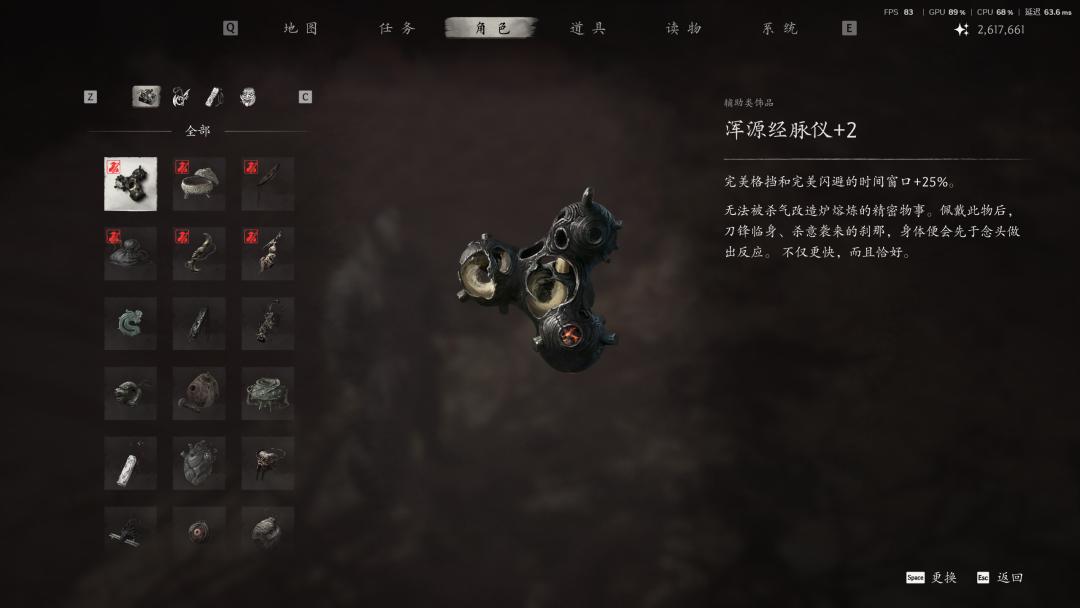
Accessories in the game can provide various stat bonuses
Just like this accessory, new players treat it like a lifesaver, while veteran players dismiss it as useless
From this point of view, Phantom Blade Zero, or all the successful domestic single-player games nowadays, have a rare quality: restraint.
This not only refers to not aiming too high at the design level, or emphasizing that completion is more important than perfection, but also emphasizes leaving breathing space for yourself and for players. There is no doubt that in the single-player game field, domestic developers are not much worse than foreign developers in terms of pure ability. Most of the time, they just do not have as good market soil as foreign counterparts, nor enough deep accumulated project management experience. Even many things (such as AAA design for domestic themes) are still in the initial exploration stage.
In other words, Phantom Blade Zero is not a game built on the short-board effect. On the contrary, as long as it shows one outstanding strength, it is enough to gain recognition from players. The rest of the work is to respect players, or not to make things difficult for players, such as reducing the useless time in the game, adopting more "generous" game stats, etc. These things, once impacted by foreign single-player games, have even become "ancestral rules" in the minds of some domestic developers that cannot be easily changed.
Conclusion
But in reality, where are the so-called "ancestral rules" in the game industry?
As a cultural entertainment product, what is more terrifying than copying others' homework is that creators choose to give up thinking. After Black Myth: Wukong and Where Winds Meet, there was once a wave of a large number of "Souls-like" products in China. Even the bell in Phantom Blade Zero that works similarly to the bonfire in Souls games was compared to Souls games by many people, who commented on where it is "Souls-like enough" and where it is not.
Looking further, domestic single-player and console games have ushered in rapid growth opportunities in the past two years. Earlier, the "Sony China Star" plan that has lasted for ten years has supported and launched many excellent works. However, the game industry is ultimately a content industry, and even with Sony's support, many domestic single-player games still failed. Because behind this, what is more terrifying than copying homework is that creators choose to give up thinking.
It is undeniable that for many developers, "Souls-like" is indeed a low-cost, high-success-rate choice. But there is far more to the game industry than Souls games. "Souls-like" is just a design style, and should not become a universal reusable solution — just like you cannot call any game made with UE5 a AAA game.
Even from a personal point of view, Phantom Blade Zero can highlight its own strengths, and even if it only makes designs above the baseline in other systems, it is already much better than pure "homework copying".
Not to mention, many of its own designs are full of independent thinking. For example, in the normal difficulty, many people ignore the setting of "Sixty-Six Days", but according to Liang Qiwei, this setting in the game is closely linked to the entire game system build.
