Weak demand and cutthroat price competition: leading home appliance giants are under pressure, each seeking new paths to achieve breakthroughs.
Dragged by sluggish consumer demand, the home appliance industry has entered a difficult period with its market scale continuing to shrink. According to the aggregated data from AVC, in the first three quarters of 2026, the total retail sales of domestic home appliances (excluding 3C products) reached 604.1 billion yuan, down 10% year on year. By quarter, the year-on-year decline was 6.0% in Q1, 12.4% in Q2 and 10.1% in Q3. The pressure of weak demand ran through the whole first three quarters, the market failed to stabilize, and the industry environment became increasingly severe.
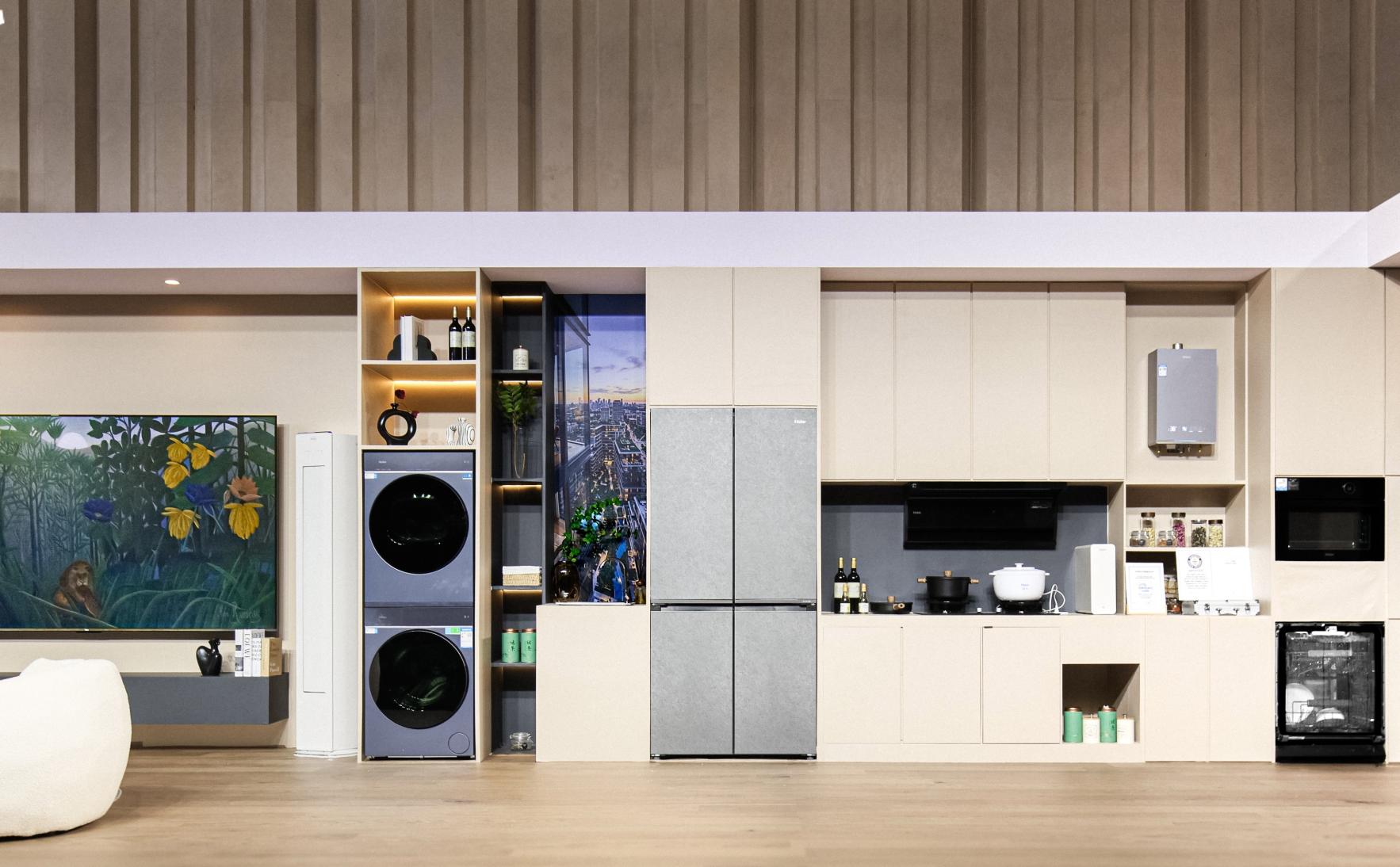
Image source: Haier Smart Home's Weibo account
Sluggish Demand and Cost Pressure: Home Appliance Giants All Face Profit Headwinds
In the weak market environment, competition in the industry has become increasingly fierce. All manufacturers have adopted more aggressive pricing strategies, putting pressure on their profitability. Most notably, the cost pressure brought by upstream raw materials has further squeezed corporate earnings, leaving home appliance manufacturers facing dual pressures on revenue and profits.
In the first three quarters of 2026, Midea Group recorded a revenue of 367.3 billion yuan, a slight year-on-year increase of 1.19%; its net profit reached 41.4 billion yuan, up 9.27% year on year. However, its non-recurring profit and loss adjusted net profit dropped 22.49% year on year, indicating pressure on the profitability of its core business. Among them, Q3 revenue decreased by 4.12% year on year, and non-recurring profit and loss adjusted net profit fell by 15.7%.
Haier Smart Home achieved a revenue of 221.8 billion yuan in the first three quarters of 2026, down 5.23% year on year; its net profit was 15 billion yuan, down 13.67% year on year. Specifically, Q3 revenue decreased by 10%, net profit fell by 12%, and non-recurring profit and loss adjusted net profit dropped by 32%. The gross margin was dragged down by the rise in bulk commodities and price competition; meanwhile, exchange gains and losses also had a large impact on profits. In addition, the active promotion of global supply chain restructuring and overseas regional platform integration generated one-off related expenditures of about 500 million yuan.
In the first three quarters of 2026, Gree Electric recorded a revenue of 126 billion yuan, down 8% year on year; its net profit was 17.2 billion yuan, down 19% year on year. Among them, Q3 revenue decreased by 7.97% year on year; net profit fell by 43%. Among the three major home appliance giants, the performance of Gree Electric is disappointing, and its once-proud profitability has long been surpassed by Midea Group.
The core reason for this situation of Gree Electric is that its diversified transformation has not formed effective support for its performance, and it still highly relies on the air conditioning segment. When the industry pressure continues to increase, competition will further intensify. In particular, with the rise in raw material prices, Gree adheres to the concept of focusing on quality rather than price, which has had a certain impact on its profits.
Sichuan Changhong achieved a revenue of 85.4 billion yuan in the first three quarters of 2026, up 4.34% year on year; its net profit was 58.98 million yuan. Among them, the loss in Q3 was as high as 1.587 billion yuan. In the overall downward market environment where the entire home appliance market is under pressure, it is really not easy to maintain positive growth in overall performance, showing strong resilience, but the quality of earnings is worrying.
Although the profit was affected by a year-on-year sharp decrease in the fair value income of its invested enterprise Huafeng Technology, the deeper pressure came from the periodic rise in bulk raw materials and memory chip prices, coupled with weak terminal demand, the profit space of its main business was squeezed, and it still recorded a loss of 450 million yuan after non-recurring profit and loss adjustment in the first three quarters. At the same time, the negative 3.16 billion yuan cash flow generated from operating activities also reflects that the main business is still facing great operating pressure.
In the first three quarters of 2026, Hisense Home Appliances recorded a revenue of 67 billion yuan, down 6.32% year on year; its net profit was 1.849 billion yuan, down 34% year on year. Among them, Q3 revenue was 20.2 billion yuan, down 8.76% year on year, net profit dropped 74% year on year, and non-recurring profit and loss adjusted net profit was only 16.67 million yuan, down 96% year on year. HVAC is its core business segment, but under market pressure, it also has to face competition from the three giants of Midea, Gree and Haier. Affected by multiple factors, Hisense's HVAC segment dragged down its overall performance.
Leading Players Explore Their Own Paths, Differentiated Breakthroughs Open Up New Growth Points
Against the backdrop of sluggish demand in the home appliance industry, the fluctuation of raw material prices has pushed up production costs, putting pressure on the cost and price of terminal products. In particular, the involution-style price competition that is difficult to end in the short term has brought many challenges to the development of home appliance enterprises.
Facing this situation, leading enterprises have achieved counter-trend breakthroughs through differentiated strategies. Most critically, tapping into overseas markets and pursuing high-end transformation have become highlights of the industry's development.
Benefiting from its diversified strategic layout, Midea Group has established a business matrix that gives equal weight to ToC and ToB development. In particular, ToB has become the main engine for sustained business growth. Among them, the Building Technology, Robotics and Automation segments both achieved double-digit growth, with revenues of 30.9 billion yuan and 24.9 billion yuan respectively in the first three quarters of 2026, up 10% year on year respectively.
Against the overall pressurized environment of the industry, Haier Smart Home has taken a completely different path to break the deadlock. By actively seizing the opportunities of AI development to create a brand-new user experience, for example, the launched three-drum integrated washing machine leverages the market through differentiated and highly recognizable hit products, which is regarded as a phenomenal product by the industry.
At the same time, with the deep empowerment of AI technology and the collaboration of multiple brands, it continues to lead the high-end track. In terms of high-end strategy, taking high-end brands such as Casarte as the strategic fulcrum, it has created a differentiated model of high-end complete home appliances, which is clearly separated from the low-price competition in the industry. More strategically valuable, by integrating the collaborative advantages of the large HVAC business, it opens up new growth space and embarks on a path of differentiated competition.
For Sichuan Changhong, after decades of development, it has evolved from a pure color TV manufacturer to a comprehensive industrial group. Among them, the ICT comprehensive service and home appliance segments jointly support its revenue to break through the 100 billion yuan threshold.
Driven by artificial intelligence, the ICT business has achieved continuous growth, and its revenue proportion has risen to 42%. In the first half of 2026, Changhong's ICT comprehensive service segment achieved a revenue of 24.721 billion yuan, up 25.47% year on year. It can be seen that compared with the sluggish home appliance segment, Changhong's ICT distribution business is developing steadily and is the key to supporting the overall revenue growth.
Changhong's ICT distribution business seizes the new opportunity of AI technology, relies on its profound ecological cooperation resources and large-scale channel advantages to capture the incremental opportunities in the AI-driven ICT market, and becomes the core driving force driving Changhong's overall revenue growth. However, there are obvious shortcomings hidden behind the rapid growth, and its profitability is particularly weak.
Hisense Home Appliances actively seeks opportunities in overseas markets, builds a clear-level, collaborative and complementary global brand matrix relying on eight major brands, and achieves rapid growth in many overseas markets. In the first half of 2026, its overseas revenue reached 21.38 billion yuan, up 4.56% year on year, and the revenue proportion further increased to 45.72%. It can be seen that the overseas market has become an important growth engine for it.
Conclusion
The growth momentum of the home appliance industry is insufficient, and it has declined for two consecutive years. The industry demand continues to be weak, and relying on price competition will only lead itself into trouble. It is worth noting that with the deep integration of AI technology, the application of AI technology in home appliance products will continuously improve the quality of human life. Only by creating new demand through new supply and breaking homogeneous involution can we open up new increments in the stock market.
This article is from the WeChat Official Account "Yang Jianyong" (ID: iotquanzi), written by Yang Jianyong, and published with authorization by 36Kr.