Guo Qing steps down, the food delivery business shifts gears, and JD pursues profits from its supply chain.
The battle for local life services among industry giants is far from over, and JD.com has appointed a new top leader for its local life business.
On November 4, according to TMTPOST, Guo Qing, head of JD.com's local life business, has resigned for personal reasons.
This industry veteran, who once took charge of Meituan's hotel and travel business and was a member of Meituan's highest decision-making body S-team, stepped down less than three years after joining JD.com, which has become a core perspective to observe the strategic trend of JD.com's local life business.
The past year has been a critical period for JD.com's local life business to evolve from strategic layout to full-scale expansion.
In March 2025, JD.com launched its food delivery service, quickly breaking through the market gap with low commissions and large subsidies; in June, JD.com made a high-profile entry into the hotel and travel market; in July, the original Dada Business Department was upgraded to the Local Life Service Group, completing the construction of a multi-category organizational framework; in October, JD Logistics acquired the assets of the instant delivery business for 270 million US dollars, realizing the financial and system separation between the fulfillment end and the operation end; entering 2026, the management stated that the food delivery business will definitely achieve profitability.
Behind this series of actions is the consistent supply chain logic of JD Group. On the eve of last year's 618 Shopping Festival, Liu Qiangdong, founder of JD.com, specifically responded that "JD.com's food delivery and hotel and travel businesses are all paving the way for the underlying supply chain."
In fact, JD.com is very clear about its own advantages and disadvantages. When it enters the local life track to compete head-to-head with Meituan and Alibaba, JD.com does not have obvious traffic advantages on the front end, and the supply chain capability and warehouse distribution fulfillment system on the back end are JD.com's core competitive moat.
Guo Qing led JD.com's local life business to achieve a breakthrough from 0 to 1. In the new stage, JD.com may need a team that is good at supply chain integration and efficiency improvement more.
When the core contradiction of the business shifts from how to scale up to how to achieve profitability, JD.com needs to adjust its posture and change its operation strategies.
Guo Qing's mission is completed
Guo Qing was a key talent poached by Liu Qiangdong from Meituan.
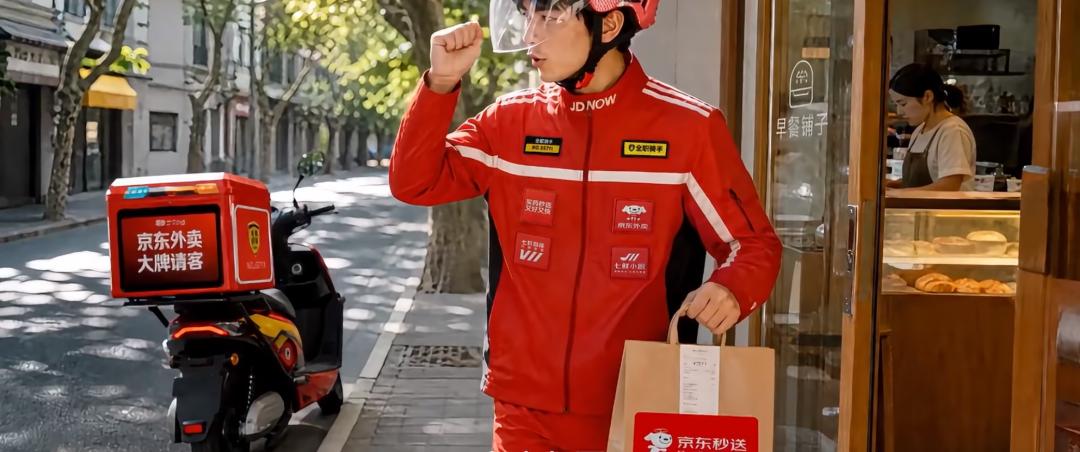
In January 2024, Guo Qing joined JD.com as a consultant to Xu Ran, then CEO of JD Group, and in August of the same year, he served as chairman of the board of Dada Group, coordinating Dada and instant retail business.
Source: JD Food Delivery official Weibo account
From the very beginning, Guo Qing's joining was endowed with clear strategic significance by JD.com -- to make up for the shortcomings of JD.com's local life business.
At that time, JD.com chose to enter the local life track starting from food delivery, and what it had in abundance was delivery capacity: Dada's distribution network was already in hand, and years of e-commerce experience had also allowed JD.com to build deep barriers in the field of supply chain and self-built logistics.
What it lacked most was the platform-based operation experience of local life services. From merchant expansion, category operation to field promotion team management and two-sided network effect construction, these are the core capabilities for the cold start of the food delivery business. The introduction of Guo Qing is essentially a key step for JD.com to make up for the shortcomings of local life operation at the fastest speed.
After taking charge of JD.com's local life business, Guo Qing's core task in the first stage was very clear: quickly build the business framework, get through the food delivery business model, and establish initial quality perception among users.
Judging from the business results, JD Food Delivery has indeed opened up a differentiated market. By the first anniversary of JD Food Delivery's launch in February 2026, the cumulative number of order-placing users on the platform had exceeded 240 million, and the overall market share had exceeded 15%. On the merchant side, JD Food Delivery has attracted more than 2 million catering stores to settle in with its low commission policy.
At the same time, the organizational framework of JD.com's local life business was quickly iterated. In July 2025, JD.com officially upgraded the original Dada Business Department to the Local Life Service Group, with multiple business departments including Instant Delivery (including food delivery), hotel and travel, housekeeping, R&D, integrated marketing, and middle platform, and Guo Qing continued to serve as the head of the business group.
This organizational upgrade is a landmark node. JD.com's local life business has evolved from a single food delivery business to a multi-category comprehensive business sector covering catering, retail, hotel and travel, and local services, and has officially become a group-level strategic business parallel to retail and logistics.
From business department to business group, what has changed is not only the name, but also the resource allocation authority and strategic priority. The finalized organization of JD.com's local life business has built a complete structural framework for subsequent business expansion.
The problem also arises here. Expanding into tracks such as hotel and travel and housekeeping means more real money investment. Although Guo Qing has achieved phased results with the food delivery business, when the traffic dividend of the high-frequency entry is not enough to support multi-category expansion, efficiency has become a more urgent proposition.
During this period, the path of scaling up the food delivery business through heavy investment has hit the ceiling, and the continuously expanding loss has become the core pressure on the table. In the second quarter of 2025, the operating loss of JD.com's new business reached 14.8 billion yuan. The expansion of losses was mainly dragged down by the food delivery business, which stemmed from the simultaneous rise of subsidy investment, rider cost and market promotion expenses.
Although the food delivery business has reduced losses after entering 2026, the new business lines such as hotel and travel and housekeeping, which were highly expected, have not yet been able to replicate the path of high-frequency business driving low-frequency business, their growth rate is far lower than market expectations, and the strategic value of multi-category collaboration has not yet been realized.
At this time, the goal of JD.com's local life business has changed, and it urgently needs to shift from market expansion to efficiency improvement and profitability, which may not be Guo Qing's area of expertise.
The development logic of JD.com's local life business has changed
Behind Guo Qing's resignation, the financial and operation models of JD.com's local life business are changing.
In 2025, the keyword of JD.com's local life business was "sprint", because at that time, JD.com had just entered the food delivery track and needed to grab the admission ticket of this business with large subsidies.
By 2026, the three platforms in this food delivery war have all got the results they want. Meituan has defended its moat of the first market share; Taobao Flash Purchase has become an entry connecting local life, e-commerce and fulfillment network.
JD.com has firmly occupied the third place, completed the defense against Meituan in instant retail, so the keyword of JD.com's local life business this year has become "loss reduction".
As early as August last year, JD.com put the brakes on large subsidies.
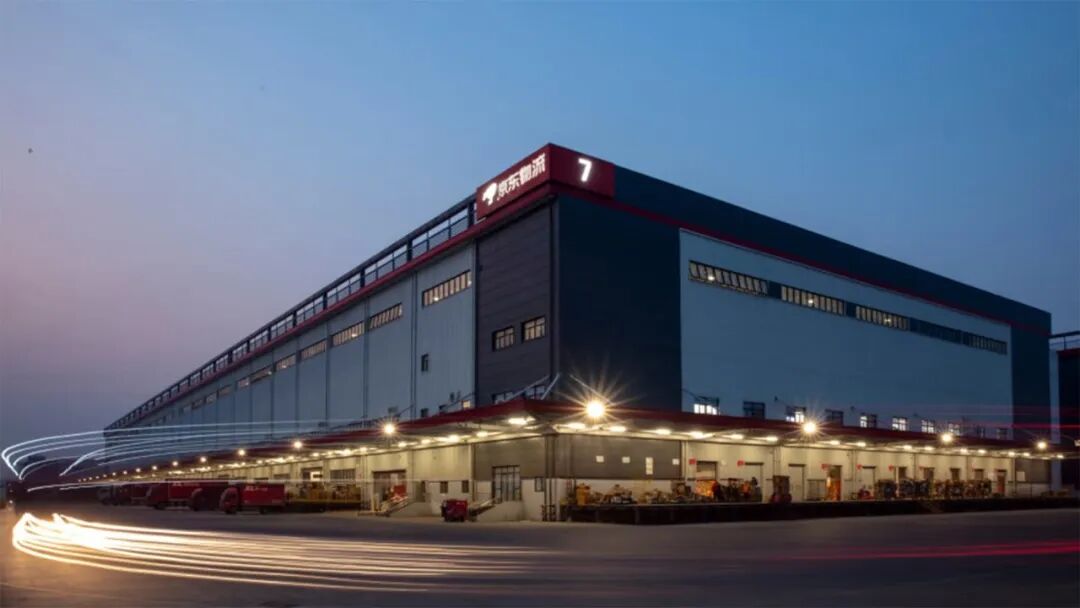
The more critical action was in October last year, when JD Logistics acquired the local instant delivery business (the core asset of the original Dada Group) for 270 million US dollars. Since January 2026, the delivery service has changed from serving the internal food delivery business to settling directly with third-party merchants on the platform at market price.
Source: JD Logistics official website
This action is easily interpreted by the outside world as "JD Food Delivery getting rid of the burden of distribution", but in essence, the fulfillment assets are still within the group, which only realizes business account separation and rights and responsibilities division, and uses market-oriented settlement to force food delivery and logistics to each run through an independent economic model.
JD Food Delivery has shifted from an asset-heavy model to asset-light operation. It does not need to invest resources to manage the rider network and bear the cost risk brought by capacity fluctuation. It is more convenient to focus on merchant operation, user management, business circle supply polishing and supply chain commodity organization, so as to improve operation efficiency.
The fulfillment scenarios that JD Logistics faces will become more diverse as a result. JD Logistics can take orders from third-party merchants such as food delivery, supermarkets, fresh food, and brand private domains at the same time, and the increase in order density will also dilute the fixed costs such as rider and scheduling.
After the ownership change, the pricing mechanism of delivery services has also changed.
In the previous operation mode of JD distribution, JD Food Delivery purchased capacity from Dada, which belonged to internal group settlement. Dada would adopt an internal quotation lower than the market price to reduce the fulfillment cost for the platform in a disguised form; after the adjustment, delivery orders are initiated directly by merchants to Dada. Dada belongs to the JD Logistics system, and its external quotation is aligned with the market price of the industry, so distribution has become a profit source for JD Logistics.
For JD Group, the overall fulfillment cost of the group has not disappeared, and how to help JD Food Delivery stabilize the order volume after the subsidy ends is also crucial.
Therefore, after stopping subsidies, JD.com's strategy in the food delivery business is to focus on core business districts.
On the one hand, it focuses on arranging delivery capacity and optimizing station layout in high-value business districts such as office buildings and mature residential areas in first- and second-tier cities, so as to improve the efficiency of riders combining multiple orders and dilute the average fulfillment cost per order.
On the other hand, it "fights regional wars". JD.com's 7Fresh Kitchen first covered the main areas within the Fifth Ring Road, and then replicated to first- and second-tier cities through the operating partner model. JD Food Delivery can put 7Fresh Kitchen, JD Instant Delivery, supermarkets and pharmacies, fresh convenience stores in the same fulfillment network to increase the customer unit price and the order density of business districts.
The effects of these actions are now reflected in the financial data.
In the second quarter of this year, the profit of JD Group rose, and the loss of JD Food Delivery narrowed by more than 50% year-on-year, which was the main driving force for loss reduction.
On the other hand, reducing the subsidy intensity also controlled the group's expenses, which is another reason for the profit improvement. JD.com's marketing expenditure in the second quarter of this year was 20.3 billion yuan, a sharp drop of 24.8% year-on-year, and the proportion of revenue decreased from 7.6% to 5.9%.
From the financial situation, the main goal of JD Food Delivery at present is to reduce losses, and this set of strategies of "asset-light + supply chain collaboration" is suitable for JD Food Delivery at the current stage, but it goes beyond the capability radius of Guo Qing as a "local life platform operator".
Therefore, this personnel change is imperative.
Deeply cultivating the supply chain, will the new team lead JD Food Delivery to take a new path?
According to TMTPOST, a person close to JD.com revealed that the new head and management team have long been deeply engaged in the supply chain field, and the future local life team will deepen supply chain innovation under their leadership to create greater value for customers, the industry and the society.
The source also revealed that JD Food Delivery has officially entered the "JD Food Delivery 2.0" stage with "supply chain innovation" as the core. In the new stage, JD Food Delivery will further improve quality, carry out a series of new model innovations around the "supply chain", and pay more attention to refined operation and efficiency improvement.
All these send a clear signal: the future development path of JD Food Delivery will further shift from operation-driven to supply chain-driven.
This is also in line with JD.com's original intention of doing food delivery business.
In comparison, Meituan's core moat is its huge offline merchant network, rider scheduling system and catering operation experience; Taobao Flash Purchase relies on Alibaba's e-commerce ecosystem, and its advantage is that the shelf e-commerce and instant consumption scenarios can realize traffic interconnection.
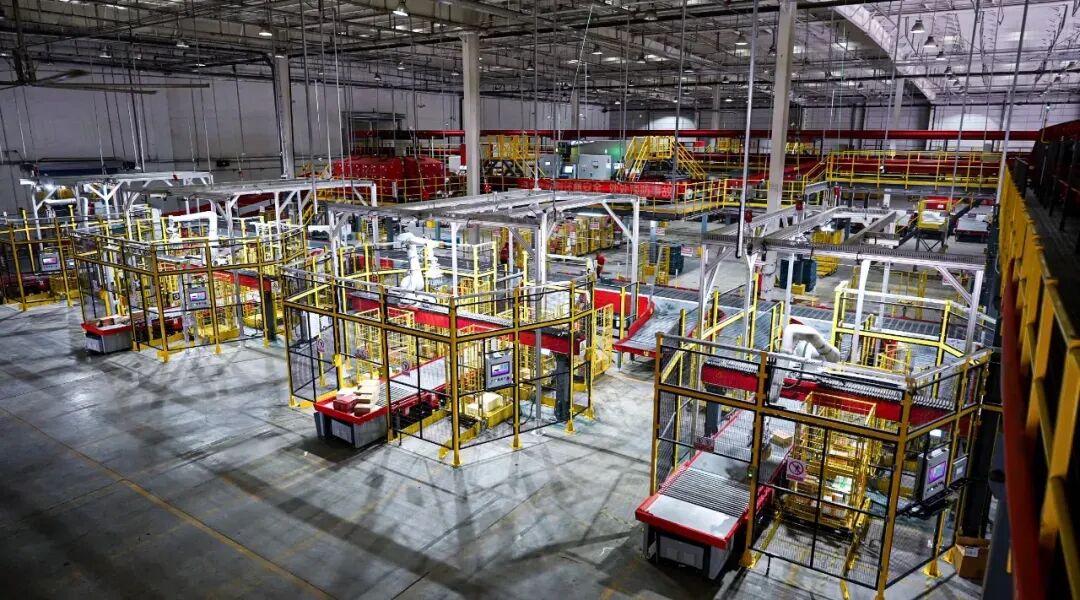
JD.com's long board is its supply chain capability. It has a full-link supply chain system from source procurement, warehouse network layout to commodity standardization, and has stable commodity supply advantages in categories such as supermarkets, fresh food, pre-made dishes, 3C products and home appliances.
In the 1.0 stage, the top priority of JD Food Delivery was to make up for shortcomings. It needed to quickly build the merchant and user system of catering food delivery to obtain the high-frequency entry of food delivery.
Entering the 2.0 stage, JD Food Delivery needs to return to its own strengths and transform supply chain capabilities into differentiated competitiveness.
However, to implement the supply chain advantage into the food delivery scenario, there are still many problems to be solved.
JD.com's supply chain capability is built on the retail logic of commodity standardization, controllable SKU and planable warehouse network, while the supply subjects of food delivery are a large number of small and medium-sized catering merchants, and the dish recipes, meal production processes and ingredient structures are highly scattered and non-standard. JD Food Delivery needs to find an intervention method that can output standardized capabilities without dragging the platform into full self-operation.
7Fresh Kitchen may be able to answer this question, but whether its model can be replicated remains to be tested.
In addition, the fulfillment rhythm and loss standards of different categories such as catering, fresh food and supermarkets are different. How to reasonably allocate orders of different categories? The new team needs to establish category-specific scheduling rules and cost accounting, otherwise the increase in order density may also lead to higher loss rate and lower user experience.
At the same time, under the premise of subsidy withdrawal and distribution settled at market price, whether JD Food Delivery can transform its supply chain advantage into the price advantage of commodities to retain users and merchants also tests the ability of the new team.
To complete these layouts, an operator who is well versed in supply chain logic and can mobilize the resources of JD Logistics and commodity inventory is required.
Source: JD Logistics official website
In fact, JD Food Delivery has made organizational preparations in advance.
In addition to the aforementioned JD Logistics' acquisition of the instant delivery business, as early as June last year, JD.com completed the privatization of Dada and incorporated it into JD's wholly-owned system. This move allows Dada's capacity system and data scheduling to be free from external disclosure and short-term performance constraints, align with JD's overall supply chain and fulfillment strategy, and pave the way for subsequent asset transfer and rights and responsibilities separation.
With the finalization of the new head of JD Food Delivery, the adjustments of JD Food Delivery in finance, organization, strategy and operation will all be settled, and this new supply chain-driven model will also enter the verification stage from the layout stage.
Personnel change only draws a phased end to the past model. Whether the supply chain can build a differentiated moat is the real exam question for JD.com's local life business in the next stage.
(The cover image of this article is from the official website of JD.com.)