Major Silicon Valley tech giants are scrambling to seize the last remaining lucrative market prospects by leveraging AI games.
"If your internship experience only includes Google, AI companies will lower their rating of you."
At the beginning of this year, a practitioner making a living in West Silicon Valley told Global Insights this. For AI-native enterprises, the prestige of big tech giants is no longer a bonus point, and may even be devalued.
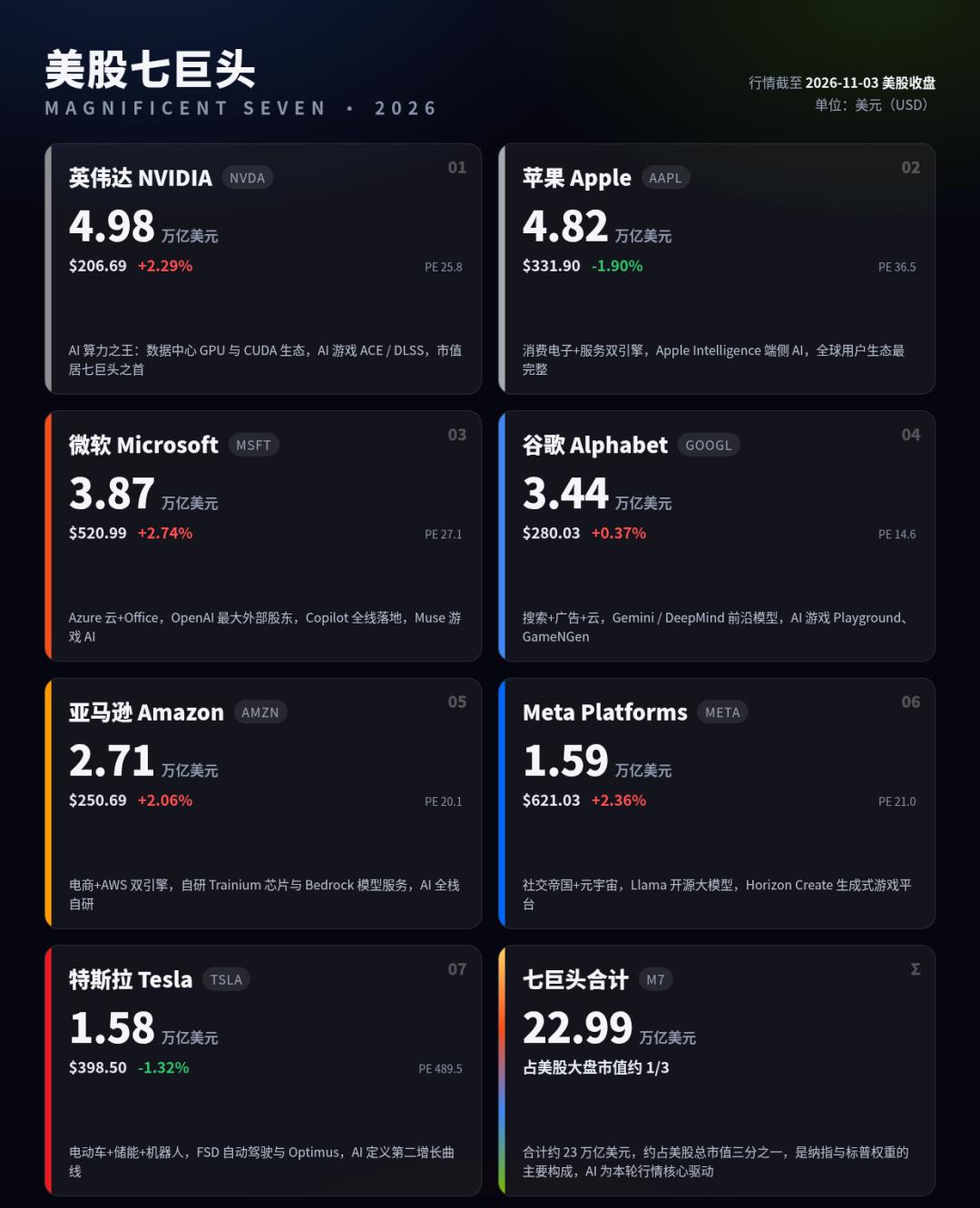
This change is not only reflected in the resume and job application process. At the start of this year, Silicon Valley's M7 (the seven largest tech companies in the United States by market capitalization that have the deepest impact on the stock market: Apple, Microsoft, Alphabet (Google's parent company), Amazon, Nvidia, Meta (Facebook's parent company), and Tesla) launched wave after wave of layoffs, and gradually adjusted their respective "AI integration strategies"; at the same time, they are competing for talents and resources in the market. On one hand, resumes from big tech companies are being picked on by AI enterprises, on the other hand, big tech companies themselves are doubling down on AI, and the game table in Silicon Valley has been reshuffled.
One of the most intuitive battlefields of this reshuffle is AI games.
In a previous article, Global Insights introduced Astrocade, an AI game creation platform that Li Feifei bet on and secured $56 million in financing.
At that time, this platform was filled with casual mini-games like rough Tetris and Snake, focusing on "personalized recommendation feed". Although it received investment, it was regarded by practitioners as a "low-end game version of TikTok", with blurred target player profiles and unpredictable prospects.
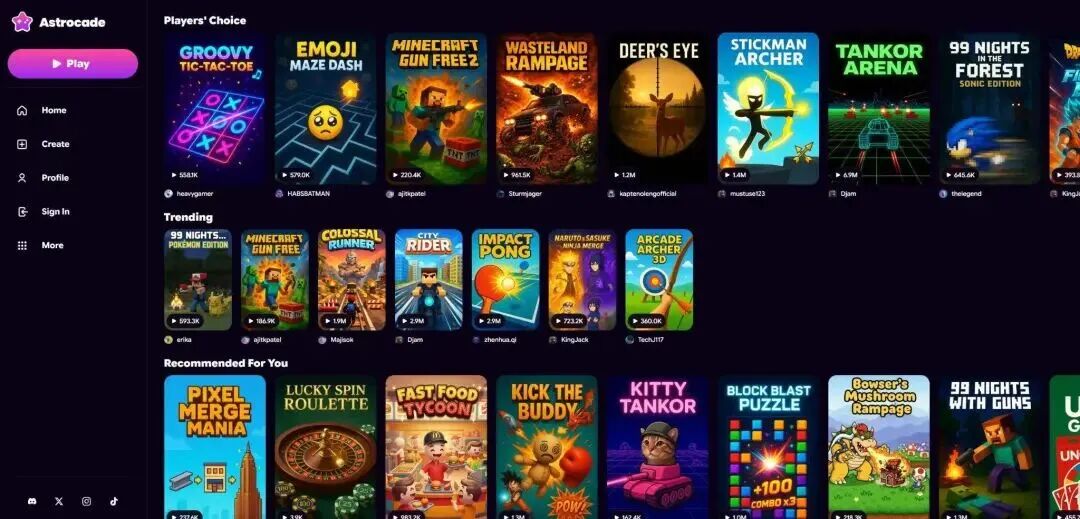
But Astrocade came up with a corresponding strategy - a $10 million creator incentive program. Creators can unlock monetization once they reach 100,000 valid plays within 30 days. Four months after the public revenue-sharing rule was released, Astrocade's monthly active users surged to 10 million.
No one knows how long the data driven by this incentive can last, but behind Astrocade's high growth, there is a more definite message: the low threshold has opened a window, and AI-generated games have successfully cultivated the first batch of audiences.
However, this group of audiences does not belong to traditional Internet giants, but is attached to AI-native companies. As a result, Google, Meta, Microsoft and other big tech companies have rushed to start the race, trying to find the few profitable opportunities in this increasingly severe investment environment.
Silicon Valley Big Tech Giants Are Obsessed With "One-Sentence Game Generation"
The "one-sentence game generation" trend in Silicon Valley has actually been developing for a long time.
Google was the first to take action.
At the end of 2024, DeepMind, Google's AI research institute, launched Genie 2, which can generate interactive 3D scenes from a single image and text description, and even invited Elon Musk to test it out.
In January 2026, Project Genie powered by Genie 3 was released, targeting Google AI Ultra subscribers over 18 years old in the United States. After the "one-sentence generation" feature, another slogan of Genie 3 is "Generate and Play". Genie 3 can generate scenes that conform to optical mechanics and complete complex interactions, but it only has about 1 minute of "visual short-term memory", cannot maintain a coherent game world, its output specification is locked at 720p and 24 frames per second, and it still has comprehension errors.
What's even more "terrifying" is that this is a walled garden. All the generated works cannot be exported or shared, the platform can observe everything that happens to get more data, but players can only get 60 seconds of fun.
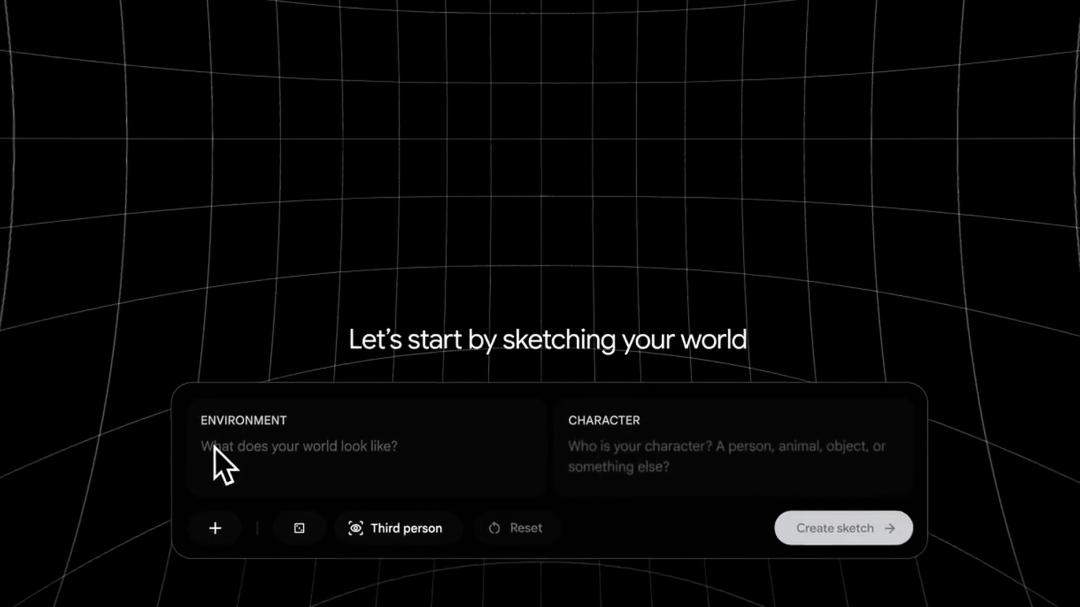
Google, which was criticized, did not stop. On October 7 this year, it launched another AI game creation platform called Google Playground.
Playground still insists on only opening to users over 18 years old in the United States, and adheres to the "generate games from a paragraph" model. But the good news is that users can now publish or share games on the platform's community.
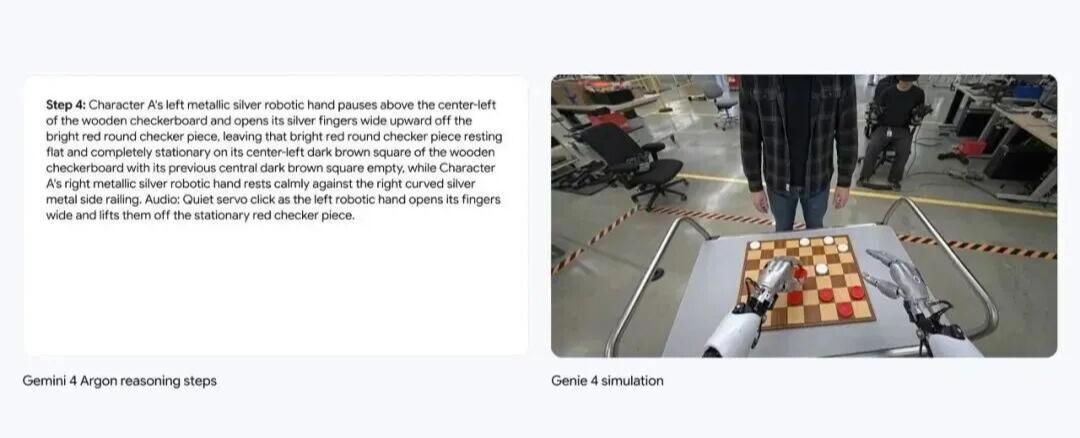
Just a week ago, DeepMind released Genie 4, which extended the single play time after generating real-time scenes to 2 minutes.
It can be said that Playground is not trying to revolutionize the industry, nor is it Google's another attempt to lower the creation threshold, but to find commercialization scenarios for its AI business.
Compared with Google, Meta (formerly Facebook before 2021) has a long-prepared eagerness when betting on AI games.
In 2007, Facebook launched an exclusive game platform for third-party developers. In 2016, it launched Instant Games, aiming to attract users to stay longer in the Facebook ecosystem through H5-based instant games. However, due to Apple's refusal to share benefits and the platform's high commission, this business model did not last long.
In the following years, Mark Zuckerberg bet on the "metaverse" and invested over $15 billion in Horizon Worlds. However, things did not go as expected. By the end of 2025, Horizon Worlds had an average monthly active user base of less than 200,000, and the metaverse business had accumulated losses of $70 billion. The only memorable news was that wonderful selfie shared by Zuckerberg.
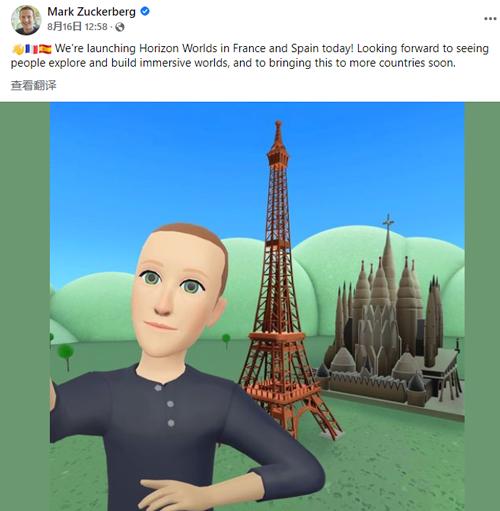
By the way, Horizon also launched a $10 million creator program in the early days. In comparison, Astrocade's results are indeed quite good.
Now it's 2026. On June 29 this year, Meta quietly launched the AI creation app Pocket on the app store. This application was defined by domestic media as "Instagram's version of 4399", which also focuses on "one-sentence game generation", and its form is almost the same as Astrocade and Aippy.
It is worth mentioning that Pocket was originally Gizmo from the startup Atma Sciences, whose founding team mainly came from Snap. But this team with a 98% positive rating did not bring another miracle. Pocket was launched in 33 countries and regions, with total downloads of only 210,000, making it the most inconspicuous application in Silicon Valley's AI game race.
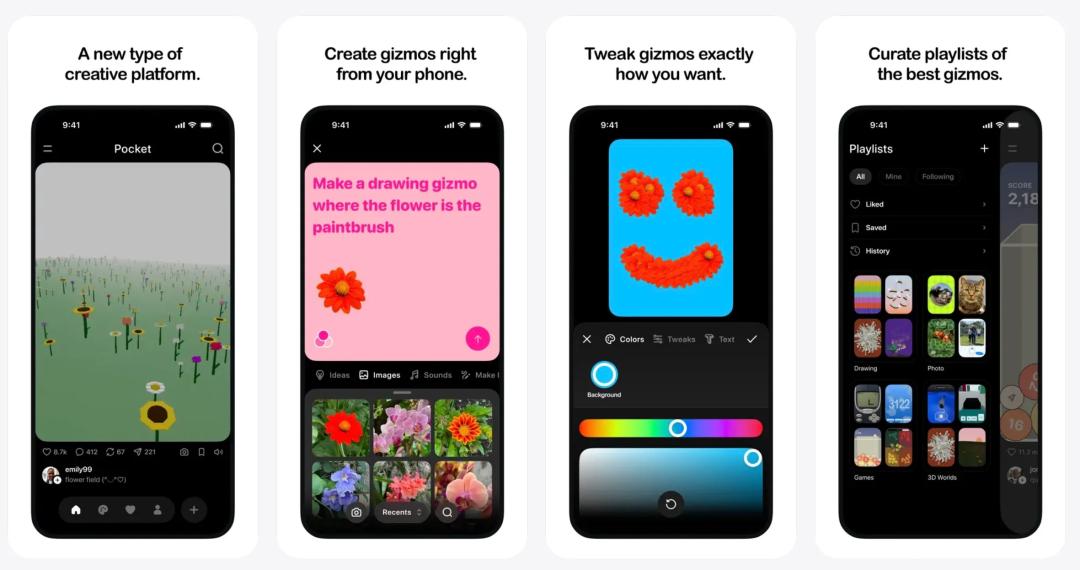
Perhaps realizing that the track is already full of competitors, Meta's attention has returned to "heavy industry".
In September, Meta released Horizon Create and Horizon Studio, allowing users to build games based on the creation capabilities of the Meta Horizon Engine agent, announcing that Horizon has officially transformed into an AI game engine.
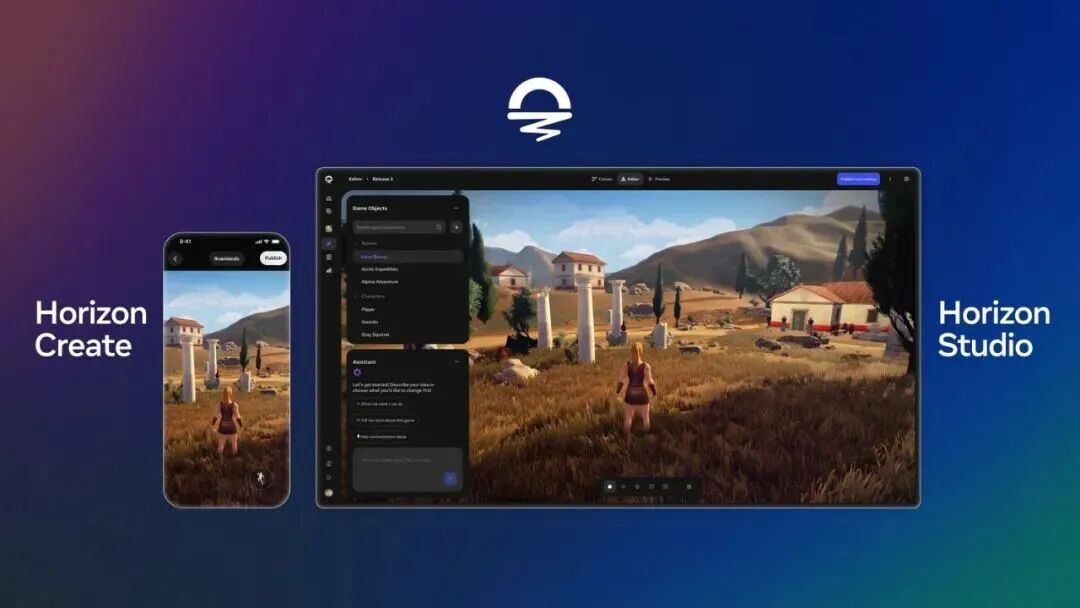
Horizon Create and Horizon Studio have three main features. First, games generated by the tools can enter Meta's social platforms and spread on social media such as Facebook and Instagram. Second, they share the same back end, allowing seamless switching between mobile and web ends. Third, they support creators to perform synchronous multi-player online creation on Quest headsets or desktop ends.
Meta's goal is more like integrating social elements into AI games, and quickly taking a position in the "one-sentence game generation" AI ecosystem by leveraging its strengths. The native social relationships based on the Meta ecosystem are becoming the core accelerator for its layout in the AI track.
In comparison, Microsoft seems a little "clumsy".
In February 2026, Muse, the world and human action model (WHAM) co-developed by Microsoft Research and Ninja Theory under Xbox Game Studios, was released, and was even featured in the international academic journal *Nature*.
Muse's biggest achievement is that after training on the 7 Maps dataset (the amount of data is equivalent to more than 7 years of human game play time), it can ensure that the generated videos maintain consistency, diversity and persistence at the same time, but the current generation resolution is only 300×180 pixels.
Such underwhelming results made practitioners sigh with disappointment. David Goldfarb, founder of The Outsiders studio, expressed his feelings directly on X - "fuck this shit".

Source: X
An anonymous developer pointed out directly that Muse's real target is shareholders. "It's to show shareholders that Microsoft is fully committed in the AI field, even though it hasn't delivered any product that anyone really wants."
In October, Xbox established Xbox Labs to respond to the emerging phenomena of AI-assisted game generation porting, decompilation and recompilation. But interestingly, its CEO Sharma seemed to deliberately avoid AI-related words in his wording, and was teased as "trying to hide something but making it more obvious".
In addition, some "regular entrants" are also continuously betting on AI games. Nvidia released RTX Spark, built specifically for AI, creation and games, and deeply connected with developers such as KRAFTON and NC; Optimus trains avatars with game data, aiming to reshape the robot ecosystem; Open AI released GPT-6 Astra, which specifically mentioned a "key breakthrough": users can generate a complete playable mini-game in just a few minutes only by describing it with their imagination.
In the AI game field of Silicon Valley, there is no shortage of Chinese entrepreneurs. Health, who graduated from Tsinghua University at the age of 20 and was a core member of Douyin's social interaction team, founded LinearGame in Silicon Valley in 2024, positioning it to build "the next Steam + the next Netflix". In 2025, the launch of Nano Banana and Genie 3 made LinearGame anchor its direction, built an AI game development platform Yoroll with the world model, and proposed the concept of "engine-less games".
Today's Silicon Valley is relying on "one-sentence game generation" to set off the final frenzy at the end of the AI storm.
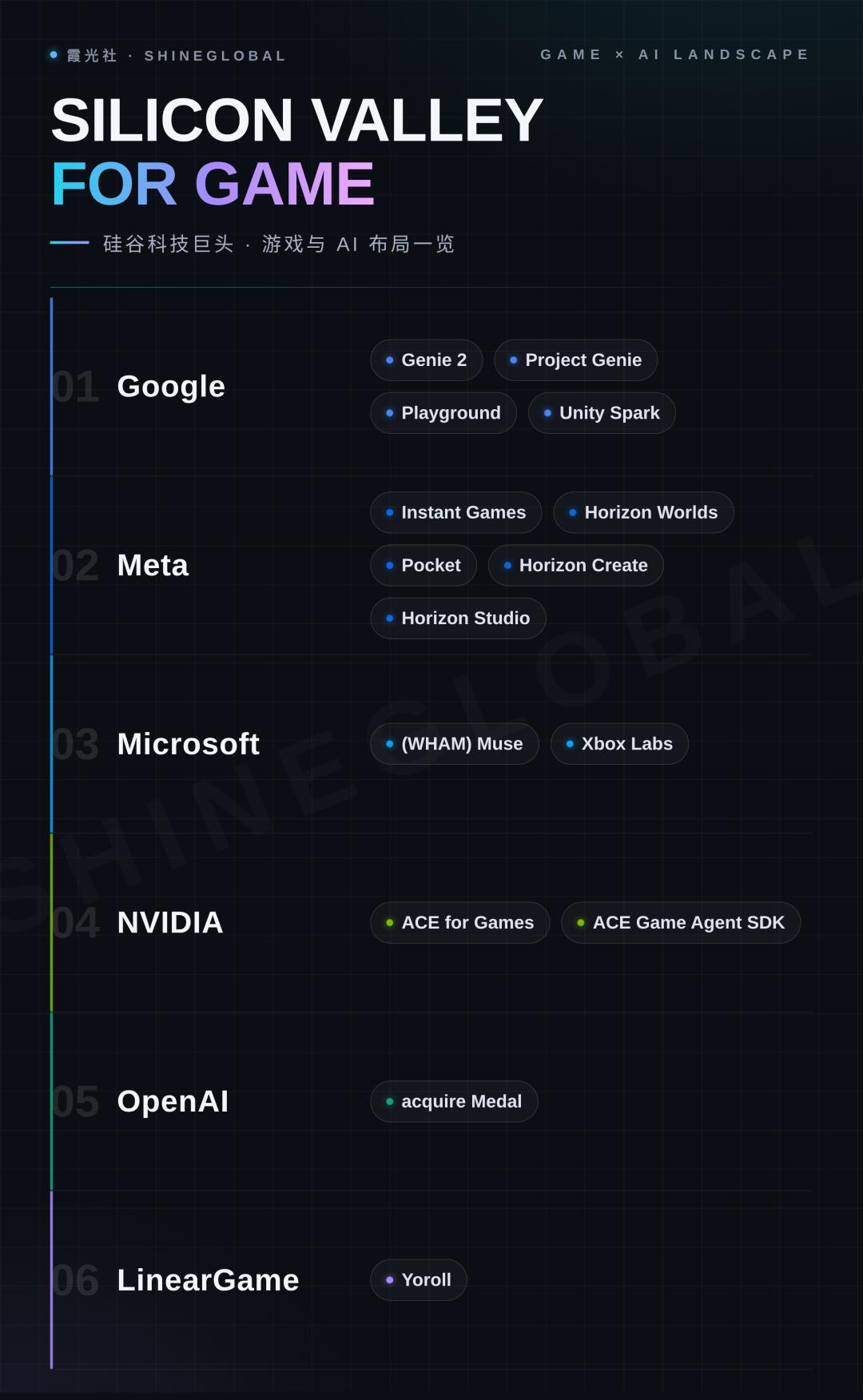
Integration, Acquisition, Capital Grabbing: Three Tactics for Silicon Valley to Bet on AI Games
Why are all Silicon Valley big tech companies betting on AI games?
In fact, the reaction of the capital market has already given the answer.
One reason is the AI panic in the market.
In January this year, after Project Genie was released, although most practitioners reacted indifferently and still maintained a wait-and-see attitude towards AI game production, the stock prices of industry giants in the gaming circle began to "plunge collectively".
Unity, the overlord of game engines, fell by 24.22%, Take-Two, which is preparing to launch *GTA6*, fell by 7.93%, and Roblox, the first metaverse stock, plummeted by 13.17%. The three companies lost a total of about $195 billion in market value in one trading day.

No matter whether AI platforms can truly replace practitioners or highly reshape the industry, fear has become an emotion that the public cannot eliminate, especially under the crazy bets in Silicon Valley. This panic has given birth to three development directions.
The first is the integration of "old and new". While announcing Playground, Google also announced another AI game development tool jointly developed with Unity - Unity Spark.
Different from Playground's product positioning for "newcomers to game creation", Unity Spark's target is more professional creators.
Although it is still in the testing stage, one piece of information that has been disclosed so far is that Unity Spark will support more complex game mechanics, visual and operational support, while providing Unity's "content assets": Spark will directly connect to the Unity Asset Store, allowing creators to access materials made by community artists.
In the past, Unity's long-accumulated model, animation and scene assets only served "developers with engine experience" who had crossed the technical threshold. But now, it will serve more creative ideas, and can produce more complete and professional games with a low threshold.
