Why do AAA blockbusters prefer the fall release window?
From the end of October, three blockbuster games will be released intensively within just three weeks.
The first one is *Phantom Blade Zero*, the most anticipated wuxia action game in China's domestic single-player game circle this year; the second one is the remastered version of *The Legend of Zelda: Ocarina of Time* (hereinafter referred to as *Ocarina of Time*), the highest-rated game in Metacritic's history; the third one is *Grand Theft Auto VI* (hereinafter referred to as *GTA6*), the decade-in-the-making masterpiece from Rockstar.
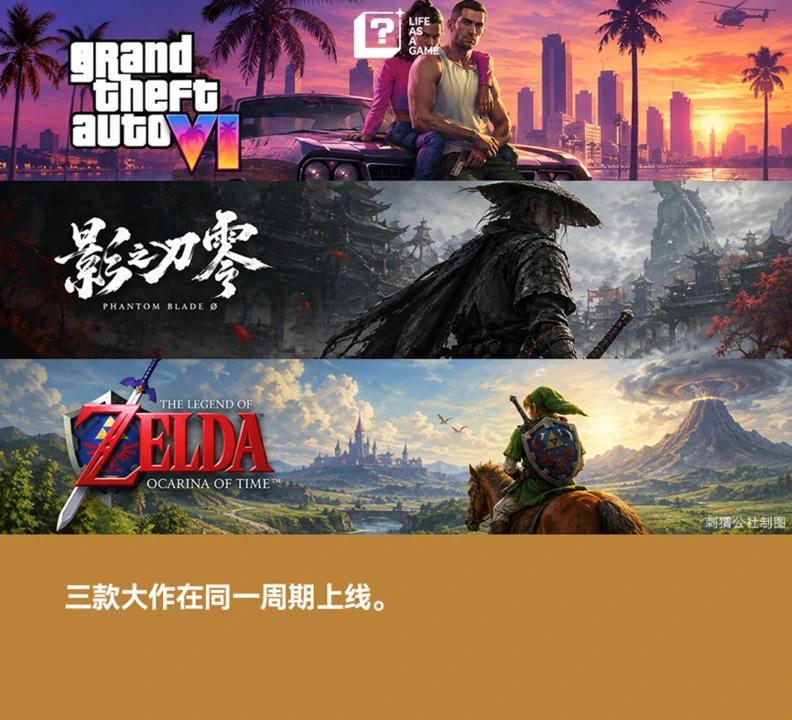
If these three masterpieces were released separately, choosing any time period of this year, each of them would most likely become the unrivaled champion of their release window. Why did they choose to gather in the fall window? Is it because developers prefer head-on collisions, or are there some "compulsory" reasons behind this choice?
AAA Games That Favor the Fall Release Window
First of all, the direct reason why these three masterpieces dare to "collide in release schedule" is that the intensity of competition is controllable.
For one thing, the themes and gameplay of the three games are different, and their audiences will be naturally segmented. For another, the platforms they choose vary: *GTA6* will only be available on PS and Xbox in its first year, skipping NS and PC; the remastered version of *Ocarina of Time* is exclusively for NS2; while *Phantom Blade Zero* will be launched on PC and PS, temporarily skipping Xbox and NS. Third, these new works are developed by China, the United States and Japan respectively, targeting different local markets.
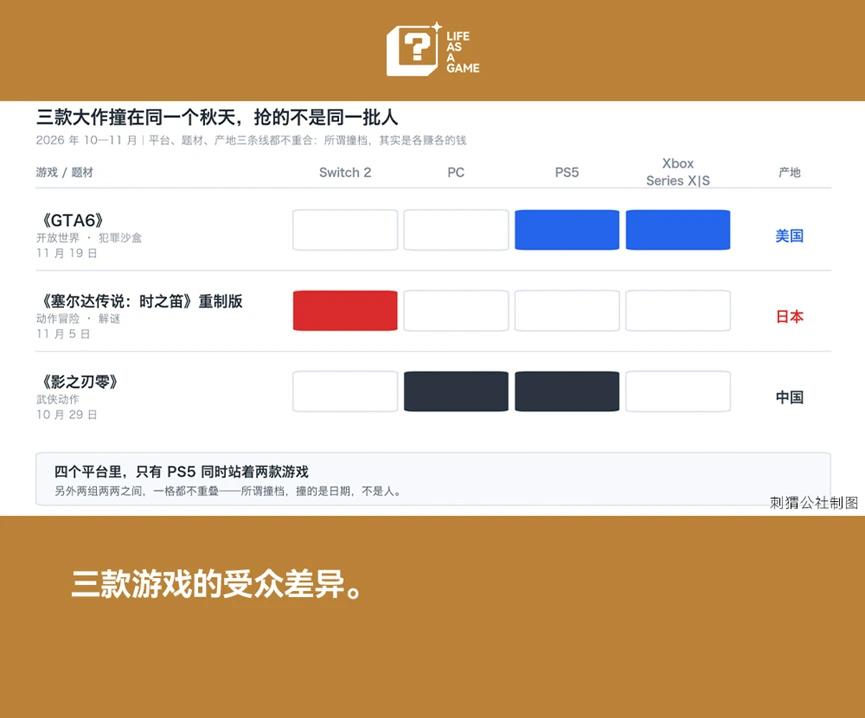
This means that the three games actually target audiences with different interests, different gaming platforms, and even different countries and regions. They seem to be in a head-to-head confrontation, but in fact they each make their own profits and try not to interfere with each other.
However, the fact that the three masterpieces are clustered in the same time period still faces a tricky problem — marketing schedule collision.
It should be noted that the marketing cost of AAA blockbusters is often extremely huge. According to the data disclosed by Polish game company CD Projekt, the total budget of its work *Cyberpunk 2077* is about 316 million US dollars, of which the R&D cost is 174 million US dollars, and the global marketing cost reaches 142 million US dollars, accounting for more than 80% of the R&D cost.
The reason why marketing expenditure is so huge is mainly that developers need to pay for "media" in a broad sense. In the era of information explosion, if games want to compete with other pan-entertainment products, they will inevitably need to hit the "hot search" and try their best to reach the widest possible audience.
The marketing schedule collision means that the three games will bid for "attention" at the same time in this period, and their marketing expenses may increase synchronously.
We can imagine all game media resources as a prime billboard. At the beginning, the well-funded *GTA6* can directly book this billboard for a month at the standard price, fully occupying players' attention before and after the game's release.
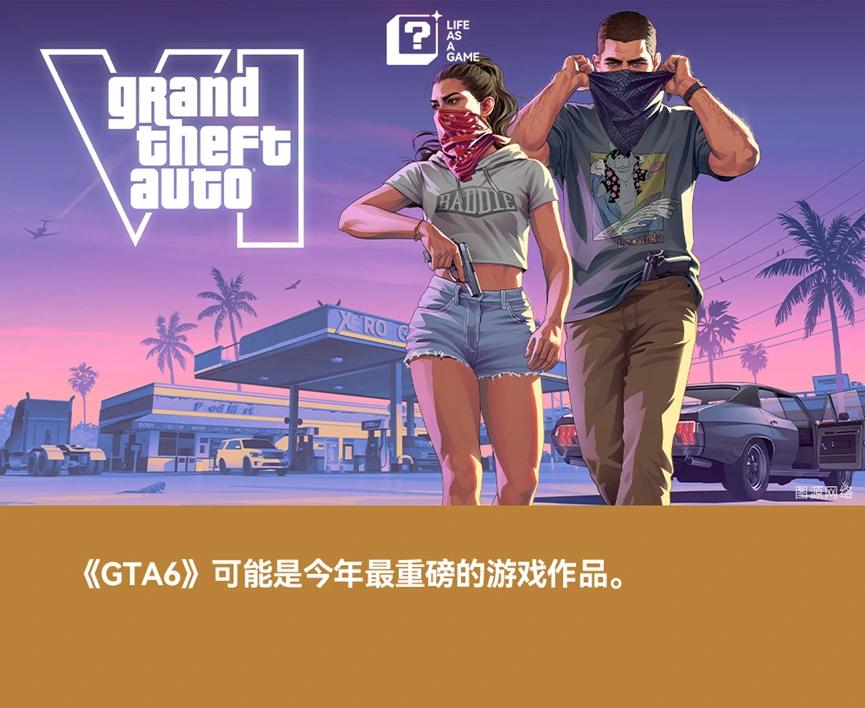
However, the arrival of *Phantom Blade Zero* and *Ocarina of Time* has sharply increased the demand for the billboard, and its price will naturally rise, forcing the three developers to pay more.
So the question arises: why do these three masterpieces prefer to spend more on marketing and squeeze into the same time period?
In fact, these three games are not the only ones that favor this release window.
If we go back a little further, we will find that many AAA blockbusters this year have gathered in this autumn, such as *Call of Duty: Modern Warfare 4* released on October 23, *Marvel's Wolverine* released in mid-September, *Onimusha: Way of the Sword* released in early September, and *Dawnwalker Blood*, etc.
This situation not only occurs this year, but also reflects the common choice of the entire industry for many years.
A global game market report from Newzoo shows that from 2021 to 2024, a total of 155 AAA single-player works were released on the three platforms of PS, PC and Xbox, of which 44.5% of the games were scheduled to be released in the three months from mid-August to mid-November. For this reason, developers have to pay more marketing expenses, but they are willing to do so.
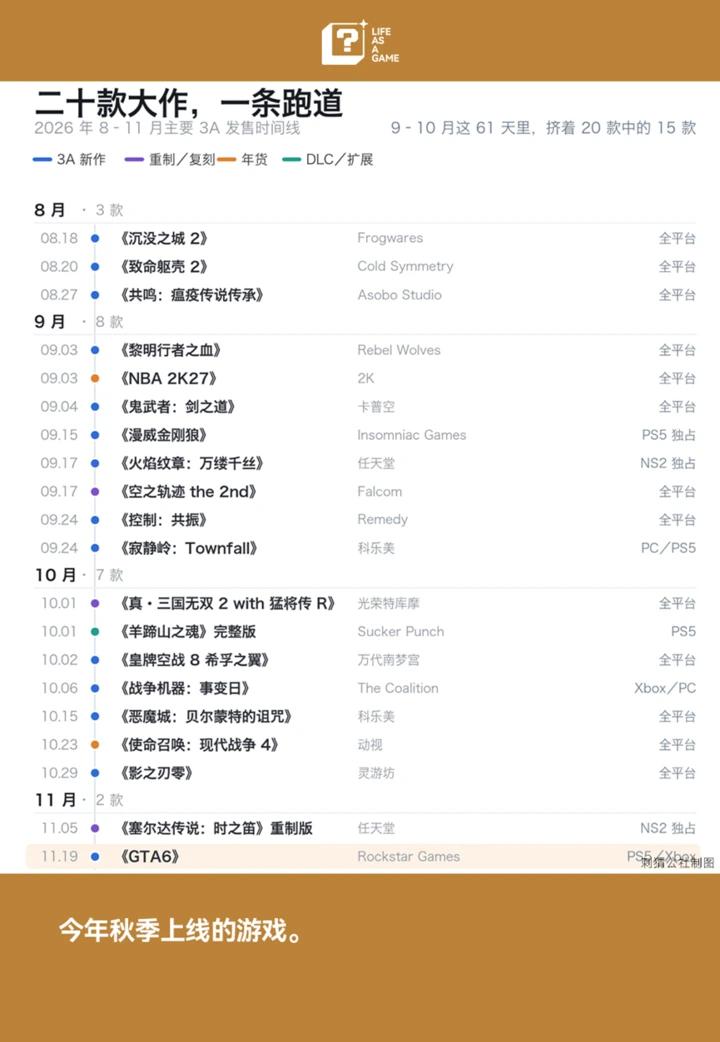
In short, about half of the AAA games prefer to be released in autumn, which is consistent with the grand scene this year. Logically, there should have been even more games in this window, but the scheduled release of the seed contestant *GTA6* forced many new works to avoid its edge and move to other months in autumn...
So the real question is: why do masterpieces favor the fall release window so much?
The Great Season for Holidays and Awards
The tendency of AAA games to be scheduled for autumn is closely related to the "holiday season".
Although China has become one of the main game consumption markets in the world, when it comes to the AAA game sector, a considerable number of consumers are still distributed in markets such as Europe, America, Japan and South Korea.
Starting from October, American players will gradually enter the "vacation mode". From Halloween, Thanksgiving to Black Friday, Christmas and New Year's Day, there are almost non-stop holidays. Similar situations also exist in Europe and Japan.
For the game industry, this series of holidays can provide many promotion windows. It should be noted that game price reductions must have reasonable excuses, such as anniversary celebrations or holidays, otherwise consumers are likely to feel that they "bought at a loss" or "were backstabbed", and the merchant's pricing system will also be shaken.
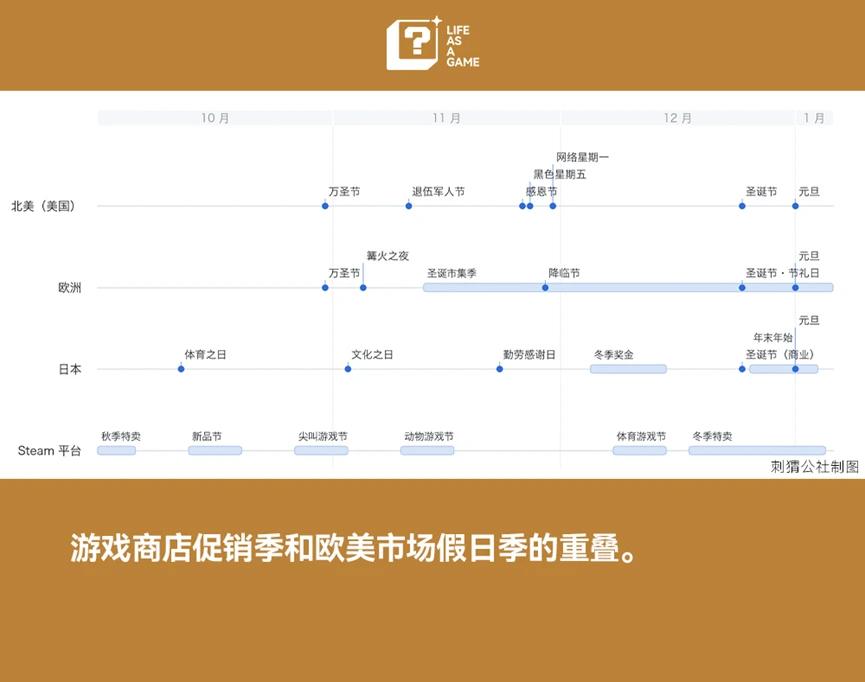
Just imagine, if a AAA game is released in June, after the first month, it has to create its own excuse to start promotions, which not only requires buying a new round of exposure, but also faces players' doubts about whether the game "can't sell well".
But if the game is released in autumn, it can first enjoy the full-price cycle of 1 to 3 months, and then smoothly enter the promotion state. With the arrival of the end-of-year holidays, the whole industry begins to promote, and game discounts become natural and reasonable.
At the same time, the holiday season has another advantage, that is, players' game time will increase significantly.
According to a study by Activision Blizzard, players' average daily game time is 1.3 hours on weekdays, which rises to 2.5 to 3.5 hours during holidays, and 80% of players will maintain or increase their gaming activities during holidays. Unlike lightweight games that can be played at any time, many AAA masterpieces rely on the immersion brought by long-time play. Therefore, the increase in players' playing time is more conducive to the sales of AAA games.
In addition, autumn is also the awards season for the game industry.
The Golden Joystick Awards and The Game Awards (TGA), two of the three major game awards, are held at the end of autumn every year, and the submission deadline for nominations is around November, with a difference of no more than three to five days. According to this year's selection rules of TGA, a game can participate in the awards as long as it is released before November 20. The shortlist for the Golden Joystick Awards will be determined even earlier.
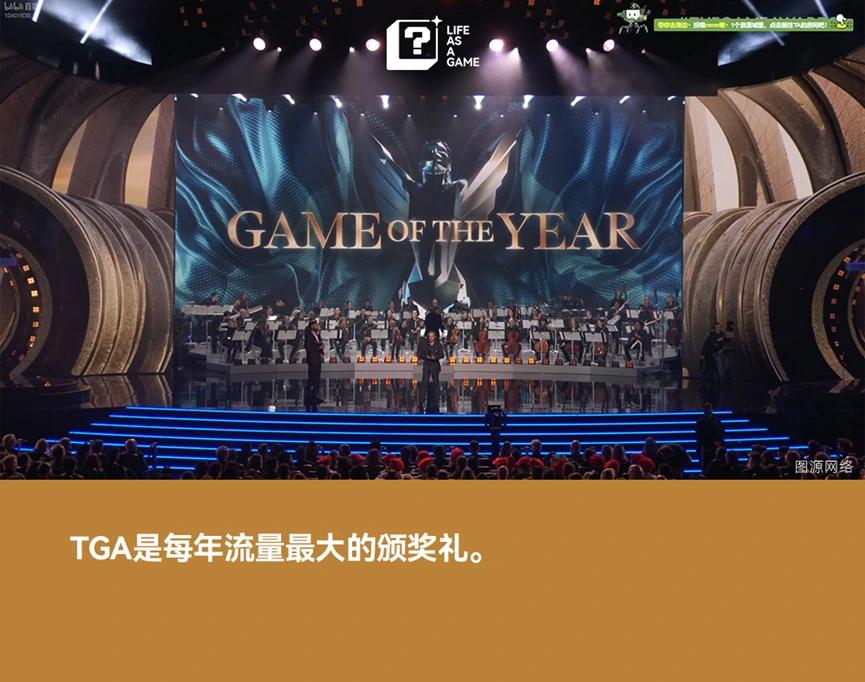
Therefore, when a AAA game is scheduled to be released in autumn, it can naturally leverage more marketing keywords during the awards season. If the work can win an award, no matter the size of the award, it will have the opportunity to be seen by more players, which will help both the publisher's brand and game sales.
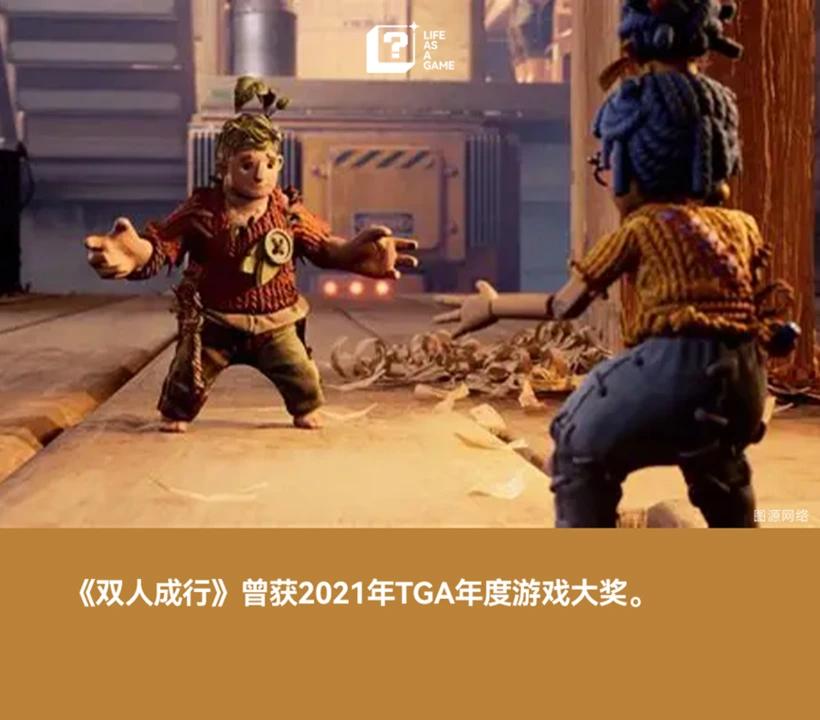
For example, *It Takes Two* sold about 5 million copies in its first year, but after winning the TGA Game of the Year Award, its total sales continued to grow and has now exceeded 30 million copies. Although it cannot be said that this is entirely due to TGA, winning the award obviously gave a huge boost to the game. In every subsequent awards season, the award-winning *It Takes Two* has the possibility of being exposed and noticed by the market again.
The most typical example this year is *GTA6*. Its release date is November 19, which is exactly one day before the TGA nomination deadline, one week before Thanksgiving, and the eve of the Black Friday consumption boom. When Take-Two CEO Strauss Zelnick talked about why the game was delayed last year, he explained it this way: "It is in the same fiscal year, and it happens to be a very good release window."
Having said that, our vision is still limited to the release scheduling logic of AAA games. Then, what do other games rely on to determine their release dates?
Three Different Scheduling Ideas
Apart from AAA games, we can roughly divide game works into three categories, and these three types of games have their own scheduling strategies.
The first category is low-to-medium cost games. Their only scheduling strategy is one word: "avoid".
In the content industry, the game industry has relatively higher industrialization requirements, relatively larger capital investment, and relatively higher market certainty. Therefore, a large-scale game operated by a large publisher, with the bonus of a big IP and the endorsement of a large platform, has a very high probability of crushing independent games or 2A works in terms of sales and revenue.
This means that when AAA masterpieces generally occupy the fall window, low-to-medium cost games must choose another auspicious date. Otherwise, once the schedules collide, the marketing offensive of AAA games will leave low-to-medium cost games with no exposure opportunities. If no players see them, no matter how unique the game creativity is, it will be difficult to stand out.
Therefore, a large number of low-to-medium cost projects can only look for unoccupied gaps in the whole year. According to a rough estimate of the current industry situation, there are only four truly available windows in the whole year, roughly falling in early January, mid-April, early May and mid-September, and they also need to avoid new product activities of specific platforms and multiple large promotions throughout the year.
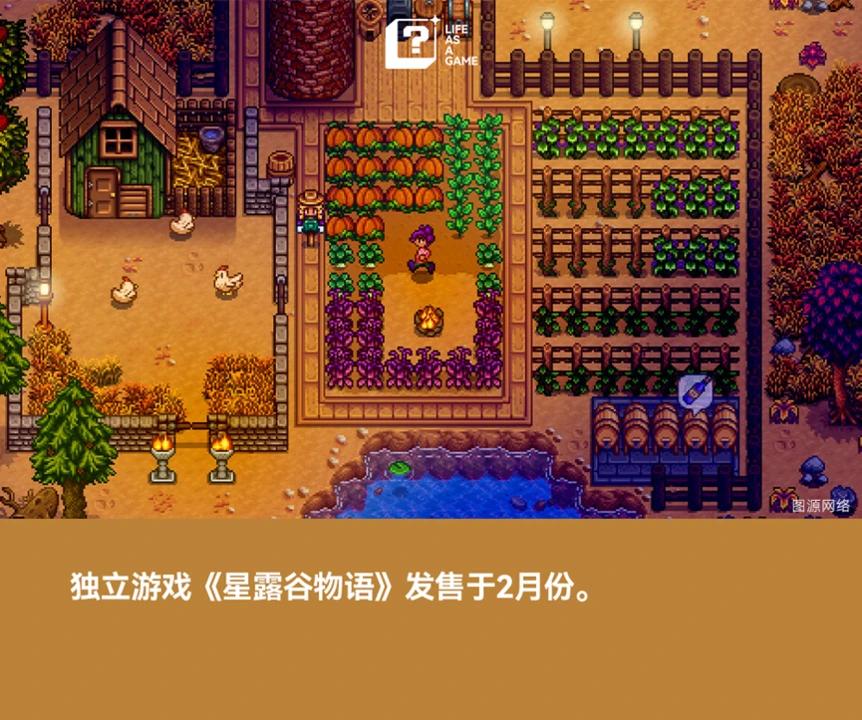
Mature publishers will also design a complete set of scheduling plans according to the characteristics of the release window to avoid mutual consumption of products. Take Sony as an example, its most important work of the year is generally placed in autumn to hit sales and awards, while the second-tier works are arranged in spring or early summer to fill the gap.
The release date of a game is very often finalized after the release date of another game is confirmed. Like many new products this year, their original schedules were adjusted because of the scheduled release of *GTA6*.
The second relatively special scheduling mode appears in annual sports games.
For example, EA's *Madden NFL* is fixed to be released in mid-August every year, and *EA Sports FC* is fixed to be released at the end of September every year. These games have a stable audience base in the European and American markets, and their schedules are weakly related to other factors, simply to correspond to the schedule of real sports leagues, so that fans of sports games can watch the games in reality and enjoy the fun in the game at the same time.
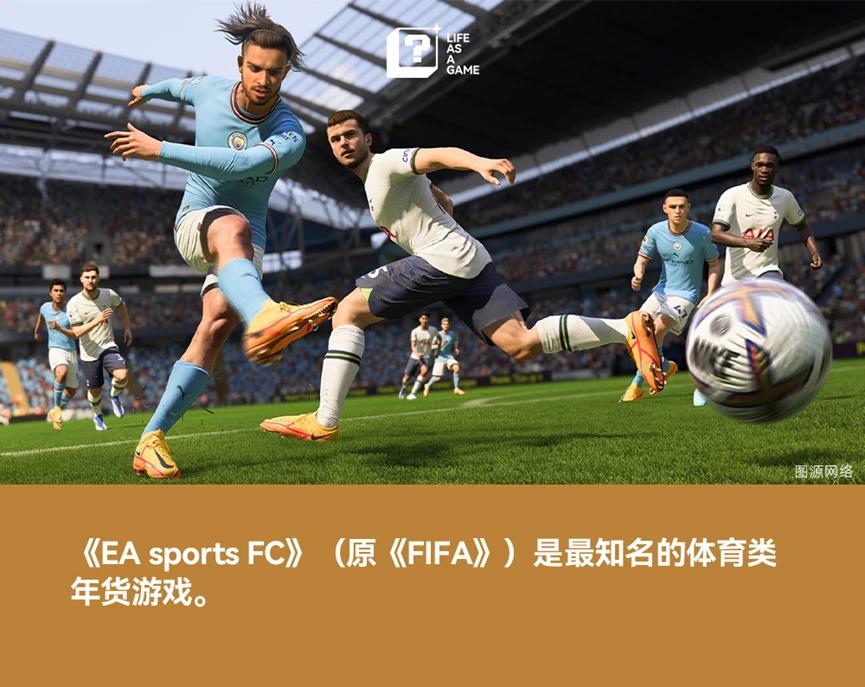
The last scheduling strategy comes from non-one-time-purchase long-term operation games. Domestic F2P games are the representative of this category.
Combined with the data, there is an obvious peak season for the launch schedule of new domestic games, that is, the summer vacation window. This July, nearly 20 new games were launched on the market, which is significantly higher than other months.
Obviously, the reason why the summer vacation window becomes a peak season is quite similar to the logic of the European and American holiday season. As students have vacations, players' available playing time increases, and the promotion rhythm of developers also unfolds accordingly.
However, it should be noted that for F2P games, the public beta date is only an entry point, and what really determines success or failure is the long-term operation level.
After all, the revenue curve of one-time-purchase games can be basically determined in the first month, while the revenue of service-oriented games depends on rounds of content updates in the following years. Therefore, the key time node that the latter pays more attention to is often not "what date to go online", but "how often to deliver new content to players after launch".
Take miHoYo's *Genshin Impact* as an example. Since its launch in 2020, this game has maintained an update rhythm of one version every 42 days, with almost no interruption over the years, with only very few exceptions. *Zenless Zone Zero*, the new work launched by Perfect World this year, also adopts a schedule of one version every 42 days