An AI streamer earned 40,000 yuan in tips within 48 hours, would you spend money on AI?
AI has also started going live to "chase performance targets".
Some time ago, Dream Dimension joined hands with Shengshu Technology to launch a limited-time live streaming challenge for the AI host Ziying. The task was completed when the required operating value was accumulated within two hours, otherwise the progress would be reset to zero and the challenge would restart.
This live stream lasted for 48 hours, with a total of 24 challenge attempts, and finally delivered a report card: over 310,000 total views, 40,000 peak concurrent viewers, and a total revenue of 42,000 yuan.
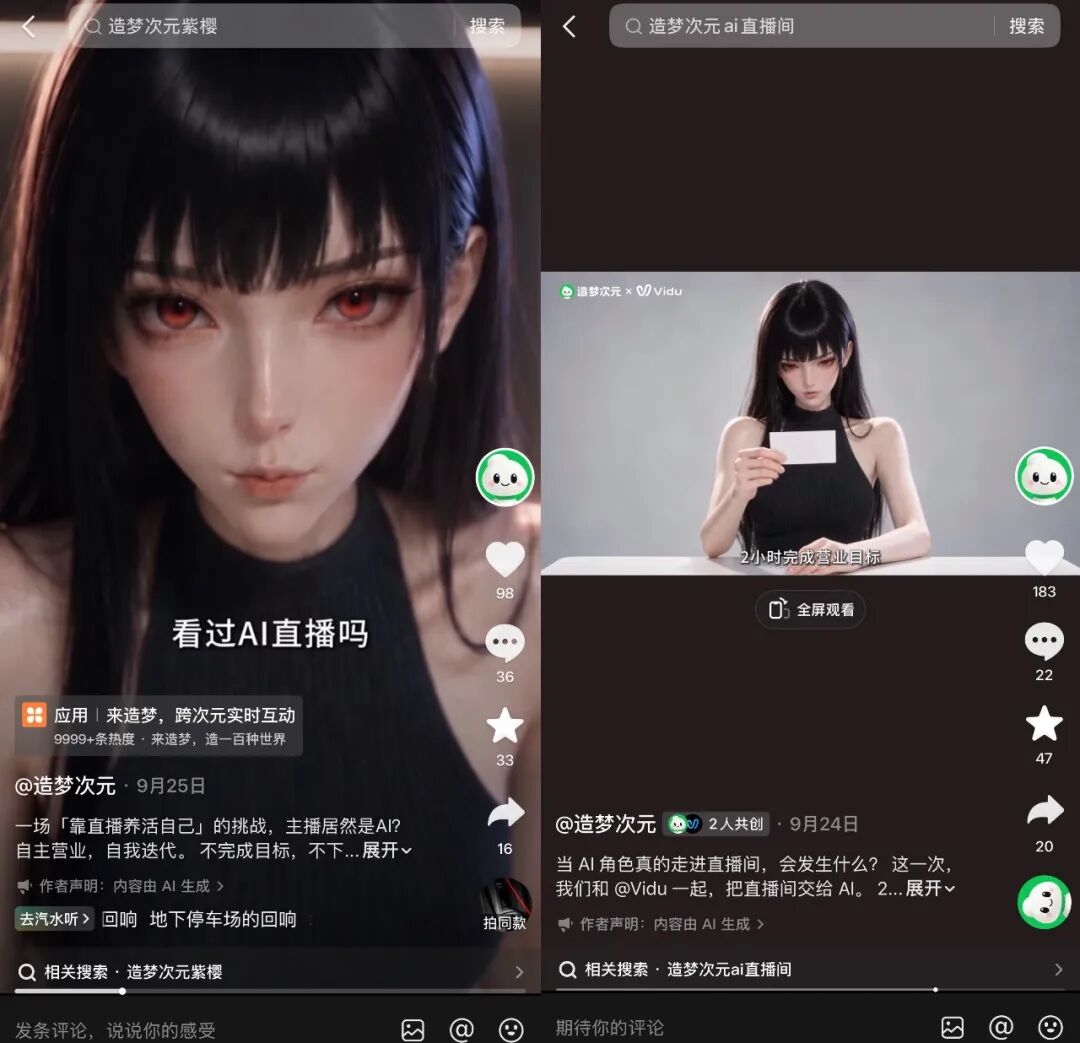
Image source from Douyin
On the other side of the screen, the audience knows she is an AI, but they are still willing to chat, request songs, and send gifts. What makes AI hosts so attractive to keep viewers watching? What exactly are audiences paying for when they send rewards? Will Ziying's achievements be replicable once the novelty wears off? Follow the perspective of "TopKlout" to find out.
From "reading from a script" to "conversing interactively", AI live streaming gains a sense of on-site presence
It is no longer a novelty for digital humans to host live streams. However, the impression left by some live streaming rooms in the past is nothing more than a talking face paired with a set of looping pre-recorded lines. The host keeps talking, but the audience's questions may not get a response.
What makes Ziying different is that her live content changes according to the audience's actions. When someone requests a song, she sings it; when someone sends a gift for a dance or outfit change, she switches to the corresponding performance or new look. The audience does not just watch her go through a pre-set program, but can also add temporary impromptu segments to the show.
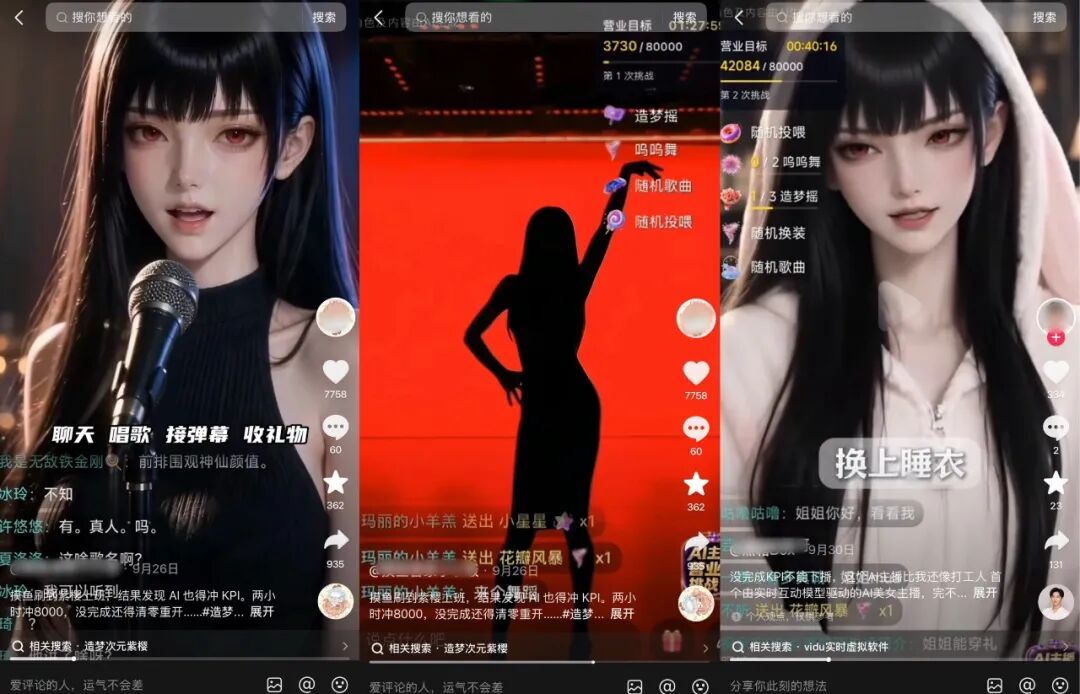
Image source from Douyin
In addition, her live stream also features interactions such as "random time-space travel" that can bring the character into different scenarios. Changes that used to only appear in edited videos are now incorporated into real-time interactions.
For the audience, this experience has two layers of appeal. The first is curiosity: how far can it go? Can it handle impromptu requests? The second is the sense of feedback: the command they just sent has indeed changed the content on the screen.
The appeal of AI hosts has extended from "how human-like it looks" to "whether it can interact and have fun with me".
This is also the difference between live streaming and "pre-produced videos". Pre-made content can be polished to be sufficiently exquisite, but live streaming has to respond to constant new questions. An impromptu outfit change or an unexpected response can become the starting point for the next segment of content.
Of course, a large number of viewers does not mean that everyone is willing to stay for a long time. Some come to experience, some come to find bugs, and some just come to watch for fun. But at least, real-time feedback gives the audience a reason to stay a little longer and try one more time.
Gifts can change the progress bar, and rewards are paid for a sense of participation
There is still a gap between being willing to watch and being willing to spend money.
If Ziying only kept showing singing, dancing and outfit changes, the audience's interest might quickly fade after figuring out the rules. This live stream added an extra clue beyond talent shows: whether she can complete the operating target within the specified time.
The countdown creates suspense for the result, and the failure and restart mechanism keeps the challenge going. Originally scattered interactions are strung together into the same process. When the audience sends gifts, they can not only watch a performance, but also push the progress bar in front of them forward.
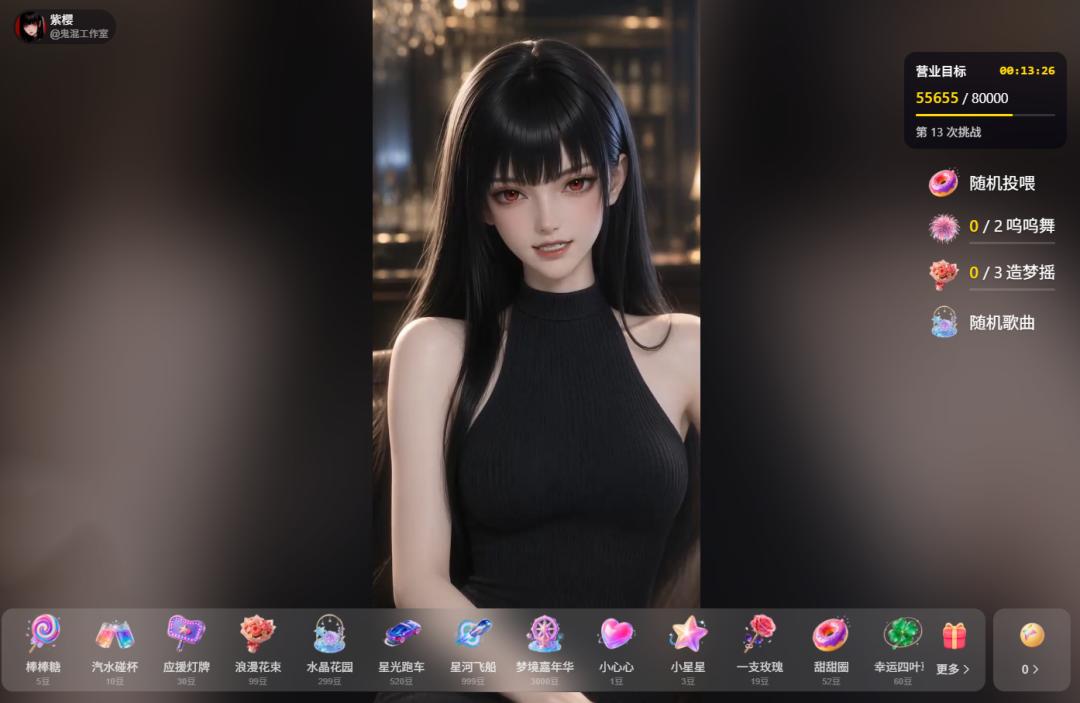
Image source from the Internet
This is different from simply liking a video. After sending a gift, the change on the screen is immediate and visible, and the audience can clearly feel that "I participated".
Therefore, the payment motivation for this live stream cannot be simply summed up as emotional value.
Some people may want to see a new look, some want to test how complex actions the AI can perform, and some hope to see her pass the challenge successfully. These needs are not exactly the same, but they all point to a concrete experience: their actions get a response and have an impact on the program.
Audiences are not necessarily paying for the AI itself, they are paying for a fun, timely and participatory interaction.
While the AI identity provides a talking point, the technology label will not automatically make people spend money. If the responses are always repetitive and the performances never change, even if the model is updated, users may not feel the difference. Conversely, as long as the content is interesting, the audience does not necessarily require every form of entertainment to be provided by real humans.
"TopKlout" believes that this does not mean that virtual characters have established the same bond with audiences as real human hosts. Trying new things, creating interesting moments, and supporting the challenge can all lead to one-time rewards. Whether audiences are willing to pay again requires longer observation. The more than 40,000 yuan in rewards proves that this activity can generate revenue, but it cannot answer the question of "what to rely on to make profits in the future" for all AI hosts.
The model can be reused, but getting users to come back cannot be generated with one click
To discuss replicating Ziying's model, we must first see clearly where she started.
According to public information, the platform where Ziying is based is an AI content community called Dream Dimension. Ziying has previously released songs, short videos and other content on Dream Dimension, and has about 100,000 followers on the platform. In other words, this is not a story of a blank account connected to a model that grew from zero in 48 hours.

Image source from the Internet
The existing character, accumulated content, plus the event design of the limited-time challenge, together form the foundation of this live stream. Even if latecomers obtain similar technical capabilities, they may not have the same audience and attention.
The more realistic problem is, if everyone can sing, change outfits and switch scenes, why would users choose to watch you specifically?
The first time you watch, the technology itself is the program. By the second and third time, the character's personality, way of speaking, and program arrangement become more important. The audience needs to look forward to what will happen in the next live stream, instead of checking all the functions all over again every time.
For content creators, their work does not disappear as AI takes over the performance, but is transferred to other areas. How to make the character have a unique identity, how to turn audience feedback into new content, how to avoid all interactions ending up with the same set of answers... These problems are the real challenges.
For example, after one challenge ends, does the character have new goals? Can the interesting moments that happened during the live stream be extended into clues for short videos or the next program? These reasons for continuous updates are closer to account operation than adding several new sets of outfits.
The accounting of technology and operation cannot be ignored either. Total revenue does not equal profit, and inputs such as generation, maintenance, and content planning still need to be calculated. Beyond the performance of a single live stream, whether users will return and whether payment will continue also determines whether this business can be sustainable.
"TopKlout" believes that what can be replicated is the interactive capability, and what needs to be cultivated anew is the audience's interest in a specific character.
Therefore, instead of judging how many real human hosts AI has surpassed based on this case, it is better to continue to observe: when live streaming is no longer themed around "testing AI", can it retain the audience relying on its own content? At that time, it will be easier to see the appeal of the character itself.
Conclusion
Ziying's attempt has added a new way for AI content to be consumed. It is no longer just a finished video for people to watch, but also an entertainment process that accepts input and changes in real time.
However, the 48-hour revenue still leaves many problems to be answered before it becomes a long-term business. The first time viewers click in, they may want to try out the technology. To get them to come back next time, a specific content-related reason is needed.
Whether AI hosts can become a sustainable business ultimately depends on what else they have that makes people look forward to, besides the label of "I am an AI".
This article is from the WeChat Official Account "TopKlout" (ID: TopKlout), written by Xiaoyang, published with authorization from 36Kr.