The more people receive cosmetic injections, the tougher it gets for medical aesthetic companies.
In 2020, the real estate industry stood at the start of a harsh winter. Real estate firm Jinghan Industrial announced a decision that broke with its long-standing business tradition: the company would bid farewell to the real estate sector and fully pivot to a new business — aesthetic medicine.
Up until the moment of the internal meeting, Jinghan Properties still derived 70% of its revenue from residential development, but it completed the transformation at top speed. It renamed itself "Aoyuan Beauty Valley", divested its real estate assets, and launched products including cold compress patches and lyophilized collagen products.

Before Aoyuan Beauty Valley's aesthetic medicine segment generated any revenue at all, its share price surged by more than 200% in response. Huatai Securities gave its aesthetic medicine business a PE valuation of 140 times[1]. Some stock investors made a pointed comment: Real estate operators are less profitable than hyaluronic acid sellers[2].
But back in 2020, few people seemed to find this absurd. Aesthetic medicine was one of the most attractive businesses at the time, known as "Moutai for women". Elderly men cannot live without Baijiu, and women cannot live without hyaluronic acid.
In that year, hyaluronic acid giant Bloomage Bio went public, and later became the third stock priced at over 1000 yuan on China's A-share market, with a 290-times PE that even made Nvidia look inferior. In the first half of 2021, 37 aesthetic medicine concept stocks rose by an average of 40.94%, and 6 companies saw their share prices rise by more than 100% within half a year[3].
The magic even spread to all kinds of companies that had nothing to do with the sector at first. After Laby, a company that originally made maternity and infant clothing products, bought 36% of the shares of an aesthetic medicine company, it notched 9 consecutive daily trading limit-ups.
Although the abnormal market hype on the A-share market was quickly curbed by visible regulatory forces, in the following years, the aesthetic medicine industry did gain a broader consumer market.
According to statistics from iiMedia Research, the number of China's light aesthetic medicine users reached 31.05 million in 2025. By 2030, the light aesthetic medicine sector is expected to grow into a huge market worth 4357 billion yuan, maintaining a compound annual growth rate of over 15%[4].
More than a decade ago, even actress Siqin Gaowa would try to hide the fact that she received sheep placenta injections, but now celebrities can openly count how many injections they have had on their faces on variety shows. In this year's new round of CPI base period rotation, aesthetic medical services, together with dishwashers and vehicle-used electricity, have been added as new statistical categories.


Top: The famous scene where Yuan Li broke the news, Bottom: Ni Ping sharing her aesthetic medicine experience on a show in recent years
However, as aesthetic medicine booms everywhere, aesthetic medicine companies are getting further and further away from achieving outstanding business results.
In the first half of 2026, the net profit of Bloomage Bio dropped by 25%, that of Juyuan Bio dropped by 28%, and that of Haohai Biological Technology dropped by 47%; the domestic aesthetic medicine revenue of Huadong Medicine was directly cut in half.
What went wrong with these aesthetic medicine companies?
An Extremely Profitable Industry
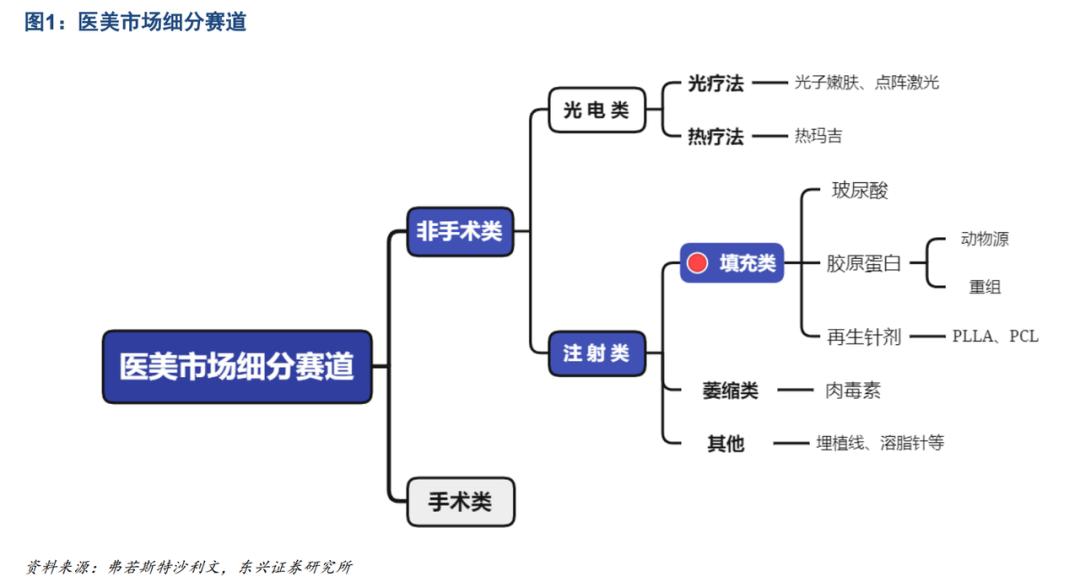
Aesthetic medicine is divided into two categories: surgical and non-surgical. Surgical aesthetic medicine requires invasive operations, such as prosthesis implantation and liposuction for body shaping. Non-surgical aesthetic medicine includes energy-based projects centered on laser and radio frequency, as well as injection projects dominated by hyaluronic acid and botulinum toxin.
The latter is what is commonly referred to as light aesthetic medicine now.
For a very long time, light aesthetic medicine has been one of the most profitable industries outside the scope of criminal law regulations.
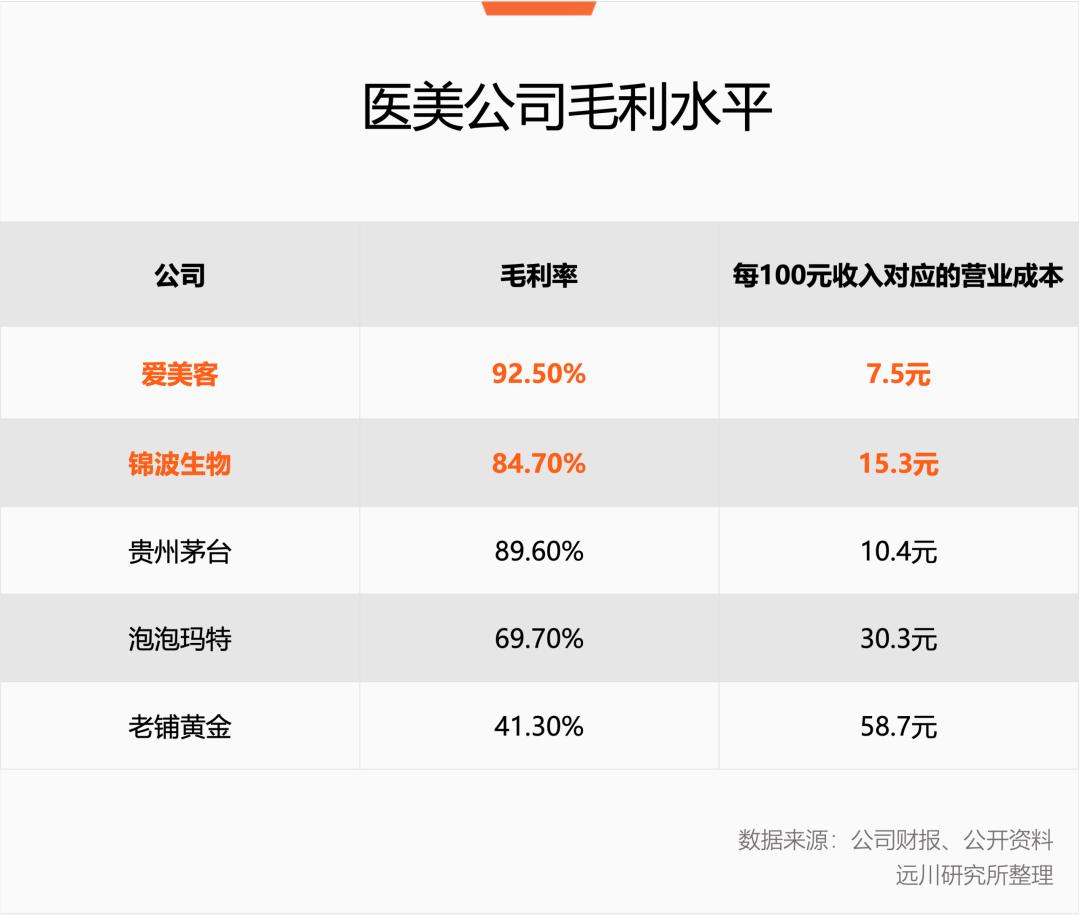
The gross profit margin of upstream manufacturers has long remained at 80%-90%. The level of excess profit is so high that even Laopu Gold would shed tears and Pop Mart would feel ashamed, and the only comparable business is Kweichow Moutai.
Compared with surgical aesthetic medicine, light aesthetic medicine is naturally a highly standardized business with high repurchase rates.
Surgical aesthetic medicine is highly dependent on the operational skills of doctors. In a world where most people do not even want to get an intravenous drip injected by an intern nurse, top doctors with excellent aesthetic judgment and superb technical skills are extremely difficult to replicate in large numbers.
In 2016, Grand Plastic Surgery, one of the three major plastic surgery hospitals in South Korea, was sued for carrying out "ghost surgeries". To boost order volume, the hospital would attract patients with the reputation of famous doctors, then replace them with dentists and ENT surgeons to perform the operations after the patients were anesthetized. More than 33 unfortunate patients were defrauded[6].

In 2016, 24-year-old college student Kwon Dae-hee underwent a zygoma surgery at a plastic surgery hospital in Seoul and encountered a ghost doctor, and unfortunately passed away. Source: Shangguan News
On the other hand, the repurchase rate of surgical aesthetic medicine is very low. Except for a very small number of people who repeatedly undergo plastic surgery, most consumers will not get a nose job or double eyelid surgery again every few months.
In contrast, although light aesthetic medicine also requires physicians to hold professional practicing qualifications, its specific operations mainly rely on injection agents and photoelectric equipment, making it easier to standardize overall than surgical aesthetic medicine.
According to the "Administrative Measures for Medical Aesthetic Services" issued by the National Health Commission, a chief physician in cosmetic surgery needs more than 6 years of professional clinical experience, while a dermatologist only needs more than 3 years of relevant experience[8].
Last year, reporters from China Central Television's "Rule of Law Online" conducted an undercover investigation into underground crash courses for aesthetic medicine injections. The courses were held in the conference rooms of budget hotels, where students learned theories for two days, and then directly injected each other on the third day, which was even faster than the onboarding process for summer workers at milk tea shops[9].
Formal institutions do not operate so recklessly, but automated equipment has emerged now. For example, the Korean DermaShine water light device can inject products into multiple parts at one time, further reducing the requirement for doctors' manual skills.

Image source: CCTV News
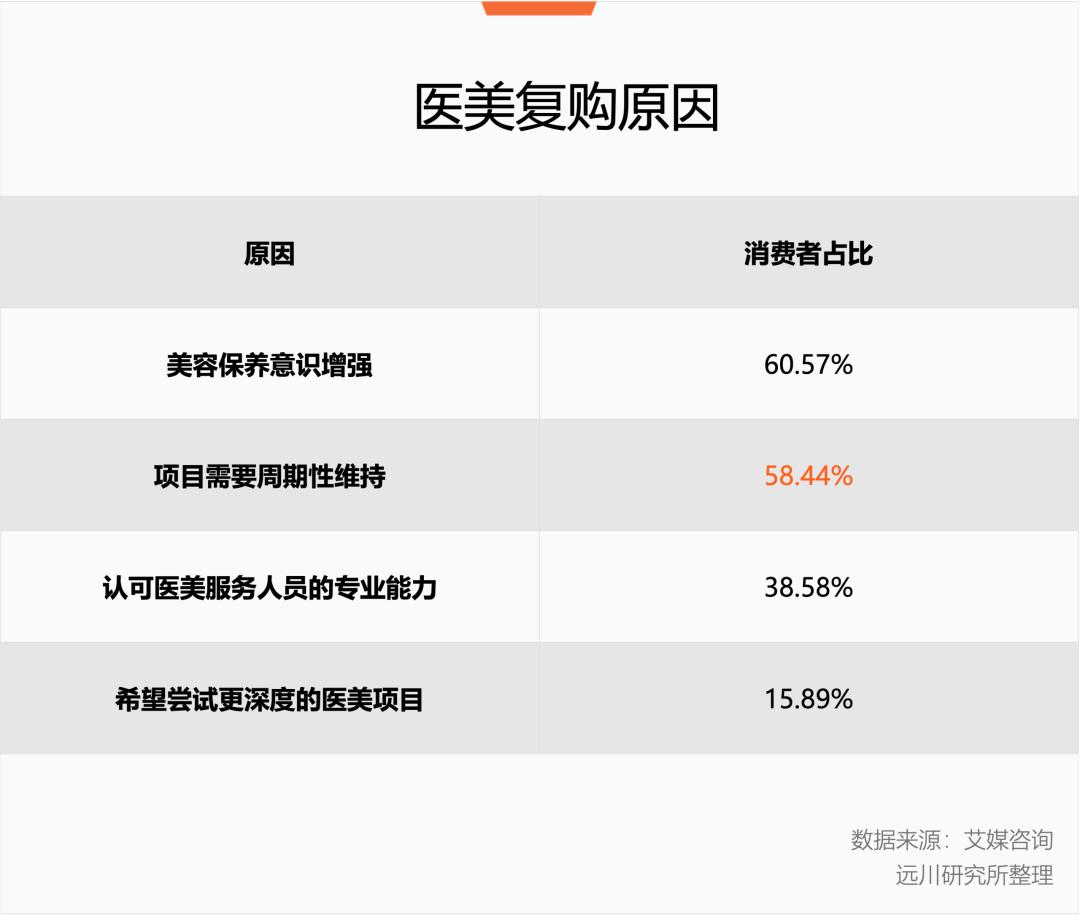
At the same time, light aesthetic medicine naturally requires repurchases. A breast implant can last for 20 years without replacement, but if you do not top up botulinum toxin injections every few months, wrinkles will reappear. After seeing the smooth and elastic skin brought by the effect of youth-enhancing injections, only a small number of people can face their original appearance again after the "magic" fades away.
A survey by iiMedia Research shows that more than half of light aesthetic medicine consumers will make a repeat purchase at least every six months[10]. Under ideal conditions, this is a perfect business with "lifetime repurchase potential".
However, standardization and high repurchase rates can only explain the business model, not the huge profits. After all, the public drinks a cup of milk tea every day and eats hot pot once a week, but that does not make Mixue Ice City and Haidilao earn money effortlessly.
The core reason why light aesthetic medicine manufacturers can obtain huge profits is licensing.
The Licensing Business
Although it is called "light", light aesthetic medicine injections are always invasive medical behaviors that are subject to strict supervision.
Injection agents such as hyaluronic acid and collagen require Class III medical device registration certificates approved by the National Medical Products Administration (commonly known as "Class III Medical Device License"); botulinum toxin, as a potent neurotoxin, is even regulated as a pharmaceutical product.
To obtain the license, enterprises need to go through product R&D, testing, clinical evaluation, registration application and other procedures, which usually takes 3 to 5 years.
Even after obtaining the license, the product is restricted by its approved scope of application. For example, if the approved scope of a certain hyaluronic acid material is "improving neck wrinkles", using it to improve crow's feet at the corners of the eyes is considered illegal operation.
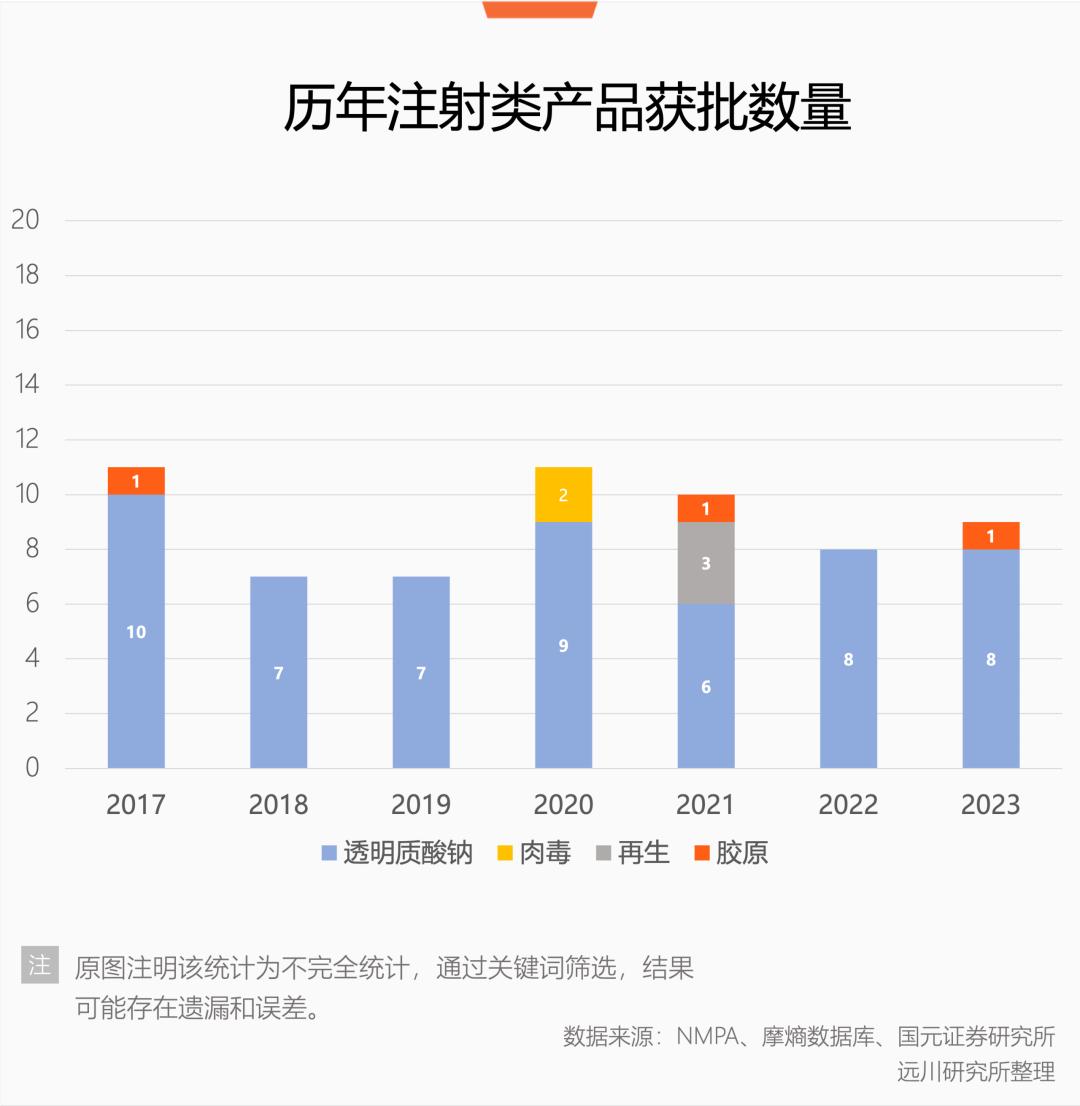
The long R&D cycle and strict approval process have kept a large number of potential competitors out of the market. In 2021, there were fewer than 20 domestic enterprises that obtained registration certificates for hyaluronic acid for aesthetic medicine injection[11]; the botulinum toxin market is even more concentrated, with only one domestically approved product, Hengli.
In the context of scarce supply, upstream aesthetic medicine manufacturers almost monopolize the pricing power. After all, if you do not sell it, there are plenty of other customers who want to buy it.
Take the most popular HiBody injection in recent years as an example. In 2016, HiBody obtained the first domestic Class III medical device license for hyaluronic acid "to correct moderate to severe neck wrinkles", and for the following eight years, it was the only license for the same indication.
The absolute market dominance made its parent company Bloomage Bio earn huge profits. According to statistics from Dongxing Securities[12], the raw material cost of HiBody is 25 yuan, and its ex-factory price is 351 yuan, marking a 14-fold increase.
With a license in hand, eager consumers and downstream institutions will rush to cooperate, and the money printing machine runs day and night. All aesthetic medicine manufacturers have experienced this dreamlike period of easy profits.
In April 2021, Ellansé was approved as China's first imported PCL regenerative filler product. Two months after its launch, it had signed more than 120 partner hospitals and received more than 100 million yuan in advance payments[13]. Its parent company Huadong Medicine urgently required its Dutch subsidiary to build new factories to expand production capacity.
Before 2025, Juyuan Bio owned all three Class III medical device licenses for recombinant collagen injection in China. Its product Viyese's terminal price once approached 7000 yuan per vial, and one injection was worth 5 bottles of Feitian Moutai.
But it is precisely the huge profits brought by licensing that have created competitors for aesthetic medicine manufacturers themselves.
As the capital market realized that the light aesthetic medicine sector has huge potential, the market suddenly became crowded.
On the one hand, established enterprises are accelerating the expansion of their product portfolios through R&D and acquisitions.
On the other hand, a large number of new players have entered the market. In 2021, 28 domestic aesthetic medicine enterprises completed financing, 80% of which were upstream manufacturers, drawing institutions including Tencent, SoftBank, IDG and GL Ventures to rush into the sector.
Some enterprises that originally had nothing to do with aesthetic medicine have also crossed into the sector. In addition to the previously mentioned Jinghan Properties that had no prior connection to the industry, Lepu Medical, a leading cardiovascular medical device manufacturer, produces youth-enhancing injections, and Giant Biotech and Fullerene, which originally made facial masks, are also developing injection products.
The trend of cutthroat competition has finally spread to the aesthetic medicine industry.
Dividends Fading Away
In April 2026, Juyuan Bio reached a cooperation with the aesthetic medicine platform New Oxygen to supply customized Viyese products to the latter, with the lowest price per vial being only 1075 yuan, which is a steep drop compared to its initial price of more than 7000 yuan.
Just two years ago, New Oxygen was still a thorn in the side of Juyuan Bio. At that time, some institutions on the platform carried out user acquisition activities, selling Viyese at a 20% discount. Juyuan Bio issued two consecutive statements, accusing New Oxygen of "malicious low-price dumping".
