In the era of "pragmatic daily living", snack categories are squeezing their way onto the fast food competitive playing field.
In the era of "purely living a down-to-earth life", snack categories are busy with upgrading
In the second half of 2026, the trend of "purely living a down-to-earth life" began to prevail, and this buzzword has become the most appropriate keyword for consumption.
On Weibo, the topic "the whole nation has entered the era of purely living a down-to-earth life" hit the hot search list, with a total reading volume of 44.546 million person-times. On Xiaohongshu, the views of content related to "people who live a purely down-to-earth life" are close to 7 million...
Consumers no longer pay for labels and social attributes, but only pay for products that are "practically usable". Their consumption decision-making has also shifted from "price-sensitive" to "value-sensitive". Every time they eat out, they will calculate carefully whether the money is worth spending and whether the meal is worth the cost.
Against this backdrop, the snack category is the first to be affected.
According to the "2025 Blue Book on the Development of Chain Snack and Fast Food Stores" released by GeoQ Data, 52% of the 118 typical brands in 2025 fell into contraction or stagnation, a significant increase from around 40% in the previous year. The expansion of chain snack and fast food brands is concentrating on leading players, and most brands are not seeing better performance even with the recovery of store openings.
Facing the "value test", snacks that only satisfy cravings have become the first option to be abandoned, making transformation an inevitable trend. As a result, the K-shaped differentiation of the category has started, and its development path has become increasingly clear.
One direction is to move upward, seeking incremental growth from the fast food sector: snacks not only need to satisfy cravings, but also make people full, taste good, and have sufficient reasons for consumers to choose. Snacks are no longer willing to play the "supporting role" in fast food, but are actively stepping into the rigid demand market to grab growth from the fast food track.
The first to complete the transformation is braised food.
Braised food has been under pressure in recent years. Consumers no longer want to spend 30 to 40 yuan on braised food just to satisfy their cravings, but want a full meal that can satiate them. Brands have begun to renovate their stores, add dine-in seats, launch braised rice noodles and braised rice bowls, and add staple foods to their product systems.
As a result, we can see that Juewei sells 4.9-yuan hot braised cups, which contain rice noodles, hot braised soup and side dishes. More than 700,000 copies were sold on e-commerce platforms in the first month after launch, and the passenger flow at lunch peak hours increased significantly. Huangshanghuang opened a special hot braised store in Nanchang, placed tables and chairs, and directly entered the fast food scenario with 8.9-yuan hot braised mixed rice noodles and 23.9-yuan "one-person meal" set meals. Zhou Hei Ya took a more straightforward step by launching the sub-brand "3 Jin Mixed · Small Pot Fresh Braised", whose store model is fully built around "fresh braised food + staple food".
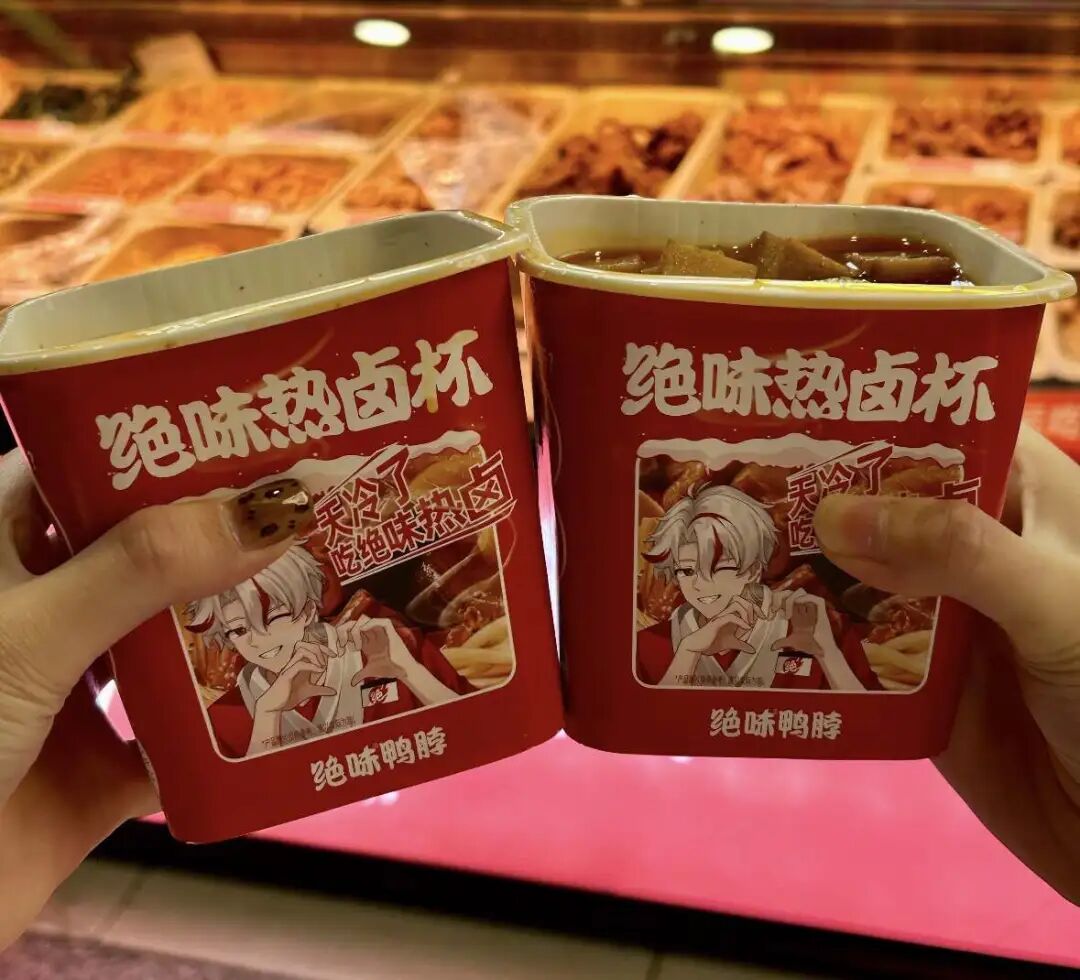
Data from iiMedia Research also shows that the growth rate of the braised food for side dishes scenario in 2025 is about 11.9%, significantly faster than the overall braised food market, and family dining tables are becoming an incremental source of braised food consumption.
The braised food itself remains the same, but what brands want to sell is no longer just a box of braised food, but a bowl of steaming rice that can satiate people.
The trend of turning snacks into staple food is also obvious in the fried skewer track.
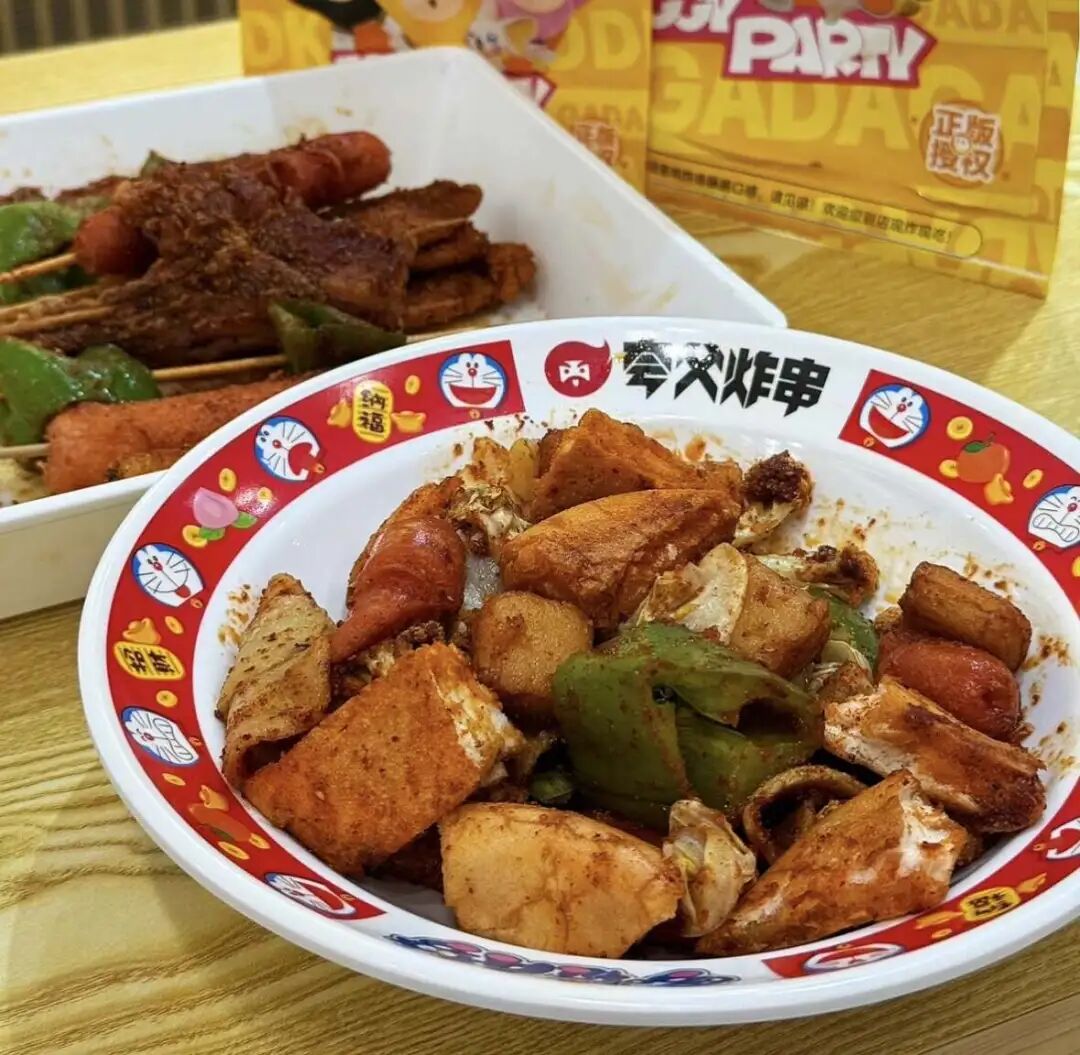
For example, since 2025, Kuafu Fried Skewers has successively launched sour and spicy rice noodles, mixed pancakes and mixed rice bowls, and the proportion of staple food sales has exceeded 20%. The consumption logic of the fried skewer category is changing quietly: in the past, people bought a few skewers to eat while walking, but now they order a bowl of rice noodles with a few fried skewers to get full while satisfying their cravings. Since consumers will match staple food by themselves anyway, brands simply provide them directly. As the experience improves, the customer unit price also rises.
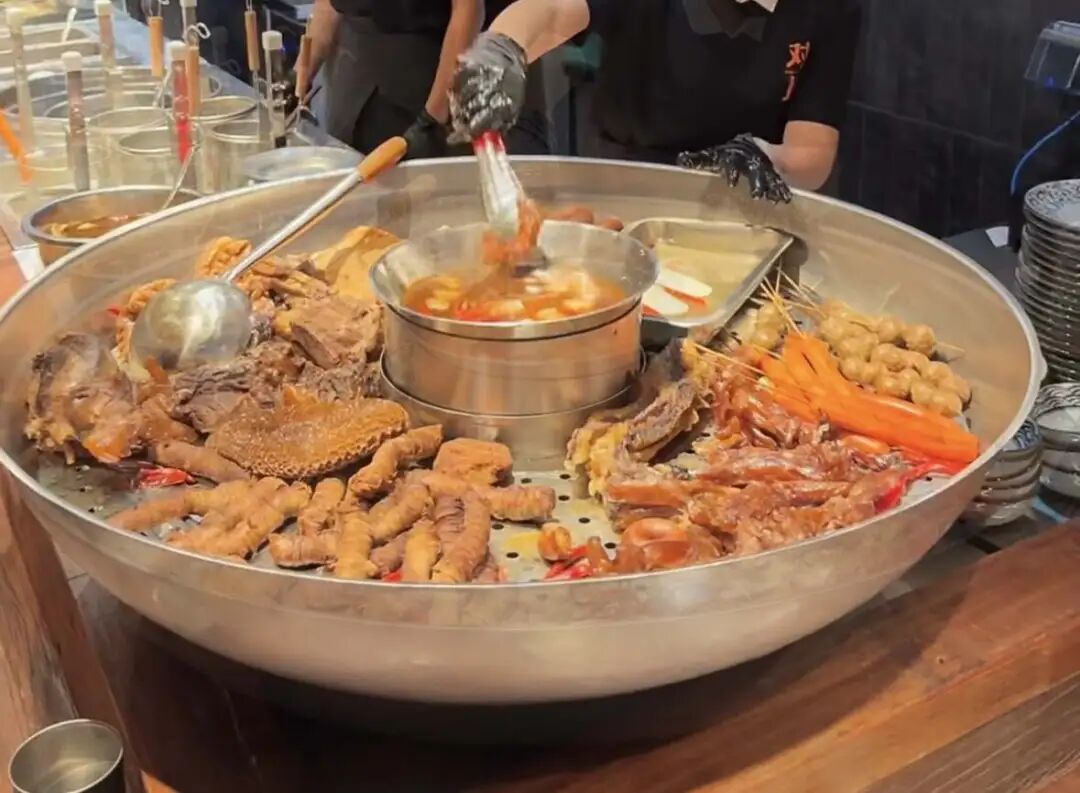
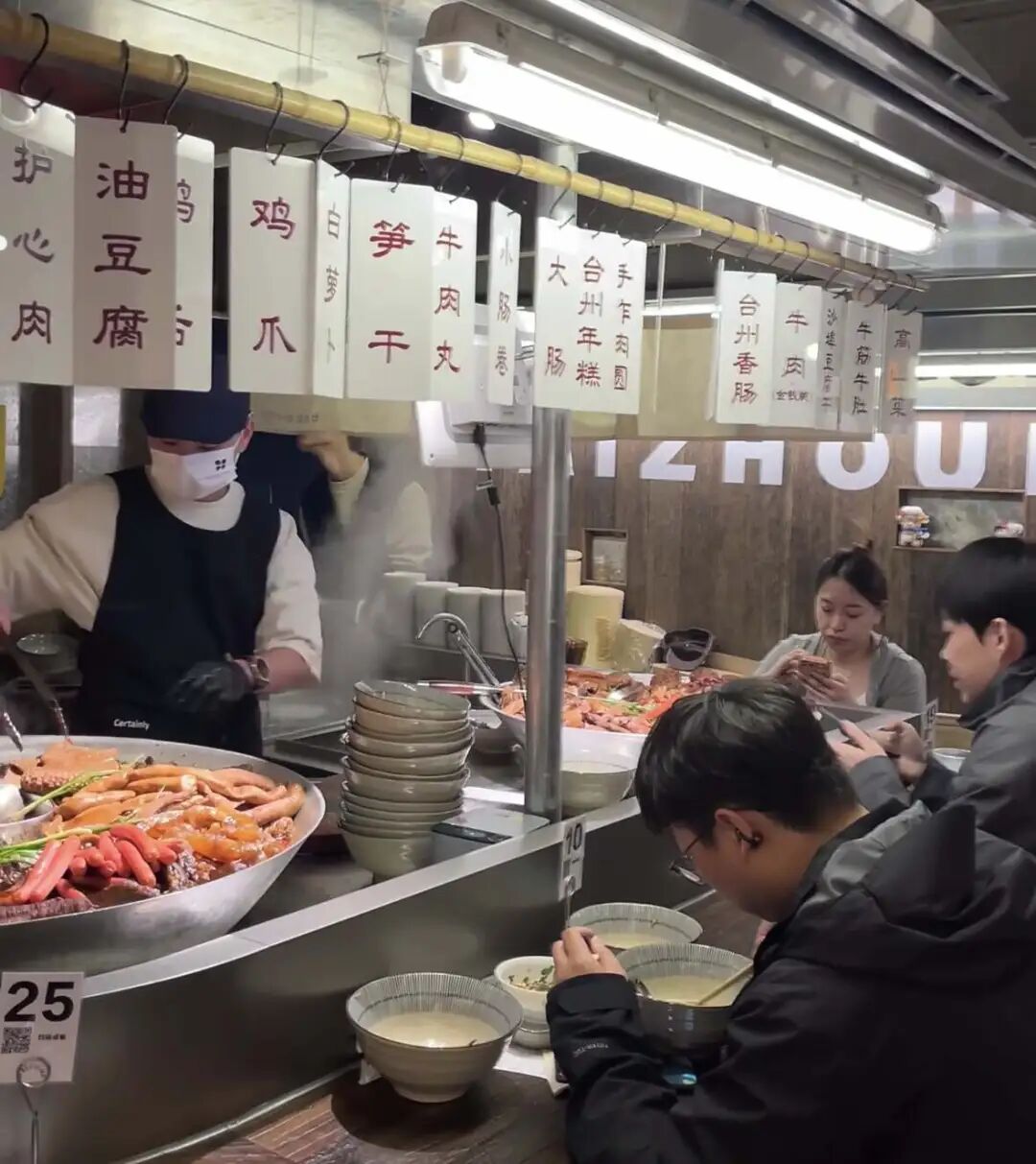
Counter-style Lu Zhu (traditional pork offal stew) has taken another path: instead of directly making fast food, it upgrades snacks into casual dining.
Recently, a number of trendy Lu Zhu restaurants have emerged in Shanghai, Hangzhou, Beijing and other cities. These restaurants move the big pot of Lu Zhu to the counter, where chefs scoop, cut and plate the food on the spot, and customers sit around the counter watching the whole process, with the per capita consumption ranging from 40-50 yuan to 60-70 yuan.
It is still the same pot of Lu Zhu. In the past, people ate it while standing for 20-30 yuan, but after changing to the "counter-style" scenario, the customer unit price has more than doubled. The stores are also developing the "Lu Zhu +" model, with more than 50 product lines covering Lu Zhu, snacks, staple food and drinks, turning "a bowl of Lu Zhu" into "a full meal", and even an experience that people can sit down and enjoy slowly.
Snacks develop upward to grab traffic and increase customer unit price
The three paths look different, but they are all competing for traffic beyond the snack sector.
The consumption frequency is declining, and "craving satisfaction" is the first to be sacrificed. The snack category is inherently at the end of consumption decision-making, which is optional and most likely to be omitted. To avoid being omitted, it can only move closer to the rigid demand market. Therefore, all brands are sparing no effort to add staple food, complete upgrades, step into the fast food circle, and what they are actually competing for are only two things: consumption frequency and customer unit price.
First, let's look at consumption frequency.
Craving satisfaction is a random demand that people only buy once in a while when they think of it; eating is a rigid demand that happens three times a day. By putting snacks into the category of "a full meal", the consumption frequency is raised from "occasional" to "daily". Stores can operate around the clock, and their turnover no longer depends on luck.
Next, let's look at customer unit price.
A portion of fried skewers costs 7-8 yuan, a box of fried chicken costs more than 10 yuan, which are priced as snacks; if they are sold as braised rice bowl or fried skewer rice bowl set meals, they are priced as a full meal, so the customer unit price can naturally be much higher, and it also drives associated consumption. With staple food as the anchor and snacks as the supplement, the customer unit price and repurchase rate rise at the same time, and the store's profit model can be optimized.
Finally, it is the sense of value.
Consumers are gradually becoming immune to low prices. Being careful with money does not mean only chasing cheap products, but focusing on "value for money". The popularity of counter-style Lu Zhu is a proof: the same pot of braised food is moved to the counter, and customers watch the chef scoop and cut the food on the spot, so they are willing to pay more and sit down to enjoy the meal slowly. The upward development of snacks is essentially re-pricing for themselves, from pricing based on "craving satisfaction", to pricing based on "a full meal", and then to pricing based on "dining experience".
Snacks develop downward: smaller, lighter and more flexible
The K-shaped differentiation of the snack category is accelerating. One direction is upward, moving towards "a valuable full meal", while the other direction is downward, developing in a smaller, lighter and more flexible way, which also coincides with the current mainstream expansion mode in the catering industry.
For example, Huang Ji Huang launched its community sub-brand "Men Xiao Guan", reducing the area of its mall stores to about 100 square meters, streamlining SKUs to more than 20, cutting the food serving time to 5-10 minutes, and lowering the per capita consumption from over 150 yuan to 50-60 yuan. Another example is Malan Ji, which launched the new brand "Xiao Ma Liu" to enter the segmented market with more streamlined SKUs.
"Small" is becoming a major trend in the current catering industry. Reflected in the snack category, more and more new brands with small storefronts are appearing on streets and alleys, selling fried chicken, waffles, oden and other products. Snack brands open small stores to embed themselves in every corner of the city in a more flexible way. At the same time, the price continues to drop to attract consumers with more extreme cost performance.
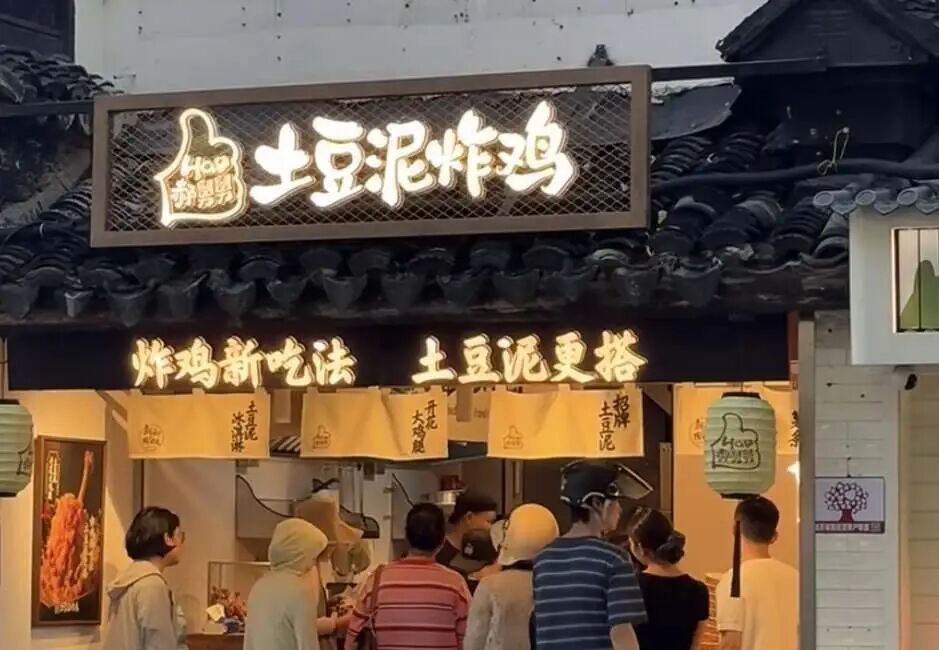
Snacks are getting smaller, prices are going down, and the operation model is getting lighter. Behind this is the reduction of costs: the store area is shrunk, and rent, decoration and labor costs are all reduced accordingly, so the single-store investment threshold drops from hundreds of thousands of yuan to more than 100 thousand yuan. Consumption is cautious, and investment is also cautious. For the unpredictable entrepreneurial path, it is better to try and make mistakes with small costs, and run one small store well first.
This is followed by the improvement of efficiency. The limitation of small area also forces brands to streamline their SKUs, shorten the operation line, and speed up food serving. The floor efficiency in the small space is greatly improved.
Finally, there are the benefits brought by flexible site selection. Small stores are small, but they are closer to consumers. Community stores and street stalls do not rely on one-time "tourist business", but survive on high repurchase rate. With close distance and high cost performance, the purchase frequency will naturally increase.
Upward & downward: the breakout of snacks is still full of difficulties
No matter developing upward or downward, the snack category is facing the limitation of consumers' inherent cognition.
In the inherent cognition, snacks are low-priced. Once a brand tries to break through upward by adding staple food and improving experience, it must give consumers a proper reason: why should they pay the price of a fast food meal for an "upgraded snack"? Besides, there are already so many good choices in the original fast food track.
This requires brands not only to build up sufficient sense of value, but also to have their own characteristics. What consumers experience should not be just "a snack with some staple food added", but a real meal, a meal with unique characteristics, which can be recognized by consumers at a glance.
In the direction of making stores smaller, the challenges are even greater. The flip side of "flexibility" is "vulnerability". Small stores do not have the multi-scenario carrying capacity of large stores to buffer the decline of single customer group or single time period. Meanwhile, the lower entry threshold means the lack of uniqueness of stores, and serious product homogenization.
The miniaturization of stores truly tests whether brands can achieve accurate product positioning, low cost, full operation hours and stable repurchase rate at the same time in a very small space.
No matter upward or downward, the K-shaped differentiation of snacks is not two opposite paths, but a "value reshaping" of the category, which is extending from the fast food sector to the snack category. All kinds of upgrades of brands need to make consumers re-believe that their money is well spent.
In the era of "purely living a down-to-earth life", no one can really give up snacks, but people no longer pay casually just to "satisfy cravings", but pay for a meal that "makes you full, cost-effective, and worth choosing".
The upward and downward development of snacks adjusts not only products and prices, but also its position in consumers' minds, turning it from an optional "craving-satisfying" choice to a stable option in three meals a day.
This article is from the WeChat official account "Restaurant Owner Internal Reference", author: Neicanjun, and is authorized to be released by 36Kr.