The best monetization opportunity for embodied intelligence: go all in to sell to large model companies
On October 22 Beijing time, Wang Xingxing shouted "Believe, Believe in AI as Much as Possible" at the 2026 World Physical AI & Unitree Partner Ecosystem Conference held today. Earlier on the 12th at the 26th China International Industry Fair, he stated that the biggest mistake he made in the past was not paying enough attention to AI.
The reason why Wang Xingxing, a representative figure in the embodied intelligence field, expressed such emotion is the recently released ChatGPT-6 Astra model. When testing the capabilities of the GPT-6 Astra model with Unitree's humanoid robots and other forms of robots, Astra demonstrated amazing capabilities — robots can complete tasks such as painting, planning, and navigation with zero training.
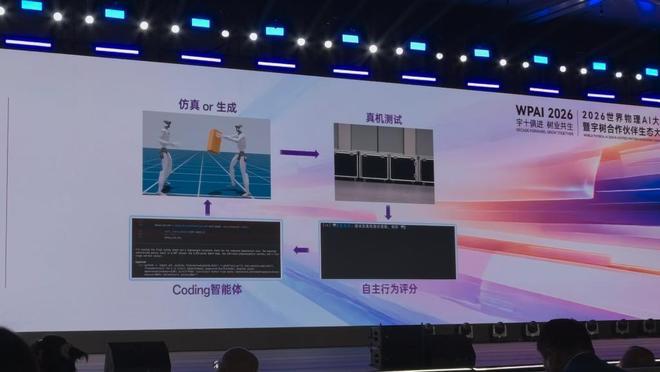
Astra's capabilities completely impressed Wang Xingxing, leading him to judge that the GPT-7 to be released next year may completely break through the bottlenecks in embodied intelligence. What Wang Xingxing did not mention is: This also puts embodied intelligence companies in a life-or-death crisis — once large model companies that have the ability to break through embodied intelligence bottlenecks step into the embodied intelligence field, where is the way out for existing industry players? (After all, the A-share IPO path has been basically blocked by Unitree)
Moreover, in fact, more and more large model companies have been exposed to plans to enter the embodied intelligence field. Foreign OpenAI has confirmed that it will develop in-house, and top domestic large model companies including DeepSeek, Kimi, Zhipu and others are all planning to get involved in embodied intelligence.
Different companies have different ways of entering the embodied intelligence field: 1. OpenAI's in-house R&D route; 2. Zhipu's route of investment, joint venture + open source ecosystem; 3. DeepSeek's "ontology + brain" investment connection route, etc.
Sam Altman said in the latest podcast interview Sources that he will definitely work on embodied intelligence, including developing humanoid robots and robots of other forms (such as special robots for data centers), and expects to come up with a demonstrable prototype in 2027.
Sam Altman's confidence comes from his company's advanced large model capabilities.
In addition to OpenAI confirming in-house R&D, there are also reports that DeepSeek tends to build its own team. It seems that in-house R&D is the common choice of advanced large model companies.
Previously, DeepSeek has participated in embodied intelligence by investing 141 million yuan in the strategic placement of Unitree Technology's IPO, and leading a tens of millions of dollars round in Winverse AI, an embodied brain startup founded by Hu Han, former head of Tencent's Hunyuan multimodal team.
Large model companies and embodied intelligence companies will eventually integrate, which is the future of physical AI. There are no cases yet where large model companies wave checks to acquire embodied intelligence companies, mainly because the mass production speed of Optimus is far less than expected. Once Optimus's mass production accelerates, large model companies will have to consider whether to make acquisitions.
This gives entrepreneurs in the embodied intelligence field the best opportunity to realize monetization, and possibly the only and last monetization opportunity, which is to be acquired by large model companies.
As for what kind of embodied intelligence companies large model companies will acquire, they will definitely be companies that large model companies are familiar with and have equity or business cooperation with. Therefore, embodied intelligence companies that want to be acquired must take action now, whether through equity or business docking first. Once Optimus accelerates mass production, the timing will be ripe, and they can immediately start acquisition negotiations!
Once the large model launched by a large model company breaks through the problems faced by embodied intelligence and ushers in the ChatGPT moment, all investors and participants in the current embodied intelligence field need to think about what is valuable and worth doing: the brain, the cerebellum, or the physical ontology.
The brain is the cognitive layer of embodied intelligence: including understanding tasks, disassembling tasks, long-term planning, and solving the problem of what to do;
The cerebellum is the motion control layer of embodied intelligence: including whole-body balance, gait, force control, motion generation, real-time closed loop, etc., solving problems such as how to act, walking steadily, grasping firmly, and low-latency control;
The ontology is the physical body of embodied intelligence: including structures, joint modules, motors, reducers, dexterous hands, sensors, complete machine hardware carriers, etc.
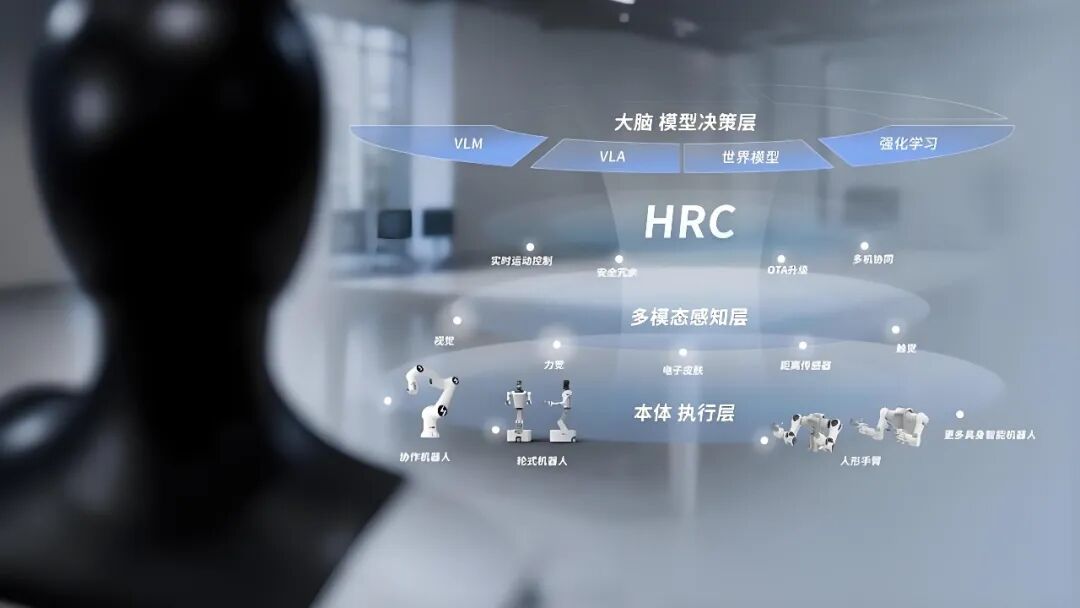
Once large model companies step into embodied intelligence, how will they affect the development of embodied intelligence companies in fields such as the brain, cerebellum, and physical ontology?
It can be determined that once large model companies plan to enter embodied intelligence, all companies working on the embodied intelligence brain will first face the situation that their trained models cannot compete with the models of large model companies, and as a result, they will go bankrupt. Before completely going bankrupt, they can see if the data and training progress in their hands can be sold to large model companies to get some cash back. The transaction price may not be very high.
After all, the scale of financing raised by embodied intelligence brain companies is smaller than that of large model companies, and the data and computing power they can obtain are relatively limited. The only time they are valuable is when large model companies are willing to pay for the time difference.
As for embodied intelligence companies that work on both cerebellum and ontology, they may be worth a certain amount of money. But when you think about the embodied intelligence company that appeared on the Spring Festival Gala and whose annual R&D cost is only 30 million yuan, what kind of products can such R&D investment develop? Most of them are solutions from suppliers. Just think, what shocked the world about DeepSeek R1 is that its training cost was only 5 million US dollars (about 34 million yuan), and the difference in capital scale between the two is like an insurmountable chasm.
The truly valuable companies that work on both cerebellum and ontology must be companies that invest in R&D to steadily build high-quality physical bodies and motion control systems. The most valuable time for such companies is when large model companies are about to compete with Tesla Optimus for the market.
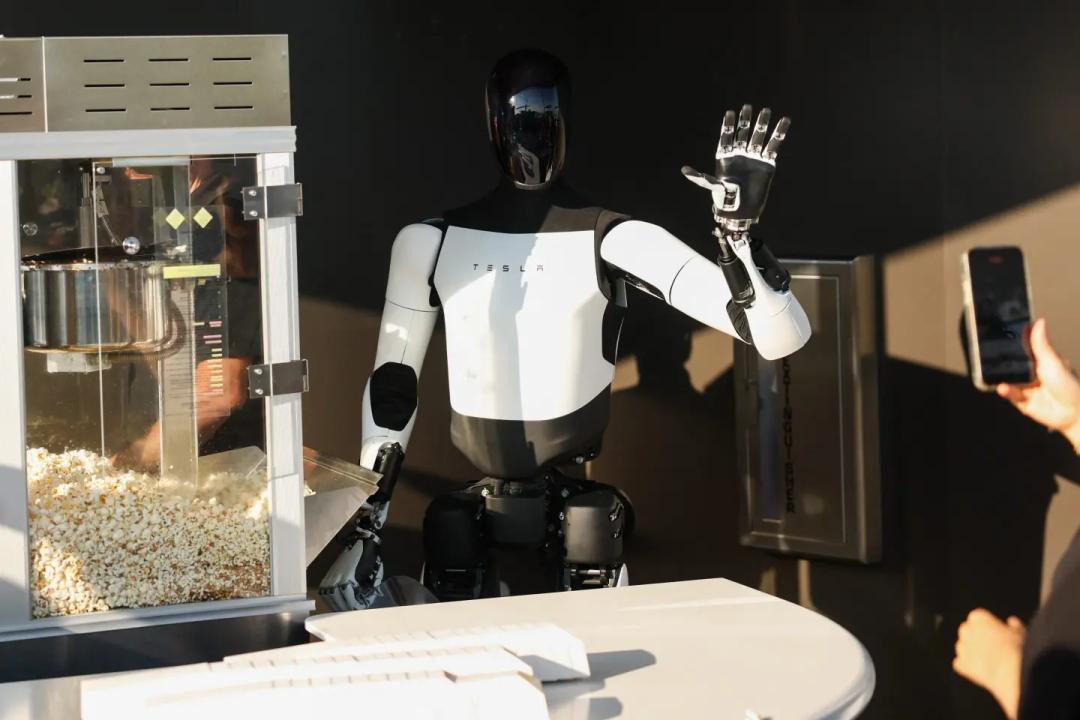
Embodied intelligence is definitely the most important battlefield at the intersection of large models and the physical world. Optimus is backed by Tesla and SpaceX (the two companies have set up an independent committee to study a merger), Tesla has self-developed AI5 chips and mass production and delivery capabilities for large-scale precision manufacturing, and SpaceX has an ultra-large-scale computing power cluster as well as the large model Grok that is being iteratively trained.
According to the latest disclosure in Tesla's Q3 financial report, Optimus's weekly production capacity of 20,000 units is at least one year or more away. This is the best window period left for large model companies to step into embodied intelligence.
Abroad, large model companies such as OpenAI and Anthropic, which have raised more than 100 billion US dollars in financing, can afford to spend a lot of money to acquire an embodied intelligence company. The transaction methods can of course be flexible, including cash transactions, share swaps, or partial cash plus partial share swaps.
In China, DeepSeek was exposed today to have just completed its second round of financing of 100 billion yuan, with cumulative financing exceeding 150 billion yuan; Kimi's cumulative financing is close to 40 billion yuan, and Zhipu's cumulative financing in the primary and secondary markets is also close to 40 billion yuan. As for MiniMax, whose stock price fell below its issue price today, it seems to have fallen behind.
If DeepSeek, Kimi and Zhipu want to buy an embodied intelligence company, they can also afford a large sum of money, and share swaps are also possible. It all depends on how the transaction structure is designed.
Of course, it still depends on whether these large model companies need to spend money to buy time, and whether there are embodied intelligence companies in the market that are worth acquiring and willing to be acquired.
Judging from the experience in the autonomous driving field, being acquired is the best choice, and this also seems to be the case in the embodied intelligence field at present.
Looking at Unitree Technology, which was wildly hyped after its listing and then plummeted, it has basically closed the A-share listing window. What about going to the Hong Kong stock market? Just look at the performance of intelligent driving companies on the Hong Kong stock market to know how difficult it is to cash out. The rapid rise and fall of Zhipu and MiniMax also makes it very difficult to cash out.
Let's have a brainstorm: Perhaps the best acquisition target for DeepSeek should be Unitree Technology. Hahaha, can we see the day when these two Hangzhou-based companies merge?
This article is from the WeChat official account "Chezhi" (ID: invehc), author: Michael Yuan, republished with authorization from 36Kr.