The "AI girl groups" that have replaced commercial KTV services are beginning to make young people obsessed and spend lavishly on them.
The commercial KTV that used to generate easy profits has finally gone bust in 2026.
In September 2026, Hangzhou took the lead in launching a tough crackdown. A number of top-tier commercial KTV venues including Skyline, IN11, Manhattan, and Oriental Hui were successively sealed off, some of their business licenses were revoked, and even their transaction flows of the past three years were retroactively investigated.

In fact, before the boom of commercial KTV faded away, many big-spending top fans had quietly shifted their tipping targets elsewhere.
Since the start of this year, HeyDream, Twelve Concubines, Fang Taozi, and AI-generated girl groups have emerged in the public view intensively. The authorities also explicitly stated in an official document in October that "virtual digital companion services" belong to the new business form that needs to be fostered.
Previously, this trend was only limited to the niche circle of enthusiasts, and it truly went viral among the general public due to a recent news story: BABYQUEEN, a South Korean AI girl group, released an announcement saying that its member Mity was pregnant and would suspend all stage performances, variety show appearances and group schedules. The tone of the announcement was even more official than that of a real talent agency, with phrases like "after full discussion" and "we sincerely ask fans for understanding and blessings".
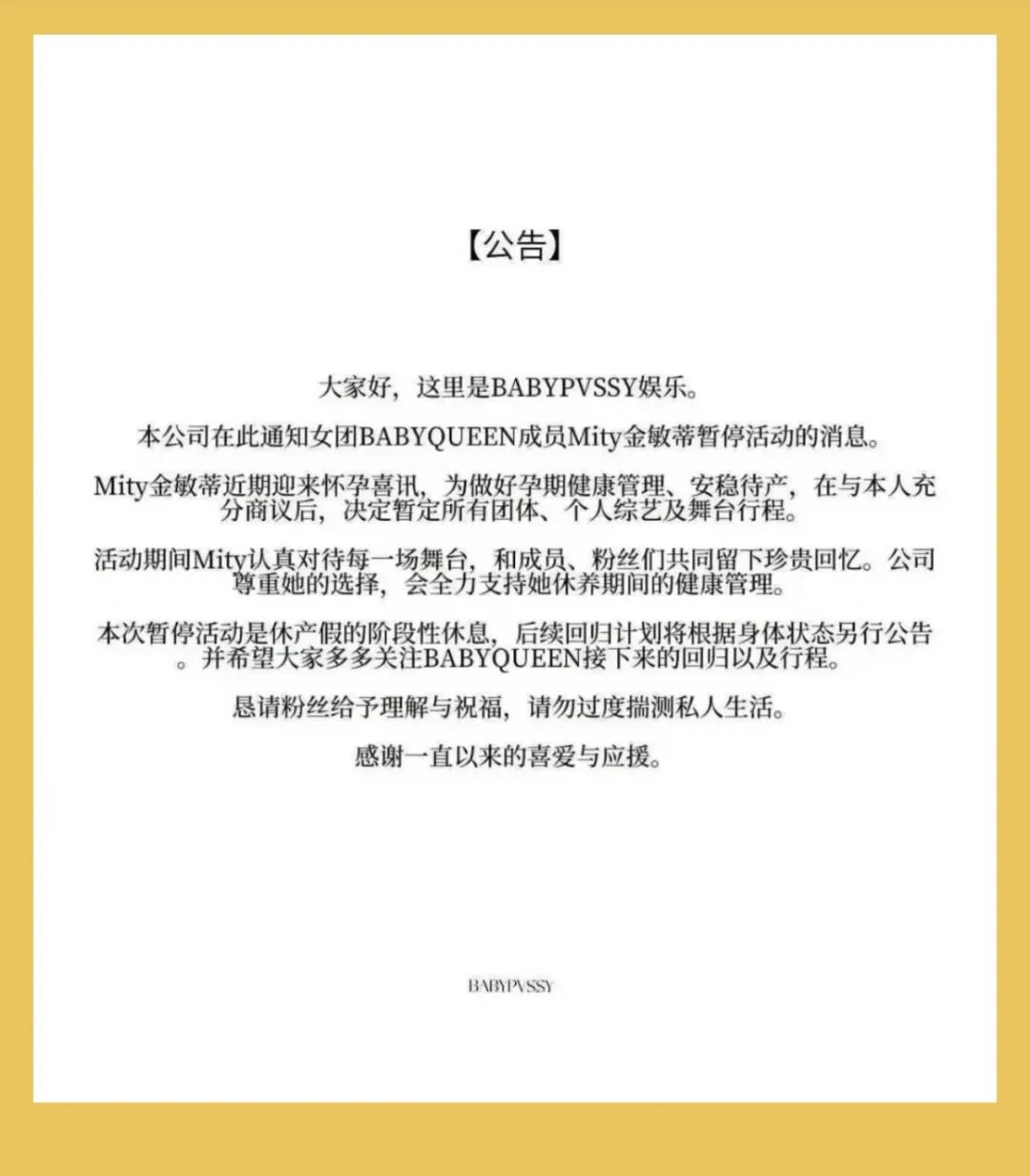
Shortly afterwards, Mity's official account released a nearly 500-word long post, every line of which followed the template of a real human idol announcing departure from a group. Just one hour later, the team's Chinese account released a teaser for a new song comeback.
However, netizens did not buy it, questioning "Is she giving birth to a robot?". The incident quickly went viral and topped the trending lists as public sentiment fermented. Soon the operators came out to apologize: it turned out that the project was run by several K-pop loving girls as a hobby. They felt too tired to manage several AI characters at the same time and wanted to take Mity offline to reduce their workload, so they picked the absurd excuse of "pregnancy".
The fact that an AI girl group idol could even get pregnant has exposed the hidden flaws behind this seemingly promising booming track.
From Tech Giants to Grassroots Players, All Are Eyeing This Hundred-Billion-Yuan Market Cake
2026 is also known in the industry as the first year of AI talent shows.
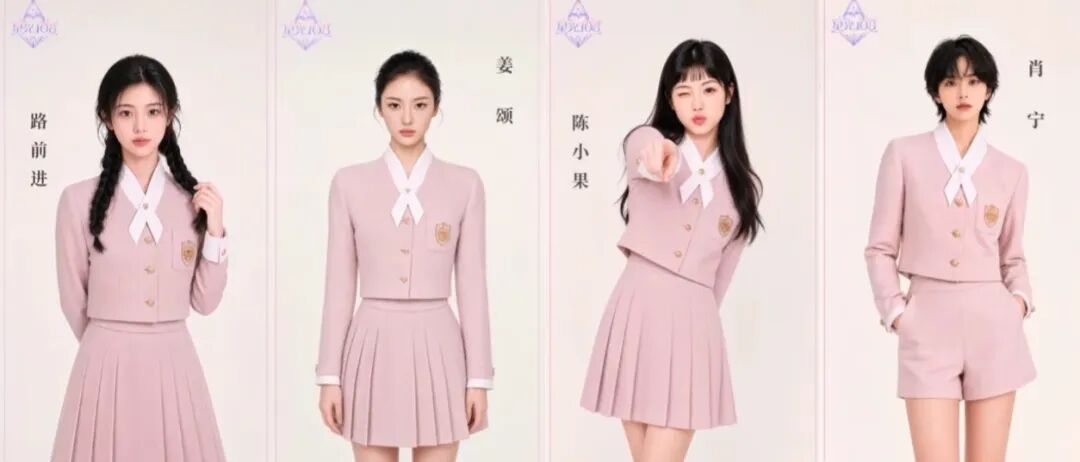
It all started with variety shows: "12 Star Trainee Contest", "Starlight 108", "AI Idol Debut Season"... A large number of AI talent show projects were launched intensively. Behind this trend, tech giants have sharp business acumen, and MCNs and entertainment companies have all stepped into this field one after another.
Data from CCID shows that in 2026, the overall scale of China's AI virtual idol industry chain has exceeded 410 billion yuan, of which the core market reached 182.6 billion yuan, with a year-on-year growth rate of 37.4%. The proportion of virtual idol users aged over 35 has climbed to 22.3%.
On the other hand, capital has also been very active. The number of MCN institutions is also surging simultaneously, with more than 500 new institutions entering the virtual idol sector within one year.
Why are all players pouring into this track all of a sudden? The contrast makes the gap obvious. First of all, in terms of upfront investment, the cost of running an AI girl group seems to be much lower.
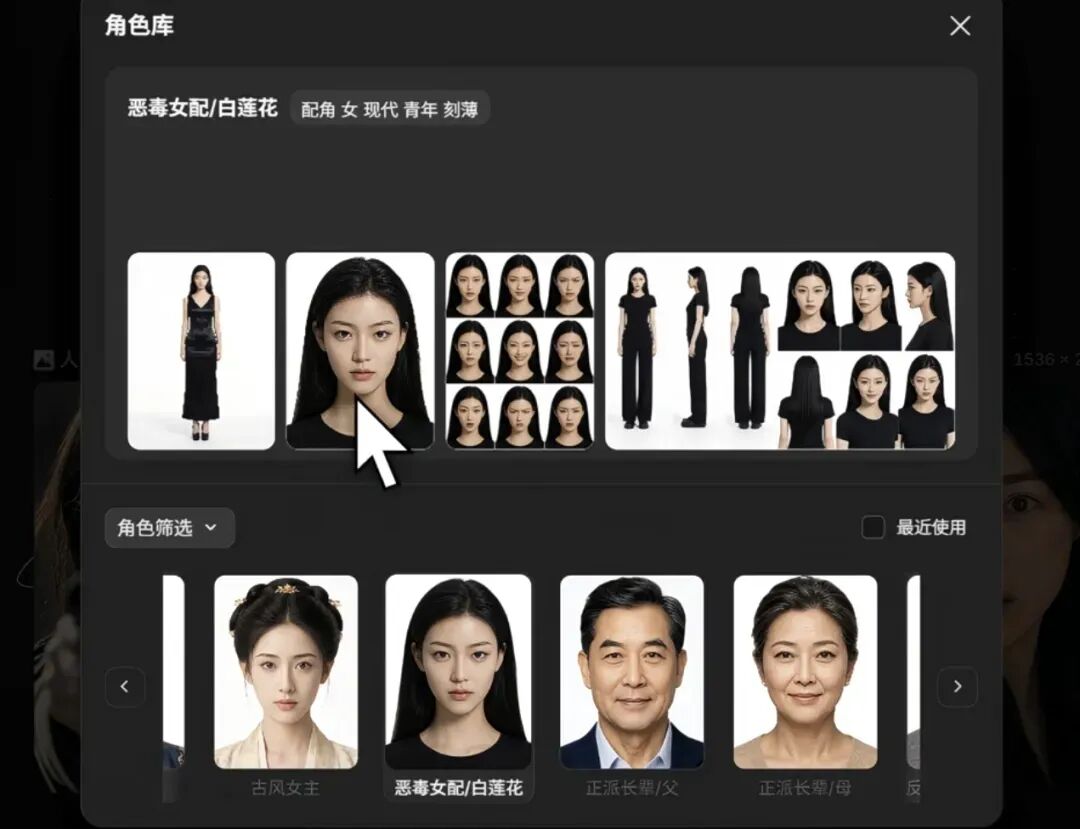
Generating images is a basic function for most mainstream AI tools on the market. You can quickly generate the required content by writing a prompt on platforms such as Jimeng, Koutu, and MidJourney. Then import the generated images into platforms like Keling, Runway, and Pika, add beat-synced effects, cheering sound effects, and simulated fan comment lines, and a complete short video can be produced easily.
Soon, a large number of AI girl group accounts popped up on Douyin, Xiaohongshu and Bilibili. 5-member formation, Korean-style stage names, 9-grid ID photo posts, practice room selfies, member interaction clips... They fully copied all the ritual elements of the K-pop industry.

Generating images is just the first step. Following a similar rhythm to real human idol groups, operators also need to set profiles for each group member, with Chinese, Korean and English names all prepared, and follow the pre-heating rhythm of new rookie groups.
In comparison, traditional real human girl groups need to rent studios, arrange choreography, shoot videos, and do post-production, with the total cost starting at least tens of thousands of yuan. The AI approach is a complete dimensionality reduction strike.
In terms of commercial returns, AI girl groups also completely outperform their real human counterparts. Real idols may have public scandals, or even say a wrong sentence that makes all previous investment go down the drain.
The selling point of AI idols is just the opposite: they have no private life and will never have public scandals, making them ideal assets for brands. For example, an AI short drama heroine like Fang Taozi can charge up to 258,000 yuan for a 60-second advertisement.
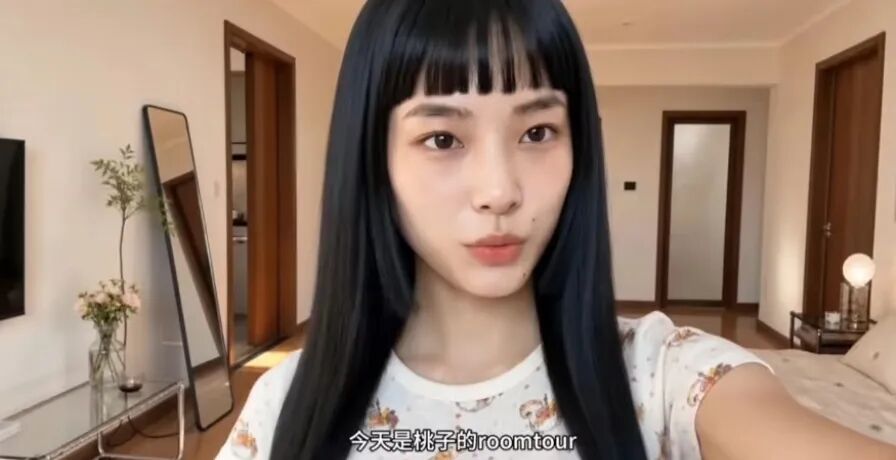
In the past, to create a virtual idol, you needed to complete original painting and 3D modeling, and operate it, which could not be done without a large professional production team. But now, several girls with no professional background can launch an AI girl group instantly with just one computer and several AI tools.
In addition, the most talked-about advantage of AI girl groups in the capital market is that they never get tired.
Real human idols need months of practice to master a stage performance. They will be out of breath after dancing three songs in a row at a concert, and look exhausted by the last stop of a tour. This is not the case for AI girl groups: theoretically, after the model is rendered, they can perform the same dance 180 times an hour and work non-stop for a whole year without any vacation.
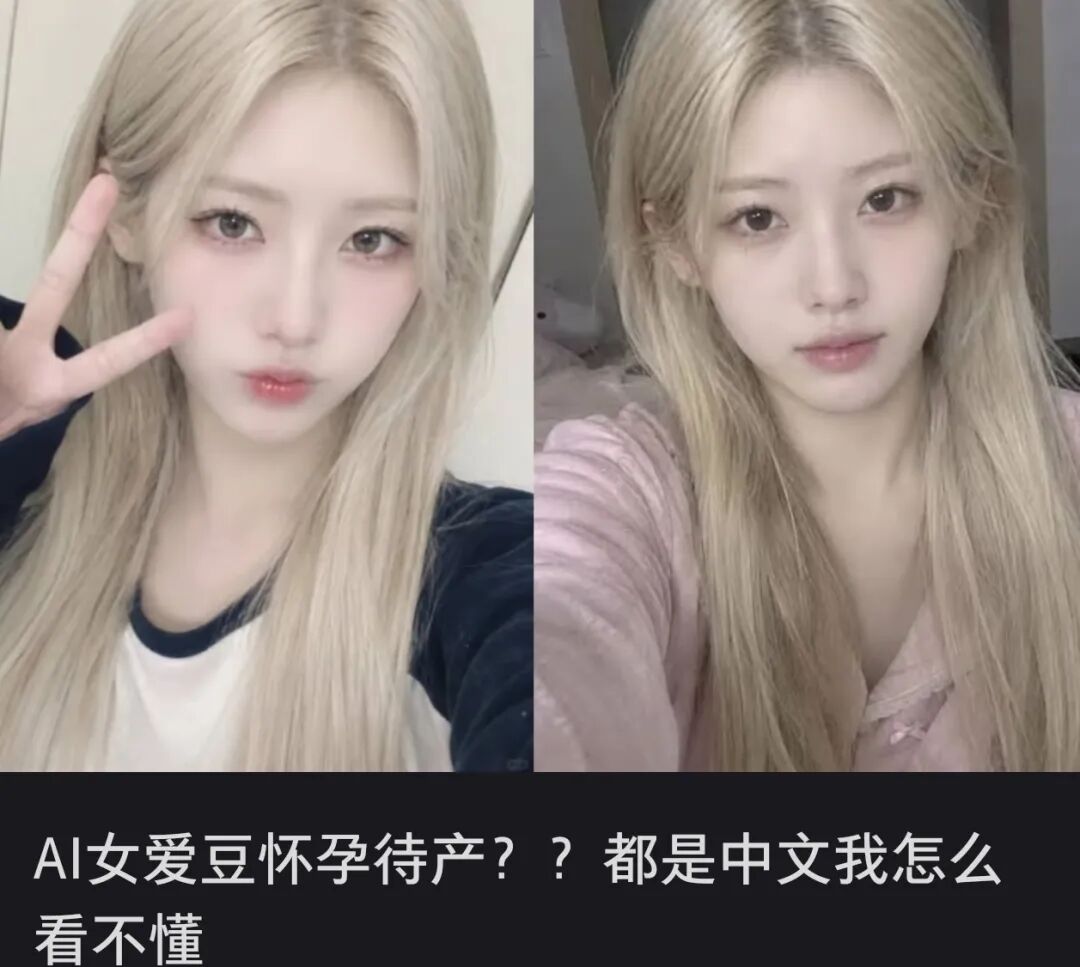
However, the players miscalculated one key point. Starting from the BABYQUEEN pregnancy and departure incident, the flaws of AI have become increasingly clear:
Being able to dance does not mean being able to gain popularity, and the fact that they never get tired has become their most fatal flaw.
Dancing 180 Times an Hour, They Have the Same Common Problem as Commercial KTV
The first flaw of AI girl groups is that they do not have a physical body at all, which means they are devoid of real emotions.
The appeal of real human idols never only lies in their appearance and singing voices. What fans follow is the life traces of a real person growing up, for example, the shaky fancams taken during their trainee days. These contents are touching precisely because they carry the unique warmth that only real people can have.
Obviously, AI girl groups do not have such capability. Every movement they make comes from the training dataset and prompts. No matter how well they dance, fans know that they can loop the performance infinitely without needing rest. The audience cannot find the sense of immersion of accompanying the idols to grow, and their perfection makes it impossible for people to generate emotional empathy.

Especially in the idol industry, the more perfect and scandal-free an idol is, the less likely fans are to develop real emotional attachment to them.
Apart from fans, for audiences who simply enjoy watching beautiful women, the second flaw of AI girl groups is even more obvious:
They lack "human touch", and the fact that they never get tired is their most fatal shortcoming.
Most of the current virtual girl groups are either driven by motion capture, with real people in special suits dancing behind the scenes, or purely algorithm-generated, where everything from the characters to the background is fake.
But the problems caused by AI are very obvious. The smooth positioning algorithm will erase the sharpness of movements, and mismatches between body proportions and the model will lead to model penetration and texture loss. Especially for movements like quick head turns, sudden stops, and chest fluctuations, the body outline is often smoothed out. Once such problems appear, the top big-spending fans will immediately lose their sense of engagement.

Therefore, the common perception of AI girl group dance videos is that they are neat and uniform, but it is hard for the audience to invest real emotions. Not to mention that top big-spending fans are unwilling to send gifts, even ordinary passers-by can hardly get hooked after a glance.
What's more, it is very difficult for AI girl groups to realistically imitate real people to make excuses, such as pregnancy, illness, sexual harassment and so on. Even worse, when it comes to commercial endorsements, if an AI girl group promotes products that cannot be experienced in real life, the audience will immediately feel deceived.
After all, virtual humans have no real life experience. If an AI idol says in first person "I have a great experience wearing this pair of colored contact lenses", the content may be taken down after public backlash at the least, and at the worst, it will violate advertising laws and portrait rights regulations.
That's why many projects are launched quickly but collapse even faster:
At the very beginning, one of their generated videos goes viral, and they gain tens of thousands of followers. But soon they find that they cannot afford the computing power cost of daily updates, the top big-spending fans refuse to pay, and they cannot get any commercial endorsement deals. Eventually, they can only exit the market quietly.
From Girl Groups to Group Live Streams, Is It Necessary to Redo Everything with AI?
While AI girl groups are gaining popularity, AI group live streams are also flooding the market.
The common AI group live stream gameplay on the market now is either pure digital human on-hook streaming, where several AI characters dance automatically on the screen at the same time; or real human + AI backup, where a virtual member is added to a real human group live stream, responsible for reading bullet comments and performing costume change special effects.
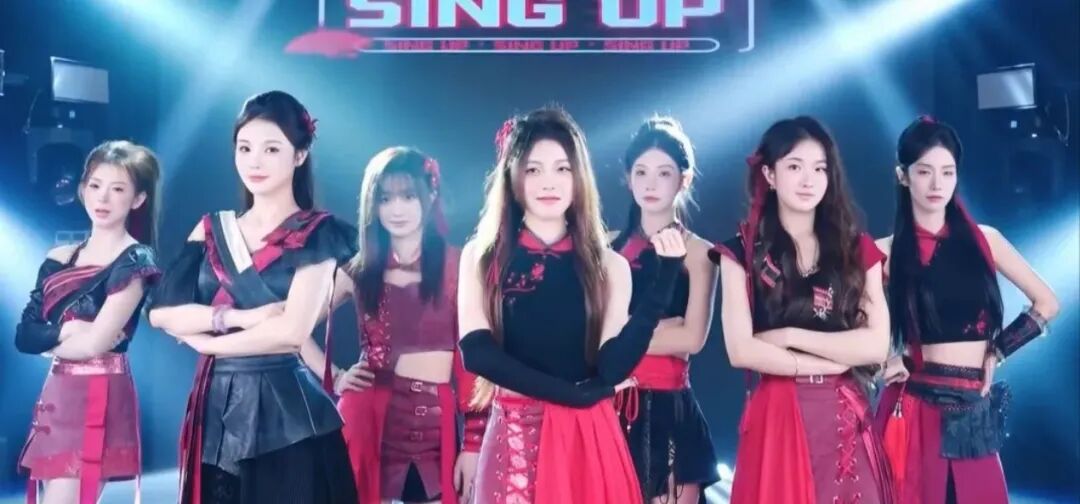
From the perspective of capital, the former is obviously more "appealing". Because pure AI group live streams do not require real people to appear on camera, they can run 24/7 to receive virtual gifts, and there are no risks such as contract termination or public scandals caused by the streamer's personal issues. The logic sounds very attractive.
But in reality, if girl groups and boy groups want to operate sustainably, especially to win over users from commercial KTV, it is never as simple as replacing real people with AI.

Why do top big-spending fans love tipping in group live streams? Because they feel a sense of existence when they are noticed by real people, which is something AI can never provide. What is missing here is not just a realistic human face, but the sincerity of the operators.
Therefore, AI group live streams are not impossible to run, but they should not be made into quick-and-dirty products that are "unmanned group streams disguised as real human operations".
AI girl groups do have their own value. For example, as virtual singers, brand mascots, supporting roles in short dramas, offline large-screen tour guides... In these scenarios that only require simple appearance, they perform much better than real people.
