Countless tourists who need to catch early morning trips but hate dragging themselves out of bed earlier than necessary are utterly spoiled by hotels' takeaway breakfast service.
Recently, Atour has launched a new function that provides takeaway breakfast for guests to eat on the go.
At the V3.6 stores of Atour Hotel, platinum-level and above members (including users with breakfast vouchers) can reserve meals for the next day via the App on the night of check-in, and pick up a freshly made self-selected breakfast at the front desk the next day.
This "Platinum Member Breakfast Takeaway" service directly addresses and satisfies customer needs, and is praised by consumers as a service that "hits the spot perfectly".
Many hotel brands including Ji Hotel, Orange Hotel, and Hi Inn can provide related breakfast takeaway services, accurately capturing the real needs of customers and shifting the competition focus of breakfast from economic value to emotional value.
Is this service worth following blindly? Will it become a standard configuration in the hotel industry?
01
Hotel Breakfast: Shifting Competition Focus From Economic Value to Emotional Value
The breakfast takeaway service essentially meets the emotional value demand of customers.
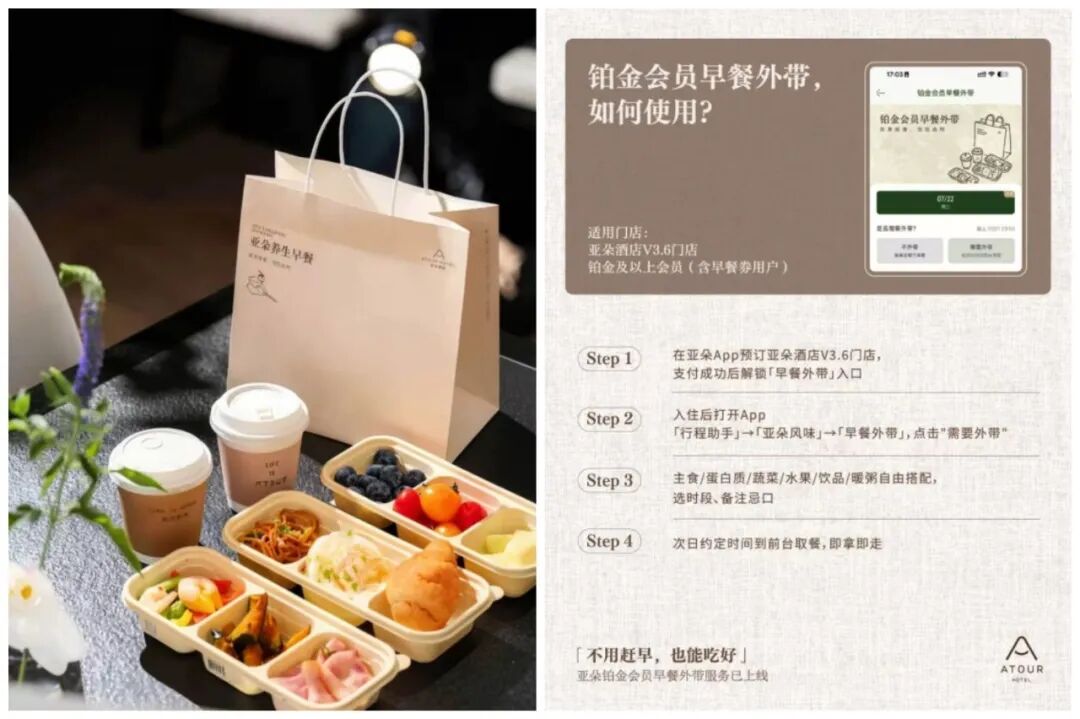
Atour's takeaway breakfast and reservation method Source: SourceSight
Prior to this, Atour already had detailed dining services: for guests checking out before 7:30 a.m., they can get an emergency breakfast consisting of bread, eggs and milk at the front desk without reservation; the 3-series of Atour Light Hotel has also launched a "sleep-in breakfast blind box", where users can make an appointment in advance, and Chinese or Western breakfast will be delivered to the room the next day.
However, this time the service has been upgraded again, allowing customers to take away freshly made self-selected products, which sends a more direct signal to customers: the hotel not only provides you with food, but also cares about whether you eat well and whether it is convenient for you.
As soon as Atour launched this service, a large number of netizens posted photos on social platforms to share their experiences. The exquisite packaging and diverse choices are very photo-friendly, which also brings a wave of free secondary communication for the hotel.
Two years ago, there was a popular trend of competing to optimize breakfast in the hotel industry. The difference is that in the past, the main focus was on monthly breakfast packages within 1,000 yuan, which was an economic calculation to attract more people to stay in the hotel or increase revenue through breakfast.
But in the past two years, with the decline of incremental customers, breakfast has become a carrier for hotels to retain existing users and create high-quality services.
This spring, Orange Hotel launched a calorie visualization breakfast system, created a "breakfast ID", attached calorie labels to each meal, and divided the dining area into three functional zones: Carbohydrate Joy Zone, Low-fat Health Zone, and Coffee & Bread Zone.
The calorie, protein and dietary fiber content of a cup of soy milk and a fried egg are clear at a glance, making customers' choices more targeted.
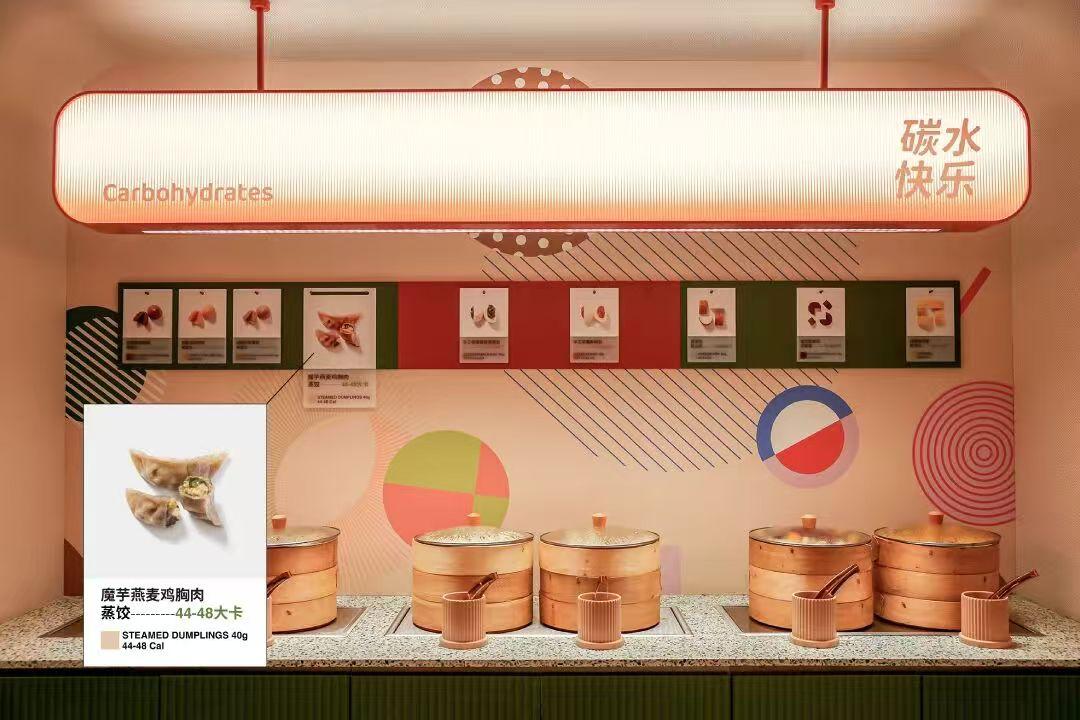
Source: FRAME
Hanting Hotel has also been implementing the strategy of "one city, one unique flavor". Stores in different cities will add local characteristic snacks, such as rice noodles at the Kunming store, hot dry noodles at the Wuhan store, and Inner Mongolia yogurt, milk tea and milk skin at the Ordos store, allowing guests to experience "micro-travel" at the breakfast table.
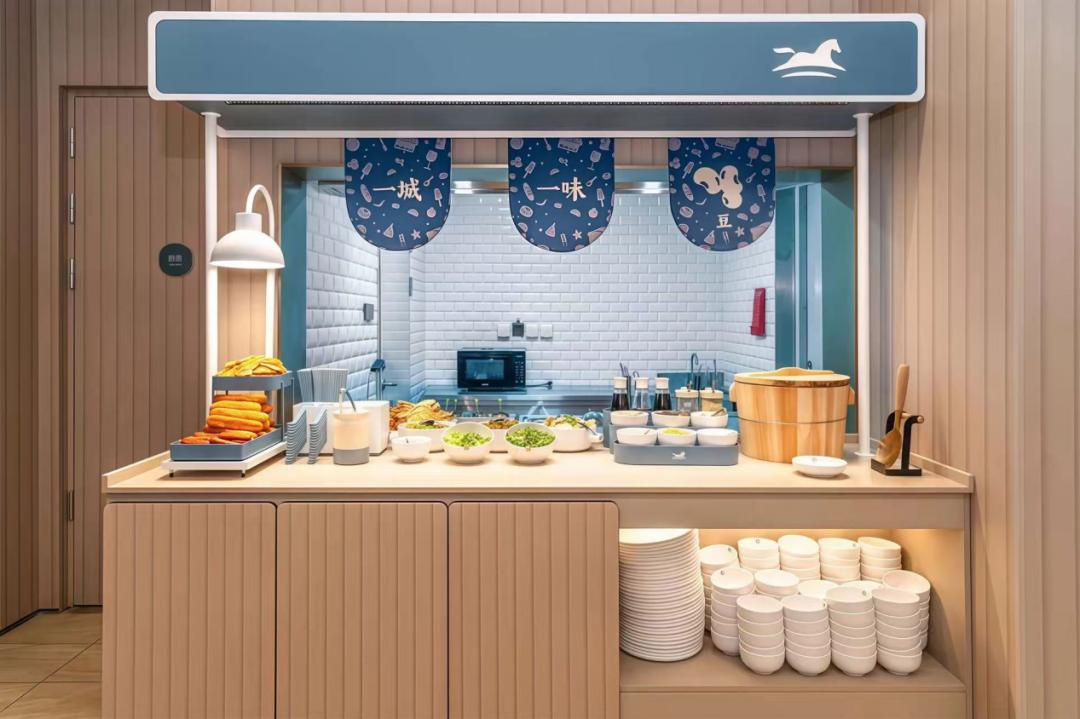
Source: Vista Hydrogen Business
These services are provided as incremental offerings to meet the needs of customers at the experience level.
For hotels, there is no large increase in food procurement investment, no need to expand the restaurant, and no need to add new open kitchens, which easily achieves the effect of "accomplishing big things with small investment".
But in the hearts of customers, it is completely a situation where "real needs are seen", which greatly increases their favorability towards the hotel.
Taking breakfast takeaway as an example, due to the lack of unified standards, consumers have long had concerns: can they take the hotel's breakfast away to eat? Can they take it back to their room? If the breakfast is marked as free, will the hotel stop them if they take it away?
Some customers boldly communicate with the front desk. Most of the time, the front desk does not refuse and will take the initiative to help pack, but the packaging and products provided are either very perfunctory, or make customers feel uneasy about taking advantage of the hotel.
When the hotel solves personalized needs in a clear way through standardized means, it meets the needs of users who check out early in the morning, not only conveys the brand's warmth, but also implements operational details and standardizes store service management.
Not only Atour, according to netizens' actual measurement and sharing, gold-level and above members of Ji Hotel can apply for a standardized breakfast packaging gift box by informing the front desk of their check-out schedule one night in advance.
InterContinental Hotels provides free breakfast for diamond-level and above members and supports pre-packing.
Providing complete upgraded services for users of a certain membership level not only highlights the identity value of members, but also avoids potential adverse factors such as wool-grabbing behavior and negative reviews.
Takeaway is a small matter, but from the perspective of customers, it means that the hotel recognizes that customers' time value is higher than the dine-in experience value of a meal.
When breakfast changes from a "basic supporting facility" to a "differentiated bargaining chip for membership rights", behind the value iteration is the in-depth care for users.
02
Easy to Follow the Trend, Hard to Achieve "Great Results"
When chain brands such as Atour and Hanting are all launching breakfast takeaway services, should other hotels follow suit?
For peers in the hotel industry, it is necessary to first see clearly the underlying logic behind these operations: this is not simply adding a new service, but realizing "standardized product design + membership rights binding + operation efficiency reconstruction" to find a balance between incremental services and hotel costs.
After careful observation of several brands that have successfully run the takeaway model, they all turn the seemingly scattered services into replicable standardized operations through three operational nodes.
The first node is to eliminate uncertainties through "advance reservation by members".
Atour's rule is that platinum members need to complete the reservation for the next day's takeaway breakfast through the App before 23:00 on the night of check-in.
The design of this time point is not only convenient for customers to operate on their mobile phones, but also reduces the operational difficulties of the hotel. By counting the required ingredients and order volume in advance, it will not affect the dine-in rhythm the next day, and ensure the service is complete and in place.
More importantly, by granting the rights and interests to members and completing the operation uniformly through the hotel's own app system, it increases the attractiveness of membership levels, and realizes convenient operation and unified management.
The second node is to define a clear product scope in advance.
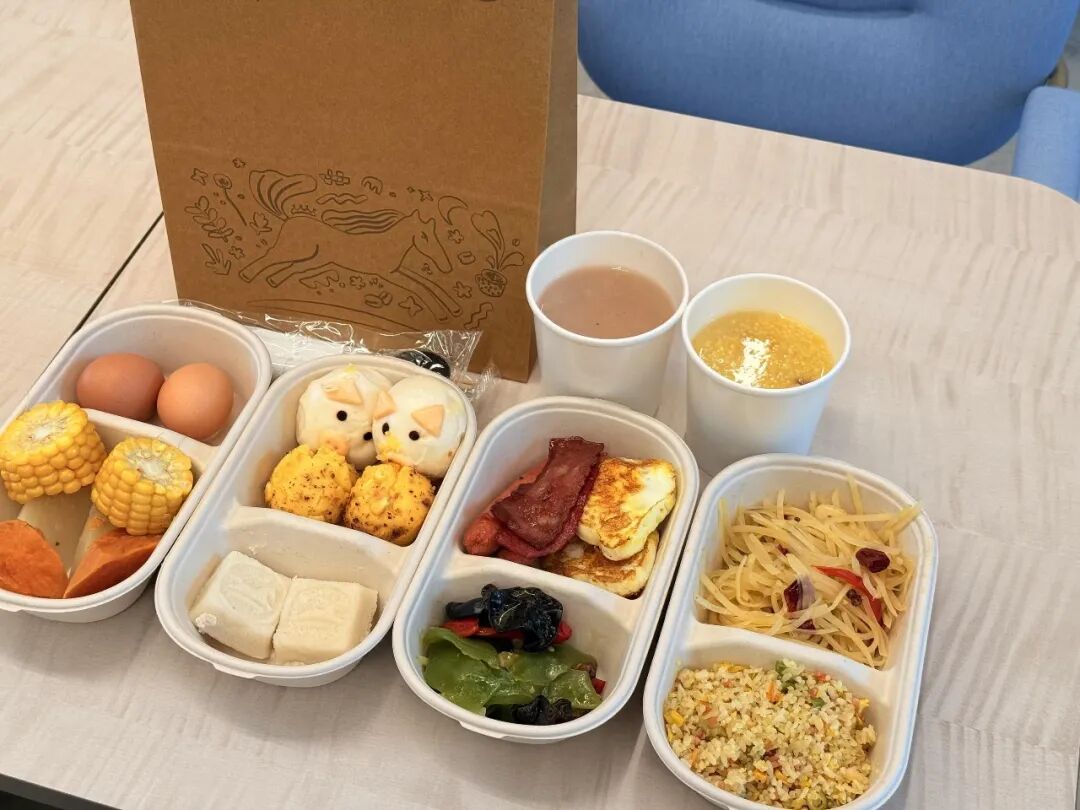
Atour's takeaway products are modularly matched, for example, 2 choices from 8 staple foods, 2 choices from 7 protein options, 3 types of fruits, 2 choices from 4 vegetables, etc. A clear scope and selection standard not only ensures that customers get nutritionally balanced meals, but also realizes cost control on the hotel side.
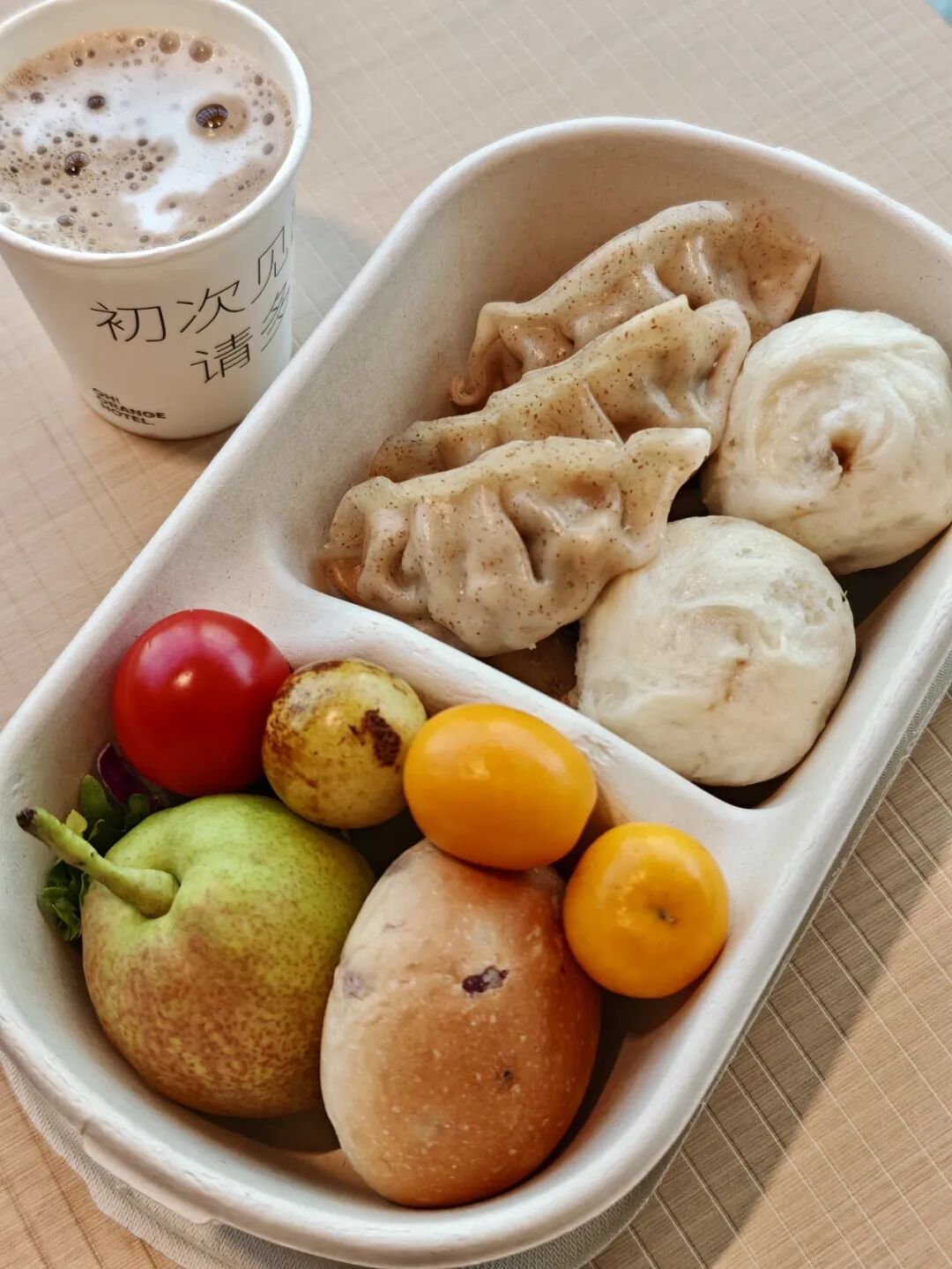
Source: Xiaohongshu
Some netizens shared their takeaway breakfast experience: if they communicate with the hotel front desk, they can also get packed breakfast, but it is either a few randomly packed small breads, or the coffee and hot soup are not packed properly and easy to spill, which will affect the customer experience instead.
Setting a clear boundary for products not only avoids unreasonable demands from guests, but also sets a unified standard for the kitchen's meal preparation, which is convenient for management.
The third node is to convey a sense of brand identity through unified packaging.
One of the important attractive points of Atour's product is its high appearance level: bags with the brand logo, and meal boxes with clear partitions. When you take them on the road, on the plane or at the high-speed railway station, they act as mobile advertisements.
Orange Hotel's "breakfast ID" is printed directly on the cover of the meal box, so that the calorie and ingredient origin are clear at a glance. Even fitness guests can clearly know how many calories they have consumed for this breakfast.
Gifts should avoid being too cheap. When the brand's product packaging is uniformly designed and provided, the service level is also improved.
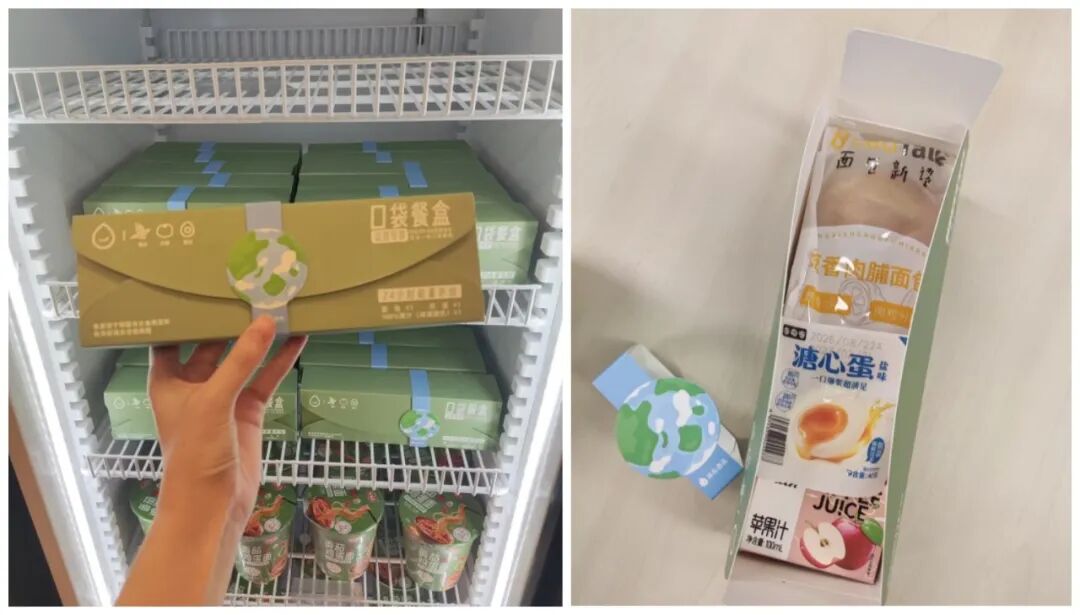
Simplifying all the above practices, there is another idea adopted by Hi Inn: launching a 24-hour energy supply pocket meal box exclusive to members.
Although the products are not freshly made, the unified exquisite packaging contains products such as Bread Talk bread, soft-boiled eggs, and dried blueberries, reflecting the hotel's intentions through product quality.
Source: Xiaohongshu
But in fact, for most hotels, any of the above implementations is not complicated, but it is difficult to implement, because systematic operations are difficult to replicate:
Chain brands have sufficient breakfast production capacity redundancy, a mature membership system to meet demands, and a nationally unified system to support reservations, while most regional brands and individual hotels do not have such basic conditions.
The more realistic situation is that for ordinary hotels, even if they launch breakfast takeaway, it may only cover a few scattered guests, which cannot form a communication effect. In the end, it becomes "investing energy but no one remembers your kindness", and it is difficult to achieve the expected "great results".
Therefore, following the trend to do breakfast takeaway is not just "copying a service action", but you need to think clearly about whether the breakfast production capacity supply, reservation support capability, meal preparation and pickup process can be implemented, and whether it can be realized through the membership system.
Skipping these prerequisites and following the trend directly will easily turn into an operation investment trap that "looks beautiful but has no actual effect".
03
If Breakfast Takeaway Becomes a Standard Service
In the past one or two decades, the hotel industry has experienced many service waves that changed from "differentiated selling points" to "industry standards".
From free WiFi, to free bottled water, and then to late check-out, every service when it first came out was a big killer to attract guests.
After the whole industry popularizes it, it changes from a "plus item" to a "passing line", and will no longer bring additional surprises to guests.
Will breakfast takeaway follow the same path?
When takeaway has become a consumption habit integrated into daily life and a very adaptable lifestyle, hotels need to reconsider the necessity of this service and calculate a new account about breakfast.
First of all, the cost account: if takeaway is made a standard configuration, it will break the hotel's existing dining structure dominated by dine-in, and hotels need to not only prepare a large number of buffet categories, but also reserve a part of products more suitable for takeaway.
Some hotels have already made similar adjustments: changing the buffet breakfast to the mode of "semi-buffet + takeaway reservation", retaining the core open-kitchen freshly made categories for dine-in, and making the takeaway meals accurately according to the reservation quantity in advance. The overall food waste is even lower than that of the previous pure buffet mode.
Source: Xiaohongshu
Secondly, the account of managing guests' expectations: some brands have started to make layered designs. Ordinary members can apply for basic takeaway breakfast, high-level members can choose customized collocation, and paying guests can pay extra to upgrade the categories of takeaway breakfast.
Through layered rights design, the needs of different guests are matched with the corresponding costs, so that the service will not extend to the direction of infinite high cost.
Most importantly, when takeaway breaks the fixed action of eating in the hotel, it seems to provide a new idea for dining services.
For example, providing special parent-child takeaway breakfast with snacks and hot milk that children love; even cooperating with surrounding office buildings to make the hotel's takeaway breakfast a retail product for surrounding office workers, so that the service radius of breakfast can completely jump out of the walls of the hotel.
The breakfast in the hotel industry has been constantly changing: from the earliest "cost item" that advocates saving as much as possible; to the stage where people found that breakfast can boost occupancy rate, regarded it as a "marketing item" and attracted customers to check in with rich categories; then upgraded ingredients and regional flavors, making breakfast an "experience item" to reflect the hotel's quality.
And the takeaway method may push the hotel's breakfast to a new stage once again.
It is no longer a fixed service that can only take place in the hotel restaurant, but a convenience provided by the hotel to customers, which integrates into consumers' daily life from the fixed store and plays a deeper connection role.
This article is from WeChat official account "Hotel Management Finance", the author is Qian Li, and it is released with authorization from 36Kr.