Anta and Li-Ning have both set their sights on the company invested by the owner of Manchester United.
During typical corporate acquisition negotiations, the parties involved usually keep all details confidential, but Tom Beahon, co-founder of the British sportswear brand Castore, took the opposite approach: he voluntarily named the potential buyers publicly.
On October 21, he told the Financial Times of the UK that ANTA, Li-Ning, and several large American footwear enterprises are all in contact with Castore.
Chinese consumers may not be familiar with this company, which once supplied gear for F1 championship team McLaren and Bayer 04 Leverkusen, the unbeaten Bundesliga champion. Its shareholders include the famous tennis star Andy Murray, and INEOS Group, which is owned by Jim Ratcliffe, one of the owners of Manchester United.
Three years ago, Castore completed a £145 million financing round at a valuation of nearly £1 billion. Now some financial investors are looking to exit. The young Beahon brothers remain the majority shareholders and have no intention of stepping down from their operational positions. The company has hired JPMorgan Chase to evaluate potential transactions, while the number of shares to be sold and the quoted price remain unknown for the time being.
ANTA just spent 1.5 billion euros to become the largest shareholder of Puma; although Li-Ning adheres to the single-brand strategy, another listed company controlled by its founder, Viva Leap, acquired the British footwear brand Clarks some time ago.
A £1 Billion Valuation in 10 Years
Castore's story began in 2016.
Founders Tom Beahon and Phil Beahon are from Liverpool. Both of them have athletic backgrounds and have previously worked in the financial industry. Their parents mortgaged their property to provide the brothers with £40,000 in seed funding.
In 2019, Murray became a shareholder and partner of the brand, and the two sides jointly launched the AMC tennis collection. Later, it was not tennis apparel but the professional team business that truly drove Castore's rapid growth.
In 2020, Castore signed a partnership with the Scottish football powerhouse Rangers FC, and later expanded its business to the Premier League, Bundesliga, La Liga, and F1 events. Aston Villa, Newcastle United, Sevilla FC, Bayer 04 Leverkusen, McLaren, and the Red Bull F1 Team have all been on its cooperation list.
In the 2023/24 season, Bayer 04 Leverkusen won the Bundesliga title with an unbeaten record, and the players were wearing kits provided by Castore. In 2025, the McLaren team won the F1 Constructors' World Championship, and their apparel was also supplied by Castore.

Castore's business is not limited to providing match kits for clubs, but also extends to team peripheral merchandise, official retail and licensing operations. Fans do not necessarily know the Castore brand, but they can still become its customers by buying Everton's jerseys.
Capital began to favor Castore: in 2021, the British billionaire Issa brothers, founders of EG Group, invested about £10 million; in 2023, Castore completed a £145 million financing round with investors including the Raine Group, Hanaco Ventures and Felix Capital, pushing the company's valuation to approximately £950 million.
The brothers built their business from their parents' kitchen and grew the company to a valuation close to £1 billion in less than ten years.
However, sports sponsorship is a costly business. The more famous the team is, the more expensive the kit contract will be, which gives large sportswear brands greater competitive advantages.
In 2023, Aston Villa players complained that Castore's jerseys were too tight and uncomfortable to wear. In 2024, the team switched to cooperate with Adidas. Newcastle United also changed its kit supplier to Adidas in 2024, and Bayer 04 Leverkusen will move to New Balance starting from the 2025/26 season.
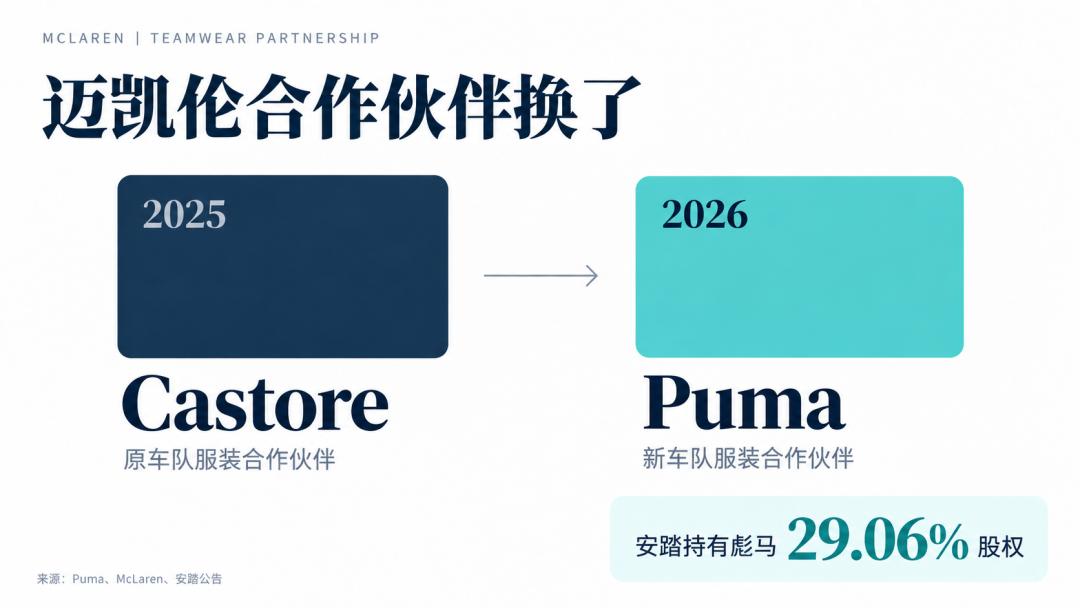
In 2026, McLaren's apparel partner became Puma.
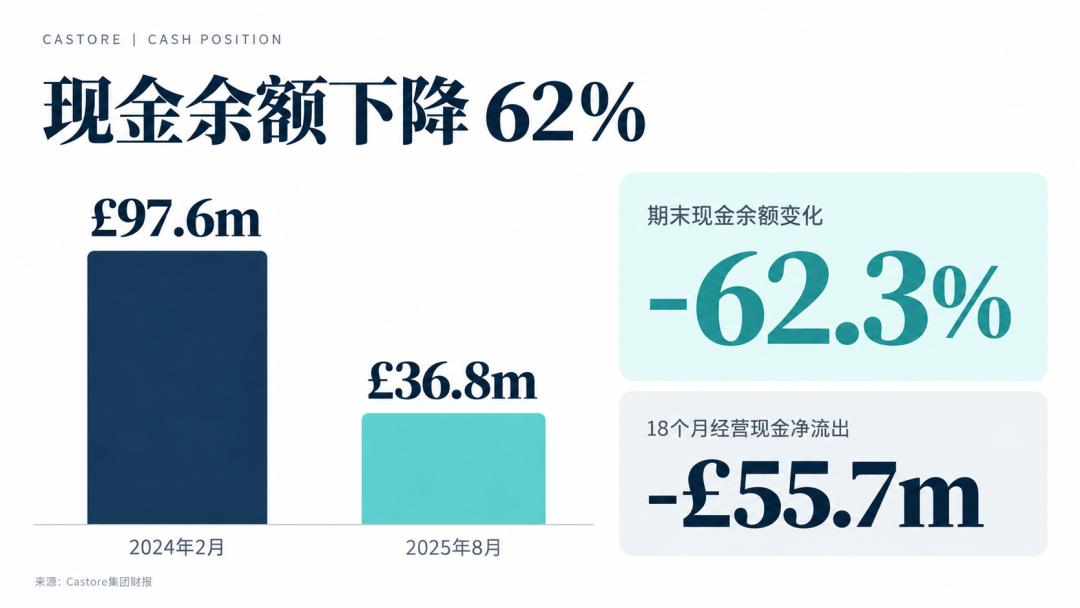
Castore paid a considerable price for its rapid expansion relying on professional teams. In the 18 months ending August 3, 2025, Castore recorded operating revenue of £335 million, a pre-tax loss of about £40.8 million, and net cash outflow from operating activities of around £55.7 million. The financial report also disclosed about £9.74 million in loss-making contract expenses, and the company is exiting some non-core sports partnerships.
As of the end of the reporting period, cash and cash equivalents dropped from £97.6 million at the end of the previous period to £36.8 million.
The company intends to redirect its capital to businesses with better profit prospects: in 2025, it acquired Belstaff, a century-old British apparel brand; in 2026, it bought 75% stake in the footwear brand Grenson.
The new round of expansion still requires capital. In May this year, Castore secured a £90 million revolving credit facility. In September, Sky News reported that Castore had hired JPMorgan Chase to explore options including stake sale or capital introduction.
More than a month later, Beahon voluntarily revealed the names of ANTA and Li-Ning.
ANTA Already Has Puma in Its Portfolio
Castore is significantly different from the brands previously acquired by ANTA.
From FILA to Arc'teryx, Salomon and other brands under Amer Sports, ANTA favors brands with long histories and strong product capabilities. Castore was founded only ten years ago with low public awareness, and its most prominent assets are customer contracts in the European professional sports sector, as well as merchandise sales and operation capabilities for sports teams.
ANTA has indeed shown interest in these resources. In October, Ding Shizhong, Chairman of the ANTA Board of Directors, talked to Yicai about why the company invested in Puma, and he mentioned football and motor racing. He said that ANTA lacks a solid football business, while Puma has strong strength in the football sector and also has rich motorsport gear resources.
In Ding Shizhong's view, the value of Puma lies not only in the brand itself, but also in its product assets, sports resources and global network.
This statement also explains why Castore has entered ANTA's list of potential targets. Castore's revenue mainly comes from the UK and Europe, and its long-term operation of professional football and F1 teams covers sectors that ANTA's core brand has not yet ventured into.
However, there is one issue: Puma already has more mature similar resources. On October 7, ANTA just completed the acquisition of a 29.06% stake in Puma for 1.5055 billion euros. There is also a coincidence that in January this year, it was Puma that replaced Castore to become McLaren's apparel supplier.
Ding Shizhong emphasized in the interview that high-quality brands are rarely available for acquisition. What ANTA focuses on is not only the scale of the acquisition, but also the brand heritage, professional product capabilities, and whether the group can truly unlock its operational value.
It is not obvious that Castore can meet all these requirements. If ANTA eventually invests in Castore, what it values may not be the brand itself, but the latter's capability to operate European professional sports commercial businesses.
Two Possible Scenarios for Li-Ning's Involvement in the Negotiations
Compared with ANTA, the relationship between Li-Ning and Castore is more difficult to assess.
The public is still unclear whether the Li-Ning mentioned in the reports refers to the listed company Li-Ning, or the capital platform controlled by its founder Li Ning. The two parties have very different operational paths: Li-Ning Co., Ltd. emphasizes a single-brand, multi-category and multi-channel strategy; Viva Leap, another Hong Kong-listed company controlled by Li Ning himself, is a multi-brand operation group.
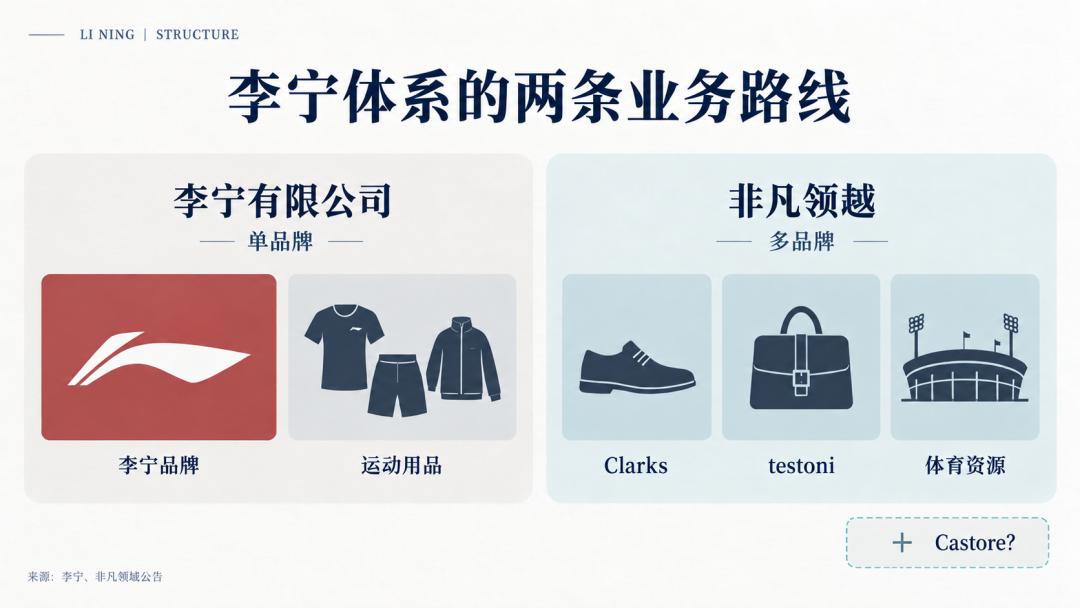
In 2023, Viva Leap acquired about 51% equity interest in the British footwear brand Clarks, also purchased the Italian high-end footwear brand testoni, operated Bossini, and participated in the Greater China business of the Swedish outdoor brand Haglöfs.
From the perspective of business fit, Viva Leap has good reasons to consider investing in Castore. It operates apparel brands, and also invests in sports venues, events and esports clubs. Castore's team kit and licensed merchandise business aligns well with this set of operational logic.
The difference is that Viva Leap's sports operation business is mainly based in China, while Castore operates in Europe. If Viva Leap does invest in Castore, what it gains is not just a British brand, but also a group of professional football and motorsport customers, as well as the supporting merchandise operation team.
However, Viva Leap has its own challenges to address. After acquiring Clarks, it devoted a lot of energy to improving its operation; it also increased its shareholding in the listed Li-Ning company earlier this year, and did not allocate capital to search for new overseas brands. At this point, the company taking over another loss-making British firm that requires continuous capital investment to maintain team partnerships may not deliver a favorable overall return.
If the potential investor is Li-Ning Co., Ltd., the logic will be different.
In the first half of 2026, Li-Ning recorded revenue of 15.235 billion yuan, representing a year-on-year increase of 2.8%. The company is still addressing issues such as slowing market growth and product portfolio adjustment. Castore may provide a shortcut to enter the European market, but it cannot directly solve the core brand's growth challenges.
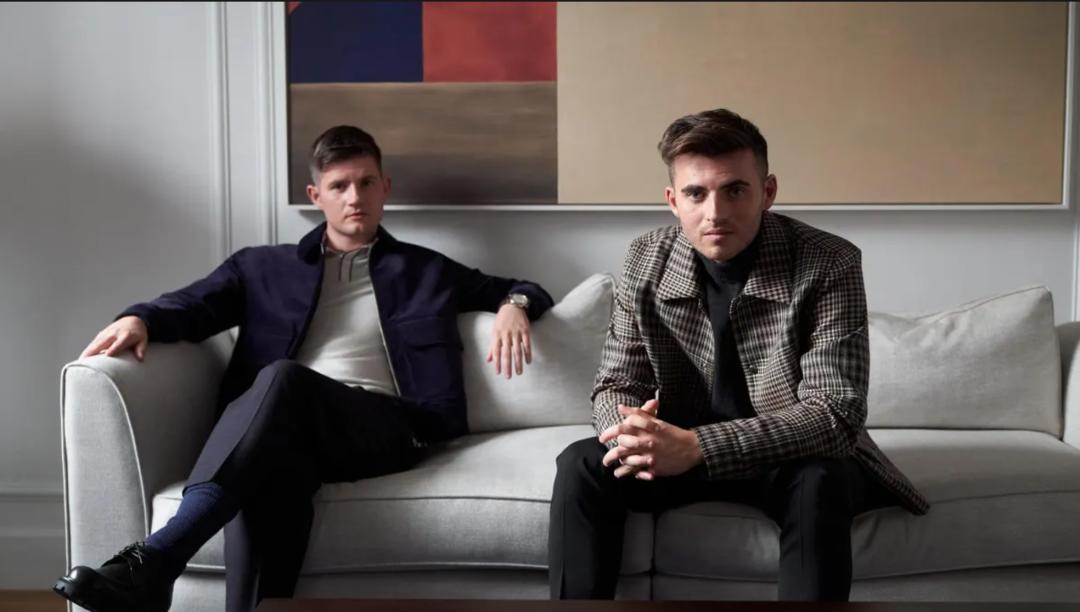
The fact that Castore managed to secure contracts with multiple top European clubs within ten years demonstrates the Beahon brothers' strong capabilities in acquiring clients and building commercial networks. However, a team contract can bring brand exposure, but it does not guarantee profitability.
Castore lost its partnerships with McLaren and Bayer 04 Leverkusen in recent years, admitted that some sports contracts are not worth continuing high investment, and acquired Belstaff and Grenson to find new revenue sources.
Castore is increasingly moving away from being a traditional sportswear company. The most realistic task for the Beahon brothers right now is to find strong new shareholders who are willing to support their expansion, while some existing investors are determined to exit.
This article is from the WeChat official account "Flowing Business", written by Li Wei, and published by 36Kr with authorization.