Five years have passed, has the education industry regained its growth?
The past decade has been a roller-coaster ride for the education industry.
The period from 2016 to 2020 was the upward climb to the peak.
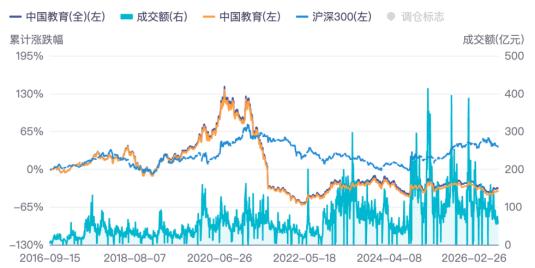
The China Education (All) Index (921456.CSI) kept rising all the way, with a cumulative increase of 128.87% by August 2020. During the same period, the CSI 300 posted a 46.22% gain. Domestic listed education and training companies including New Oriental (EDU.N, 9901.HK) and Xueda Education (000526.SZ) reached their largest revenue scale in history by the end of 2021. The total revenue of five companies, namely New Oriental, Xueda Education, TAL (TAL.N), Gaotu (GOTU.N) and Only Education (600661.SH), exceeded 60 billion yuan. At that time, the education industry was at the height of its prosperity.
However, in July 2021, the introduction of the "double reduction" policy dealt a heavy blow to the fast-moving education and training institutions.
Seven months after the policy was promulgated (February 2022), the original 124,000 offline subject-based after-school training institutions for compulsory education students were reduced to 9,728, with a reduction rate of 92.14%; the original 263 online after-school training institutions were reduced to 34, with a reduction rate of 87.07%. Small non-compliant institutions were eliminated, and the morale of the surviving leading companies was far lower than before.
Having just reached the peak, the industry took a sharp downturn immediately, and the whole industry fell to the bottom overnight. The market's attitude towards it shifted from blind enthusiasm to a wait-and-see stance, followed by questions: Is the education and training industry still viable?
For the players in the industry, it is no longer possible to move forward by sticking to the old path. To survive as much as possible, companies have to explore their own paths through transformation and evolution.
In the blink of an eye, five years have passed since the policy was issued. No matter how much turmoil or exploration there has been, the most important thing is the actual effect, and now there is enough time to see the final results.
Making a Comeback After Industry Reshuffling
The performance delivered by companies in recent years is particularly important to dispel market doubts.
Considering the buffer period after the policy was promulgated, we mainly observe the situation of companies in the past three years. We have counted the top 40 listed companies by total market capitalization as of September 2026 under the global education industry classification of Tonghuashun, excluding foreign and ST companies, and there are 19 domestic education companies in total. Among them, 12 companies have achieved consecutive operating revenue growth in the last three fiscal years, including 5 A-share companies, 5 Hong Kong stock companies and 2 US stock companies. Judging from this set of data, domestic education companies are making a comeback with remarkable recovery results.
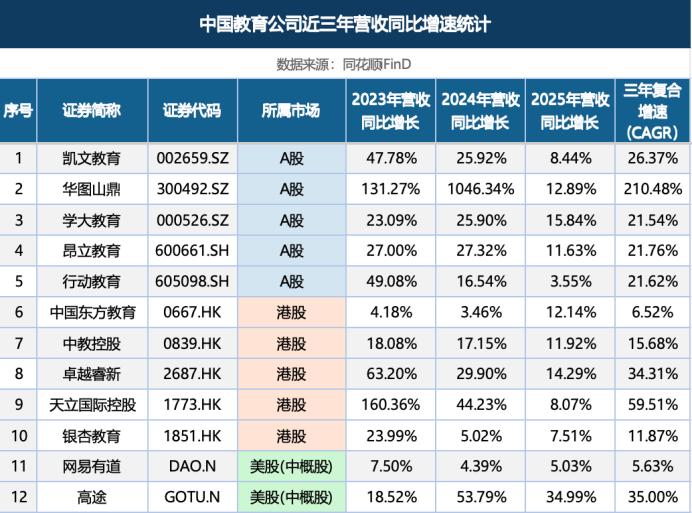
Companies including TAL and Gaotu are stabilizing and rebounding. Although there is still a gap from their peak period, the overall trend is positive. New Oriental and Xueda Education have completely walked out of the haze after five years, and their operating revenue in 2025 has exceeded the all-time high record set before the policy was promulgated. Excellence Education (3978.HK) has also almost caught up with its previous peak. As the weathervane of the industry, the performance of leading enterprises shows that the education industry may be more resilient and potential than we imagined.
After the implementation of the "double reduction" policy, the after-school training industry has experienced a major reshuffle. A large number of non-compliant small and medium-sized institutions withdrew from the market, and the qualification access threshold of the industry has been raised, but the education consumption demand at the social level does not seem to have decreased.
Data from the National Bureau of Statistics shows that in 2025, the per capita consumption expenditure of Chinese residents on education, culture and entertainment reached 3,489 yuan, accounting for 11.8% of the per capita consumption expenditure of residents. Education is still the core area of household consumption.
At the same time, China has built the world's largest vocational education system. As of September 2025, the number of students in vocational colleges and schools across the country has reached 34 million, which means that after-school training institutions have found a new development path on the basis of traditional academic subjects, and vocational education related sectors have become new growth points.
With the completion of industry clearance and supply contraction, market resources are more inclined to market entities with compliant school-running qualifications and complete operation capabilities. For the leading enterprises that survived after the industry reshuffle, their market share is expected to be further improved.
Specific to each company, their development strategies are different. We selected three leading companies from the US stock market, A-share market and Hong Kong stock market respectively to see how they staged a comeback after the policy was promulgated.
New Oriental: Focusing on Both Services and Products
In fiscal year 2021, New Oriental achieved a net revenue of 4.277 billion US dollars, setting an all-time high record. Then its performance dropped sharply, and in fiscal year 2023, the figure was only 2.998 billion US dollars.
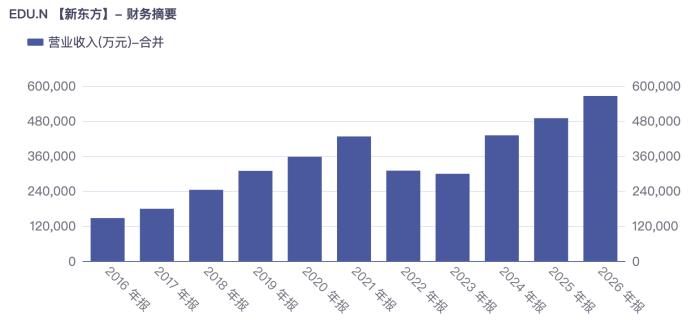
Operating Revenue of New Oriental (Currency Unit: USD)
In fiscal year 2024, three years after the policy was promulgated, the company refreshed its historical record with 4.314 billion US dollars. It also hit a new high of 5.661 billion US dollars in fiscal year 2026, up 15.5% year-on-year from fiscal year 2025; in the same period, it achieved an operating profit of 643 million US dollars, a sharp increase of 50.2% over the previous fiscal year, and the operating profit margin rose from 8.7% in the previous year to 11.4%.
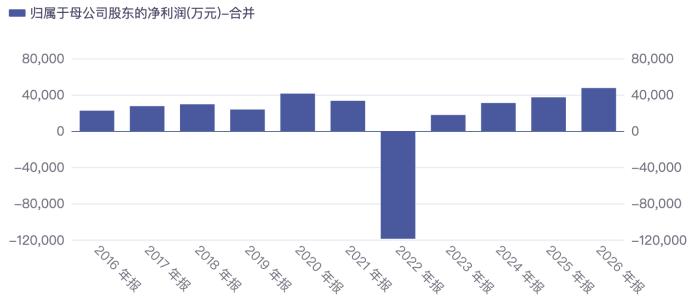
Net Profit Attributable to Parent Company of New Oriental (Currency Unit: USD)
It took the company 3 years to digest the impact brought by the policy, and such recovery speed ranks among the top in the whole industry.
At present, the company's revenue comes from two parts: services and products.
The company's services mainly include education services and exam preparation courses, self-owned brand products and live streaming e-commerce, as well as study abroad consulting services. In fiscal years 2023, 2024 and 2025, the company's net service revenue accounted for 84.9%, 81.2% and 88.4% of the total net revenue respectively.
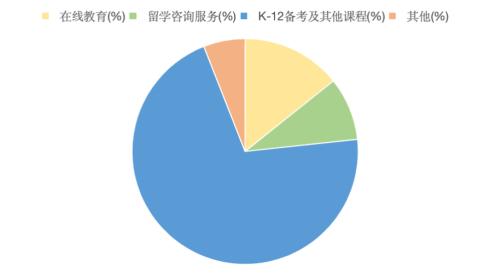
Proportion of Each Business of New Oriental in Fiscal Year 2026
Among them, the revenue from education services and exam preparation courses accounted for 63.9%, 63.0% and 70.5% of the total net revenue respectively.
It can be seen that education services have always been the core foundation of the company.
It is worth noting that the company's non-subject tutoring services are currently carried out in 60 cities across the country, with the number of student person-times reaching 2.804 million in fiscal year 2025; the intelligent learning system and equipment business has 479,000 active paying users, and the market outside the traditional education services is expanding.
Looking to the future, the growth of this part is also considerable. As of the end of the fourth quarter of fiscal year 2026, the company's deferred revenue balance was 2.243 billion US dollars, an increase of 14.8% compared with 1.955 billion US dollars in the same period of the previous year.
However, the once popular live streaming e-commerce business has declined.
In 2022, the company established the East Buy e-commerce platform, which achieved a GMV (Gross Merchandise Value) of 14.3 billion yuan in fiscal year 2024; in August 2024, the "With Hui Together" business was spun off from the company, and then the revenue of this part dropped to 8.7 billion yuan in fiscal year 2025. The proportion of product revenue in total revenue dropped from 18.8% in fiscal year 2024 to 11.6% in fiscal year 2025. It is intuitive to see that after the equity sale of "With Hui Together", the bonus brought by the live streaming e-commerce business to the company is far less than before.
But recovery does not mean there are no risks. Changes in regulatory policies are still the Sword of Damocles hanging over the company's head.
The company stated in its 2026 semi-annual report that it expects the net revenue for fiscal year 2027 to be between 6.454 billion US dollars and 6.680 billion US dollars, with a year-on-year increase rate between 14% and 18%. If the target is achieved as scheduled, the company's performance will hit a new high again.
Xueda Education: Focusing on Exploring Development Paths in Education Sector
Under the "double reduction" policy, Xueda Education has also experienced painful adjustments.
Affected by the clearance of K9 subject-based business and large-scale goodwill impairment in 2021, the company suffered a loss of 484 million yuan in that year.
Different from New Oriental's cross-sector exploration for development, Xueda Education has always been firmly rooted in the education sector. Judging from its performance, the company has walked out of the predicament brought by the "double reduction" policy.
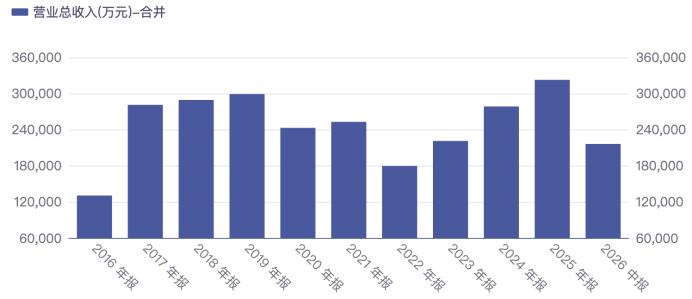
Operating Revenue of Xueda Education
From 2023 to 2025, the company's revenue maintained double-digit growth for three consecutive years. The revenue was 2.213 billion yuan in 2023, rose to 2.786 billion yuan in 2024, and further climbed to 3.227 billion yuan in 2025. The revenue scale has exceeded the historical high before the "double reduction" policy. Among them, the net profit attributable to parent company in 2025 was 195 million yuan, a year-on-year increase of 8.58%; the cash flow from operating activities was 739 million yuan, a year-on-year increase of 10.79%. Revenue, profit and cash flow all showed positive performance synchronously.
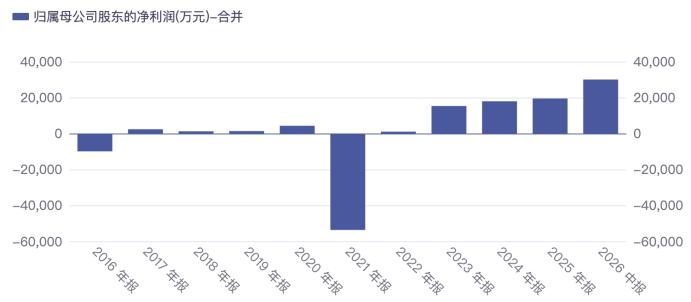
Net Profit Attributable to Parent Company of Xueda Education
In the first half of 2026, the company's profit elasticity was further released, achieving an operating revenue of 2.163 billion yuan, a year-on-year increase of 12.87%; the net profit attributable to parent company was 301 million yuan, a year-on-year increase of 30.85%, and the non-recurring profit and loss deducted net profit attributable to parent company even surged by 43.37%. The profit growth rate significantly outpaced the revenue growth rate.
Education and training services are the absolute source of revenue for Xueda Education. In 2025, the company's education and training service revenue was 3.12 billion yuan, accounting for as high as 96.67% of the total revenue. Almost all of its revenue comes from its core education business. The company's education and training services are mainly divided into one-on-one and small-group education and training services, and personalized one-on-one tutoring is still the company's most core competitive advantage. By the end of 2025, the company's personalized learning centers had expanded to 330, covering more than 100 cities across the country, with more than 5,100 full-time teachers.
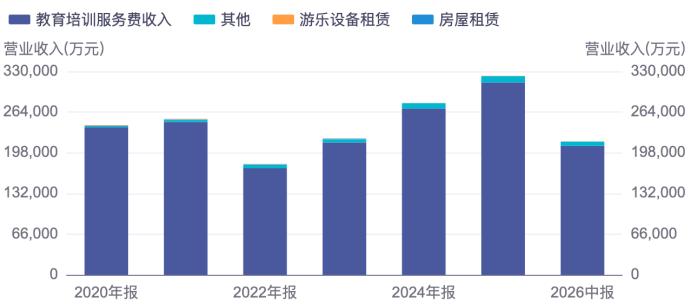
Composition of Operating Revenue of Xueda Education
Of course, learning from previous lessons, the company did not continue to bet all its assets on the traditional single track, but coped with uncertainties by getting involved in different education fields.
The first sector is full-time education. As of 2025, the company has set up 34 full-time training bases across the country, targeting students preparing for college entrance examination retakes and art examinees; at the same time, it operates 5 characteristic bilingual schools with more than 7,500 students on campus. The full-time business effectively fills the off-season of education and training institutions outside the winter and summer vacations.
The second sector is vocational education. As the second growth curve under the policy dividend, the company acquired 4 secondary vocational and technical schools, carried out cooperation around the integration of industry and education, and entered the talent training track for emerging industries. In addition, the company has also derived cultural reading business represented by Juxiang Bookstore, and set up 14 cultural spaces in 7 cities; as well as the integrated medical and education business for children with autism and learning