Lunar Perspective: Rethinking Global Strategy
Estimated full reading duration: around 14 minutes
As the boundary between products and services blurs increasingly, innovation no longer flows in a single direction. IMD professors point out that enterprises must complete three transformations of shift, melt and tilt, to coordinate and deploy their own capabilities in a diverse global ecosystem.
Quick Reading Key Points
The core proposition of global strategy has long gone beyond "where to produce and where to sell", and shifted to "where to learn, where to innovate, and how to acquire unique capabilities".
The source of competitive advantage is increasingly rooted in finding the ecosystem that best fits the development of specific capabilities, and opening up internal links and scheduling capabilities across the organization.
Corporate headquarters should play the role of "ecosystem coordinator": plan the global layout of various capabilities, build a collaboration mechanism, and enable knowledge and innovation to flow smoothly across the world.
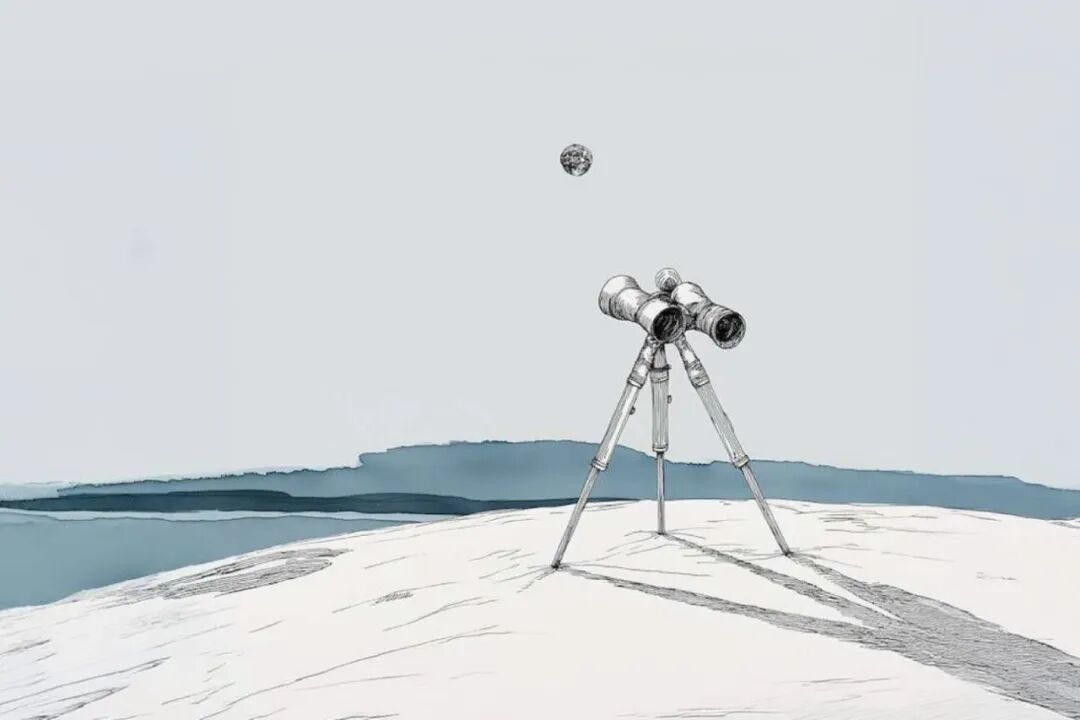
Imagine looking back at Earth from the moon. From this vantage point, national borders are no more than superficial lines, and what truly emerges clearly are interconnected networks: talents, knowledge, technology, capital and data flow continuously across the globe, linking different regions. Some regions are highlands for scientific discoveries, some excel in manufacturing, digital innovation trials, cutting-edge artificial intelligence exploration, or social model innovation.
From this perspective, the world is no longer a collection of segmented geographic markets, but a network composed of innovation ecosystems with their own unique features and interconnections. Looking back at the entire 20th century, global strategies have always revolved around a simple yet limited question: where to produce and where to sell? The typical expansion path of multinational enterprises is to copy mature local products to overseas markets, adjust functions according to local demands, with the headquarters located at the center to uniformly manage and control global businesses.
This set of logic still holds today, but it is far from sufficient. Nowadays, when enterprises go global, they are not only aiming to expand markets, acquire labor and resources, but also to obtain capabilities that are difficult to generate endogenously locally — including professional talents, discerning user groups, cutting-edge scientific research communities, mature supply chains, entrepreneurial networks, policy resources, and institutional knowledge deeply rooted in local ecosystems.
At the same time, the paradox of globalization has become increasingly prominent: intensified geopolitical games continue to raise the importance of national borders and national security; yet innovation itself has become more decentralized and more interconnected. A technology or idea may be born in one ecosystem, complete iterative upgrades in another, and finally achieve large-scale implementation with the capabilities of a third region.
Therefore, the core proposition of global strategy has changed: it is no longer just "where do we produce and where do we sell", but where do we go to learn, where do we cultivate capabilities, and how do we connect these capabilities to amplify value across the globe.
Three Transformations of the Global Economy
Three underlying trends explain why global strategies must break away from market-oriented thinking and turn to an ecosystem perspective.
shift: Shift of Value Gravity
For decades, the economics community has long verified the universal law of the service-oriented transformation of economies — the Petty-Clark Law points out that the growth engine of a national economy will shift from agriculture to manufacturing in sequence, and finally migrate to the service industry. Today in advanced economies, the service industry has occupied the absolute dominant position in business activities.
However, the shift at the strategic level is far more profound than the transformation of industrial structure: the underlying logic of value creation and value acquisition is changing. Value no longer only arises at the moment of product delivery, but more comes from the results achieved by customers using products for a long time. The value of Nike comes not only from selling shoes, but also from the sports and health ecosystem it has built; Michelin is no longer just selling tires, but helping fleets reduce the comprehensive operating cost per kilometer. Products are increasingly becoming carriers for continuous value delivery.
melt: Boundary Dissolution
As the value gravity shifts, various boundaries we are familiar with are constantly dissolving.
Manufacturing enterprises are increasingly similar to service enterprises: Apple Inc. is far more than a hardware manufacturer, but a comprehensive ecosystem that provides streaming media, payment, cloud storage and other services at the same time; Komatsu connects construction machinery and equipment to data analysis systems to provide operation optimization services. Conversely, service enterprises have also begun to deploy hardware: Amazon Echo, Google Nest, and Meta smart glasses are all physical entrances that cut into the service ecosystem. Hardware, software, data and experience are deeply integrated, and industrial boundaries are becoming increasingly blurred.
The organizational boundaries of enterprises have also become more permeable. Value creation no longer relies solely on internal resources of the enterprise, but requires joint efforts of multiple parties including customers, suppliers, technical partners, universities, and start-ups. In more and more industries, the competitive advantage of an enterprise has been deeply bound to the ecosystem it resides in.
tilt: Pattern Tilt
Thomas Friedman once said that globalization has flattened the world, but Pankaj Ghemawat reminds us that the world is actually always uneven. The differences between different countries in systems, culture, regulation, infrastructure and capabilities do exist, and the core of globalization is precisely how to properly manage these differences. Ram Charan added another perspective: the world is tilting, and economic vitality is gradually shifting from traditional advanced economies in the Global North to emerging economies in the Global South.
Nowadays, this tilted pattern is no longer limited to economic growth, but extends to the field of innovation. Kenya's M-Pesa pioneered the mobile payment model against the backdrop of insufficient traditional banking infrastructure; relying on Alipay and WeChat Pay, China quickly popularized the cashless payment and super app ecosystem; Indonesia's Gojek started from motorcycle sharing services and grew into a comprehensive digital life platform. This kind of "leapfrog innovation" breaks the inherent assumption that new ideas are first born in advanced economies. Innovation can flow in all directions, and different regions give birth to unique capabilities precisely because their users, systems, constraints, technologies and histories are all different.
Why Some Ecosystems Have High Value
Since capabilities are increasingly distributed across the globe, why can some places continuously lead in specific fields? Why has Silicon Valley always been the global highland of digital entrepreneurship? Why does Shenzhen have extremely strong capabilities in rapid hardware iteration and commercialization? Why does Switzerland, with a small land area, have global influence in the fields of pharmaceuticals, life sciences and precision industry?
The Diamond Model proposed by Michael Porter explains part of the underlying logic: production factors, discerning customers, mature supporting industries and sufficient market competition work together to give rise to the unique competitive advantages of regions. The National Innovation System (NIS) theory further expands the perspective: long-term interaction of factors such as universities, enterprises, capital, governments, scientific research institutions, suppliers, users, infrastructure and cultural concepts jointly shape the capability endowment of a region.
Different historical paths and institutional environments will give birth to completely different capabilities. High-demand user markets, unique supply chain networks, specific regulatory environments, profound scientific research accumulation, or long-standing industrial traditions can all enable an ecosystem to have far more advantages in cultivating specific capabilities than other regions.
Therefore, countries, cities and regions are no longer just markets or production bases, but ecosystems that nurture capabilities. In these ecosystems, Centers of Excellence (CoE) for specific capabilities will be born — talents, knowledge, systems, users, partners and industry experience are highly concentrated here, forming core capabilities that are difficult to replicate elsewhere.
The national innovation system is responsible for cultivating capabilities, the center of excellence is responsible for implementing and solidifying capabilities, and the role of multinational enterprises is to connect the capabilities scattered around the world. This connection relies on the "adhesive layer" proposed by IMD professor Mark Greeven — that is, the mechanism to establish collaborative relationships between different entities and different capabilities. For enterprises, the core challenge lies in: which capabilities should be deployed in which locations, and how to connect them.
From Global Site Layout to Global Capability Portfolio
The new generation of multinational enterprises must learn to find places to learn, sources of innovation, and connection nodes across the globe.
Taking Yamaha Motor's global layout as an example, there is never a single "best location" for innovation. The core capabilities of motorcycles are always deeply rooted in Iwata, Japan; while other business segments have formed specialized divisions around the world: leisure marine business in Georgia, USA, financial services in California, and electric vehicle R&D in Berlin. Yamaha does not tangle with "whether it is a Japanese enterprise or a global enterprise", but thinks: in which ecosystem each capability should be placed for development.
The Japanese service group Recruit is also a typical case. The company successively acquired Indeed in the United States in 2012 and Glassdoor in 2018, with the aim of acquiring digital platform operation, data technology, intelligent matching algorithms, and industry insights into the online labor market. Today, these businesses have become the core of Recruit's global human resources technology business and two-sided talent market. The value of an ecosystem always depends on what capabilities you want to acquire.
The flow of capabilities is always two-way. For global enterprises, Japan is not only a huge sales market, but also an innovation ecosystem worth learning from.
The core ingredient PITERA of SK-II under P&G was originally derived from observations of Japanese sake breweries — researchers discovered the special effect of the fermentation process on skin condition. SK-II has grown step by step from a local Japanese skincare brand to a global high-end beauty brand.
The story did not stop in Japan. In 2012, Singapore became the global headquarters of SK-II; P&G later announced that it would move the global management center of its skincare, makeup and personal care business from Cincinnati, USA to Kobe, Japan first, and then to Singapore — the goal is to get close to the fast-growing and diversified beauty market in Asia. Japan contributes unique skincare R&D capabilities and a high-demand pioneering market, while Singapore, with its diverse and open hub status, helps P&G integrate market insights across Asia and then promote them to the whole world.
The story of 7-Eleven shows a more complete capability cycle. The convenience store format originated in the United States, but its operation model was polished to the extreme in Japan — convenience stores evolved from simple retail stores to life platforms that integrate fresh food, payment, logistics, finance and various other convenient services. Now Seven & i Holdings is trying to export this 7-Eleven model that has been proven effective in Japan to overseas markets, even including the United States, the origin of the model. In 2024, the Canadian enterprise Alimentation Couche-Tard proposed to acquire Seven & i, which once caused a stir in Japanese business circles, although the acquisition was not finally completed.
From the perspective of the moon, two-way flows are valuable: capabilities can be exported outward from Japan, and enterprises will also actively access ecosystems that can enable their business models to continuously evolve.
These cases seem to point in different directions, but their underlying strategic logic is completely consistent: competitive advantage no longer only comes from the origin of the enterprise, but from the ability to identify unique global ecosystems, build or acquire corresponding core capabilities in them, and then mobilize these capabilities to serve the global market.
Not All Capabilities Need to Be Tied to Geographical Locations
The vast majority of centers of excellence have clear geographical coordinates: R&D centers are built in this city, and engineering bases are set up in that city. But there is also a type of capability that is highly mobile.
MUJI once launched the "World MUJI" project, whose core proposition is: if the brand was born outside Japan, what kind of products would it create? The project thus absorbs designers and local wisdom from all over the world. Today's "Found MUJI" project continues this idea: cross-cultural teams go to various parts of the world to find ordinary objects that have been used in daily life for generations and polished repeatedly — it is about "discovering good objects" rather than "creating new products", and then reinterpret them with MUJI's brand philosophy.
In 2006, the MUJI team found in a village in the Czech Republic that the socks knitted by local elderly women by hand were woven along the natural 90-degree angle of the heel, while the standard for industrial production at that time was 120 degrees. To scale up this discovery for mass production, it was necessary to transform the production technology of the traditional sock industry area in Nara, Japan. Today, all MUJI socks adopt the 90-degree right-angle heel design. A small capability discovered in a Czech village, combined with Japanese manufacturing technology, was finally promoted to the whole world.
In this model, the core capability actually lies in the organization itself: go out to observe, discover tiny bright spots scattered around the world, transform them with your own brand philosophy and production system, and finally achieve global large-scale application.
The New Role of Corporate Headquarters: From Control Center to Ecosystem Coordinator
All this is reshaping the mission of corporate headquarters. The core functions of the headquarters of traditional multinational enterprises are to control, allocate resources, and coordinate subsidiaries. But under the global capability ecosystem model, the challenges faced by headquarters are completely different: high-value capabilities may be born in places far away from the headquarters, and knowledge is no longer output unidirectionally from the headquarters outward.
For leaders, two core tasks have become critical:
Layout design: decide where to place various capabilities. Judge which capabilities must be rooted locally, which are suitable for overseas cultivation, and which ecosystems are most suitable for learning and innovation.
Collaborative linkage: prevent capabilities scattered around the world from becoming isolated islands. Whether it is innovations born in Kobe, Berlin, Milan, Boston, Nairobi, or a Czech village, if the entire organization cannot identify them, connect complementary capabilities, and place them in places that can create maximum value, it will be difficult to form real competitive advantages.
Corporate headquarters increasingly need to play the role of ecosystem coordinator. Every local innovation ecosystem needs "adhesive" to connect all parties; and the role of the headquarters is to provide cross-ecosystem "meta-adhesive" — to connect the capabilities rooted in various places, so that they can learn from each other, complement each other's strengths, and amplify each other.
Looking Back at Earth
Standing on the moon will not make the differences between countries disappear, but on the contrary, allow us to see the strategic value of these differences more clearly. Under the political national borders, there is another layer of geographical pattern: evolving innovation systems, specialized capabilities, various centers of excellence, and the knowledge flow network that connects all of this.
The core thinking of 20th century multinational enterprises was "where to produce and where to sell"; while the new generation of multinational enterprises must master "where to learn, where to innovate, and where to build connections". The world is not just a collection of markets, but a network of capabilities waiting to be integrated.

Five Questions for Leaders
In discussions with executive teams, we will guide everyone to truly switch to the "lunar perspective": put aside the existing organizational structure, and imagine redesigning the entire business from scratch. This perspective will not only make managers think about "what changes need to be made", but also push everyone to figure out: in each region, what things need to be started, what things need to be stopped, and what things need to be continued.
Please try to answer these five questions:
If we founded this enterprise from scratch today, which place in the world would we choose to start? Why? Which ecosystem can gather high-quality customers, talents, technologies, partners, institutional environment and competitive pressure at the same time, allowing us to learn and grow at the fastest speed?
By 2035, what should our ideal global capability layout look like? If we design for the future instead of sticking to the legacy layout of the past, where should each business, function, and center of