The former Vice President of Landspace strikes out on his own, focusing relentlessly on the "full-flow staged combustion" technology identical to that of SpaceX, and Ningbo has thrown its full weight behind the project with a massive 8.6-billion-yuan industrial base investment.
Not content with only manufacturing valves and lenses, Ningbo has purchased a "boarding pass" for heavy-lift rockets with an 8.6-billion-yuan industrial base.
Recently, at the special commercial aerospace session of the "Global Ningbo Entrepreneurs Homecoming" event in Ningbo, Zhejiang, Huosheng Aerospace (Beijing) Technology Co., Ltd. signed a contract with the Ningbo Marine Economic Development Demonstration Zone, announcing the official launch of its 200-ton-class liquid oxygen methane engine project.
This engine, named "Huosheng No.1", has adopted the most widely recognized technically challenging route in liquid rocket propulsion — the full-flow staged combustion cycle (commonly known as "full-flow afterburning"). Looking across the globe, at present only SpaceX's Raptor has successfully flown with this technical route.
Gao Yufeng, Co-founder and CEO of Huosheng Aerospace, stated on site that the company will play the role of a core chain-leading enterprise, and build a complete industrial chain in Ningbo covering engine final assembly and testing, rocket manufacturing, and launch services.
What has drawn widespread public attention this time is the contrast between the R&D progress of the engine and the planned scale of the base.
On one side is a startup company whose engine has only completed the test run of the scaled-down preburner, and has not yet entered the final assembly of the complete machine; on the other side is a national-level commercial aerospace base with a planned total investment of 86.6 billion yuan and a land area of 67 square kilometers.
Ningbo is using one of the largest heavy-asset new commercial launch sites under construction in China to support an engine that is still in the stage of breaking through technical barriers between design drawings and test benches.
01
175-ton option, where does it rank in the most crowded "no-man's land"?
Setting aside the "200-ton-class" promotion in investment attraction press releases, the actual parameters and engineering progress of Huosheng No.1 determine the fundamental nature of this project settlement.
According to publicly disclosed technical indicators, Huosheng No.1 has a sea-level specific impulse of 315 seconds and a combustion chamber pressure of 20 MPa. For the core thrust data, there are currently two widely circulated versions in the industry: one states that its sea-level thrust is 175 tons and the single-unit structural mass is 1.4 tons; the other says that the first-generation mass-produced model has a sea-level thrust of 140 tons and a structural mass of 1.5 tons.
Combined with Huosheng Aerospace's planned "Qitian No.2" heavy-lift rocket, whose first stage adopts 9 engines in parallel with a takeoff thrust of 1300 tons, the gradient setting of a single engine with a sea-level thrust of more than 140 tons and a vacuum thrust of around 175 tons is more logically consistent on the engineering ledger.
In terms of engineering progress, Huosheng No.1 is currently in the transition stage from tackling key core components to joint debugging of the complete machine. As of the first half of 2026, the completion rate of components such as the gimbal mount, thrust chamber, and methane pump has reached 100%, and the completion rate of core assemblies such as the liquid oxygen turbopump, oxygen-rich/fuel-rich preburner, and main and auxiliary valves is between 90% and 95%.
In May this year, Huosheng Aerospace just achieved the key milestone of the hot test run of the scaled-down oxygen-rich preburner prototype. Under three working conditions: 5-second short-time operation, 10-second steady-state operation, and 100-second long-duration operation, the deviation between the measured data and the simulation result is controlled within 3%.
However, for industry insiders, there are still several major engineering gaps between a "scaled-down preburner" and a "full-size complete engine". According to the schedule, Huosheng No.1 is planned to complete the final assembly of the complete machine and the full-system hot test run by the end of 2026, and support the maiden flight of "Qitian No.2" in 2028. In the hard technology field, any unignited schedule can only be regarded as an option to be verified.
More importantly, on the extremely narrow track of "full-flow afterburning" in China, Huosheng Aerospace is not the only player, nor even the fastest pacesetter. At present, at least six domestic enterprises are simultaneously launching challenges to this "pearl on the crown of propulsion":
Landspace: It takes the lead in progress. Its 220-ton-class full-flow engine "Blue Flame" has completed the full-system long-duration test run of the complete machine in March 2026, with a total of more than 100 ignitions (Landspace's other mature product line, the "Tianque" series gas generator engines, has supported the Zhuque-3 Y2 rocket to complete China's first first-stage land recovery in August this year).
Star Shuttle Technology: Its 200-ton-class "Mammoth No.1" has a designed sea-level specific impulse of 326 seconds, slightly higher than Huosheng No.1. It just completed the hydraulic tests of the oxygen pump and methane pump in July this year, and also targets the full-machine hot test run in the second half of the year.
Other players: Weiguang Qihang's "Huaguang No.1" has publicly completed the preburner hot test run and fluid test; Qianyi Aerospace's 300-ton-class "SY-300FF" just passed the project approval review in late September this year......
Putting Huosheng No.1 in this industry coordinate system, its position is in the middle reaches. Six domestic companies are collectively developing this technology, and none of them has been finalized and put into actual flight, which is the realistic background for Ningbo to sign the cooperation agreement with Huosheng Aerospace.
02
The narrow gate that Raptor has been exploring for 12 years, and the solo flight of a former Landspace veteran
Why do domestic commercial aerospace companies, knowing that full-flow afterburning is extremely difficult, still flock to tackle this challenge? Because the only reference on this technical route is SpaceX's Raptor, which has proven the absolute dominance of this architecture in terms of thrust-to-weight ratio and reuse life through the Starship program.
But even for a powerful company like SpaceX, it paid a very tragic price to make this route work. From formally locking the liquid oxygen methane full-flow route in 2012 to the mass production of the third-generation Raptor (Raptor 3) in August 2024, Musk's team spent a full 12 years.
Raptor 3 has a sea-level thrust increased to 280 tons, a vacuum specific impulse of 350 seconds, and a single-unit weight reduced to 1525 kg. In the three core dimensions of thrust, specific impulse and chamber pressure, all the models currently under development in China are followers of it, and there is an obvious generation gap between them and Raptor.
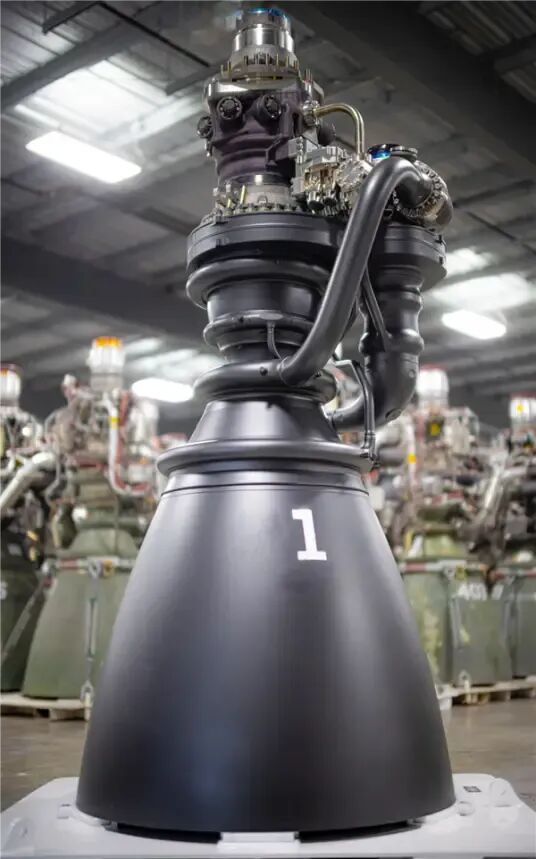
Raptor Rocket Engine
These 12 years of data are obtained from countless exploded prototypes. In the 1960s, the Soviet Union once developed the RD-270 engine using the full-flow cycle, but it eventually failed to achieve a single flight due to unstable combustion and out-of-control R&D cycle.
At SpaceX, the first full-size Raptor prototype exploded immediately after ignition at the McGregor test site in Texas in 2016; from the end of 2020 to the beginning of 2021, Starship prototypes SN8 to SN11 exploded one after another; until the 8th flight of Starship in March 2025, the super-heavy booster still suffered a tail energy event that caused multiple engines to fail.
Even after the Starship V3 completed its maiden flight in May this year (33 Raptor 3 engines in parallel generated a thrust of more than 90,000 kN), the 13th flight in July still encountered an ignition abort at T-0, and the upper stage of the 14th flight even experienced chamber pressure oscillation and abnormal temperature rise of the turbopump, which directly cast a shadow over the schedule of NASA's Artemis moon landing program.
Musk has sighed more than once that Raptor is "the most difficult rocket engine ever built". The root of this life-and-death technical barrier lies in the component that Huosheng just completed the test run in May this year — the oxygen-rich preburner.
In the full-flow afterburning cycle, the oxygen-fuel mixing ratio of the oxygen-rich preburner is usually as high as 150 to 200. This means that a huge amount of high-temperature and high-pressure liquid oxygen directly scours the turbine blades. A research team from the Massachusetts Institute of Technology (MIT) once pointed out that in this extremely oxygen-rich environment, any tiny particle impact may directly ignite the metal components.
There are only two engineering solutions: either widen the gap of rotating parts to prevent friction from causing fire, but at the cost of seriously sacrificing engine performance; or invent special alloys resistant to oxygen combustion and explosion from the bottom layer, and combine metal additive manufacturing (3D printing) with oxygen-resistant ceramic coatings to overcome the problem.
Huosheng Aerospace, which has been established for only two years, dares to make an aggressive military order of "maiden flight in 4 years", and its confidence largely comes from the resume of its core founding team.
Ge Minghe, the founder of Huosheng Aerospace, is not a newcomer who entered the industry across different fields. He is the former Vice President of Landspace and General Manager of the Propulsion R&D Department, who once personally led the team to develop the "Tianque" series of liquid oxygen methane engines, sent the Zhuque-2 Y2 rocket into orbit, and won the record of the world's first successfully orbited liquid oxygen methane rocket.
Against the background of Landspace's internal implementation of the "Tianque (gas generator) + Blue Flame (full-flow)" dual-track parallel strategy, Ge Minghe left the company in 2024, founded Huosheng Aerospace in Sanlitun, Beijing, completely cut off the transition route, and bet all on full-flow afterburning.
In order to shorten the trial-and-error cycle, Huosheng reached a strategic cooperation with the team of Academician Chen Shiqi from the Chinese Academy of Sciences, and built a multi-physics field simulation system with deep coupling of LBM (mesoscopic fluid simulation) and CFD (macro computational fluid dynamics), which is also the technical support that allowed its scaled-down preburner to control the error within 3% in the first test run.
At the same time, Co-founder Gao Yufeng led the team to contact Shanxi Lu'an Chemical Machinery to find a shortcut for engineering implementation in special equipment welding technology and corrosion-resistant materials.
In addition to focusing on engine development, Huosheng also tries to achieve differentiation in the overall rocket design. Its planned "Qitian No.2" adopts a 6-meter-diameter stainless steel rocket body, with a low-Earth orbit carrying capacity of 33 tons.
While most domestic private rocket companies are imitating Falcon 9's "vertical return landing with landing legs", Qitian No.2 adopts the far-sea net recovery scheme that is homologous to the national team's "Long March 10" series: the first stage of the rocket does not need to consume valuable propellant to fly back to the land launch site, but falls to the far-sea recovery ship along the ballistic trajectory, and is captured in the air by an open rope net.
This route not only greatly reduces the difficulty of guidance and control, but also saves a large amount of fuel that can be converted into payload.
Of course, the company's claim that "the material cost of a single rocket does not exceed 200 million yuan, and the launch cost per kilogram is less than 10,000 yuan" is still only an ideal model on paper before the maiden flight is verified in 2028.
03
8.66 billion yuan and 40 years of manufacturing heritage: What is Ningbo actually buying?
Since Huosheng No.1 is still breaking through technical barriers and Qitian No.2 is still in the long-term plan, why is Ningbo willing to invest heavily right now?
The Ningbo Commercial Aerospace Industrial Base that hosts Huosheng Aerospace this time is located on Pingfengshan Island in Xiangshan County and the Xiangbao Cooperation Zone, realizing land-sea linkage of "rocket manufacturing on land and launch on island" through a cross-sea bridge. The project operator is Ningbo Commercial Aerospace Development Co., Ltd., a state-owned enterprise established in January this year with a registered capital of 1 billion yuan, which is 50% owned by Ningbo Development Investment Group and 50% owned by the Xiangbao Cooperation Zone.
Looking through the planning ledger of this base, you can see a very rare large-scale investment from Zhejiang local state-owned capital: the total investment is 86.6 billion yuan, with a planned total area of 67 square kilometers (including 35 square kilometers for the launch site and 32 square kilometers for the industrial supporting zone), and the planned annual launch capacity is as high as 100 times.
In the first half of this year, the 50 million yuan worth of engineering survey, the 2.3 million yuan feasibility study report, and dozens of marine hydrological and ecological station surveys undertaken by the Zhejiang Academy of Marine Sciences have been carried out intensively; sub-projects such as the onshore industrial zone, island infrastructure, and island connecting channels have all completed the approval and filing procedures, and are scheduled to officially break ground in October 2026 and be completed and put into operation in March 2028.
If we compare the Xiangshan Base in the map of national commercial aerospace launch sites, its ambition is clear at a glance:
Hainan Commercial Space Launch Site: the first operational commercial launch site in China, which completed its maiden flight in November 2024. After all the 1st to 4th launch pads are completed, its annual designed launch capacity will be more than 60 times;
Jiuquan Dongfeng Commercial Aerospace Innovation Pilot Zone: the headquarters of private enterprises in the inland Gobi Desert, gathering leading players such as Landspace, Tianbing Space, CAS Space, and Galactic Energy, with strong capabilities in testing and land recovery;
Shandong Haiyang Oriental Aerospace Port: focusing on sea mobile platform launches, which has carried out more than 25 sea launch tasks so far.
In contrast, the Ningbo Xiangshan Base, with an annual launch capacity of 100 times, directly ranks first in the scale of newly built bases in China.
More importantly, Ningbo is located in the sea area near 29 degrees north latitude, which not only has better drop zone safety than inland launch sites (which perfectly matches the far-sea net recovery of Qitian No.2), but also is backed by the extremely dense precision manufacturing supply chain in the Yangtze River Delta.
In fact, before signing a whole-machine "chain-leading" enterprise like Huosheng, Ningbo's hidden champions have already sent their parts into space. At present, there are 27 aerospace enterprises above designated size in Ningbo, with a total output value of 133.64 billion yuan in 2025; 15 aerospace projects have been implemented in the Qianwan New Area alone, with a total investment of over 100 billion yuan.
In this long supply chain list, there are no shortage of hard-core players.
Yongxin Optics has provided optical lenses for Chang'e-2, Chang'e-3 and Chang'e-4 since 2010. The space microlab instrument it developed has been operating in orbit with the Tianhe core module for more than 4 years, and took the first picture of the beating of cardiomyocytes in space in human history;
Founded in 1981, Ningbo Xingjian Aerospace Machinery (Xingjian Technology), as the first private enterprise in Ningbo to obtain all four "military industry certifications", has been providing high-pressure gas circuit valves and filling gas supply systems for Jiuquan, Xichang and Wenchang launch sites for decades. Its figures are behind the tower gas supply of Chang'e-1, the high-pressure high-purity oxygen combination valve of Tiangong-2, and the launch support of Long March 5 and Long March 7.
In addition, local manufacturing leaders such as Bowei Alloy, Vulcan, Changyang Technology, and Tianshi Sealing Parts have long occupied key links in aerospace special materials, optical films and high-end