Investigation into the "block underwriting" of Hong Kong stock pharmaceutical IPOs: The thousand-fold subscription illusion under the new regulations
Rumors of alleged manipulation surrounding ChaBaiDao's IPO continue to spread, and a rarely used term "block booking" has rapidly gained traction among investor groups.
The so-called "block booking" refers to a practice where capital parties use private agreements to take up the vast majority of new share allotments during the international placement phase, creating a false impression of over-subscription and scorching market demand. The syndicates behind such operations often set up multi-layer offshore entities as allottees, and even arrange undisclosed structures to channel IPO fundraising funds back to form a closed loop. This artificially manipulated "false boom" in IPO subscriptions seriously distorts the real supply and demand of new shares, leaving many retail investors with total losses.
Looking beyond the surface to see the essence, the core reason why grey-area practices like "block booking" can breed and spread lies in the cooling down of the capital market. For companies with low public visibility in particular, weak investor interest in share offerings is a common dilemma. To successfully complete their IPO and get listed, these companies are incentivized to use "block booking" to create a facade of high market demand.
To restore the true picture of the market as much as possible, we have systematically sorted out the new share allotment announcements of 50 pharmaceutical industry companies listed since 2024, and compiled the data into charts and graphs. It should be noted that in the absence of official notifications, it is very difficult to make a clear and definitive determination of the existence of "block booking" practices. Therefore, this article will downplay subjective judgments and focus on the data itself. As for whether "block booking" exists, we believe investors have their own fair judgment.
01 Hong Kong Stock Exchange IPO Offering Rules
Hong Kong stock IPO offerings mainly have two major channels: public offer and international placement.
The public offer is mainly targeted at retail investors with a low subscription threshold, which is divided into Category A (subscription amount below HK$5 million) and Category B (subscription amount above HK$5 million) according to the size of investors' subscription, and share allocation is usually determined by ballot or allocation benchmarks. The international placement is mainly targeted at cornerstone investors, institutional investors and other professional investors, and the share allocation is usually determined at the discretion of the bookrunner based on subscription status, investor quality and communication with the issuer.
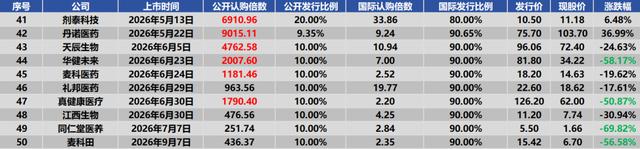
Figure: Hong Kong Stock Exchange IPO Offering Channels
Generally speaking, international placement accounts for a relatively large proportion in IPO offerings, while public offer accounts for a relatively small proportion. But this is not absolute. If the public offer is exceptionally popular, the issuer can transfer part of the quota originally allocated to international placement to the public offer. This mechanism is called the "clawback mechanism".
On August 4, 2025, the new IPO rules of the Hong Kong Stock Exchange came into effect, introducing a "dual-track system" for issuers to choose independently. The first mechanism retains the "clawback mechanism", with the initial proportion allocated to the public offer set at 5%, but the maximum upper limit of clawback proportion is lowered from 50% to 35%. The second mechanism gives full autonomy to the issuer, allowing it to set the proportion allocated to the public offer between 10% and 60%, while canceling the traditional "clawback mechanism".
It is the implementation of the "new mechanism" that leaves room for the operation of "block booking". If an enterprise sets the proportion allocated to the public offer at 10%, since there is no clawback, no matter how hot the subscription is, the quota allocated to retail investors is fixed. The enterprise only needs a small public share to create a false impression of "shares are hard to come by". In addition, "block booking" may also occur in other links such as international placement. Of course, not all enterprises that set the public offer proportion at 10% have "block booking" practices, and investors still need to make their own judgments in combination with other information.
In short, the core purpose of "block booking" is to boost the popularity of the enterprise's IPO. Therefore, the allocation data in the allotment result announcement released after the enterprise is listed often provides important clues, which is also the core content of the following analysis in this article.
02 New Regulation as a Watershed
After systematically reviewing the new share allotment announcements of 50 pharmaceutical industry companies listed since 2024, we can clearly observe that: August 2025, when the new regulation was released, is a clear watershed.
Before that, the public subscription multiples of IPOs were generally below 1000 times, and as the subscription multiples rose, the proportion of public offer would increase accordingly according to the clawback mechanism, which conforms to the normal offering logic. After the new regulation, the public subscription multiples of pharmaceutical companies' IPOs began to rise sharply, often reaching thousands of times, but the public offer share has long been locked at 10%, leaving investors who failed to get allotment very frustrated.
As can be seen from the above figure, among the IPOs of many pharmaceutical companies, the offering data of Hengrui Medicine is relatively reasonable, which can be roughly used as a reference by investors. In the meantime, the first AI pharmaceutical stock CrystaTech only obtained a hundred times over-subscription during its IPO, which can also be used as a benchmark for everyone's analysis.
Of course, IPOs before the new regulation did not have no "block booking" problems, but the phenomenon was not as widespread as it was later. Judging from the data, the public offer proportion of at least more than 20 pharmaceutical companies is seriously deviated from the subscription popularity, and whether it constitutes "block booking" is subject to the determination of the regulatory authority. But what is certain is that under the new regulation, the false illusion of "shares are hard to come by" is eroding the credibility of Hong Kong stock IPOs.
This article is from the WeChat official account "Breakthrough Bio", authorized for release by 36Kr.