From Dr. Luka to CapaLeap: The Platformization Choice of a Children's AI Company
Turning an idea into a runnable mini-tool is becoming easier. In 2025, OpenAI launched Agent development tools that support tool calling and task orchestration; Anthropic also enabled users to create, modify and share AI applications through conversations with Claude. From raising questions to hands-on implementation, AI has begun to take on more execution work.
As a result, children's AI products get the opportunity to extend a single Q&A session to a finished work. Children need to articulate their vague ideas clearly, judge the results given by AI, and decide how to adjust in the next step. How to help them go through this process has become a new product topic.
Taking the "Leap into the Future — CapaLeap Global Brand and Ecosystem Launch Event" as an opportunity, Dr. LuKa has been upgraded to CapaLeap, positioning itself as an AI Agent platform and terminal brand for children and adolescents aged 3 to 18 around the world. Its business scope has also extended from photo-taking learning exploration to learning and creation in a longer growth stage.
This transformation aims to answer a long-term question: as children grow up and devices are replaced, how can a children's AI company continuously accumulate its technical capabilities and user relationships in this process?
1. From Photo Learning Device to Sensation & Creation Platform
In the view of Yang Kun, CEO of Dr. LuKa, AI makes knowledge acquisition and task execution more convenient, and also puts forward new requirements for children's products. The team initially served younger age groups through photo learning devices. As children grow up, their expression ability, cognitive level and task complexity will all change. He hopes to incorporate these changes into a continuously evolving product system, so that the company can move forward along the needs of existing users.
Yang Kun introduced a scenario from the team's creative activities to 36Kr: a child wants to make an interactive birthday card, put the photo, name and shared experiences of the blessing recipient into it, and then through repeated communication with AI, modify it step by step to the desired appearance.
Who to send it to, which memories to include, and what effect to present, all require children to make their own choices. AI helps complete the execution, and the changes of the work will lead to new ideas.
This is exactly what CapaLeap defines as Vibe Creating. "The idea belongs to the child, and the execution is done by AI." Yang Kun said. After getting the results, children continue to think, judge and modify, forming a creation process that can be promoted repeatedly.
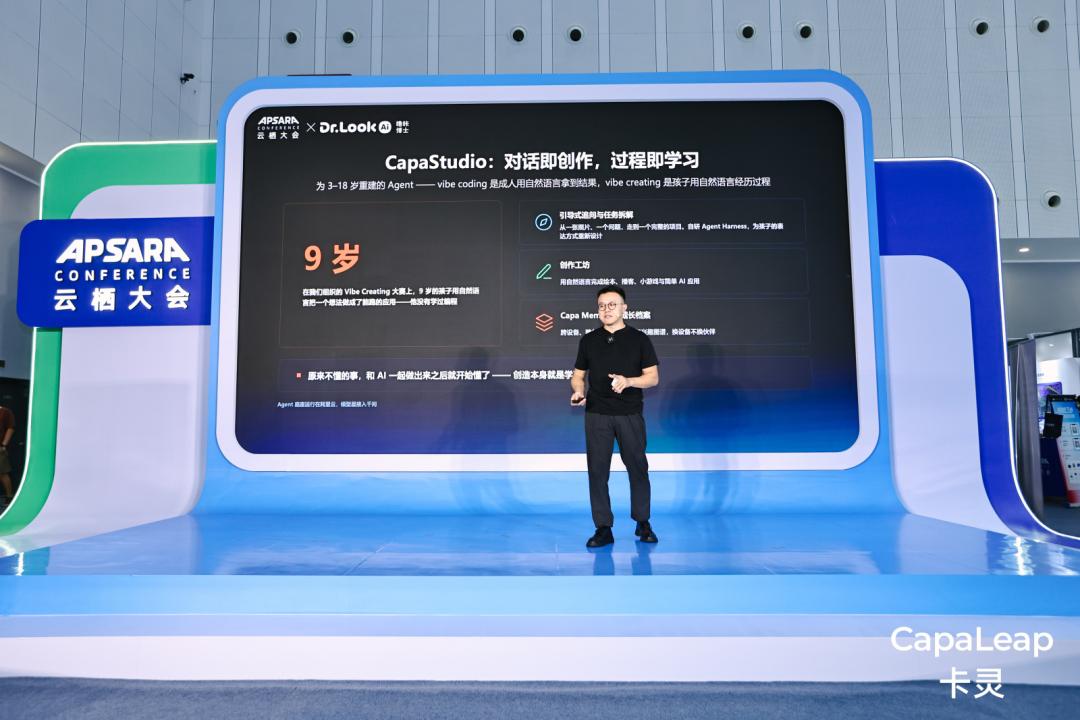
Yang Kun repeatedly talked about judgment in the interview. He believes that after AI gives a result, children still need to decide whether the result meets their own ideas, where to modify, and what question to raise next. "You need to keep all the decision-making power in your own hands." This is the usage mode he hopes the product conveys.
In another scenario shared by Yang Kun, a child used AI to sort out the summer vacation schedule, and made arrangements such as getting up, going out and exercising into usable mini-applications or interactive web pages. This kind of task comes directly from life. Children are not only the people who put forward demands, but also the people who test the results. Whether the work is usable and convenient will provide a specific basis for the next round of modification.
However, handing this over to children requires dedicated product design. In Yang Kun's view, general-purpose tools emphasize the efficiency of task completion, while children's products need to embed guiding thinking into the task process. Young children's expressions may be scattered and vague, and they may not know how to put forward clear requirements. The product needs to help them clarify their ideas through follow-up questions, and present the results in an age-appropriate and intuitive way. Parents' requirements for content and usage management also need to be incorporated into product design.
He also regards this route as a supplement outside classroom and subject education. Children can start from a story, an experience or a certain interest, and gradually make their own things. Therefore, sensory creation products need to find tasks that allow children to take the initiative to start and are willing to continue investing, which will affect content organization, interaction rhythm and product promotion methods.
The photo learning device is the starting point of this transformation. When a child takes a picture of a woodlouse, he can first know what it is called, and then ask why it curls into a ball. Yang Kun hopes that subsequent interactions can encourage children to put forward guesses and carry out exploration, extending a single object recognition to continuous thinking. As children grow up, similar interests can further develop into research projects or creative works.
According to 36Kr, its photo learning device products have accumulated a net delivery of 220,000 households within 20 months. Yang Kun introduced that the team has built a multi-modal interaction and multi-model scheduling system at the photo learning device stage to complete users' exploration tasks. The existing engineering accumulation and family usage feedback form the foundation for extending to the new platform; how the new platform serves older age groups still needs to be verified in specific products.
2. Let the Same "Brain" Serve Different Growth Stages
For the new business architecture, the company summed it up in one sentence — CapaLeap: One Brain · Multiple Terminals · Full Ecosystem. It also defines the respective roles of software, terminals and partners.
Among them, the "One Brain" refers to CapaStudio. According to the publicly announced architecture, this platform is responsible for guided follow-up questions, task disassembly and tool scheduling, so that a photo or a question can continue to develop into a project. Its self-developed Agent Harness, that is, the framework for organizing models and tools to execute tasks, needs to adapt to children's expression patterns. In terms of technical division of labor, the Agent base runs on Alibaba Cloud, and the model layer accesses Tongyi.
Following this idea, the general capabilities provided by the model need to go through child-oriented task orchestration to enter the specific experience. The system needs to judge whether a question needs further follow-up, which information has not been clearly expressed, and what tools are suitable to call next. In Yang Kun's view, age, cognitive level and current task all need to be taken as the context during orchestration.
A design scenario in the launch event is that when a child asks why the area of a parallelogram is base multiplied by height, the Agent guides the child to think about how to cut and splice, and then generates a draggable mini-tool. CapaLeap hopes that children can gradually understand the problem through operation and feedback.
CapaMemory undertakes the role of long-term memory and growth files, taking interests, works and historical projects as the context for subsequent interactions. Yang Kun specially mentioned that children's cognition is constantly changing. Previous wrong guesses may have been corrected, and interests will also shift. The system needs to handle these changes to provide useful help in the next creation.
The launch event further described the path of memory participating in creation: sort out scattered expressions into demands, supplement the context by combining historical projects, and then confirm through multiple rounds of Q&A to form executable tasks. According to this design, when a child remakes or modifies a work, the system can use previous project experience to reduce the burden of explaining from scratch. The value of memory must also be reflected in whether it can help complete the current task.
The supporting CapaGuard sets usage boundaries around age-appropriate content, privacy protection and parent management. For CapaLeap, understanding children's expressions, updating memories and managing age-appropriate content are all engineering tasks that the platform needs to continuously invest in.
Special-purpose terminals also play a role in interaction design. Yang Kun gave an example: younger children take pictures of whatever they see, which is more intuitive than organizing a complete question; as they grow older, voice description, supplementary conditions and longer tasks gradually become feasible. The hardware form and task length need to be adjusted along with these changes.
"Multiple Terminals" allows this set of capabilities to enter different age groups. After the existing photo learning device series is incorporated into the new brand, CapaCap is oriented to 3-6 years old, undertaking photo recognition and interest enlightenment; CapaSnap is oriented to 5-9 years old, expanding exploration content and interaction. Both products are already on sale.
CapaNote for 6-16 years old is the company's key product in the next stage. It is also about to be launched, which will undertake more independent learning, project exploration and creative tasks, covering work forms such as picture books, podcasts and mini-games. The supporting full-series CapaPrint plans to print photos, knowledge cards and creative outputs, so that works can further enter children's daily lives.
Therefore, the importance of CapaNote lies in that it needs to undertake the change from instant exploration to continuous creation. Taking a picture of something often initiates an interaction; completing a picture book or mini-application requires repeatedly supplementing requirements, checking results, and modifying details. The company's product polishing in the next stage will also face the continuous experience in such longer tasks.
These age ranges are intentionally kept overlapping. The company hopes that after children gradually develop more complex expression and operation capabilities, they can switch to the next device and continue to use the original growth files and creation accumulation. The common Agent system thus becomes the foundation connecting different terminals.
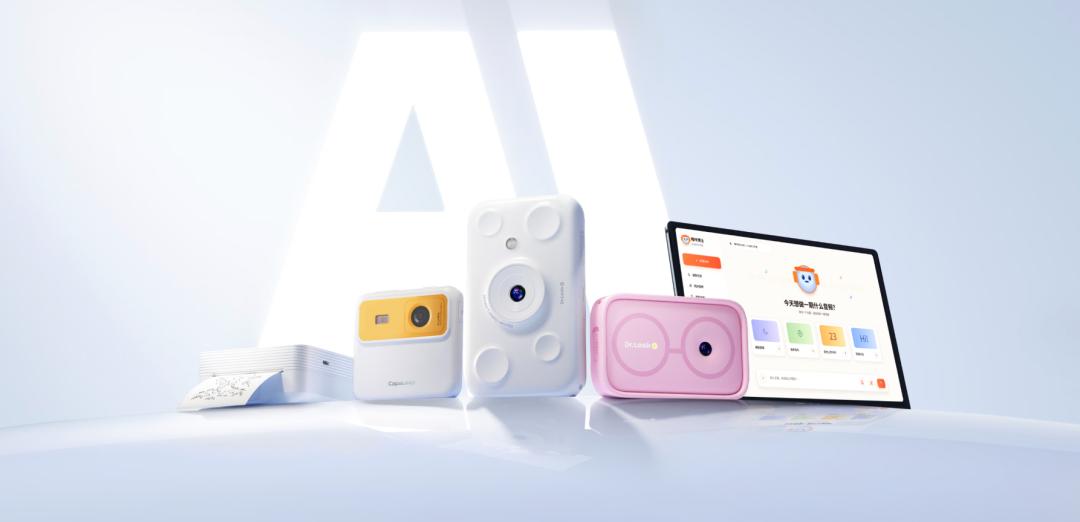
"Full Ecosystem" corresponds to the expansion of content and scenarios. Through the CapaLeap Partner Co-Leap Program, the company hopes to attract participants from education, brands & IP, cultural tourism, channels, as well as developers and content creators. The works created by children themselves are also included in this content system.
3. What to Accumulate for Platformization
From the perspective of the primary market, the long-term value of this layout first depends on whether the company can turn the investment of each generation of products into capabilities that the next generation can inherit.
"For us, the greatest compound interest is actually our agent system." Yang Kun said. The team focuses its main self-developed investment on the software platform, while on the hardware side it relies on supply chain and solution partners to emphasize quality and stability, and on the content side it builds together with partners.
This division of labor is expected to reduce repeated development investment for new products. If the task orchestration, memory and content management system can serve more terminals, new products can inherit the existing foundation, and invest more resources in solving problems in new scenarios. Its effect will eventually be reflected in product experience, development efficiency and service cost.
When different applications can access similar basic models, CapaLeap hopes to form differences in specific links of children's usage. Faced with the same incomplete demand, whether the system can make appropriate follow-up questions; when generating the same work, whether children can understand and continue to modify, all need to be repeatedly verified by the product. This means that the improvement of model capabilities is only the starting point, and stably converting capabilities into experience is the work that the team continues to invest in.
User relationships also have the opportunity to be extended. If the works and exploration records left by children can continue to play a role in subsequent learning and creation, they will form a reason for reusing. The observation of this logic needs to further fall on continuous creation, cross-device usage, and whether users continue to use after device replacement. The delivery scale of existing photo learning devices provides the foundation for family reach, and the new platform still needs to build its own usage habits.
From a business perspective, this points to the usage and purchase relationship of a family over a longer period of time. The family needs that the team understood at the photo learning device stage may become the design basis for the next stage of products; users who have accumulated works may also have reasons to migrate to new creative terminals. Whether this connection can be realized will affect the company's repurchase opportunities and the way to acquire new product users.
Ecosystem cooperation is related to content supply and commercialization space. According to Yang Kun, the team has tried photo learning courses in kindergartens in Shenzhen, and optimized photo exploration scenarios in Xianhu Botanical Garden. Entering the new platform stage, these attempts can be expanded to courses and project tasks provided by educational partners, or themed exploration content participated by cultural tourism and IP partners.
Taking the cultural tourism cooperation envisioned by Yang Kun as an example, the existing commentary and knowledge materials of the venues can become the content foundation of the Agent. After children bring their devices to the scene, they can raise questions around the exhibits in front of them, and the system will combine these materials to carry out interactions. The knowledge materials and exploration themes of different venues will be different, and content sorting, update and device services need to form a stable division of labor in cooperation.
In this division of labor, CapaLeap provides Agent capabilities and terminals, and partners bring professional content, scenarios and user touchpoints. Yang Kun mentioned in the interview that cultural tourism scenarios can explore device leasing, and can also carry out business through revenue sharing cooperation; the Co-Leap Program also puts forward the direction of revenue sharing for developers and creators. These cooperations have the opportunity to make the same set of Agent capabilities serve more paid scenarios, while the actual revenue contribution remains to be seen after the projects are implemented.
Whether the cooperation can last also depends on whether partners are willing to continuously supply content. Educational institutions understand teaching scenarios, cultural tourism institutions master venue knowledge, and developers can participate in the construction of tools and gameplay. The Co-Leap Program needs to make these different inputs get returns, so that partners have the motivation to continue updating content. For investors, whether the cooperative projects can be reused and can operate sustainably also needs to be observed in specific progress.
The works themselves may also bring new users. Yang Kun hopes that through creative activities, children can share their works and questioning methods, and then sort out the reusable ideas into templates to help more children start creation. His plan is to serve a part of core users well first, then continuously improve the guidance methods and usage experience, and gradually expand the user group.
However, the creative experience of seed users still needs to be transformed into methods that more children can use. Yang Kun mentioned that many children do not know how to raise clear questions at the beginning, and the platform needs to provide guided templates. Whether children can add their own ideas and successfully complete the works after getting the templates is an important part of whether this growth path can expand the user group.
For the global market, verification is also needed market by market. When Yang Kun communicated with visitors at IFA, he noticed the creative demands in music, art and other fields, and believed that these directions are worthy of further exploration. His promotion sequence is: first complete the matching of products and markets in China, then re-verify the real demands in target markets, and complete content and delivery adaptation.
Yang Kun believes that compared with subject learning closely bound to textbooks, exploration and creation have more opportunities to find common demands across markets. But specific interests, usage habits and content still vary. Therefore, the Agent capabilities accumulated in China can become the foundation of overseas products, and what kind of content and experience the target market needs should be re-judged through the actual feedback of local users.
When talking about the possible challenges of the product, Yang Kun focused on the demand itself: whether the demand is real, how often users use it, and whether there is a more convenient alternative. He hopes to make the most core scenarios thoroughly first, and then add functions along the natural needs of users. For the long-term plan for people aged 3 to 18, this also means that product implementation needs to have a clear sequence of priorities.
Yang Kun's recent focus is on polishing the experience of CapaNote and CapaStudio, as well as building the partner ecosystem. He hopes that the product can become the "co-pilot" of children, accompanying an idea to gradually grow into a finished work.

From Dr. LuKa to CapaLeap, the company tries to make software capabilities and children's creative accumulation cross device replacement. After children change devices, they are still willing to continue using and continue creating, and the platformization will have a real commercial foundation.