"The quietest event in history"? The Nanjing Autumn Sugar & Alcohol Trade Fair has become a "carbon copy" of the regular order-placing fair, where sales staff with absolutely nothing to do feel as if they are staying in a shopping mall on a weekday.
On October 11, the Nanjing Autumn Sugar Hotel Exhibition entered its second day. Although the booths in several food and beverage-themed hotels were fully occupied, there were not many people walking in the aisles, and some booths had more salespeople than customers.
Shandong-based distributor Lao Zhou (pseudonym) has been visiting one of the hotels for two days, and has not signed a single new product. He has been in the beverage and snack food business for 14 years, and in previous years when he came to the Autumn Sugar, he would bring back at least two or three new products. "This year I didn't come to place orders, I came to collect debts," he said. Two manufacturers still owe him last year's market expenses that have not been reimbursed. So why are distributors reluctant to sign orders now?
Tied-up Capital and Warehouses
The most direct reason is that they have no spare cash on hand and no empty space in their warehouses.
Beverage sales performed very poorly this summer. Data from a retail monitoring agency shows that offline beverage sales in the second quarter of 2026 fell by 11.78% year on year, the largest drop among major FMCG categories; carbonated beverage sales fell by 12.23%, and ready-to-drink juice sales fell by 14.84%. According to reports from Huxiu, more than 70% of beverage distributors have seen their business shrink.
Slow-moving goods end up backlogged in the hands of distributors. Industry surveys cited by multiple media outlets show that the inventory turnover of beverage distributors has extended from around 30 days to more than 60 days, with a gross profit margin of only 3% to 8%. The manufacturers' sales targets have not been reduced accordingly. Many brands require distributors to increase their purchase volume by another 15% to 30% this year, and distributors have to take slow-moving products together with best-selling products. Failure to meet the target will result in deduction of rebates, or even revocation of distribution rights.
Lao Zhou's warehouse is in exactly this situation. For a leading water and beverage brand he distributes, 40% of the goods that were pressed into the warehouse during the peak season are still left at the end of September. "The payment for old products is tied up, and the warehouse capacity is also occupied. If I sign a new product now, the first order requires a payment of 50,000 yuan, where do I put the goods when they arrive? If they can't be sold and become nearly expired, the loss is still on me."
In fact, this sentiment existed long before the Autumn Sugar event. At the water head order fair before the start of summer in the second quarter of this year, distributors' willingness to attend the event and make payments had already begun to decline. Some people who had already made payments chose not to have the goods delivered because there was no space in their warehouses. In essence, the hotel exhibition is doing the same thing: getting distributors to pay for orders, just in a different location.
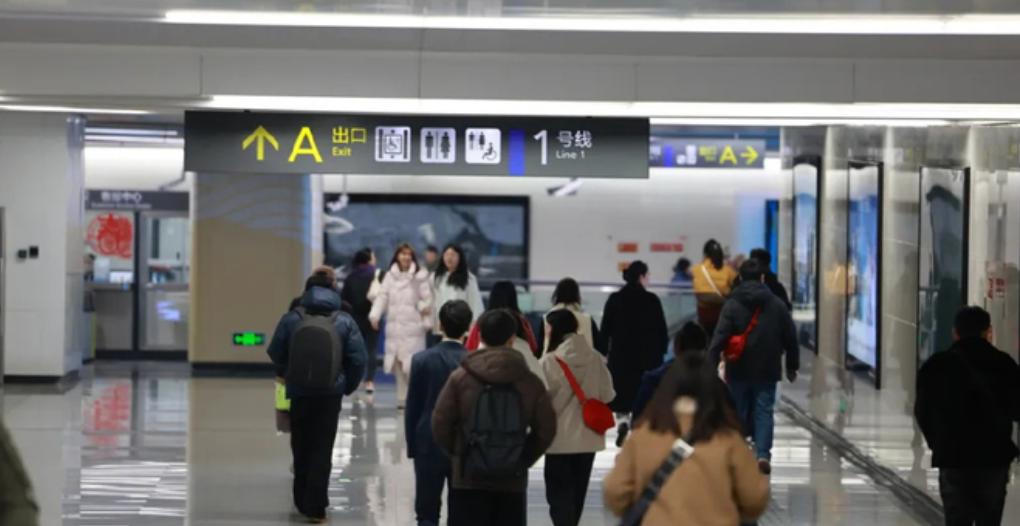
The money that distributors refused to pay at the order fair will not be paid when they arrive in Nanjing.
Inventory will be cleared one day. If it is only a problem of capital turnover, exhibitors can totally wait. But the real concern of distributors lies in the downstream market: even if they have spare money and available warehouse space, it is getting harder and harder to distribute the goods they sign for. Consumers are still buying snacks and beverages, but they are buying them from different places, and the goods in those places do not go through distributors.
Terminal Outlets "Crushed" by the System
For many years, the value of distributors lies in the terminal outlets they control. Manufacturers turn to them because they can distribute goods to hundreds or thousands of small stores. But now, these small stores are being replaced.
The first type of replacement is the bulk snack stores. By the end of June this year, Mingming Mangmang had 26,405 stores, and Wanchen Group had 23,802 stores, with the total number of the two exceeding 50,000. Their combined revenue in the first half of the year reached 79.8 billion yuan, with growth rates of 60% and 54% respectively. According to reports from TMTPost, what this business model does is cut off the multi-layer distribution links, and the headquarters directly purchases from factories on a large scale.
The snacks and beverages sold in these 50,000 stores basically do not go through traditional distributors like Lao Zhou. Furthermore, the two leading enterprises have begun to directly connect with factories to develop private brands, and the channel itself decides what to sell.
In addition, more channels are bypassing distributors. Huxiu once reported that in the past, only hypermarkets required manufacturers to operate directly, but now community group buying, front warehouses, instant retail and discount stores all have the same requirement. Some manufacturers take the initiative to relax this rule to boost sales volume, resulting in low-priced goods flowing everywhere. Some small terminal stores simply purchase goods from platforms, which is cheaper than purchasing from distributors.
Lao Zhou calculated that among the more than 1,200 outlets he manages in southern Shandong, nearly 300 have disappeared in two years, most of which closed down or switched to purchasing goods from platforms. "In the past, I could know whether a new product was good or bad two months after I distributed it. Now for the same product, the bulk snack stores sell it at a price lower than my purchase price. Who can I distribute it to?"
Lao Zhou's refusal to sign orders, the tight capital and warehouse capacity turnover are only superficial reasons. Even if a new product sells well, that part of the sales volume does not belong to him.
At this point, the problem has changed: if distributors are no longer the main channel for new product launches, what are those manufacturers that set up booths in hotels waiting for investment thinking about?
Who Is Still Seeking Distributors at the Event?
It is worth noting that in recent years, manufacturers that can enter the direct system channels no longer rely on hotel exhibitions.
In fact, the performance differentiation of listed snack food companies in the first half of the year is very illustrative. For example, Youyou Food saw its revenue grow by 34.1% relying on a boneless duck palm product sold in Sam's Club. For powerful factories, securing a system customer means that one SKU can enter thousands of stores, which is much faster than recruiting distributors county by county in hotels. Their new products and sales teams are prioritized to serve the system channels.
Most of the manufacturers remaining in the hotel exhibition to seek distributors are of another type: small in scale, unable to enter bulk snack stores and membership stores, or unable to get favorable terms even if they get in, so they can only turn back to traditional distributors. Lao Zhou flipped through the materials he received in recent days and said, "Good-selling products don't need to come here to find me. For the products that come here to look for me, I have to think about why the system channels don't want them."
This has created a lose-lose situation. The time when manufacturers need distributors most is when they are the weakest; the time when distributors are most cautious is exactly when they are facing this group of weakest manufacturers. The two sides are in the same building, and neither dares to make the first move. A sales director of a Henan-based baking enterprise said that he has registered more than 40 potential customers, and he estimates that no more than 5 of them will reach a cooperation, which means that this trip to the exhibition will end up with a loss.
The exhibition itself is also amplifying the gap. In the investment promotion copy of booth agents, the passenger flow of the same hotel last year was written as nearly 100,000 in some versions and nearly 1 million in others, while the official figure shows that the total number of professional visitors to the entire Autumn Sugar event (main exhibition plus hotel exhibition) last year was more than 400,000. Nanjing is hosting the event for the second consecutive year, and the freshness of the event returning after a 10-year gap last year is gone this year. Manufacturers paid for the booths according to the passenger flow in the promotional materials, but what they saw on site was a completely different scene.
The claim of "the coldest in history" is shouted at every session, including the Spring Sugar event earlier this year. The hotel exhibition of Autumn Sugar will last for several more days, and the main exhibition will open on the 15th. There is no data to support the claim that this session is the coldest one. But the negative sentiment is almost overflowing.
The hotel exhibition is a market that supports business between manufacturers and distributors: manufacturers come with new products, and distributors come with capital and outlets. But now distributors' money is tied up in inventory, their outlets are shrinking, and powerful manufacturers have turned to negotiate with system channels. The people left at the market are those who dare not buy, and those who cannot sell their products.
Lao Zhou said he will come back next year, but only stay for one day. "Meet old friends, check the accounts. I won't do order placement here anymore."
This article is from the WeChat Official Account "Food Insider", written by the author who never wastes readers' time, and published with authorization from 36Kr.