Nearly fully liquidating its holdings, the once top-tier property owner is set to sell its hotel assets again.
In the domestic high-end hotel owner circle, it seems that there has not been a deal rumor that stirs the nerves of the whole industry for a long time except for those related to R&F Properties.
Few people have noticed a procurement pre-bidding announcement released by Yunnan Culture and Tourism Investment not long ago. The content of the announcement is straightforward: it plans to hire a third-party institution to conduct asset appraisal on 100% equity of its two subsidiary platform companies together with the corresponding creditor's rights, the two entities are Yunnan City Investment Banna Investment and Development Co., Ltd. and Beijing Yunnan Tower Hotel Co., Ltd. respectively.
It should be noted that appraisal is only a pre-action before the transaction. To sell assets, you need to figure out your own situation first, clarify the value of equity, debts and real estate, and work out a transaction reserve price that can be presented publicly.
This time, the properties to be put on the shelf are InterContinental Xishuangbanna Resort and Crowne Plaza Beijing New Yunnan Hotel. Once the two equity transfers are completed, the number of hotels operated by Yunnan Culture and Tourism Investment will be reduced to 10.
Looking back at its peak stage, Yunnan Culture and Tourism Investment, which owned 16 high-end hotels, was once the largest single owner of InterContinental Hotels Group worldwide, and also the most important partner of Banyan Tree Group in China.
After the transaction is completed, the only hotel managed by InterContinental Group entrusted by Yunnan Culture and Tourism Investment will be InterContinental Kunming.
The former top owner of InterContinental in China has almost liquidated all its InterContinental-branded hotels in hand now.
The Glory of the Former Top InterContinental Owner
You may not know that the starting point of Yunnan Culture and Tourism Investment's hotel business is actually Beijing.
In 2008, Crowne Plaza Beijing New Yunnan Hotel opened to the public, which coincided with the Olympic year. The Yunnan Tower located on the North Third Ring Road has carried a strong identity attribute since its birth, serving as an external window for Yunnan Province set up in the capital.
This is also the first international brand high-star hotel invested and constructed by Yunnan Culture and Tourism Investment (which was called Yunnan City Investment at that time).
Before that, there was no shortage of local hotels in Yunnan, but large-scale projects that could meet international high-end hotel standards and were operated by provincial state-owned enterprises were almost blank.
However, as early as 2015, the then Yunnan City Investment Group had listed and transferred 100% equity of Beijing Yunnan Tower Hotel Co., Ltd. with an appraisal value of 2 billion yuan, but the transfer was not successful. It is preparing for the transfer again 11 years later, and it is hard to predict whether the price has changed and whether the transaction can be completed successfully.
In 2013, InterContinental Kunming opened in Dianchi Resort, close to Haigeng Dam.
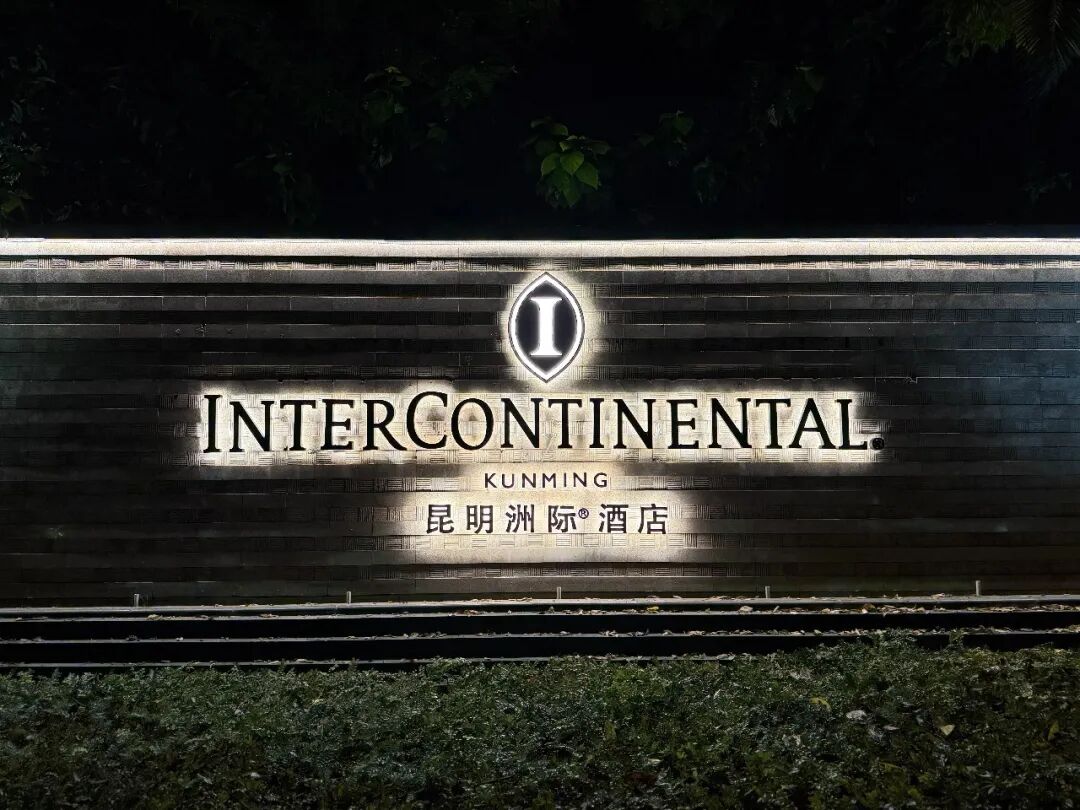
Image source: Xiaohongshu
This is the first project of InterContinental brand settled in Kunming, and also a milestone in the development history of high-end hotels in Yunnan. In the same year, InterContinental Xishuangbanna Resort opened, filling the gap of high-end resort hotels in Xishuangbanna.
After that, brands such as Wanda, Sheraton and Wyndham successively entered Xishuangbanna, completely rewriting the hotel pattern of this tropical tourist destination. A number of projects including Banyan Tree Tengchong Mayu Valley and Hotel Indigo Dali Erhai Tianyu were launched one after another.
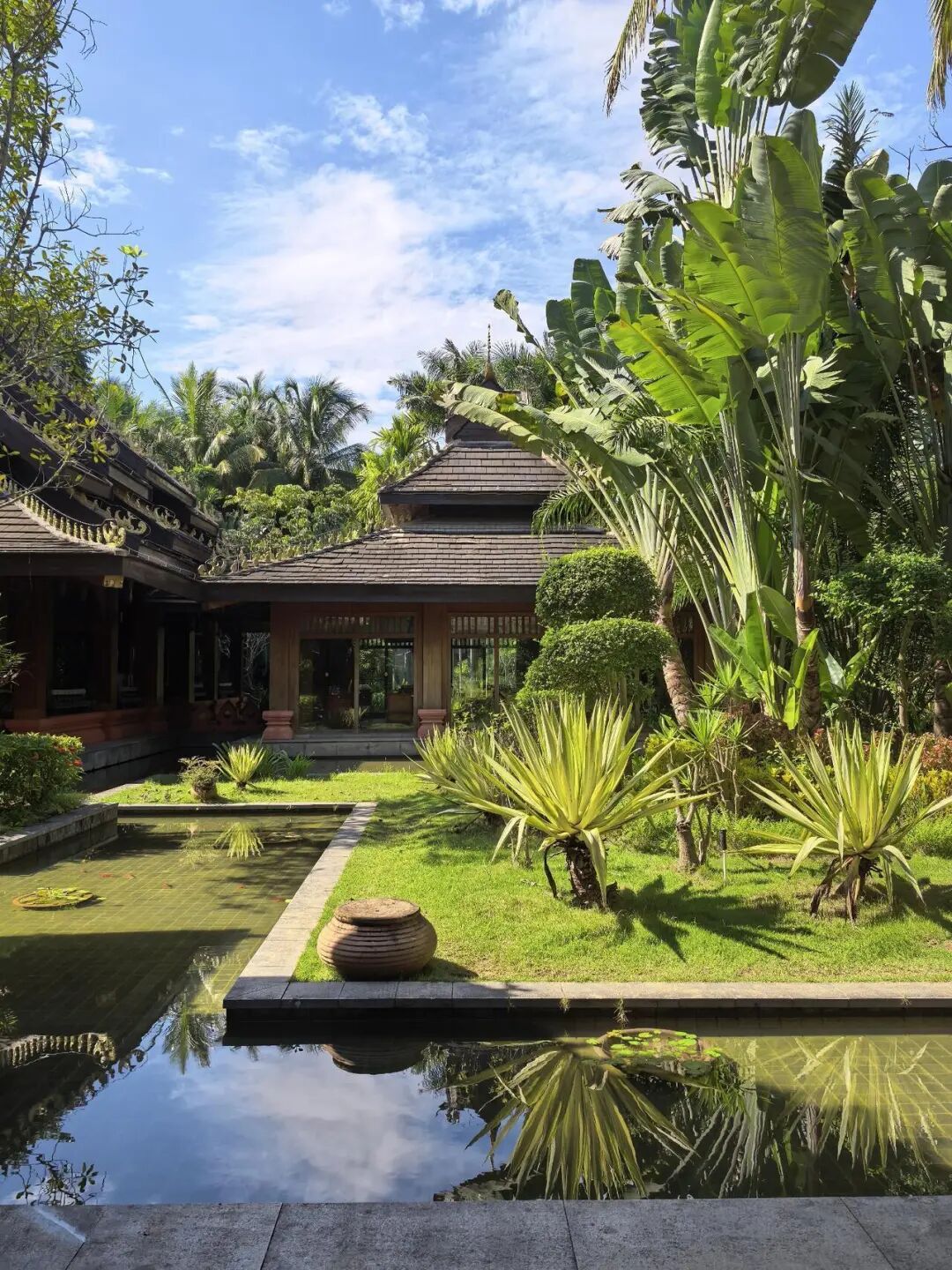
It is worth noting that the other hotel that Yunnan Culture and Tourism Investment plans to transfer this time is exactly InterContinental Xishuangbanna Resort. The hotel territory of Yunnan Culture and Tourism Investment extends outward along the core tourist destinations in Yunnan, with footprints in Beijing, Shanghai and Haikou. A number of top international brands including InterContinental, Banyan Tree, Hilton and Sheraton are all included in the hotel asset package of the same provincial state-owned enterprise.
Since then, a title has gradually spread in the industry: the world's largest single owner of InterContinental.
This title carried great weight back then. InterContinental has a huge owner network all over the world, and there was almost no second entity in China that could sign entrusted management agreements for multiple InterContinental and Crowne Plaza hotels as a single subject.
At the same time, Yunnan Culture and Tourism Investment is also the largest cooperative owner of Banyan Tree Group in China, and Banyan Tree Tengchong Mayu Valley is still a highly recognizable resort project in Banyan Tree's domestic product line.
At its peak, Yunnan Culture and Tourism Investment operated a total of 16 international chain hotels, with more than 5,000 guest rooms in total, and the cumulative investment exceeded 6 billion yuan. In the plan of that year, high-end hotels were regarded as the infrastructure of destinations, and the starting point to attract passenger flow and drive land and cultural tourism development.
Hotels were launched synchronously with the development of cultural tourism towns and scenic spots, and hotel assets are intertwined with land development and scenic spot operation. However, this model highly relies on two prerequisites: continuous land value appreciation and continuously open financing windows. Once the real estate cycle reverses, this set of operation methods will not work anymore.
The Heavy Asset Model Falls From Grace
After 2019, the domestic market environment has changed. The real estate industry has entered in-depth adjustment, and the cultural tourism market has been impacted. The revenue of a large number of high-star hotels is under pressure, with both occupancy rate and average daily rate declining. The hotels themselves lack sufficient hematopoietic capacity, and high interest expenses continue to erode cash flow.
Yunnan Culture and Tourism Investment itself is also under heavy debt pressure. Reducing asset burden has become an important task at the group level. Hotel assets, especially large-scale heavy-asset hotels that continuously occupy funds, naturally entered the disposal list.
However, high-end hotels belong to bulk real estate with huge volume, and there are not many potential buyers. Ordinary people cannot afford it, ordinary real estate enterprises cannot digest it, and the industrial capital that is willing to make an offer has extremely strong bargaining power. The transaction cycle is very long, and a lot of complex problems such as equity, creditor's rights, lease contracts and management agreements need to be dealt with. This is also the reason why this transfer does not directly list the hotel for sale, but appraises the equity and corresponding creditor's rights at the same time.
Hotels do not exist independently, and assets are bundled with debts. What the buyer takes over is not only the hotel property, but also the whole set of creditor's rights behind it. There has always been a saying in the industry: international hotel brands make money, often not from hotel operating profits, but from stable brand management fees.
No matter whether the owner's hotel makes profit or not, as long as the entrusted management agreement is in effect, the management fee must be paid on time. The owner earns money from operation, but also bears all risks including asset depreciation, debt interest and market fluctuation. The brand side can guarantee income regardless of the market performance.
When the market is booming, this contradiction is covered up. Once the revenue declines and the interest expense remains rigid, the cash flow gap will be exposed soon. Yunnan Culture and Tourism Investment's choice to appraise these two hotels in a package is essentially an asset slimming campaign.
Many people will ask, is it because the hotel operation is not good? Looking only at the operation side, the hotel's guest rooms, catering and conferences may generate positive cash flow.
But the operating cash flow cannot cover the huge debt interest formed in the initial construction stage.
In addition, Yunnan Culture and Tourism Investment itself has major operational problems. It achieved a revenue of 1.754 billion yuan in 2025, with a net profit loss of 285 million yuan.
From the perspective of cash flow, Yunnan Culture and Tourism Investment has been in a state of continuous cash outflow since 2018. The cash outflows in 2018, 2019, 2020, 2021 and the first quarter of 2022 were -9.114 billion yuan, -2.898 billion yuan, -4.172 billion yuan, -4.778 billion yuan and -1.106 billion yuan respectively.
When assets are expanding, people only talk about scale, brand and city business card. When debt is overwhelming, the only topics left are asset disposal, debt restructuring and slimming to recover cash.
When Owners No Longer Pay for "Scale"
In recent years, many local state-owned enterprises in China have been reducing their holdings of high-end hotel assets. In the past, all regions were keen to introduce international big-name hotels, willing to provide high-quality land, subsidize construction costs, and regard high-star hotels as urban supporting facilities.
Now the trend has changed. It is getting harder and harder to make the accounts of heavy-asset hotels clear.
International brand management fees, owner's revenue sharing, property maintenance, energy consumption and labor costs remain high all year round. High-end resort hotels also face huge fluctuations between peak and off seasons.
It is hard to find a spare room in peak season, while the occupancy rate is very low in off season. The book revenue of hotels looks good, but after deducting various costs and financial interest, many owners cannot get positive net cash flow all year round.
InterContinental Xishuangbanna Resort Image source: Xiaohongshu
This logic is getting harder and harder to justify now.
The pressure on local finance is increasing, and the priority of asset return rate and debt control has been raised to a very high level. Heavy-asset projects that only serve as the facade of the city but continuously consume funds are no longer the priority option. Many local state-owned enterprises have begun to readjust their hotel business, no longer pursuing self-construction and self-holding a large number of international brand hotels, and turning to light asset operation. They retain hotel management capabilities and no longer hold a large number of properties on a large scale.
This is exactly the path that Yunnan Culture and Tourism Investment is taking. It divests heavy-asset properties, retains the hotel operation platform, and will focus more on outputting management rather than holding assets in the future.
The most difficult part of hotel asset transactions is often not the brand or passenger flow, but the stacked creditor's rights behind them. The fact that the appraisal announcement includes both equity and creditor's rights appraisal also reflects the complexity of this transaction from the side.
In the past two decades, the prosperity of China's hotel industry has been built on the dividends of urbanization and commercial real estate expansion, with the core strategy of acquiring land, constructing buildings and opening new hotels. However, with the exhaustion of high-quality incremental land in core cities, the industry has inevitably ushered in the era of stock game.
It is obvious that the heavy asset era belonging to traditional owners has come to an end.
For high-end hotels, people used to focus on occupancy rate, ADR, RevPAR and GOP. Now they focus on NOI, capitalization rate, cash flow stability, asset depreciation and holding cost.
The extensive era of making profits from land value appreciation by acquiring land and constructing buildings has completely ended. Instead, a cruel game about capital efficiency, asset quality and management boundary is coming.
What China's hotel industry is experiencing now is not a simple story of shifting from scale to quality, for scale and quality are not naturally opposed. What the industry really needs to eliminate is not "large scale", but the "large but not strong" situation that lacks product support, brand precipitation and operation capability.
This article is from WeChat Official Account "Hotel Management Finance", the author is Nanchuan, and 36Kr publishes it with authorization.