OpenAI sent all AI stocks tumbling, what exactly happened?
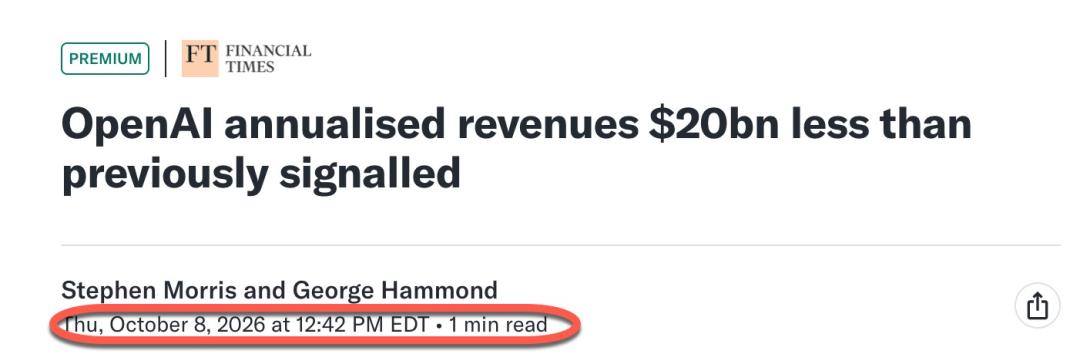
At 12:42 noon ET on Thursday, a report about OpenAI's revenue triggered the market to re-evaluate the growth expectation of the AI industry chain.
OpenAI's annualized revenue as of the end of September is close to 50 billion US dollars, nearly 30% lower than the previously widely circulated figure of about 70 billion US dollars.
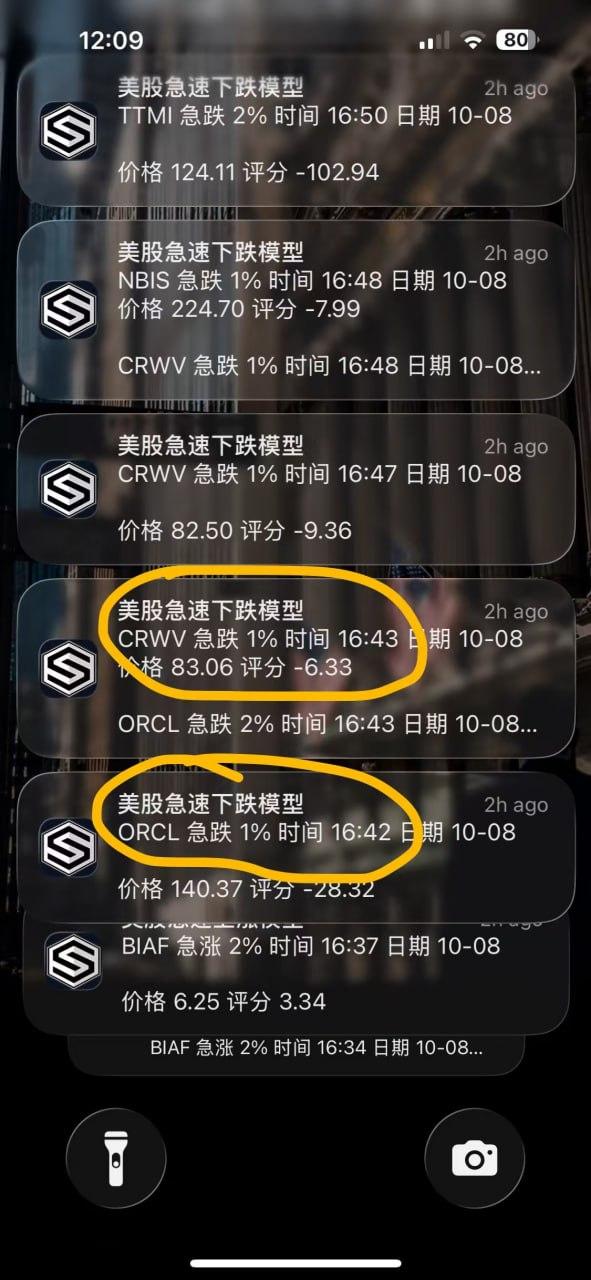
The "US Stock Sharp Drop Model" of the US Stock Big Data APP quickly captured the abnormal movement of relevant companies, and directly pushed the emergency alert to my mobile phone.
12:42 (16:42 PT) 16:42 PT, ORCL triggered an alert of a 1% sharp drop, with the price at 140.37 US dollars at that time;
12:43 (16:43 PT), just one minute later, CRWV triggered an alert of a 1% sharp drop, with the price at 83.06 US dollars at that time; ORCL further triggered an alert of a 2% sharp drop.
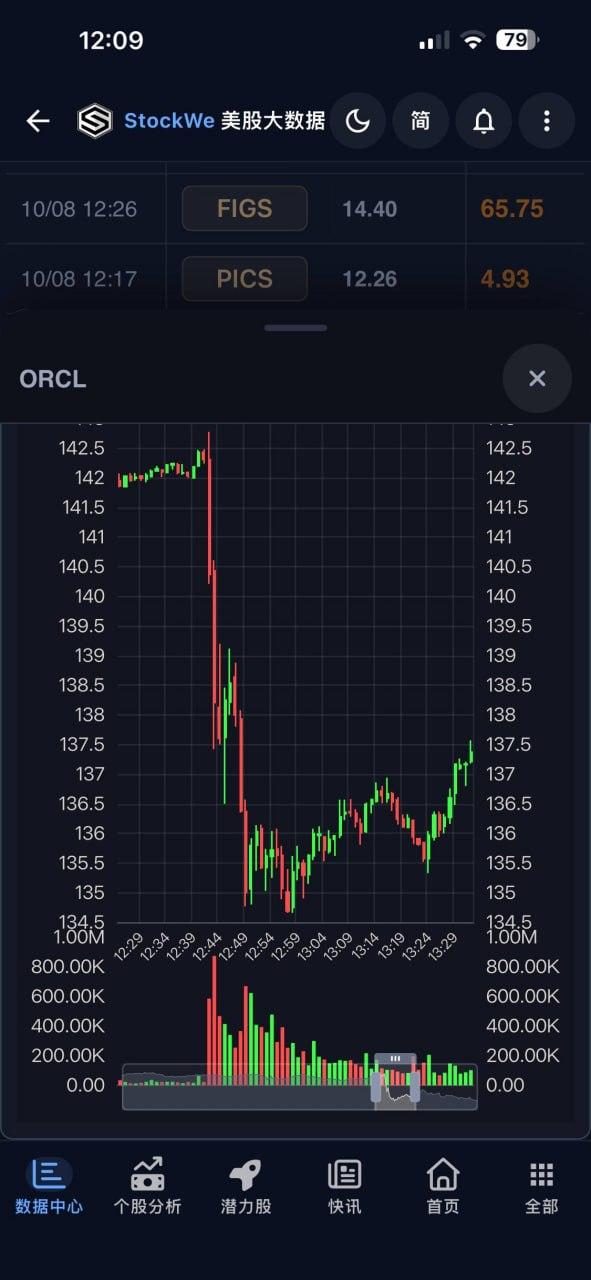
Putting these alerts and time-sharing charts together, the timeline is very intuitive:
ORCL began to plunge rapidly around 12:42, then fell from above 142 US dollars to around 135 US dollars, a drop of nearly 5%, in only 5 minutes.
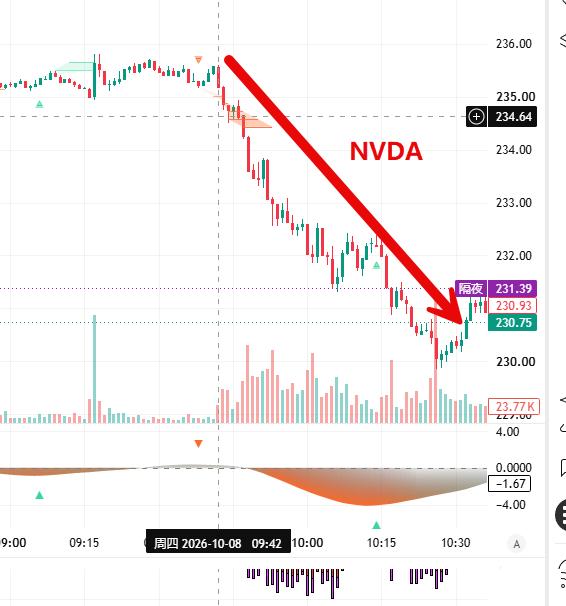
This rare opportunity provides our VIP members with a great chance to short AI stocks such as NVIDIA NVDA and AMD.
The function of StockWe US Stock Big Data App is to continuously monitor the market for you. After the sharp drop signal is triggered, the company code, abnormal movement range and price will be directly pushed to your mobile phone, allowing you to check the trend, review your positions and decide what to do next in time.
Revenue Caliber: What exactly does annualized revenue mean?
But after receiving the alert, we still need to figure out: what exactly did this drop change for the companies concerned?
The 20 billion US dollar gap seems huge, but it cannot be directly interpreted as OpenAI losing 20 billion US dollars in orders. This issue mainly involves the scope of revenue statistics, while the market had previously built higher expectations for the entire AI industry chain based on a larger figure.
US Stock Investment Network believes that this is the point we need to further explore: the figure can be clearly explained, but does the judgment supporting the stock price still hold?
Only after we make "annualized revenue" clear can the subsequent discussion not go astray.
Assume that a company's revenue in a certain month reaches 1 billion US dollars, multiply it by 12, and you can get an annualized revenue of 12 billion US dollars. It reflects the current revenue speed, does not mean that the company has recognized 12 billion US dollars in revenue in the past year, nor can it guarantee that this level will be maintained every month in the future.
For companies with rapid growth, this indicator is useful, because the months with smaller scale at the beginning of the year will drag down the full-year revenue and cannot fully reflect the latest business progress. But when we look at this figure, we also need to keep in mind: it shows the speed, and the full-year revenue still needs to be realized month by month.
This time the controversy around OpenAI has an additional statistical difference in the partner channel.
Public reports show that Anthropic's annualized revenue statistics include sales generated through partner channels such as AWS and Google Cloud, while the data disclosed by OpenAI does not include channel revenue of the same scope. The previously higher figure involves caliber adjustments made by investors for the convenience of comparison.
You can break it down into three sums of money:
- How much customers pay for AI services;
- How much revenue the model company and the cloud platform recognize respectively;
- After deducting computing power, channels and other costs, how much money the company retains.
The same customer payment involves multiple companies in the industry chain, but it cannot be repeatedly summed up in the data of different companies and then used to prove how large the end demand is.
Therefore, this revenue gap cannot directly prove that orders have decreased, let alone confirm that there is financial fraud. First of all, we need to confirm whether the statistical scope of the two sets of figures is the same.
Valuation Adjustment: The caliber can explain it, but why did the stock price still fall?
Because investors had already calculated the future based on the larger figure before.
When buying stocks in the AI industry chain, there is usually such a judgment behind it: the faster the model company's revenue grows, the more capable it is to continuously purchase chips and rent computing power, and the revenue and profit of suppliers will also increase accordingly.
Now that the revenue scale needs to be re-understood, the subsequent procurement capacity will naturally need to be re-evaluated.
Do a simple calculation: if the company's valuation remains unchanged, and the revenue is changed from 70 billion US dollars to 50 billion US dollars, the multiple of valuation relative to revenue will increase by 40%.
This does not mean that the stock price should be mechanically adjusted down by a certain percentage, but it reminds us that at the same price, the company now needs stronger future growth to support it.
The AI industry chain is particularly sensitive to this, because purchasing equipment, expanding production capacity and financing often precede revenue realization. How much suppliers invest today depends on how much customers can buy and pay in the future.
However, we cannot only look at the revenue gap. OpenAI still reported data showing that the overall revenue run rate in the third quarter increased by 77% year-on-year, and the enterprise business run rate increased by 107% year-on-year.
So my judgment is that this news first impacted market expectations, and it is not enough to prove that AI demand has reversed at present.
If there are subsequent customer procurement cuts, project delays, or suppliers lowering revenue and delivery guidance, that will be a more direct business change. The fact that the stock price has fallen first does not mean that these changes have already occurred, but we need to start tracking them carefully.
Cash Flow Pressure: Oracle's books are more worth looking at
Speaking of which, some people may ask: Why is Oracle so sensitive to the revenue of model companies?
If you look at its financial report, it is easy to understand.
Oracle disclosed in the first quarter of fiscal year 2027:
- Contract obligations not yet recognized as revenue reached 664 billion US dollars;
- Operating cash flow was about 23.1 billion US dollars;
- Capital expenditure was about 28.5 billion US dollars;
- The company disclosed free cash flow of about negative 5 billion US dollars.
The operating cash flow also includes about 11.36 billion US dollars of customer prepayments with significant financing components. It is certainly a good thing for customers to pay in advance, which can reduce Oracle's pressure to advance funds to buy equipment and build computer rooms. But after receiving the money, the company still needs to invest in construction and deliver services, and the prepayment cannot be directly regarded as earned profit.
The same is true for the 664 billion US dollars in contract obligations. It represents the business that needs to be fulfilled in the future and cannot be regarded as cash in the bank account. How much profit it can finally contribute depends on the delivery time, cost and customer's ability to fulfill the contract.
Extending the time horizon makes the capital demand clearer. Oracle's operating cash flow in fiscal year 2026 was about 32 billion US dollars, and its free cash flow was about negative 23.7 billion US dollars; in the same period, it raised 43 billion US dollars in debt funds and 5 billion US dollars in equity funds.
This is a business that requires upfront investment and gradual capital recovery later. Equipment and construction are paid first, revenue is recognized later, and return on investment comes even later.
As long as customers pay as agreed and projects are delivered smoothly, such investment can drive growth. But once customers' revenue falls short of expectations, or financing becomes difficult, suppliers may also come under pressure.
Therefore, the market's attention to OpenAI's revenue is also to judge whether the long-term procurement related to it can be realized stably.
Commercialization Quality
Let's go one step further: the growth of model revenue ultimately comes from user payments. However, the increase in usage is not the same as the enhancement of profitability.
The drop in model invocation prices can attract more users. Whether revenue can grow depends on how much usage increases.
Assume that the price per invocation is cut in half, and the invocation volume increases by 50%, the total revenue will drop by 25% instead; even if the invocation volume doubles, the revenue will only stay at the original level.
Even if revenue increases, the company still has to pay for computing power, training, R&D and sales expenses. If costs fall faster, profitability may improve; if competition forces companies to keep cutting prices, there may be a situation where the number of users increases and the cash gap also expands.
Therefore, when looking at the commercialization of model companies, I will put several sets of data together:
- Whether paying customers continue to increase;
- Whether the growth in usage brings revenue growth;
- Whether the cost of providing services is decreasing;
- Whether operating losses and cash consumption are improving.
Anthropic's financial data also needs to be viewed separately in this way. Public reports show that its 2025 revenue is about 4.6 billion US dollars, and its operating loss is about 8.06 billion US dollars; the net loss of about 42 billion US dollars is affected by significant accounting expenses, and cannot be directly interpreted as burning 42 billion US dollars in cash in one year.
US Stock Investment Network believes that model companies need to prove next that the growth of customer payments can improve operating results. If revenue is getting larger and the cash gap is also getting larger, the financing pressure will not be resolved.
Back to the companies in your portfolio
Finally, we still need to return to our own positions: How much impact does this news have on the companies you bought?
Chip suppliers, cloud platforms, data center operators and model companies make different types of money. We cannot judge them with the same conclusion just because they are all related to AI.
For chip and optical communication suppliers, I will first look at customer procurement, delivery arrangements and product competitiveness. The revenue controversy of model companies will affect valuations, but it does not mean that suppliers have lost orders on that day.
For data center and computing power operators, I will pay more attention to customer concentration, financing cost and cash recovery. If expansion requires continuous borrowing and major customers rely on financing to pay, we cannot judge the value only based on the contract amount.
Companies with mature main businesses and stable cash flow are more capable of undertaking AI investment, but they also need to prove that new expenditures can bring improvements in revenue, profit or efficiency.
Next, I will focus on tracking four things:
- Whether large contracts are converted into revenue as planned;
- Whether customer payments are stable and receivables are recovered normally;
- Whether free cash flow improves after capital expenditure increases;
- Whether revenue growth is accompanied by improvements in gross margin and operating results.
I prefer to study companies that can convert orders into revenue and then convert revenue into cash. For companies that continue to rely on financing and have not yet delivered improved profitability, a lower purchase price is required to leave room for misjudgment.
This controversy over OpenAI is not enough to prove that AI demand has peaked. But it makes us see a problem: revenue figures can drive up stock prices, but long-term returns ultimately depend on the company making real money back.
In the next round of financial reports, I will pay more attention to how much cash return these investments have already brought. This answer can help us better judge how much the stocks in our hands are worth, far more than signing another big contract.