The second-largest shareholder of PUMA buys the dip on Under Armour.
In May 2024, Kevin Plank, the founder of Under Armour, had just resumed his position as CEO for more than a month when he made a trip to the UK.
He appeared at the annual Frasers Festival hosted by British retail giant Frasers Group, where he was arranged to deliver the opening keynote speech.
That was no ordinary supplier conference. More than 40 brands participated, and attendees included Bjørn Gulden, CEO of Adidas, Daniel Grieder, CEO of Hugo Boss, and senior executives from companies including On and Nike.
Later, Frasers CEO Michael Murray wrote in an article that Under Armour has been working closely with the group ever since they launched the Elevation strategy, and its support for Frasers is "of great value".
At that time, it was still a standard relationship between a retailer and a brand; two years later, an extra layer was added to this relationship.
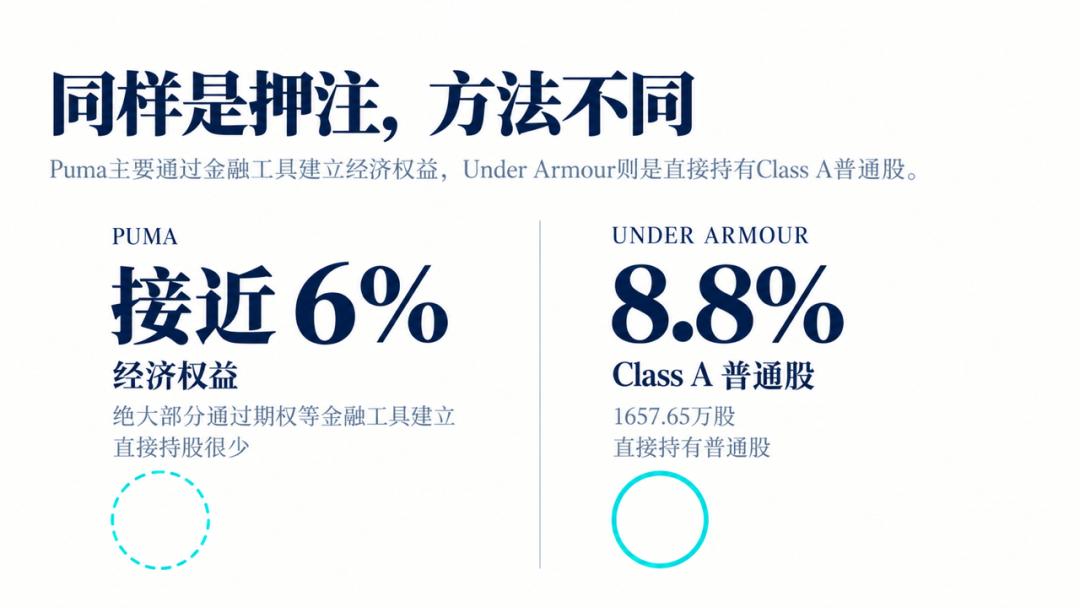
According to the latest disclosure from Frasers, as of September 24, 2026, it has held 16,576,500 shares of Class A common stock of Under Armour, accounting for approximately 8.8% of the outstanding shares of this class. Estimated based on the stock price as of the cutoff date, the market value of this position is about 75 million US dollars.
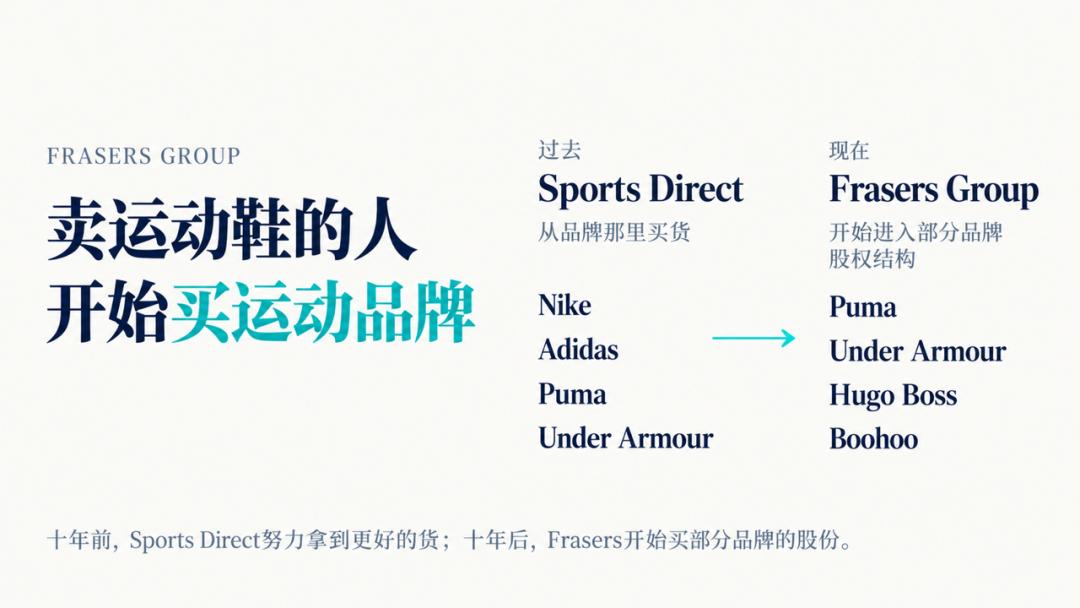
The retailer that sells Under Armour's products has started buying Under Armour's stocks. Frasers entered the position at a sufficiently low point: in late September, the share price of UAA was just over 4 US dollars, not far from its 52-week low; back in 2021, this stock once nearly hit 27 US dollars.
In the same week when the news of Frasers' stake in Under Armour was announced, Anta officially completed the acquisition of 29.06% of Puma's equity (1.5055 billion euros) and became Puma's largest shareholder. Sports brands seem to be gradually re-entering the vision of industrial capital.
The man best at picking up undervalued brands in the UK
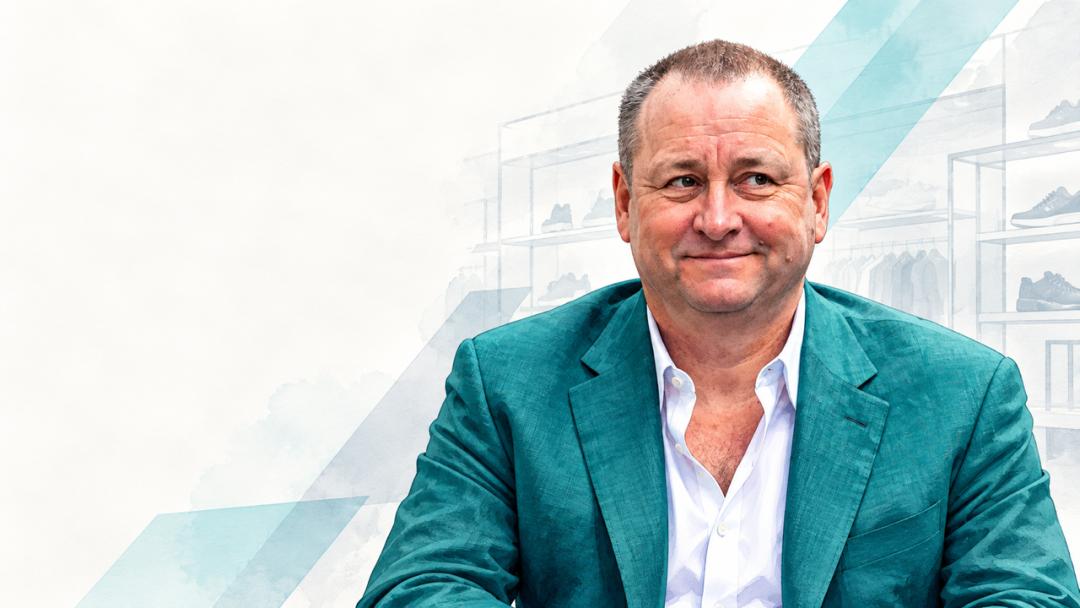
Sports Direct, which is under the British Frasers Group, has a huge retail network: Flannels focuses on high-end fashion, House of Fraser operates department stores, and it also controls a number of brands including Everlast.
Founder Mike Ashley is not only good at selling shoes, but also good at acquiring assets, especially when others are not optimistic about them.
In 1982, Ashley opened his first sporting goods store in Maidenhead. Later, Sports Direct kept expanding and acquired a number of brands that had temporarily lost growth momentum but were still recognized by consumers.
These assets are no longer fashionable, but they are not completely worthless. As long as the price is right, putting them into Sports Direct's huge store system can still generate profits. This later became one of the most distinct business habits of Frasers.
However, this also brought some negative impacts. Sports Direct increasingly resembles a discount hypermarket. Nike, Adidas, Puma and Under Armour are willing to supply products to it, but they may not be willing to provide their latest and best products.
This is an awkward situation for a retailer: it has a large sales volume, but its brand status is not high. Around 2017, Michael Murray began to promote a transformation named Elevation.
Murray is the son-in-law of founder Ashley. He worked in the real estate industry in his early years, and started to help Sports Direct renovate its stores in 2015, then gradually took over work related to branding, digitalization and other fields. In 2022, 33-year-old Murray succeeded Ashley as CEO.
The goal of the transformation is to make Sports Direct no longer look so cheap. Stores are renovated, digital channels are upgraded, and the product structure has changed from simply emphasizing low prices to the "good, better, best" that the company has repeatedly mentioned.
Frasers wanted to get better product supply from brands in exchange for a better consumer experience, and then it went a step further later — it not only buys goods, but also starts buying stocks.
Frasers is not always a naturally quiet financial investor. The case of fast fashion e-commerce Boohoo best reflects the tough character of founder Ashley: after Frasers became the major shareholder of Boohoo, it was not satisfied with the operating performance.
In 2024, they publicly demanded that Mike Ashley serve as CEO of Boohoo, and also asked for board seats, restrictions on major asset disposals, and issued open letters to put pressure. However, these demands were not supported in the end.
Hugo Boss shows another path: Frasers was initially only a minority shareholder, and then kept increasing its holdings. Michael Murray joined the supervisory board, and Frasers transformed from an ordinary financial investor into a shareholder with significant influence. By 2026, it further proposed a full acquisition, pushing its shareholding to a position close to controlling stake.
Murray later said in an interview with Vogue: "Boss started as a small investment. Things always have to start small."
He put forward a judging criterion: when Frasers looks at an investment, it will ask itself whether it likes this company and whether it is willing to own the entire company in the future.
The case of Puma has similarities with that of Under Armour. In 2026, Frasers disclosed that it holds nearly 6% of the economic interest in Puma. The vast majority of this is not direct shareholding, but established through financial instruments such as options.
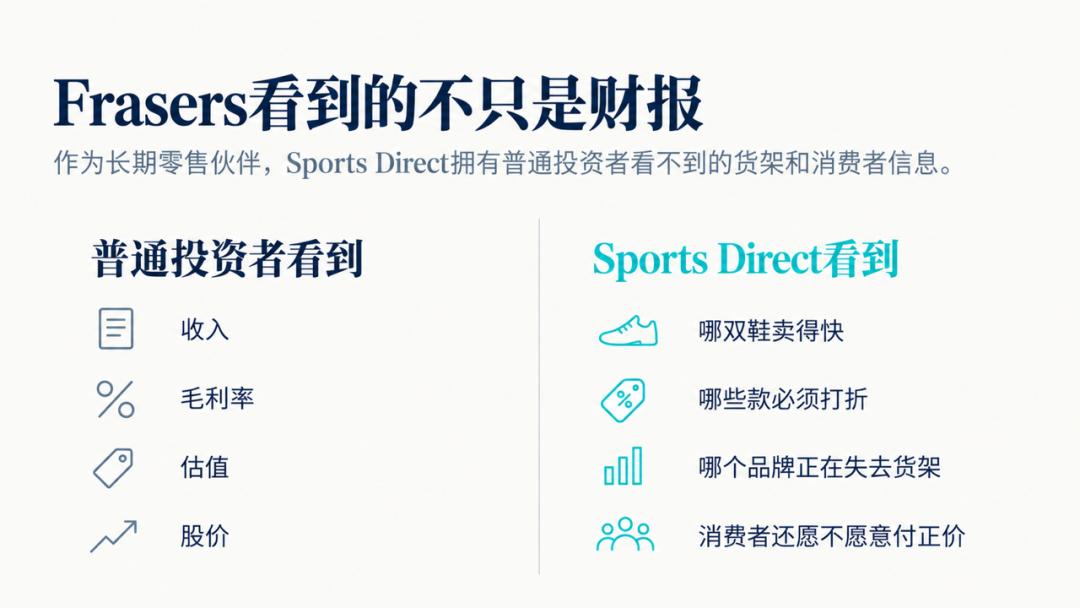
Puma and Under Armour have long been core suppliers of Sports Direct for many years. Frasers' perspective on observing these companies is very different from that of ordinary funds: fund managers only see data, while Sports Direct sees which pair of shoes sells fast, what products have to be discounted, which brand is losing public attention, and what products can make consumers stop.
Kevin Plank solves the same problem for the second time
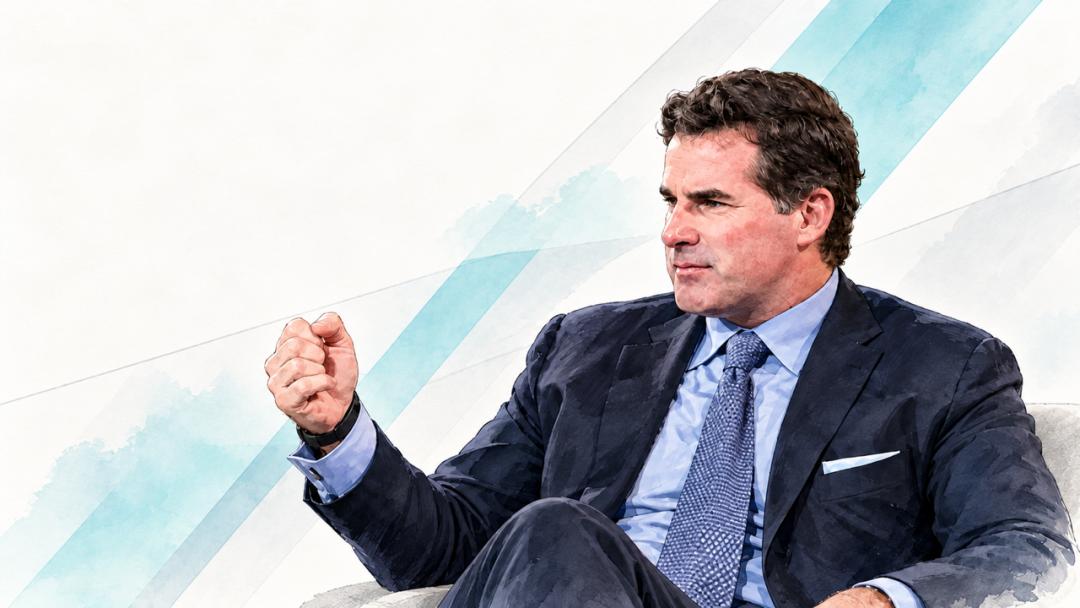
In March 2024, Kevin Plank resumed his position as CEO of Under Armour. After the founder returned, many problems waiting for him to solve were exactly the ones he had seen six years ago.
In 2018, Under Armour had just ended its rapid growth, its performance in North America began to decline, inventory and discounts increased, and the company launched successive restructurings. Plank said at the earnings call at that time: "In 2017, we were a noisy company, but a quiet brand. In 2018, we want to reverse this, to become a quiet company and a loud brand."
He summed up the reform into four things: Product, Story, Service, Team.
Six years later, Plank sat back in the CEO's office and said almost the same words. Under Armour has spent six years, but the problems have not been truly solved.
In 2016, the company's revenue was 4.83 billion US dollars, up 22% year on year; footwear revenue exceeded 1 billion US dollars for the first time. At that time, Under Armour was one of the most notable challengers to Nike. In the 2026 fiscal year ending at the end of March 2026, the company's revenue was 4.97 billion US dollars.
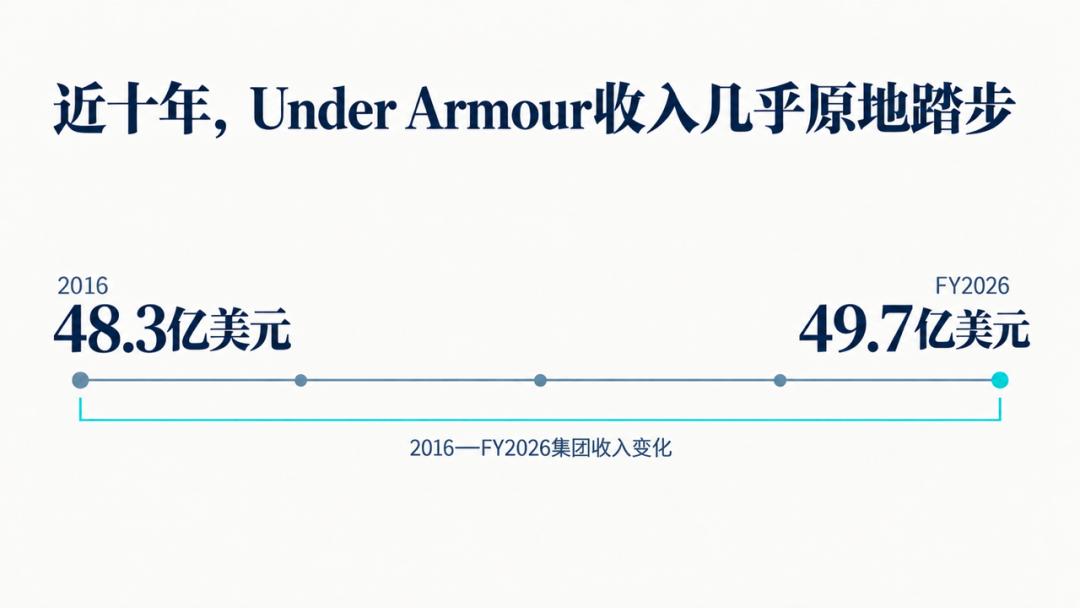
Nearly ten years have passed, Lululemon, On and Hoka have risen one after another, the entire sporting goods market has expanded significantly, but Under Armour's revenue scale has almost stayed in place. It expanded from functional apparel to the footwear sector, but failed to make footwear a growth engine.
The turning point came in 2017, when growth in North America stalled, the company launched its first restructuring, but the situation did not improve. It was not until 2021 that the company saw a rebound: full-year revenue reached 5.7 billion US dollars, North America's revenue hit 3.8 billion US dollars again, and gross margin exceeded 50%.
That time seemed like a successful reversal. The then CEO Patrik Frisk even rebranded Under Armour as a "growth company" and prepared to pursue revenue growth again.
Unfortunately, the recovery did not last, and the North American market declined again. By fiscal year 2026, the revenue there was only about 2.9 billion US dollars, almost returning to the scale during the pandemic period.
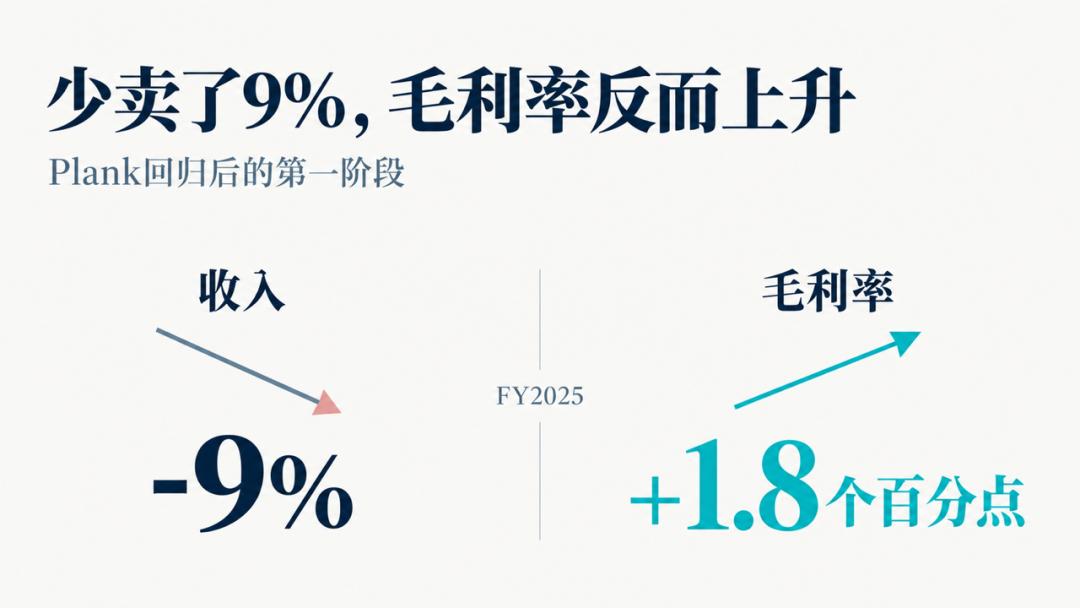
After Plank returned, he cut about 1/4 of SKUs, reduced discounts, tightened distribution, raised average selling prices, and concentrated resources on performance sports.
At the 2024 Investor Day, he said that if there were 100 things the company needed to fix, about 75 of them were caused by Under Armour itself.
He once again compared the company to a 5-billion-dollar startup. Back in 2016, when the company's revenue first approached 5 billion US dollars, Plank used the same statement. At that time, it meant that a company that had already grown large still needed to maintain the speed of a startup.
Eight years later, with the same 5 billion US dollars revenue, the meaning is different — Under Armour has to re-learn how to grow.
In fiscal year 2026, the company's revenue continued to decline, North America's revenue fell by about 8%, footwear revenue fell by about 11%, and gross margin retreated. There is a hard question to answer: how much of the revenue decline was actively abandoned by the company, and how much was because consumers no longer liked Under Armour?
Star basketball player Stephen Curry was originally the brand's most promising asset to change the fate of its footwear business. In 2020, the company officially upgraded his signature shoe business to Curry Brand, aiming to build long-term brand equity.
However, the basketball-related business afterwards remained lukewarm, and the two sides announced their split in November 2025. A few months before the split, the company was still preparing for Asian and global tour activities for Curry Brand.
A basketball asset with top-tier athletes that has been operated for more than a decade ended up being so small that its departure did not have a significant impact on the group's revenue and profits.
In the 2026 annual report, Plank wrote: "We have made some progress, but it is far from enough. To put it simply, we are not improving our profitability fast enough."
"As someone who has spent almost all of my adult life building this company, the responsibility lies first with the management, and first with me."
Why now
This time Frasers' purchase of Under Armour's shares is ostensibly a not-so-large investment: 16,576,500 Class A shares, accounting for 8.8% of the total, with an estimated value of about 75 million US dollars at the time of disclosure.
Under Armour's share price is not what it used to be. Its performance in North America has declined continuously, and its footwear business has barely grown in the past ten years. This is exactly the type of asset that Mike Ashley is most familiar with. The brand still exists, and the price has already dropped first.
The company still has revenue close to 5 billion US dollars, its global sales network is still in operation, and consumers know Under Armour, but the capital market is not willing to pay a premium for it.
Frasers did not observe Under Armour only through its financial reports; they have been selling Under Armour's products for many years. At the first full fiscal quarter earnings call after Plank's return in August 2024, when talking about the European business, he directly said: "JD and Sports Direct are incredibly important to us."
In early 2026, he told investors again that the relationship between Under Armour and Sports Direct has never been closer.
Sports Direct has access to more information than ordinary investors: which products need to be discounted, which can still be sold at full price, and whether consumers will stop to try Under Armour after browsing Nike, Adidas, On and Hoka products.
Before buying Under Armour's shares, Frasers had already bet on Puma through stocks and derivatives. The two companies have many similarities: both are global sports brands, both are long-term suppliers of Sports Direct, both are in the period of brand adjustment, and both have low expectations from the capital market.
If there was only one such case, it could be understood as a special-case investment. The successive emergence of Puma and Under Armour seems to indicate that a new model is taking shape. Frasers is looking for sports brands that have global popularity, channel foundation and product capabilities, but have temporarily fallen out of favor with the capital market.
The place where the two sides may truly generate overlapping interests is not on the board of directors, but on the shelves.
Plank is now repeatedly talking about premiumization, reducing discounts, withdrawing from low-quality distribution, and making products re-enter a more appropriate retail environment, which does not mean that Under Armour will abandon the wholesale business.
In fiscal year 2026, wholesale still accounts for 57% of the company's revenue; what it wants to get rid of is low-quality wholesale. What Sports Direct has been doing for the past eight years is to transform itself from a discount hypermarket into a retail platform for high-quality goods.
In the past, Sports Direct needed high-quality products from brands such as Under Armour; now, Under Armour also needs strong channels to achieve sales scale.
The European market is also particularly important. In fiscal year 2026, EMEA contributed nearly 1/4 of Under Armour's revenue, making it the largest region outside North America. Frasers has also been expanding to Northern Europe, South Africa, Australia and New Zealand in recent years.
One is an