The undervalued Starbucks is being repriced.
When a market shifts its focus from "who offers the lowest price" back to "who delivers the highest value", all the assets Starbucks has accumulated over decades in the practice of "respect for people" will be revalued.
Over the past two years, the main theme of China's coffee market has been store expansion and price cuts. Luckin Coffee has more than 36,000 outlets, Cotti Coffee over 15,000, and the total number of coffee beverage stores across the country has reached 284,000. The 9.9-yuan price band has turned freshly brewed coffee from an "occasional luxury" into a "daily necessity", with the annual per capita cup consumption jumping from 16.7 cups in 2023 to 28.6 cups in 2025, marking a 1.7-fold increase in two years.
Against this steep growth curve, the figures of Starbucks China look relatively unimpressive: in the second fiscal quarter of FY2026, same-store sales only increased by 0.5%, the average transaction value per customer dropped by 1.6%, and the number of stores recorded a net decrease of 20 in a single quarter for the first time in 27 years. As a result, the judgment that "Starbucks is losing its edge" has repeatedly emerged, and even become a self-evident common sense that requires no proof.
However, these figures are all filtered through the same statistical caliber. Same-store sales is an indicator of growth rate, but it cannot answer other questions: how many times higher is the output of a single Starbucks store than that of most local coffee brands? What kind of demand does it serve, and what kind of customers does it retain? The market is bustling with price competition, while value creation stays under the radar. The former determines who runs faster in the short term, and the latter determines who cannot be replaced in the long run. If you measure Starbucks only with the ruler of "who is cheaper", the conclusion will inevitably be "Starbucks has lost". To see its real value, you need to switch to a different ruler.
Misaligned Competitors: Luckin Sells Convenience, Starbucks Sells Time
China's coffee market is undergoing a clear stratification of consumer demand.
Essentially, what Luckin does is to turn coffee into "convenience-store-level infrastructure": with 36,000 stores, an average of 112.7 million monthly transacting customers, the 9.9-yuan price band and algorithm-based site selection, it solves the problem of "I want to have a cup of coffee right now, as fast and cheap as possible". This demand is extremely large and very real, and it is the main driving force that has expanded China's coffee consumer group from a small minority to 550 million people.
What Starbucks does is completely different. In China's coffee consumption scenarios, business socializing accounts for 32.7%, daytime work 30.1%, afternoon tea 27.3%, and study and exam preparation 22.9%. The top priority in all these scenarios is not "a cheap drink", but "a place where you can sit down, talk business, work, and stay for a while". Starbucks does not only sell a cup of coffee, but a period of time and a comfortable space that the coffee carries.
There is of course overlap between the two brands. For the same cup of latte, an office worker may choose Luckin on a weekday morning, but turn to Starbucks when meeting a client in the afternoon. However, overlap does not mean they are competing in the same race. Comparing their same-store growth rates side by side is equivalent to judging a marathon runner by his sprint performance: it is not that he is not fast enough, but that the track is never designed for such a comparison.
The price war itself also provides supporting evidence. In the second quarter of 2026, same-store sales of Luckin's self-operated outlets decreased by 5.3% year on year, but the average number of monthly transacting customers increased by 23%. There are more people coming, but the output per store has declined. The flip side of rapid scale expansion is mounting pressure on operational efficiency: the passenger flow attracted by high store density and subsidies needs to be maintained by another round of subsidies. This shows that low-price operation is not a sustainable and infinitely replicable good business model, it only pushes all competitors into a more strenuous position.
More importantly, the rise of Luckin has expanded the overall coffee consumer group, while Starbucks targets the sub-group of these consumers who are willing to pay for a dedicated period of time. The former taps into incremental demand, while the latter focuses on premium value. The two coexist in the same market but follow completely different operating logics. What is truly diverted by low-priced coffee is the demand for convenient access to freshly ground coffee, not Starbucks' core scenario. In this regard, regarding the two as life-and-death rivals is a misreading of the structure of China's coffee market.
The Hardest Part Is Not Opening One Good Store, But Opening Ten Thousand Equally Good Stores
Many people underestimate Starbucks because they only see the "coffee" part of its business.
In any city in China, you can find independent coffee shops that serve better-tasting coffee than Starbucks, as well as internet-famous stores with more exquisite design and more unique aesthetics. But you can hardly find a second brand that can maintain excellent quality, comfortable space and standardized service at the scale of 8,000 outlets at the same time.
This is Starbucks' real moat: it does not only outperform others in single-store operation, but achieves a perfect balance between large-scale expansion and consistent high quality.
The excellence of a single store can be achieved by talent and passion, but the excellence of ten thousand stores can only be achieved by a mature system and long-term patience. Even if an internet-famous coffee shop has a great reputation, if it can only serve 200 people a day, its value is limited to that small group of 200 people. In contrast, Starbucks has turned an experience that used to belong only to a small minority into a service accessible to hundreds of millions of people. The charm of business lies exactly here: it is not about doing one thing to the extreme, but about replicating a sufficiently good experience stably to a large enough group of people.
There is a fact that is easily overlooked: in terms of total store count, Starbucks China now has less than a quarter of Luckin's outlets; but in terms of per-store revenue and brand premium, it still significantly outperforms most local coffee brands. Between scale and quality, Starbucks chooses to make both work, rather than exchanging one for the other. This is exactly where it is harder to surpass than the "faster runner": speed can be bought with capital, but consistent service quality can only be accumulated over time.
This replicable capability can be broken down and verified:
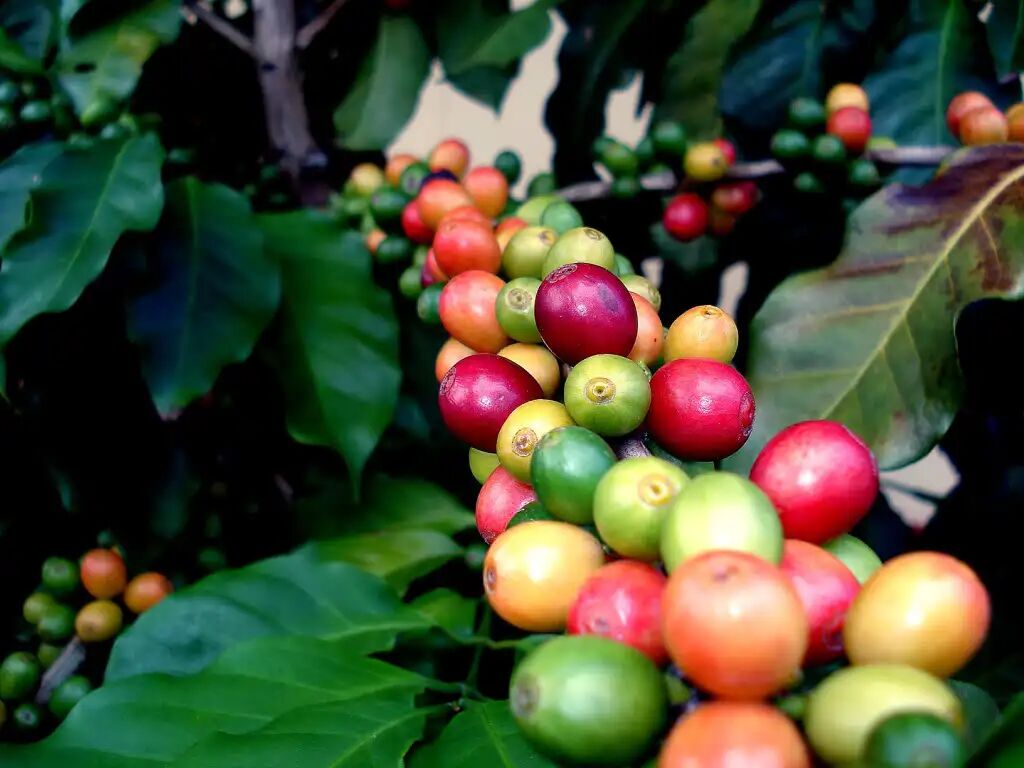
For example, the Starbucks China Coffee Innovation Park completed in 2023 has realized full-chain integration "from green bean to cup of coffee", with an annual roasting capacity of 60,000 tons and a maximum 10-day delivery cycle to stores;
In 2025, the global price of Arabica coffee beans rose by about 20%, while the raw material cost of Starbucks China only increased by about 8%. Vertical integration has created a buffer against raw material price fluctuations. In the first half of the same year, when the whole industry faced tight coffee bean supply, Starbucks never experienced any stockout;
Over 60,000 partners have received systematic training, and more than 8,000 stores across the country follow the exact same set of product output and experience standards.
This is the truth behind "consistent quality": it is not just a craft, but an industrial capability and management capability. That is why it can be replicated, but very difficult to be imitated.
Three Most Easily Overlooked Capabilities
Starbucks' differentiation is reflected in three capabilities that are often ignored:
First, consistent taste.
Starbucks' coffee may not be the most delicious, but it is almost never bad. For a cup of coffee priced at more than 30 yuan, "tasting the same every time" is far more important than "being surprisingly good occasionally". The stability of quality control comes from the superposition of standards for raw materials, roasting and extraction, which is supported by the long value chain from the plantation to the bar. When consumers vote with their feet, they usually do not pay for the highest score, but for the certainty of the lowest risk.
Second, immersive space experience.
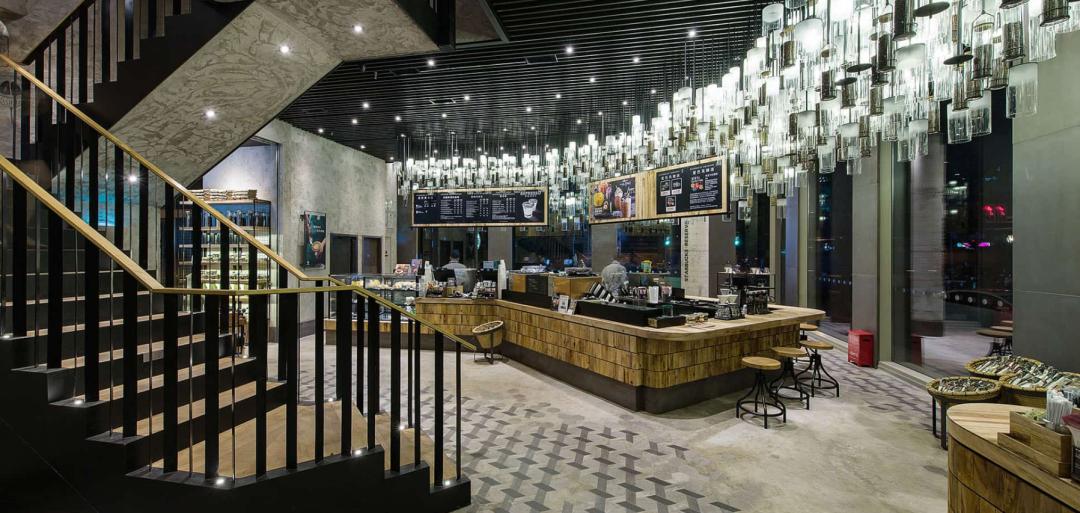
Spacious, bright and well-organized, this is the most simple yet hardest-to-replicate temperament of Starbucks stores. During his trip to Milan in 1983, Schultz first realized that the value of a coffee bar lies not only in coffee, but in the atmosphere that combines craftsmanship, details and a strong sense of community. After returning to Seattle, he turned this insight into Starbucks' store philosophy: Vision, smell, music, lighting and crowd together form a "multi-sensory experience", and the store itself is a core asset of the company.
More than 20 years later, this judgment still holds true in China. When most new brands' stores are reduced to simple pickup windows, Starbucks is willing to pay rent for the function of "staying in the space". This is not a sign of inefficiency, but an accurate judgment of another type of demand: there are always people who need a third space that belongs neither to home nor to the office.
Third, inclusive service.
This is the most underrated and most difficult to imitate capability.
Starbucks introduced the "community-friendly" policy very early, allowing non-paying customers to use in-store facilities. In January 2025, Starbucks' North American stores revoked the open policy implemented since 2018, requiring all customers to make a purchase after entering the store. However, Starbucks China explicitly stated that it would not follow this change, with its response being "continuously upgrading the third space to strengthen human connections between people". A store manager put it more bluntly: whether to consume is up to the customer, and people can sit in the store even if they do not buy anything.
This practice is very rare in China. It means that stores have to bear the cost of seats, cleaning and space occupancy for people who do not place orders. That is why this rule is sometimes impacted by operational pressure. In October 2025, several individual stores in Guangzhou were involved in a controversy where staff frequently urged customers to place orders, which was interpreted by customers as a disguised way to drive people away. Starbucks China later responded that it would never force customers to make purchases after entering the store.
This incident just illustrates the nature of the issue: inclusiveness is not a slogan, but a discipline that needs to be re-implemented every day. It is easy to follow in good times, but its real cost becomes obvious when the business is under pressure. What makes Starbucks truly outstanding is that it still chooses to bear this cost in most scenarios.
Behind this inclusiveness is a longer-term accounting logic.
Behind Inclusiveness: A Longer-Term Accounting Logic
Why would a commercial company be willing to do such an "unprofitable" thing? Because it is not calculating the profit of a single order, but the return over a long period of time.
The first level is conversion. The person who sits in the store without consuming today may become a paying customer tomorrow. The store is a brand window that costs almost nothing: he completes his first experience of Starbucks' space, service and atmosphere here, and this experience will be remembered the next time he needs a place to meet guests, stay alone, or enjoy a decent moment.
The second level is customer retention. Some other people are regular customers who just have no consumption demand at the moment, or cannot afford frequent purchases due to income constraints. If they are treated differently just because they do not buy something once, the loss is never just the money of that cup of coffee, but a relationship that could have lasted for ten years. People can be persuaded by low prices, but they will hardly come back once they feel they are not respected.
The third level is repurchase structure. By the end of FY2025, the active members of Starbucks' Star Rewards program reached 25.5 million, contributing about 65% of total sales. High-tier members make an average of 4.8 monthly purchases, significantly higher than ordinary members. This structure shows that Starbucks' business is built on the accumulation of long-term relationships, not one-off transaction games. For this kind of business, giving up a small amount of short-term orders in exchange for stable long-term relationships is a very cost-effective deal.
The fourth level is scenario extension. Starbucks has connected its membership system with China Eastern Airlines, enabling mutual access to the rights and interests of nearly 200 million members. It has also cooperated with Xiaohongshu to upgrade more than 1,800 stores across the country into themed "interest community spaces" for pets, handicrafts, cycling and running, and this number will expand to nearly 2,400 in 2026. All these actions point to the same goal: the store is no longer just a terminal for selling coffee, but an integral part of the community. When a store is useful to people in the surrounding area, it is no longer just a carrier of business, but a needed position in people's daily life. Such a position can hardly be taken away by price competition.
Schultz calls this trade-off "achieving business results through a humanistic perspective", and business performance and human care are never conflicting. He also put forward the "two chairs" principle: any decision must satisfy both partners and customers at the same time, and if it cannot, the decision will not be made. What is more well-known is his priority ranking of corporate goals: at the top of Starbucks' pyramid are partners, in the middle are customers, and at the bottom are shareholders.
This is not moral rhetoric, but a well-designed business model. A brand that respects customers usually respects its own employees first. When employees are respected, they are willing to pass on this patience and care to customers. Giving up some short-term orders in exchange for a group of loyal customers who will never leave is exactly the most specific manifestation of long-termism in the retail industry.
How A Humanistic Space Is Built
To understand Starbucks' business model, the three books written by its founder Schultz, *Pour Your Heart Into It*, *Onward* and *From the Ground Up*, form a complete textbook of entrepreneurship. The first book talks about how the dream originated, the second talks about how to stick to the soul in times of crisis, and the third explains where the values behind all these practices come from.
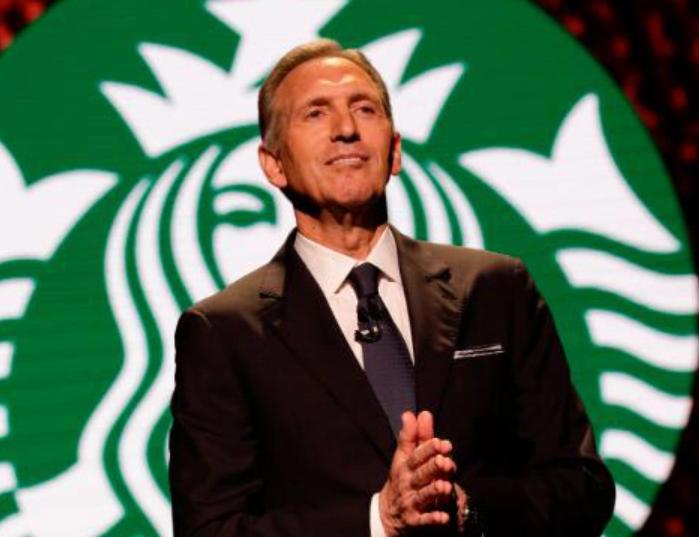
Schultz grew up in a poor neighborhood in Brooklyn. His father was a truck driver, who had no savings or health insurance after being unemployed due to a work-related injury, and the whole family survived on borrowing money. Schultz later wrote in *Pour Your Heart Into It* that this experience made him determined to build a company where his father never had the chance to work, an enterprise that shares its success with every employee. In 1987, he raised funds everywhere to acquire Starbucks, and among more than 200 investors he contacted, 217 said no. Eventually, he bought this small company that only sold coffee beans at the time for 3.8 million dollars, and transformed it into a "space that connects people through coffee". Looking back many years later, this beginning almost foreshadows the entire logic of Starbucks: it solves the problem of