After layoffs and factory closures, is the global raw material giant about to be acquired again?
Following the "marriage" of DSM and Firmenich, two leading giants in the flavor and fragrance industry, another large-scale merger and acquisition may be ushered in the upstream cosmetics sector.
Recently (on September 25), BASF officially announced on its Chinese website that it is confirming that it is conducting exploratory negotiations for a potential acquisition of Evonik.
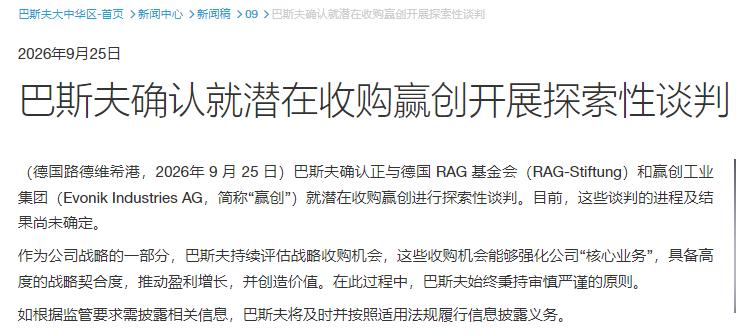
Image source: Screenshot from BASF official website
Although the announcement emphasized that "the current negotiation process and results are still uncertain", the news quickly aroused widespread attention in the industry, and once triggered a drop in the share prices of both enterprises.
As of midday of Central European Summer Time on September 28, BASF was quoted at 49.87 euros (about 380.6 yuan), down 1.09%, with a market capitalization of 44.95 billion euros (about 343.1 billion yuan); Evonik was quoted at 19.34 euros (about 147.59 yuan), down 0.15%, with a market capitalization of 9.03 billion euros (about 68.9 billion yuan). The two declined simultaneously, BASF saw a larger drop, and there is a huge gap in their market capitalization.
As a leading enterprise in the German chemical industry system, both BASF and Evonik occupy a high market share in the global supply chain of cosmetics, personal care and specialty chemical raw materials. This means that if the transaction is finally advanced, it may rewrite the competition pattern of the global beauty and personal care raw material market.
Nutrition & Care segment declined by 9%, trying to reverse performance through M&A?
At present, some foreign media [1] have disclosed relevant details. In response, Evonik stated that it has received a non-binding approach from BASF regarding all its shares, but has not disclosed the quotation or transaction structure.
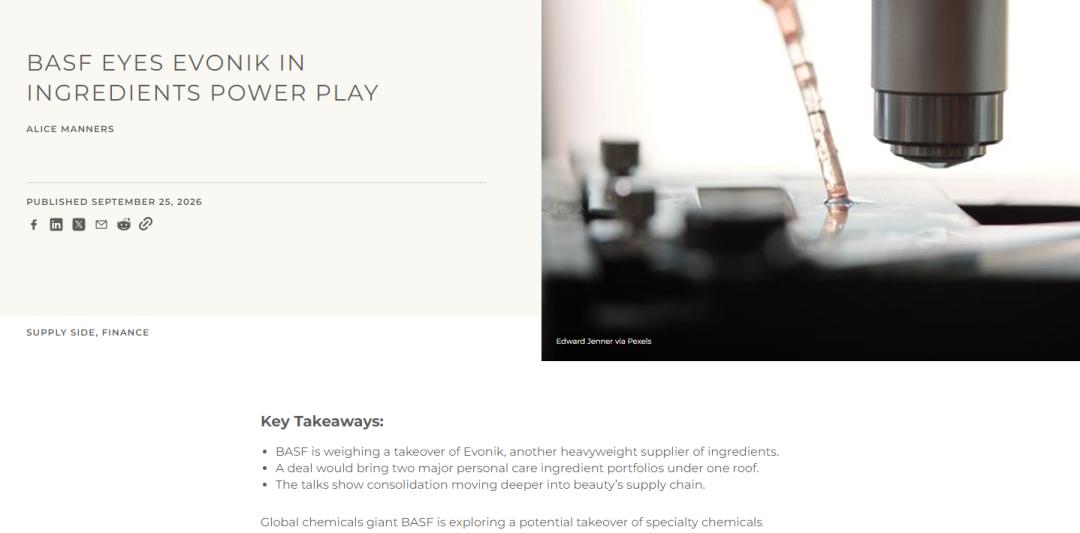
Image source: Screenshot from beautymatter official website
Public information shows that [2], BASF and Evonik have their own advantages in the cosmetics/personal care sector. The former is one of the largest chemical enterprises in the world, with businesses covering chemicals, materials, industrial solutions, nutrition & care, agriculture and other sectors. In the cosmetics and personal care field, BASF has a deep layout, and its product line covers care chemicals, active ingredients, sunscreens, surfactants, polymers, additives and so on.
Among them, in terms of fragrance raw materials, BASF has well-known product portfolios such as citrus, lavender and mint. In the personal care field, its business covers sun protection, cleansing, moisturizing, emulsification, rheology, film forming, conditioning and active care. Its sunscreens are particularly well-known, including Tinosorb S, Tinosorb M, Tinosorb A2B, Uvinul A Plus, Uvinul T 150, Uvinul MC 80 and Z-Cote, etc.
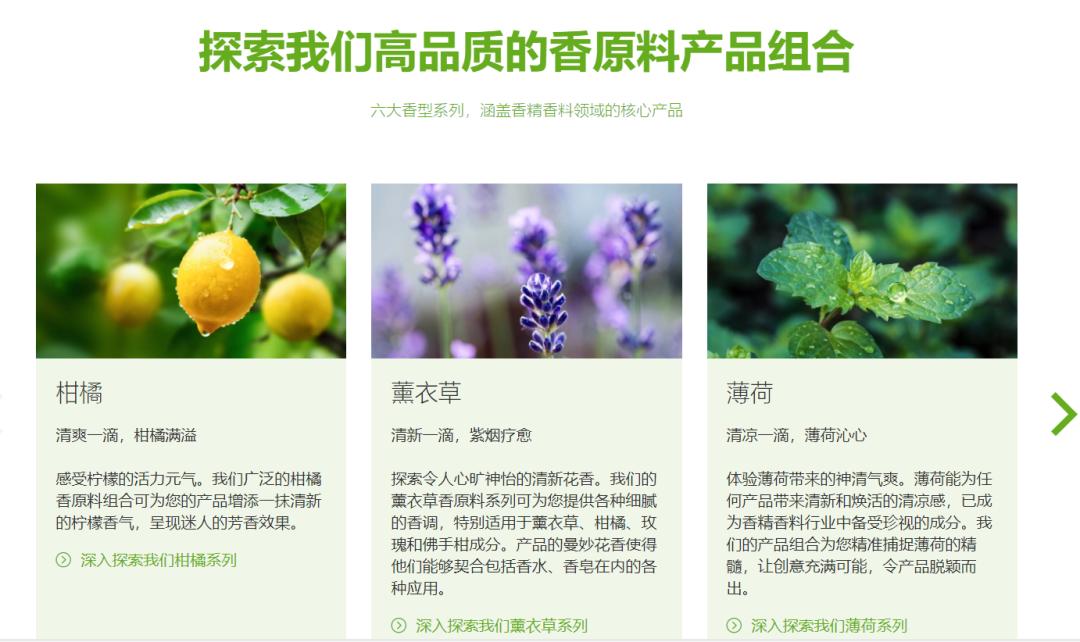
Image source: Screenshot from BASF official website
Evonik is a leading German specialty chemical enterprise, whose businesses include specialty additives, nutrition & care, smart materials, functional materials and other sectors.
In the field of personal care raw materials, Evonik also holds an important position, especially with profound accumulation in specialty additives, active ingredients, formulation auxiliaries and functional materials, and its products include ceramides, biotechnology-derived collagen, biosurfactants, active ingredients and delivery systems, etc.
In addition, Evonik continues to cultivate the Chinese market. At the 2026 PCHi exhibition, Jumeili once reported its two locally innovated, developed and produced emulsifiers symbio®pure G3E1 MB and symbio®muls Aquasoft MB.
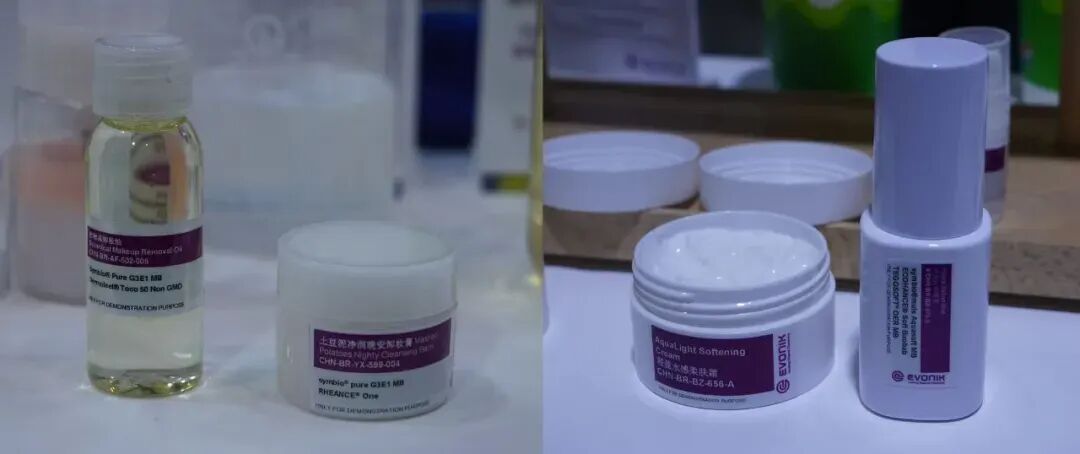
Image source: Special report on PCHi exhibition released by Jumeili this year
It can be seen that the businesses of the two companies are obviously complementary and also overlapping. The complementary part lies in that BASF has a larger scale, wider product line and stronger global customer network. In contrast, Evonik has unique advantages in the field of specialty chemicals and high-end additives. The overlapping part is concentrated in the segmented fields such as care chemicals, surfactants, additives and functional materials.
At the same time, Evonik is accelerating its global R&D layout for beauty products. For example, in June, the company opened Asia's first Beauty Science and Innovation Center in Shanghai to develop raw materials and formulas for the Chinese and broader Asian beauty markets.
BASF is also improving its competitiveness in the Chinese market. In June this year, it cooperated with Enhe Technology to launch SkinNexus™ Collag3n, a 100% human homologous recombinant type III collagen screened by AI. At the same time, in the first half of the year, its integrated base in Zhanjiang was fully put into operation, and the production capacity of fragrance raw materials such as citral was launched, so as to strengthen the local supply chain.
Combined, the consideration for advancing this transaction may be related to the slowdown growth of both parties in the cosmetics/personal care sector.
According to the financial report, BASF's Nutrition & Care business achieved sales of 3.378 billion euros (about 25.779 billion yuan) in the first half of 2026, with a year-on-year increase of only 1.23%; its EBITDA (earnings before interest, tax, depreciation and amortization) fell 8.67% year-on-year to 379 million euros (about 2.892 billion yuan). In this regard, BASF revealed in the financial report that the decline in the earnings of this business was caused by the decrease in gross contribution margin.
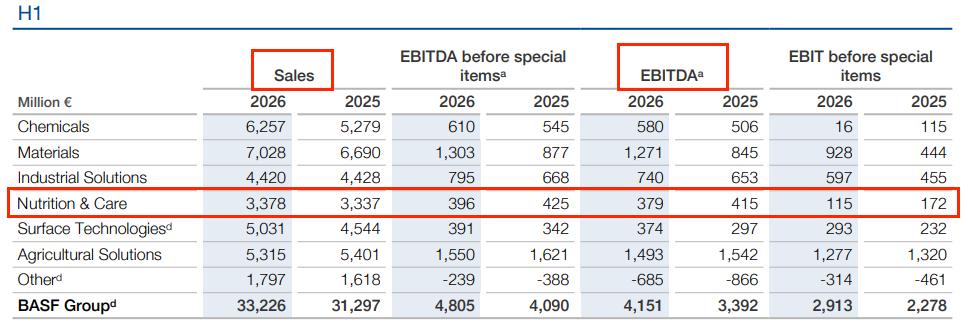
Key performance data of BASF's various businesses in the first half of 2026, screenshot from its relevant financial report
On the other side, Evonik's financial report shows that the sales of its customized solutions business segment in the second quarter of 2026 was 1.422 billion euros (about 10.852 billion yuan), up 4% year-on-year; the adjusted EBITDA increased by 7% year-on-year to 271 million euros (about 2.068 billion yuan). Among them, the sales of the care business were basically the same as the same period of last year.
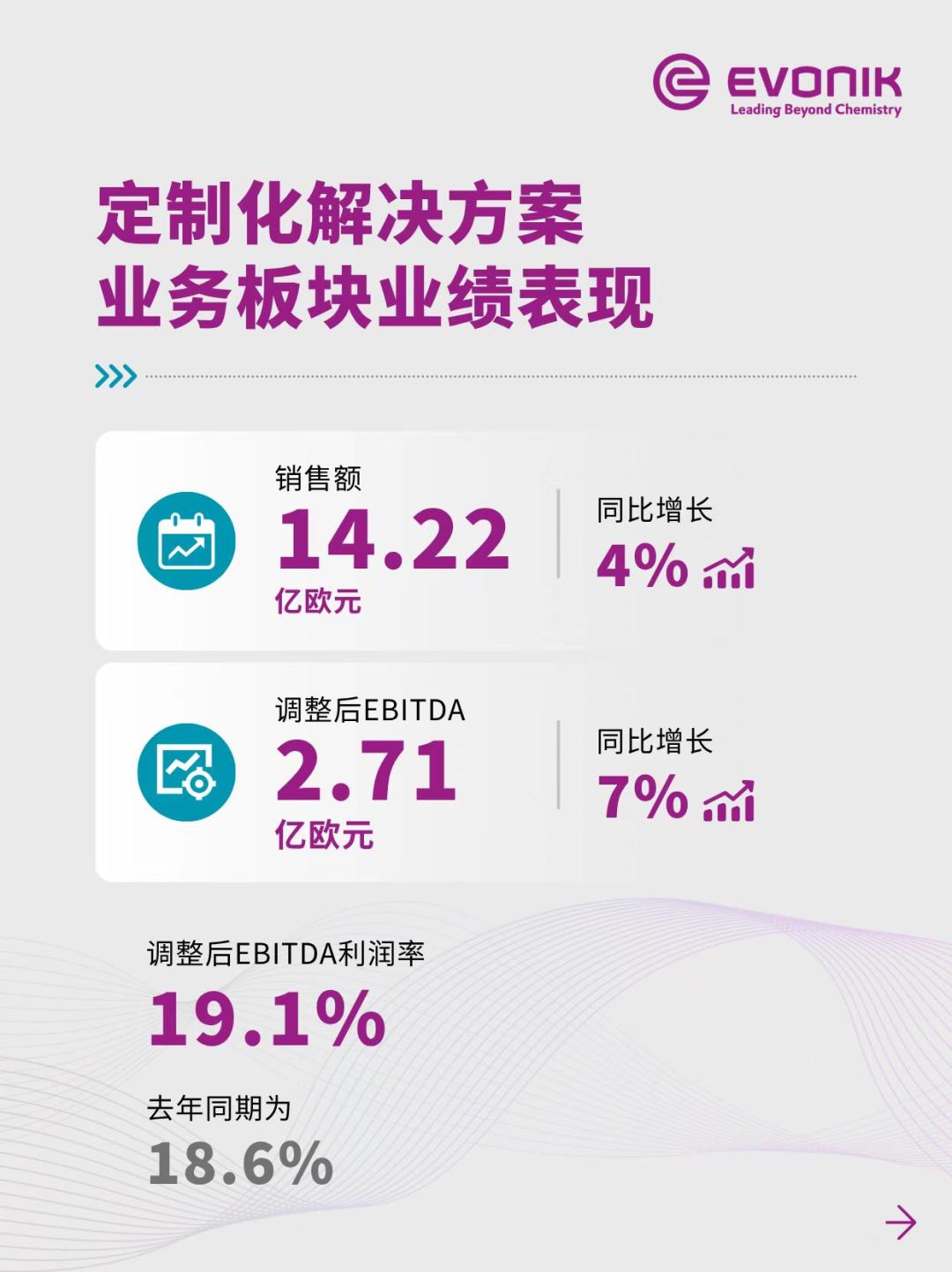
Image source: Evonik WeChat official account
In addition, under the pressure of performance, Evonik announced in June that it would extend the "Evonik Custom" efficiency enhancement plan, including promoting organizational restructuring and cost reduction measures globally, which is planned to last until 2029 and cut about 3200 positions.
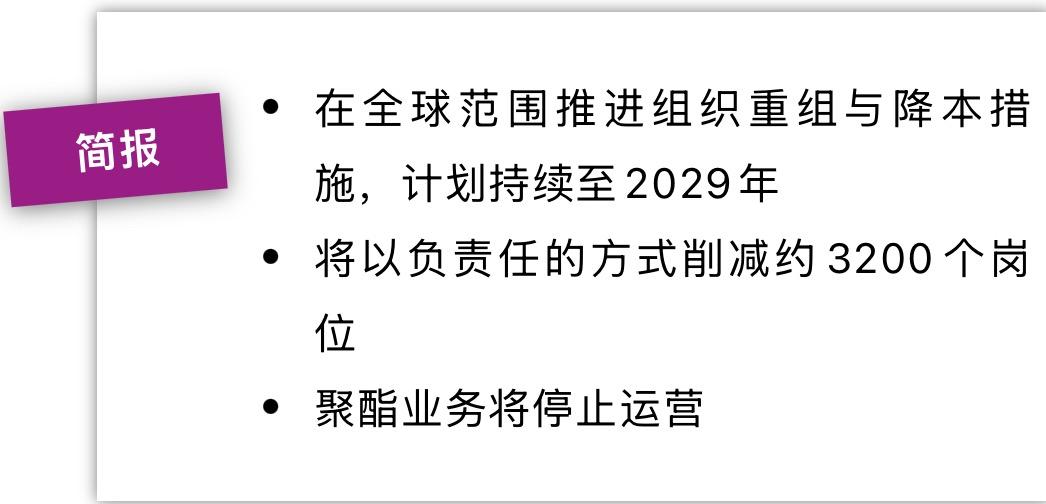
Image source: Screenshot from Evonik WeChat official account
At that time, Christian Kullmann, Chairman and CEO of Evonik Industries AG, said: "With intensified global political uncertainty, weak economic growth and fierce international competition, we must strengthen our own strength."
It can be seen that the growth of both parties in the beauty/personal care field has stagnated. If BASF's considerable manufacturing scale and existing personal care business are combined with Evonik's specialty raw materials and formulation capabilities, it is expected to go through the cycle through strong complementary advantages and find a new way out.
The upstream beauty industry is under pressure, and the raw material integration wave has arrived?
From the overall market perspective, the upstream competition is extremely fierce, the performance of international raw material manufacturers in the cosmetics/care sector is clearly differentiated, and some leading enterprises are facing pressure on profitability.
Among them, Drago's Aroma & Care Division achieved sales of 1.009 billion euros (about 7.7 billion yuan) in the first half of 2026, a slight drop of 1.7% year-on-year; its adjusted EBITDA fell 6.7% year-on-year to 178 million euros (about 1.358 billion yuan), which was mainly dragged down by product mix and structural effects as well as rising freight and logistics costs.
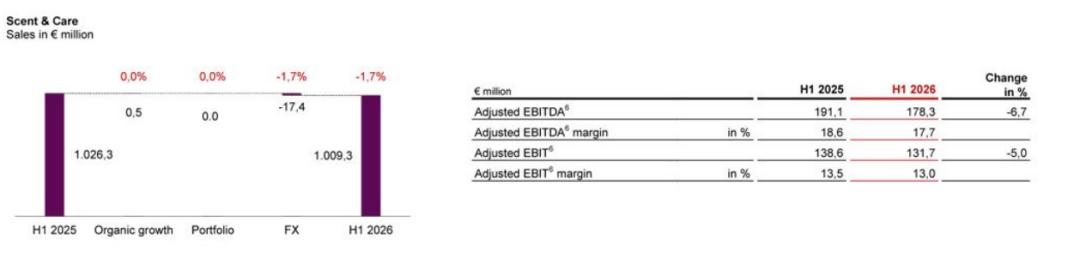
Key financial data of Drago's Aroma & Care Division in the first half of 2026, screenshot from its relevant financial report
Givaudan's Fragrance & Beauty business achieved sales of 2.01 billion Swiss francs (about 16.224 billion yuan) in the first half of this year, with a year-on-year increase of 2.9%, but the adjusted EBITDA margin of this sector dropped from 27.6% to 26.2%, which was mainly dragged down by one-time legal settlement expenses.


Key financial data of Givaudan's Fragrance & Beauty business in the first half of 2026, screenshot from its relevant financial report
Ashland's Personal Care business sales in the second quarter of 2026 was 150 million US dollars (about 1.007 billion yuan), up 3% year-on-year, but lower than the market expectation of 153 million US dollars (about 1.027 billion yuan). Its growth was mainly driven by the double-digit growth of bio-functional active ingredients, and the overall growth rate slowed down.
Specifically, the fierce upstream competition is mainly reflected in the following aspects:
First, the growth rate of the brand side slows down, and inventory adjustment is transmitted to the upstream. In the past few years, the beauty industry has entered a stable period after experiencing rapid growth, and some categories even declined. In order to control costs, brand owners keep pressing prices to raw material suppliers, extending the payment period and fragmenting orders;
Second, there is overcapacity in the raw material sector and homogeneous competition is serious. The profits of bulk raw materials such as surfactants, basic oils and conventional emulsifiers are meager, and enterprises can only win by scale;
Third, the costs of R&D and compliance are rising. New raw material registration, safety assessment, sustainable certification and carbon footprint management all require a lot of investment, which small and medium-sized raw material manufacturers cannot afford independently;
Finally, the valuation logic of the capital market for chemical enterprises is also changing. Investors prefer companies that focus on core businesses and have stable cash flow, rather than large and comprehensive groups with low profit margins.
In this context, the exploratory negotiations between BASF and Evonik are not an isolated case, but more like the epitome of a new round of integration wave in the upstream cosmetics raw material market. In recent years, the upstream raw material market has been under performance pressure, with slowing growth and intensifying price competition. Some enterprises have begun to optimize their business portfolios, choosing to merge or sell/acquire cosmetics and personal care businesses to carry out cyclical adjustments.
According to incomplete statistics from Jumeili, there have been at least 7 relevant initiatives in the past few years: In 2021, BASF sold its pigment business to DIC, and DSM sold its resin and functional materials business to Covestro; In 2023, DSM and Firmenich merged to establish DSM-Firmenich, Evonik sold its superabsorbent business to ICL and its methacrylate business to Advent respectively; In 2024, IFF sold Lucas Meyer Cosmetics