The new 56% benchmark of Figure has sparked a major generalization verification challenge for all embodied agents.
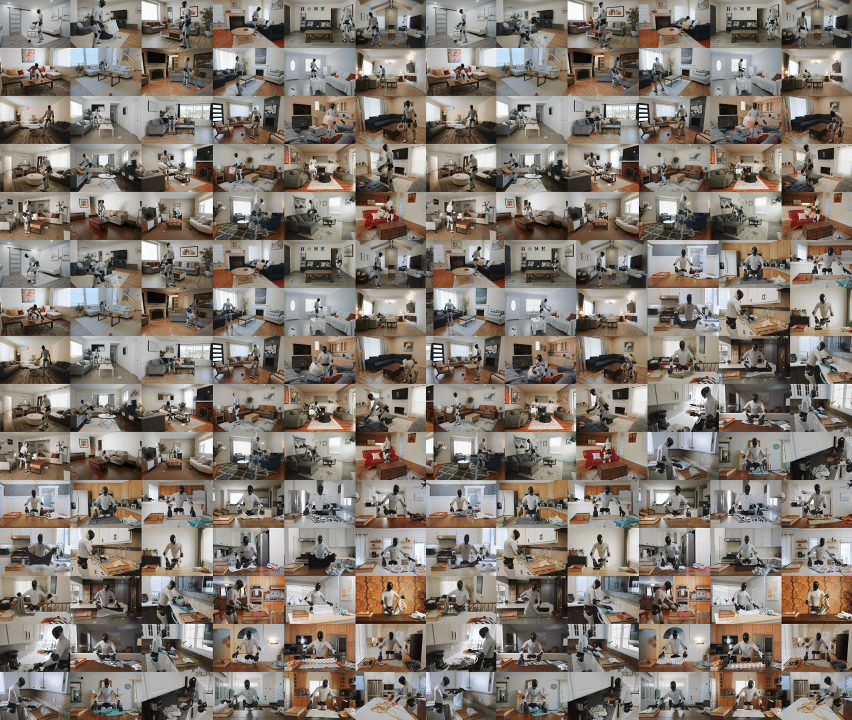
Thirty families in the San Francisco Bay Area handed over their homes to the same robot this August. Figure had never stepped into any of these houses during the training process, and all the sofas, beds and folding worktops inside belonged to the homeowners themselves.
The robot only completes one task at a time: it may collect more than a dozen toys scattered on the floor of the living room into the basket without missing any, fold all the towels and put them into the basket, or arrange two pillows and the corners of the quilt to the upper third of the bed. The task to be performed is randomly selected by the evaluation party.
There is no partial score. The task will be judged as a failure if it is not completed, and it will also be judged as a failure if a person intervenes for protection midway.
The organizer of this assessment is exactly Figure AI.
On September 17, Figure released Helix 2.5, which is mounted on Figure 03.
Out of 420 attempts, 237 tasks were completed. In a sense, the generalization ability of humanoid robots has been improved, with the task success rate rising from 9% to 56%.
"Generalization" has long been a universal adjective in the public relations rhetoric of embodied intelligence. This time, Figure redefines the discussion benchmark with verifiable skill demonstrations. What can domestic embodied players use to respond to this practical move?
01 From 9% to 56%
The figure of 56% needs to be analyzed in detail.
Making the bed: 94 out of 140 attempts, 67%; folding towels: 87 out of 140 attempts, 62%; collecting toys: 56 out of 140 attempts, 40%. Thirty houses share the same model checkpoint, no adaptation is made for any of the houses, and the evaluation method is blind test.
The zero-shot boundary defined by Figure is that neither the houses nor the operated objects have been seen before, and the three behaviors themselves are learned from data in other scenarios.
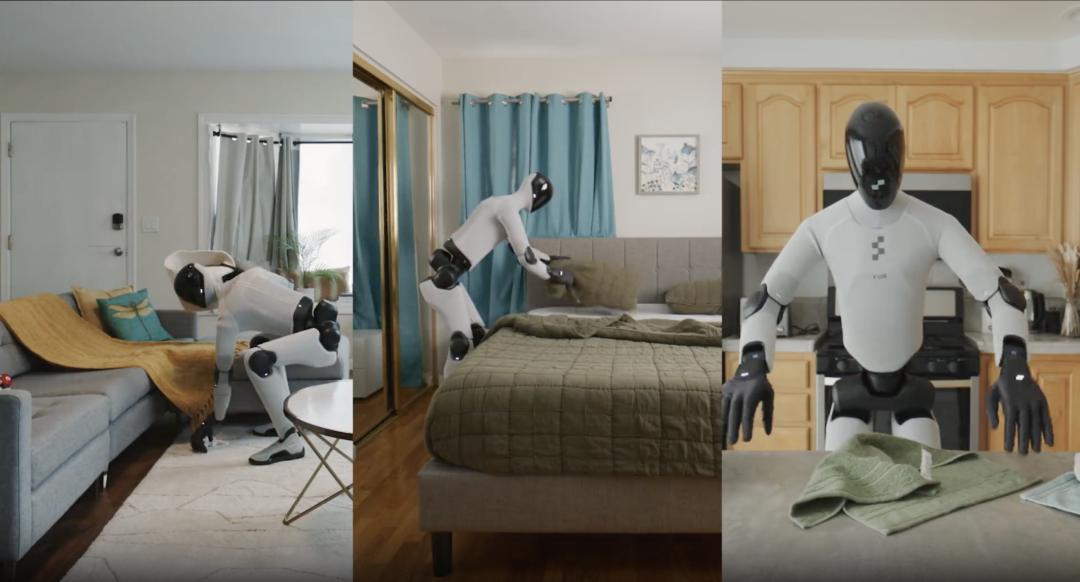
Figure AI Test
Behind this set of numbers lies a controlled experiment: Figure uses the same batch of task data to train two policies. One starts from random weights, and the other starts from Helix 2.5 pre-trained by Index. The architecture, optimizer, hyperparameters, downstream data and evaluation methods are all locked. The only difference is whether there is Index pre-training.
The policy with Index pre-training has a zero-shot success rate of about 56%, while the policy trained from scratch only has a 9% success rate, a gap of more than 6 times. None of the evaluation tasks in the Index dataset accounts for more than 1.90%.
Figure's conclusion on this matter is that as far as it knows, this is the first time that zero-shot full-body generalization has been achieved on humanoid robots at this scale.
It also shows that Helix 2.5 is pre-trained entirely on Index starting from random initialization, while the starting point of the previous generation Helix 02 is a pre-trained vision-language model.
The account of data volume is also laid out on the table.
Compared with the previous generation Helix 02, Helix 2.5 only uses half of the task-specific data, but applies the same set of behaviors to 30 times more environments.
More critically, Figure presents a scaling curve.
Four models run on nested subsets of Index, with the pre-training data volume spanning 8 times, while the model scale and downstream training remain unchanged. Using only the results of several small-scale runs, the test loss of the largest-scale experiment can be predicted to four decimal places before the training starts, and the prediction error is only 0.54% of the fluctuation of the entire 8-times data interval.
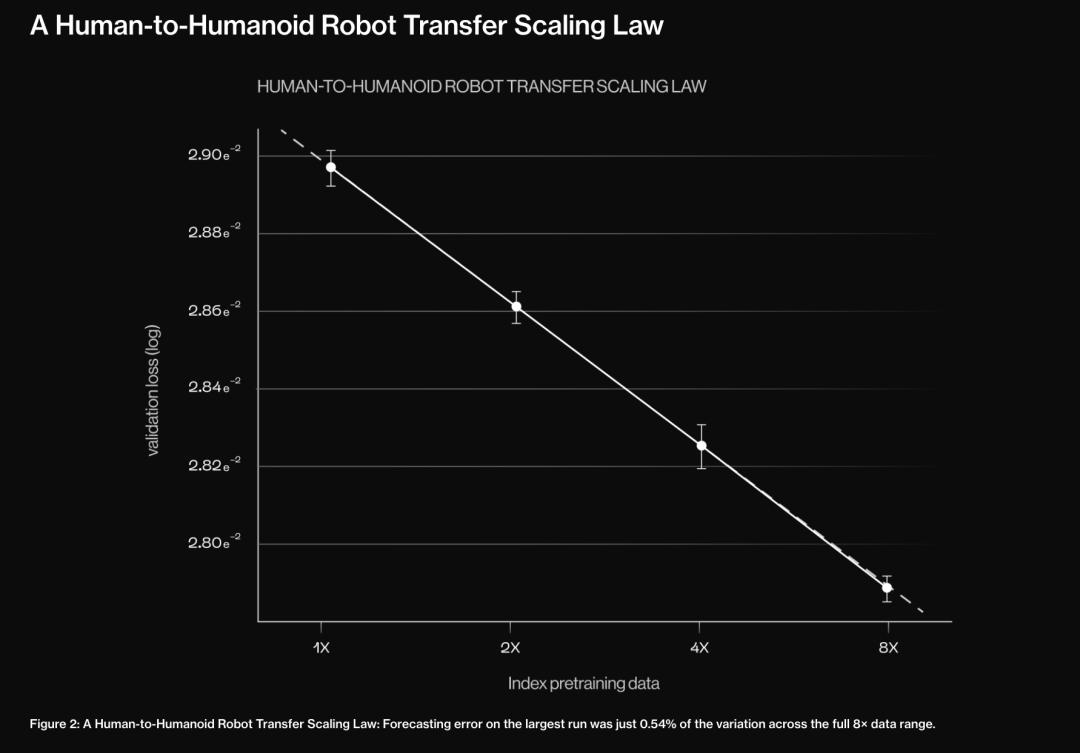
Figure calls this the first human-to-robot transfer scaling law measured on humanoid robots.
The foundation of this logic is Index, which was launched on August 25. The company says it generates about 35 minutes of new human behavior data per second, has collected more than 16 million videos in total, and has paid contributors 15 million US dollars.
Figure signed a multi-year agreement with Nscale on September 3, promising 3.5 billion US dollars of computing power in the initial stage, locking up to 100,000 GPUs on NVIDIA's Vera Rubin platform, with the maximum contract value reaching 6 billion US dollars. The first batch of GPUs is planned to be deployed in Texas in the second half of 2027.
Its technical foundation is the dual-system architecture of Helix. S2 is the slow brain, responsible for task understanding and planning; S1 is the fast brain, which controls the upper body joints in real time at a frequency of 200 times per second in the first-generation Helix; Helix 02 released in January 2026 extends the control of S1 to the whole body, and adds a layer of S0 cerebellum, which is specially responsible for balance and whole-body coordination.
The "full body" in this "full-body generalization" means that the robot needs to squat down, walk around the bed, change its standing posture to exert force again in an unfamiliar room, instead of only moving its hands.
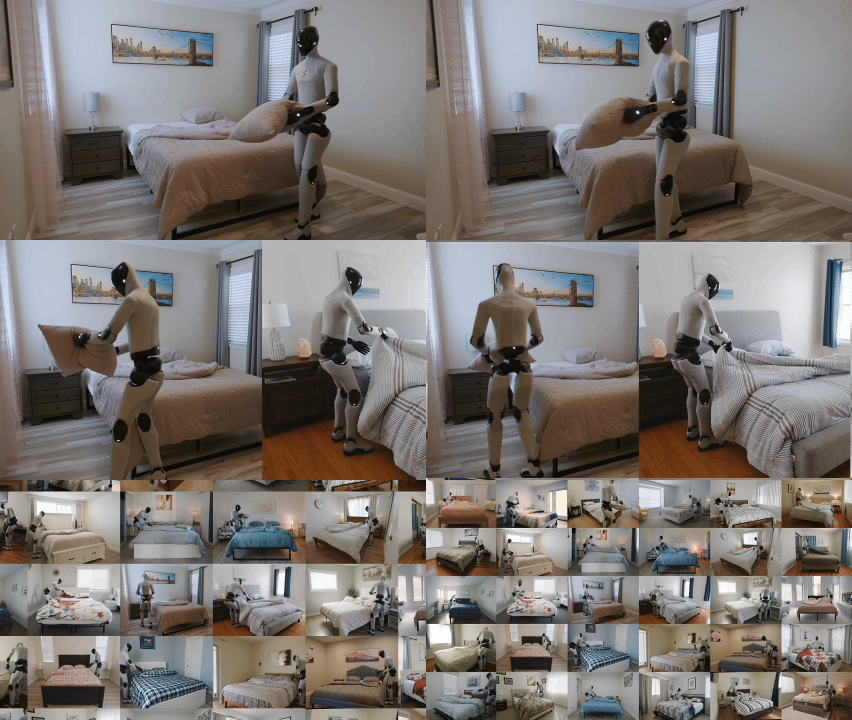
Figure AI Test
However, this result still needs to be viewed dialectically: the evaluation was conducted by Figure itself, without independent verification by a third party, and 56% also means that 44% of the attempts were not completed.
Founder Brett Adcock said in the release video that this is the most important project Figure has ever done. He also released nearly four hours of shooting materials, but that is not the complete record of 420 evaluations. Just like the sorting live broadcast in May, some viewers pointed out that there was a movement delay of about half a second and a suspected teleoperation head-touching movement. The company denied remote operation, but did not release the background data.
02 The 80% Criterion Proposed by Wang Xingxing
In the keynote speech delivered by Wang Xingxing, founder of Unitree Robotics, at the World Robot Conference on August 20, he directly pointed out that the biggest bottleneck of the industry is insufficient generalization ability.
He said that for models that have been fully collected and trained in fixed scenarios, the task success rate is close to 100%, but once the operated objects or the environment are changed, the success rate drops significantly. Each time a new task appears, retraining is required, leading to high adaptation costs.
Wang Xingxing gave the public a criterion: only when a robot is brought into 80% of unfamiliar scenarios and can complete about 80% of the tasks only through voice or text instructions, can the industry reach the critical point of explosion.
His judgment is that this will take 2 to 3 years at the fastest, and 5 to 10 years at the slowest.
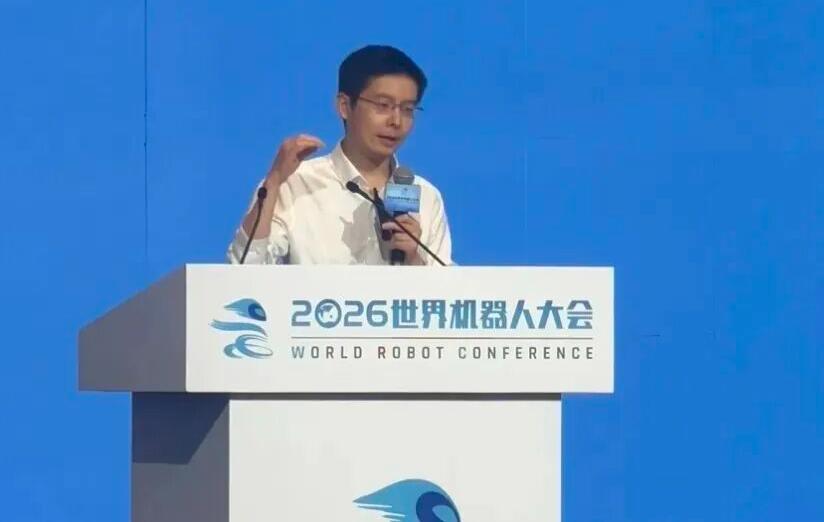
Wang Xingxing at the 2026 World Robot Conference
As for where the bottleneck lies, his statement is deviation accumulation: the input and output of large language models are almost lossless within the vector space, but each perception, decision-making and execution of the robot will introduce deviations. The general direction of the task is correct, but the last few millimeters of error cannot be corrected.
Measured by this criterion, Figure delivered a result of 56% this time, while the figures delivered by domestic embodied companies are much more scattered.
Wang He, founder of Galaxy Universal, gave a similar definition. The "ChatGPT moment" of embodied intelligence he refers to is that robots can achieve a 70% to 80% success rate on tasks that ordinary people do not need to learn specially, and he expects this moment to arrive in 2028.
On September 9, Agibot released GE-Act 2.0, which is trained with four levels of data: 300 hours, 1200 hours, 5000 hours and 30000 hours. After training, the robot faces unfamiliar objects directly without fine-tuning or demonstration for the test tasks. The number of tasks with non-zero success rate of the robot increased from 39 to 76, and the overall success rate rose from 17.1% to 44.1%. The performance did not reach saturation even when the data volume was increased to 30000 hours. There are not many public generalization scaling curves with data support, and this is one of them.
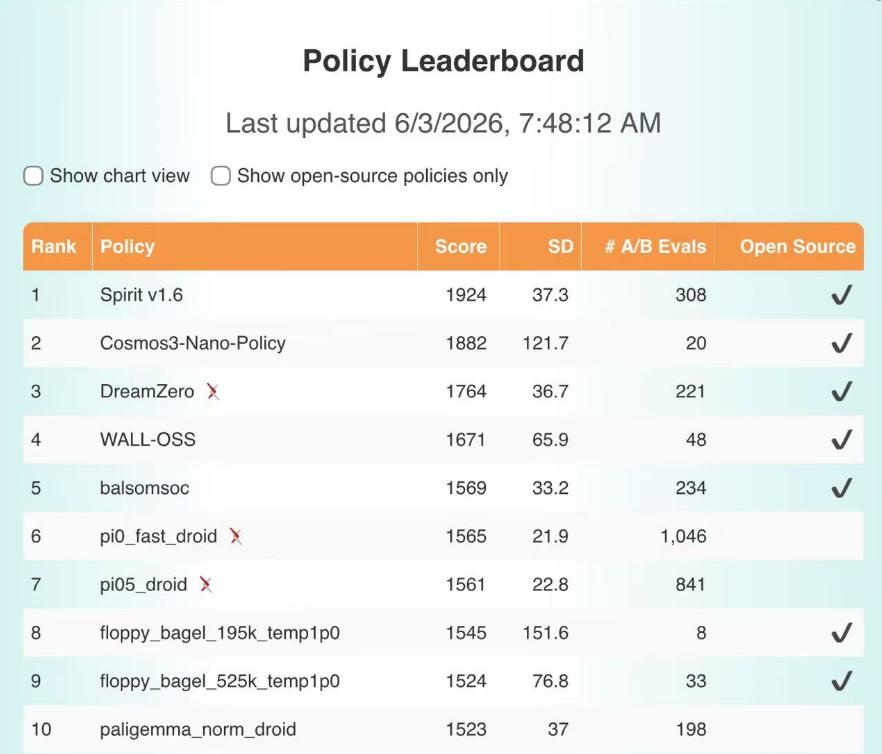
Qianxun Intelligence took the path of third-party rankings. In January, its Spirit v1.5 scored 66.09 points and achieved a 50.33% success rate in 30 real machine tasks of RoboChallenge, surpassing π0.5 which had topped the list for several months, and was the only model with a success rate of more than 50%. In June, Spirit v1.6 topped the RoboArena list, surpassing NVIDIA Cosmos3 and Physical Intelligence's π0.5. However, disputes arose over this top spot later: some observers pointed out that more than 70% of the scores in the evaluation records came from two accounts. RoboArena rolled back the questionable data and updated the ranking, and Spirit v1.6 was removed from the list accordingly. Qianxun has not made a public response so far. On the production line of CATL, its robot performs high-voltage test plug insertion, with a stable success rate of over 99%.
AstraBrain-WBC 0.5 from Galaxy Universal uses 20,000 hours of human motion data and 80.4 million parameters. It claims to have achieved zero-shot execution of a large number of unseen motions on real machines. But it needs to be treated separately: the whole-body motion control generalization it demonstrated at the 2026 World Robot Conference in August was marked as a teleoperation demonstration by the official.
HERON-CRA released by Songyan Dynamics on September 15 achieved cross-body generalization: the same set of models drives the robotic arm and the wheeled humanoid robot respectively. The first test success rate of sock folding is 38.5%, and it rises to 97.8% after enabling reinforcement learning. Both figures are self-tested by the company.
Xinghaitu's G0.5 achieved an average success rate of 82.5% on 10 zero-shot desktop tasks on the DROID benchmark, performing better than π0.5 on each task. At the front warehouse of the World Robot Conference in August, after audiences placed orders online, the robot completed autonomous recognition, planning, grasping, bag supporting and packaging, and completed 900 orders in total during the exhibition.
At the 2nd World Humanoid Robot Games, Accelerated Evolution made 80 robots change their formation autonomously. Cheng Hao, the founder, distinguished it from group control, saying that each robot relies on its own lidar to calculate its next move. The football research conducted by the team of Zhao Mingguo from Tsinghua University using its Booster T1 was published in *Science Robotics* in August, achieving zero-shot deployment on grass, stone slabs, soil and asphalt, with a frontcourt shooting success rate of about 90%...
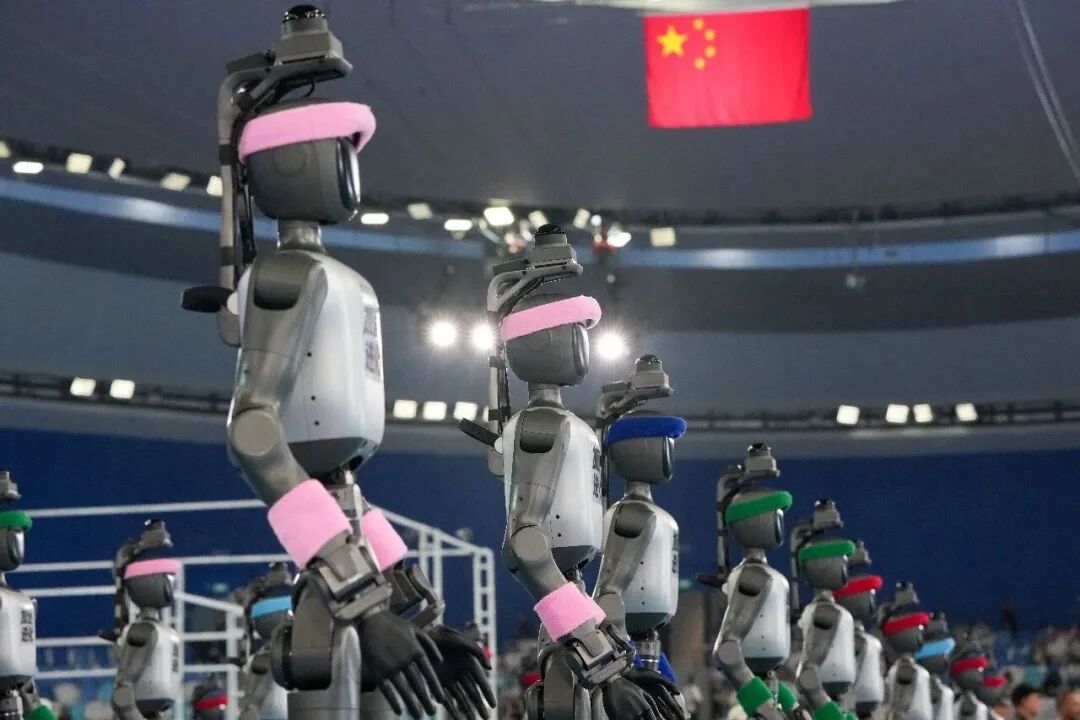
Accelerated Evolution Booster T2 Humanoid Robot
Behind the noisy figures, an honesty test about "generalization" is unfolding.
When Figure sets the passing line at 56%, domestic players are either climbing the data scaling curve, topping third-party rankings, or deepening the application in specific scenarios — the answer may not lie in a stunning percentage, but in who can be the first to cross the gap from "demonstration" to "daily use".
03 The Uncounted Part on the Balance Sheet
At the same time, the calibers of data scale statistics vary among domestic companies.
Agibot's AgiBot World has accumulated more than 1 million trajectories and 217 tasks; Xinghaitu's GOD has 500 hours of real machine data and 100,000 trajectories; Qianxun Intelligence has accumulated more than 200,000 hours, with a 2026 target of 1 million hours; Tushi Zhihang claims that the WIYH dataset has a scale of more than 1 million hours, covering tens of thousands of scenarios... None of the companies has disclosed verifiable real machine data hour accounts, nor has any company announced the collection scale of human behavior videos.
The takeover ratio is an even more severe test.
Xinghaitu retains a manual takeover mechanism in the production environment, and the data generated by takeover is returned to the training process. Wang Qian, founder of Ziliang, said that home service "does not mean that all tasks can be completed 100% autonomously by AI, and remote personnel are still needed as a backup when necessary". Wang He, founder of Galaxy Universal, said that it is still difficult for robots to directly adapt to thousands of industries, and corresponding post-training is still required for different tasks...
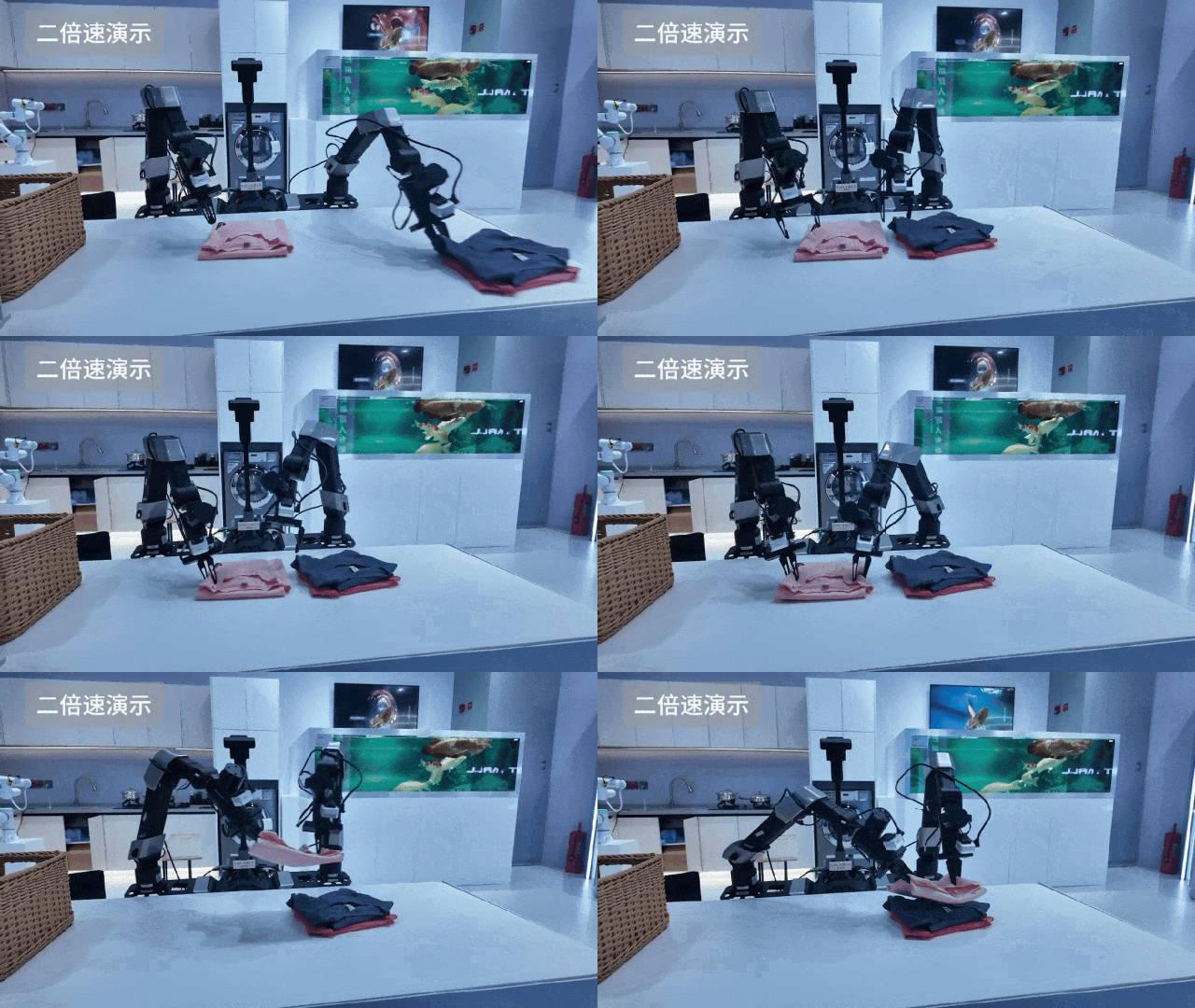
Xinghaitu Robot
It is worth alerting that when "retaining takeover" is re-told as a warm story of "human-machine collaboration", and when the average value in the laboratory is packaged as a pass for the commercial world, the crack between rhetoric and reality is quietly appearing at the denominator of the success rate.
Xu Huazhe, founder of Shello Robotics, said at the Bund Summit that a 50% success rate of robots means a