"Mr. Wild Man did respond after all — is a 28-yuan portion of Gelato actually expensive?"
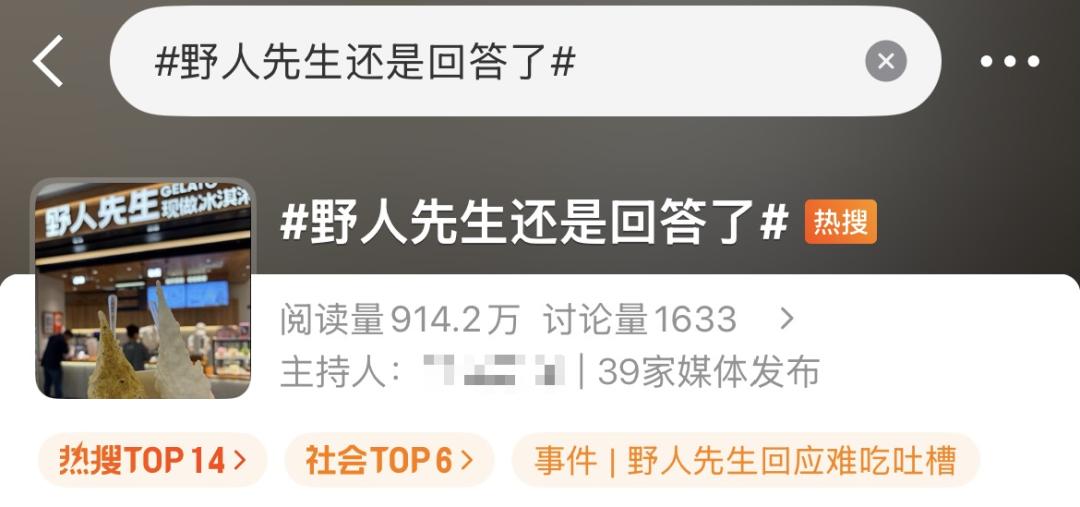
"Mr. Wild Man's Response Finally Comes" Has Once Again Rushed to the Top of Hot Search Lists. Mr. Wild Man, a local ice cream brand second only to DQ in scale, has recently hit a turbulent patch.
A casual complaint from Luo Yonghao that "it doesn't taste good" has kept the brand on hot search lists for several consecutive days, and "the cost of Mr. Wild Man" has become a widely discussed topic across the internet.
Putting aside the taste controversy, are Mr. Wild Man's ice creams really overpriced?
Gaining 400,000 New Followers in a Month: Mr. Wild Man's Textbook-style "Silence is Golden"
The incident traces back to September 12. After Luo Yonghao bought Mr. Wild Man ice cream at the airport, he posted a negative review targeting its taste and price on Weibo.
The comment sparked a huge public outcry, and the topic quickly went viral. On September 14, "Mr. Wild Man: Cold Treatment" topped Weibo's hot search list. On September 15, "the cost of Mr. Wild Man" once again became a top trending search.
What is interesting is the reaction of netizens. Right after Luo Yonghao's complaint was posted, a large number of consumers flooded into the comment section of Mr. Wild Man's official account, spamming the classic line from *The Three-Body Problem* in unison: "Do not answer. Do not answer. Do not answer."
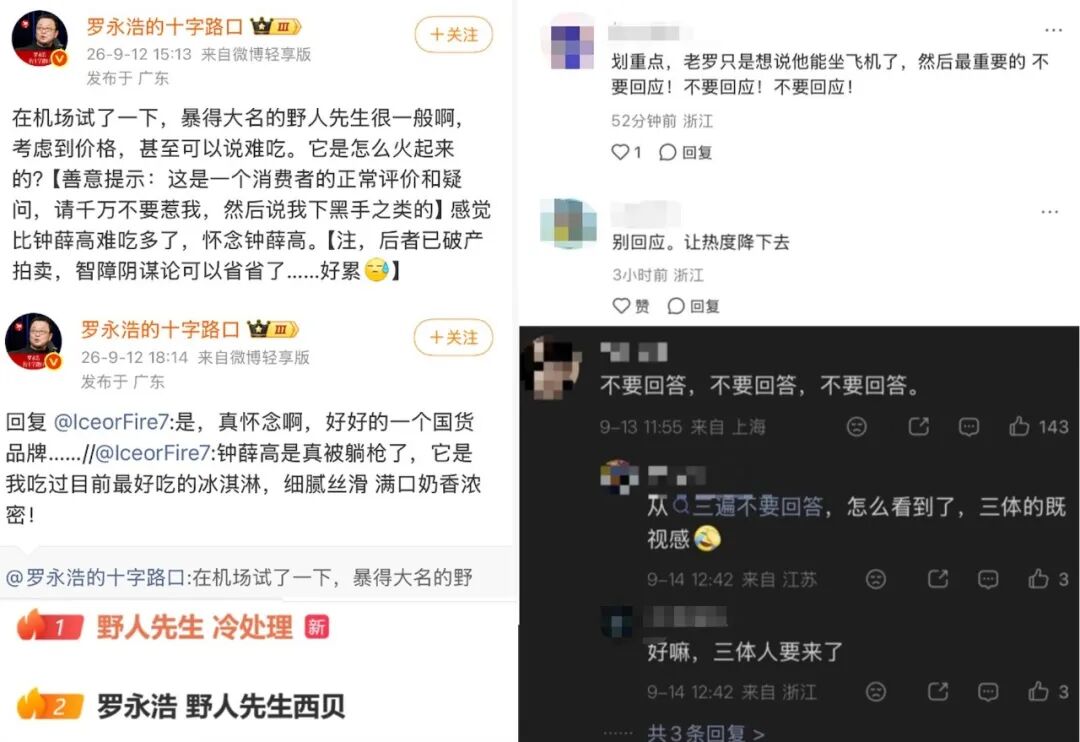
This meme points to a clear reference: in September 2025, Luo Yonghao similarly questioned Xibei on Weibo for using pre-made dishes and overpricing its products. The founder of Xibei chose to confront the public directly, which only made the situation worse as the debate dragged on.
Facing the same "public backlash", the entire internet pressed the mute button for Mr. Wild Man in advance. Mr. Wild Man remained silent throughout the incident, issuing no statements, no apologies, and no direct responses.
Silence seemingly comes at the cost of giving up control of public opinion, but the result was beyond expectation. Public data shows that Mr. Wild Man's video account gained nearly 30,000 new followers on September 13 alone, with a total increase of over 400,000 followers in the past 30 days, and the number of followers on a single platform exceeded 4.39 million.
Many people remembered this brand for the first time because of this controversy.
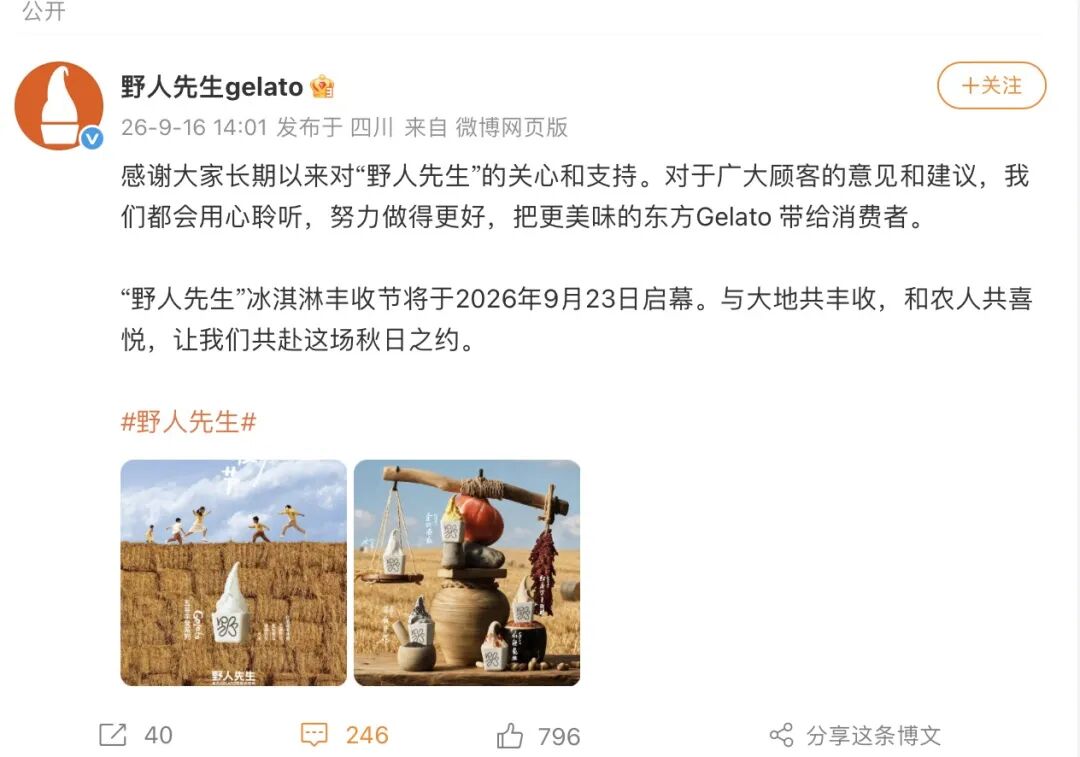
On September 16, Mr. Wild Man gave its first official response: "We will listen carefully to all opinions and suggestions from customers, and strive to do better." This statement once again pushed the brand to the hot search list.
Mr. Wild Man was formerly known as "Wild Man Pastoral Workshop" founded in 2011, focusing on low-fat formula Italian gelato. After 13 years of polishing its store operation model, the brand began large-scale expansion in 2024, and has opened more than 1,700 stores so far.
The number of its stores has increased 13 times in 2 years, second only to DQ which has been in the Chinese market for 34 years, making it the local Chinese chain ice cream brand with the second largest number of stores.
Beyond the taste controversy, what I want to discuss more is the cost accounting of ice cream.
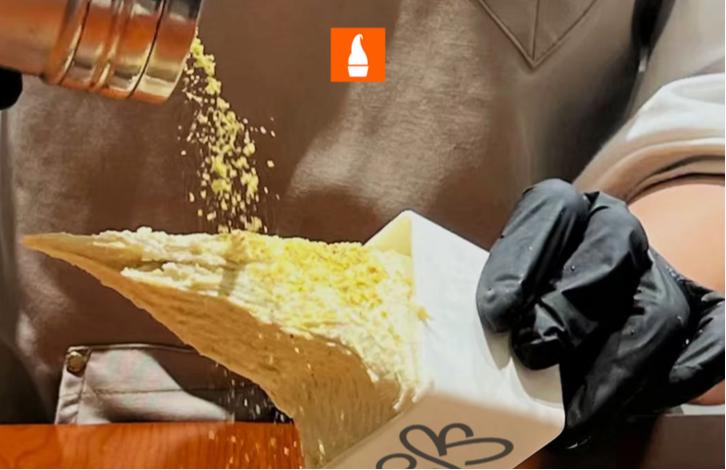
Putting Aside Right and Wrong, How to Calculate the Cost of Gelato?
In the field of hard ice cream, there are two main categories: Italian gelato and American ice cream. Representative brands of the former include Venchi, while representative brands of the latter include Häagen-Dazs.
The two have big differences in raw materials and costs: American ice cream usually has a milk fat content of more than 10% and an air content of about 50%; Italian gelato usually has a milk fat content between 4% and 8% and an air content between 25% and 35%.
This means that under the same volume, gelato has a greater weight and a denser texture.
Gelato is stored at a temperature of about -12°C to -15°C, which is higher than the storage temperature of below -20°C for American ice cream. Therefore, it melts immediately after entering the mouth, and can release the flavor of ingredients faster.
Mr. Wild Man sells localized Chinese-style gelato, and similar brands include Honglou, Gelato Pop, etc. Wu Jianshen, an industry veteran in R&D, said that in local ice cream shops in Italy, raw materials usually account for 10% to 12% of the selling price, while the cost of domestic brands in China accounts for about 25% to 35% of the selling price.
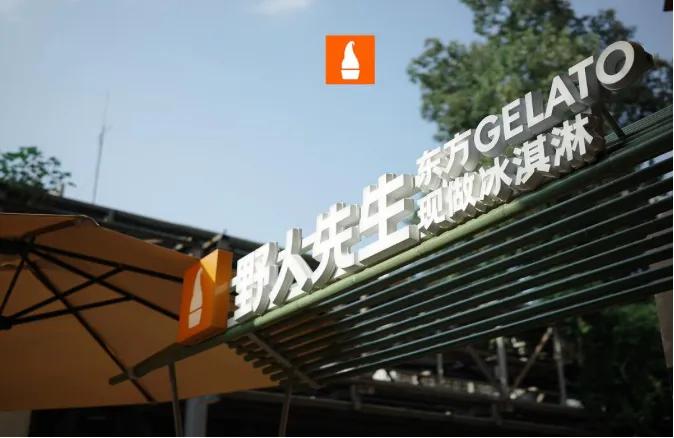
After adding fresh fruits, grains, nuts, chocolate and other ingredients, the cost of ingredients for a single 80g scoop is roughly between 6 and 10 yuan. Converted to Mr. Wild Man's products, the cost of a 130g ice cream is roughly between 7 and 10 yuan.
If we only look at the cost of ingredients, it is really hard to understand why a single serving is sold for 28 or even 38 yuan. But the biggest cost of Italian gelato does not lie in raw materials.
Wu Jianshen told me that the entry-level model of Italian imported Bravo equipment costs about 300,000 yuan, and novices need to invest about 400,000 to 500,000 yuan in the early stage to open a gelato shop.
Although Mr. Wild Man has promoted the localization of production equipment, most of its stores are located in Class A locations of top business districts in big cities, so the rent cost is much higher.
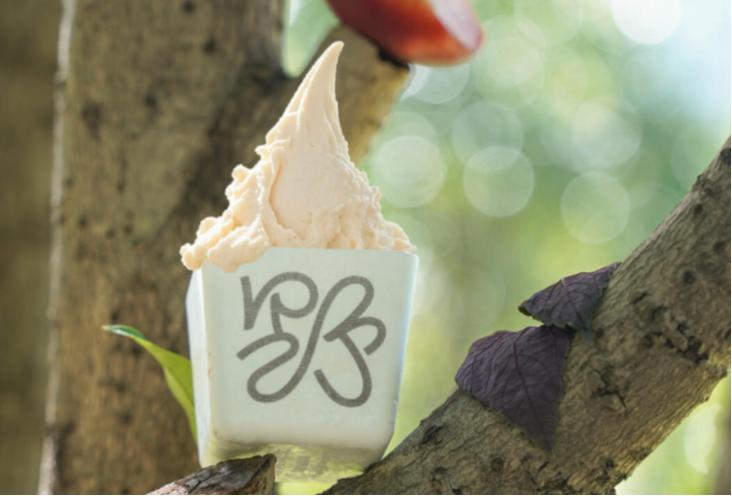
In addition, Mr. Wild Man changed the traditional spherical shape of ice cream, innovatively launching a stretched, pointed shape to better present the texture, which also further increases the labor cost.
Group buying on platforms, cold chain logistics, and loss control for daily fresh-made products are all hidden expenses. Some industry practitioners said: Only when the price of a single serving is maintained at 28 to 38 yuan can the store operate normally.
The gross profit margin of gelato products is generally above 70%, and some products can even reach 80%. However, after deducting operating costs, the brand's overall net profit margin is far less impressive. Some media reports show that the comprehensive gross profit margin of Mr. Wild Man is about 60%.
It is worth mentioning that even at the price of 28 yuan, compared with Häagen-Dazs's 49 yuan per scoop, Mr. Wild Man's ice cream not only weighs 30g more, but also costs at least 75% less. As Cui Jianwei, the founder of Mr. Wild Man, said: "Mr. Wild Man has brought down the price of gelato."
How Much Should a Serving of Italian Gelato Cost?
From another perspective, the pricing of gelato in China has actually gone through a process of "being unattainable to gradually becoming affordable". The entry-level product of high-end Italian brand Venchi starts at 59 yuan, while Mr. Wild Man sells a 130g serving for 28 yuan when converted to unit price per gram, which indeed lowers the average price of the industry.
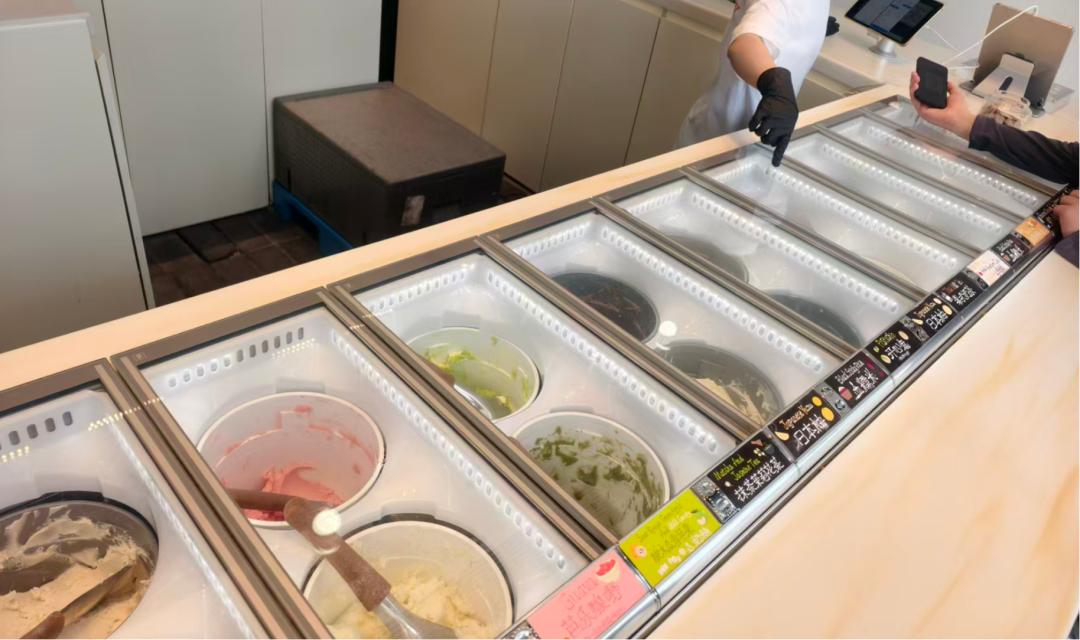
Taste is subjective, but cost is objective. The debate between Luo Yonghao and Mr. Wild Man raises a question really worth thinking about for the whole industry: how much should a serving of Italian gelato cost?
If we refer to the pricing logic of the milk tea industry, where a cup of freshly made tea priced at 15 to 25 yuan has become a daily consumer product for young people, then as a category with more "dessert attributes" than milk tea, pricing in the 20 to 35 yuan range has a solid market foundation.
But the key is that this price must correspond to sufficiently clear quality performance and consumption experience. Consumers are not unwilling to pay for good products, but they are unwilling to pay for products whose "high price cannot be justified".
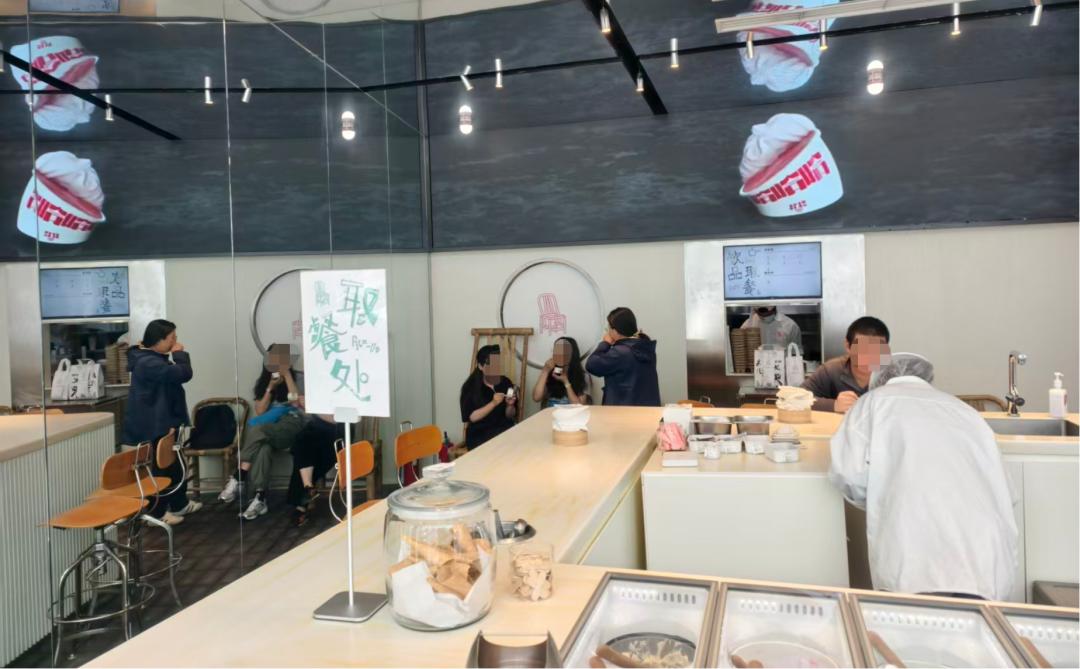
In a period when consumption is becoming more rational, supporting a thousand-store scale with a high-price positioning requires continuous proof of the matching degree between product value and price. Luo Yonghao's complaint has precisely hit the most vulnerable point of Chinese ice cream brands.
The reasonable price of a serving of Italian gelato is not determined by the cost of raw materials, but jointly anchored by "scenario + repurchase rate + consumer trust".
Zhong Xuegao collapsed in the crack between its premium pricing and consumer trust, Häagen-Dazs and Magnum took the initiative to cut prices to save their business, and the term "ice cream assassin" is still fresh in consumers' memory.
In the consumer sector, perception outweighs facts. When consumers spend 28 yuan on a serving of ice cream, what they get is not only "cost-effectiveness" calculated by numbers, but also a complete set of value judgments including visual experience, taste, freshness, and brand experience.
When there is a gap between this judgment and the price, the comment "it tastes bad" will become the most direct expression.
Conclusion
Back to Luo Yonghao's question: "How on earth did this brand get popular?"
The answer may not lie in marketing, nor in taste, but in the fact that Mr. Wild Man has caught up with two trends: Chinese consumers are willing to pay more for "slightly better products", and Chinese brands finally have the ability to turn an imported craft into a chain business.
As for whether that ice cream is overpriced or not, let the market continue the discussion, but the answer has never been on Weibo.
This article is from the WeChat Official Account "Kamen" (ID: KamenClub), written by Guojun, and published with authorization from 36Kr.