Supermarkets and traditional snack brands have entered the fray, bringing the fresh snack industry into its acceleration phase.
Currently, the fresh snack track is booming. But beneath the bustling surface, what is truly worth noting is not "how many new players have joined", but that the dimensions of competition among these players have fundamentally changed.
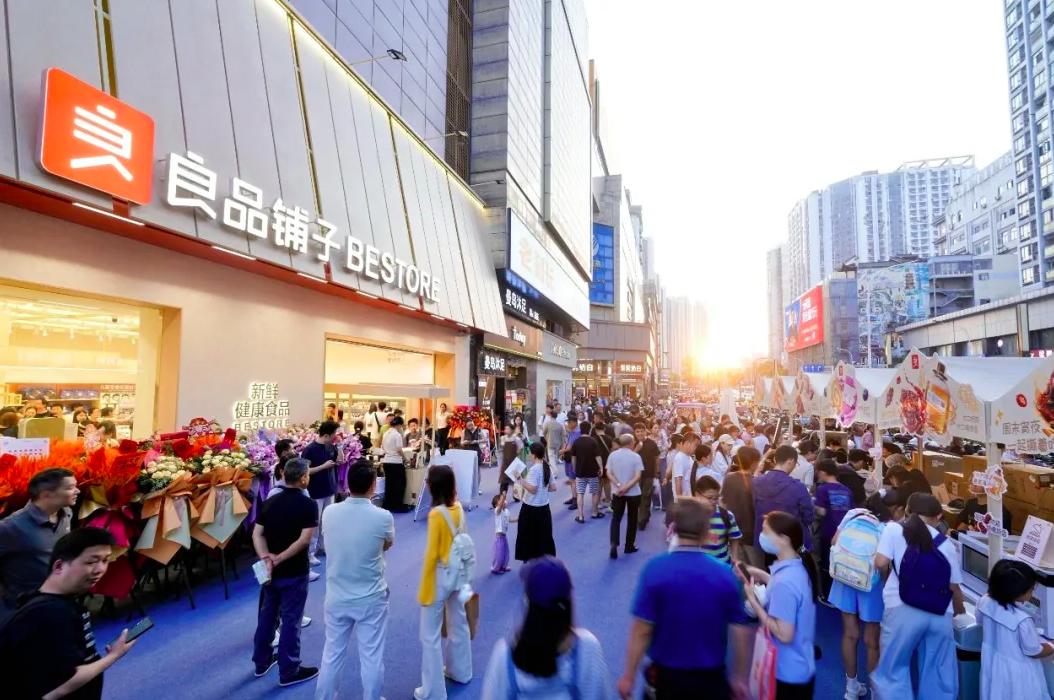
Bestore has just opened its 7.0 fresh and healthy food store in Wuhan. This marks its 7th store upgrade in the 20 years since its founding, which is far from a minor tweak. The share of in-store made cold-chain SKUs has reached 45%, with product categories extending from ambient-temperature snacks all the way to freshly roasted nuts, cold braised deli, and daily-distributed Western pastries.
Jiduquan has also launched its first national Blue Label Store in Wuxi, covering nearly 400 square meters with nearly 200 products across 8 categories, explicitly targeting top-tier landmark shopping malls in first- and second-tier cities. All participants in the fresh snack sector are strengthening their own advantages, and shifting their strategic focus from regional markets to the national market.
"Fresh snacks have won recognition from consumers. In many tourist cities, fresh snacks have become the go-to souvenir for most visitors. The business model has also been validated, and all players are striving for national large-scale expansion," said an investor focusing on the consumer track.
However, beneath the aura of high growth, the extreme challenges of supply chains, resistance to expansion, and the trade-off between standardization and quality control have also filled this track with uncertainties.
Fresh Snacks Are Thriving, and the Business Model Has Been Fully Validated
Why have fresh snacks become the new industry trend? It is mainly driven by consumer demand.
Consumer demands are continuously upgrading. The research report from Zhongtai Securities shows that over 60% of young consumers are willing to pay a premium of more than 30% for "clean label" products, which refer to products with simple ingredients and no additives. "Ingredient list anxiety" has pushed "short shelf life", "zero additives" and "in-store made" to become rigid consumer demands.
Fresh snack stores take "short shelf life + in-store production + freshness" as their core selling points, and make "freshness" and "health" visible and perceptible to consumers through transparent packaging, on-site production, health labeling and other methods.
On social media platforms, a large number of "cross-city purchasing agents" and "store exploration guides" further confirm that fresh snacks have formed a major consumer trend.
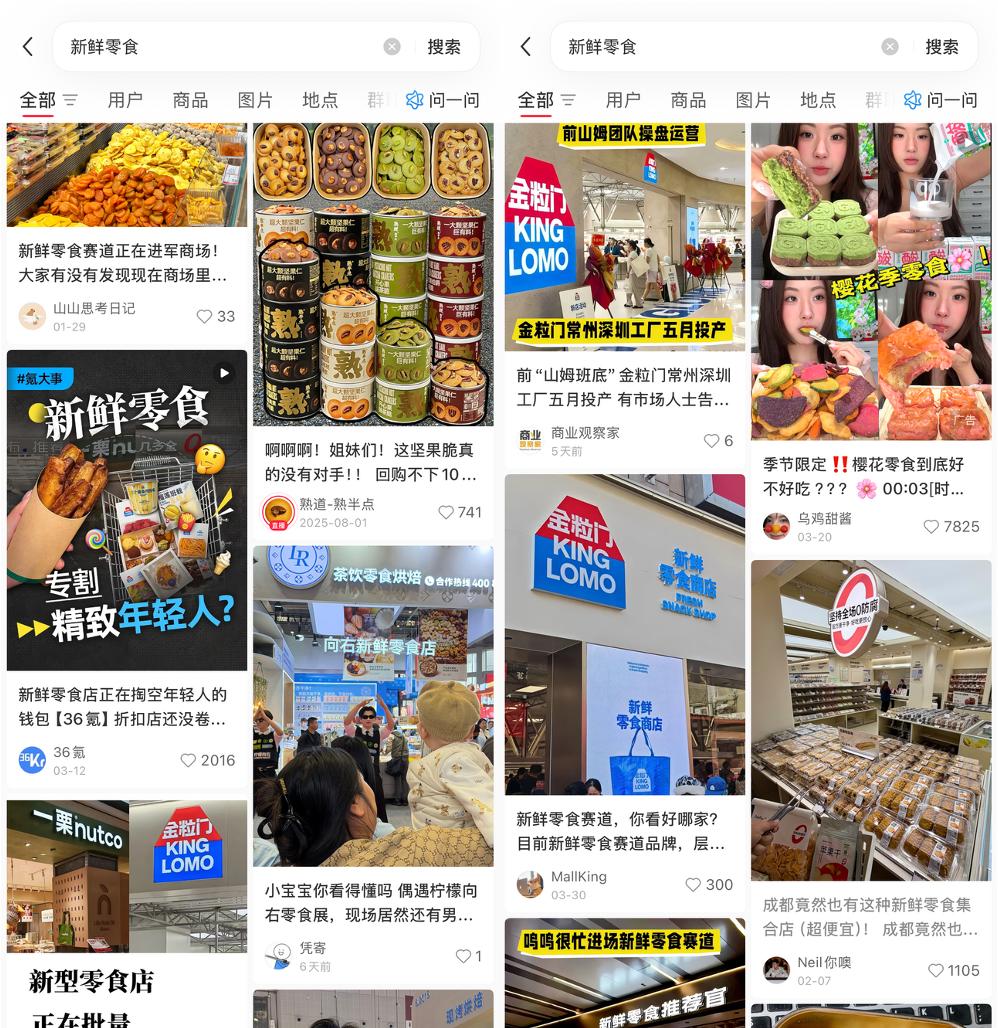
Source: Screenshot from Xiaohongshu
From the retail perspective, the profit model has been proven feasible. Different from the "massive SKU" strategy adopted by traditional bulk snack stores, fresh snack stores generally adopt the "broad categories with narrow SKU selection" model, streamlining SKUs to 200-500 and focusing on proven hit products that have been validated by the market. This not only reduces the complexity of inventory management and product selection, but also achieves better sales per unit area and a more optimized profit structure through high-turnover, high-margin short-shelf-life products, with gross margins of some products reaching 35%-45%.
This has also driven the growth of the fresh snack market. Data from Zheshang Securities shows that from 2020 to 2025, the size of China's fresh snack market increased from less than 5 billion yuan to 18 billion yuan, with an average annual compound growth rate exceeding 40%, and it is expected to reach 40-50 billion yuan in 2026.
Players in the fresh snack track are also accelerating their layout. Jinlimen opened three new stores in Hangzhou in September, with its first Zhejiang store located at Xiaoshan MixC. At present, Jinlimen has more than 40 directly-operated stores across the country, covering Changsha, Shenzhen, Wuxi, Wuhan, Nanjing and other cities. In terms of supply chain, its self-built factory in Changzhou was put into production in May this year, and almost all the supply for stores in East China comes from this factory.
Founded only in March 2025, Jiduquan has now covered 14 provinces and more than 70 cities across the country, with the number of stores exceeding 200. Yili has nearly 100 stores nationwide, with total annual revenue of about 500 million yuan in 2025 and a net profit margin of 10% to 15%.
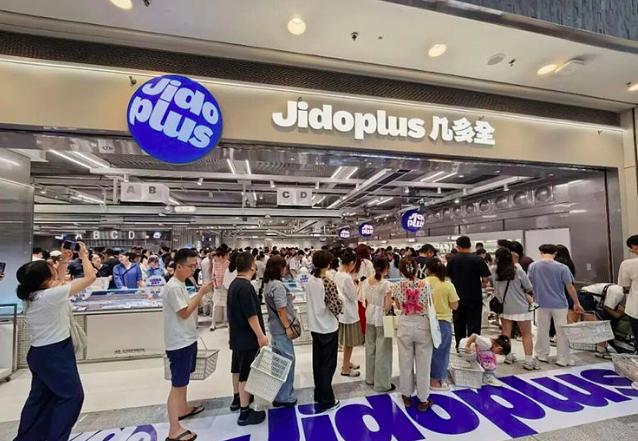
Traditional snack brands, convenience stores, supermarkets, and cross-sector players are all rushing into this track.
In July, Laiyifen launched the world's first "LYFEN Life Fresh Life" store in Shanghai. In September, Xueji Stir-Fried Snacks' store at Beijing Hopson One was renovated, adding short-shelf-life baked products such as bread and pastries.
For example, in the convenience store sector, 7-Eleven launched its own brand "7 Fresh Snacks" in Jiangsu, with the first batch of more than 10 short-shelf-life baked products priced from 4.9 to 17.9 yuan, focusing on clean labels, short shelf life and health. Tangjiu Convenience launched 25 fresh snack products in August, and the average daily sales of each single product per store is more than 10 times that of traditional standard products, with a gross margin steadily above 35%.
Supermarkets are also actively participating. Yonghui opened a "Fresh Snack Pavilion" in Chongqing, with nearly 100 SKUs covering categories such as dried fruits and preserved fruits, in-store made snacks, fruit juices and tea drinks. Beyond collaborated with Pumama, and opened the first batch of 56 stores for the renovation of fresh snack zones. RT-Mart and Three Squirrels jointly launched in-store stores, with the first batch of 9 stores located in 6 cities in East China.
From the perspective of *Retail Business Review*, different players including supermarkets, convenience stores and traditional snack brands are expanding their layout relying on their own store or supply chain advantages, but the real test lies in the efficiency of the freshness-centered supply chain, strict quality control and differentiated innovation capabilities.
Core Challenges: Supply Chain, Quality Control, Differentiation
At present, consumers' criteria for judging "freshness" are evolving from subjective perception to "visible and verifiable".
The *2026-2027 China Fresh Snack Industry Development Research Report* released by iiMedia Research shows that the top advantage of fresh snacks recognized by consumers is "clean ingredients", accounting for 65.1%, followed by "fresh products" (43.8%) and "good taste and flavor" (39.0%). What consumers want is not just "tasting fresh", but "visibly clean".
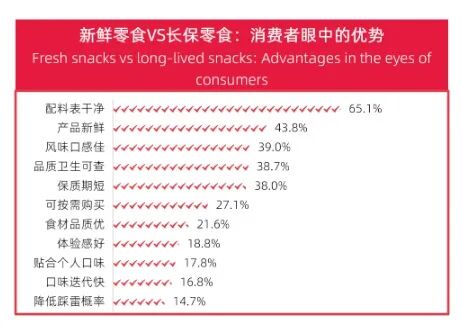
Source: iiMedia Research
These requirements set higher standards for brands. In our view, the fresh snack business is not only competing on the speed of store expansion, but more importantly, on the ability to build core competitive advantages.
The first is product power — what to offer to make consumers remember your brand.
The practice of Jiduquan's Blue Label Store is worth examining. It grades products by the purity of their ingredients, and only sells high-grade products in stores. The grading mechanism means that every single product has to go through ingredient review, formula verification and taste testing before being put on shelves. It turns the slogan of "less additives" into a verifiable standard, so that consumers can judge how "clean" a product is just by looking at its packaging.
A quality commitment is directly displayed on the wall: "We adhere to 2000 tests on all products in the store every month, striving to ensure no preservatives are detected", integrating the brand's proposition into the consumption space. The Blue Label Store also launched a limited new product "Seven-Scented Jasmine Lemon Milk", using jasmine tea that has undergone seven scenting processes as the tea base. The complexity of this craft itself constitutes a competitive barrier.
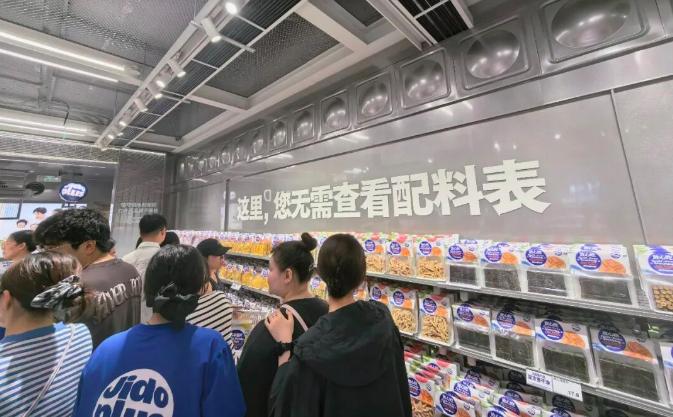
Bestore's approach is different but aligned in direction, breaking down "freshness" into executable parameters. The freshly roasted cashews in its 7.0 stores use large Vietnamese cashews, with the ingredient list containing only cashews; its signature cake uses fresh eggs produced within 48 hours, with about 5 fresh eggs used in one cake; its cold braised series has more than 10 products, with a short shelf life of 4 to 7 days and zero preservatives. Its whole wheat egg and ham sandwich has a filling ratio of no less than 44%, a short shelf life of 3 days, the whole process of cold chain to lock in freshness, and is priced at 6.9 yuan.
The next is the "anti-loss" battle of the supply chain. The operational complexity of fresh snacks is far higher than that of traditional pre-packaged snacks. For example, fresh snacks have a short shelf life of 3-30 days, and some even need to be cleared on the same day, putting forward extreme requirements for the supply chain. Its average loss rate reaches 8%-15%, far exceeding the 1%-3% level of pre-packaged snacks.
"Fresh snacks test the supply chain's ability to respond quickly. However, the upfront investment is huge and the return cycle is long. This forms extremely high capital and operational barriers, restricting the entry of small and medium-sized players and the speed of national expansion," said industry insiders.
Some players have already gained first-mover advantages relying on their supply chain strengths. For example, Jiduquan has built a vertical supply chain system of "direct procurement from production bases + central factories + regional satellite factories + three-level cold chain daily distribution", and controls the loss rate to an extremely low level through flexible production based on sales forecasts.
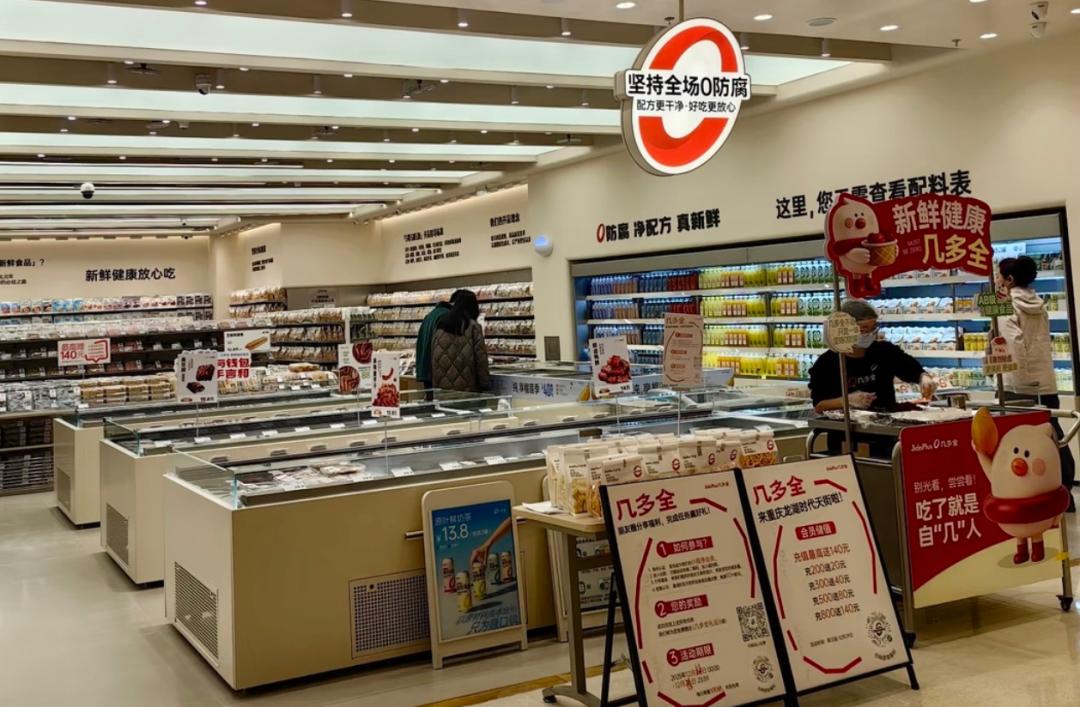
Furthermore, it tests the consistency of quality control under large-scale operation. When the number of stores expands from dozens to hundreds and thousands, how to ensure that the taste and quality of every product from every store remains consistent? This requires brands to establish a quality control system that far exceeds industry standards. For example, investing heavily in building core self-owned factories, and establishing a full-chain digital traceability system.
Another core point is innovation around "fresh" products.
When all players are focusing on "short shelf life" and "zero additives", how to build differentiation? On social media platforms, the most frequent comment about fresh snacks is "they all feel pretty much the same". Some consumers posted on social media platforms pointing out that the potato strips of two different fresh snack brands are highly similar in packaging, net weight and even taste.
Consumers' feedback points to the same problem: when braised food, baked goods, nuts and dried fruits become standard configurations in all fresh snack stores, the high overlap of product categories is rapidly erasing the differentiation between brands.
The key to breaking this deadlock lies in continuous innovation. The monthly product update rate of Pumama reaches 10%; Yili has developed innovative products such as sugar-fried chestnut ice cream and sugar-fried chestnut egg tarts around chestnuts; Pumama's sesame oil duck is developed for the sweet and spicy taste preference of southern consumers, which has a high popularity in the Jiangsu-Zhejiang-Shanghai region, and 8%-10% of the revenue of its in-store braised food section comes from this single product.
From the perspective of the whole industry, the fresh snack track needs to build scale advantages on the one hand, and develop systematic capabilities on the other hand — including differentiated product innovation, uncompromising quality control, and supply chain efficiency that can support loss control. Only the brands that first turn "freshness" from an in-store experience into a replicable operational standard at the back end can continuously win consumer recognition.
This article is from the WeChat official account "Retail Business Review" (ID: lssync), the author is Retail Business Review, and it is authorized for release by 36Kr.