I got into the Tesla Cybercab and took a bite of Elon Musk's "new pie" for Robotaxi.
Sets a benchmark for Robotaxi and also serves as a testing ground for the next-generation Model vehicles.
In September 2013, Apple launched its new iPhone 5S. In addition to continuing Apple's strong momentum in the smartphone market, its newly added gold color scheme was deeply loved by the public and was given the nickname "Luxury Gold".
In September 2026, Tesla also released a "Luxury Gold" product — not a Space Phone, but the Tesla Cybercab, an autonomous electric vehicle designed for Robotaxi use cases.
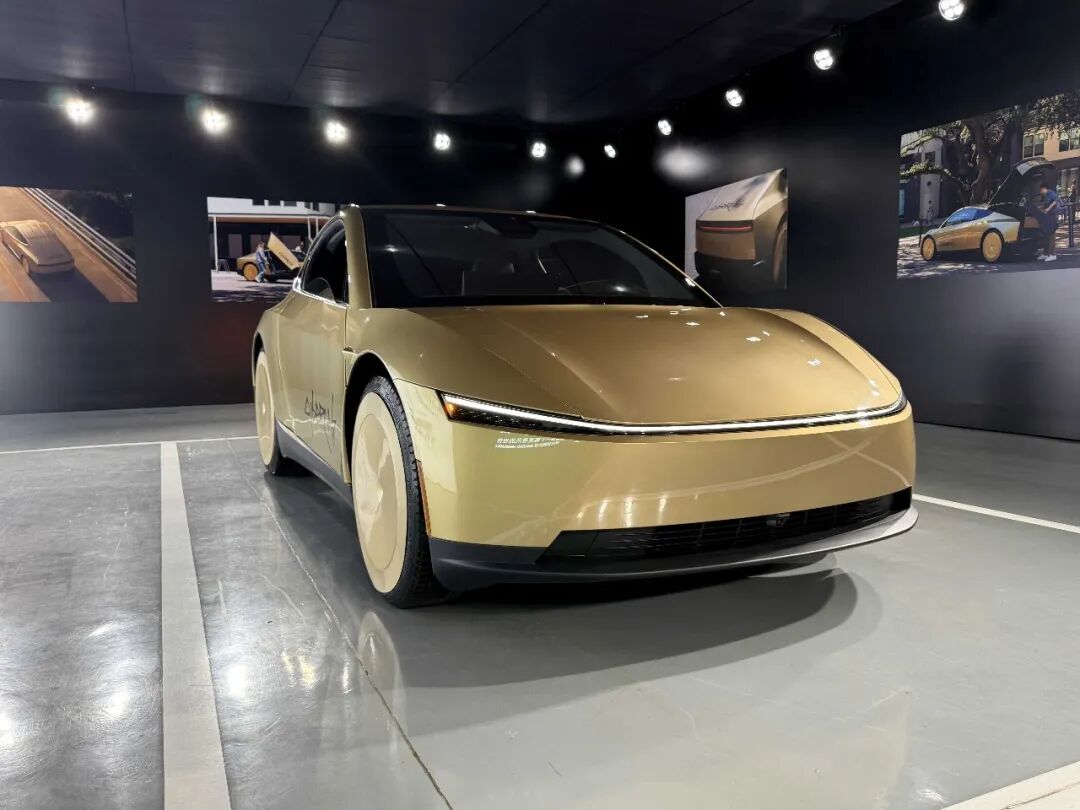
The "Luxury Gold" Robotaxi is here! | Image source: GeekPark
Tesla is not the first manufacturer to build self-driving vehicles, but it is clearly Tesla that has removed the steering wheel, accelerator, brake pedals and rearview mirrors completely, and built a Robotaxi model entirely based on first principles, leading the trend once again. In particular, such Cybercabs have already started to pick up passengers in Austin, Texas, the United States.
While it is still unclear when Tesla's FSD will be launched in China, the GeekPark team experienced the Cybercab in person in China less than two weeks after its unveiling, getting a firsthand taste of the "new pie" Elon Musk has promised the public.
01 The Golden "Frankenstein" Vehicle
At the Tesla Beijing Xiedao Delivery Center, a simple photo studio was set up inside the delivery hall. Amid the screech of tires rubbing against the ground, the GeekPark team caught sight of the golden Cybercab.
Perhaps because we had watched too many videos about the Cybercab, we didn't find it particularly stunning at first glance. After all, it is a 4.4-meter-long two-seater compact car, but its gold color scheme makes it stand out from all other new energy vehicles.
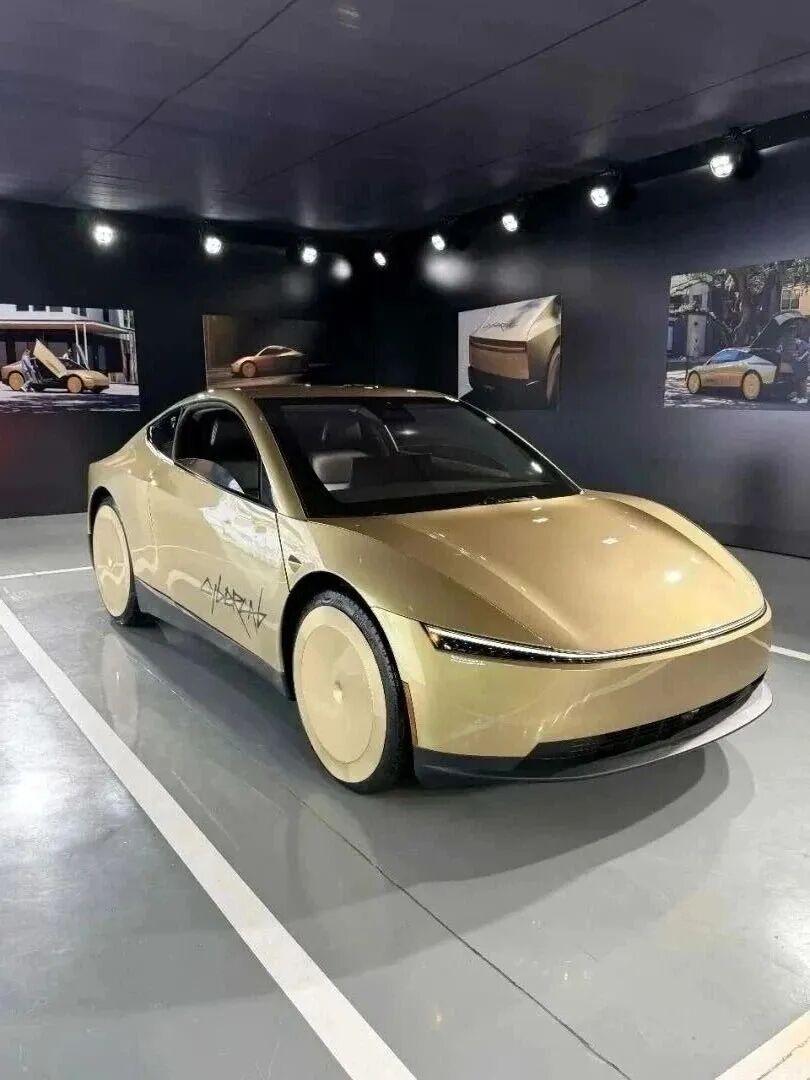
The Cybercab has a bit of a "Frankenstein" vibe | Image source: GeekPark
The Cybercab looks very much like a patched-together vehicle: its front half strongly resembles the refreshed Model series, especially with its closed front face and the full-width light strip running across the center. But from the middle to the rear, a straight, sloping fastback immediately brings to mind the Cybercab's bigger sibling — the Cybertruck. Together with the waistline running through the body, this design fully highlights the "tough" aesthetic of the Cybercab.
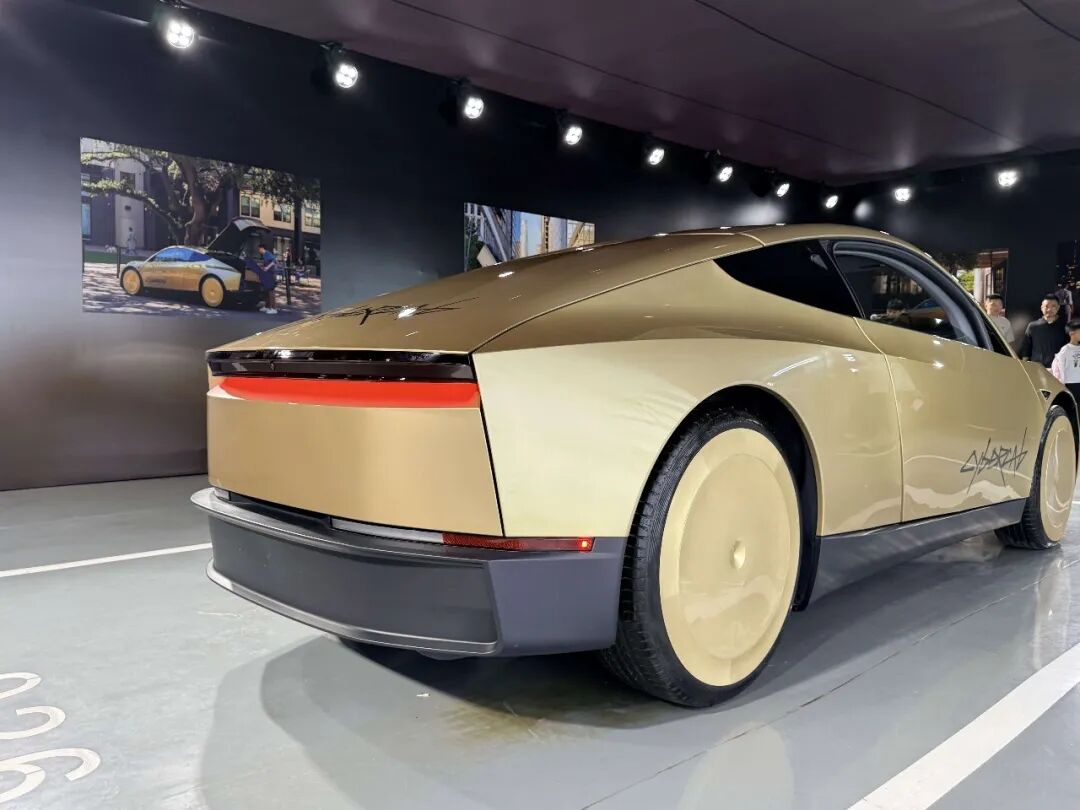
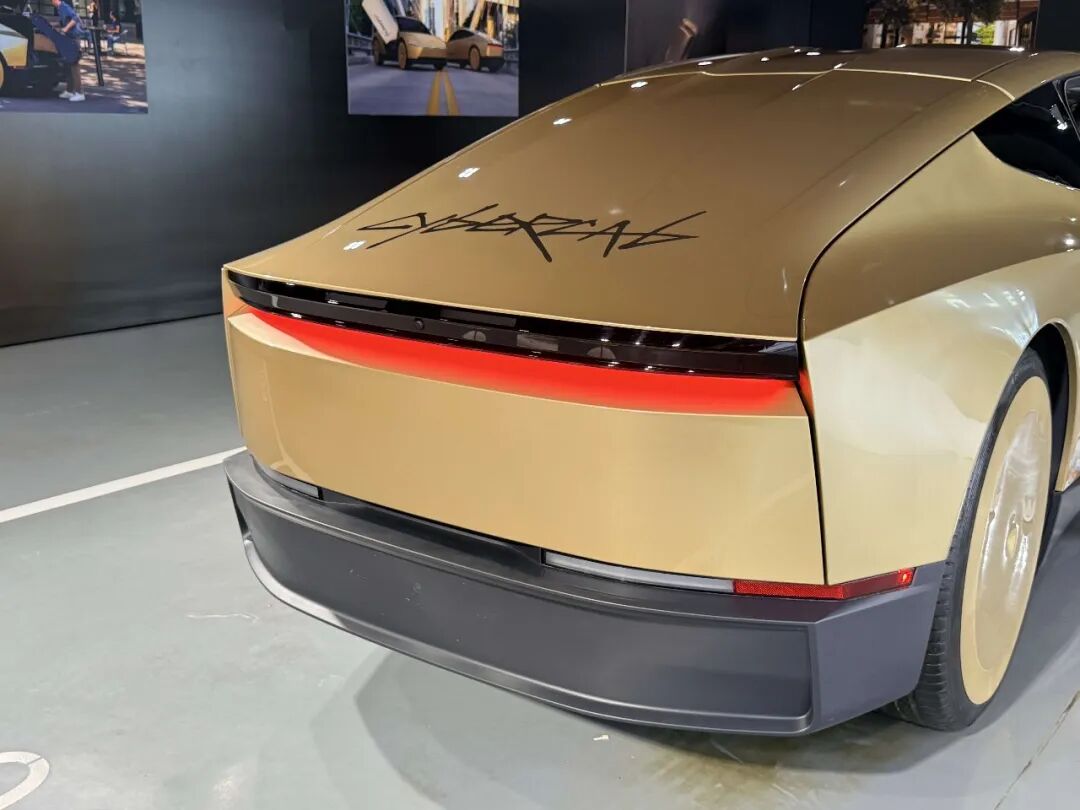
The front part has the rounded design of Model vehicles, while the rear part features the tough styling of the Cybertruck | Image source: GeekPark
Though it looks relatively understated, the Cybercab's door opening method is quite eye-catching. It adopts a butterfly door design: when you press the button inside the car, the door opens diagonally upwards, making you feel like you are not sitting in a ride-hailing vehicle, but in a supercar.
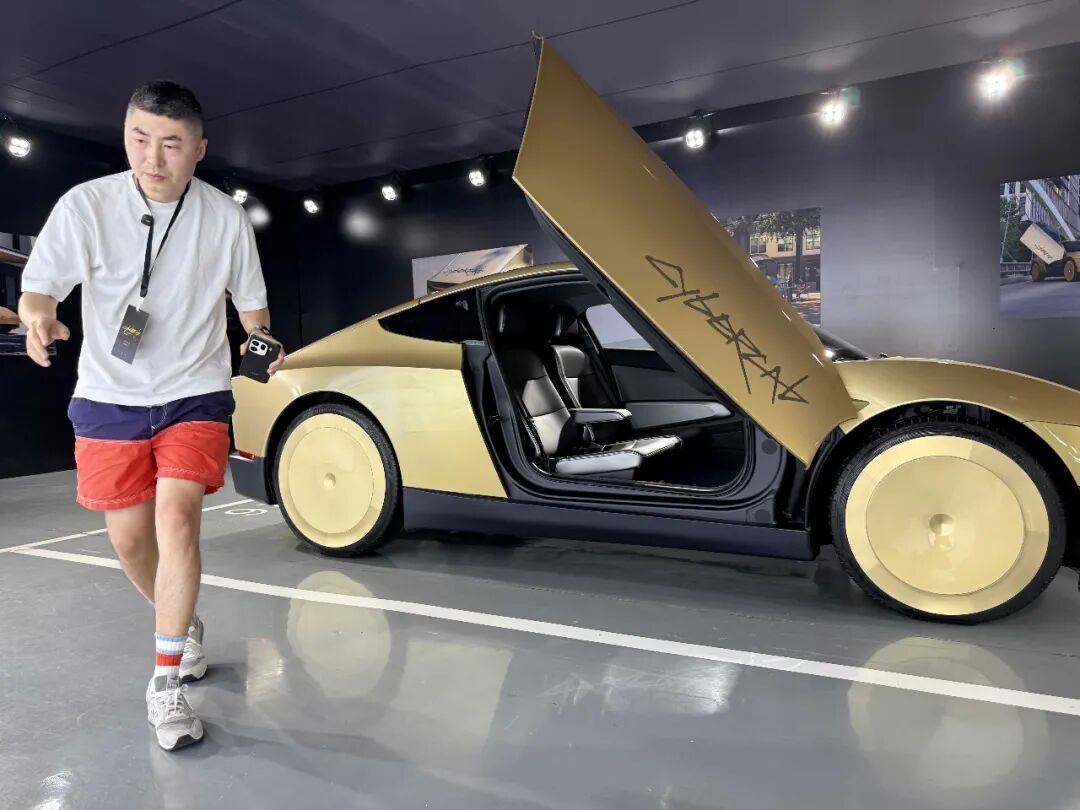
The Cybercab's butterfly doors look extremely cool | Image source: GeekPark
It is no exaggeration to say that the Cybercab's door opening method is even cooler than the gull-wing door opening design of the Model X. Of course, this door design also has practical functions, which will be introduced in detail later.
Another interesting point about the Cybercab's exterior is that you will realize a car without rearview mirrors feels more like the essence of a vehicle. No matter how well-designed a rearview mirror is, it is redundant for a car, which is probably why the Cybercab without rearview mirrors looks more natural.
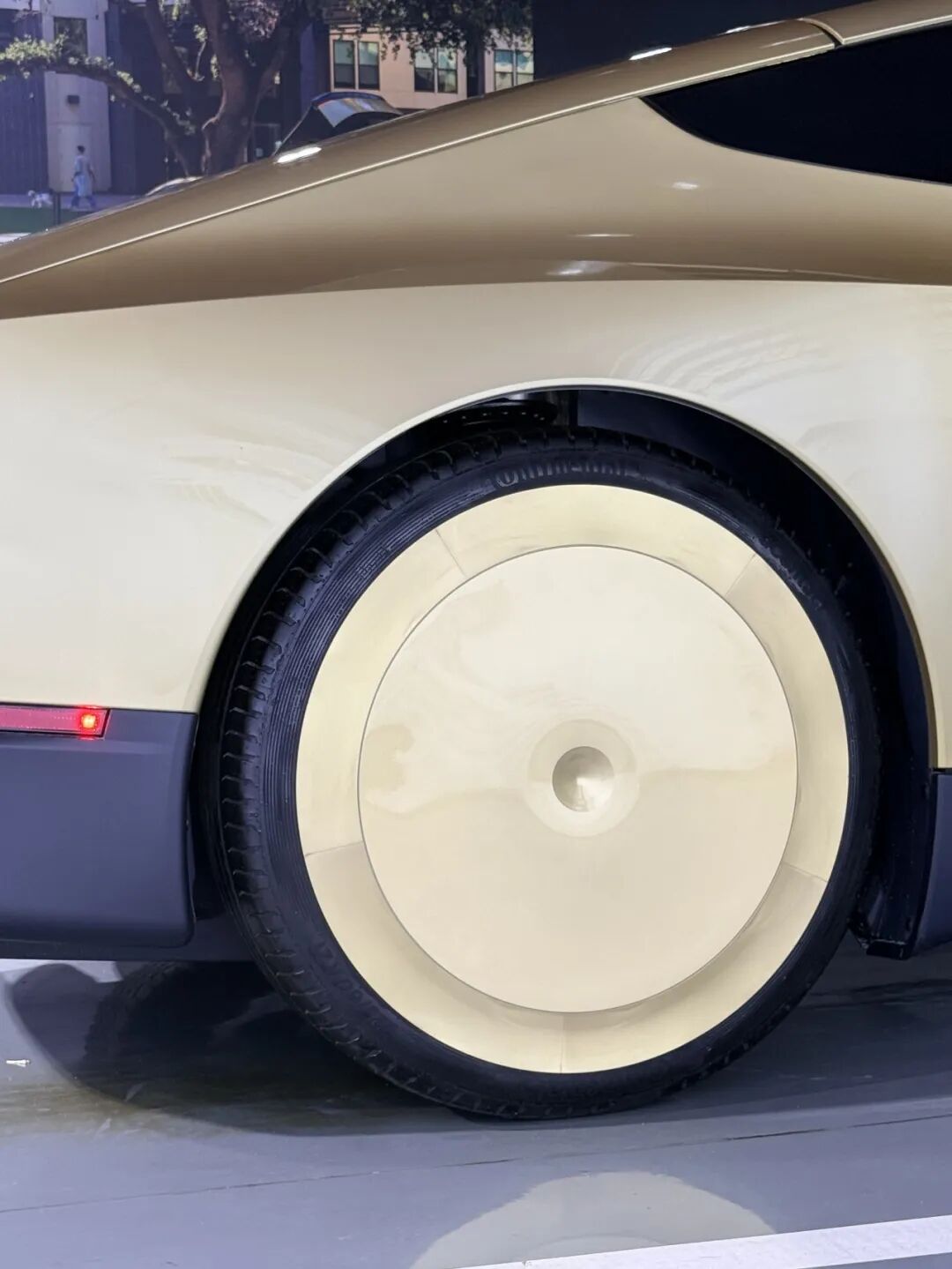
The Cybercab's golden wheel hub | Image source: GeekPark
Another thing that surprised me about this autonomous electric vehicle is that it is equipped with a vertical rectangular trunk at the rear, which offers a surprisingly large storage space. Thanks to its hatchback structure, passengers can easily load many large items, such as a small bicycle or a wheelchair, into the trunk.
According to public information, to fit a two-passenger cockpit plus a large trunk within a 4.4-meter-long body, the Cybercab adopts a front-wheel drive layout, which is completely different from the rear-wheel drive design of the currently available Model series.
Back to the "Luxury Gold" color scheme: Tesla officially introduced that this paint finish is completed in tandem with the manufacturing of car components, which is not only more efficient and environmentally friendly, but also greatly improves its scratch resistance. After all, the Cybercab is a vehicle designed to provide public services, so it is very important that it is easy to maintain and highly durable.
02 Further Evolution of the "Bare Shell" Interior
The "bare shell" interior of Tesla's Model series has long been a common target of public criticism. In comparison, the Cybercab's interior can be described as an even more extreme version of the bare shell design.
Walking through the cool butterfly doors and entering the Cybercab's cockpit, the first thing you notice is the vehicle's seats, which are thinner and lower than those of Model passenger cars, with relatively ordinary material. The low seat height is reportedly designed to make it easier for all passengers, including people with disabilities, to get in and out of the vehicle; the ordinary material is obviously chosen to facilitate cleaning and maintenance in later operation stages.
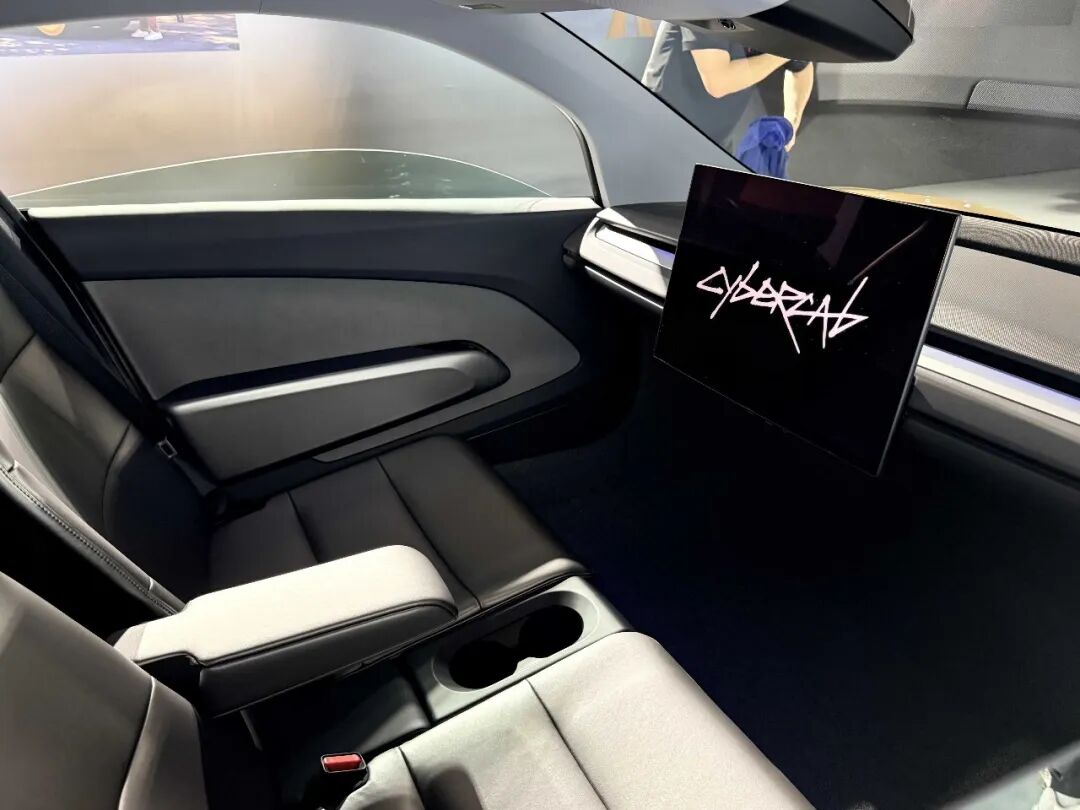
The Cybercab's cockpit is exceptionally minimalist | Image source: GeekPark
In terms of riding posture, although the Cybercab is an autonomous vehicle, passengers cannot slouch in a "zero-gravity" position. The entire sitting posture is somewhat similar to the seating design of some cinema viewing sofas.
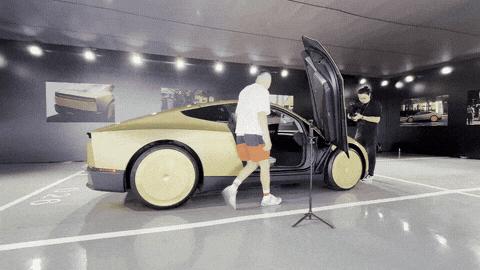
Getting into the Cybercab is pretty smooth | Image source: GeekPark
Apart from the seats, the most eye-catching element is probably the 22-inch large screen in the middle of the cockpit, where passengers can enjoy a variety of entertainment content. Of course, I guess most passengers will probably choose to scroll through their phones or chat with the in-vehicle Grok AI.
Below the screen are two window switches with a distinct plastic feel, as well as two USB-C charging ports that can charge passengers' mobile phones.
As mentioned earlier, the design of butterfly doors and low seats takes into account the needs of users with disabilities. The hazard warning light and door opening buttons inside the Cybercab's cockpit are also equipped with Braille to facilitate passengers with visual impairments. As a US-based company, Tesla has done a really solid job in this regard.
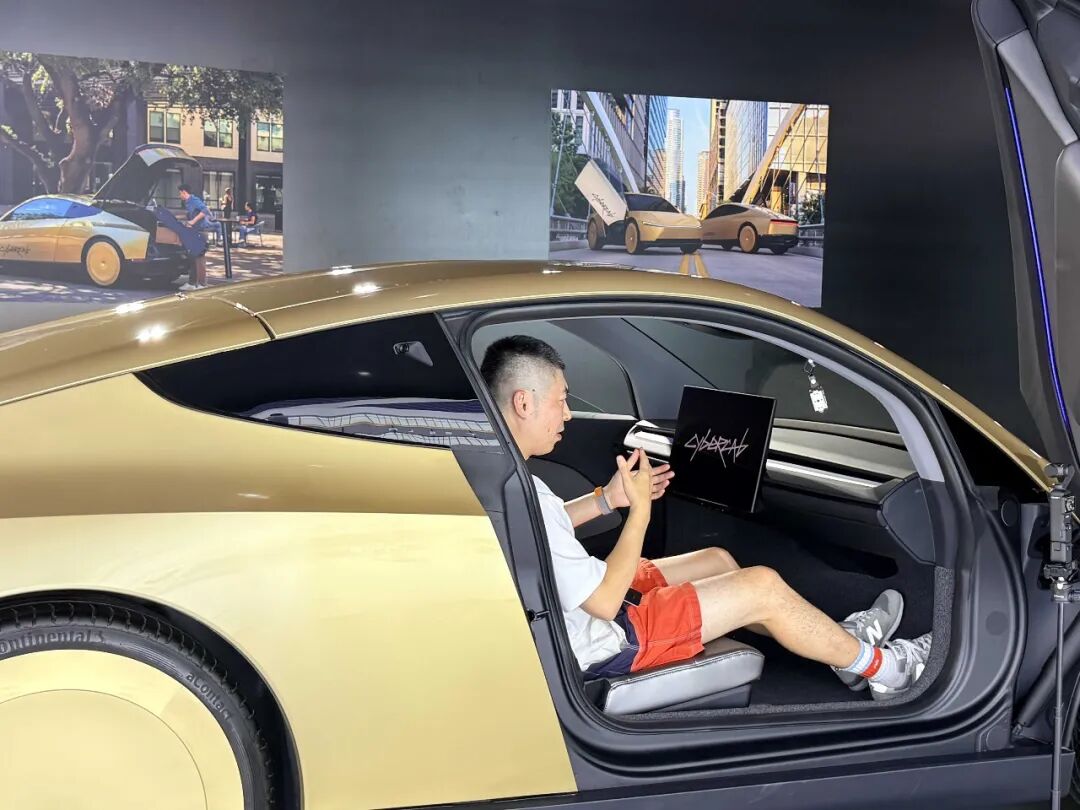
You can indeed fully stretch your legs when sitting inside | Image source: GeekPark
At the same time, don't forget that the Cybercab is a vehicle built for commercial operation, so a camera is installed at the front of the cockpit. Passengers who plan to do some special activities inside the cabin may need to reconsider their plans, as all activities inside the vehicle will be recorded and become "evidence" against them.
Tesla has previously released a video showing a robotic arm equipped with a high-suction vacuum cleaner being used to clean the seats and floor; by switching to a different cleaning head, the robotic arm can also clean the large display screen. For autonomous vehicles, having unattended robots to handle cleaning and maintenance to form a fully unmanned operation closed loop is obviously the complete form of Robotaxi.
From this perspective, you can understand why the Cybercab's cockpit is so simple and bare — this minimalist design itself is largely driven by operational considerations.
03 Testing Ground for Next-Generation Model Vehicles
I don't know how many people felt regretful when Elon Musk made the tough decision to cancel the compact "Model 2" vehicle project. In a sense, the Cybercab is essentially the autonomous driving variant of the scrapped Model 2.
To make this vehicle meet the operational cost expectations for Robotaxi use cases, the Cybercab has been completely redesigned in terms of energy consumption, power performance, handling, and manufacturing.
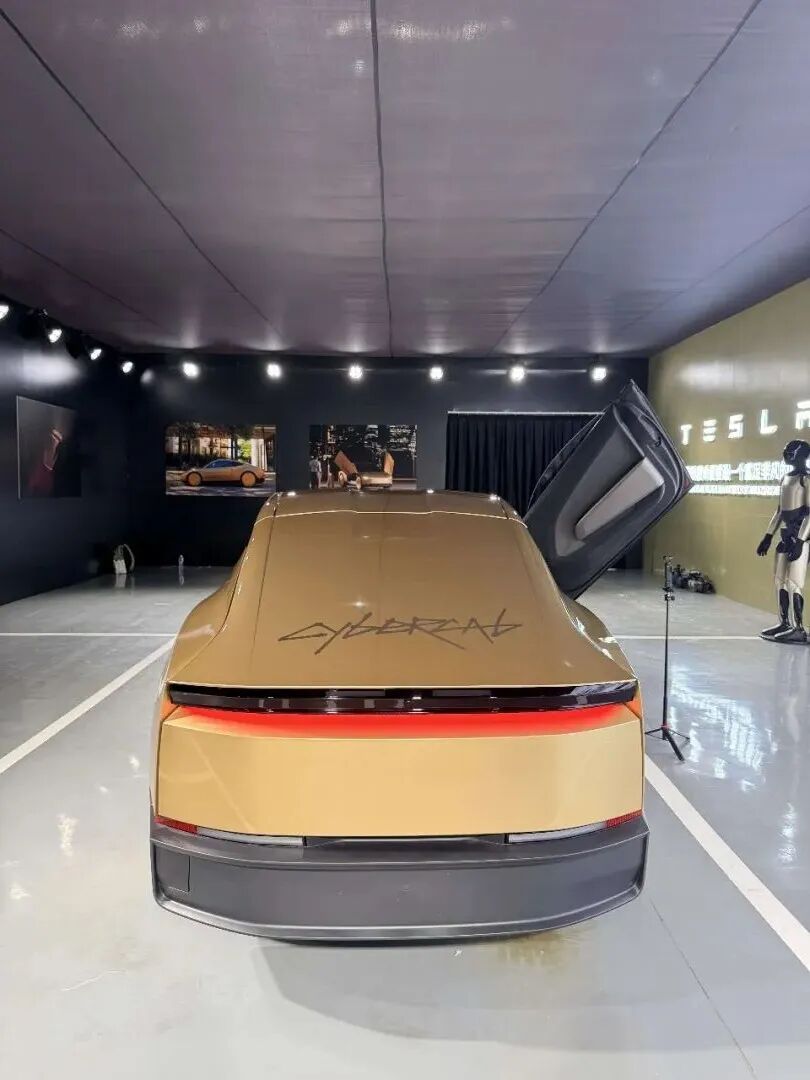
The golden Cybercab pairs perfectly with the adjacent Optimus robot | Image source: GeekPark
On this 4.4-meter-long compact vehicle, Tesla has only equipped it with a 163 kW motor, delivering 219 horsepower, which is barely the configuration of entry-level pure electric sedans on the current market. However, since the Cybercab is only fitted with a 47.6 kWh battery, the total vehicle weight is as low as 1412 kg, plus a drag coefficient lower than 0.2, the Cybercab achieves an astonishing range of 673 kilometers!
According to Tesla's official data, the Cybercab's energy consumption reaches 10.2 kWh per 100 kilometers. Compared with the energy consumption of around 15 kWh per 100 kilometers for most competing products, the Cybercab has clearly refreshed its own record.
The reason for pursuing such extreme performance is that Tesla projects the future per-mile operating cost of the Cybercab to be $0.2, equivalent to about 0.84 RMB per kilometer. Even after subsidies, the per-kilometer cost of domestic self-driving vehicles in China still reaches 1.5 RMB to 2 RMB, so this price is extremely competitive on a global scale.
In addition to energy consumption, the Cybercab adopts Tesla's Unboxed manufacturing process, which allows all components to be produced in parallel in sub-assemblies before final assembly is completed in one go. This greatly improves vehicle production efficiency, and Tesla's expected production cycle is as short as 5 seconds per vehicle. In comparison, the production takt time for a vehicle to roll off the line at Tesla's Shanghai Gigafactory is more than 30 seconds.
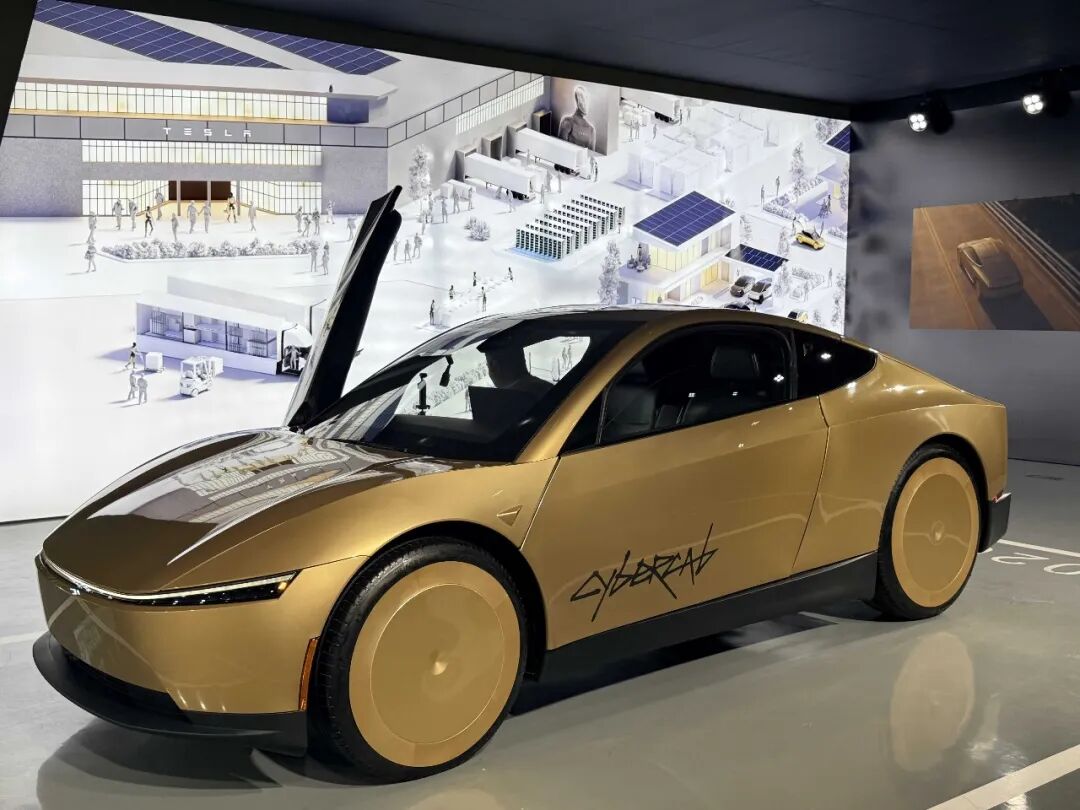
The Cybercab's manufacturing process is also part of Tesla's core competitiveness | Image source: GeekPark
At the same time, the Cybercab uses one-piece die castings for both the front and rear sections. The outer "paint" layer is integrally injection-molded with the body panel, which not only makes the paint layer thicker and more scratch-resistant, but also makes the painting process more environmentally friendly.
As Elon Musk often says, Tesla's production lines themselves are one of the company's most important products.
On the Cybercab, you can see technologies that may be adopted on next-generation Model vehicles, such as brake-by-wire and steer-by-wire systems, body paint processes, as well as assembly and manufacturing technologies. In a sense, the Cybercab also acts as a testing ground for Tesla.
At present, several Cybercabs are already in operation on the roads of Austin, Texas in the United States, but there is still a gap from Tesla's expected scale of thousands of units. In addition, it may still take a long time for Tesla to bring the per-kilometer cost of Robotaxi down to 0.8 RMB as planned.
But the launch of the Cybercab has undoubtedly set a benchmark for future Robotaxi models in design, manufacturing, operation and many other aspects, and it has become a new benchmark that rival manufacturers will find hard to bypass in the future.