With the 5% U.S. Treasury yield hanging over the market, how long on earth will the U.S. stock market decline this time?
In the short term, what truly determines the direction of the US stock market is when the 10-year US Treasury yield peaks.
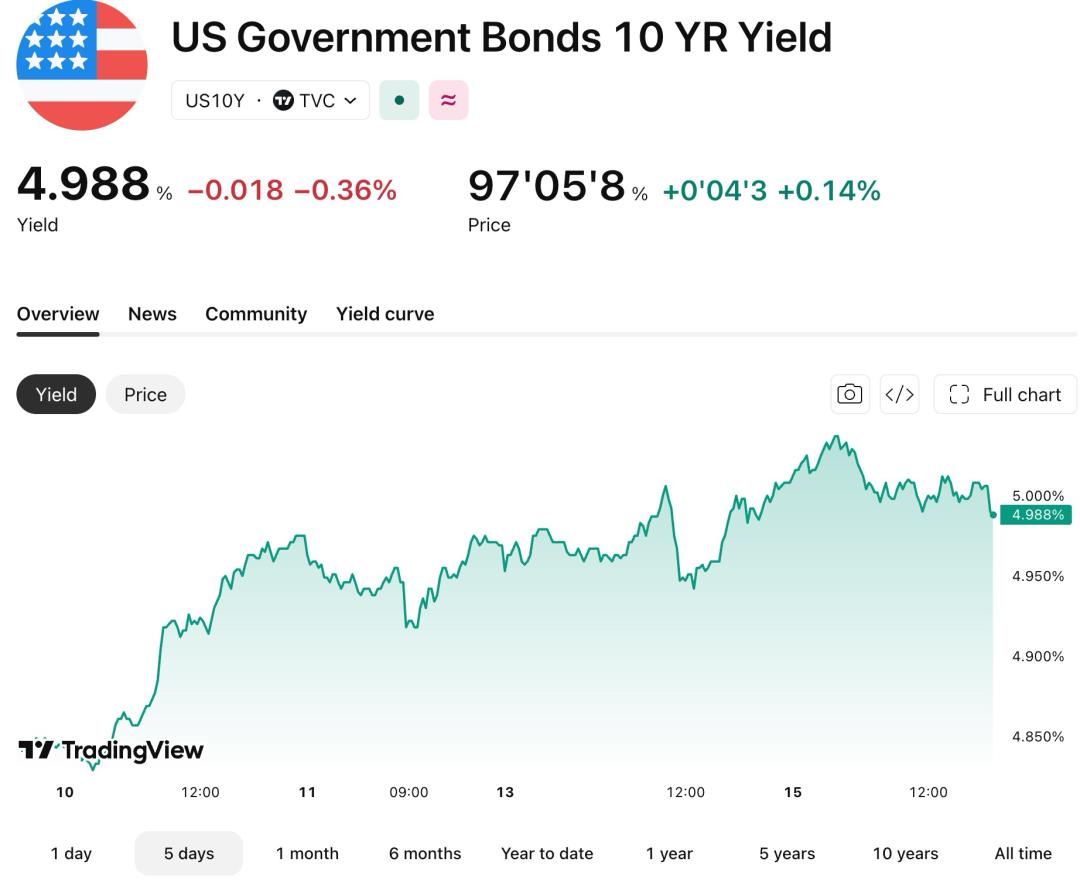
Oil prices push up inflation, 5% 10-year Treasury yield suppresses valuations
On Tuesday, US stock markets saw capital attempting to bottom-fish at the opening, after the sharp drop on Monday, but the market was soon pushed down again. In the end, the S&P 500 fell 0.45%, the Nasdaq dropped 0.78%, and although the Philadelphia Semiconductor Index rose 0.4%, it barely counts as a recovery following the nearly 6% plunge on Monday.
AI concept stocks also tried to stabilize and rebound at the start of trading, but the decline soon expanded again, with most closing down in step with the broader market.
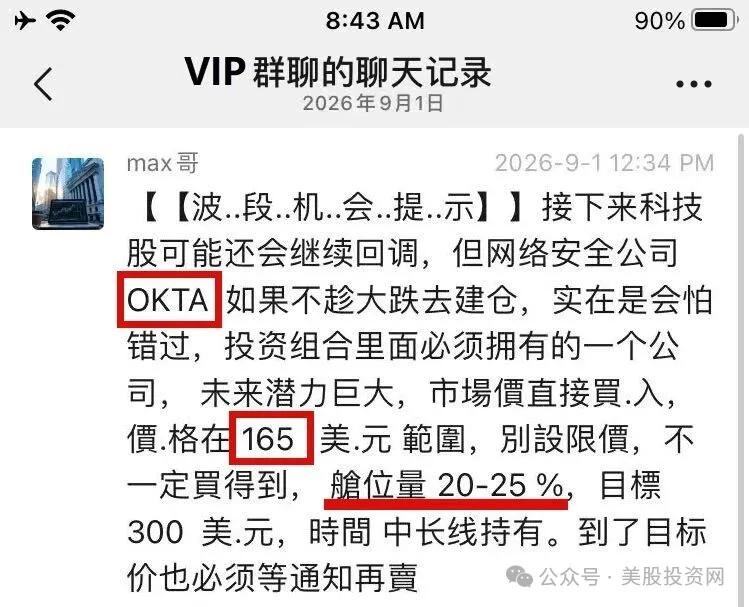
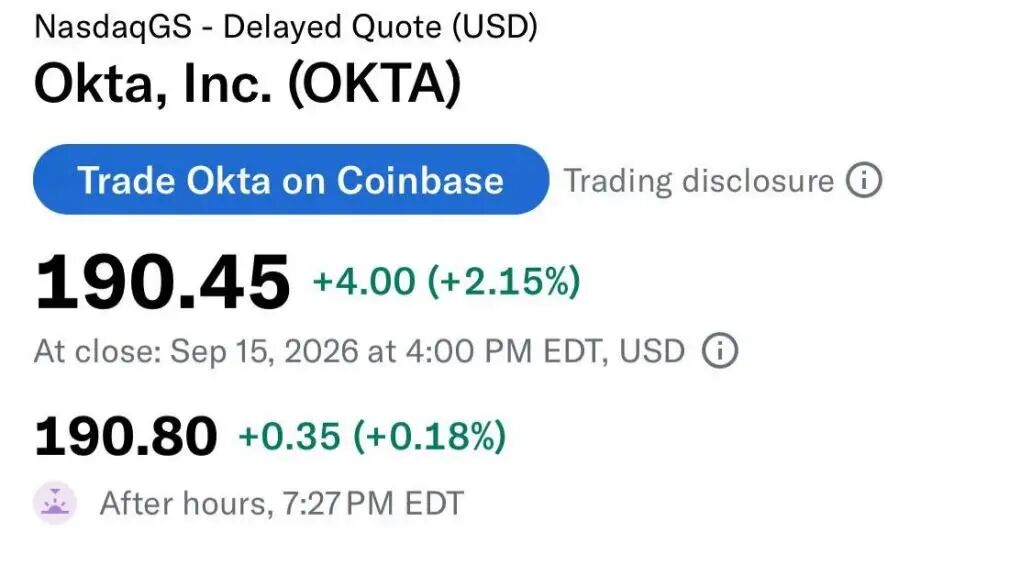
However, OKTA, the cybersecurity company that our VIP community opened positions in on September 1, is still rising steadily by more than 2% today, with a short-term floating profit of 16%, we will continue to hold it!
There are only two reasons for the suppressed market performance today: high oil prices, and the 10-year US Treasury yield hit 5.04% intraday, marking a new high since 2007.
These two events are actually connected by the same logic.
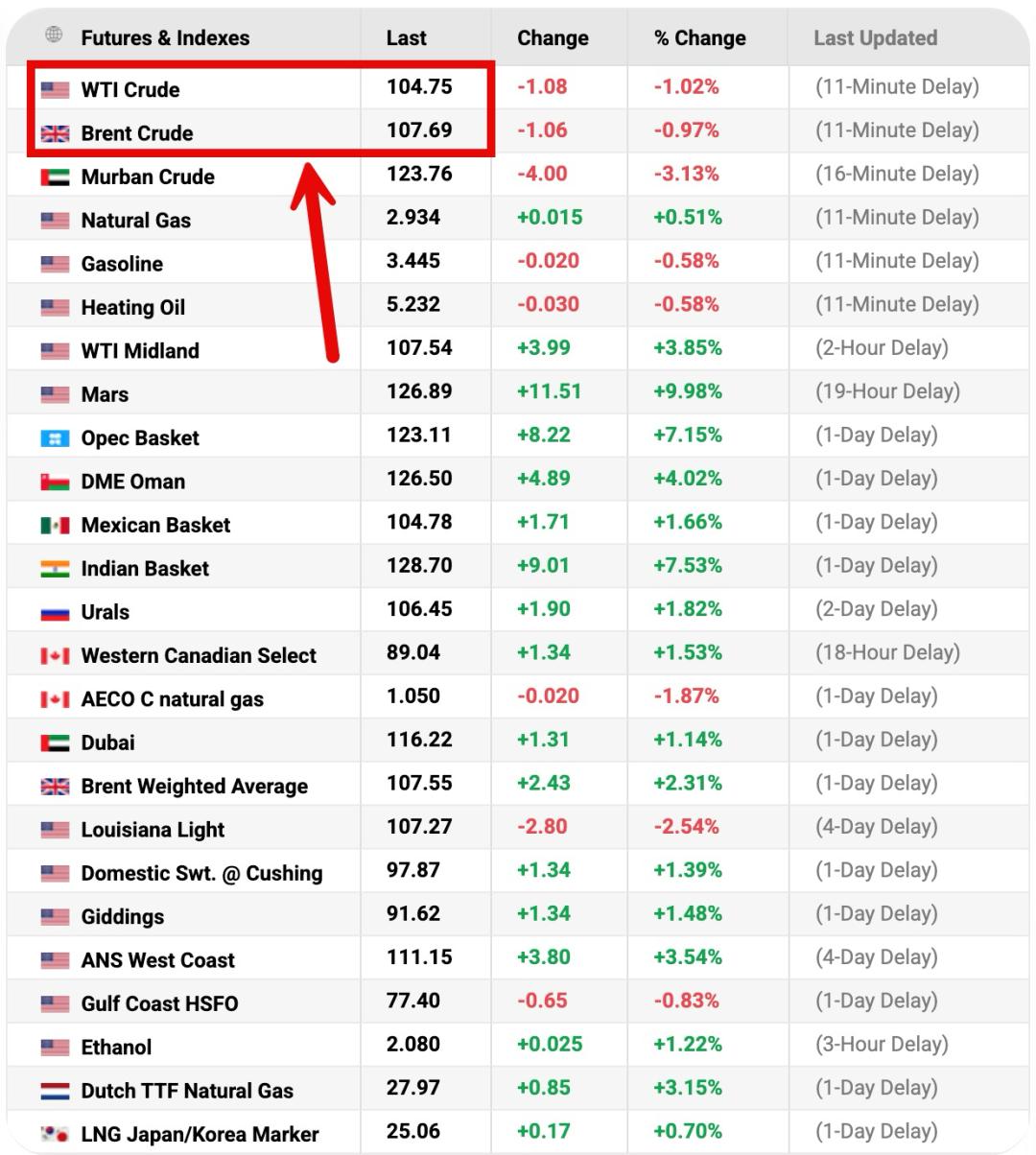
When oil prices rise, what the market really fears is not expensive gasoline, but the spillover of energy costs to the entire economy. The costs of diesel, logistics, aviation and manufacturing are all going up, which will eventually push inflation higher again.
On Tuesday, diesel futures hit a record high, WTI crude rose above $106, and Brent crude approached $109. As a result, the bond market immediately repriced: inflation may not come down as easily as previously expected.
If inflation does not fall, the Federal Reserve will find it difficult to ease its policy.
Therefore, the market is no longer tangled over "whether to raise interest rates by 25 basis points this time", but is trading on "how many more hikes will there be after this one". The probability of a 25-basis-point rate hike this week has exceeded 90%, and what truly determines the trend of the US stock market is the subsequent interest rate path.
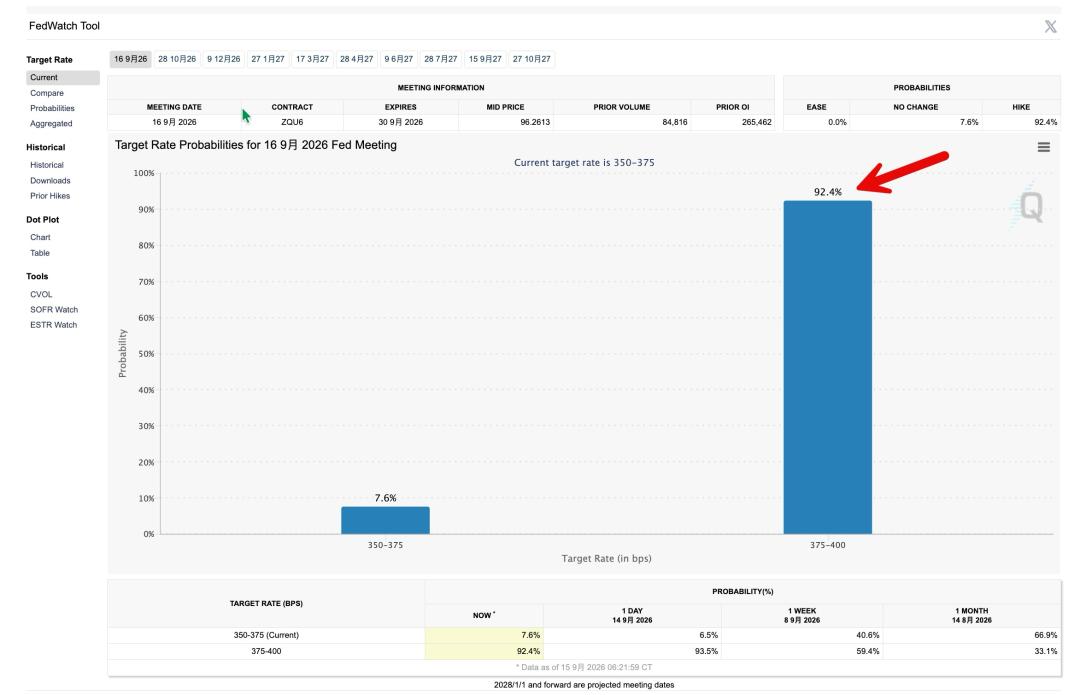
This is also why the 10-year US Treasury bond has once again become the most important valuation anchor for the US stock market. In particular, when the yield stands above 5%, low-risk assets themselves can generate very high returns, making it naturally harder for technology stocks, growth stocks and AI concept stocks that rely on growth in the next few years to support their valuations to maintain high valuations.
Therefore, the recent pressure on AI stocks is not due to a deterioration in fundamentals, but a decline in the valuation multiples the market is willing to assign to them.
US Treasury auction weakens, 7,600 becomes a key level
What is more troublesome is that US Treasuries themselves are also facing supply and demand pressure.
On Tuesday, the US Treasury Department's auction of $130 billion 20-year US Treasuries delivered very poor results, with overseas institutional demand falling to a historic low and the auction yield hitting an all-time high.
This signal is critical, because it shows that the current problem is not just that oil prices are pushing up inflation, but there is a more realistic issue: who is going to take on the massive amount of US national debt to be issued in the future?
The supply of national debt is growing larger and larger. If demand fails to keep up, yields will have to continue to rise until there are willing buyers.
Therefore, this time the 10-year yield breaking above 5% is not exactly the same as the 2023 scenario. In 2023, the market could still bet on a cooling economy and subsequent interest rate cuts, but now oil prices are at a high level, the fiscal deficit has not shrunk, the supply of US Treasuries is still increasing, and the Federal Reserve has even returned to the rate hike path, which is why the 5% level is putting such heavy pressure on the market now.
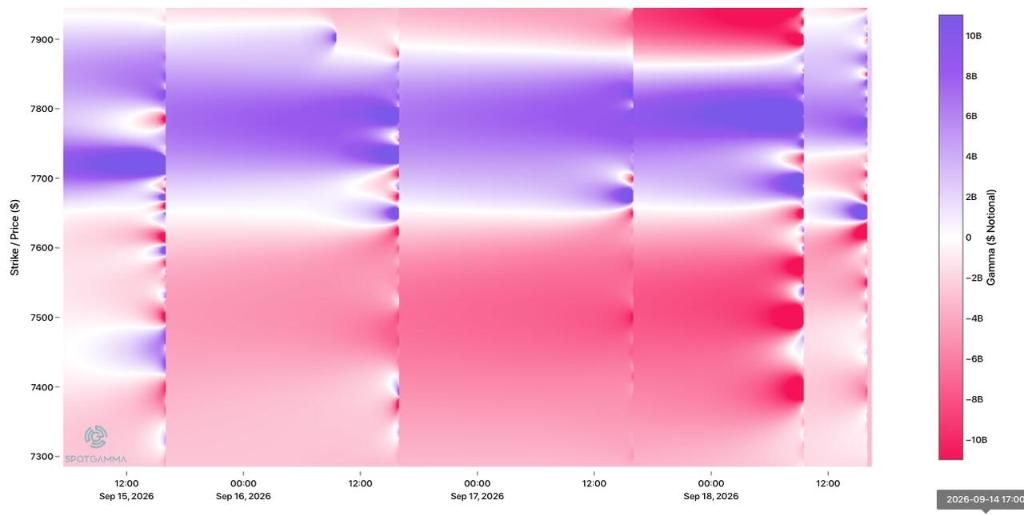
In the short term, we need to keep an eye on another level, which is around 7,600 points for the S&P 500.
After the index falls below 7,625 points, it has entered the negative Gamma zone. To put it simply, the more the market falls, the more market makers will sell futures for hedging purposes, which tends to amplify the decline. Therefore, 7,600 is not an ordinary support level. Once it is broken through persistently, short-term volatility may rise significantly.
Our official WeChat account also published an article yesterday:
The Nasdaq of US stock market sends out a dangerous signal!
How does the US stock market usually perform after the first rate hike?
So if the Federal Reserve really restarts the rate hike cycle, does that mean the US stock market is no longer investable?
History tells a different story.
Looking at 7 similar rate hike cycles since 1988, the S&P 500 on average fell by about 4% in the first 6 weeks after the first rate hike. That means short-term pressure after the first rate hike is normal, as the market needs to recalculate the terminal interest rate and valuations.
But looking further ahead, in the next 5 to 6 weeks, the previous decline is almost fully recovered on average. Six months after the first rate hike, the S&P 500 delivers an average return of about 4%, and the figure is close to 9% one year later. Except for 2022, all other cycles ended with positive returns one year after the first hike.
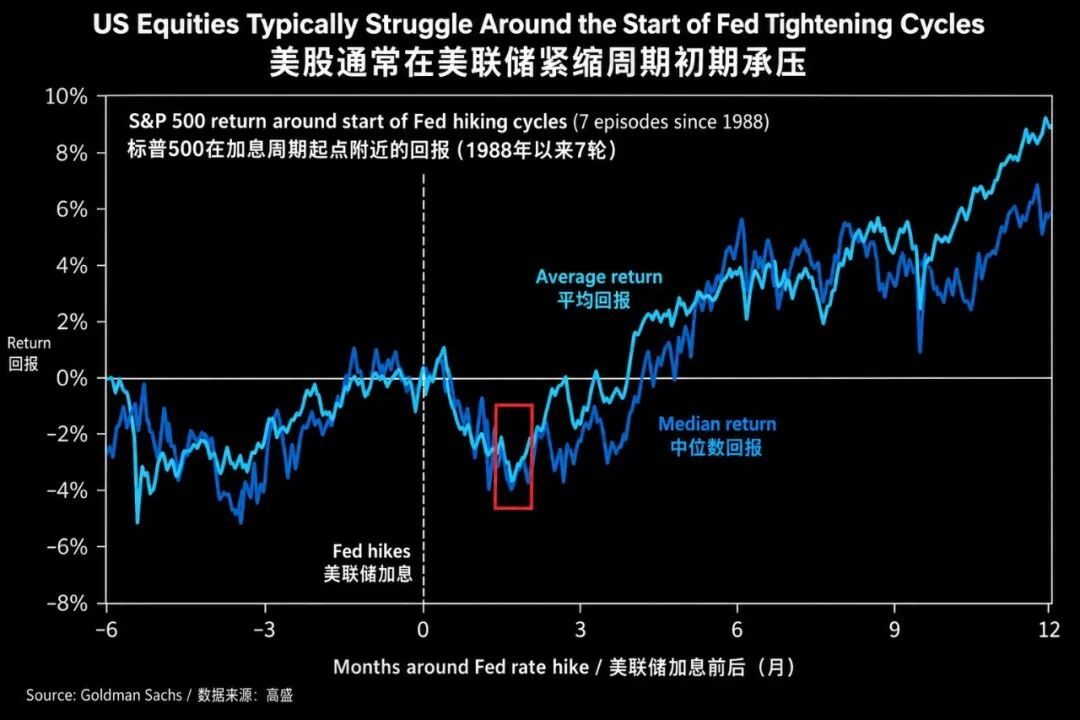
Analysis from US Stock Investment Network holds that if after the rate hike on Wednesday the market confirms that the policy has been sufficiently tight, and the 10-year yield starts to fall back from above 5%, this will become a very important turning signal for the US stock market. Because by that time, the negative factor of rate hikes will have been fully priced in, and the heaviest pressure on the valuation side will start to ease.
However, if the dot plot continues to move upward, oil prices remain above $100, and the 10-year yield not only holds above 5% but also continues to rise to 5.1% and 5.2%, high-valuation technology stocks will still face notable pressure in the short term.
What we are waiting for is the market to finish repricing the tightening expectations, and the interest rate loses the momentum to rise further.
In short, as long as the US Treasury yield does not peak, the US stock market will hardly see real relief.