Jinzi Ham has set its sights on the highly lucrative chip sector.
Jinzi Ham, a company known for selling ham, has set its sights on optical communication chips.
Recently, Jinzi Ham announced in a public notice that its wholly-owned subsidiary Fujian Jinzi Semiconductor plans to make an additional investment of 174 million yuan in Zhong Sheng Microelectronics. After the transaction is completed, the total investment of the two rounds will reach 274 million yuan. Jinzi Semiconductor will hold approximately 19% of the equity of Zhong Sheng Microelectronics and become its largest shareholder. The pre-money valuation determined in this capital increase round is 1.4223 billion yuan.
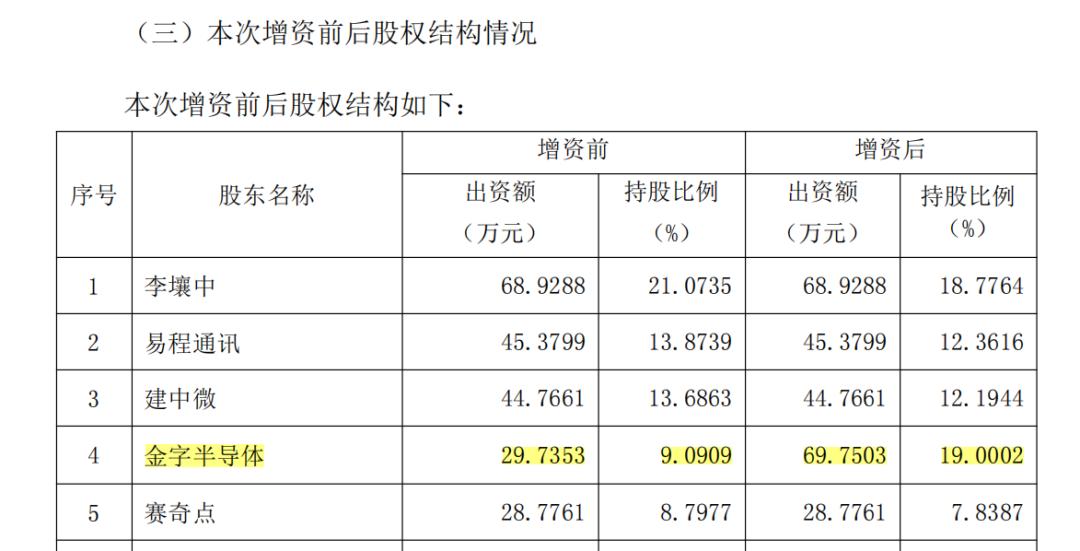
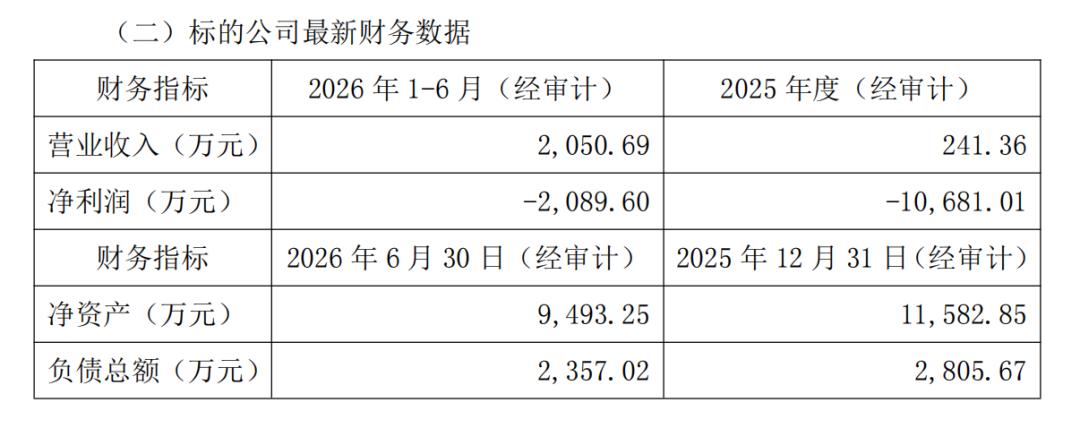
How significant is this sum of money? From 2022 to 2025, the total attributable net profit of Jinzi Ham added up to only about 177 million yuan. This single round of capital increase is almost equivalent to the profits it has earned in the past four years. As for the favored Zhong Sheng Microelectronics, it recorded a revenue of 20.5069 million yuan and a loss of 20.896 million yuan in the first half of 2026.
On one side is the ham business facing pressure on profitability, and on the other side is a chip company that has not yet turned a profit. Jinzi Ham is willing to continue increasing its investment, which obviously shows that it is optimistic about the future of the latter.
However, for this company, paying for the future is nothing new.
Over the past decade or more, from coal, banking, medical and health care, to AI computing power and today's optical communication chips, Jinzi Ham has targeted a series of popular tracks one after another. At the same time, its control has changed hands twice, from founder Shi Yanjun to Ren Guilong, and then to Zheng Qingsheng in 2025.
The tracks have changed, and the helmsman has also changed, but a series of cross-border layouts have not yet truly supported the company's new growth.
This time, can Jinzi Ham catch the "light"?
Valued at 1.4 billion yuan, profits are still on the way
How can a company with a half-year revenue of more than 20 million yuan and still in loss negotiate a valuation of 1.4 billion yuan?
The most appealing point of Zhong Sheng Microelectronics is that it is positioned to meet the demand for AI data center construction.
Nowadays, chips in data centers not only need to calculate fast, but also need to transmit data quickly between devices. The optical module is responsible for the transceiver conversion between electrical signals and optical signals.
What Zhong Sheng Microelectronics manufactures are the electrical chips upstream of the optical modules. Among them, the Driver is responsible for providing driving signals to the laser or optical modulator, so that the transmitting end can "speak clearly"; the TIA converts and amplifies the weak current at the receiving end into signals that can be processed by subsequent circuits, so that it can "hear clearly".
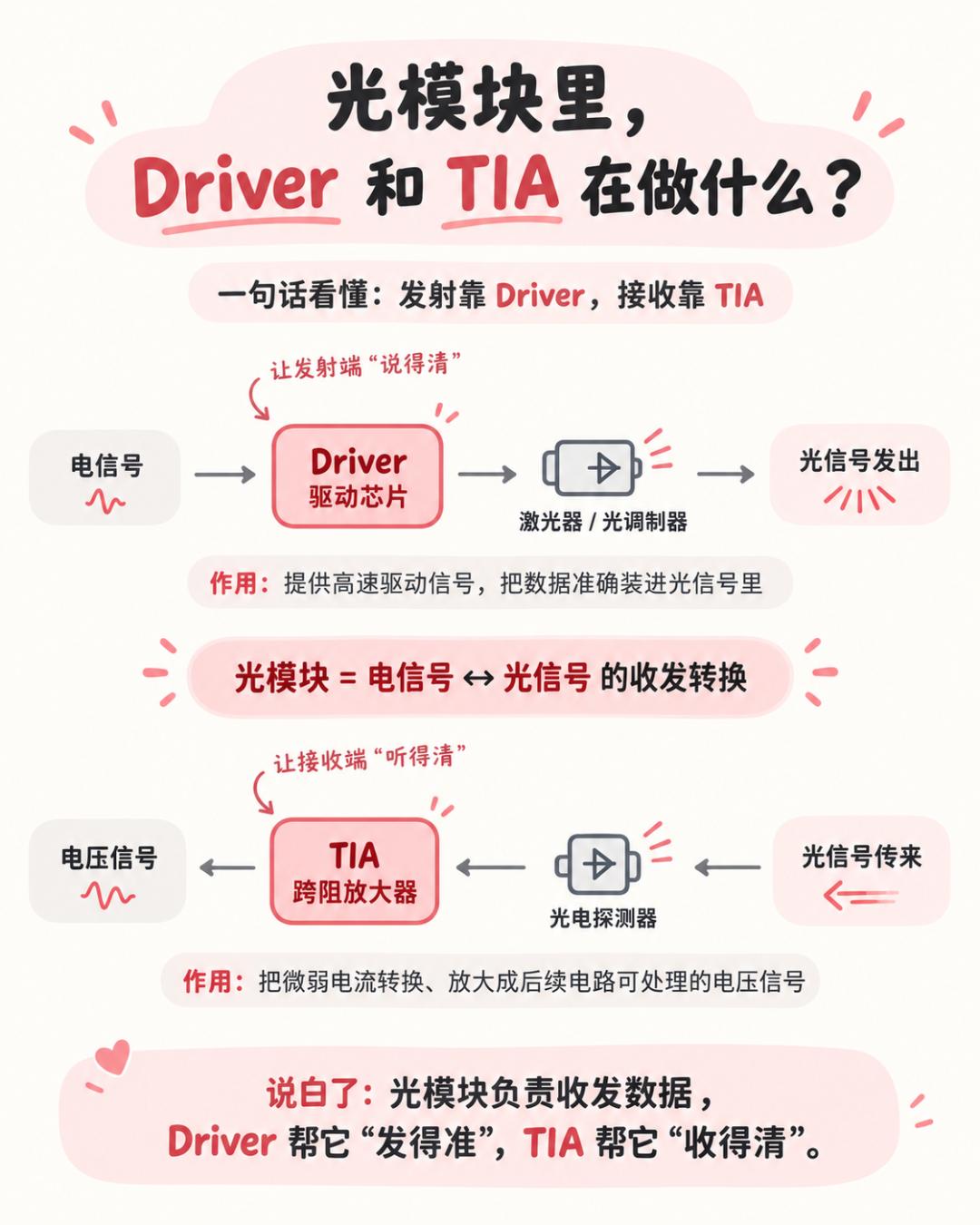
In other words, what Jinzi Ham is investing in is the chip business that helps optical modules "transmit accurately and receive clearly".
The growth of the downstream market is indeed sufficiently attractive.
According to the data released by LightCounting in June 2026, the global sales of optical transceivers and related products reached 26.8 billion US dollars in 2025, a year-on-year increase of 74%. Its July report also predicts that sales of Ethernet optical transceivers will grow by 73% in 2026.
The two sets of data correspond to different product scopes, but both point to the same direction: AI construction is driving up the demand for optical communications.
However, the prosperity of the industry can only be converted into the revenue of a company through customers and orders. Good sales of optical modules do not mean that all upstream chip companies can get an equal share of orders.
Zhong Sheng Microelectronics has already taken the step of mass product shipment. The previous investment announcement of Jinzi Ham disclosed that Zhong Sheng Microelectronics has achieved mass production and shipment of single-wavelength 100G TIA/Driver, and related products have passed technical tests of many leading domestic customers.
Progress has also been made on products with higher rates. The investment framework agreement signed in 2025 set a technical threshold for the second round of capital increase: the tape-out of single-wavelength 200G TIA/Driver chips passes verification. In July 2026, the company announced that the conditions for the second round of capital increase have been met.
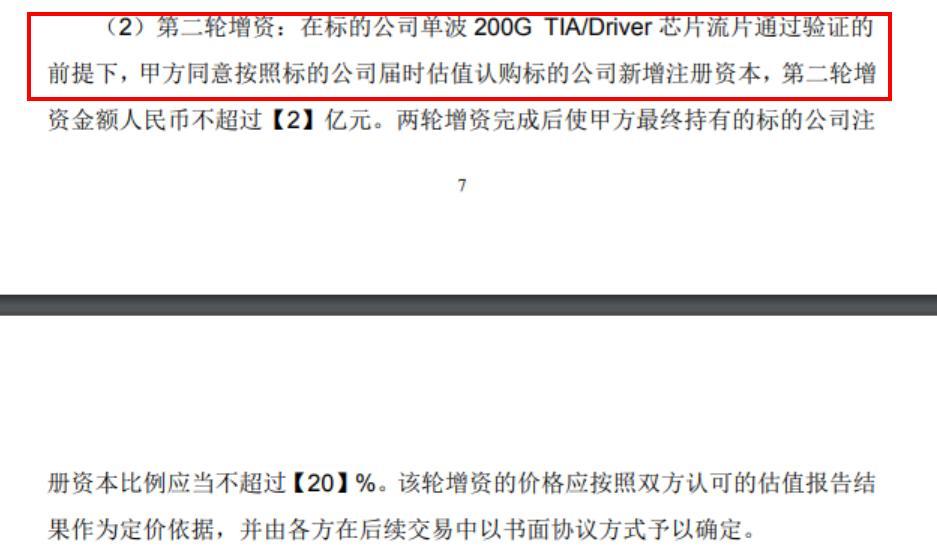
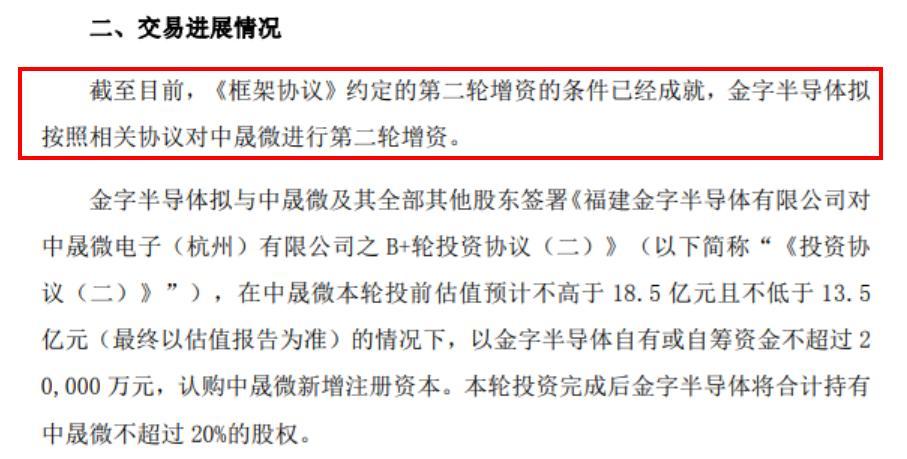
Putting the two announcements together, it can be reasonably inferred that the single-wavelength 200G product of Zhong Sheng Microelectronics has reached the tape-out verification node required by the agreement, which at least shows that it is advancing towards the higher-rate optical module market.
However, there is still a long way to go between the chip passing verification and customers placing continuous orders. Jinzi Ham can make additional investments according to technical nodes, but customers need to check whether the products can meet the actual usage requirements.
What's more, competitors have not stopped either.
Overseas manufacturer Semtech released its single-channel 224Gbps TIA and Driver product families in March 2026, targeting 800G, 1.6T and higher-rate optical interconnections. Domestic Youxun Co., Ltd. disclosed in its 2026 semi-annual report that related products of single-wavelength 100G and 200G have completed the engineering chip tape-out, and R&D of LPO and NPO related products is being carried out at the same time.
This means that Zhong Sheng Microelectronics not only needs to catch up with international manufacturers, but also convert technological progress into customer relationships and stable orders before domestic competition further intensifies. However, according to financial data, in the first half of 2026, Zhong Sheng Microelectronics recorded a revenue of 20.5069 million yuan and a loss of 20.896 million yuan.
And the valuation of 1.4 billion yuan has already set requirements for the future.
According to the investment agreement, based on the caliber of non-recurring profit and loss attributable net profit after excluding the impact of share-based payment and other factors, the net profit of Zhong Sheng Microelectronics in 2027 must reach at least 18.8 million yuan, and reach 100.25 million yuan in 2028.
The problem then falls back to Jinzi Ham. After the completion of this transaction, Jinzi Semiconductor will become the largest shareholder of Zhong Sheng Microelectronics.
At that time, what Jinzi Ham needs to consider may not only be whether this investment has prospects, but also how much capital and resource support Zhong Sheng Microelectronics needs in the follow-up, and how much it can provide.
Ham sales are sluggish, interest income props up performance
The profit of the chip business is still in the future, but the pressure of the ham business has already appeared on the financial statements.
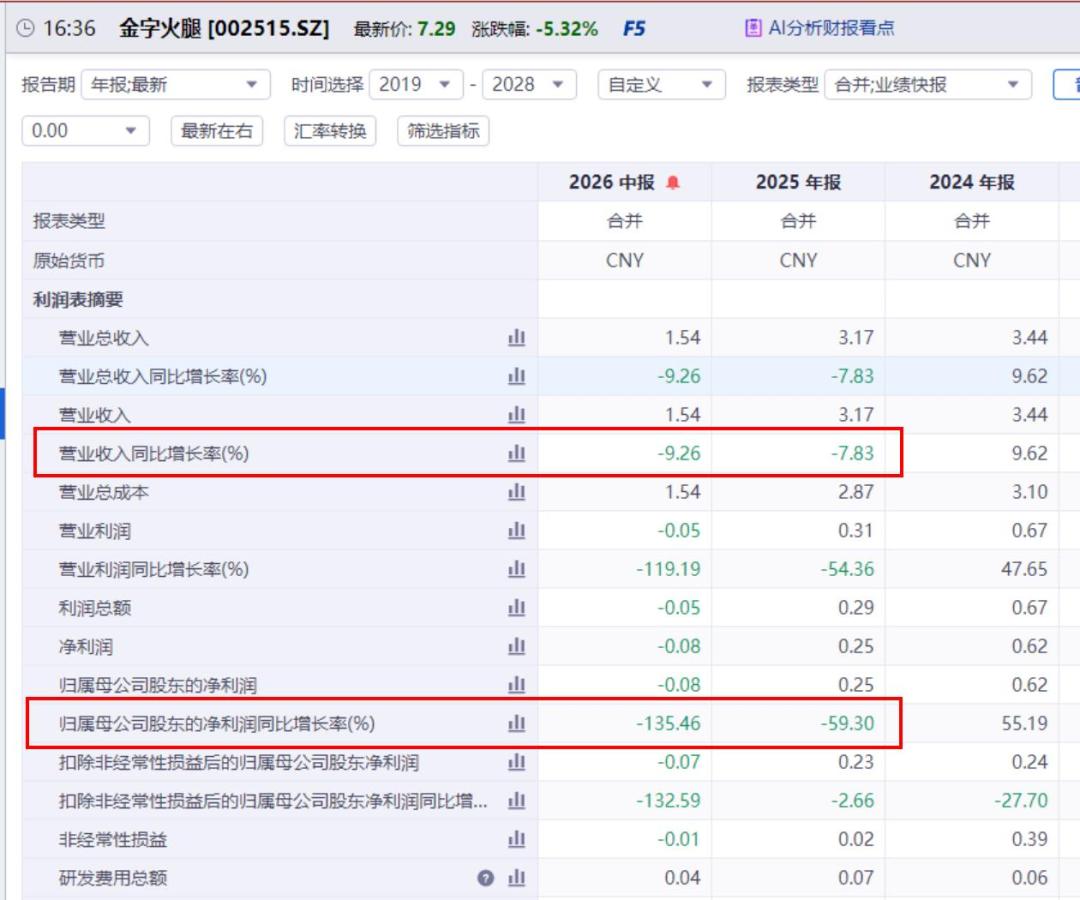
In the first half of 2026, Jinzi Ham achieved a revenue of 154 million yuan, a year-on-year decrease of 9.26%; the attributable net loss was about 8.13 million yuan, turning from profit to loss. In the previous year of 2025, the company's revenue and attributable net profit had already decreased by 7.83% and 59.3% respectively.
The most difficult products to sell are precisely its signature products.
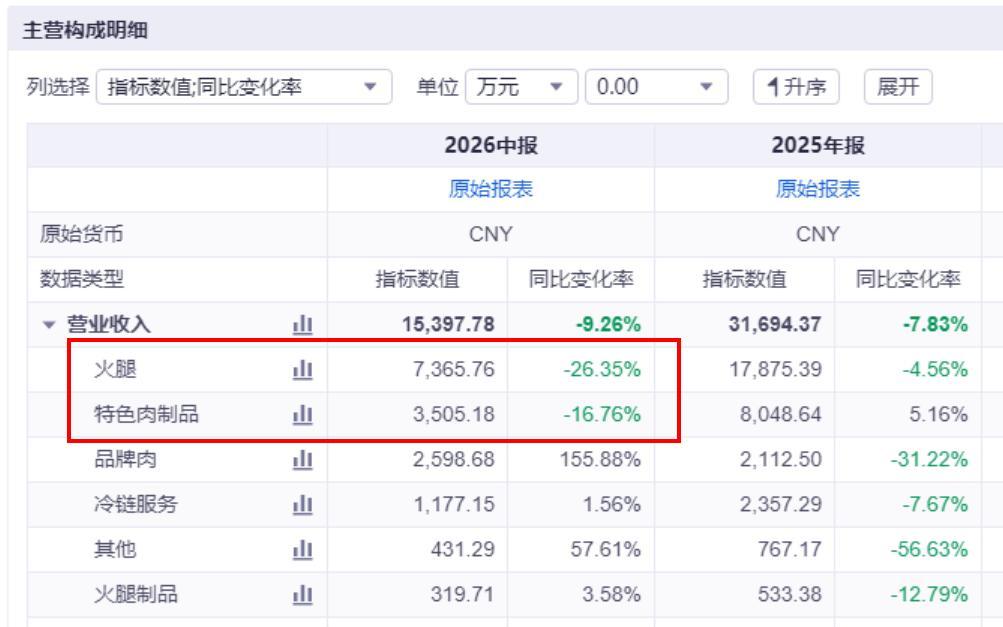
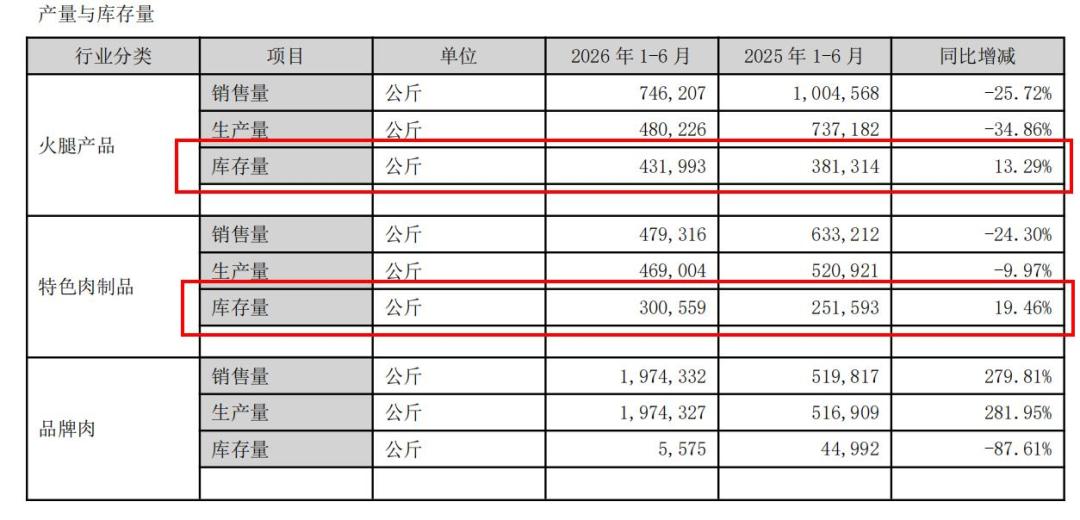
In the first half of the year, the revenue of ham products was 73.66 million yuan, down 26.35% year-on-year, and sales volume decreased by 25.72%; the revenue of characteristic meat products such as sausages, cured meats and sauced meats was 35.0518 million yuan, down 16.76% year-on-year, and sales volume decreased by 24.3%.
Branded meat, however, has grown rapidly. Products such as fresh chilled meat and pork cuts generated a revenue of 25.9868 million yuan in the first half of the year, a year-on-year increase of 155.88%, and the sales volume increase even reached 279.81%. But the sales volume grew much faster than the revenue, corresponding to a 32.65% drop in average selling price, with a gross margin of only 4.04%.
To put it bluntly, the increase in branded meat sales is a low-margin business, which is not enough to fill the gap left by the decline of ham and other products.
While sales are slowing down, the inventory of some core products is also increasing.
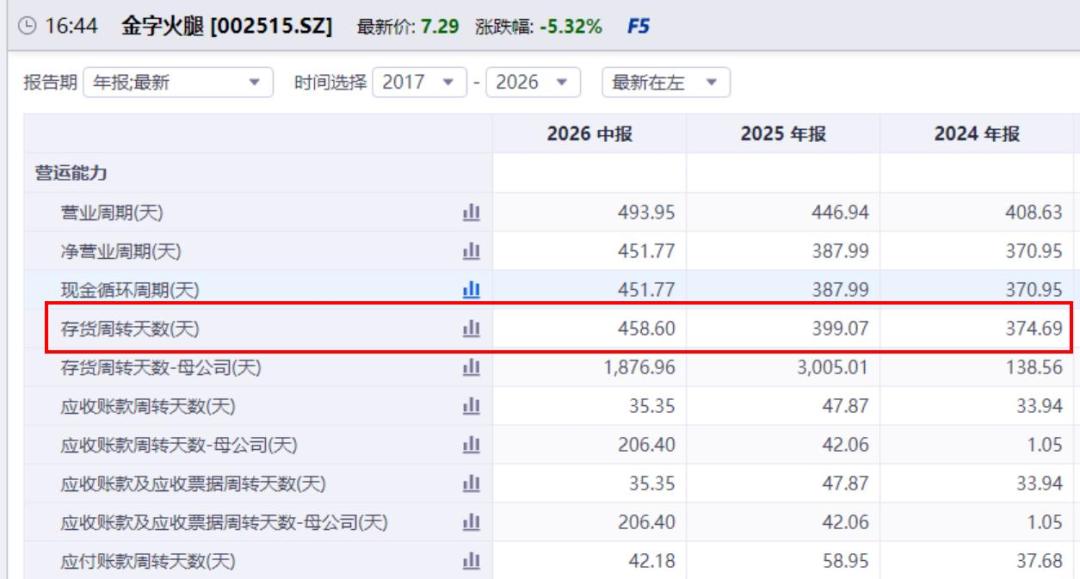
As of the end of the first half of the year, the inventory of ham products reached 432,000 kilograms, a year-on-year increase of 13.29%; the inventory of characteristic meat products reached 300,600 kilograms, a year-on-year increase of 19.46%. Data from Tonghuashun shows that its inventory turnover days in the first half of the year were about 459 days, equivalent to 15 months.
Behind this is the consumption change that the meat product industry is facing: in the past, ham and cured meat were common on festival dining tables and in gift lists. Nowadays, consumers are paying more and more attention to low fat and low salt, and also value convenience and ready-to-eat products.
Traditional cured meat products not only need to adapt to taste changes, but also need to answer a question: without festivals and gifting scenarios, why do consumers buy them in daily life and how to cook them after buying?
Jinzi Ham has not tried to find solutions. In order to attract young people to buy, the company proposed "snack-rization of products, younger customers, and diversified usage scenarios", adding ham to ice cream, small cakes and mooncakes, trying to turn it from a kitchen ingredient into a snack that can be eaten casually. In the summer of 2024, 60,000 cups of ham ice cream were sold.
Another larger investment is placed on the production side.
The company's "annual output of 50,000 tons of meat products digital intelligent industrial base construction project" has a total investment of 1 billion yuan, of which 947 million yuan is planned to be invested with raised funds. As of the end of June 2026, the accumulated investment of raised funds reached 599 million yuan, with an investment progress of 63.3%.
According to the company, this "super factory" covering an area of 172.6 mu and with a construction area of 173,800 square meters is the largest ham processing base in Asia, with an annual designed capacity of 1.5 million hams in the ham workshop.
However, judging from the performance in recent years and the semi-annual report, these layouts have not really driven Jinzi Ham to resume growth.
Instead, the "money makes money" model has become a key buffer for performance.
In 2025, the interest income of Jinzi Ham was 23 million yuan, while the operating profit in the same period was 31 million yuan, and the core profit (revenue - operating cost - taxes and surcharges - sales, management, R&D and interest expenses) was only 7 million yuan, interest income occupied a pivotal position in last year's operating profit.
In the first half of 2026, Jinzi Ham's operating loss was 5 million yuan, and its core loss was 9 million yuan. Without the 9 million yuan of interest income, the loss situation would be even worse.
