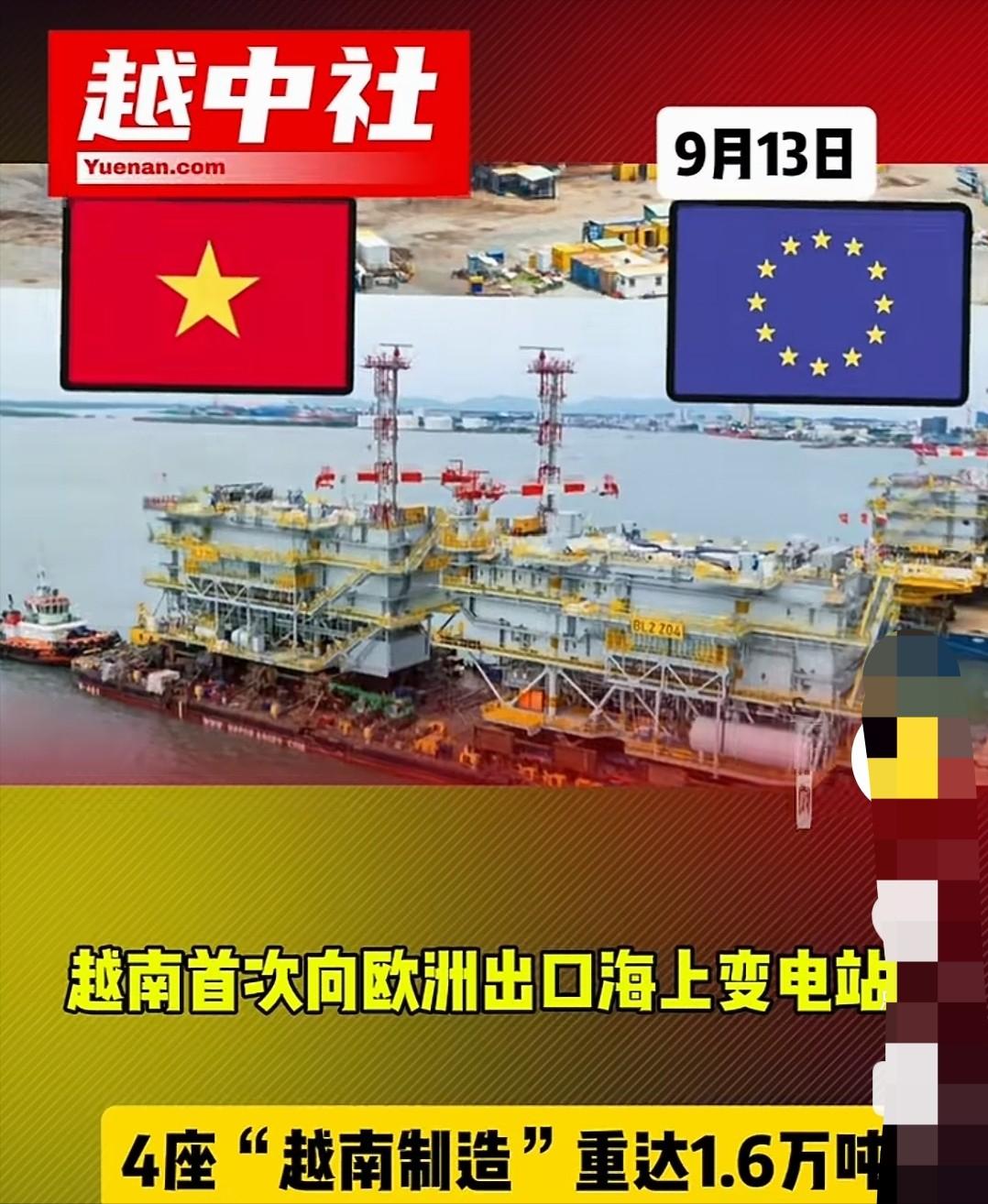
16,000-ton offshore substations are exported to Europe. Is Vietnam now developing the capability to compete with China for large heavy-duty orders?
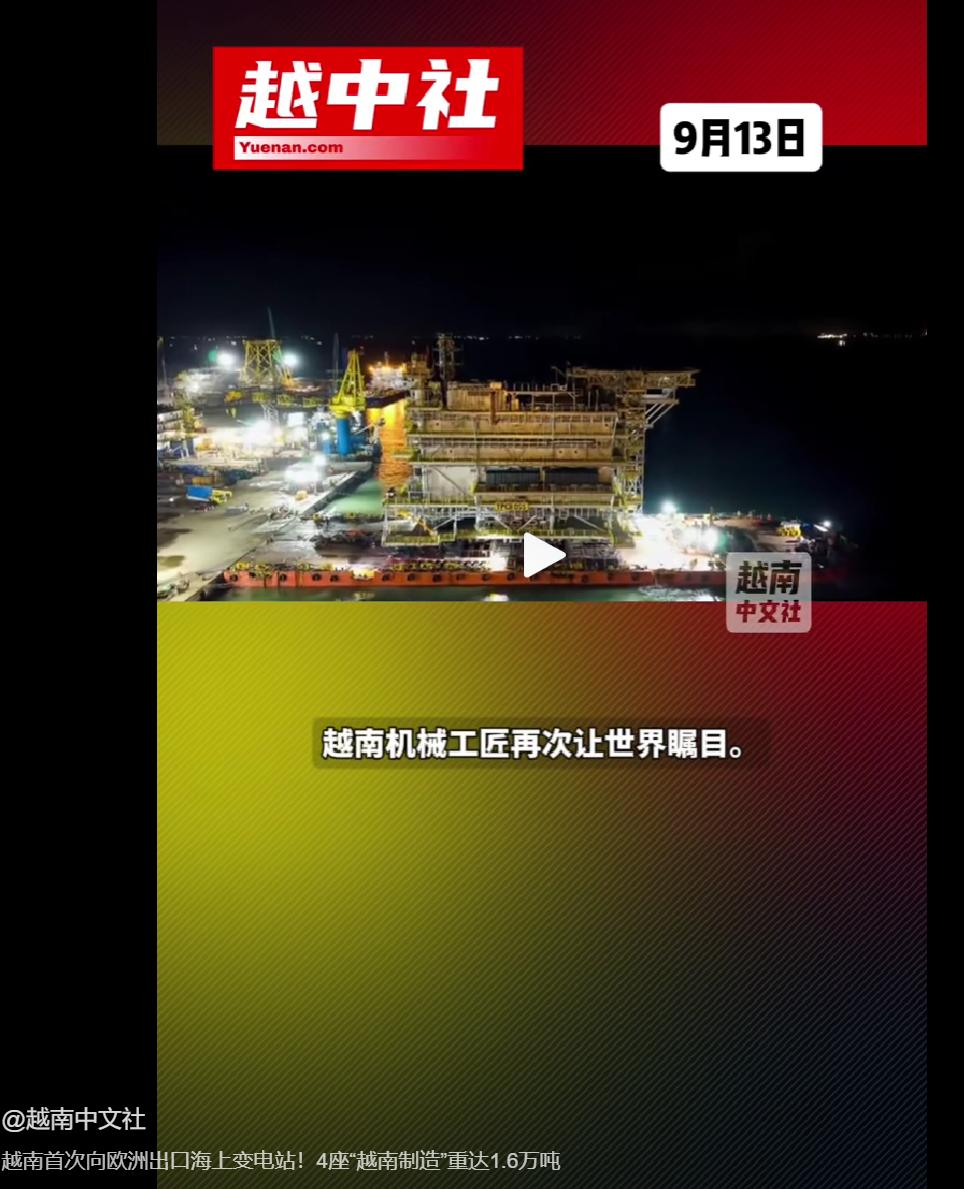
According to Vietnam Youth Daily, 4 giant Vietnam-made equipment units weighing 16,000 tons each have officially completed their launching and handover ceremony at Vietnam PetroVietnam Marine Machinery Services Co., Ltd. on September 12, marking that the 4 giant offshore substations are to be exported to Europe.
The first two units have already set sail for Europe, while the other two have been placed on barges, ready to depart at any time. This marks the first time that Vietnam's offshore wind power engineering products have entered the European market.
In our impression, Vietnam mainly exports low-end labor-intensive products such as textiles, toys, furniture, hardware, small building materials and other ordinary products. Now Vietnam can even manufacture such heavy equipment? Does Vietnam have the ability to compete with China for heavy machinery orders?
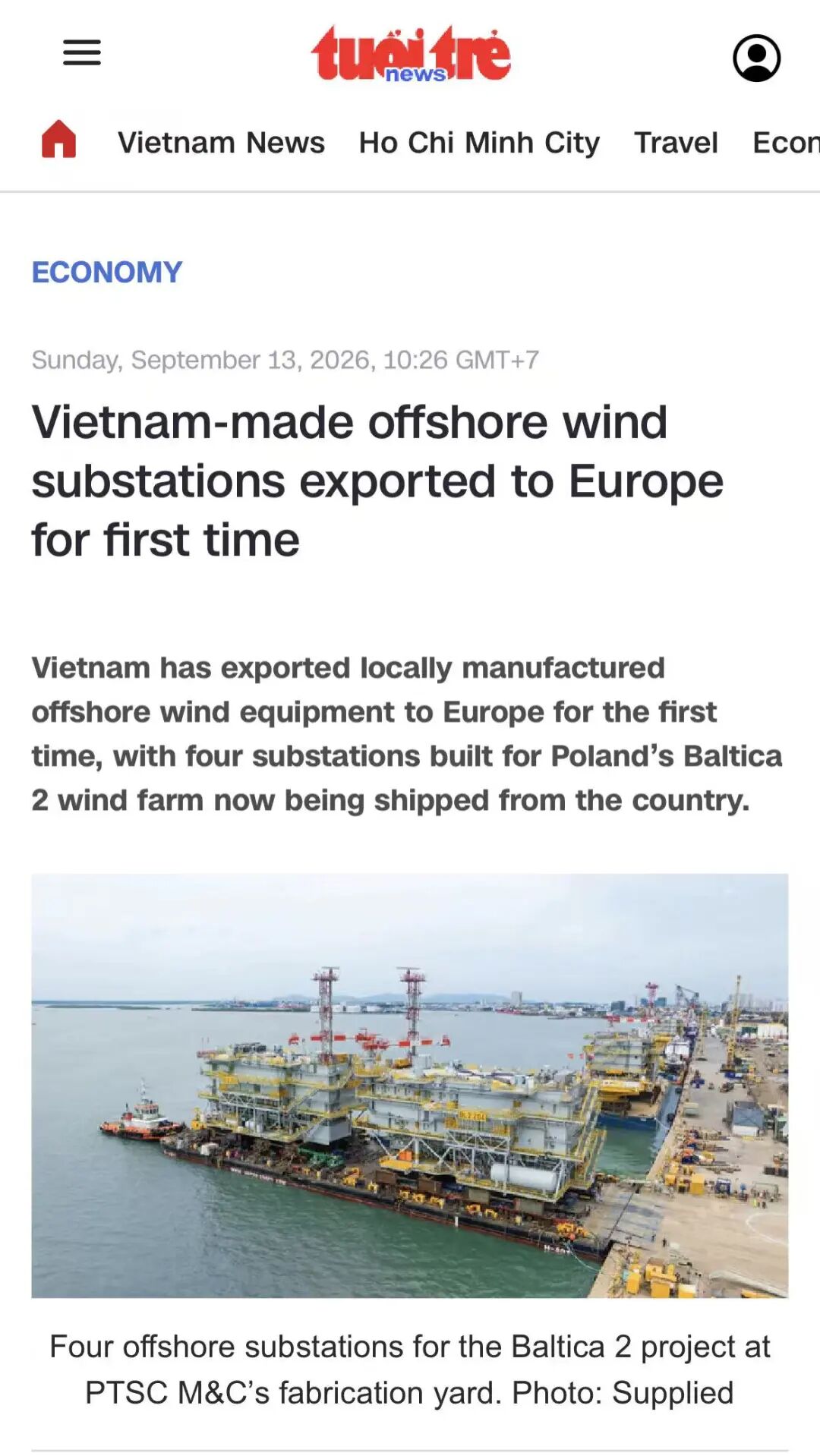
16,000-ton Offshore Substations Exported to Europe: How Much Local Content Does Vietnam Have?
This project, named Baltica 2, is an offshore wind farm located in Poland's Baltic Sea. Its owners are Denmark's Ørsted and Poland's state-owned energy company PGE, with a total installed capacity of 1.5GW.
In June 2023, the EPC general contracting contract was awarded to a consortium consisting of Denmark's Semco Maritime and Vietnam's PTSC M&C. Note that the division of responsibilities between the two parties is very critical.
What is Denmark's Semco Maritime responsible for? It takes charge of design, engineering, procurement, installation and commissioning of high-voltage and medium-voltage systems, SCADA monitoring systems and auxiliary systems, and cooperates with two core subcontractors: Denmark's ISC Consulting provides engineering consulting services, and South Korea's Hyundai Electric supplies core electrical equipment such as transformers and switchgear.
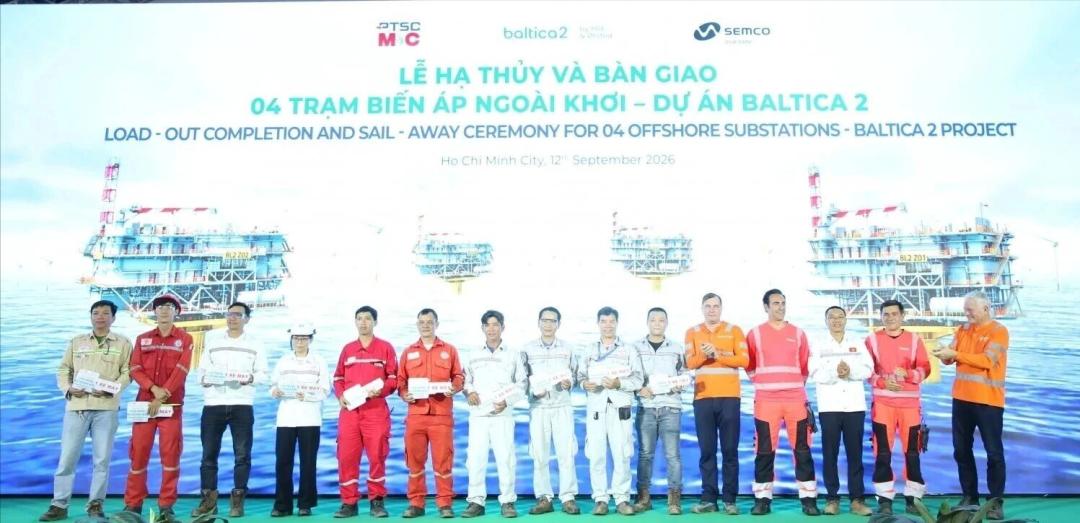
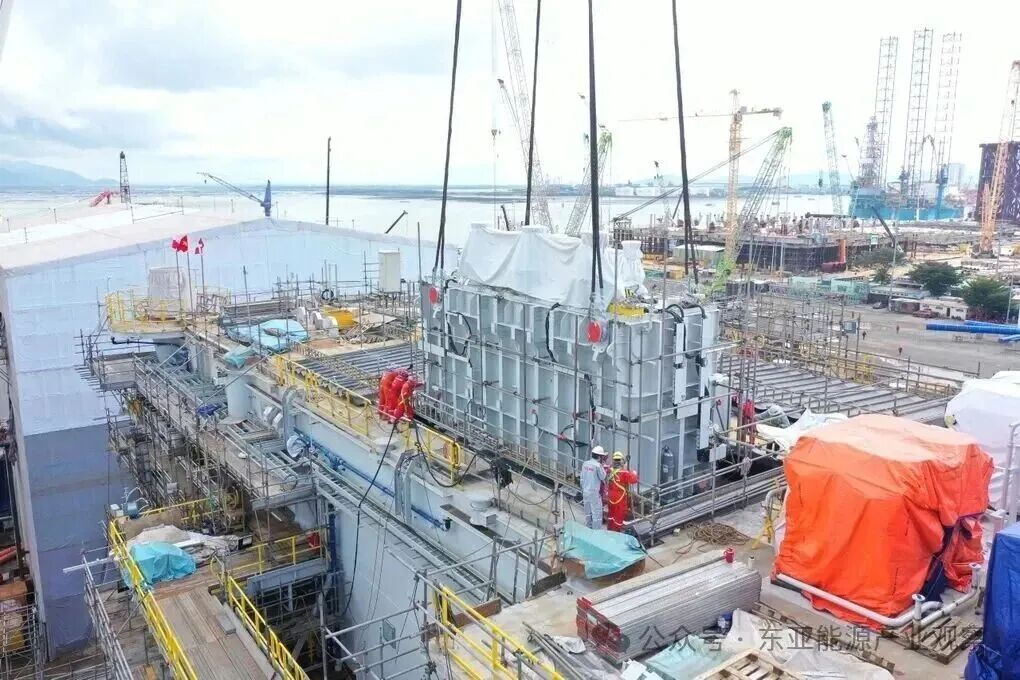
What is Vietnam's PTSC M&C responsible for? It undertakes steel structure construction, final assembly and onshore commissioning at its shipyard in Vung Tau, Vietnam.
In short, the design work is done by Denmark, the core electrical equipment is supplied by South Korea, and Vietnam is only responsible for construction and final assembly. There is no core technology output from China throughout the whole process.
Are there any Chinese elements in this project? Most probably yes — steel products, fasteners, ordinary cables and auxiliary parts may be procured from China, after all China is the world's largest producer of steel and offshore engineering components. But this is just supporting supply chain cooperation, not technology output.
Why Can Vietnam Manufacture Such Equipment? It Is Not a Sudden Miracle, But the Result of 30 Years of Accumulation
Many people think it is impossible for Vietnam to build a 16,000-ton offshore substation, but this is not the case.
PTSC M&C is a subsidiary of Vietnam's state-owned oil company Petrovietnam, and has been engaged in offshore oil engineering for more than 30 years.
It has built various facilities including drilling platforms, production platforms and FPSO oil storage vessels.
From 2017 to 2021, it built a 15,500-ton Sao Vang gas processing platform for Japan's Idemitsu Kosan — which is almost the same weight as the 16,000-ton offshore substation in this project.
Essentially speaking, an offshore substation is structurally an offshore steel structure platform equipped with a large number of electrical equipment. The skills for steel structure construction, heavy hoisting and module final assembly are fully compatible with those for building oil platforms.
Vietnam has Vung Tau, the center of its offshore oil industry, mature shipyards and skilled workers, as well as 30 years of offshore engineering construction experience. Its transformation to build offshore wind power substations is not starting from scratch, but a transfer of existing capabilities.
In addition, its labor cost is lower than that of China, South Korea and Europe, so European owners are naturally willing to arrange the construction links in Vietnam.
The Essence of This Incident: Europe Is Actively Promoting Supply Chain Diversification
Why doesn't Denmark's Ørsted choose Chinese shipyards for the construction? It is well known that China ranks first in the world in offshore engineering construction capacity, with low cost and reliable quality.
There are two main reasons. The first is cost. Vietnam's labor cost is indeed lower than that of China, and arranging the construction links there can reduce expenses.
The second, and more important reason, is supply chain diversification, or in other words, "de-Sinicization".
Europe's current strategy is very clear: the supply chain of critical energy infrastructure should not be overly dependent on China.
Offshore wind power is the core of Europe's energy transition, and substations are the heart of wind farms. Europe does not want the construction links of this core part to be fully controlled by China.
So you can see, Europe chooses Danish partners for design, South Korean partners for electrical equipment, and Vietnamese partners for construction — the whole supply chain deliberately bypasses China. This does not mean that Vietnam is extremely powerful, but that Europe is actively supporting alternative options.
This is exactly the same logic as Apple moving its production capacity to India in the past: it is not that India is stronger than China, but Western countries need an "alternative option outside China".
What Can We Learn From This Incident?
The core technology of this project does not belong to China in the first place, but there are two issues that we must be alert to.
First, the competition in the construction segment. Vietnam does have solid capabilities in the field of offshore engineering construction, and its cost is lower than that of China.
Ordinary countries cannot complete the manufacturing of such heavy equipment. Only industrialized countries can complete such large-scale heavy machinery production.
Regardless of the quality of these offshore substations, once they are delivered to Europe, "Made in Vietnam" will form a strong brand effect in the European market.
In the future, Vietnam will most likely compete with China for orders of offshore wind power substations and offshore engineering structural parts in Europe and even across the globe. Chinese shipyards can no longer receive orders passively, but need to improve efficiency, reduce costs and enhance delivery capabilities.
Second, Europe is now deliberately bypassing China in key fields, and is promoting the trend of de-Sinicization of the supply chain from mobile phones to wind power, from semiconductors to new energy.
This time it is offshore substations, and next time it may be complete wind turbines, blades and gearboxes. If Europe continues to support Vietnam, India and South Korea as alternative supply chains, the overseas market space for Chinese enterprises will be squeezed.
What is more worth observing is: Will Vietnam follow China's path — starting from construction and assembly, and gradually extending to the upstream design and core components sectors?
China also started from working for Western countries and doing low-end manufacturing, and gradually climbed to the top of the industrial chain. The path Vietnam is taking now is very similar to what China did 30 years ago.
Of course, whether Vietnam can replicate China's success is another matter. Vietnam is difficult to catch up with China in the short term in terms of complete industrial chain, super-large-scale market, engineer dividend and infrastructure capacity. But we cannot ignore its existence just because it cannot catch up for the time being.
The incident that Vietnam exported 16,000-ton offshore substations should not be underestimated, nor should it be ignored.
The core technology of this project still belongs to Denmark and South Korea, Vietnam only undertakes the construction links, and China's offshore engineering capabilities and complete industrial chain advantages still exist.
The reason why it should not be underestimated is that this incident is a microcosm of the global supply chain restructuring — Western countries are actively supporting alternative options outside China, and Vietnam is using this window to accelerate its industrialization, which will produce certain substitution effects and brand effects.
You cannot stop others from moving their production capacity out; but you can make sure that after they move out, they will find that our products and delivery are the most user-friendly, the most efficient, and have the strongest comprehensive competitiveness. This may be the direction we need to pay attention to in the competition for overseas orders.
This article is from the WeChat official account "Hot Comment" (ID: redianweiping), written by Wang Xinyu, and authorized for release by 36Kr.