100 people are shouldering the workload that previously required 2000 employees: AI is recalculating the three key accounts of the film and television industry.
AI film and television has finally stepped into the field of full-length drama series.
At the end of August, Post Journey to the West premiered on the prime time slots of Mango TV and Hunan TV. This 30-episode work, with 40-minute runtime per episode and no live-action actors, has all its visuals and character performances fully generated by AIGC technology. It marks the first time that AI film and television, which used to only exist in short videos, comic dramas and conceptual demos, has taken the form of full-length drama. On its premiere day, the share price of Mango Super Media hit the 10% daily limit, and rose by about 50% in the following week, driving the entire film and television sector up by around 10% — the capital market cast a solid vote in favor of this AI drama with real money.
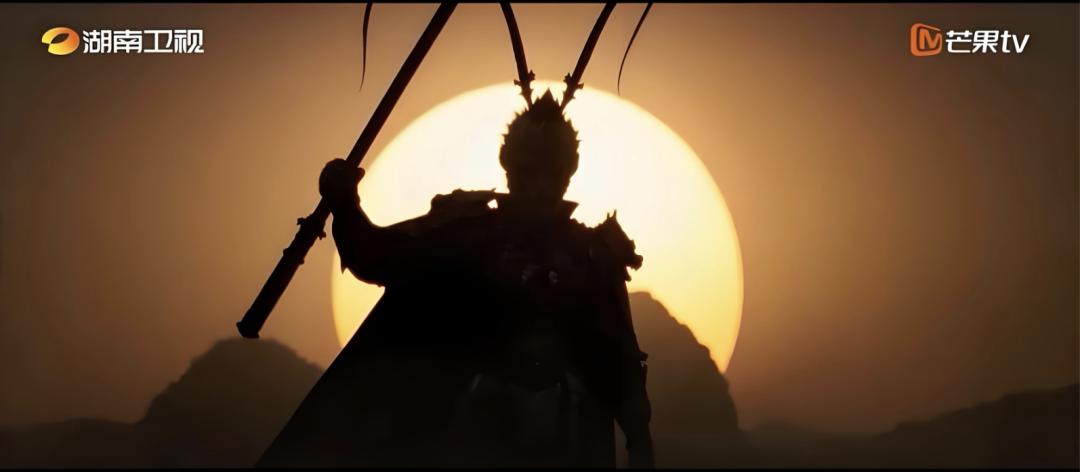
What the capital market sees is obviously far more than the label of "the first AI full-length drama broadcast on a satellite TV". To produce a full-length drama, traditional film and television teams need to calculate three accounts: the production account, where top-tier projects usually require huge upfront investment; the asset account, where the reuse rate of production factors such as actors, real sets, costumes and props is very limited, and a large amount of cost is sunk as soon as the project ends; the business account, where membership fees and advertisements remain the main revenue paths, and the success of the project highly depends on its commercial performance after broadcast.
From the "simultaneous review and broadcast" mechanism after the release of the "21 regulations for radio and television", to the 109 characters and 143 scenes that are preserved as reusable digital assets, Post Journey to the West has completely reshaped all these three accounts one by one.
How exactly does AI move from a generation tool to the actual production site of a full-length drama? What changes have taken place in the production relations behind these three accounts? With these questions, Entertainment Pioneer had an in-depth conversation with Li Dongshen, the chief director of Post Journey to the West.
The First Account: Production Cost
In terms of topic selection, Post Journey to the West has shown a different idea from previous AI projects.
While most AI film and television works on the market are clustered around classic IPs and public domain masterpieces, the team deliberately picked a relatively obscure work: the myth novel of the same name written by an anonymous author in the late Ming and early Qing dynasties. Based on the 40-chapter original work, the series incorporates relevant foreshadowing and clues from Journey to the West, and re-interprets this IP in a brand new way.
Li Dongshen told Entertainment Pioneer, "Although Post Journey to the West is one of the three major sequels to Journey to the West, not many people know about it, and the text itself is not as mature as Journey to the West". For the creative team, this instead means more space for adaptation and imagination.
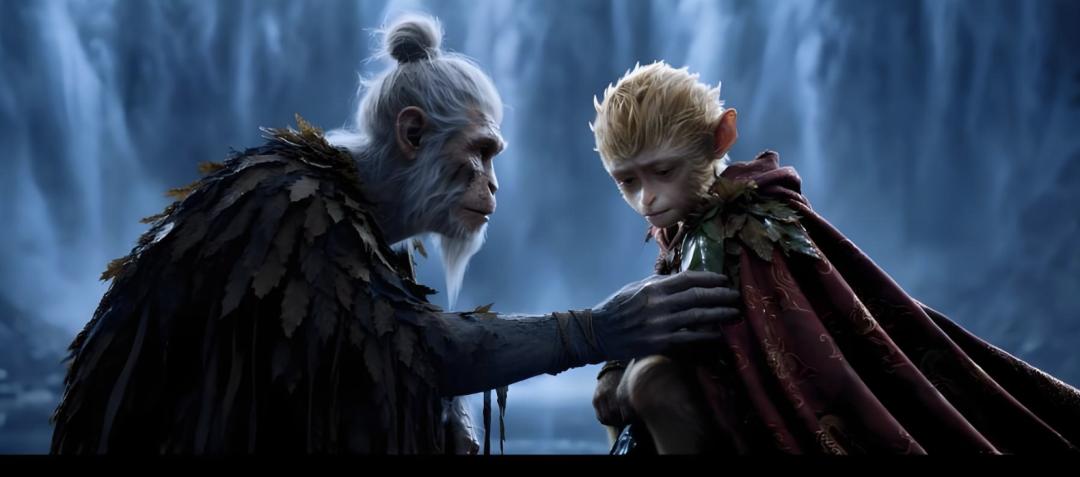
There is a pragmatic calculation behind this choice: Journey to the West is a national cultural symbol that the audience is extremely familiar with down to every detail, any deviation will be magnified and scrutinized; while there are almost no mature film and television versions of Post Journey to the West, the immature shortcomings of AI performance are hidden, and the imagination space of the mythological theme is maximized. Leveraging strengths and avoiding weaknesses is the first conscious choice of AI full-length drama when facing its own capability boundaries.
But adaptation does not mean arbitrary creation. Facing such a national cultural symbol as Journey to the West, Li Dongshen has a very clear attitude: no chaotic and ungrounded modification.
In his view, rather than completely subverting the original setting just to create a sense of novelty, it is better to use this IP to convey the values of contemporary creators. "We borrow the character framework and the core theme of spiritual cultivation and growth, make modern translation in the narrative structure and character development, and retain the core values of 'spiritual cultivation' and 'growth'." For example, Sun Xiaosheng does not complete his transformation by suddenly gaining superpowers, but promotes his growth with his own mind power in the continuous journey and self-exploration.
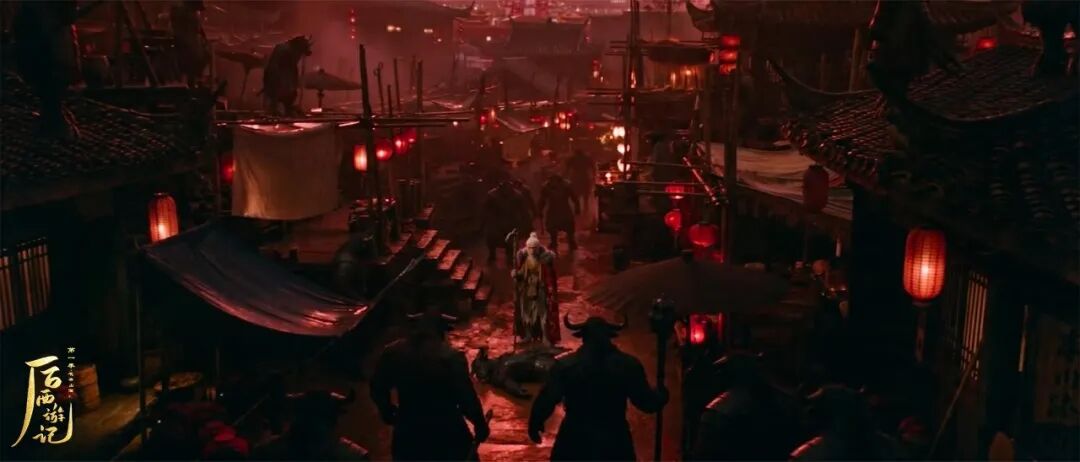
The art design is also kept restrained. The creative team did not let AI freely generate "ancient style" visuals, but first extracted elements from traditional Chinese paintings and the paintings of Journey to the West across dynasties, completed a large number of reference drawings and visual settings, and then handed them to the model for generation, so as to avoid the "generic ancient style" trap that AI most easily falls into. "The Underworld and the Heavenly Palace can be romantic and unrestrained, but their visual foundation still needs to be grounded."
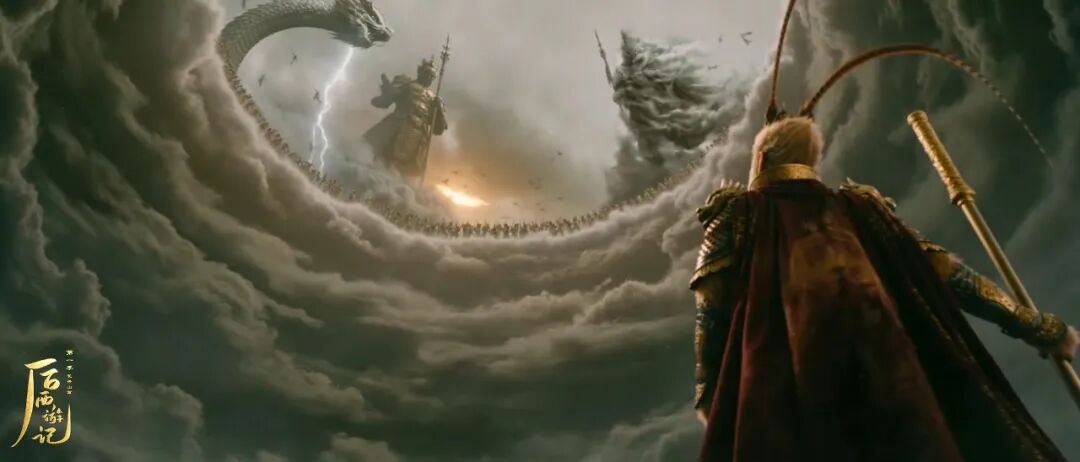
Interestingly, AI is also influencing the creation in reverse. For example, in the generated result of a party scene, the team found that the expression and temperament of Macaque King are more suitable for the villain role than the originally scheduled main antagonist Bull Demon King, so they temporarily adjusted the character setting. In Li Dongshen's view, AIGC is not just an execution tool, but more like a "partner". "It has its own generation logic and feedback, and sometimes it will bring unexpected inspiration to creators."
However, for AI full-length dramas, the real difficulty is never generating a stunning frame of picture, but ensuring that thousands of frames of pictures always belong to the same work. Li Dongshen calls "consistency" the lifeline of AI full-length dramas. To maintain this line, the team has set up multiple lines of defense in all links of the production process.
The first is asset standardization. 109 characters and 143 scenes are repeatedly verified from different angles, expressions and light and shadow conditions one by one. The second is key frame locking: key frames are controlled by humans — who is in this frame, where he stands, where the light comes from, and what stage the emotion reaches, and the transition between key frames is then handed over to the model.
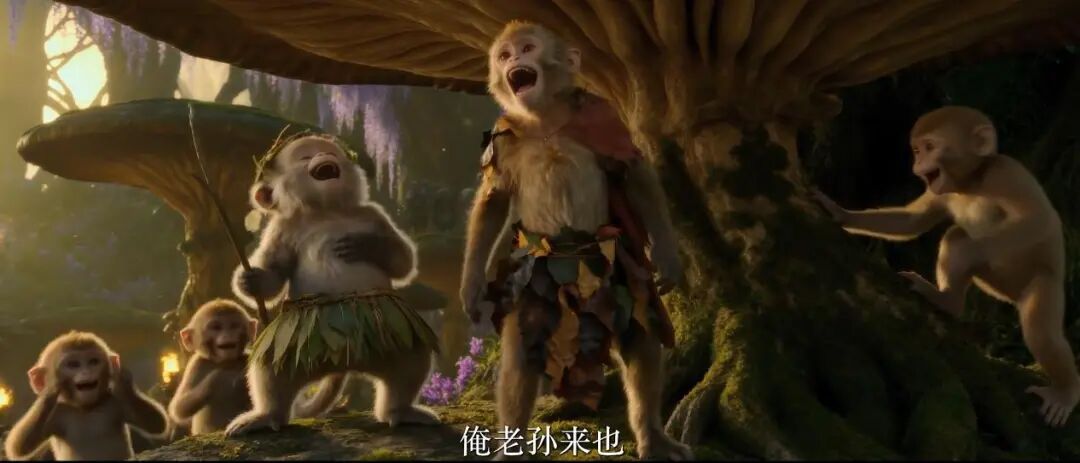
The judgment of human beings thus becomes more important. "What I do, in a nutshell, is the imagination in the early stage and the judgment in the later stage." Li Dongshen said, The model can generate hundreds of versions at one time, and what really consumes energy is to quickly judge which version conforms to the narrative and aesthetic standards.
In addition, the team had already run through a complete AIGC long-content production process when they previously produced Chronicles of Taiwan Island, which provided an empirical foundation for the production of Post Journey to the West. Coupled with the collaboration with Mango Lingchuang, the team was able to maintain the stable output of full-length drama content in a relatively short period of time.
As for production efficiency, in Li Dongshen's words: "We finished 15 episodes in 3 months, and 100 people completed the workload that used to require 2000 people in traditional production."
The Second Account: Asset Value
The reduction of numbers on the production account is intuitive. Cai Huaijun, Chairman of Mango Super Media, revealed that the period from planning to launch of this drama is 70% shorter than that of traditional 3D animation, and the total cost is only a fraction of that of similar S-level live-action dramas. But what is really worth recording in the industry ledger is the second account — the usage mode of content assets has been rewritten.
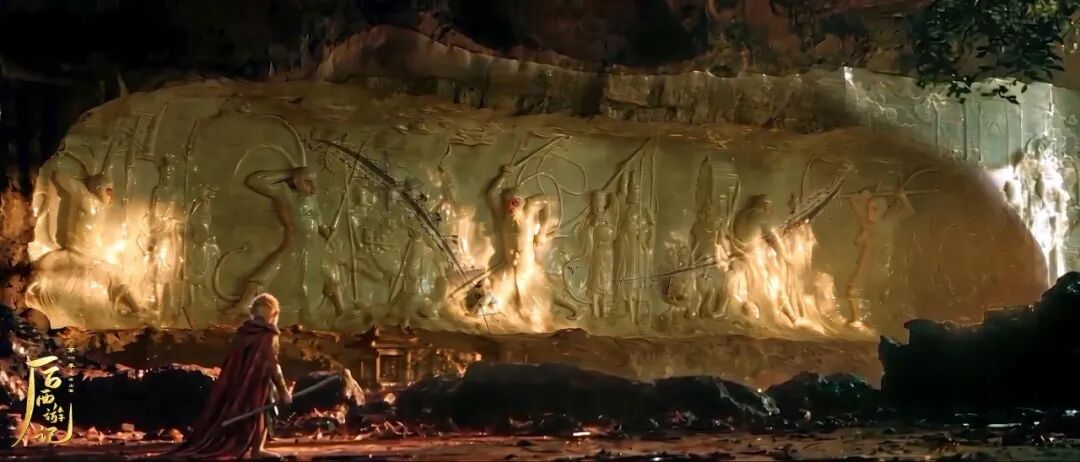
In the past, after a drama was filmed, actor schedules, real set construction, costumes and props were often sunk as the project ended; while in AIGC production, characters and scenes themselves are digital assets that can be called repeatedly. At present, the 109 character assets and 143 scene assets precipitated by Post Journey to the West not only serve the current season, but also can be reused in the second season and derivative development. Cai Huaijun summarized it as an important value of AI: continuous asset reuse and the resulting diminishing marginal cost.
This is the first time that the "software logic" has truly appeared in the film and television industry: the value of a drama no longer only exists in the one-time broadcast. After the assets are digitally precipitated, sequels, extra episodes, and short content developed around the characters can all be called at low cost. The development chain of a drama is extended, and the content assets do not have to end with the end of a single project. For platforms, the valuation method of content reserves has also changed accordingly. In the past, the evaluation of a drama only focused on the return of a single work, but in the future, the long-term income of the entire asset pool may need to be calculated.
There is a deeper layer in the asset account, hidden in the visual system and production process.
The entire production of Post Journey to the West is completed on the Mango Lingchuang cloud platform, and its unified visual style formed based on its own material library is also incorporated into this production system. The visual style itself is not difficult to imitate, but it is difficult to maintain this style stably across 30 episodes, hundreds of characters and scenes. What supports it is not just a set of models, but the material library, parameter system, character assets, workflow, and the aesthetic standards formed by creators after continuous screening and revision.
In other words, the focus of AIGC assetization is no longer just to "save" characters and scenes, but to precipitate part of the creative experience and production rules. When these elements can be standardized, called repeatedly and continuously expanded, what is reused is no longer just a few pictures and several characters, but a complete set of production capabilities.
This may be the most worthy part of the asset account to be recalculated: what AI leaves behind is not just content inventory, but also a production line that can continue to operate.
The Third Account: Business Return
The money saved from the first two accounts will eventually be tested in the business account.
Post Journey to the West did not follow the old linear path of "complete production — submit for review — broadcast", but adopted a three-line parallel mode of production, review and broadcast: the first season has 30 episodes in total, 5 episodes have been broadcast, another 10 episodes are ready to be launched at any time, and the rest are still in production and adjustment.
The biggest change of this "simultaneous production, review and broadcast" mode is that the audience is no longer just the recipient after the production is completed. Li Dongshen told Entertainment Pioneer that the audience feedback after the broadcast will be included in the review meeting, and directly affect the subsequent script, rhythm and even narrative logic — the script is not written at one time, and the space for modification and co-creation is deliberately reserved.
In his view, this is equivalent to turning the traditional linear assembly line of film and television into a parallel system with a feedback loop. In the past, creators finished a relatively closed work behind closed doors and then handed it over to the audience; now, creative judgment and audience feedback collide continuously in the production process, and the faster generation speed of AI makes this collision truly land for the first time.

The speed of putting forward the plan in March, setting up the project in May, and broadcasting in August this year is inseparable from Mango's spirit of "daring to think, daring to act, and daring to be the first", as well as Mango Lingchuang's early AIGC accumulation.
However, the threshold has not disappeared, it has just changed its position: imagination, judgment, human-computer communication ability, and understanding of light, shadow and visual rules have become more important than ever. Short videos can be one-time and fragmented generation, but full-length dramas face the long-term consistency of thousands of frames of pictures, as well as the continuous stability of characters, scenes, lens language and narrative logic on the scale of dozens of episodes.
It is worth mentioning that Post Journey to the West has already gained revenue on the business account. Cai Huaijun revealed that the performance of the first 5 episodes is "fully in line with expectations", the changes brought by member acquisition and user expansion are obvious, and the male user acquisition rate exceeds expectations — for Mango TV, which has always had a high proportion of female users, this mythological AI full-length drama has brought long-lost user growth.
Commercialization is also advancing. Mango officials revealed that some advertising clients have made additional investment orders, and are paying attention to the value of AIGC in creative presentation and cost control; Xiaomang E-commerce has also launched the peripheral product plan of Post Journey to the West, and related products will be launched along with the series.
At the same time, Mango TV has also established an AIGC innovative content center, launched the AIGC partner program, and continued to open IP and cooperation mechanisms for children's animation, national style classic IPs, and female-themed content. From this perspective, what Post Journey to the West verifies is not just a single project, but a new possibility of content production and commercialization.
Conclusion
Calmly speaking, it is not easy to properly calculate these three accounts.
In terms of creation, issues such as long-term memory, content stability, and manual verification cost still exist: it is difficult for a full-length drama to maintain contextual coherence in continuous generation, and a large amount of manual support is still required to avoid visual inconsistency and character distortion. This is also an unavoidable problem for the entire AI long video industry.
In terms of production, AI has greatly reduced labor cost and cycle, but computing power and Token consumption are becoming new major cost items. According to the report of Daily Economic News, many AI film and television practitioners mentioned that the computing power