Guming has started selling freshly tapped draft beer at 12 yuan per cup. Can other milk tea shops follow suit?
Following coffee and ice cream, "Guming Convenience Store" has launched new offerings again.
This time, it is beer. Last Saturday, some consumers found at a Guming store in Hangzhou that the store had started selling freshly tapped beer, priced from 12 yuan per cup, and customers who tried it called it "stunning".
From internal testing of canned beer to the launch of freshly tapped beer, Guming's rapid progress makes people wonder: Has the tea + alcohol sector entered a new round of explosive growth?
1
Starting from only 12 yuan per cup
Milk tea shops have begun to serve draft beer
Recently, a new category "Freshly Tapped Draft Beer" appeared in the mini-program of the Guming flagship store at Hangzhou Hubin Intime in77, including "Classic Draft Beer" and "Triple Yuzu Lager", priced at 15 yuan and 18 yuan per cup respectively, with a promotional price of 12 yuan per cup.
Both products have a volume of 500ml, with alcohol content of 4.8%vol and 3.7%vol respectively.
Soon, store exploration notes such as "the first in the country" "Guming actually sells beer in a milk tea shop" spread across social platforms. Some bloggers commented that "the yuzu flavor is very fresh, and the alcohol taste is not strong".
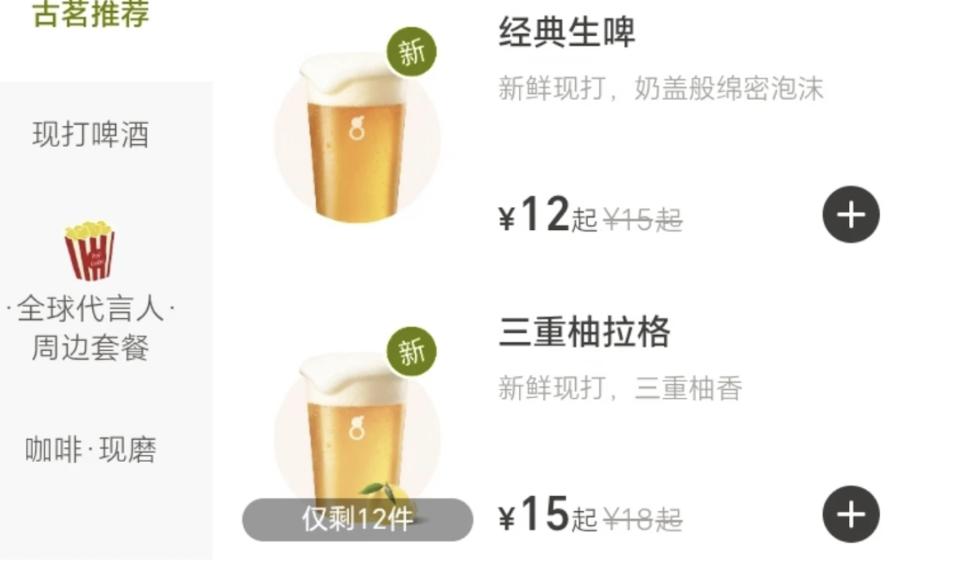
This is not a spur-of-the-moment decision. In June this year, some netizens posted photos of canned "Fresh Yuzu Draft Beer" printed with the Guming LOGO, which has a volume of 330ml, alcohol content ≥3.0%vol, and a short refrigerated shelf life of 30 days. At that time, the brand stated that it "has no comment for the time being".
From internal testing of canned beer to the launch of freshly tapped beer, from topic fermentation to store layout, Guming's rapid progress makes people can't help but wonder: Has the tea/coffee + alcohol sector entered a new round of explosive growth?
2
Luckin Coffee is also stepping into the "light intoxication" track
Drink shops are collectively "indulging in a little alcohol"
Guming's entry into the sector is not an isolated case. Since the beginning of this year, tea and coffee brands have been making increasingly dense layouts in the alcohol track.
According to statistics from Kamen, from May to July alone, 50 mainstream tea and coffee brands launched a total of 17 new products with alcohol elements or flavors.
In July, Heytea launched a limited low-alcohol special drink "Light Intoxication Yellow Skin Peach" in the Guangdong region, which uses Qilan oolong tea soup paired with a Corona beer base, with an alcohol content of less than 0.6%vol, and is called "the official Heytea alcohol drink" by netizens.
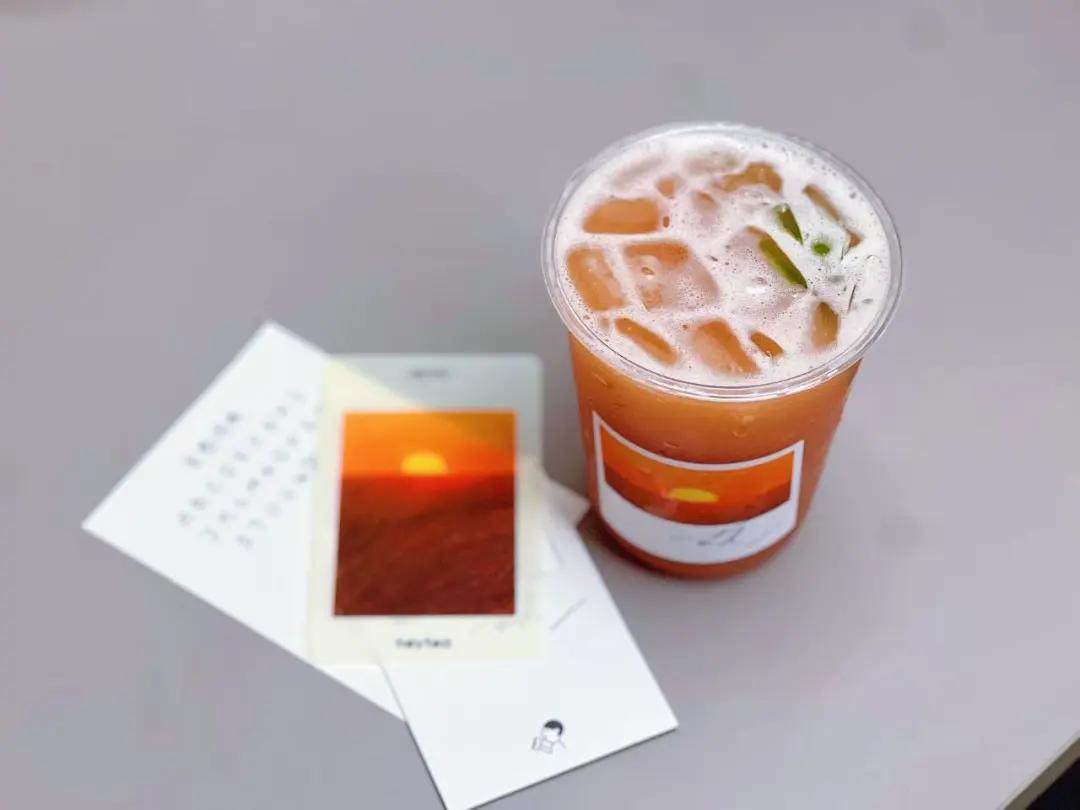
Back in June, Bawangchaji launched Pineapple Shake Smoothie and Green Plum Shake Smoothie nationwide, with an Oriental Beauty tea base paired with hop-flavored syrup, which can be shaken to form a sandy texture before drinking. Netizens exclaimed that "it is more addictive than craft beer".
Grandpa Doesn't Make Tea and Yidiandian have also successively launched new products including beer sparkling tea and butter beer flavor series to supplement their night-time product portfolios.
Go Tea launched 4 new special drinks containing whisky, soy sauce-flavored Baijiu and white wine at one go in May. Yee3 launched coconut fried ice containing rum. Shuxia launched the limited "Sea Salt Cheese Bubble Beer Force" in the Chengdu region.
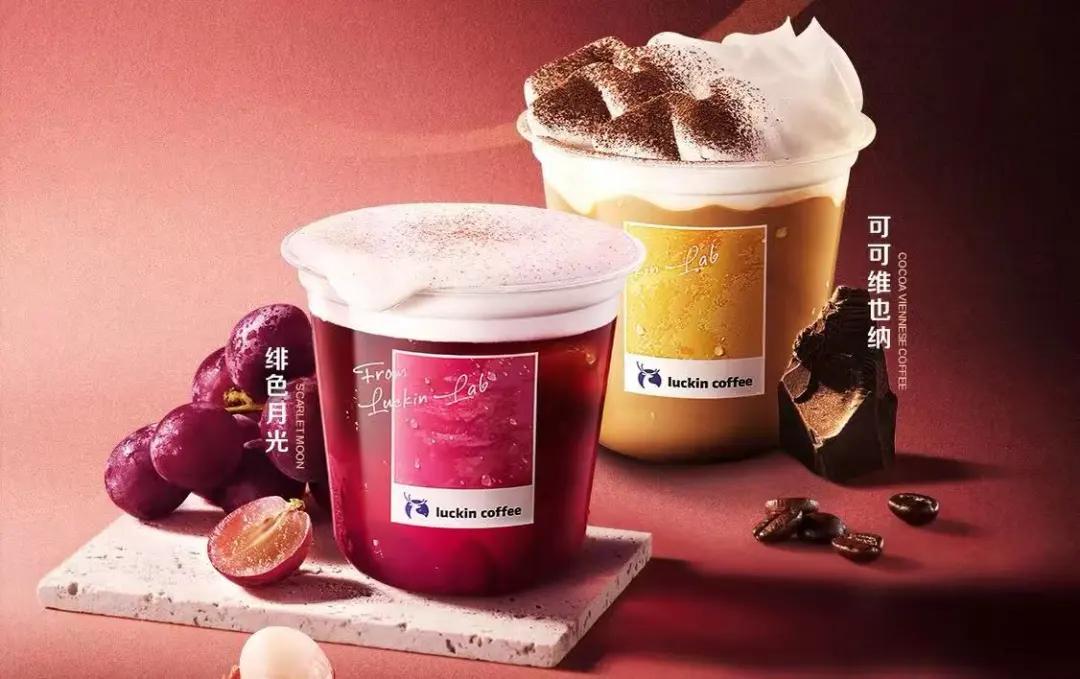
Luckin Coffee's recently widely discussed "Apple Bump" on social platforms is also a special drink with an optional alcoholic version. It previously launched two gin special drinks "Crimson Moonlight" and "Cocoa Vienna". Media reports show that store orders rose significantly on the first day of the new products' launch.
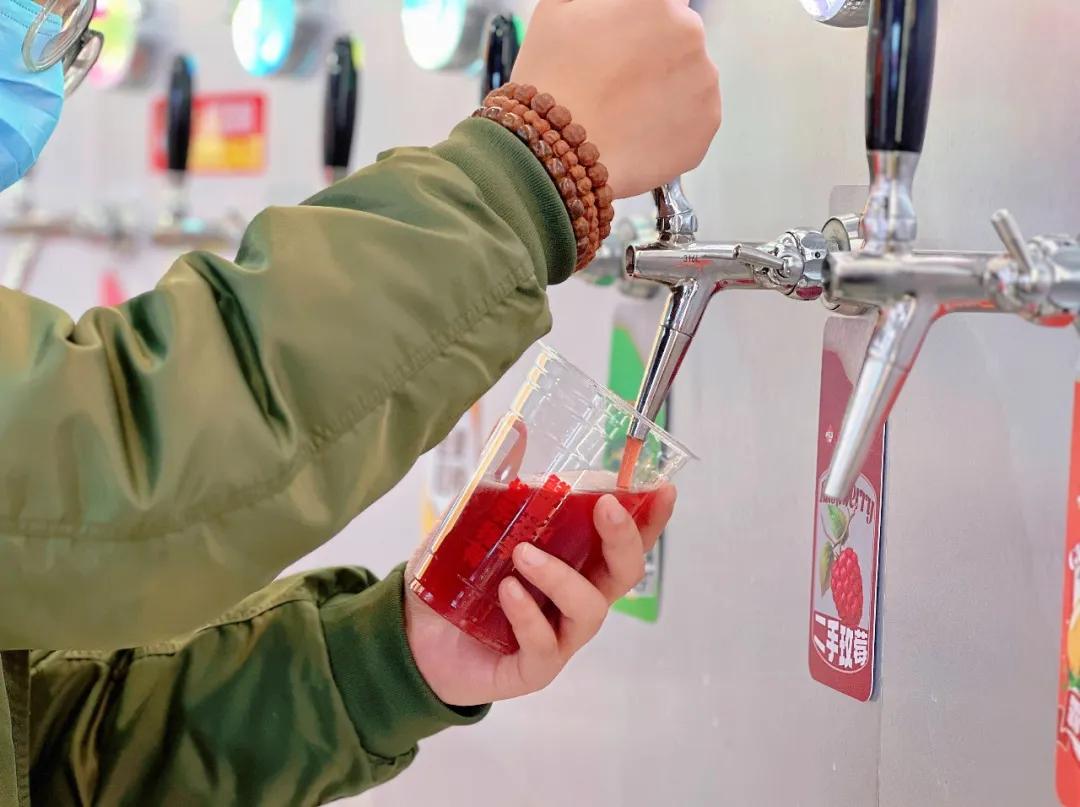
Mixue Ice City entered the sector even earlier. It acquired Fulujia in October 2025, and the number of its national stores has now exceeded 3500.
The supply chain side also sends out corresponding signals. The head of the marketing department of Yitang Tianxia revealed that as of June this year, more than 200 tons of hop-flavored syrup have been shipped, with cooperating brands covering Bawangchaji, Grandpa Doesn't Make Tea, Qilin Big Mouth Tea, Mancha and others. "Last year, brands were still asking for samples, and this year they started placing formal orders".
All signs indicate that "alcoholic drinks are becoming an independent product line for drink shops, rather than a trial of a single SKU".
3
"Morning C, Evening A"
Why did it break out concentratedly this year?
As early as 2017, leading brands began to explore alcoholic drinks.
In December 2017, Starbucks tried to combine coffee and alcohol at its Shanghai Roastery, and opened China's first Bar Mixato Starbucks Reserve Coffee & Bar in 2019.
Heytea launched the "Spring Summer Autumn Winter" series of alcoholic products at its Black Gold Lab in 2018. Nayuki opened BlaBlaBar in Shenzhen in 2019, which is known as "Nayuki's small pub" to the public.
In 2021, "Morning C, Evening A" hit the top of Weibo's hot search list for the first time. The concept, which was originally a skincare popular science term, was redefined by netizens as "coffee in the day, alcohol at night" — you need coffee in the morning to start a day of work and study, and you need alcohol at night to comfort the tiredness of the whole day.
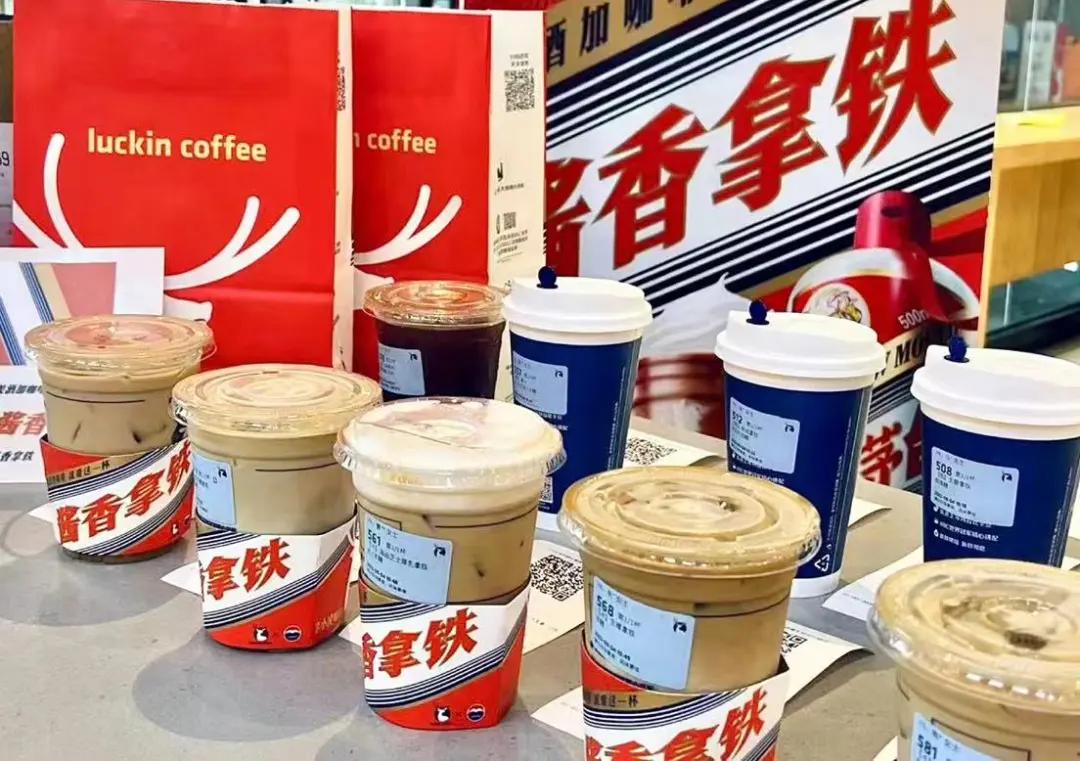
In 2023, Luckin Coffee's Sauvignon Blanc Latte sold 5.42 million cups on the first day, with sales exceeding 100 million yuan, which verified the topic explosion power of alcohol + tea & coffee.
It can be said that this is not the first time that ready-made drinks have entered the alcoholic drink track, and there are three driving forces behind this small wave of explosive growth this year.
The first is the growth anxiety of brands. After capturing the early morning market with coffee, they want to seize the market after sunset with light intoxication alcoholic drinks.
The second is the structural opportunity of the alcoholic drink track. In 2026, the Baijiu industry experienced a "triple decline in volume, price and profit", and low-alcohol drinks ushered in explosive growth. According to data from the China Alcoholic Drinks Association, the low-alcohol drink market has grown from a niche outlet to a hundred-billion-yuan track.
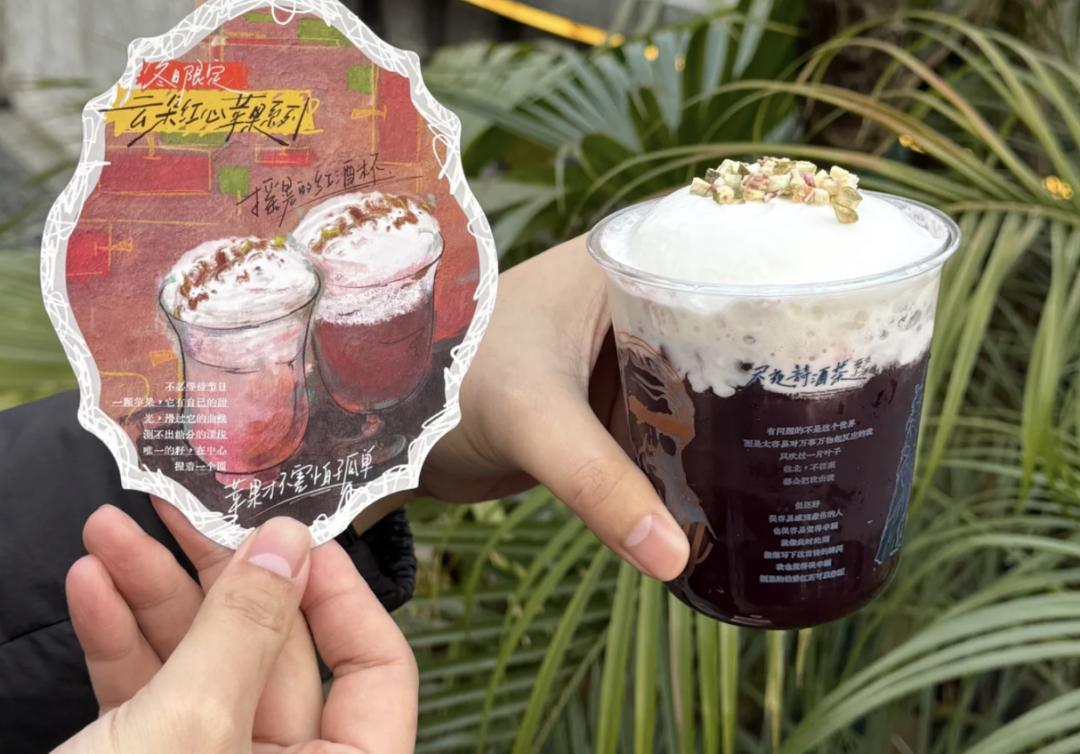
The third is the shift of young people's alcohol drinking scenarios. Young people are not stopping drinking alcohol, but changing their way of drinking — "want the alcohol feeling without getting drunk, want relaxation instead of formal drinking parties". Tea brands accurately meet this demand.
As a young consumer puts it: "I don't want to go to a bar specially for socializing, the low-alcohol special drinks in milk tea shops have palatable sweetness, are easy to buy on the go, and offer just the right sense of relaxation."
4
The long-distance race has just begun
The summer of 2026 saw the most concentrated launch of alcoholic drinks: Heytea used real Corona in its tea products, Luckin Coffee rolled out its alcoholic special drinks to more than 30,000 stores, Fulujia exceeded 3500 stores, and Guming served its first cup of beer in Hangzhou.
But explosive growth does not mean the final outcome.
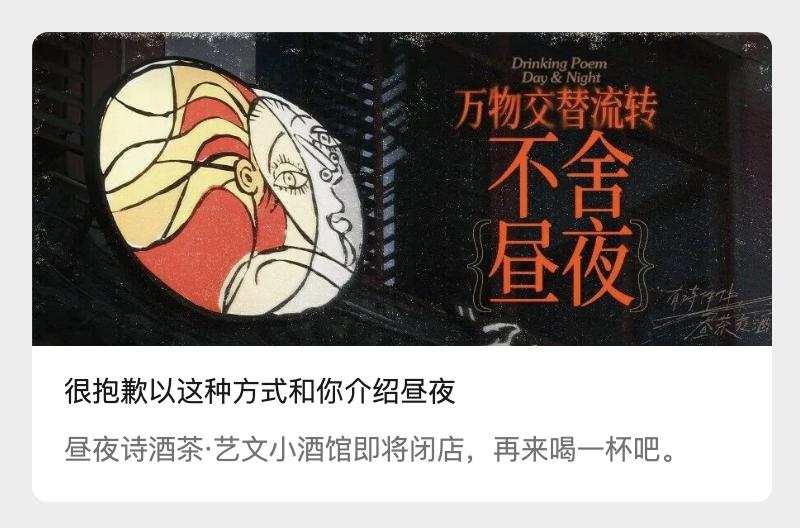
Just the day before yesterday, Chayanyuese announced that all its "Day and Night Poetry Wine Tea" stores will be closed by the end of October. The official post stated directly: "It cannot be said that we did not make any money at all, but after years of exploration, the business model has not been verified."
The Chayanyuese team found that the in-store alcoholic drinks dominated by emotional consumption and the third light intoxication space are not rigid needs, and cannot form sustainable and healthy cash flow.
In fact, the hot sales of Luckin Coffee's Sauvignon Blanc Latte and Apple Bump prove that alcohol + tea & coffee can generate extremely high topic popularity, but it cannot prove that corresponding consumption habits have been formed.
The high-frequency scenarios of alcoholic drinks are late-night snacks and gatherings, while the main customer groups of milk tea shops are white-collar workers and students, and the two are naturally mismatched in terms of time and crowd.
This round of boom is essentially a collective exploration by brands for full-time operation and full-category coverage under the pressure of stock competition in the industry.
Whether alcoholic drinks can develop from "phenomenal new launches" to "normalized operation", and from "topic drainage" to "stable profit", depends on the long-term capabilities of brands in dimensions such as compliance management, supply chain construction, and brand mind maintenance.
Behind the prosperity, brands have not yet formed a sustainable second growth curve. The precipitation of any new category requires the simultaneous success of repurchase rate, operation, single-store model and compliance system, rather than just photos of queues in a single store.
The current competition in the drink industry is no longer a shallow competition in taste and price, but a deep competition in scenarios, time periods and supply chains. For brands like Guming, getting the admission ticket is only the first step, and the real long-distance race has just begun.
This article is from the WeChat official account "Kamen" (ID: KamenClub), written by Guojun, and republished with authorization from 36Kr.