AliExpress showcased at the IFA exhibition: Exports of the AI hardware category doubled, and the brand sales penetration rate of Brand+ in 11 European countries exceeds 50% | Frontline
Written by Huang Nan
Edited by Yuan Silai
At the IFA 2026 exhibition site, AliExpress, one of the "Four Rising Stars of Chinese Cross-Border E-Commerce Going Global", made its debut at this world's top consumer electronics show. On the booth, products of 9 Chinese brands are displayed in a row, covering categories from AI smart glasses, bionic flapping-wing aircraft, 3D printers to electric bicycles, which span several of the most popular tracks in recent years.
This scene was almost unthinkable just a few years ago. A cross-border e-commerce platform that does not focus on selling goods or promoting hit products, but chooses to showcase third-party brands' global expansion, reflects the narrative shift taking place in the cross-border industry.
After the implementation of the EU tax reform, the cross-border industry has undergone a drastic reshuffle. The rising tariff costs have directly impacted the business model that relies on low prices and high sales volume.
Against this backdrop, AliExpress saw its sales in the EU market surge by 97% year on year in August, with the core driving force coming from the buffer effect brought by the Brand+ initiative. Branded products have higher unit prices, so the tariff proportion can be absorbed by the premium space. In addition, a large number of products are shipped from local European warehouses, avoiding the tariff impact on cross-border parcels. As of August this year, the brand sales penetration rate of Brand+ has exceeded 50% in 11 countries including Germany, France and Poland.
Specific to the categories going global, AI hardware is the fastest-growing segment of AliExpress's brand business. Official data shows that from January to July 2026, the scale of AI hardware categories going global on the platform doubled year on year.
A number of domestic hard technology enterprises appeared on AliExpress's IFA booth, including technology-driven startups such as GMK and Magic Atom; mature brands that migrated from the Amazon system such as Engwe and Anycubic; as well as cases like ILIFE and Seauto that grew up entirely in the AliExpress ecosystem and completed overseas market penetration relying on the platform.
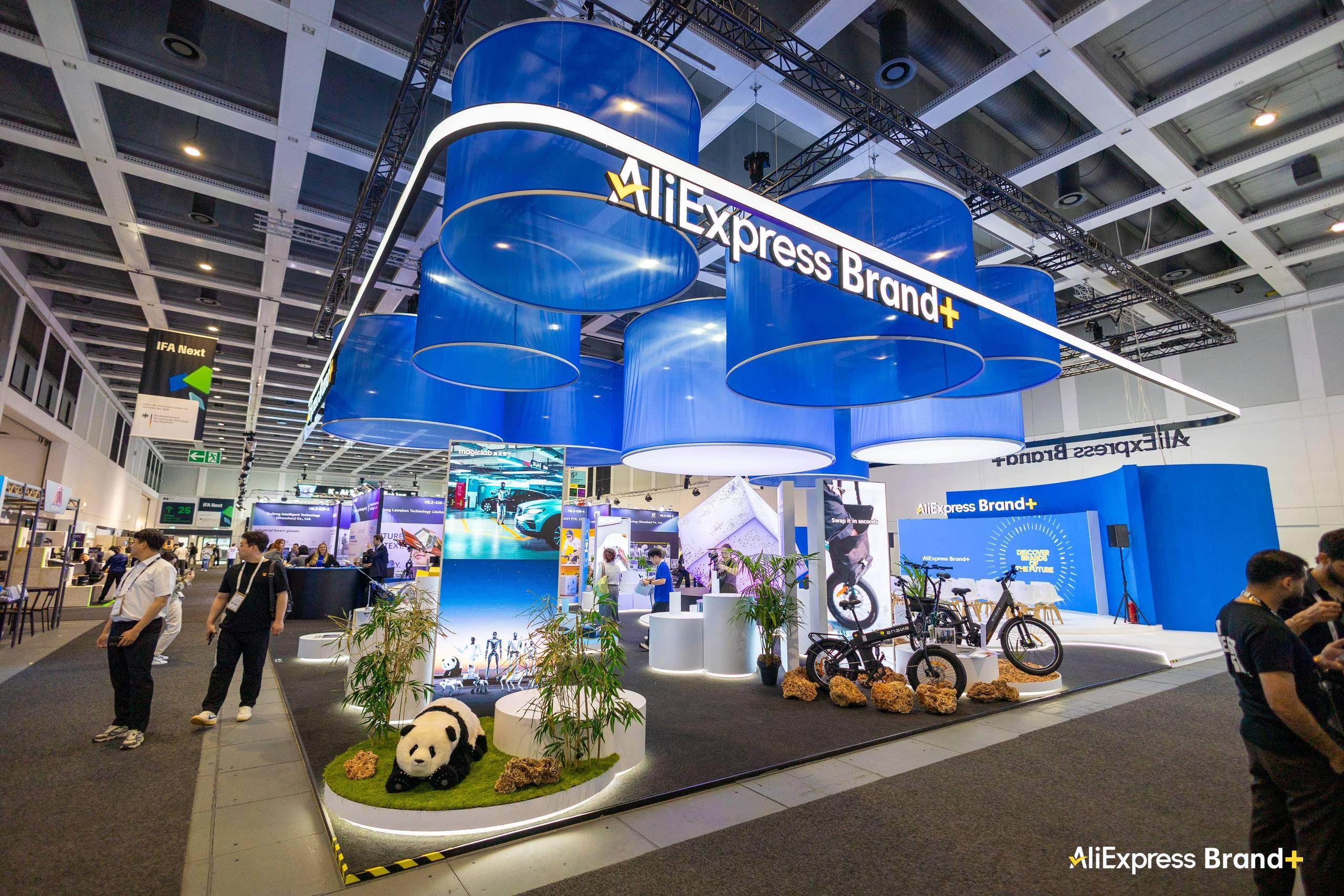
AliExpress IFA 2026 Booth
Take ILIFE as an example. The brand entered the Polish market with the help of platform resources. At present, there is one ILIFE robotic vacuum cleaner in every ten local households, and the brand's sales on the platform have nearly tripled in the past year. More than 90% of Seauto's European orders come from AliExpress. These cases prove that AliExpress is not only a sales channel, but also a springboard for enterprises to enter new markets.
During the exhibition, AliExpress announced three major capability upgrades for Brand+. First, expand the full-domain marketing solution to more new markets, and replicate the successful European experience in countries including the United States, South Korea and Brazil. Second, upgrade AI operation tools, and open product selection analysis, pricing strategy and multilingual content generation tools for brands. Third, expand local European warehouse and distribution capacity. In addition to the official warehouses in Spain, France and Poland, the official German warehouse will be officially opened in mid-September, reducing merchants' warehouse and distribution costs by 10%.
The supporting logic of this model relies on AliExpress's "Marketing + Distribution" system. There is a brand-exclusive marketing IP matrix on the platform, and tens of thousands of influencers and hundreds of thousands of affiliate webmasters are connected off the platform, with 200 marketing activities throughout the year. On the logistics side, the fulfillment efficiency is guaranteed by the warehouse and distribution network covering 27 countries and inventory forecasting tools.
Among them, Brand+, as a service middle platform for brands to go global, can help cover the main links required for brands to enter new markets from user awareness building to order fulfillment and delivery. At present, brands including Xiaomi, Honor, Anker, Li-Ning, Pop Mart and Unitree have signed up to settle in. The penetration rate of active brand buyers has exceeded 30%, and the proportion of brand GMV is close to 40%. The platform expects to drive 2000 Chinese brands to double their overseas scale in 2026.
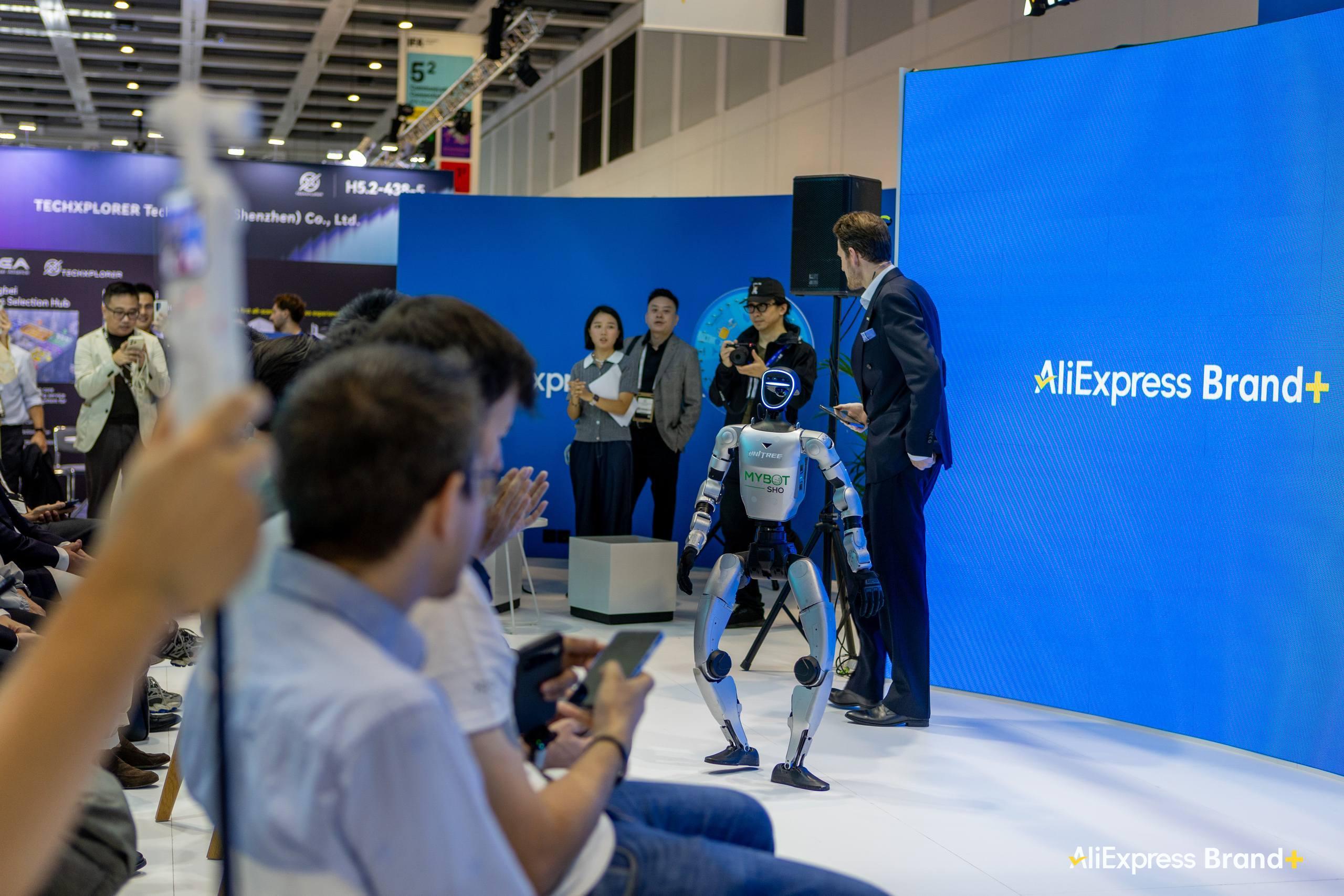
AliExpress IFA 2026 Booth
Relevant rankings such as Ad Age and The Harris Poll show that AliExpress currently ranks first in the growth rate of brand appeal among Gen Z consumers across the United States, surpassing local brands such as Lululemon and Grok.
Nielsen's Going Global Report also shows that brands' overseas expansion is leaving the era of Amazon's dominance behind. 89% of European users have switched their shopping platforms, of which 14% of users who switched from Amazon to AliExpress. The annual consumption growth rate of AliExpress's European users reaches 25%, higher than Amazon's 19%.
Brands' overseas expansion cannot rely solely on online traffic. AliExpress is accelerating the layout of the local European ecosystem, including cooperation with Payback, Germany's leading cashback platform, to help new brands lower the trust threshold through the local network of 35 million members. The cumulative GMV of affiliate marketing cooperation with AWIN has exceeded 1 billion euros, serving more than 100 Brand+ brands.
Today, Chinese cross-border e-commerce is undergoing a round of role transformation. Changes in tax reforms and trade rules have squeezed the living space of low-price bulk stocking, and overseas consumers' demands for quality and brands are on the rise.
In the past, Amazon was often the first choice for brands to go global, but now multi-platform layout has become a more rational choice. However, going global for brands is not as simple as just shipping products out. Every link from user awareness to localized marketing to supply chain fulfillment has its own thresholds.
The exploration value of AliExpress Brand+ lies in that it tries to provide a reusable path: instead of relying on price involution, it uses platform capabilities to help brands build overseas user mindshare.
Of course, this cause is far from reaching the end. Cultural differences in different markets, supply chain stability, and user mindshare cultivation are all long-term projects. But one change visible at IFA is that a number of Chinese hard technology enterprises are no longer satisfied with being OEMs, and are starting to move to the forefront of the global consumer market. The role of cross-border e-commerce platforms is also evolving from a traffic channel to the infrastructure for brands to go global.