With a market value exceeding 50 billion yuan, the leading Beijing-based AI vision chip enterprise has been listed on the Hong Kong Stock Exchange, and its net profit has skyrocketed by 330%.
Report from Core News on August 25: Today, Beijing Junzheng Integrated Circuit Co., Ltd. (hereinafter referred to as "Junzheng Co., Ltd."), the leading enterprise in the segmented storage chip track, was listed on the Hong Kong Stock Exchange.
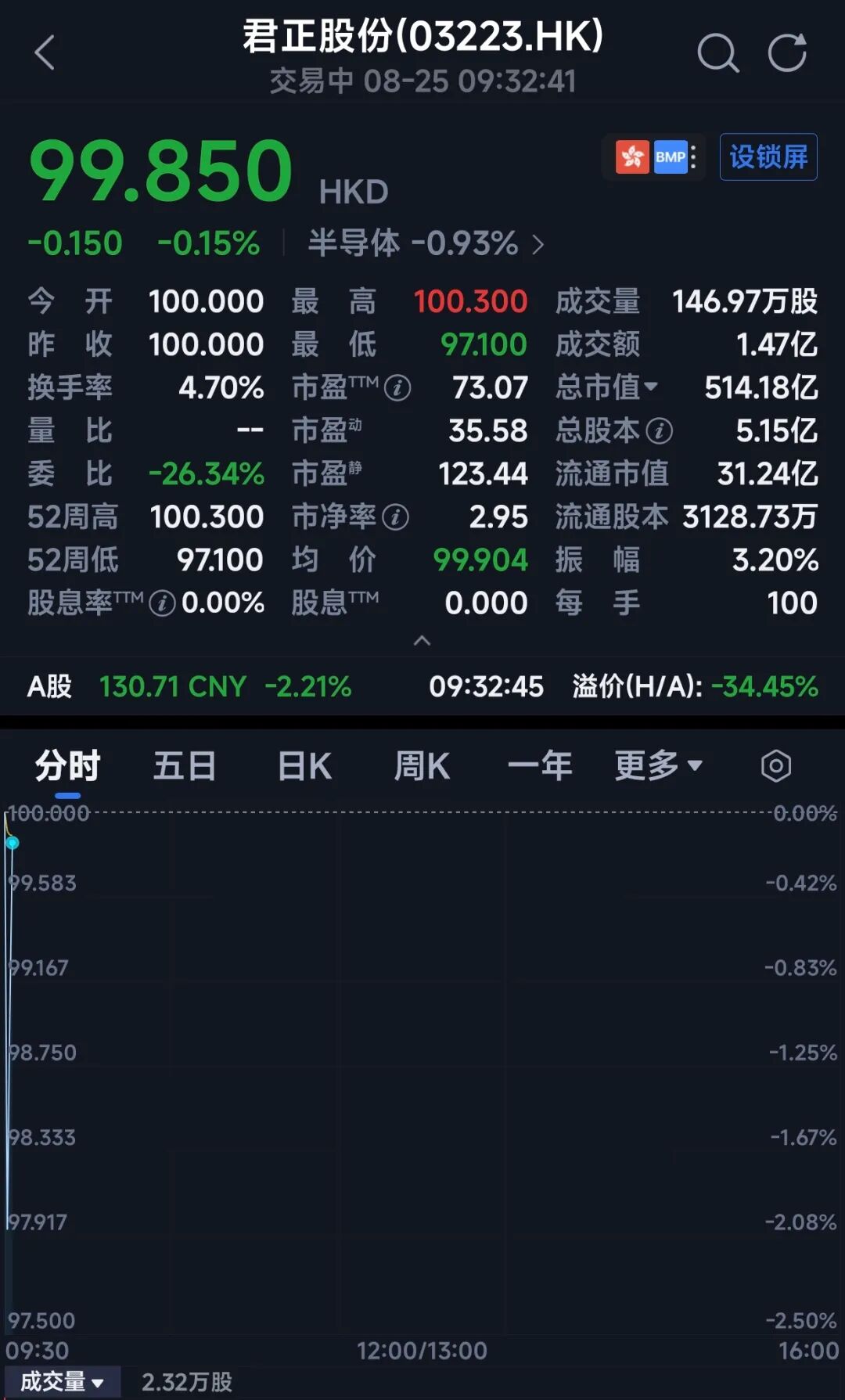
Its issue price is HK$100.00 per share (approximately RMB 85.79), and the opening price is HK$100.00. After the market opened, its share price fell slightly. As of 9:32 today, its share price dropped by 0.15% to HK$99.85 (approximately RMB 85.66), with a total market value of HK$51.418 billion (approximately RMB 44.113 billion).
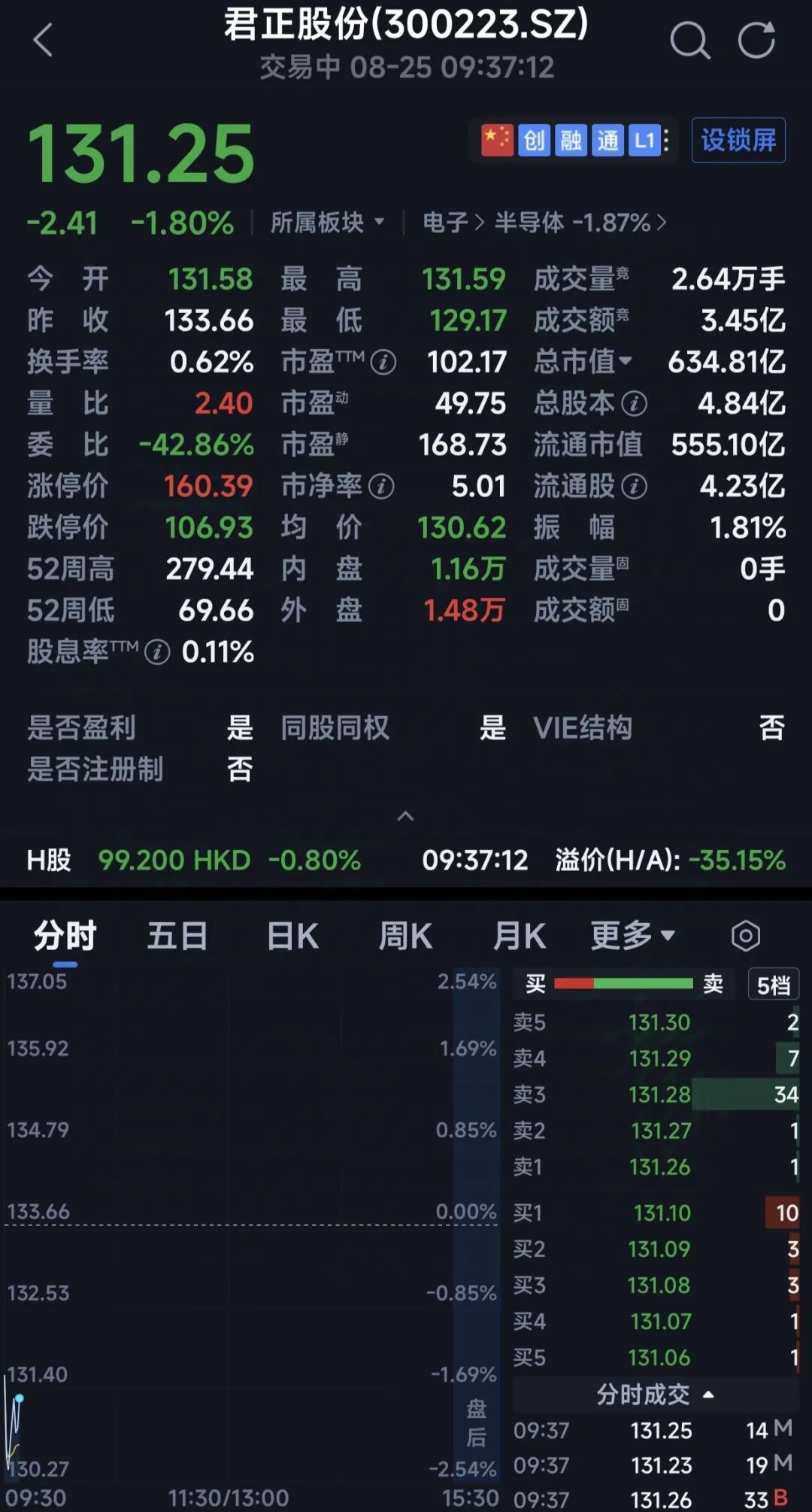
Founded in July 2005, Junzheng Co., Ltd. is one of the earliest embedded CPU chip design enterprises in China to enter the capital market, and it was listed on the ChiNext Board of the Shenzhen Stock Exchange in May 2011. As of 9:37 today, its latest share price is RMB 131.25, down 1.8%, with a total market value of RMB 63.481 billion.
In 2020, the company completed the acquisition of ISSI (a subsidiary of Beijing Sichen), a U.S.-based storage chip enterprise, expanding its business to the automotive-grade storage chip sector and forming a business layout of "storage chips + computing chips + analog chips". Its products cover categories including DRAM, SRAM, NOR Flash, NAND Flash, embedded MPU, intelligent vision SoC, AI-MCU and LED driver chips, which are widely applied in automotive electronics, industrial and medical, AIoT and security fields.
Public information shows that Junzheng Co., Ltd.'s automotive-grade storage products have entered the supply chains of enterprises such as Tesla, BYD, Bosch.
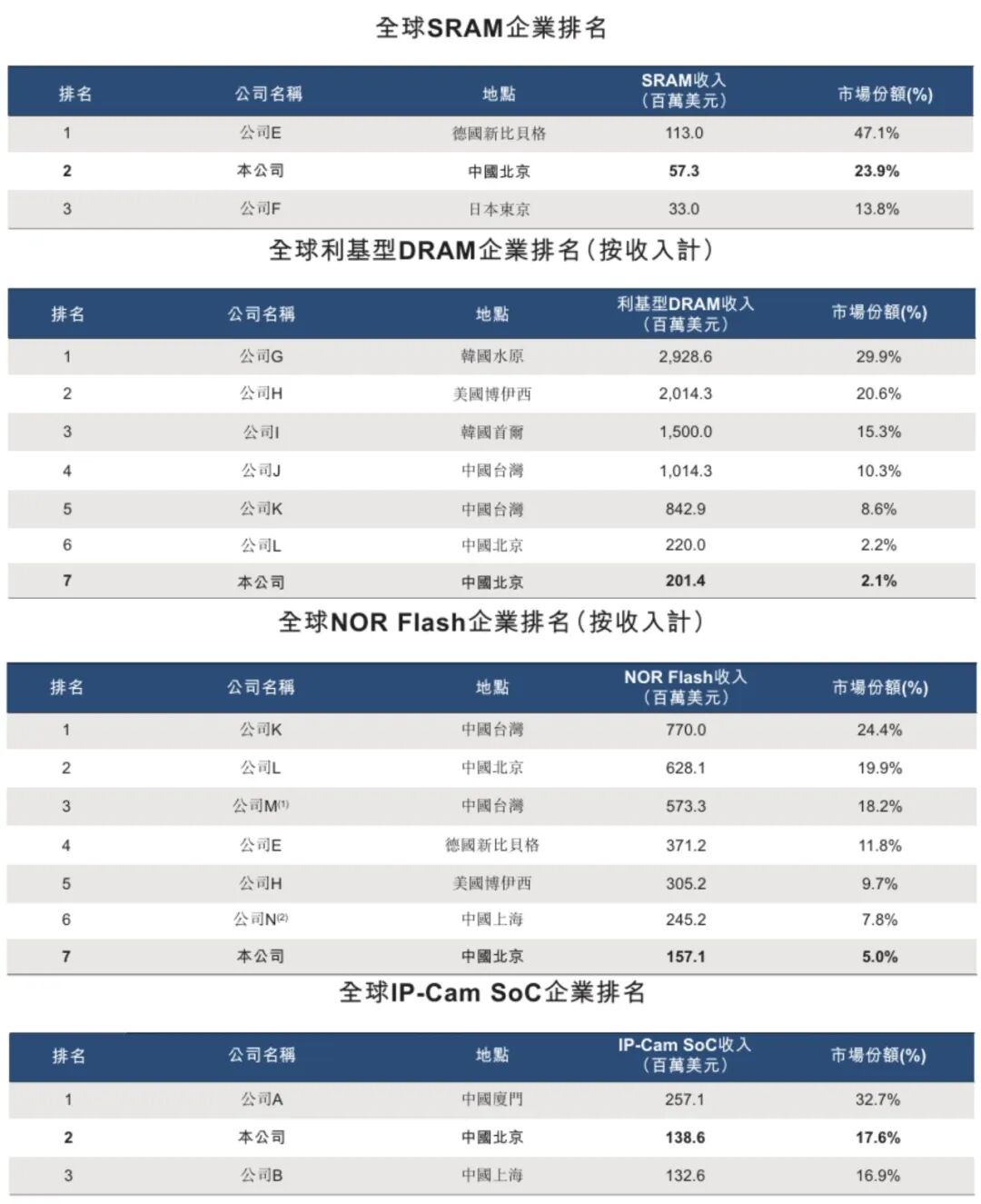
According to data from Frost & Sullivan, calculated by 2025 revenue, Junzheng Co., Ltd. ranks second in the global SRAM market with a market share of 23.9%, taking the first place among companies headquartered in mainland China; it ranks 7th globally in the niche DRAM market and 2nd in mainland China; it ranks 7th globally and 3rd in mainland China in the NOR Flash market; it takes the second place globally in the IP-Cam SoC market with a 17.6% market share.
In this IPO, the net proceeds raised by Junzheng Co., Ltd. is approximately HK$30.55 billion, of which about 50% will be used to strengthen technological innovation and product development of the three core product lines of storage chips, computing chips and analog chips, about 25% for strategic investment or acquisition, about 15% for expanding the sales network and promoting products, and about 10% for working capital and other general corporate purposes.
01.
Annual Revenue Exceeded RMB 4.7 Billion Last Year
Net Profit Surged Over 3 Times in Q1 of This Year
In 2023, 2024, 2025 and January-March 2026, Junzheng Co., Ltd. recorded total revenue of RMB 45.31 billion, RMB 42.13 billion, RMB 47.41 billion and RMB 15.60 billion respectively, net profit of RMB 5.16 billion, RMB 3.64 billion, RMB 3.75 billion and RMB 3.20 billion respectively, and R&D expenses of RMB 7.08 billion, RMB 6.81 billion, RMB 7.12 billion and RMB 1.72 billion respectively.
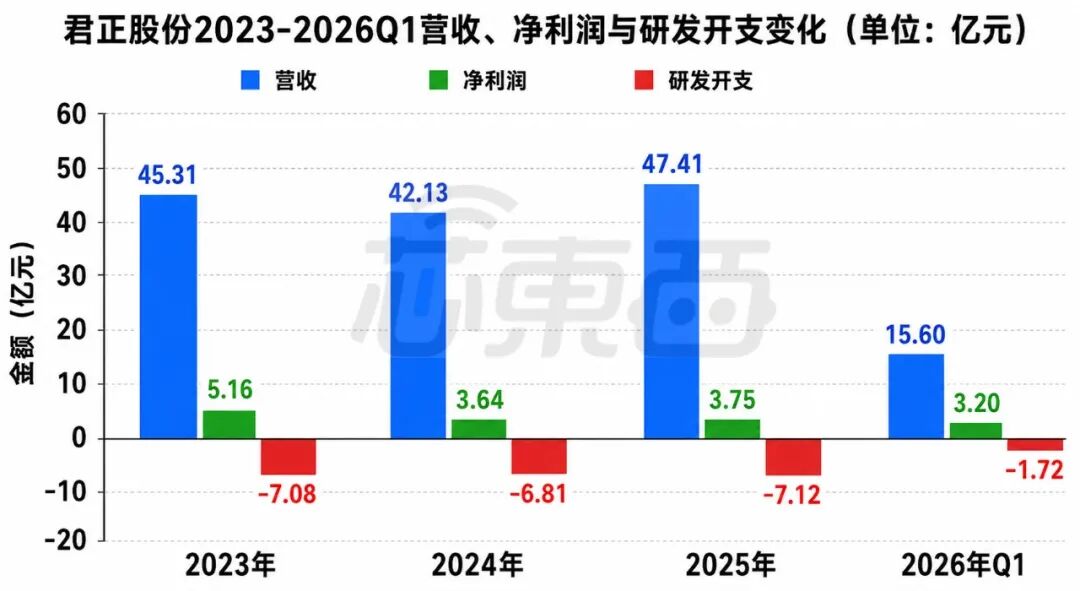
▲ Revenue, net profit and R&D expenditure of Junzheng Co., Ltd. from 2023 to January-March 2026 (Chart by Core News)
In 2024, its revenue decreased by 7.0% year on year, and in 2025 it increased by 12.5% year on year; its revenue in the first quarter of 2026 increased by 47.1% year on year, and its net profit rose by more than 330% year on year.
By product line, storage chips are its largest source of revenue. In 2023, 2024, 2025 and January-March 2026, the revenue of storage chips reached RMB 29.12 billion, RMB 25.89 billion, RMB 29.11 billion and RMB 10.18 billion respectively, accounting for 64.3%, 61.5%, 61.4% and 65.3% of the total revenue, with a relatively stable proportion.
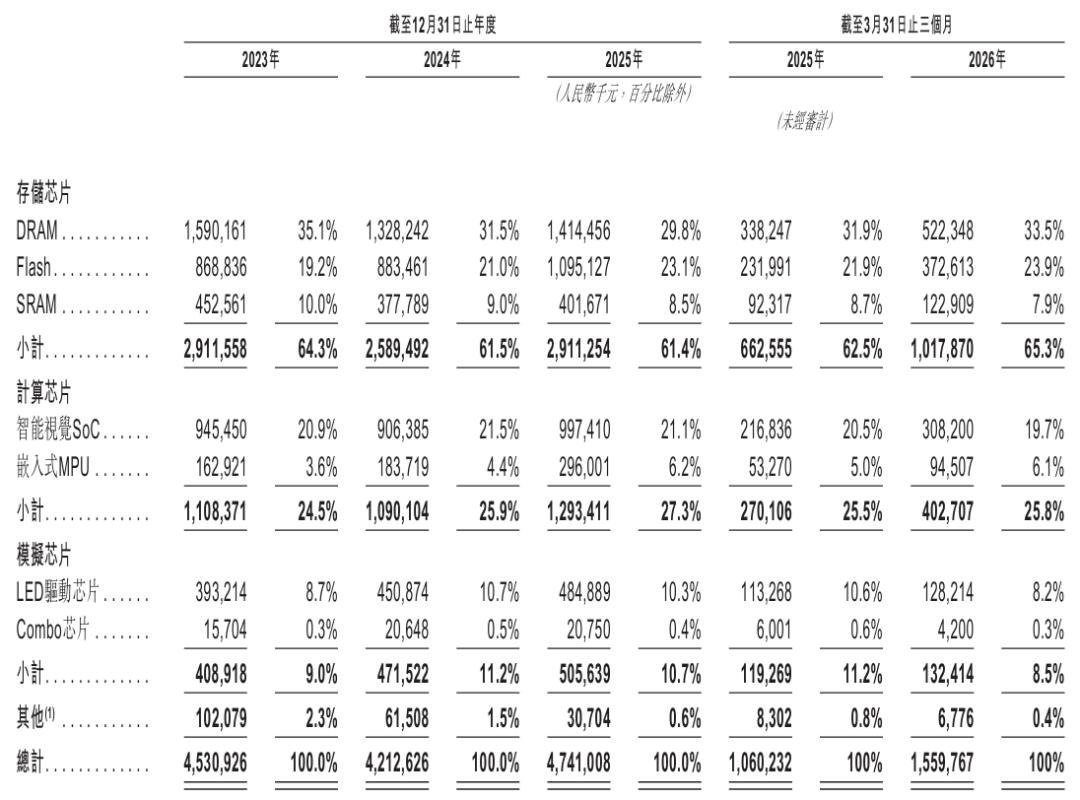
Among them, the revenue of DRAM was RMB 15.90 billion, RMB 13.28 billion, RMB 14.14 billion and RMB 5.22 billion respectively, the revenue of Flash was RMB 8.69 billion, RMB 8.83 billion, RMB 10.95 billion and RMB 3.73 billion respectively, and the revenue of SRAM was RMB 4.53 billion, RMB 3.78 billion, RMB 4.02 billion and RMB 1.23 billion respectively.
The revenue of computing chips (including intelligent vision SoC and embedded MPU) was RMB 11.08 billion, RMB 10.90 billion, RMB 12.93 billion and RMB 4.03 billion respectively; the revenue of analog and interconnection chips (including LED driver chips and Combo chips) was RMB 4.09 billion, RMB 4.72 billion, RMB 5.06 billion and RMB 1.32 billion respectively.
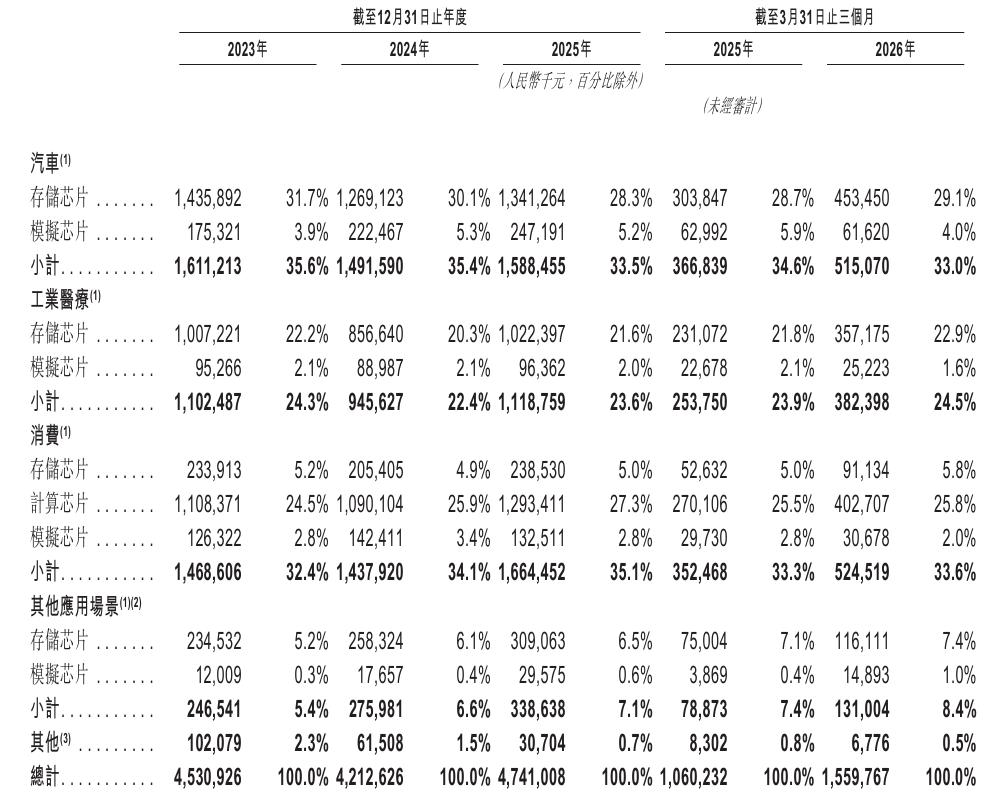
During the reporting period, divided by downstream applications, the revenue proportion of its automotive-grade products was relatively high, reaching 35.6%, 35.4%, 33.5% and 33.0% respectively. The cumulative shipment of automotive electronic chips of the company has exceeded 1 billion pieces, and its storage chips have been adopted by the world's leading Tier 1 suppliers.
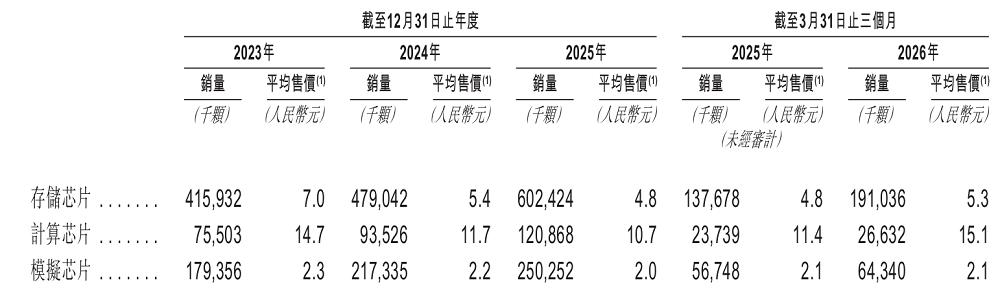
In 2023, 2024, 2025 and January-March 2026, the sales volume of storage chips of Junzheng Co., Ltd. was 416 million pieces, 479 million pieces, 602 million pieces and 191 million pieces respectively; the sales volume of computing chips was 76 million pieces, 94 million pieces, 121 million pieces and 27 million pieces respectively; the sales volume of analog chips was 179 million pieces, 217 million pieces, 250 million pieces and 64 million pieces respectively.
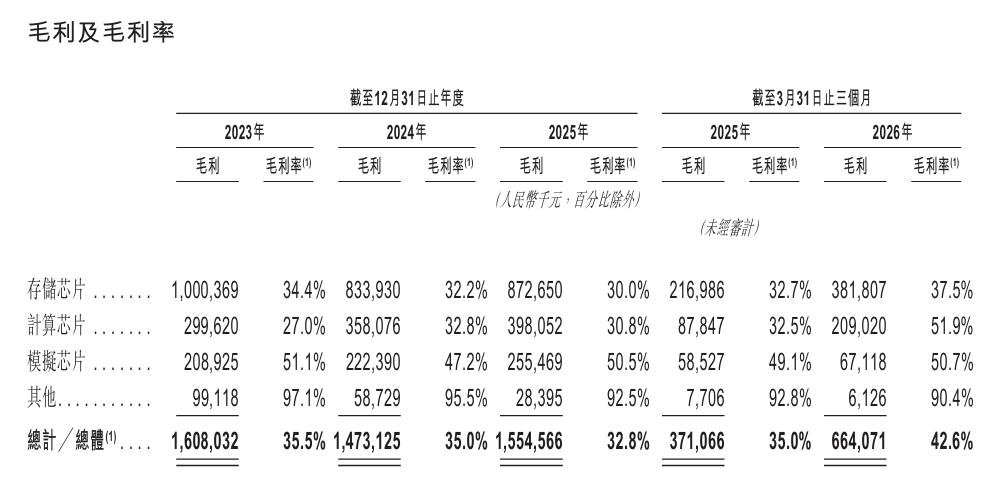
During the reporting period, the gross profit margin of its main business was 35.5%, 35.0%, 32.8% and 42.6% respectively. The gross profit margin declined year by year from 2023 to 2025, which was mainly affected by the drop of average selling price of products; in the first quarter of 2026, driven by the surge in demand for storage chips and computing chips that pushed up the average selling price, the gross profit margin rebounded significantly.
By segment, the gross profit margin of its storage chips was 34.4%, 32.2%, 30.0% and 37.5% respectively, the gross profit margin of computing chips was 27.0%, 32.8%, 30.8% and 51.9% respectively, and the gross profit margin of analog chips was 51.1%, 47.2%, 50.5% and 50.7% respectively.
Among comparable companies in the same industry, the gross profit margin of Junzheng Co., Ltd. is at a relatively low level. Taking the first quarter of 2026 as an example, the 42.6% gross profit margin of Junzheng Co., Ltd. is lower than that of domestic enterprises such as GigaDevice (57.0%) and Puyi Semiconductor (44.7%).
Junzheng Co., Ltd. operates under the Fabless model, and cooperates with 18 wafer fab partners and 28 packaging and testing subcontracting partners; it has 822 R&D personnel, accounting for 65.7% of the total number of employees, and holds 812 patents.
Its self-developed XBurst series CPU cores and Victory series RISC-V CPU cores have been deployed and applied in the computing chip product line. The AI-MCU integrates self-developed RISC-V core and NPU, with a maximum computing power of 0.5 TOPS. The first AI glasses equipped with its chips have been launched on the market in 2025.
02.
The Top 5 Customers Contribute 50% of the Total Revenue
TSMC Is Its Largest Supplier
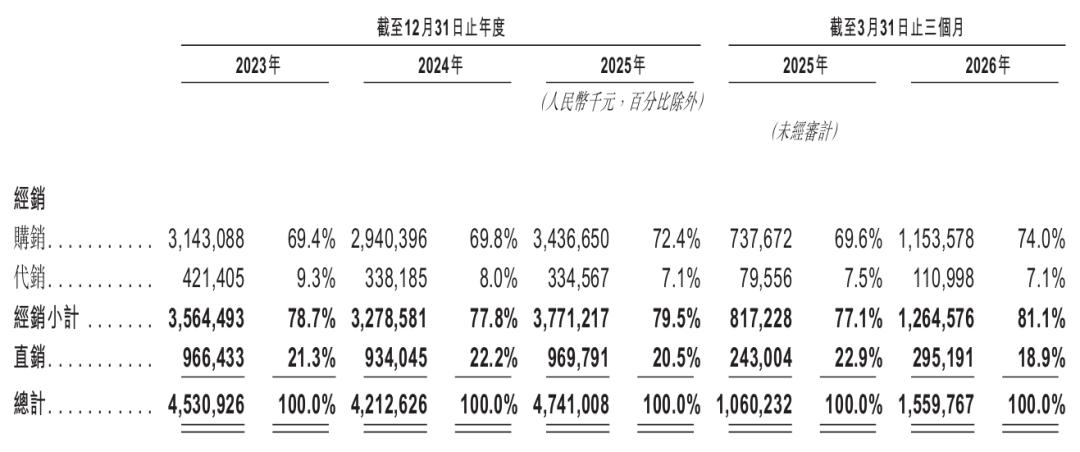
At present, Junzheng Co., Ltd. mainly sells products through distributors, and the revenue from distribution accounted for 79.5% in 2025, while direct sales accounted for 20.5%.
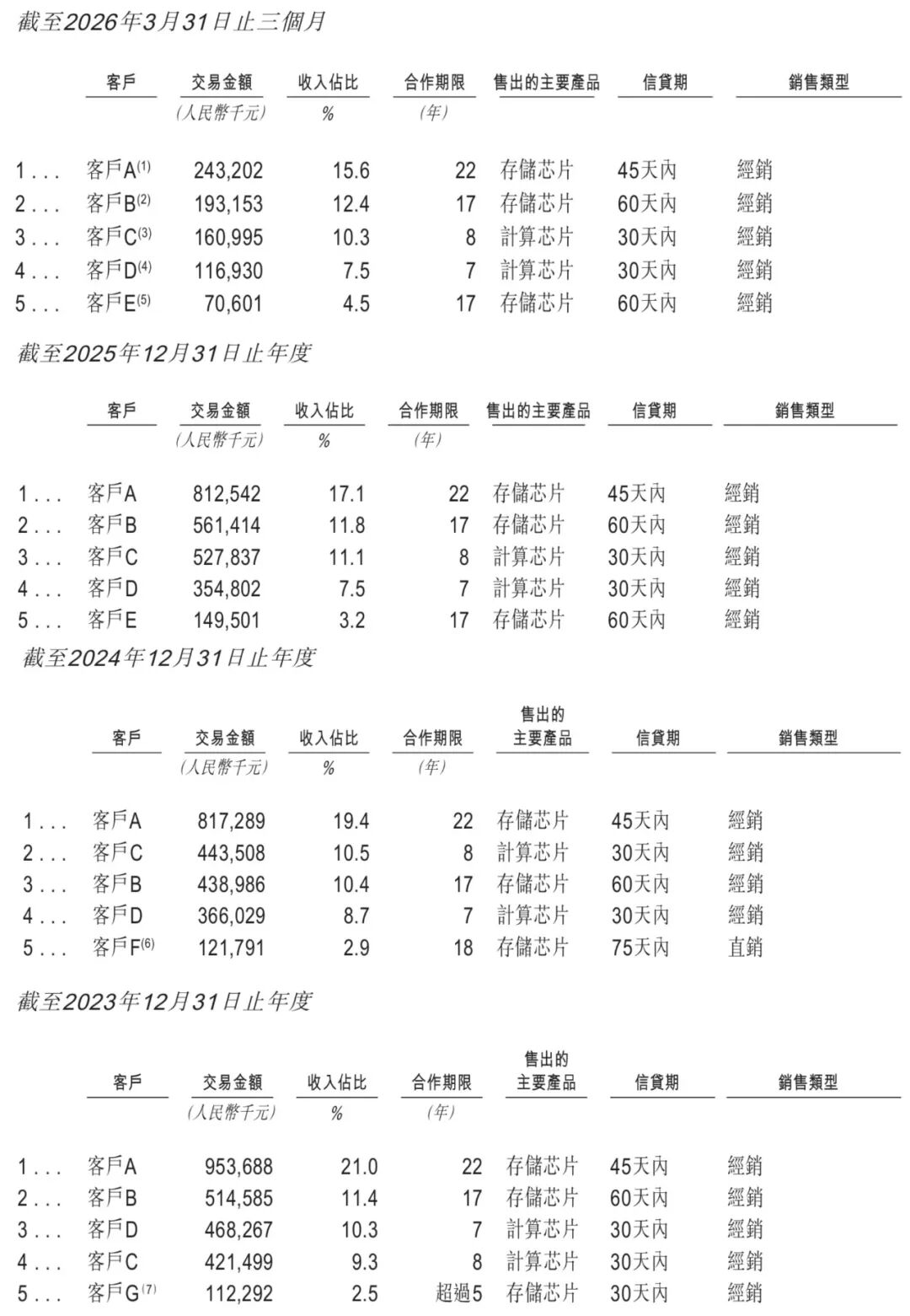
Its customer concentration is relatively high. In 2023, 2024, 2025 and January-March 2026, the total revenue proportion of the top 5 customers of Junzheng Co., Ltd. reached 54.5%, 51.9%, 50.7% and 50.3% respectively, and the revenue proportion of the largest customer dropped from 21.0% to 15.6%.
In terms of supply chain, in 2023, 2024, 2025 and January-March 2026, the procurement proportion of the top 5 suppliers reached 58.3%, 47.8%, 45.1% and 41.6% respectively. The concentration has been improved year by year, but the Fabless model determines that it still relies on external wafer fabs and packaging and testing plants.
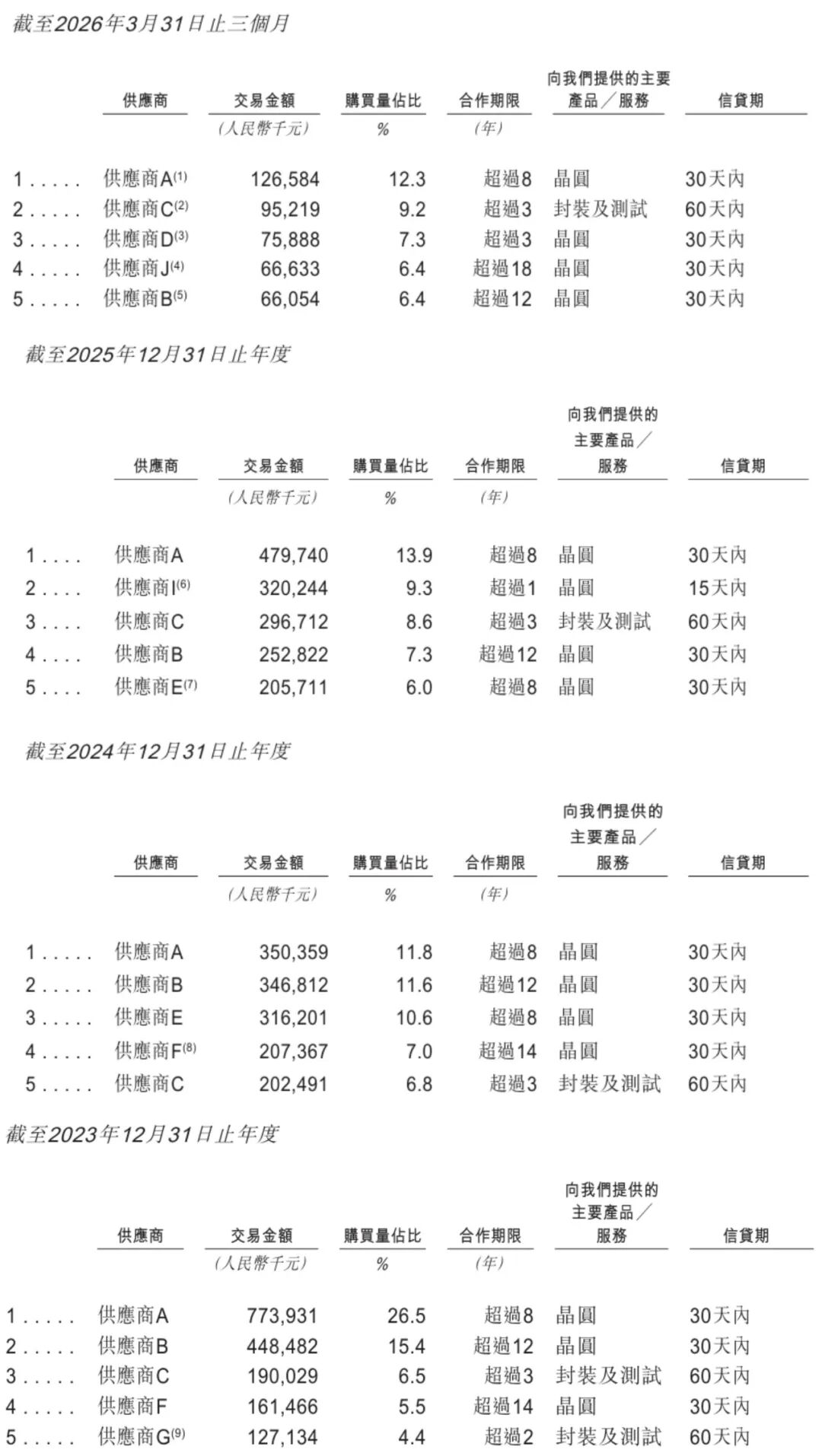
According to the information disclosed in the prospectus of Junzheng Co., Ltd. and public data, it can be inferred that Supplier A of Junzheng Co., Ltd. should be TSMC, and its computing chips (such as intelligent vision SoC) are mainly manufactured by TSMC.
