The robot steps off the stage, and JD.com takes the stage.
Infrastructure creates possibilities.
This was a key judgment Jeff Bezos made in the early days of Amazon. The subsequent emergence of AWS essentially stemmed from his insight that many companies do not lack ideas, but the capacity to build underlying infrastructure on their own.
This same problem has emerged in the embodied intelligence industry: while technical capabilities are advancing rapidly, a robot that truly integrates into the physical world requires far more than just its body and models.
At the recent World Robot Conference, running, dancing and backflips are no longer novelties, and movements for daily scenarios such as handing over water and grabbing objects are becoming increasingly skillful. Over the past few years, the progress of humanoid robots in motion control, interaction and task execution has been visible to the naked eye. In an era where large models are trying to understand everything, robots seem to have begun to grasp the human world.
But beyond demonstrations, robots still have to face a world far more complex than the stage: mixed noise and crowds in shopping malls, strict operation rhythms in warehouses, endless unlisted items in households, and the long cycle of a product from delivery, commissioning to maintenance and recycling.
What the stage shows is the boundary of capabilities, while the industry tests long-term real operation. There are many gaps between the two — supply chains, data, delivery, operation and maintenance, and service systems.
This is an entry point to understand JD's latest layout in the robotics sector.
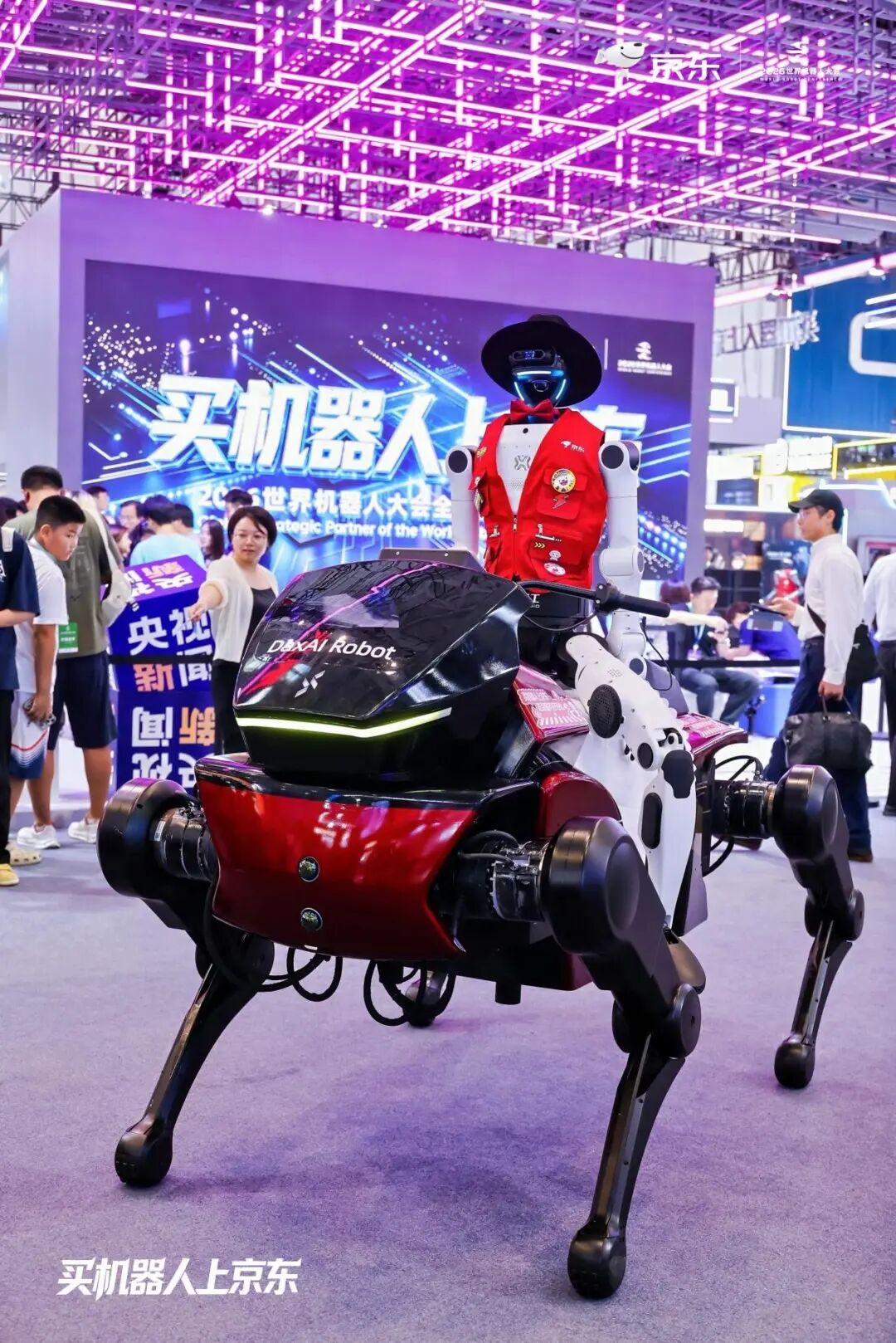
Different from the technology-focused demonstrations of a single brand, JD presents a complete picture of the future city in its exhibition area: there is a full-range training system for robots, covering everything from data to models, and from component procurement to maintenance services; there are real industrial park scenarios such as industry, logistics, retail and housekeeping; there is also future life that combines cyberpunk vibes and everyday warmth, such as exoskeletons that allow the elderly to enjoy the fun of mountain climbing, and small humanoid robots that can accompany children full-time and support tech-enabled childcare.
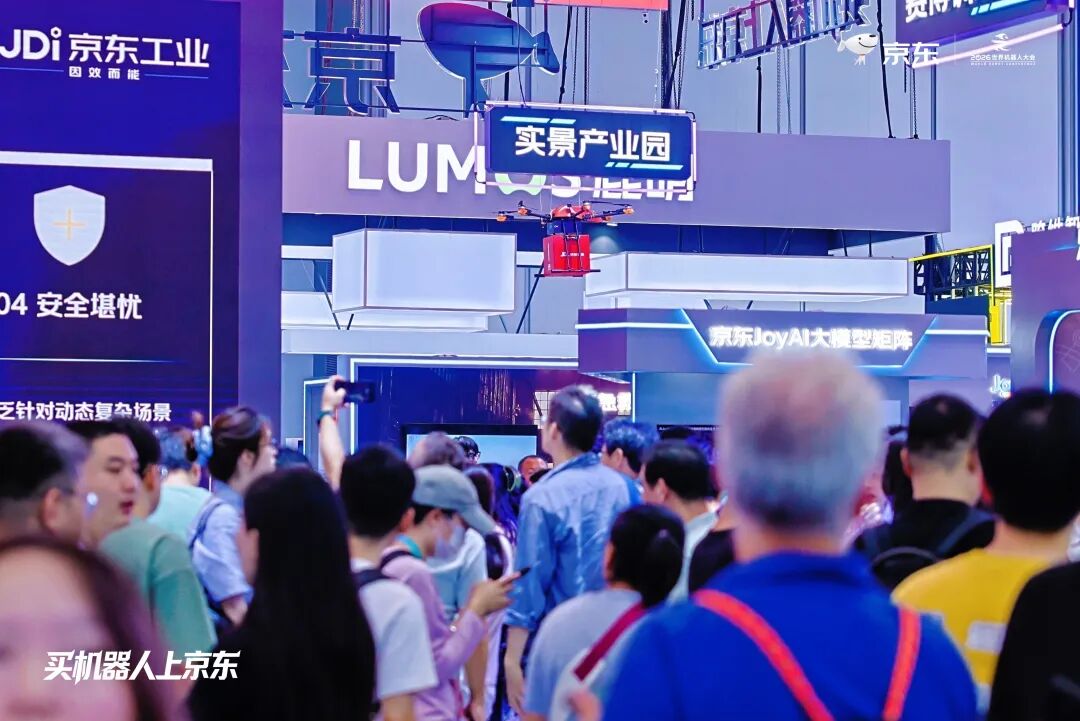
When this picture will become a reality — 10 years, 30 years or 50 years — the answer remains unknown. Technological maturity is only one aspect, and it depends more on when the industrial capabilities that support the large-scale entry of robots into the real world will mature. JD's goal is precisely to shorten this distance.
When robots leave the laboratory and expand from one unit to a thousand or ten thousand units, the problems also transform. Capabilities scattered across the industrial chain, including data, model training, component procurement, sales, fulfillment and after-sales services, will hardly generate scale effects if every company builds them from scratch independently. How to organize these capabilities into a reusable industrial infrastructure is the key for robots to move from "being manufacturable" to "being able to operate on a large scale".
Robots step off the stage, and JD officially enters the arena.
The Starting Point of Large-scale Application and the Dilemma of Industrial Infrastructure
"Two years ago, people were asking whether this track was viable at all, and now they are more concerned about how to develop this track well," the head of JD's intelligent robotics business summarized the change in industry sentiment to 36Kr.
The market has already shown some positive signals. On JD's platform alone, the sales of humanoid robots during this year's 618 shopping festival have increased by more than 10 times year-on-year. This figure shows that consumers and enterprise customers are rapidly getting access to robots, but high growth does not directly equal industrial maturity. For a new category that is still in the low penetration stage, the rapid rise in sales mostly means that market attention has been drawn, and whether product value, user experience and service system can sustain long-term operation still needs to be verified by the market.
Interestingly, the head of JD's intelligent robotics business is unwilling to call the current stage a commercialization inflection point. He believes a more accurate description is that "large-scale development has just reached its starting point".
But the "starting point" does not mean all robots stand on the same starting line. Different categories vary greatly in technical maturity, application scenarios and commercialization progress. Combined with platform data, he believes robot commercialization can be divided into several levels.
Consumer-grade robots in fields such as education and family companionship have entered households and begun to undergo tests on price, interactive experience and after-sales services; delivery, cleaning and some industrial robots can already be used in vertical tasks, but the costs of customization, deployment and operation and maintenance still restrict return on investment; general-purpose robots that can handle open household environments and long-sequence tasks are still constrained by model capabilities, data quality, and the coordination between the "cerebrum", "cerebellum" and the robot body.
Regardless of the difference in technical maturity, all of them face a common problem when entering the market: there is still a lack of a sufficiently robust industrial support layer between the prototype, the commercial product, and stable long-term service.
This gap was not prominent in the past. In the technical verification stage, the scale and volume of robotics projects were relatively limited, and many problems could be solved by the founding team and on-site engineers. As orders increase, the costs that were previously concealed begin to emerge intensively.
In other words, once the industry enters the large-scale development stage, problems must be solved by systematic capabilities.
Compared with mature consumer electronics products, the complexity faced by robots runs through both the production and usage ends. Upstream, component specifications are not yet fully unified, and the procurement scale is limited, so the mass production process still faces problems of cost and supply chain efficiency; downstream, after a robot arrives at the customer site, it often needs to go through surveying, adaptation and continuous operation and maintenance, and completing the transaction is only the starting point of the service chain.
The problem is that robots are still in the low-sales stage, yet they already require a heavy-asset, service-intensive industrial network. These capabilities share a similar cost structure: a network needs to be invested in first, and then the cost can be amortized by a sufficiently high usage density.
Even if a maintenance center only serves a small number of devices, it needs to be equipped with venues, engineers, testing equipment and spare parts; even if offline stores have limited customer flow, they still need to cover the costs of rent, demo units and professional explanations. The annual delivery volume of leading enterprises is still measured in thousands or tens of thousands of units, and the devices are scattered across the country and even overseas, so a single service outlet can hardly achieve sufficient service density.
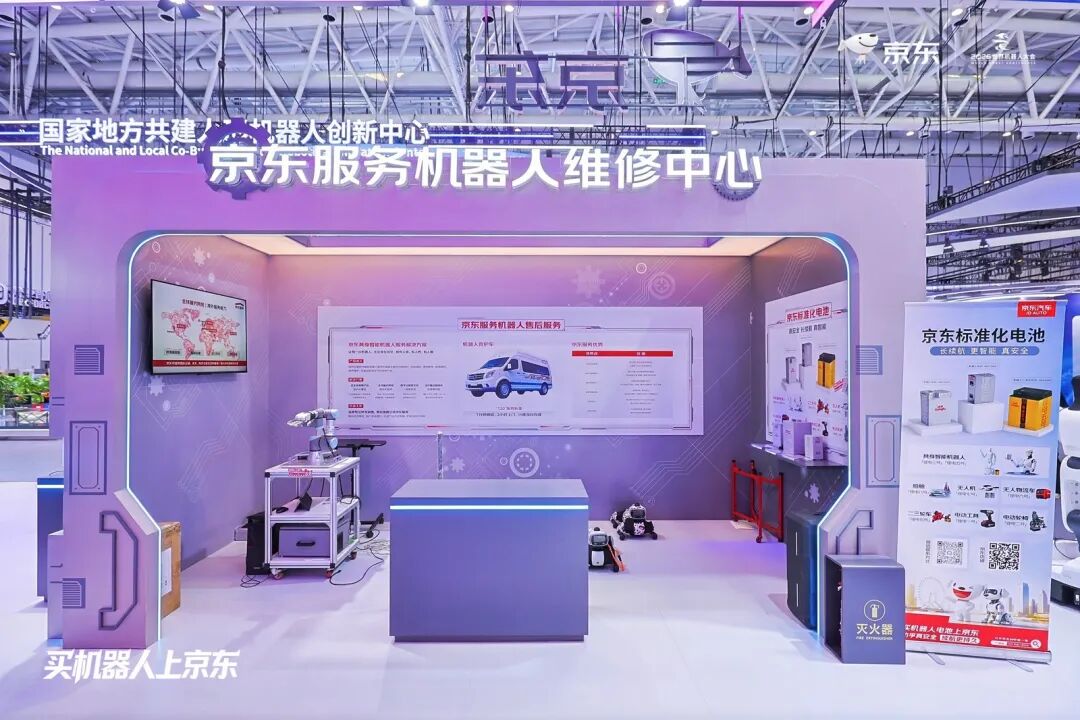
If every brand builds its own maintenance outlets, spare parts warehouses, channels and service teams repeatedly, the limited sales volume can hardly amortize the high fixed costs, which will eventually lead to low network utilization and high per-unit service costs. If these services are handed over to scattered third-party providers, the industry will face inconsistent technical capabilities, spare parts efficiency and service standards.
Repeated construction not only brings cost problems, but also further squeezes the R&D resources of robotics companies, whose core competitiveness still comes from the robot body. Commercialization is supposed to provide cash flow for technical R&D, but the closer to the market, the more resources sales, channels, delivery and services will occupy, which may in turn consume the organizational capacity of tech companies in the early stage.
When more and more companies get stuck at the critical step of turning technology into market value, what is exposed is not just individual operational shortcomings, but the immaturity of industrial infrastructure.
The problem thus shifts from "how robotics companies can sell their products" to an industrial division of labor issue: who should build the underlying infrastructure that all enterprises need, but can hardly be independently constructed by a single brand?
Platforms and Enterprises: Who Will Build the Infrastructure
The value of platform-based enterprises does not lie in doing all the work for robotics companies, but in connecting the common links that were originally scattered inside different brands.
The first step is to organize the unformed market demand.
At the end of last year, Unitree Technology opened the world's first offline experience store in Beijing JD MALL Shuangjing Store. The two sides adopted a linkage model of online JD self-operation and offline physical experience: Unitree provides products, demo units and professional technical support, while JD provides venues, customer flow, transactions, warehousing and distribution, and after-sales services.
On the surface, this is a channel cooperation. But for a category whose definition is evolving rapidly, the value of channels goes far beyond being a sales entrance. Questions such as what consumers are willing to pay for, which groups different robots are more suitable for, and what scenarios actually exist, all remain to be verified.
Therefore, the platform connects brands and products on one end, and real users on the other, undertaking the task of making scattered demands identifiable.
Unitree's prospectus shows that JD is one of its largest customers during the reporting period, and the cooperation between the two sides has extended from consumer-grade robot sales to a wider range of commercial scenarios. This directly demonstrates that large platforms are not only sales channels, but also beginning to become important demand bearers.
This is exactly why JD has become a sample worthy of observation.
On the one hand, the advantage of JD Retail's mixed model of self-operated and third-party operations has turned warehousing, logistics, supply chain and service networks into a cross-brand shared system. Its entry into the robotics industry is equivalent to extending this organizational capability to a new category that has not yet achieved large-scale development.
At present, JD has cooperated with more than 200 robot brands through the self-operated model, with the platform undertaking product operations, customer services, warehousing and distribution, fulfillment and part of after-sales services. The searches, consultations, transactions and evaluations generated by about 700 million consumers and 8 million enterprise customers can be restored to product demand.
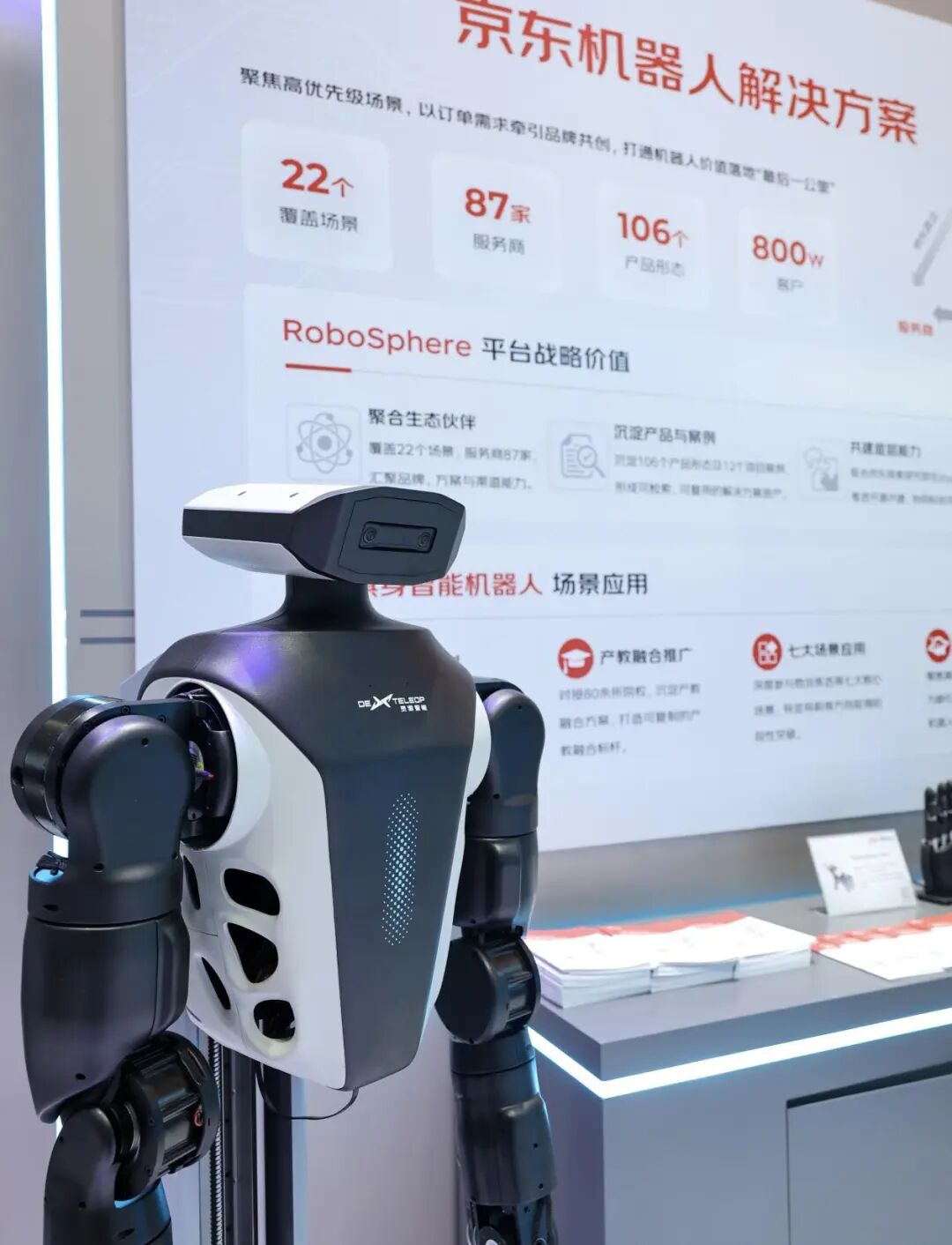
The head of JD's intelligent robotics business summarizes this path as "going back to the users", which essentially answers a more pre-emptive question: what kind of robots do users really need?
A very interesting detail is that JD has divided robots of different uses on the platform into 16 detailed categories according to user demands. Sometimes when brands themselves have not figured out which customer group to target, JD will help them clarify their positioning first. JD is becoming a pathfinder in this emerging consumer market.
After the demand is organized, the next step is to scale up the supply. JD has therefore extended its layout to industrial links such as supply chain, services and data.
Looking upstream, JD is trying to aggregate scattered common demands in the industry. Battery is a typical link in this regard. Different manufacturers define their own standards for safety, capacity, size and communication protocols, and the procurement volume of a single brand is limited, which not only leads to weak bargaining power, but also makes it difficult to establish stable inventory. As one of the strategically announced initiatives, JD is working with more than 20 industry partners to promote the standardization of robot batteries, and aggregating demand through centralized procurement, warehouse stocking and batch pickup.
For an industry that has not yet achieved million-level shipment volume, standardization is not only the result of maturity, but also a prerequisite for large-scale development to take place.
After the supply is scaled up, robots still face another key problem: how to operate stably in the real world for a long time?
JD has currently built 8 robot maintenance centers in China, with maintenance services expanded to Europe, the Middle East and North America. It also plans to build 80 RoboBase robot bases in the next five years, integrating component production, complete machine pilot testing, secondary development, maintenance and recycling into a full lifecycle service system, with relevant capabilities covering more than 100 countries and regions around the world.
The logic is similar to JD's construction of logistics infrastructure: first form a network through heavy investment, then allow multiple brands and categories to share it, and build a service scale that a single brand cannot support at the current stage in advance.
Whether this set of service capabilities can truly operate smoothly remains to be tested in on-site environments with high intensity and frequent unexpected failures.
At this year's Robot Marathon, the "robot ambulance" running behind the No. 120 robot once became a hit on online media. At the upcoming Humanoid Robot Games, JD's "Robot Home" and robot maintenance personnel will also appear on the field to test their capabilities in actual combat.
Finally, to embrace its own "ChatGPT moment", the robotics industry also needs to get through the data barrier.
Embodied intelligence requires a large amount of high-quality data from the physical world, but obtaining real data is far more difficult than obtaining internet data. Internet models can learn from existing texts and images, while robot data must be generated through the operation of devices in real environments. JD happens to have a large number of real scenarios, such as actual business systems including JD MALL, 7FRESH, logistics supply chains and unmanned pharmacies.
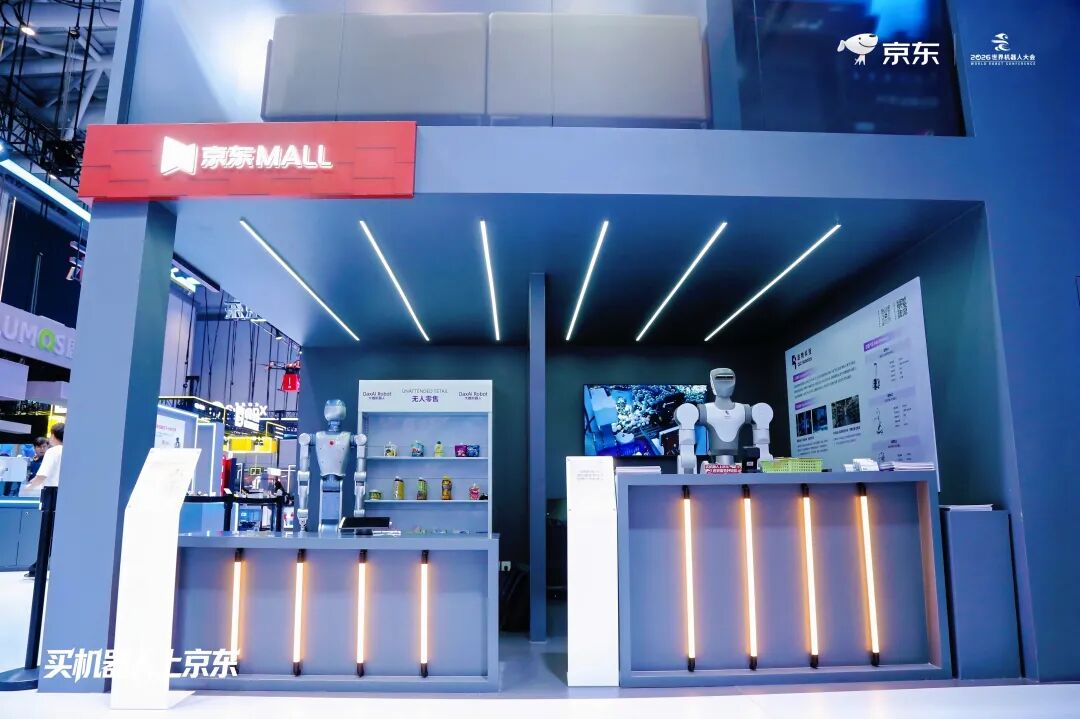
In addition to robot operation data, high-quality human operation data is also equally important. For example, the operation processes formed by JD's housekeeping staff in actual work such as cleaning and organizing can be collected and labeled to become samples for robots to learn real tasks.
JD is clearly aware of this point. In its strategic layout, it also plans to collect more than 10 million hours of real scenario data in total within two years, and support multi-modal interaction and scenario adaptation of robots through capabilities such as JoyInside.
Putting all these initiatives together, JD's robotics layout is not a simple superposition of several capabilities. On the one hand, it is reusing its existing retail, supply chain and service networks to connect market demand; on the other hand, it is re-building new infrastructures for the robotics industry, including standards, RoboBase and real scenario data.
The latter in particular almost covers the full implementation process of a robot from production to application: scenarios and data solve the problem of "how to train and iterate", standards and supply chains solve the problem of "how to manufacture on a large scale", and RoboBase solves the problem of "how to deploy and operate for a long time", thus truly establishing the industry's public infrastructure.
As robots move towards large-scale application, the industry's demand for infrastructure construction has begun to emerge. It not only needs to reduce commercialization costs, but also shorten the distance between technical iteration and market feedback.
Robots Enter the Real World
As robots are put into practical use, industry competition has begun to shift from "single-point capability" to "continuously completing real tasks".
Embodied intelligence ultimately creates value through actions. Hardware is only the carrier of capabilities. Whether tasks such as handling, cleaning, tour guiding and production can be completed continuously determines whether the product is truly usable. Only by entering the real environment can robots constantly expose problems, accumulate data and improve user experience, thus forming a cycle between commercialization and technical iteration.
Judging from the layout disclosed by JD this time, its goal is not just to become the largest robot sales platform, but to undertake the supply chain, scenarios, data and services required after products enter the real world.
This gives JD's proposed "physical world operator" a more specific meaning. Robotics companies will continue to define the capability boundary of robot bodies and models, while JD tries to make these capabilities