Technology takes the lead while business development lags behind: Benmo Dynamics first brakes and then accelerates right at the entrance of the Hong Kong Stock Exchange.
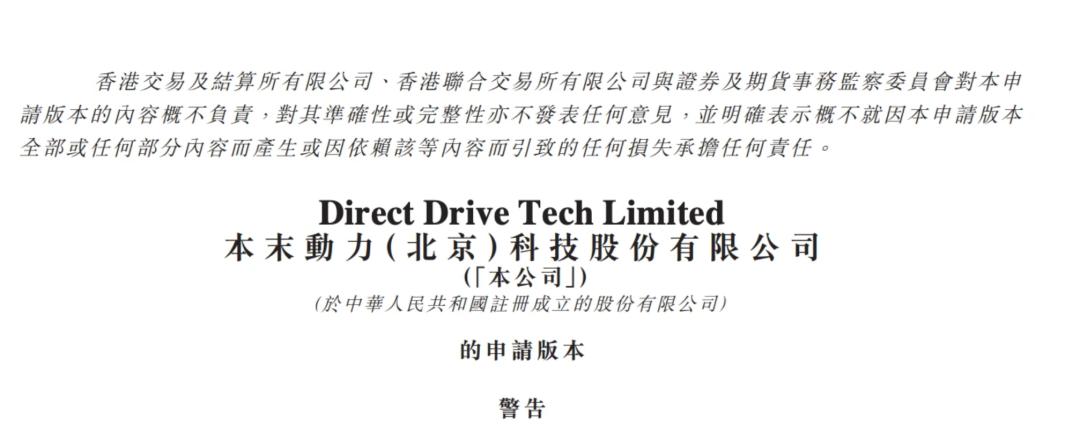
On August 19, 2026, Benmo Dynamics (Beijing) Technology Co., Ltd. submitted its prospectus for the second time to the Hong Kong Stock Exchange (HKEX), with CICC as the sole sponsor, planning to list on the Main Board of the Hong Kong Stock Exchange under the Chapter 18C Specialised Technology Companies regime.
Founded in 2020, Benmo Dynamics' founder Zhang Di studied under Li Zexiang, known as the "Godfather of DJI", and is backed by star institutions including Lenovo Capital, Legend Capital, Songhe Capital, SenseTime, and Horizon Robotics. It has completed 10 rounds of financing in five years, with a post-money valuation approaching 3.2 billion yuan. Relying on the direct drive technology that eliminates the reducer, Benmo Dynamics has carved out a niche in the fiercely competitive consumer robot power module market, ranking first in the direct drive segmented track with a 61.1% market share, with a total shipment of power modules exceeding 8.5 million units.
The other side of the glamour is equally glaring: continuous losses, long-term cash flow drain, and extremely high customer concentration, multiple red flags are lit at the same time.
Surface Logic: Hearing Validity, Market Window and Narrative Repair
It is worth clarifying that Benmo Dynamics did not go public directly after its first submission passed the hearing, and now the re-submission is a normal technical restart on the Chapter 18C specialised technology track of the Hong Kong stock market.
The hearing of HKEX only represents that the review has been passed, which does not mean the successful listing; if the enterprise does not start the prospectus, bookkeeping and listing process for a long time after passing the hearing, the original hearing document set will expire automatically over time, and it must update the latest financial data, operation progress and risk disclosure, and go through the review process again.
The timeline of Benmo Dynamics is exactly like this: it obtained the overseas listing filing of the China Securities Regulatory Commission on June 26, 2026, and disclosed the post-hearing prospectus on June 29, then remained inactive for nearly two months until it re-submitted the application on August 19. On the Chapter 18C track where unprofitable hard technology companies gather, this cycle of "passing the hearing, suspending issuance, updating materials, re-submitting the application" is a common rhythm, which has nothing to do with listing failure.
The system gives enterprises room to "wait", and the market environment determines whether they "need to wait". On March 9, 2026, Estun, known as the "top industrial robot player", was listed on HKEX with an issue price of HK$15.36, and 7 cornerstone investors subscribed for HK$523 million. Even so, it opened flat and moved lower on the first day, plummeted 16.02% below the issue price; Uleesai listed on the same day plunged 43.64%, and Zhaowei Machinery & Electronics, which focuses on the dexterous hand concept, fell about 20% from the issue price within a few days of listing. According to Wind statistics, among the 27 new shares listed in 2026, 10 have fallen below the issue price 5 trading days after listing.
When Benmo Dynamics passed the hearing in June, the overall sentiment of the Hong Kong stock market towards unprofitable hard technology targets was weak, the risk of breaking the issue price was high, and the robot track was experiencing valuation correction, making it difficult for the secondary market to match the high valuation accumulated by the enterprise in the primary market. A hasty issuance at this moment will easily lead to valuation inversion and the situation where old shareholders exit with losses. Rather than selling at a low price, it is better to wait for a more friendly issuance window — actively suspending the listing is essentially a wait that exchanges time for space.
During this buffer period of waiting for the window, the enterprise is not just passively waiting and watching. In the early hearing stage, institutional investors had many disputes over Benmo Dynamics' business positioning, profit model and commercialization realization ability: a company that supports a valuation of 3.2 billion yuan with a sweeping robot motor of about 30 yuan, why can it enjoy the treatment of a technology unicorn?
Delaying the issuance, updating the prospectus, and supplementing the latest operating data are the means for enterprises to try to repair the narrative, weaken doubts, and pave the way for the subsequent smooth issuance. The second submission can be regarded as a phased action of this narrative repair.
Deep-seated Dilemma: Structural Imbalance, Profit Stagnation and Commercialization Bottleneck
The real reason why Benmo Dynamics dare not issue rashly may lie in its long-standing structural shortcomings.
In 2025, Benmo Dynamics' revenue was 282 million yuan, of which robot power modules accounted for 97.4%, and it was still as high as 94.5% in the first half of 2026, and the consumer application scenario alone accounted for 82.3%. In other words, nearly 90% of Benmo Dynamics' revenue comes from consumer-grade direct drive modules such as sweeping robots, which is a business of "small parts" worth dozens of yuan. In contrast, the businesses that the capital market is really willing to pay for: the revenue of humanoid robot joint modules in 2025 was only 6.798 million yuan, and the wheel-legged complete machine was only 7.307 million yuan, with 240 units sold throughout the year. The imbalance of business structure has become the most intuitive shortcoming of Benmo Dynamics.
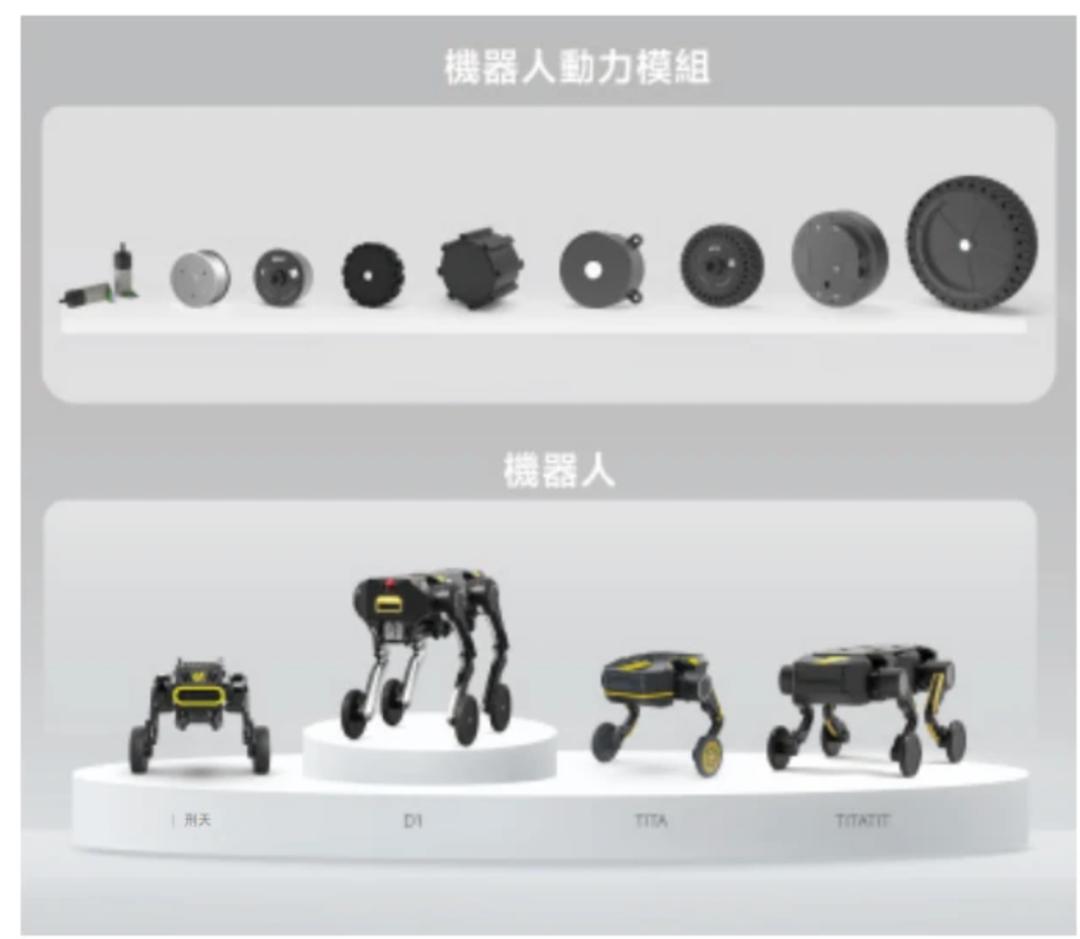
The complete machine is "well-received but not well-sold", and the root cause is that the market itself is too small. In 2025, the total revenue of the top five wheel-legged robot manufacturers in China was only about 125 million yuan, and the total revenue of the top five in the double wheel-legged track was about 28.8 million yuan. Even the leading players are in such a situation, and the whole industry is still in the stage of consumer awareness cultivation. The separation between the "hard technology story" and the "low-end component revenue" greatly reduces the recognition of Benmo Dynamics' technological attributes.
From 2023 to 2025, the proportion of revenue from the top five customers of Benmo Dynamics rose all the way from 67.0% to 85.7%; the largest customer contributed 120 million yuan in revenue in 2025, accounting for 42.8%, and further rose to 53.6% in the first half of 2026. In contrast, the proportion of the top five customers of its peer Leader Harmonious Drive is less than 35%, and no single customer accounts for more than 15%; the top five customers of Zhaowei Machinery & Electronics account for about 48%, and the largest one accounts for 21%.
Highly dependent on a single major customer, the bargaining power is naturally weak. The downstream price involution leads to the continuous decline of product unit price, and Benmo Dynamics can only sell at low prices to increase volume; customers default on payment, forcing the company to accept long account periods and advance funds for stock preparation. This also led to its accounts receivable and notes reaching 79.439 million yuan at the end of 2025, an increase of nearly 8 times compared with 2023. Revenue has risen, but cash cannot be recovered.
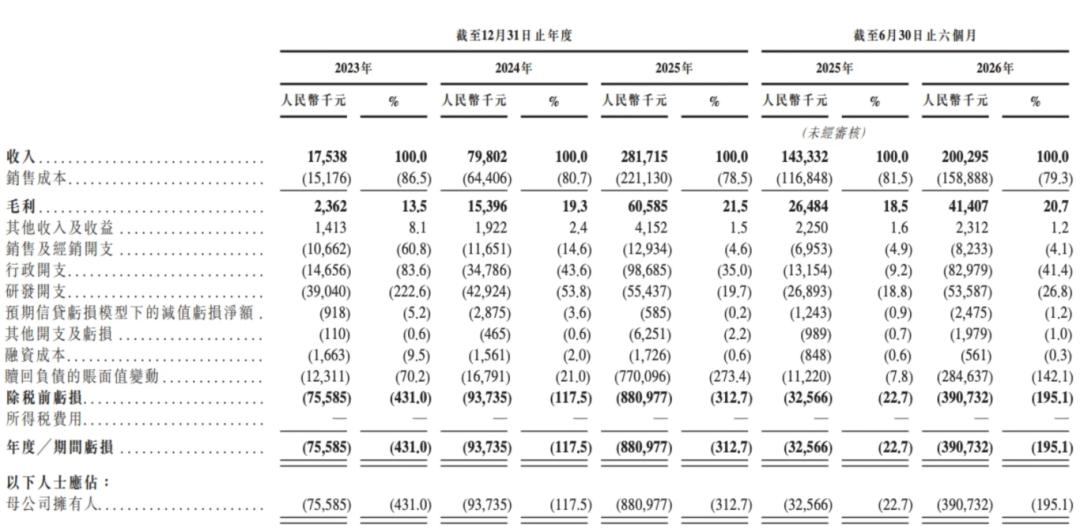
From 2023 to 2025, Benmo Dynamics' net losses were 75.6 million yuan, 93.74 million yuan and 881 million yuan respectively. During the reporting period, the net cash flow used in Benmo Dynamics' operating activities was -52.96 million yuan, -66.687 million yuan, -69.563 million yuan and -64.795 million yuan respectively. It is more intuitive to compare with peers: Leader Harmonious Drive's operating cash flow in 2025 reached 152 million yuan. The revenue has doubled in three years, but the cash flow gap has expanded year by year, and the operation is completely maintained by external financing.
R&D investment is also not abundant. The R&D expenditure in three years was 39.04 million yuan, 42.924 million yuan, 55.437 million yuan, and 53.587 million yuan in the first half of 2026. Although 345 patents and a 192-person R&D team have built the direct drive barrier, compared with the intensity of the arms race in the embodied intelligence track, this investment is not sufficient.
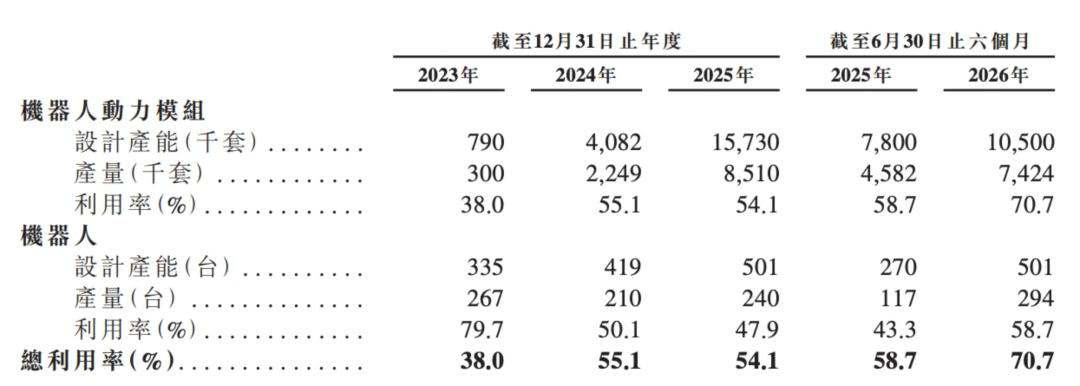
In 2025, the capacity utilization rate of Benmo Dynamics' power modules was only 54.1%, and that of the complete robot machine was 47.9%. More than half of the capacity was idle, the fixed cost could not be amortized, and the gross profit margin of 21.5% was under continuous pressure.
The more fundamental hidden worry lies in the technical route: the reducer-free direct drive solution adhered to by Benmo Dynamics is non-mainstream in the industry, and direct drive power modules only account for 3.9% of China's power module market, while the traditional reducer-equipped solution still occupies the absolute mainstream of 96.1%, with high uncertainty in technology implementation and a long commercial verification cycle.
The concentration of suppliers is increasing year by year, the dependence on the single domestic market, and the overseas localized layout is almost blank, Benmo Dynamics' overall anti-risk ability is weak. The superposition of multiple shortboards makes it difficult for the fundamentals to support the high valuation of the primary market — this is the core constraint for it to suspend the listing and re-submit the application to polish the conditions.
Ultimate Contradiction: Mismatch Between 3.2 Billion Yuan Valuation and Weak Fundamentals
From the perspective of capital and industry, the biggest contradiction of Benmo Dynamics comes to the surface: there is a serious mismatch between the high valuation expectation of the primary market and the weak fundamentals and weak realization ability seen by the secondary market.
In the past five years, Benmo Dynamics, riding the wind of the embodied intelligence track, has pushed its post-money valuation to nearly 3.2 billion yuan with the endorsement of leading capitals. According to Tianyancha data, Benmo Dynamics completed 10 rounds of financing in just five years. From 0.05 yuan per share in the 2020 seed round to 9.97 yuan per share in Series C, it has risen about 200 times in five years, and the pricing in the primary market is almost entirely bet on the long-term space of embodied intelligence.
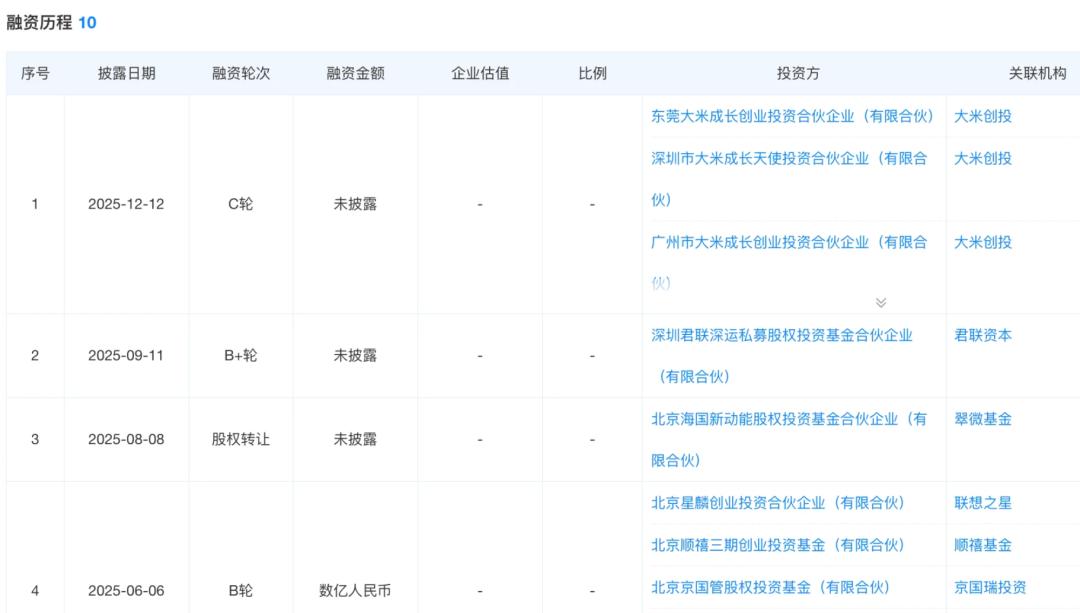
However, at the moment when embodied intelligence is cooling down, with a single revenue structure, weak profitability, slow commercialization, and doubtful technical routes, it seems much more difficult for such fundamentals to gain institutional recognition in the mature secondary market of Hong Kong stocks.
The gross profit margin is the most intuitive footnote: the overall gross profit margin in 2025 was 21.5%, which has improved significantly compared with 13.5% in 2023, but it is still at a low level among peers of precision transmission components; Benmo Dynamics has no advantages in growth certainty, profit recovery space, and technology implementation speed, and the doubt of valuation bubble lingers.
As of the end of June 2026, Benmo Dynamics' net current liabilities were 1.39 billion yuan, and net liabilities were 1.347 billion yuan, of which trade payables were 151 million yuan, an increase of 88.429 million yuan over the beginning of the year. In addition, the preferred share redemption terms continue to exert pressure, and primary market investors also urgently need a smooth exit channel.
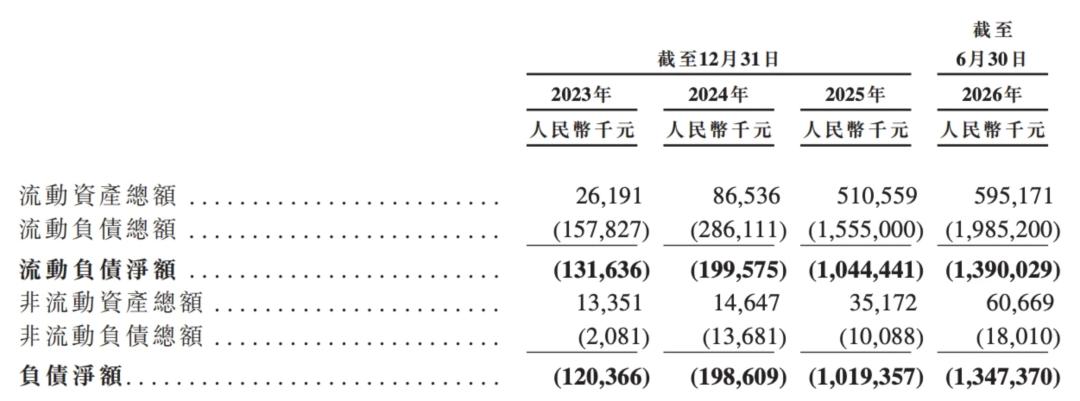
Suspending the listing and submitting the application for the second time is essentially a passive risk hedge: on the one hand, it avoids the risk of breaking the issue price in a weak market, preventing valuation inversion from hurting old shareholders; on the other hand, it uses the buffer period to optimize operating data, improve business structure, strengthen the implementation results of robot business, and try to narrow the gap between valuation and fundamentals. But we must be clear that whether this "exchange time for space" plan works depends on three verification points: whether the direct drive penetration rate can truly expand from 3.9%, whether the embodied joint module can take over the growth curve, and whether customer concentration can be effectively dispersed.
Benmo Dynamics' story is a typical sample of "technology first, business lagging behind" in the wave of embodied intelligence. The technical barrier of direct drive is real, and the 61.1% market share in the segmented track is enough to prove the team's strong R&D strength; however, commercial revenue is heavily dependent on low-value-added sweeping robot motors, and new businesses that support valuation imagination have not been scaled up for a long time, and the situation of dual loss of profit and cash flow cannot be solved in the short term.
Even if it is successfully listed on the Hong Kong Stock Exchange, if it cannot quickly reduce the dependence on a single business, promote the commercialization of embodied business, and repair profit and cash flow, Benmo Dynamics will still be trapped in the situation of long-term valuation pressure and weak growth. The second submission is only a node in the financing process. The real key to victory lies in the realization ability of the second growth curve and the substantial breakthrough in operating quality, which not only tests the founding team, but also tests the patience and pricing logic of the primary market.