A 65-year-old engineering professor, an entrepreneurial experiment spanning more than 30 years: 287 incubated companies with a total valuation of 500 billion yuan.
Against the grand narrative of China's transformation from a "manufacturing giant" to an "innovation powerhouse", the group led by Li Zexiang has launched an experiment to "mass-incubate" hard technology entrepreneurs.
The Songshan Lake International Robot Industry (XbotPark Robot) Base covers an area of over 60,000 square meters with a construction area of 110,000 square meters, directly facing Huawei's Sanyapo campus — this coincidental location choice is not surprising on Dongguan's industrial map. More than 100 entrepreneurial teams are exploring here at the same time, making the entire park look like a miniature university: facilities such as classrooms, laboratories, shared factories, dormitories, canteens, libraries, stadiums, and children's centers are all available. The existence of the last facility is particularly meaningful, as it implies that hard technology entrepreneurship is destined to be a protracted war.
Walking through the corridor leads to the base's shared factory. In the workshop more than 9 meters high, industrial fans hum and rotate, forming a symphony with the operating sounds of various equipment. In the gaps between the equipment, there are service windows for suppliers such as 3D printing, with models and various parts displayed at the door, which are more like a demonstration of sincerity: here, all the links required for an idea to turn from a drawing into a physical object are compressed within a walking distance.
This is an "ideal kingdom" created by Li Zexiang, a professor at the Hong Kong University of Science and Technology, and two other co-founders with the proceeds from selling part of their DJI shares.
Jim Collins, a famous American management expert and author, wrote a passage in Built to Last: Top-tier leaders do not "tell the time" (build a great company), but "build a clock" (create an ecosystem that can continuously produce great companies). The former is a temporary success, while the latter is institutionalized vitality.
On the map of China's hard technology entrepreneurship, Li Zexiang is exactly such a "clock builder".
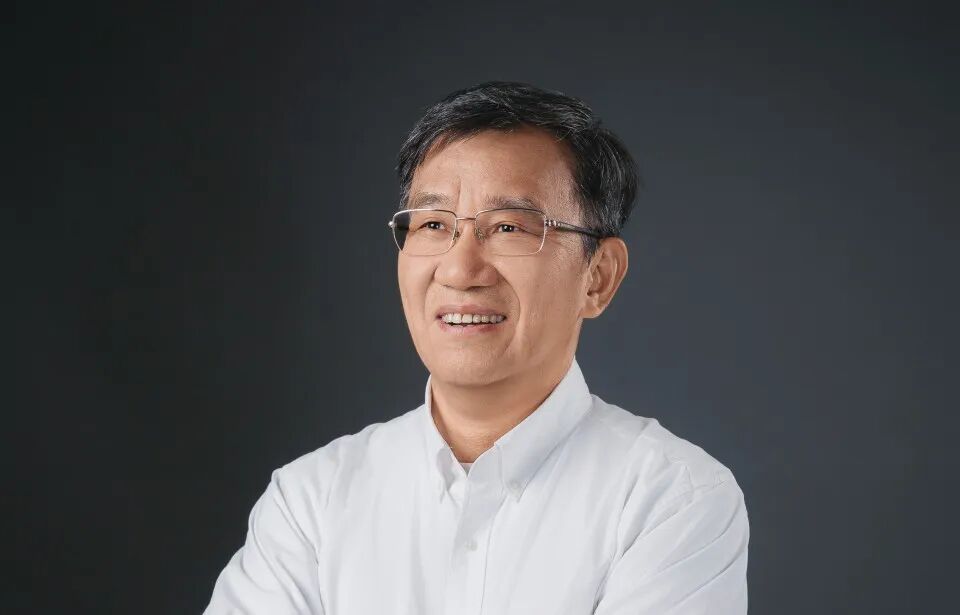
Photography: Deng Pan
He is 65 years old this year, not tall, and slender. Standing among a group of post-90s entrepreneurs, he looks more like a head teacher surrounded by students on a spring outing — which is actually true. In the portrait photo on XbotPark's official website, he wears a neatly ironed white shirt, but holds an industrial controller with a red button in his hand, in a natural posture as if it is not a machine, but a coffee cup he has carried with him for many years.
If you pass him by on a university campus, you would think he is just an ordinary engineering professor, with gray hair, a gentle smile, and a Hunan accent. It just so happens that more than 200 hard technology companies stand behind him.
In fact, Li Zexiang's identity is so complex that it cannot be defined by a single label — in addition to being a university professor, he is also the founder of Googol Technology, an early mentor of DJI, the initiator of the XbotPark Robot Base, and the dean of the Shenzhen Institute of Innovative Technology. But under all these labels, he has spent more than 30 years exploring the same proposition: in China, can we systematically "manufacture" hard technology entrepreneurs and hard technology brands with global competitiveness through systematic methods?
Behind this proposition is a series of essential questions: Are entrepreneurs born, or can they be cultivated? How to bridge the gap between engineering education and industrial demand?
These questions precisely respond to one of the most urgent strategic propositions in China today.
The outline of the 15th Five-Year Plan clearly states: "Implement the dominant position of enterprises in technological innovation decision-making, R&D investment, scientific research organization and achievement transformation and application, and promote the deep integration of innovation chain, industrial chain, capital chain and talent chain", "Deepen the integrated reform of education, science and technology and talents, strengthen planning connection, policy coordination, resource coordination and evaluation linkage, and promote the positive interaction between independent scientific and technological innovation and independent talent cultivation."
Building an innovation platform system with deep integration of "industry-university-research-application", so that the intelligence of universities, the demands of the industry, the power of capital, and the resources of the government can generate chemical reactions in the same system, against the grand narrative of China's transformation from a "manufacturing giant" to an "innovation powerhouse", Li Zexiang and his practice in Songshan Lake provide a sample worthy of research.
Li Zexiang has established a regional science and innovation ecosystem of "education, talent, science and technology innovation, industry". Up to now, this system has incubated more than 280 hard technology enterprises in total, with a total valuation of over 500 billion yuan, of which 4 are listed, and 12 have grown into unicorns or quasi-unicorns. Narwal, EcoFlow, Hai Robotics, Benben... Behind these names, there is a common growth track: young people with entrepreneurial dreams walk into XbotPark, learn about the entrepreneurial process and the pitfalls that predecessors have stepped into through the science and innovation training camp, form teams, find directions, and gradually develop into leading enterprises or single champions in their respective niche tracks with the company of entrepreneurial mentors and the support of the supply chain.
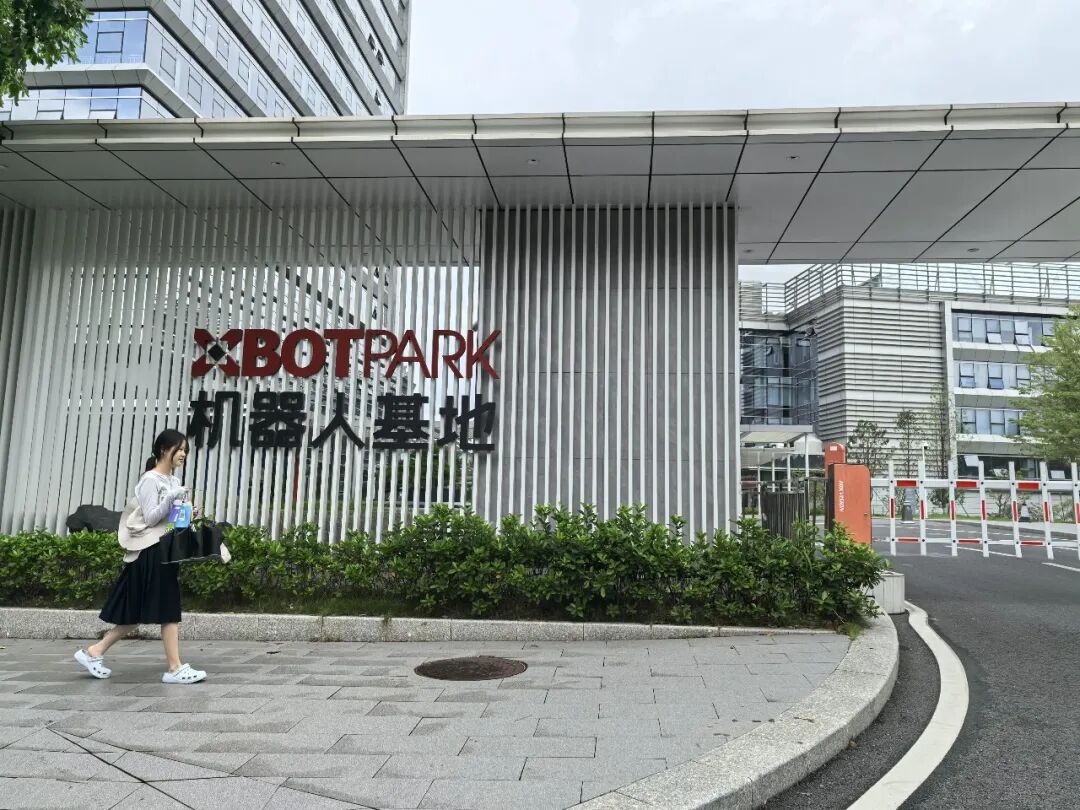
Songshan Lake XbotPark Robot Base. Photography: Deng Pan
Mi Lei, founding partner of CAS Star, put forward a judgment in The Hard Technology Wave: The second half of hard technology competition will shift from quantity catching-up to quality transcendence, that is, to further increase the density of talents, capital and resources. However, geniuses cannot be "shouted" out by slogans, nor can they be "mass-produced" by a uniform model. The more outstanding talents are, the more suitable soil they need for their growth. Very often, they need a more relaxed academic environment, a more stable support mechanism, and the society to maintain enough patience for exploration, trial and error, and even failure.
Against this background, what is more worth exploring behind the data is: What is the underlying logic of this ecosystem? What "bottleneck" links in hard technology entrepreneurship have its talent selection criteria, education experiments, incubation models, and supply chain empowerment solved respectively? Can this ecosystem be replicated?
Building the "Infrastructure" for Hard Technology Entrepreneurship
Hard technology entrepreneurship in the early stage needs to solve two main types of problems: product definition and supply chain. To "solve problems", the support of the supply chain is indispensable. Li Zexiang also emphasized that "the shared factory that integrates surrounding supply chain resources is one of the greatest competitive advantages of our ecosystem. In terms of talents, technology and market, some countries may be stronger than us, but we can iterate quickly, boldly try and make mistakes, and it does not matter even if we make errors."
How strong is the supply chain capability of the Greater Bay Area? Li Zexiang once cited an example: In the early days, when Wang Tao came to Shenzhen to make product prototypes, there was a machining factory right next to the restaurant, and the sample was ready by the time he finished his meal. If he did this in Hong Kong, China, it would take at least a week to finish, and in the US, it would take no less than a month.
In the early days of Songshan Lake, there was no shared factory, and it relied on the resources accumulated by Li Zexiang over years of entrepreneurial incubation. Zeng Lin, the person in charge of the base's shared factory, revealed: "Many of our partner factories have known Professor Li for more than 20 years, and some have been in communication with him since the era of Googol and DJI."
Entrepreneurs incubated in the base start their businesses with the supply chain resources recommended by senior alumni from Googol, DJI and other enterprises, and share resources layer by layer. Deng Guojun, consultant of the Songshan Lake Base, emphasized that a sweeping robot may have 1000 components, and you cannot only find one supplier for each component, you need at least three. It is extremely difficult and time-consuming for young entrepreneurs to find 3000 suppliers on their own.
After the shared factory was completed in 2023, the situation changed. The base integrated the supply chain resources accumulated over the past decade into a physical network. "We require these supply chain companies to have booths in the base, and even have engineers on site." Li Zexiang said, "In the past, you might need to visit more than a dozen suppliers to make a sample, but now you can get everything done on this single floor."
The shared factory model took two to three years to polish into shape. When it was first launched, Zeng Lin and his team considered building a large Foxconn-style factory, but later gave up the idea. Because the base serves startup teams with different products and different demands, what they need is not one factory, but a collaborative network of ten, hundreds, thousands of factories. "We set a clear idea: in the early stage, we build facilities ourselves to meet the diverse demands in the prototyping stage; in the later stage, we rely on integration to connect all resources across the industrial chain." Zeng Lin said.
At present, the base has connected with hundreds of suppliers, and more than 100 have reached cooperation agreements. Zeng Lin said they do not pursue a large number of suppliers, because too many suppliers will increase management costs, and providing too many options for startups will make them confused, so precise matching is a better choice.
In the early stage of cooperation, all parties will make the factual conditions clear: first, check whether the technology matches; second, check the service positioning; third, check the willingness to cooperate. "You have to recognize our philosophy, be willing to accompany startups for a long run, and be able to endure loneliness; those who only come for orders can hardly cooperate well with us." Zeng Lin said.
The establishment of the shared factory has greatly made up for the shortcomings of startup teams. In Zeng Lin's eyes, compared with large companies, small companies have the advantages of bolder technological innovation and more innovative points, but they lack the knowledge of the whole supply chain, the support of a complete development team, as well as mature experience and methodology. What the shared factory needs to do is to allow startup teams to focus on the technology and market they are good at in the initial stage, while links such as supply chain, manufacturing and procurement are supported by the shared factory.
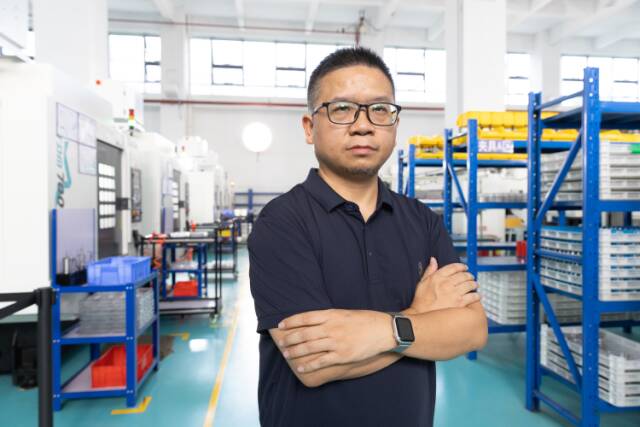
Zeng Lin, Head of the Base Shared Factory. Photography: Deng Pan
However, Zeng Lin also encourages entrepreneurs to find suppliers by themselves. "You look for suppliers on your own, and we also look for them, then we compare the actual results together." This not only allows entrepreneurs to have first-hand experience, but also makes them recognize the professionalism of the supply chain through comparison, "it is not as simple as searching online and finding a name". The simultaneous progress of the shared factory is equivalent to a fallback mechanism.
He insists that entrepreneurs go through the whole process in person instead of saving them the steps directly. Because this is something that requires practice, the base "teaches them to fish" to help them learn and grow, so that the founder's vision and thinking can be improved in the process.
The hardest part here is the direction decision in the early stage. "Once you make a wrong decision, you will have to go back and redo the work later." Zeng Lin said that a large part of the shared factory's work is to help entrepreneurs make technical judgments, discuss with them, conduct on-site inspections, and evaluate solutions according to product demands and market positioning, with some suppliers participating in the process as well.
But the complexity of the supply chain determines that things cannot always go smoothly. Zeng Lin cited the example of a team making health sports products, "the first generation of products had three molds opened just for the soft shell".
The first time the team found a manufacturer on their own, but the supplier's technical capability was insufficient, and the mold was found to be not suitable for mass production after being opened. When Zeng Lin took over the project, the first batch of goods was to be shipped to Europe and the shipping schedule had already been set. In order not to delay delivery, the shared factory quickly found a second supplier, and the prototyping went smoothly, but the yield rate could not be improved during mass production, which meant they lost money for every product they made. The startup team could not afford the extra cost, and the shared factory was also stuck in the middle, so they could only move their bedding to the factory, live and eat with the workers, finish the delivery first, then spare time to find a third factory to solve the problem.
There are many similar problems. Zeng Lin's experience is that startups have no experience and not enough manpower to advance multiple tasks in parallel. If the supply chain is not suitable, they will fall into a pit, cannot deliver goods, dare not take subsequent orders, and then fall into a vicious circle.
After reviewing the incident afterwards, Zeng Lin thought the problem was that they were too optimistic in the early stage, and the team did not do sufficient verification and screening. Now the whole process of the shared factory has been optimized: after receiving the demand, they first conduct a round of review with their professional standards. "No matter you think there is no problem, I will recheck it with our own methods. Find out the risks in advance and make solutions in advance, we cannot wait until the customer places an order to remedy the problem." Zeng Lin said.
Zeng Lin said this set of full-process specifications has been iterated for more than ten versions, "The shared factory itself is also a startup company, we are also learning, adjusting and iterating every day."
At present, the shared factory model is also being promoted, and cooperation is being negotiated in Chongqing, Shenzhen, Changsha, Xinjiang, Beijing, Guangzhou and other places. Zhang Yimeng, head of the XbotPark Chongqing Mingyue Lake Base, revealed that the Chongqing Outstanding Engineer College is under 2.0 construction, and its shared factory will officially operate in August this year.
Let Students Become Leaders
Allowing young people to complete the leap from drawings to samples in the base was Li Zexiang's original intention to build the shared factory. But the shared factory and supply chain resources are only one of the problems encountered in the entrepreneurial process. What is more critical is how to define the respective positions of students and teachers in the entrepreneurial process, who takes the lead and who rushes to the front — this is something Li Zexiang spent much longer time figuring out.
Li Zexiang's parents are both primary and secondary school teachers. He grew up living in the family courtyard of the school, listening to the bell for classes and the sound of reading. "It had quite an impact on me." He said.
In 1978, 17-year-old Li Zexiang was admitted to Central South University of Technology with the top score in the county, and the following year became one of China's first group of publicly funded undergraduate students to study in the United States. From Carnegie Mellon University to the University of California, Berkeley, and then to postdoctoral research at the Massachusetts Institute of Technology, after graduation, he went to teach at New York University. He stayed in the United States for 13 years — which was exactly the crucial period when the US industrial economy crossed the middle-income trap and moved towards the global peak, but during these 13 years, Li Zexiang always had a thought in his mind: "I want to come back and do something meaningful."
Before returning to China, he and a group of overseas students wrote a report to the relevant authorities, proposing to select a university as a pilot, gather a group of returned overseas talents, and run education according to their own concepts. But the timing was not ripe, and the plan was not realized.
The turning point came in 1992, when the Robotics Laboratory of the Chinese University of Hong Kong was recruiting a director and invited Li Zexiang for an inspection. Later, he joined the Hong Kong University of Science and Technology, which had been established for only one year.
At that time, the Hong Kong University of Science and Technology (hereinafter referred to as "HKUST") had just