Even at 5 yuan for two bottles, the products are barely moving off the shelves. Is the "happy soda" that was a signature refreshment for a whole generation about to exit the market?
Recently, according to reports from media outlets across multiple regions, in the summer of 2026, the promotional price of sugary carbonated drinks at some convenience stores in Wuhan is as low as 5 yuan for 2 bottles, yet few consumers are willing to buy them. The topic of "sugary carbonated drinks falling out of favor" even topped the trending search lists.

Summer, which is supposed to be the peak sales season, are sugary carbonated drinks really unsalable now?

01
Media Say Sales Are Slumping, But Financial Reports Show Growth
This is the most interesting part.
Terminal media are all reporting that sugary carbonated drinks are not selling well, distributors are stuck with overstocked inventory, and consumers are no longer buying them. But if you look through the financial reports of the two major companies, you will see a completely different picture.
First, take a look at The Coca-Cola Company. Its Q2 2026 financial report released on July 28 shows that its revenue reached 13.38 billion US dollars, a year-on-year increase of 7%. Its net profit hit 4.438 billion US dollars, up 17% year on year. Global unit case volume increased by 5%, with China being one of the core growth drivers. Unit case volume in the Asia-Pacific market rose by 8%, and the flagship brand Coca-Cola posted its largest quarterly sales growth in the past 17 years. Sugar-free Coca-Cola saw a 16% growth globally. Based on its Q2 performance, Coca-Cola raised its full-year performance guidance, expecting full-year organic revenue growth of around 5%.
Next, take a look at Swire Coca-Cola. Its 2026 interim performance report released on August 6 shows that its revenue in Chinese mainland reached 14.224 billion yuan, up 8.39% year on year. Attributable profit was 727 million yuan, a year-on-year increase of 24%. Total sales volume hit 1.149 billion standard cases, rising 11% year on year. The sales volume of soda drinks increased steadily, while drinking water and energy drinks achieved strong growth. Bradley HY, Chairman of Swire Group, said that the performance in Chinese mainland has improved significantly, benefited from stronger consumer demand and continuous investment in emerging channels such as e-commerce.
CEO Bradley Geise said during the earnings call: "In the Asia-Pacific market including China, we have achieved all-round sales growth in almost all beverage categories."
But on the other hand, the overall beverage market is indeed shrinking. Data from Nielsen IQ shows that the total channel sales of domestic beverages in May this year fell by 9.7% year on year, and offline channels dropped by 13.7% year on year. Data from the National Bureau of Statistics also shows that the national beverage output in the first half of the year recorded its first semi-annual year-on-year decline. The offline retail monitoring data from Mai Shangying shows that in the second quarter of 2026, the sales of sugary carbonated soda fell by 12.23% year on year.
What does this contrast indicate?
First of all, sugary carbonated drinks are declining, but carbonated drinks as a whole are not. Consumers no longer buy sugary cola, but they are still purchasing sugar-free cola, Sprite with tea, and prebiotic soda. Coca-Cola's sugar-free products grew by 16% in Q2, and flavored sodas grew by 4% — all of these are carbonated drinks, just with no sugar or reduced sugar. The soda sales volume of Swire Coca-Cola also maintained steady growth.
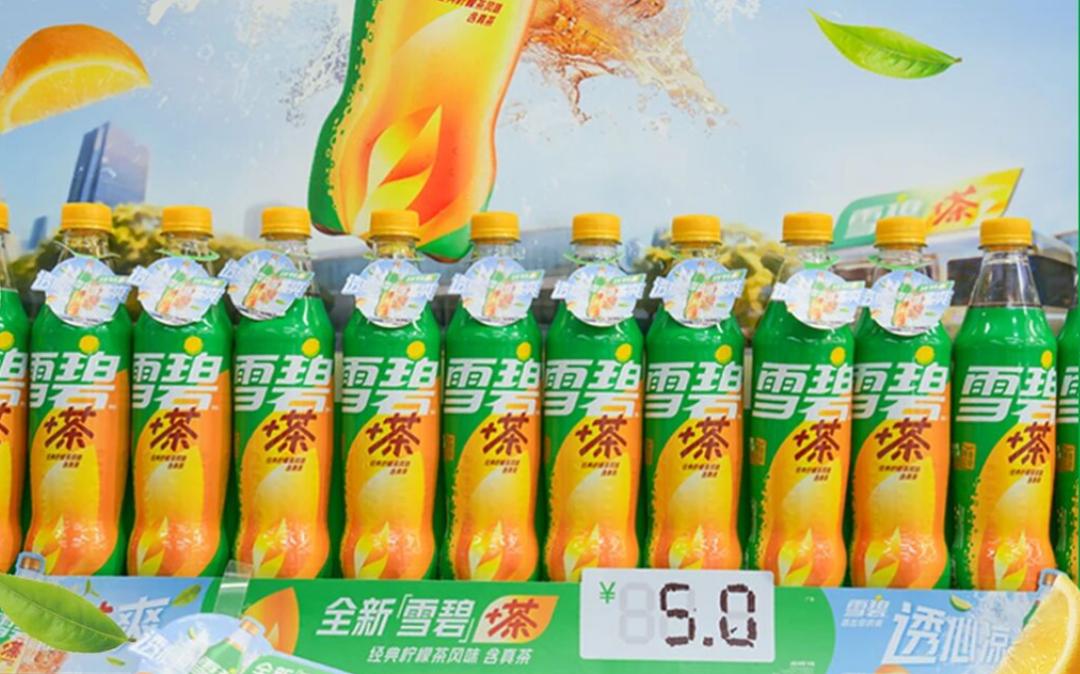
Secondly, the overall market is shrinking, but leading players are growing. This means small and medium-sized brands are ceding market share. When the market contracts, players with stronger brand power, deeper channel networks, and faster new product launch speed can seize the market share discarded by others. In the second quarter, Coca-Cola put two new green smart bases into operation in Kunshan and Guangzhou under Swire in the Chinese market, with a total investment of 3.25 billion yuan, and carried out large-scale integrated marketing campaigns during the World Cup. Swire Coca-Cola's EBITDA margin rose from 12.8% to 13.1%, with profitability improved rather than weakened.
Finally, the "unsalable" situation reported by terminal media does not contradict the "growing" figure in financial reports, as the two refer to different objects. What the media sees is the decline in offline sales of sugary categories, and data from Mai Shangying shows that the offline sales of soda category fell by 12.23%. But financial reports measure the sales volume of all categories across all channels. Sugary carbonated drinks are indeed shrinking, but sugar-free carbonated drinks, energy drinks and drinking water are making up for the gap. With the expansion of e-commerce and instant retail channels, the overall market is still growing. Bradley Geise also stated the truth: "Consumer sentiment in the Chinese market remains cautious, and consumer spending has become more rational."
The growth is real, but it is driven by seizing market share instead of expanding the overall market size.
02
It Is Not Carbonated Drinks That Are Collapsing, But Sugary Ones
First, let's talk about an easily overlooked fact: the overall size of the carbonated beverage market is not shrinking.
According to data from Euromonitor, the total sales volume of domestic carbonated beverages in the first half of 2026 increased by 4.3% year on year. But all the incremental volume comes from sugar-free products, while the sugary categories continue to shrink. From January to June this year, the share of sugar-free carbonated drinks in total carbonated beverage sales has risen to 41.2%, compared with less than 34% two years ago.
The offline sales of classic sugary cola and Sprite fell by more than 12% year on year in the second quarter. The sales volume of traditional soda in some community stores is less than half of that in the same period last year.
Consumers are not unwilling to drink soda, but unwilling to drink sugary soda.
According to a survey by China Youth Daily, 69% of consumers will check the ingredient list before buying beverages. The *2026 China Ready-to-Drink Beverage Health Trend Analysis Report* shows that more than 62% of respondents have strong willingness to buy low-sugar and low-calorie beverages. A 500ml bottle of sugary cola contains about 50 grams of sugar, while the World Health Organization recommends that the daily upper limit of added sugar intake is 25 grams. The sugar content of one bottle of cola directly exceeds the limit by twice.
The post-80s and post-90s generations have begun to control sugar intake for health preservation, while the post-00s and post-10s generations grew up checking ingredient lists, and have no nostalgic filter for traditional soda. According to the research report data from Zhongtai Securities, Generation Z aged 18 to 25 accounts for 45% of consumers, becoming the absolute main force of sugar-free tea consumption.
Sugar control is no longer exclusive to fitness groups, and has become a mass consumption consensus.
03
The Core Shelf Positions Are Taken By New Players
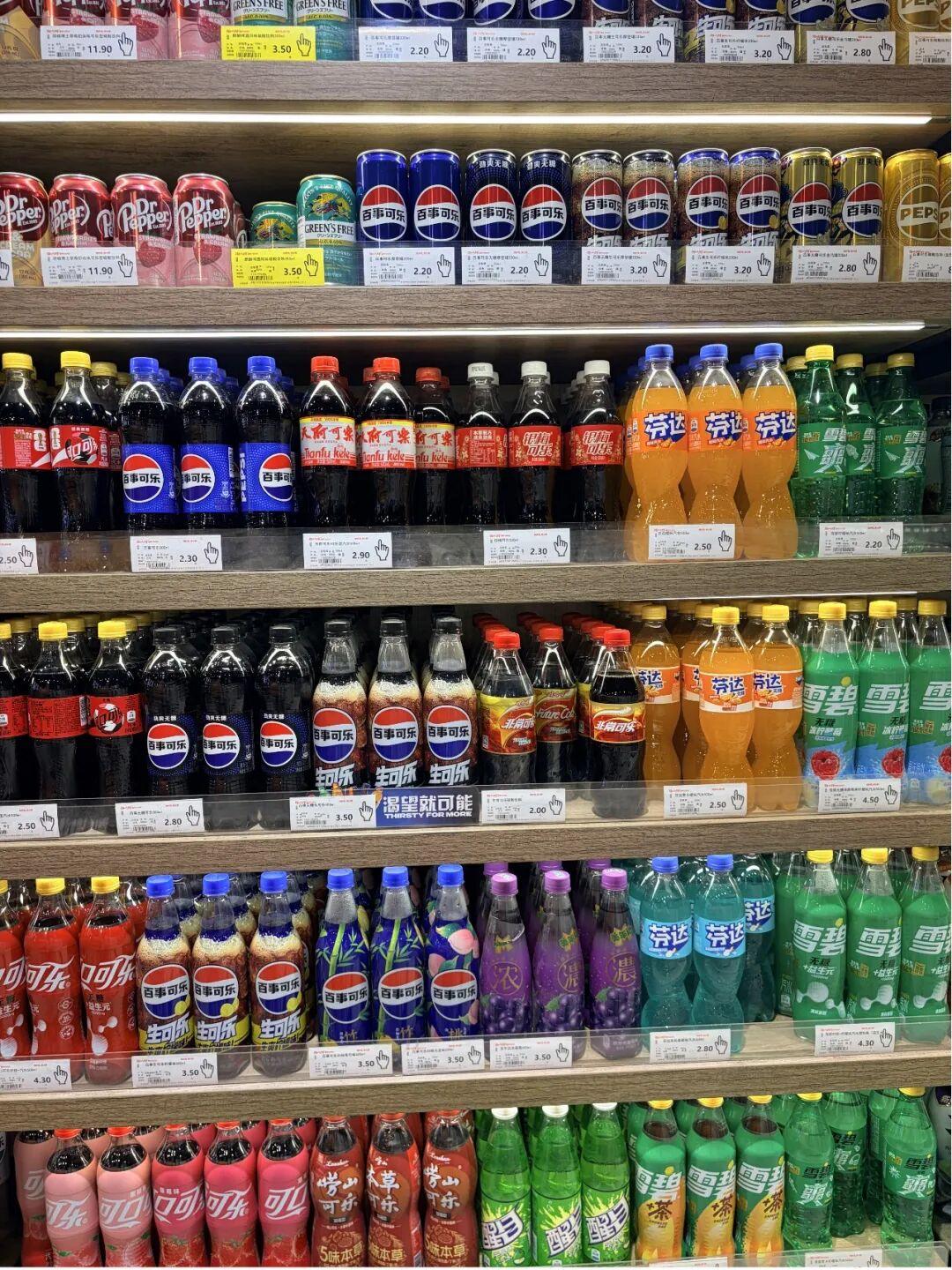
The display changes in terminal freezers best illustrate the situation.
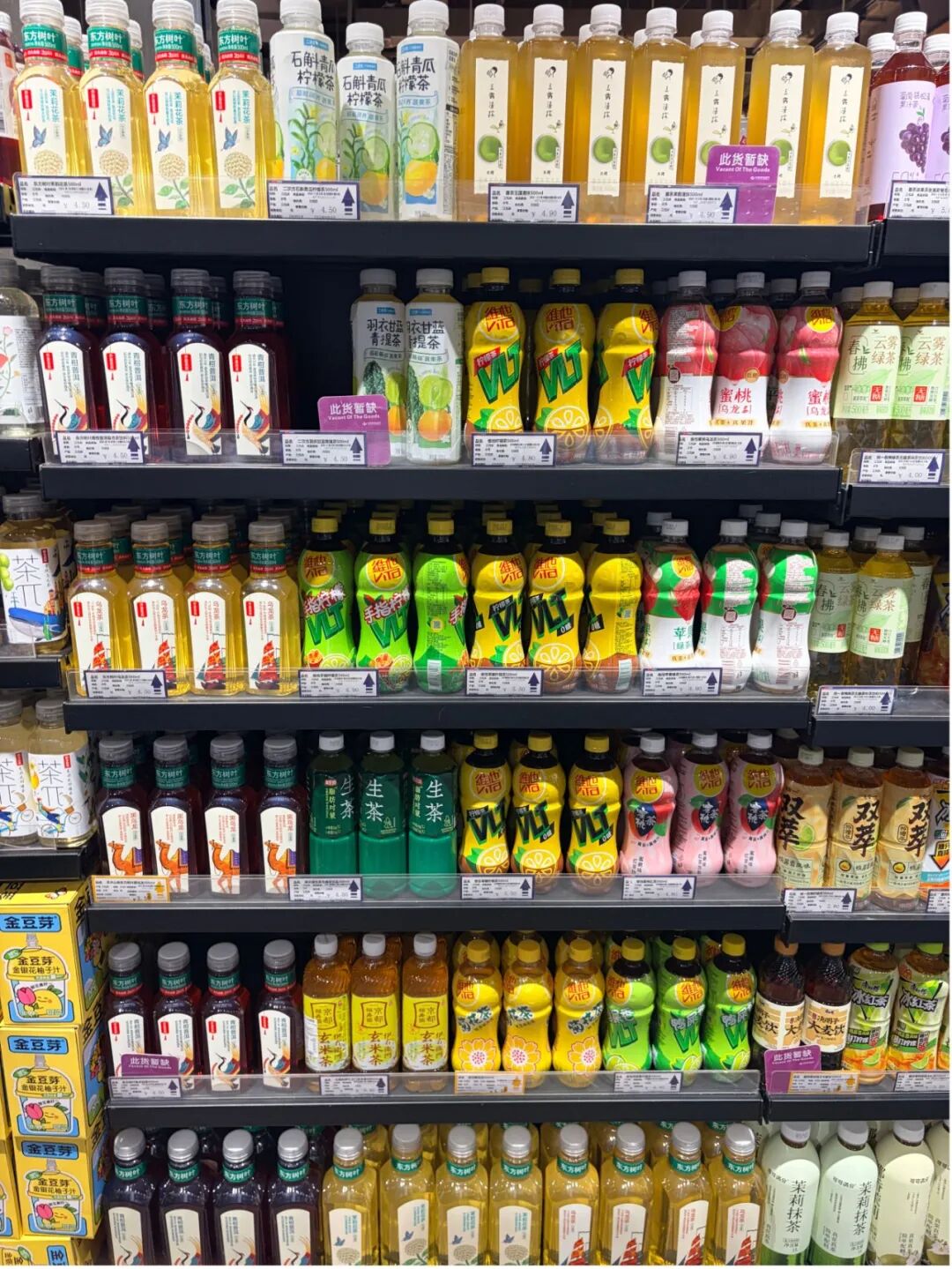
The Nashi team visited multiple supermarkets and convenience stores, the most eye-catching position in the freezer is stacked with various sugar-free tea beverages, most of which are priced at 5 yuan per bottle. Some store clerks said that sugar-free tea needs to be restocked two or three times a day in hot weather. Sugary iced black tea has been moved to the bottom layer of the refrigerator, and Master Kong iced black tea even topped the trending search list this summer for being "unsalable".
Who is seizing the shelf positions?
Sugar-free ready-to-drink tea is the only category that maintains high growth in Q2 2026, with sales up 16.1% year on year. According to the forecast of Qince Consumer Research, the size of the sugar-free tea market will reach 135.2 billion yuan in 2026, accounting for more than 50% of the total tea beverage industry for the first time. The size of traditional sugary tea continues to shrink, and it is expected to shrink to less than 50 billion yuan by 2028.
Oriental Leaf is the absolute protagonist. As of June 2025, its market share exceeds 75%, which means that for every 10 bottles of sugar-free tea sold, more than 7 bottles are Oriental Leaf. Suntory, which used to be a duopoly with Oriental Leaf, has seen its share fall to less than 9%. After traditional giants such as Master Kong, Uni-President and Wahaha realized the threat, they also launched sugar-free tea products, but most of their moves are defensive and catching up.
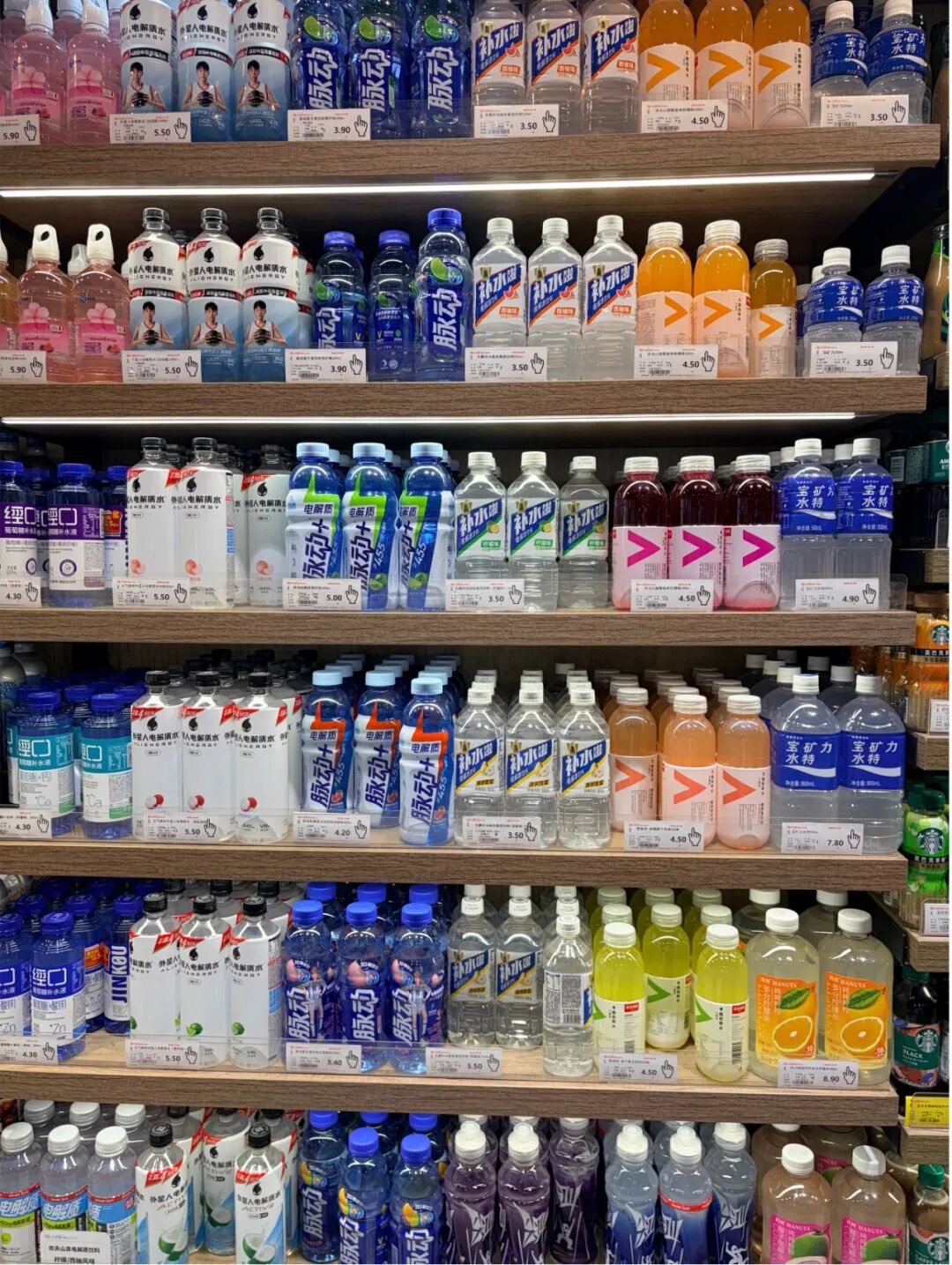
Electrolyte water is growing even faster. The market size was only 2.7 billion yuan in 2022, nearly 20 billion yuan in 2025, and is expected to exceed 33 billion yuan in 2026. Genki Forest's Alien has become a 5-billion-yuan-level blockbuster product in 2025, and Dongpeng Hydration has expanded its market share from 0 to 34% within three years. In Q1 2026, electrolyte water grew by 88.8% year on year, and non-sports scenario consumption accounts for as high as 75%. It is no longer dedicated for sports, but has become a daily hydration choice.
In the first half of 2026, at least 28 brands have launched hundreds of electrolyte beverage SKUs. The track is crowded, but the growth has not reached the ceiling yet.
04
What Should People In The Industry Notice?
First, distributors should adjust their inventory structure. About 70% of distributors are facing shrinking business, and inventory turnover has extended from 30 days to 60 to 90 days. If you still have a large amount of sugary carbonated drinks and sugary tea beverages in stock, the most important thing to do now is to actively reduce purchase volume, and allocate capital and shelf space to fast-moving categories. Do not wait for manufacturers to force stock distribution to make passive adjustments.
Second, food enterprises should not cling to the sugary track. The three categories of sugary carbonated drinks, sugary tea beverages and sugary fruit juices are declining at the same time, which is not a cyclical fluctuation, but a structural shrinkage. Sugar-free tea accounts for more than 50% of the total tea beverage market, and sugar-free carbonated drinks account for more than 41% of total carbonated beverage sales. Consumers vote with their feet faster than you expected. Brands that still rely on old formulas to support the market do not have much window time left.
Third, sugar-free is not a universal solution, but it is the admission ticket. Sugar-free tea and electrolyte water are growing fast, but the track is already crowded. Oriental Leaf occupies 75% of the market share, even Suntory cannot compete with it. Hundreds of SKUs of electrolyte water were launched within half a year, and 28 brands are competing in this track. You can enter the market, but you need to figure out where your differentiation lies. Simply labeling products as "0 sugar" is no longer enough, consumers are starting to pay attention to more detailed factors such as tea variety, origin and production process.
Fourth, the financial reports of giants are the best vane. Coca-Cola achieved all-round growth in Q2, with the Chinese market being the core growth driver, and it raised its full-year performance guidance. But if you look closely at the structure: sugary products are declining while sugar-free products are growing; traditional categories are shrinking while new categories are expanding. Giants do not grow by sticking to their old basic market, but by developing new products and new categories. Small and medium-sized brands do not necessarily need to build their own factories, but they must follow the correct direction of product R&D.
Fifth, the overall market is shrinking while leading players are growing, which is a signal of industry reshuffle. The market contraction period is exactly the window for leading brands to expand their market share. Coca-Cola achieved contrarian growth in the Chinese market in Q2, which shows that brand power, channel depth and product innovation capability are all indispensable. For distributors, following the growing leading brands is better than clinging to the declining niche brands.
Sugary carbonated drinks have dominated the Chinese beverage market for 40 years. This summer of 2026, the sugary segment is stepping down from the stage. But carbonated drinks are not dead, and Coca-Cola is not retreating. What has changed is not consumers' taste, but consumers' mindset.
This article is from the WeChat official account "Nashi", written by Industry Observer, published with authorization from 36Kr.