Among XPeng, Momenta and Horizon Robotics, who will be the first to pry open the door of the European intelligent driving market?
In 2025, Chinese automakers achieved total annual new car sales of 811,000 units in Europe, with their market share jumping to 6.1%. Last May, the monthly sales of Chinese automakers in Europe historically overtook Japanese brands for the first time. Chinese-made electric vehicles are growing from "marginal participants" into a core force driving the electrification transformation of the European automotive industry.
However, behind the sales figures, the real picture of overseas expansion is far more complex than what is shown in reports. Tariff barriers, localization games, the breaking and reshaping of consumer perception... None of these can be clearly understood while staying in the office.
To this end, we delved deep into the heart of Europe, with our first stop covering key markets including the UK, Spain and Germany. We conducted on-site visits to local dealerships and streets, held face-to-face exchanges with front-line personnel of automakers, local distributors and end consumers. We aim to penetrate through the data, restore the real survival status of Chinese automakers in Europe, and provide a valuable reference for the globalization journey of China's automotive industry.
This summer, Munich, Germany, witnessed a rare gathering of Chinese intelligent driving technologies.
He Xiaopeng (Chairman and CEO of Xpeng Group), Yu Kai (Founder and CEO of Horizon Robotics), as well as leading Chinese intelligent driving players including Momenta, almost simultaneously brought their latest systems to the city.
Munich is not a randomly selected test site. It is home to the headquarters of BMW, and is also surrounded by other European automotive giants such as Mercedes-Benz, Audi and Porsche, making it a vital hub for automotive R&D, supply chain and technical standards in Europe.
For decades, Chinese automakers that came here mostly came to learn how the European automotive industry manufactures vehicles. Now, a number of Chinese intelligent driving companies are starting to try to empower the European automotive industry.
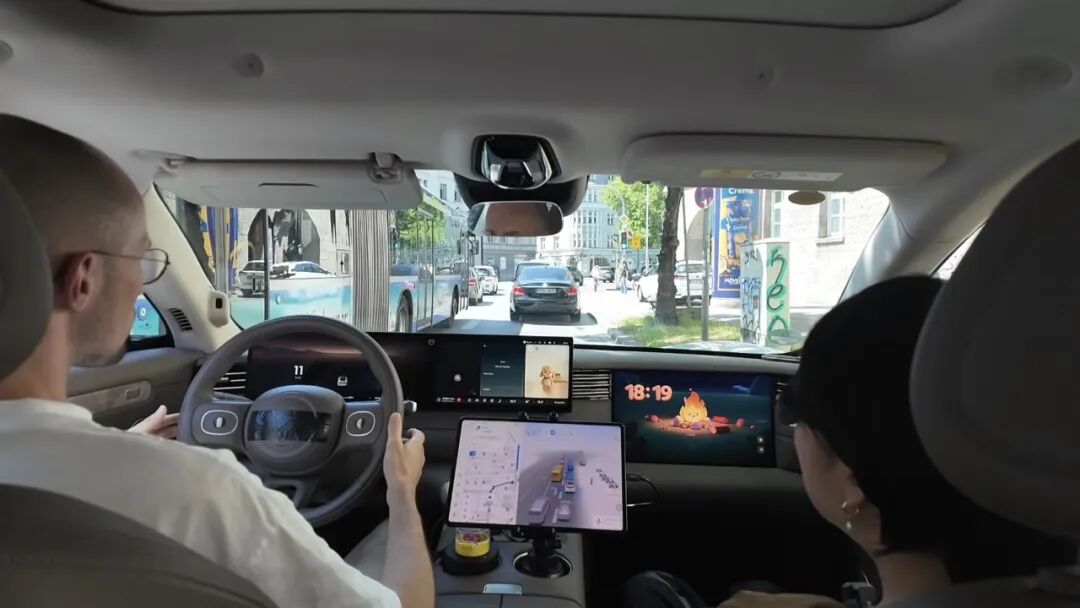
Auto Industry Journal experienced Momenta's urban intelligent driving in Munich, Germany
What is more noteworthy is that intelligent driving itself in Europe has not yet truly matured.
Although local European automakers have invested in this field for many years, they have not achieved large-scale application to date, and no enterprise has established a clear leading edge. Therefore, Chinese intelligent driving has actually obtained a rare opportunity to extend its leading model capabilities that have been formed in China to the home turf of the European automotive industry.
However, arriving at the home turf of the European automotive industry is not as simple as just copying the system over.
Local road signs, right-of-way rules, driving habits, and even the default interaction patterns among road users are all different from those in China.
How to make an intelligent driving system trained on Chinese roads accurately understand these local cultures is also a problem that needs to be solved when it enters Europe.
NO.1
Why is Europe the bridgehead for intelligent driving to go global?
The reason why Chinese intelligent driving enterprises choose to enter Europe at this moment is that the most direct driving force is not market competition, but the substantive changes that have finally taken place in access regulations.
Europe actually has no shortage of investment in this field.
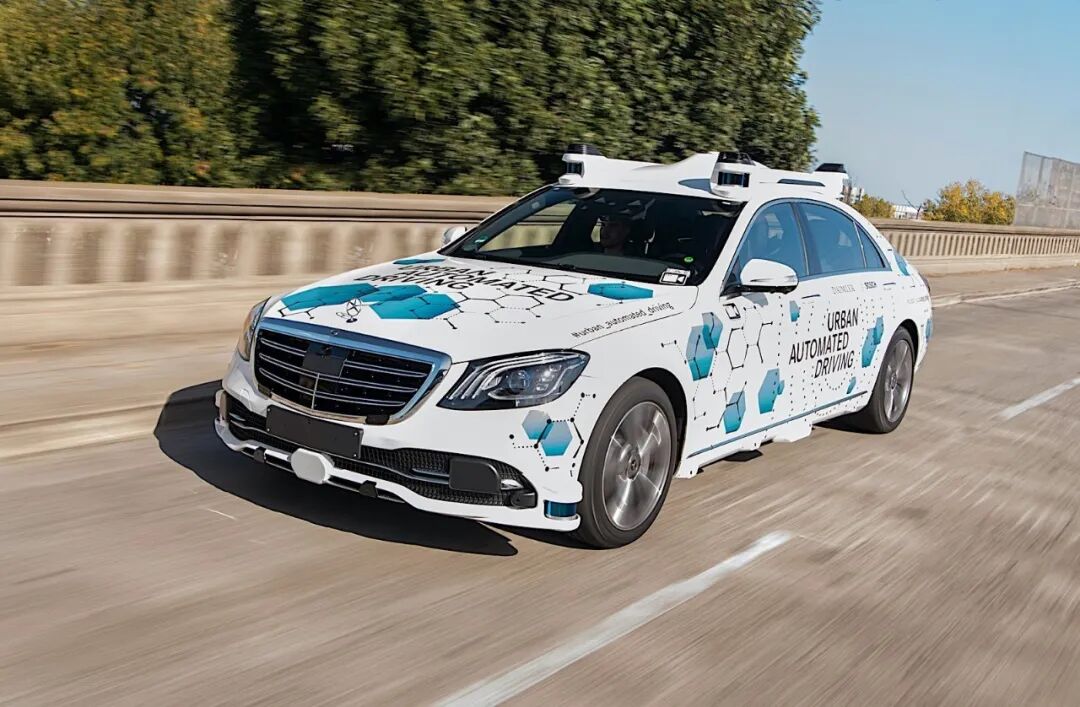
In 2017, Daimler and Bosch jointly developed L4/L5 autonomous driving
Automakers including Mercedes-Benz, BMW and Volkswagen invested heavily in ADAS advanced assisted driving and autonomous driving very early on, but these capabilities have long been limited to relatively closed scenarios such as highways, and there has never been a clear mass production path for urban intelligent driving.
Of course, this is also related to the past regulatory approach in Europe.
At the end of 2024, the R171 regulation established a relatively complete certification framework for driving assistance systems for the first time. However, the regulation at that time was still quite cautious, and the scope of use of the system was mainly limited to closed roads. Although Europe has issued an admission ticket for intelligent driving, it has not really opened up the most complex urban scenarios with the highest use value.
The turning point came in June this year.
The UN World Forum for Harmonization of Vehicle Regulations reviewed and adopted the R171 Series 02 amendment on June 24. According to the new regulatory arrangement, intelligent driving systems that have completed corresponding certification can not only be used on urban roads, but also have their boundary capabilities further relaxed.
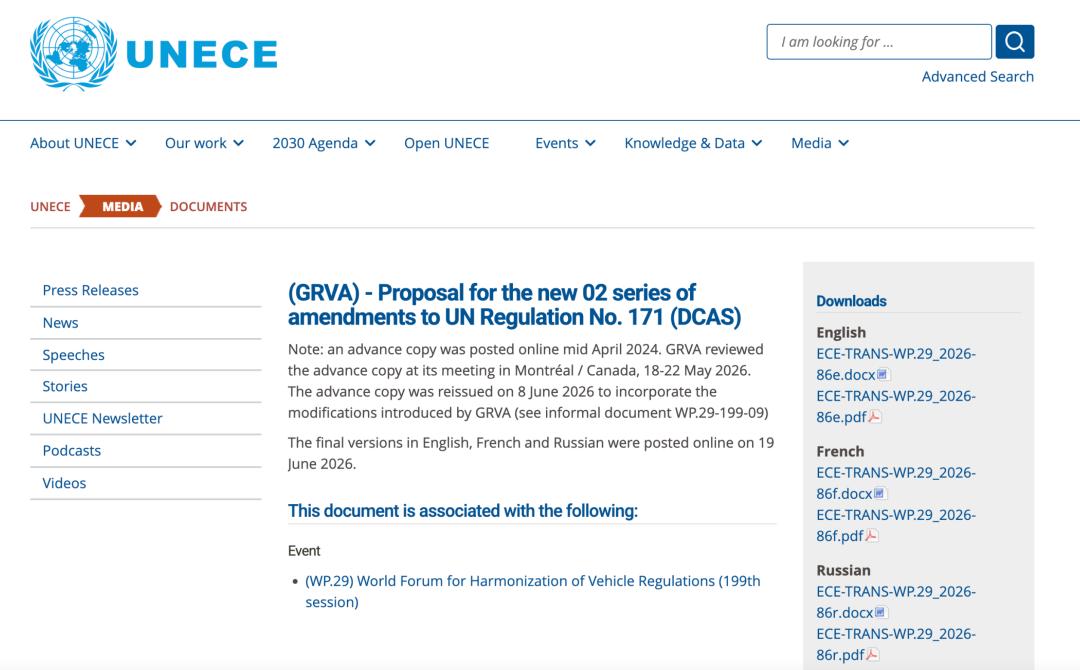
R171 Series 02 opens up urban intelligent driving for the first time
In other words, Europe did not officially open the access for urban NOA until this year. This is also why more and more Chinese intelligent driving companies are starting to appear in Europe this year.
However, the deregulation of regulations is only the first step. The reason why Chinese enterprises are willing to invest a large amount of R&D and testing resources in Europe is also that the region has the conditions to make intelligent driving a large-scale business.
On the one hand, the European automotive market is large in scale, and consumers are able to afford the hardware and R&D costs brought by advanced intelligent driving.
On the other hand, many European countries adopt a relatively unified certification system. After a set of systems is certified, it can enter multiple markets at the same time without repeating the certification process.
This means that once the technology can be successfully implemented, Europe will likely become the third market after China and the United States to realize the large-scale implementation of advanced intelligent driving.
NO.2
For Chinese intelligent driving entering Europe, the difficulty is not whether it can operate normally
Not long ago, Auto Industry Journal tested a Momenta test vehicle equipped with the R7 world model in Munich.
Judging from the actual performance, the basic capability of Chinese intelligent driving is not the main problem when it enters Europe.
Even if the base model is trained with Chinese road data, it does not show obvious acclimatization in Europe. Most operations such as following the vehicle ahead, turning, passing through unprotected intersections, and detouring can be completed smoothly.
On the contrary, some seemingly uncomplicated details are more prone to deviations.
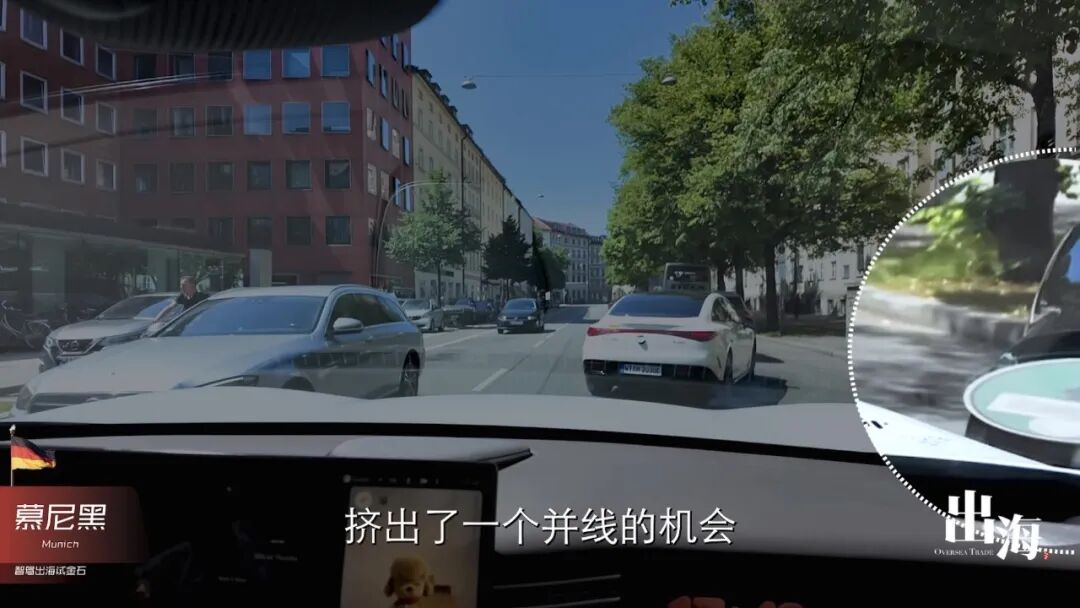
There is a game between the vehicle changing lane and the vehicle going straight
For example, during one lane change, the system forced its way into the adjacent lane even when there was a vehicle going straight in that lane; during another traffic jam at an intersection, instead of queuing at the end of the line, it directly detoured to the front and tried to cut in.
Such maneuvers are not uncommon in China.
After all, the traffic density on Chinese urban roads is high, and the spacing between vehicles is smaller. If the system is too conservative when changing lanes, it is likely to fail to find a suitable opportunity for a long time.
Therefore, domestic intelligent driving systems usually need to learn to observe, test, and even moderately fight for space. If it follows the rules too rigidly, users will easily find it not user-friendly.
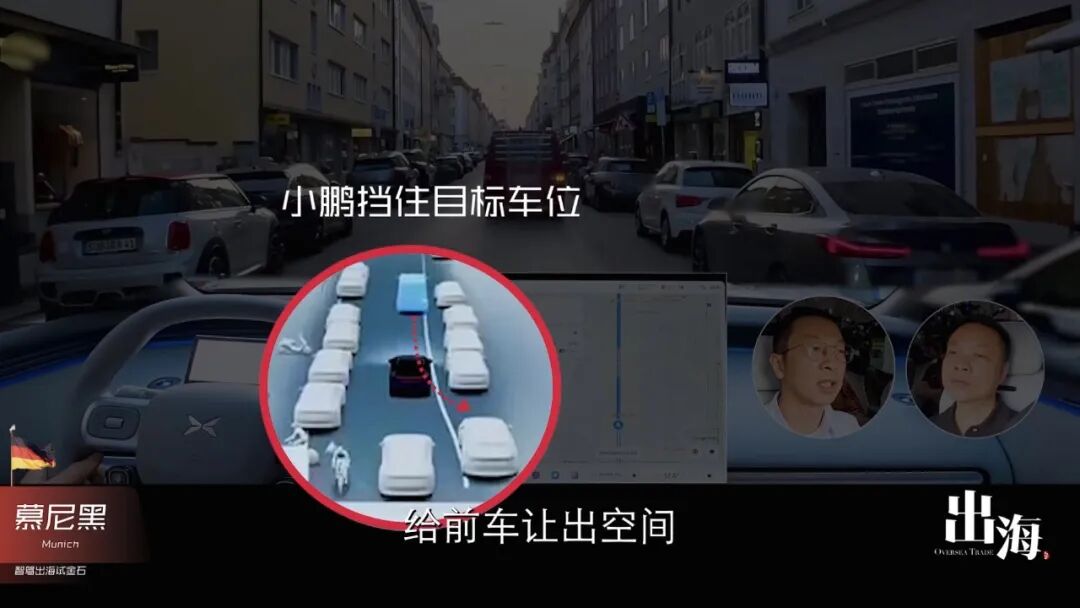
The test vehicle blocks the reversing route, forcing the oncoming vehicle to drive away
Xpeng has encountered similar situations. On a narrow road that can only accommodate one vehicle, their test car met a vehicle that was preparing to reverse into a parking space at the rear. According to local habits, the following vehicle usually takes the initiative to back up to make space for the reversing vehicle. However, the test car directly blocked the reversing route, forcing the other vehicle to drive forward and leave.
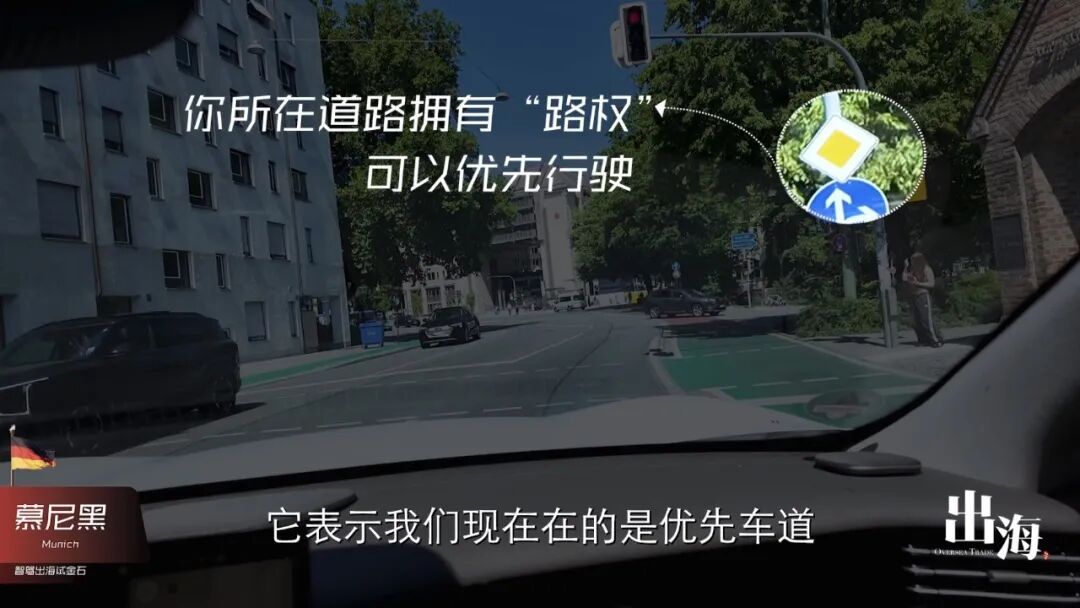
European priority road sign
Apart from driving habits, the road environment in Europe is also different from that in China.
For example, a yellow diamond-shaped traffic sign with a white border is often seen on European roads. It indicates that the vehicle is driving on a priority road, and vehicles on both sides at subsequent unsignalized intersections will usually give way.
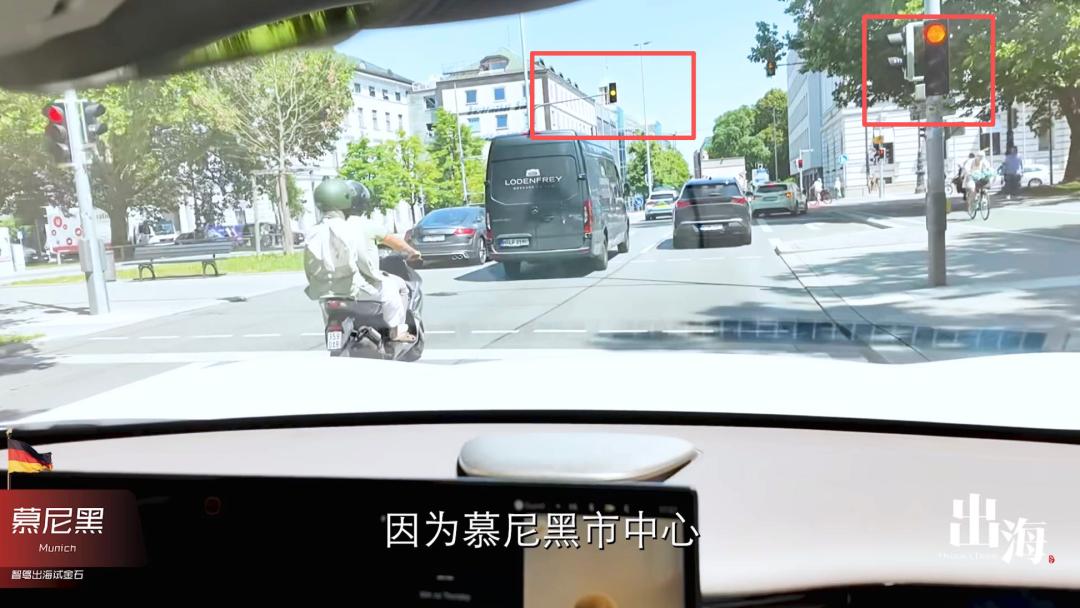
Two sets of adjacent traffic lights appear in the field of view
In addition, there are some unique road conditions in the center of Munich.
Many local blocks were built a long time ago, and the distance between intersections is very short. During the test, we encountered a situation where two intersections were only more than ten meters apart, and two sets of traffic lights appeared in the field of view almost at the same time. The system hesitated when approaching, not knowing which set of traffic lights to stop at.
Such scenarios cannot be simply attributed to insufficient system capabilities. Whether it is lane changing or meeting on narrow roads, the system can perceive surrounding vehicles and judge road space. The problem is that the choices it makes based on existing experience are inconsistent with the local default interaction patterns.
This is also the part that Chinese intelligent driving needs to re-adapt to after entering Europe.
NO.3
One base model for global operation
Since the basic capabilities are already in place, the top priority of Chinese intelligent driving in the European market is no longer about making the car run, but about how to fill in these detail gaps as soon as possible.
But this process is not that simple.
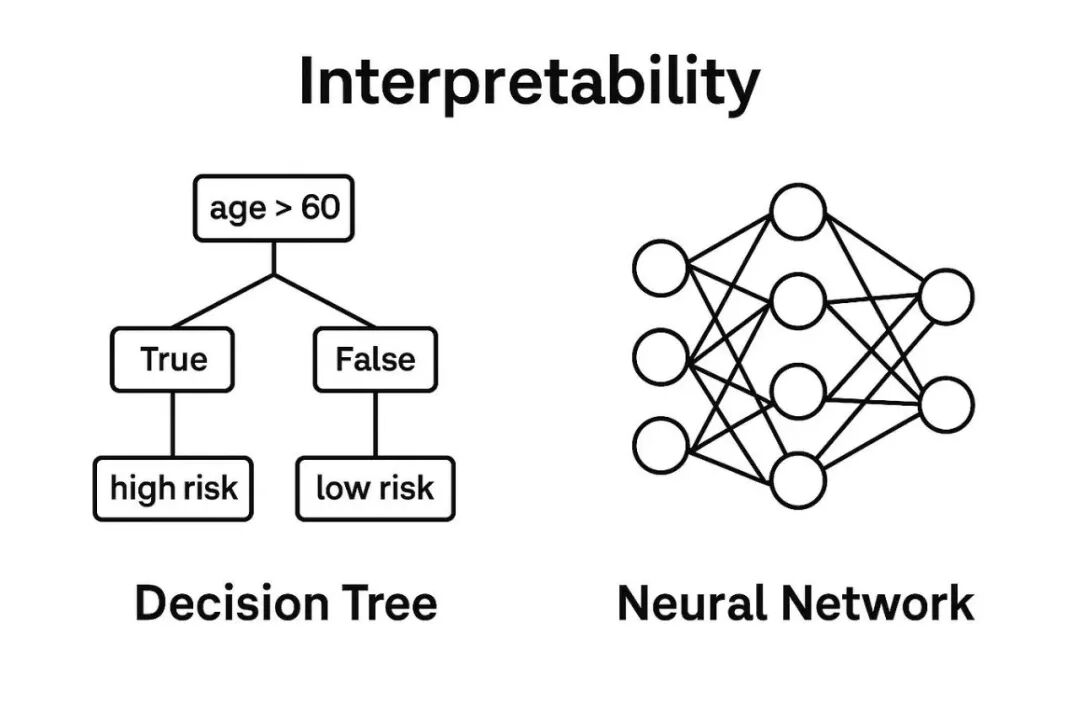
Rule-based algorithms rely on explicit logic, while neural networks rely on parameter learning
After all, it is no longer the era of rule-based algorithms. The mainstream intelligent driving systems adopt neural network models that work in a completely different way.
It no longer fully relies on pre-written conditions by engineers, but learns road relationships, traffic patterns and how vehicles interact with each other from data by watching a large number of real road videos.
The advantage of this approach is that it has strong generalization capabilities, and it does not need to "learn one scenario and process only that scenario" as in the rule-based era. Therefore, even if it is brought to Europe, it can still smoothly complete maneuvers such as following the vehicle, detouring, and passing through unprotected intersections.
But this also brings new troubles: the driving experience it has learned is no longer a set of clear and visible programs, but scattered in a large number of parameters. Engineers can no longer find a specific rule and modify it to "how to drive in this situation" as easily as before.
Therefore, when Chinese intelligent driving enters Europe, there are two core issues that need to be solved.
First, improve the generalization of the base model to avoid redeveloping the entire system to adapt to a single market; second, make the system gradually understand the right-of-way rules, traffic signs and driving habits of different countries through local data and post-training.
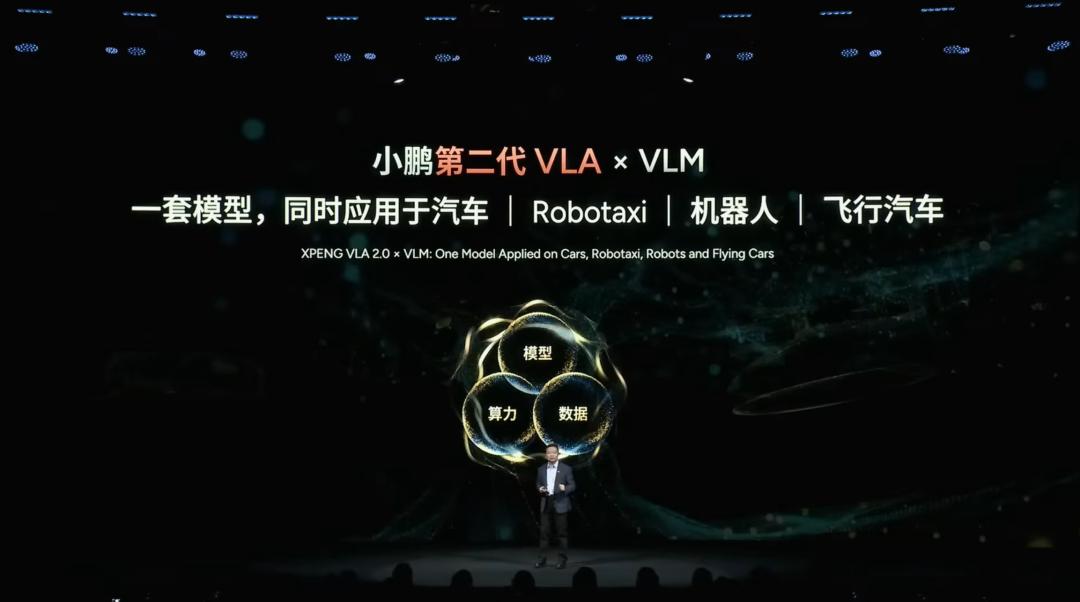
He Xiaopeng once stated that the second-generation VLA supports cross-domain model reuse
Momenta, Xpeng and Horizon Robotics are generally following a similar direction: they continue to use a unified base model, and complete post-training and safety capability adaptation through local data.
Once this route is successfully implemented, its value will not be limited to Europe.
When entering more countries in the future, the unified base model can still be reused for further training and adaptation around the local road environment. New capabilities accumulated by domestic models can also be synchronized to overseas versions faster.
NO.4
Final Notes
The advantages that Chinese automakers have built in Europe over the past few years are mainly concentrated in the electrification sector.
From batteries, electric drives to complete vehicle manufacturing, Chinese enterprises have proven that they can deliver a more efficient electric vehicle industry chain to the global market. However, in the field of intelligent driving, this advantage has not truly entered the European market.
Now, regulatory changes have given Chinese intelligent driving a new opportunity to prove itself, bringing its systems that have been mass-produced and iterated for many years in China to the home turf of the European automotive industry.
Of course, road testing does not equal commercialization. Localization adaptation, regulatory certification, and subsequent mass production all take time. But at least based on current performance, Chinese intelligent driving has indeed moved ahead of many European enterprises.
If it can take the lead in solving localization and certification problems, Chinese intelligent driving may not only go global following the export of Chinese brand vehicles, but also become part of the local European supply chain.
By then, Chinese intelligent driving will not only gain greater market space, but also stronger industrial influence.