[Monthly Macro] Domestic demand has weakened to some extent, pay close attention to the implementation of counter-cyclical adjustment policies.
Key Investment Takeaways:
Domestic Macroeconomy: Three Boom Indices All Fall Into Contraction Zone, Focus on the Implementation of Existing and Incremental Policies
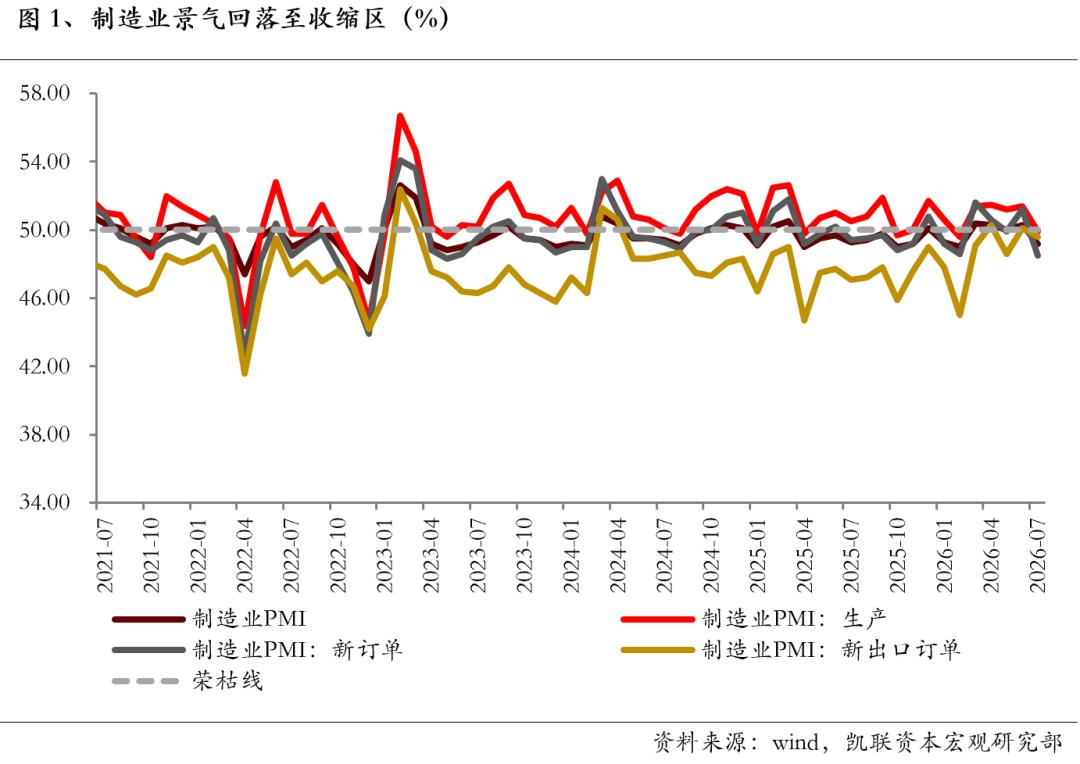
Manufacturing boom contracts again, while the cultural and tourism sector sees a recovery in prosperity. In July, the manufacturing PMI dropped sharply by 1.1 percentage points month-on-month to 49.2%. From the sub-indicators, both supply and demand sides weakened, especially the demand side. The production index and new order index dragged down the PMI by 0.38 and 0.81 percentage points respectively, among which insufficient domestic demand remained the main problem. From the perspective of major industries, the K-shaped economic recovery continues. AI, electronic information and high-end equipment are still the core support for industrial growth, but the household consumption chain, real estate and infrastructure chain, and some traditional manufacturing industries are weak. In July, the non-manufacturing business activity index fell to 49.0%. Among them, the cultural and tourism sector saw a recovery in prosperity, but the overall service industry PMI still fell into the contraction zone; the construction industry PMI dropped by 2.0 percentage points month-on-month to 47.0%, mainly affected by high temperature, heavy rain and floods.
The Political Bureau Meeting held at the end of July accelerated the implementation of existing policies, and attention should be paid to the introduction of incremental policies. In terms of the judgment of the economic situation, the meeting stated that the economy has "effectively responded to various external shocks and internal difficulties" and "presented a development trend of new momentum and optimized structure". For the economic work in the second half of the year, the meeting pointed out that it is necessary to "implement a more proactive fiscal policy and a moderately loose monetary policy, timely plan and introduce practical and effective incremental policies, and increase the intensity of counter-cyclical adjustment", with a relatively positive tone. The emphasis on expanding domestic demand remains unchanged, and the main starting points are still service consumption and the construction of the "six networks". The meeting continued to emphasize accelerating the construction of a modern industrial system, especially the development of artificial intelligence.
Overseas Perspective: The Federal Reserve Kept the Policy Rate Unchanged, and Global Stock Markets Fluctuated Sharply
On July 29, Eastern Time, the Federal Reserve maintained the target range of the federal funds rate at 3.50%-3.75%, which was the fifth consecutive hold-steady move within the year, in line with market expectations. Internal divisions within the Federal Reserve have increased, with 3 Fed chairmen advocating a 25bp rate hike and 9 Fed chairmen supporting no rate hike. We believe that the current Federal Reserve will still wait and see, and the current policy rate may remain unchanged within the year.
The initial value of the annualized quarter-on-quarter growth rate of real US GDP in the second quarter of 2026 was 1.5% (expected 2.0%, previous value 2.1%), and the year-on-year annualized growth rate was 2.1% (previous value 2.7%). Although the data is generally average on the surface, from the perspective of domestic demand, it has improved significantly compared with the past two quarters. However, the sustainability of consumption remains to be verified, and AI-related investment maintains high growth.
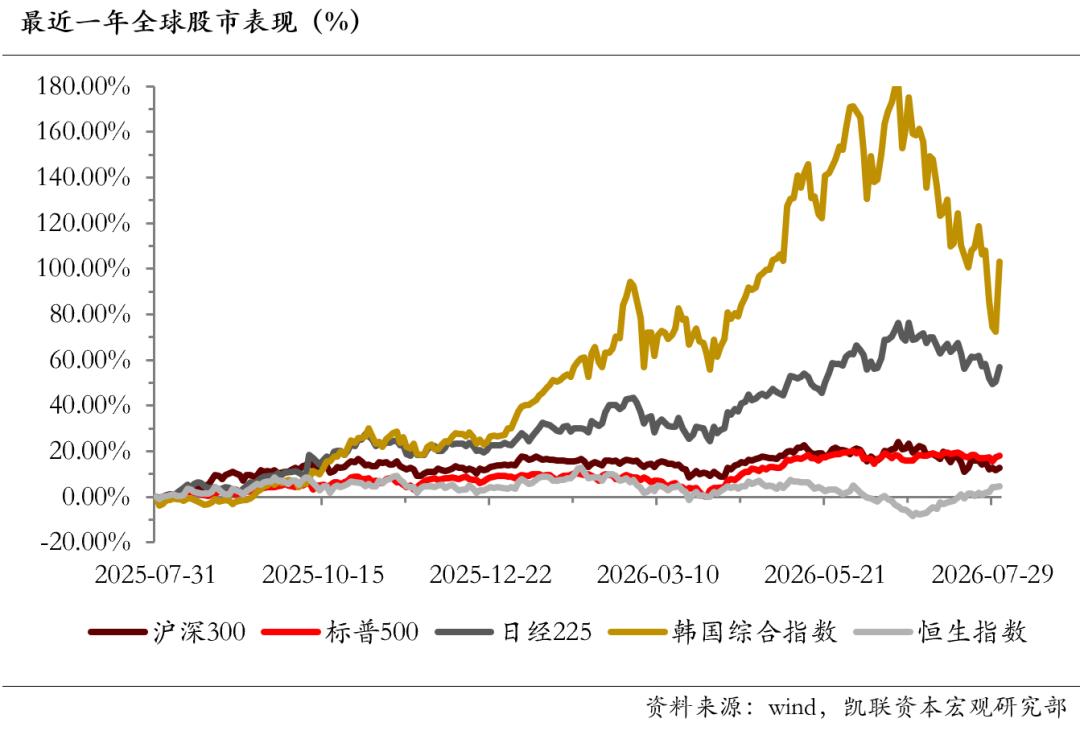
In July, in terms of major asset classes: under the influence of technology stocks, the overall performance of global stock markets fluctuated sharply, with mixed gains and losses; the yield of long-term government bonds in major overseas economies generally rose, and the yield of 10-year US Treasury bonds rose sharply by 31bp to 4.75%; the US dollar index fell by 1.38% to 99.7849, and the USD/CNY closed at 6.7476; affected by the renewed escalation of the US-Iran conflict, crude oil prices rebounded rapidly, and WTI crude oil rose by 23.9% cumulatively for the whole month to 86.8 US dollars per barrel.
Full Report:
I. Domestic Macroeconomy: Domestic Demand Weakens, Focus on the Implementation of Counter-Cyclical Adjustment Policies
1.1 Domestic Economy: Three Boom Indices All Fall Into Contraction Zone, Focus on the Implementation of Existing and Incremental Policies
Manufacturing boom contracts again, while the cultural and tourism sector sees a recovery in prosperity
On July 31, the National Bureau of Statistics released the July PMI data, which all declined across the board. The manufacturing PMI was 49.2% (previous value 50.3%), the non-manufacturing PMI was 49.0% (previous value 50.2%), and the composite PMI was 49.3% (previous value 50.6%).
Domestic demand slows down further, and the manufacturing industry falls back into the contraction range. In July, the manufacturing PMI dropped sharply by 1.1 percentage points month-on-month to 49.2%. From the sub-indicators, both supply and demand sides weakened, especially the demand side. The production index and new order index fell by 1.5 and 2.7 percentage points month-on-month to 49.9% and 48.5% respectively, dragging down the PMI by 0.38 and 0.81 percentage points. Among them, the new export order index representing external demand fell by 0.5 percentage points to 49.6%, which is far lower than the overall new order index, indicating that insufficient domestic demand is still the main problem. At the same time, the contraction of both supply and demand sides is also affected by domestic extreme weather and the sharp fluctuation of international oil prices.
In terms of prices, relevant indices continue to decline. The main raw material purchase price index fell for the 4th consecutive month to 53.2%, the ex-factory price index was 47.8% (previous value 48.2%), the scissors gap between the purchase price and ex-factory price remains large, and the profit space of midstream and downstream enterprises continues to be under pressure.
From the perspective of major industries, the K-shaped economic recovery continues. The PMI of high-tech manufacturing was 53.3%, and that of equipment manufacturing was 51.4%, continuing to be in a rapid expansion range. In contrast, the PMI of the consumer goods industry dropped to 47.8%, and the PMI of the high energy-consuming industry was 47.0%. The production and demand of non-metallic mineral products, ferrous metal smelting, automobile and other industries are all below 50%. AI, electronic information and high-end equipment are still the core support for industrial growth, but the household consumption chain, real estate and infrastructure chain, and some traditional manufacturing industries are weak.
The non-manufacturing business activity index declines, while the cultural and tourism sector sees a recovery in prosperity
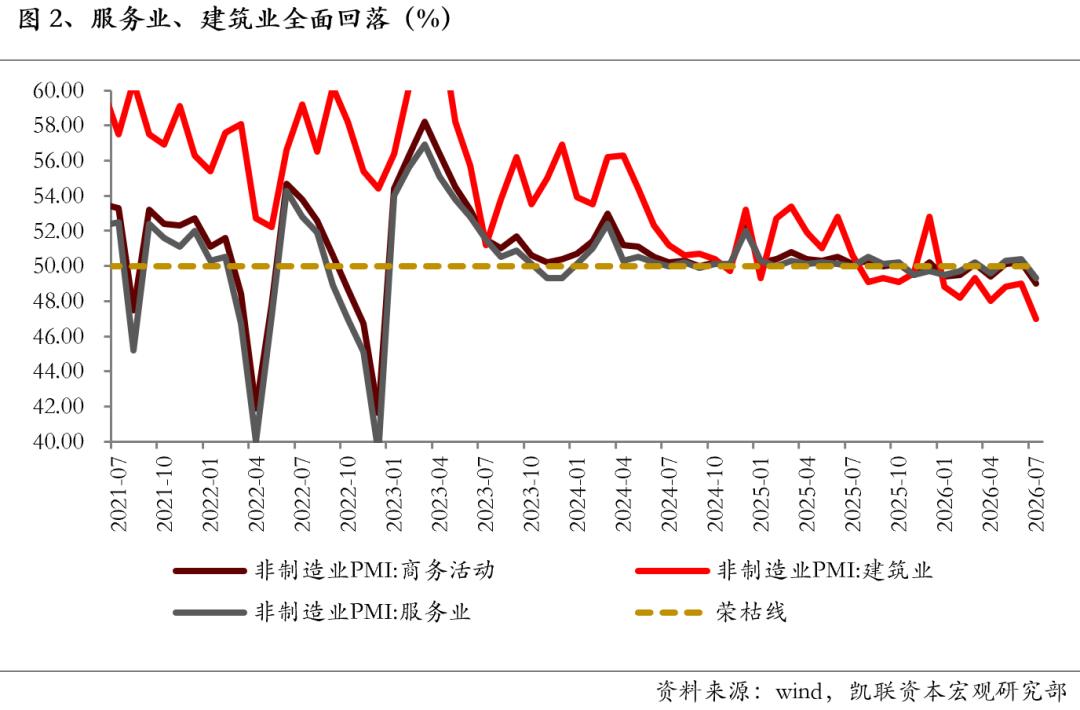
In July, the non-manufacturing business activity index was 49.0%, down 1.2 percentage points from the previous month. Among them, the service industry business activity index was 49.3% (previous value 50.4%). The summer vacation drove the improvement of aviation, accommodation, cultural, sports and entertainment and other cultural and tourism sectors, but wholesale and monetary financial services weakened significantly, and real estate and capital market services are still in contraction; the construction industry PMI index dropped by 2.0 percentage points month-on-month to 47.0%, mainly affected by high temperature, heavy rain and floods. However, the new order index of the construction industry fell by 6.2 percentage points to 40.1%, far weaker than the construction index, indicating that the succession of new projects and physical workload is also weak.
The Political Bureau Meeting held at the end of July accelerated the implementation of existing policies, and attention should be paid to the introduction of incremental policies
On July 30, the Political Bureau of the CPC Central Committee held a meeting to analyze and study the current economic situation and deploy the economic work for the second half of the year.
In terms of the judgment of the economic situation, the meeting stated that the economy has "effectively responded to various external shocks and internal difficulties" and "presented a development trend of new momentum and optimized structure", affirming the economic performance in the first half of the year, especially in terms of structural adjustment. We believe that although the economic growth rate slowed down in the second quarter, the economic growth rate in the first half of the year is still within the annual growth target range.
For the economic work in the second half of the year, the meeting pointed out that it is necessary to "implement a more proactive fiscal policy and a moderately loose monetary policy, timely plan and introduce practical and effective incremental policies, and increase the intensity of counter-cyclical adjustment", with a relatively positive tone. In terms of macro policies: accelerate the progress of fiscal expenditure and the use of bond funds, and vigorously promote the construction of "two major" projects and the work of "two new" initiatives; comprehensively use and adjust monetary policy tools in a timely manner, and optimize the implementation of fiscal and financial coordinated policies to boost domestic demand. We believe that the intensity of broad fiscal policy in the second half of the year may expand moderately, and the tightening trend will ease marginally; the monetary policy may maintain a moderately loose stance, but under the expectation of general interest rate hikes overseas, the window for domestic interest rate cuts in the second half of the year remains to be observed, and policies may focus on revitalizing existing stocks and making good use of structural monetary policy tools.
The emphasis on expanding domestic demand remains unchanged. The deployment of expanding domestic demand at this meeting is still placed before optimizing supply, and the main starting points are service consumption and the construction of the "six networks".
The meeting continued to emphasize accelerating the construction of a modern industrial system, especially the development of artificial intelligence. The meeting pointed out: strengthen long-term and stable support for basic research, thoroughly implement the "Artificial Intelligence +" action, actively promote breakthroughs in cutting-edge technologies and the development of future industries, and strive to build emerging pillar industries.
In terms of agriculture, we must not relax the work related to agriculture, rural areas and farmers, and stabilize the production and prices of agricultural and livestock products such as live pigs.
In addition, the meeting proposed: continue to comprehensively rectify "involution-style" competition, stabilize the real estate market, promote the reform and risk resolution of local small and medium-sized financial institutions, and enhance the resilience and confidence of the capital market.
1.2 Liquidity Outlook: Short-term Interest Rates Remain Stable, and Market Liquidity is Reasonably Loose
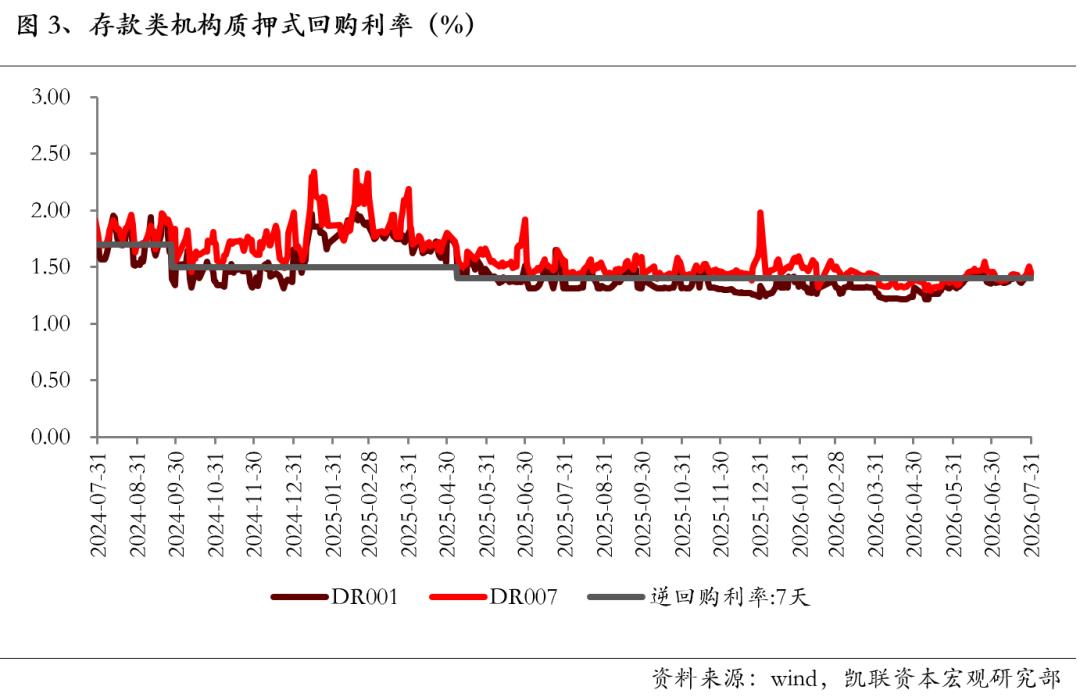
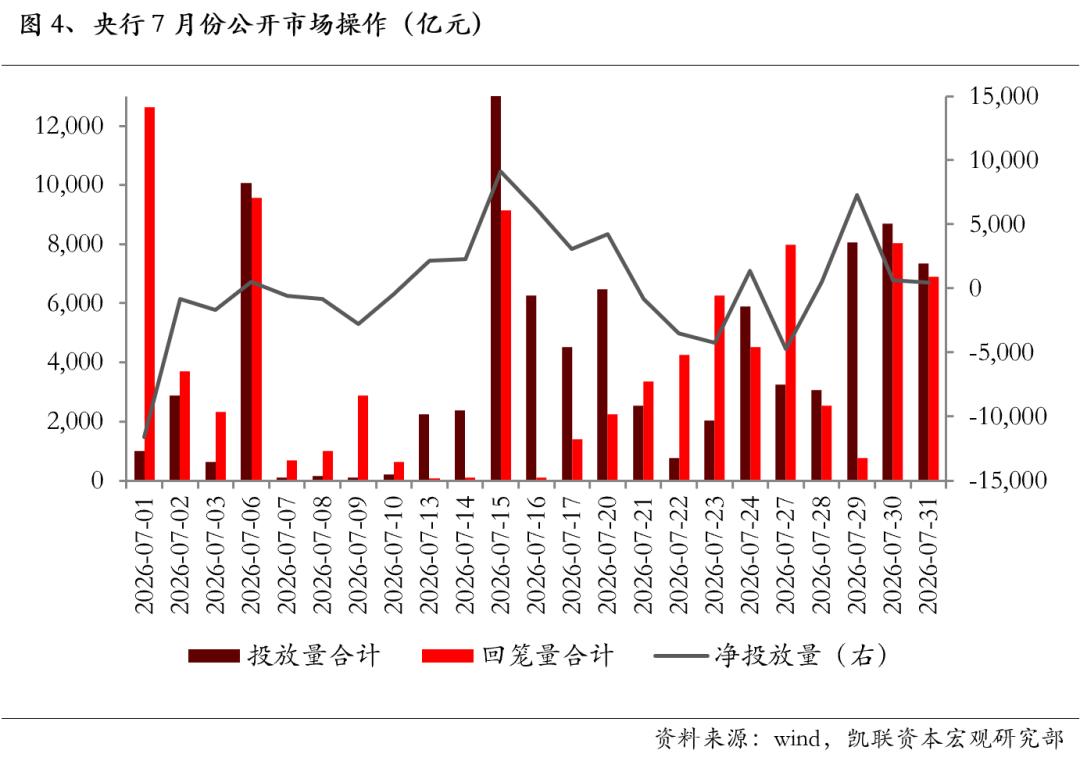
In July, short-term interest rates remained stable, and market liquidity was reasonably loose. From the monthly average perspective, the average DR001 in July was the same as that in June at 1.39%, and DR007 fell by 2bp to 1.42%.
In terms of open market operations: in July, the central bank injected 8939.5 billion yuan, 500 billion yuan and 250 billion yuan through reverse repos, MLF and treasury cash fixed deposits respectively, and withdrew 8489 billion yuan, 400 billion yuan and 220 billion yuan through the maturity of reverse repos, MLF and treasury cash fixed deposits respectively, realizing a net injection of 580.5 billion yuan.
II. Overseas Perspective: The Federal Reserve Kept the Policy Rate Unchanged, and Global Stock Markets Fluctuated Sharply
2.1 Overseas Macroeconomy: The Federal Reserve Holds Steady, US Consumption and AI Investment Remain Strong
The Federal Reserve holds steady, and internal divisions have increased
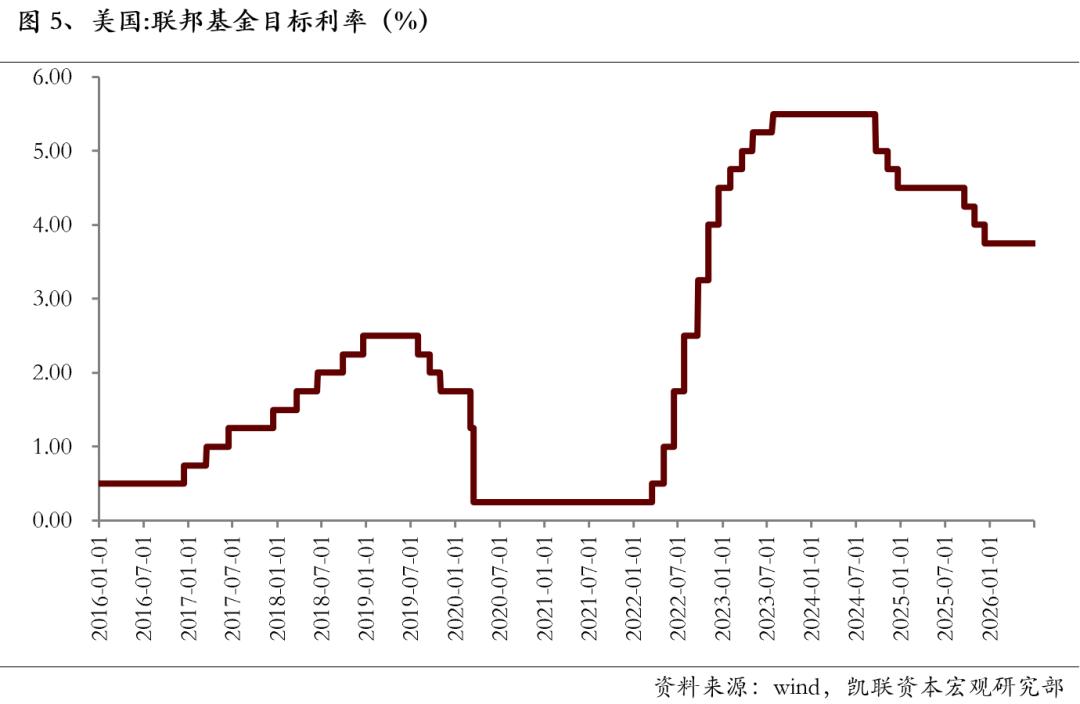
On July 29, Eastern Time, the Federal Reserve maintained the target range of the federal funds rate at 3.50%-3.75%, which was the fifth consecutive hold-steady move within the year, in line with market expectations.
Internal divisions within the Federal Reserve have increased. Cleveland Fed President Hammack, Minneapolis Fed President Kashkari and Dallas Fed President Logan all advocated a 25bp rate hike, and the final result was 9 votes in favor and 3 votes against, while the June meeting before was unanimously passed to keep the interest rate unchanged.
The Federal Reserve's statement has hardly changed, and forward guidance continues to be weakened. The meeting statement pointed out that "although the uncertainty of the Middle East conflict remains high, US economic activity is expanding at a robust pace, and productivity growth and capital investment are performing strongly". After this meeting, the Federal Reserve still did not give any conditions, time points or directions for interest rate adjustment, and did not give any guidance on the policy path. However, Wash pointed out that the nominal and real yields of US bonds rose significantly during the two meetings, and the market has completed the tightening for the Federal Reserve.
Regarding inflation, Wash said he clearly adheres to the 2% inflation target, but he also reserved space for the pace, saying that more than five years of above-target inflation "cannot be resolved in nine weeks, nor by a single month of moderate price decline".
After this interest rate meeting, the expectation of a rate hike in September heated up, and the implied probability of a September rate hike from FedWatch rose from 55% to 63%. However, we believe that short-term geopolitical conflicts have a great impact on expectations, and there may be a reversal of expectations later. We believe that the current Federal Reserve will still wait and see, will not easily raise or cut interest rates, and the current policy rate may remain unchanged within the year.
US Q2 GDP weakens, consumption and AI investment remain strong
On July 30, 2026, the Bureau of Economic Analysis (BEA) of the US Department of Commerce released: the initial value of the annualized quarter-on-quarter growth rate of real US GDP in the second quarter of 2026 was 1.5% (expected 2.0%, previous value 2.1%), and the year-on-year annualized growth rate was 2.1% (previous value 2.7%). Although the GDP growth rate is lower than expected, the structure shows that investment still has momentum, consumption has rebounded significantly compared with the first quarter, and the drag mainly comes from net exports, inventories and government spending.
Specifically:
1) The annualized quarter-on-quarter growth rate of personal consumption expenditures was