The transaction volume of second-hand residential properties in Beijing has hit a five-year high. How far can this round of market rebound go?
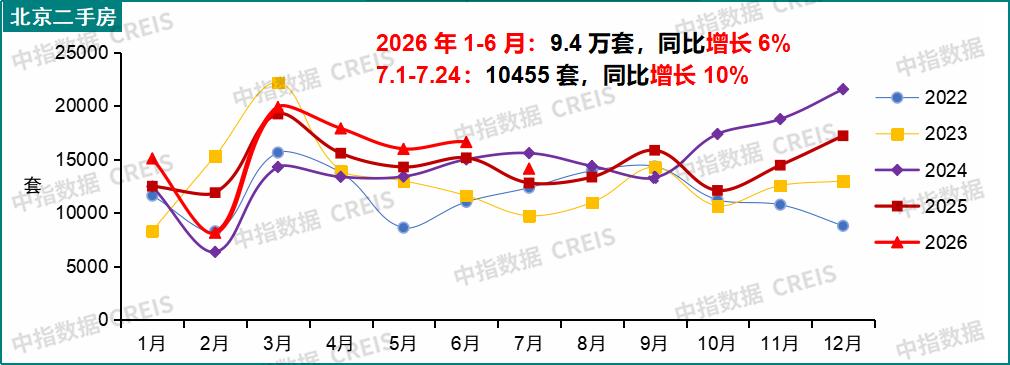
In the first half of 2026, 93,583 second-hand residential units were registered for online signing in Beijing, marking a 5.7% year-on-year increase and the highest transaction volume for the same period since 2021. Notably, transaction volume from April to June hit the highest level for the same period in the past five consecutive years.
Even after entering the traditional off-season, the market did not cool down significantly. As of July 24, 10,455 second-hand residential units had completed online signing in Beijing, representing a 10% year-on-year growth.
While transaction volume has rebounded notably, whether this round of market recovery can be sustained still depends on the continuity of transaction momentum and changes in price trends.
Sustained Transaction Expansion, Prices Remain in Bottoming Phase
In the first half of the year, the online signing volume of second-hand homes in Beijing reached 93,600 units. In June alone, over 16,600 units were registered online, up approximately 4% month-on-month and around 10% year-on-year.
Different from the phased transaction surges previously driven by the traditional "spring peak", the transaction momentum of Beijing's second-hand home market this year extended into the second quarter. From April to June, transaction volume hit new highs for the same period in the past five consecutive years, and demand release did not decline rapidly after the traditional peak season ended.
However, the rebound in transactions has not yet driven a comprehensive stabilization of prices.
According to the 100-City Price Index from the China Real Estate Index System, second-hand residential prices in Beijing saw a cumulative decline of 3.46% in the first half of 2026. Since the beginning of this year, the average listed price has continued to trend downward, but the decline has narrowed significantly.
Figure: Trend of Monthly Second-hand Home Transaction Volume in Beijing
Small and Low-Priced Units Remain Transaction Mainstay, Upgrading Demand Shows Marginal Recovery
This round of transaction rebound was first driven by rigid demand.
In the first half of 2026, the proportion of second-hand home transactions in Beijing with an online signing price below 2 million yuan rose to 53%, 4.9 percentage points higher than that in 2025. In terms of floor area, units under 70 square meters accounted for 37% of transactions, while units between 70 and 90 square meters took up 26% of the total.
After years of price adjustments, a number of small-sized second-hand homes in Beijing have become affordable for families with rigid housing needs. As down payment and monthly mortgage pressures ease, previously delayed purchases due to high total prices are now entering the market.
Starting from the second quarter, the transaction structure has undergone further changes.
From May to June, both the transaction volume and proportion of second-hand homes priced above 5 million yuan in Beijing increased, with the share of units over 8 million yuan rising to 4.15%. In terms of floor area, the transaction proportion of units over 90 square meters has continued to climb since the start of the year, reaching 38.1% in June.
The rising share of high-priced and large-sized units indicates marginal recovery signs in upgrading housing demand. However, the current growth rate and duration of upgrading transactions remain limited, and whether it can form stable market support still requires observation.
Some families seeking housing upgrades in Beijing need to sell their existing properties to raise funds for new purchases, and the improved liquidity of second-hand homes is conducive to the release of housing replacement demand. If transaction activity can be maintained in the subsequent period, such related demand may gradually transmit to the new home market.
Low-Priced Units Mostly Located Beyond 5th Ring Road, High-Priced Transactions Concentrated in Urban Core
Figure: Proportion of Second-hand Home Transaction Volume by District in Beijing in H1 2026
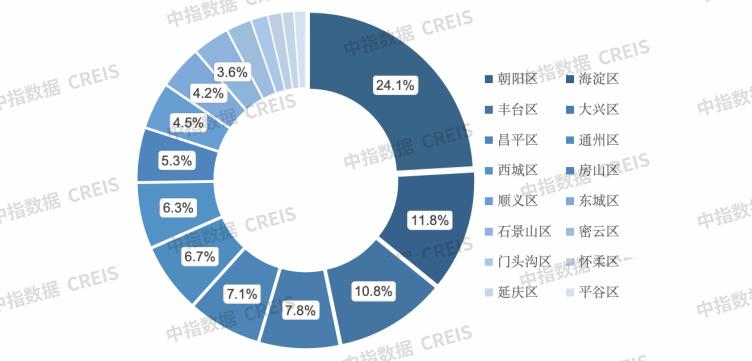
In terms of regional distribution, second-hand home transactions in Beijing are further concentrated in the urban core and mature functional areas.
In the first half of 2026, second-hand home transactions in Chaoyang, Haidian and Fengtai districts accounted for 24.1%, 11.8% and 10.8% of the city's total respectively, continuing to rank the top three, with the three districts combining for 46.7% of the city's total transactions.
Among them, Chaoyang accommodates large-scale rigid demand as well as upgrading demand. In the first half of the year, Chaoyang's transaction share of units priced below 2 million yuan reached 9.38% of the city's total, 3.73 percentage points higher than Fengtai which ranked second; its transaction proportion of units over 5 million yuan hit 2.91%, also leading all districts.
Table: Proportion of Second-hand Home Transaction Volume by District in Beijing in H1 2026 (Based on Online Signing Price)
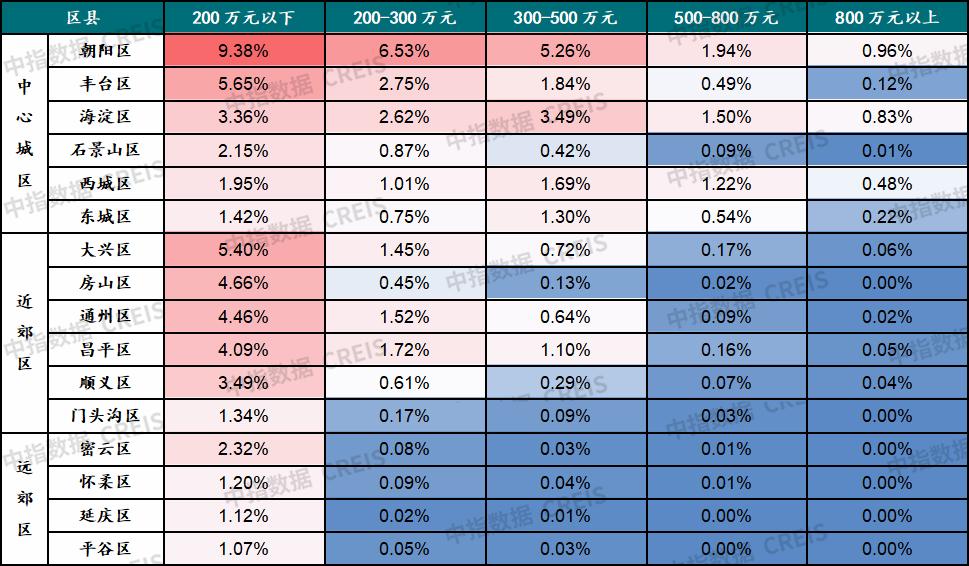
Purchasers targeting different total price ranges show distinct differences in regional preferences.
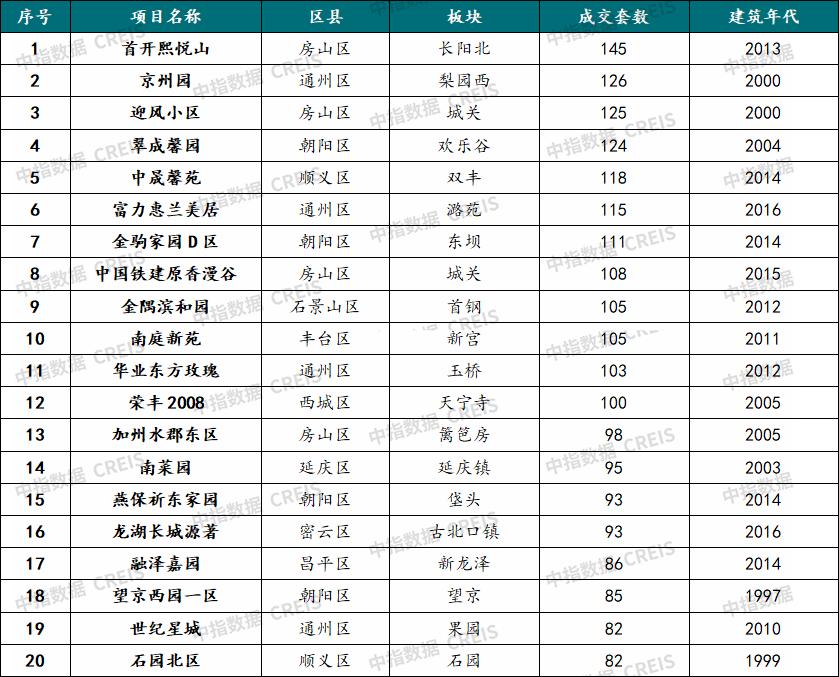
The top 20 residential compounds with the most second-hand home transactions below 2 million yuan in Beijing in the first half of the year are mainly distributed in Chaoyang, Tongzhou and Fangshan, 75% of which are located beyond the 5th Ring Road. Compounds including Shoukai Xiyueshan, Jingzhou Yuan, Yingfeng Residential Zone and Cuicheng Xinyuan lead transaction volume, most of which are close to rail transit, schools or mature living amenities.
For purchasers in this price range, the core demand remains controlling housing purchase thresholds. With limited budgets, some families are willing to accept longer commuting distances in exchange for relatively complete residential functions.
Table: Top 20 Residential Compounds with Most Second-hand Home Transactions Below 2 Million Yuan in Beijing in H1 2026 (Based on Online Signing Price)
Units priced above 5 million yuan present a different distribution pattern.
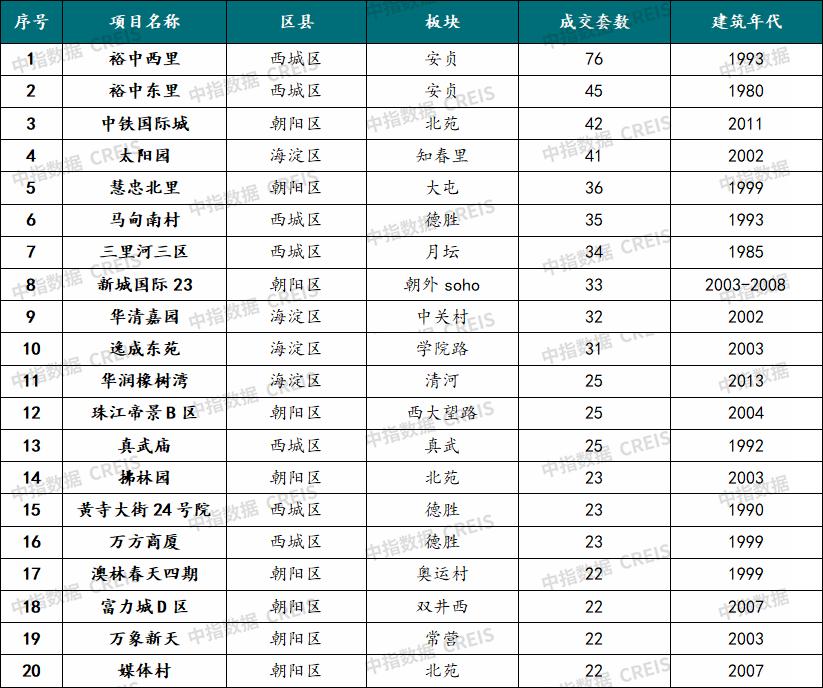
Residential compounds with leading transaction volume are mainly concentrated in Chaoyang, Xicheng and Haidian, covering mature functional areas including Zhongguancun, Desheng, Yuetan, Xueyuan Road and Beiyuan. Nearly half of the top 20 compounds were built before 2000. Some compounds with relatively old building ages still rank high in transaction volume, indicating that mature locations and supporting resources can offset the impact of building age on market liquidity to a certain extent.
Table: Top 20 Residential Compounds with Most Second-hand Home Transactions Above 5 Million Yuan in Beijing in H1 2026 (Based on Online Signing Price)
Second-hand Home Listings Fall from High Levels, Supply Pressure Eases
Figure: Number of Second-hand Residential Listings in Beijing (Data from Leading Agencies)
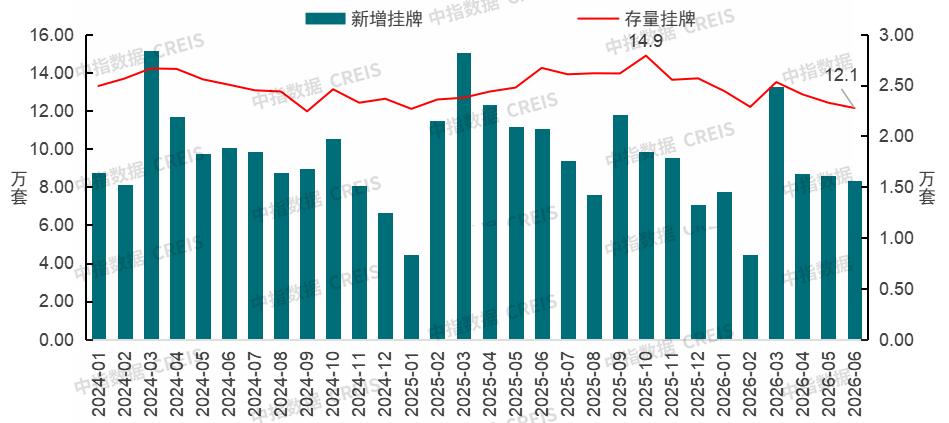
Alongside the transaction rebound, the number of second-hand home listings in Beijing is also declining.
According to monitoring data from the China Index Academy, the number of second-hand residential listings in Beijing stood at 121,000 units at the end of June, down 18.5% from the highest level of last year. Newly added listings have remained generally stable, no longer following the previous rapid upward trend.
The decline in listing volume indicates that the supply pressure of the second-hand home market has eased, which is driven by both transaction digestion and possible factors such as listing withdrawal and conversion to rental properties. If transaction activity can be maintained at a certain level in the second half of the year and listings do not rebound significantly, price competition among housing units is expected to weaken, creating conditions for gradual price stabilization.
Negotiation Space Declines from High Levels
Figure: Average Negotiation Space for Second-hand Residential Units in Beijing (Data from Leading Agencies)
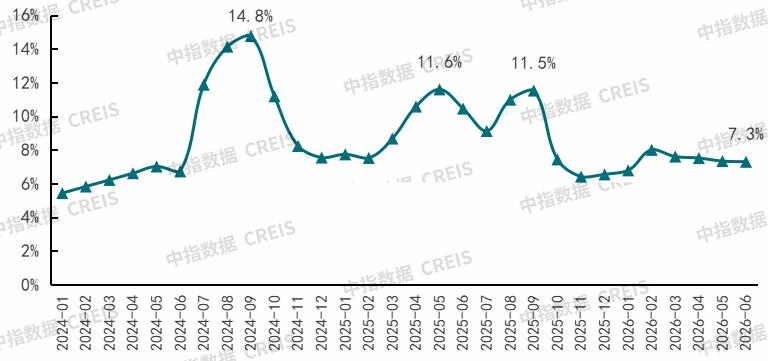
Following the decline in listing volume, price discrepancies between transaction parties have also narrowed.
According to monitoring data of leading agencies from the China Index Academy, the average negotiation space for second-hand residential units in Beijing dropped to 7.3% in June 2026, a notable decline from the previous peak, and currently remains in a relatively stable range.
Negotiation space is a direct indicator to observe market expectations of the second-hand home sector. Expanded negotiation space usually means a large gap between homeowners' asking prices and buyers' acceptable price ranges, requiring further price cuts to complete transactions; narrowed negotiation space indicates that both parties' perceptions of market prices are converging.
Housing units that can be sold quickly at present usually meet two conditions: first, they have clear advantages in total price, location or supporting amenities; second, homeowners can adjust their asking prices in a timely manner to follow market changes. For units priced significantly higher than comparable transaction levels, even with a rebound in overall market activity, their sales cycle can hardly be shortened notably.
Overall, the second-hand home market in Beijing in the first half of the year demonstrated recovery features of rebounding transactions and narrowed price declines, with rigid demand remaining the main support for transactions and upgrading demand showing marginal recovery. Listing volume and negotiation space have both fallen from high levels, and the relationship between supply and demand has improved. It is expected that second-hand home transactions will maintain certain activity in the second half of the year, and downward price pressure will continue to ease. However, comprehensive market stabilization still relies on the sustained release of upgrading demand, stable listing scale and further recovery of market expectations, and differentiation across different districts and housing units will continue.
This article is from the WeChat public account "China Index Academy", authored by China Index Research, and published by 36Kr with authorization.