They manage to roll out small hit products every year and turn a profit on each project? This once-obsolete track is now full of new business opportunities.
A while ago, Grape Jun asked in the work group if anyone wanted to work on a wuxia special feature together. A colleague replied: "Is there still a need to write about wuxia these days?"
This view stems from two reasons. First, after so many years of wuxia stories, they still revolve around the familiar, well-worn framework of sect conflicts and national loyalty, offering little innovation. Second, wuxia products have become nearly identical over time, making it hard to create fresh appeal, and readers may not even be interested in them.
But recently, Grape Jun has noticed a surge in wuxia-related activity in the domestic market. After Steam added a dedicated wuxia tag, both TapTap and Coconut Island Games launched roundtable discussions focused on the wuxia genre, and publisher Noise Games even set up a dedicated wuxia forum.
This makes sense. After all, in recent years, several wuxia titles have achieved consecutive moderate successes on Steam. For example, *Where Winds Meet* official data shows cross-platform sales exceeding 3 million copies. Additionally, according to third-party analytics firm Gamalytic, *Swords of Legends: The Wuxia Chronicles* has sold around 1.2 million copies, *Hero's Adventure: Road to Passion* has reached 1.1 million sales on Steam, and *The Legend of the Wuxia Rogue* has sold roughly 360,000 copies. *Dragon Heir's Ambition*, which only launched last March and was developed by a 2-person team, has already surpassed 200,000 sales according to Gamalytic data.
Considering the volume of wuxia game releases (SteamDB statistics show 33 new wuxia-tagged games launched in 2026, compared to only 6 in all of 2025), the success rate for this genre is surprisingly high. I predict that after *Phantom Blade Zero* launches later this year, it will likely push the revenue ceiling for wuxia games even higher.
All these developments combined make it feel like wuxia games are on the verge of becoming a lucrative business once again.
With this in mind, Grape Jun had conversations with Wu Di from *Swords of Legends: The Wuxia Chronicles*, Banping Shenxiancu (producer of *Hero's Adventure: Road to Passion*), and ZPP from *Dragon Heir's Ambition*.
During the discussion, Wu Di told us that there is absolutely no real competition in the current wuxia game market. "For the wuxia genre, every new game is a rare treat that players won't want to miss."
01 No competition means guaranteed profits?
If you only look at the competitive landscape, now might actually be the perfect time to enter the wuxia game market.
According to these producers, there is massive untapped potential in the wuxia game track. There are not many products on the market, and genuinely well-made wuxia games almost never struggle to find their initial group of players.
Wu Di originally decided to develop *Swords of Legends: The Wuxia Chronicles* largely because he had already played almost every wuxia game available on the market. "After realizing there was nothing left that I wanted to play, I decided to make my own."
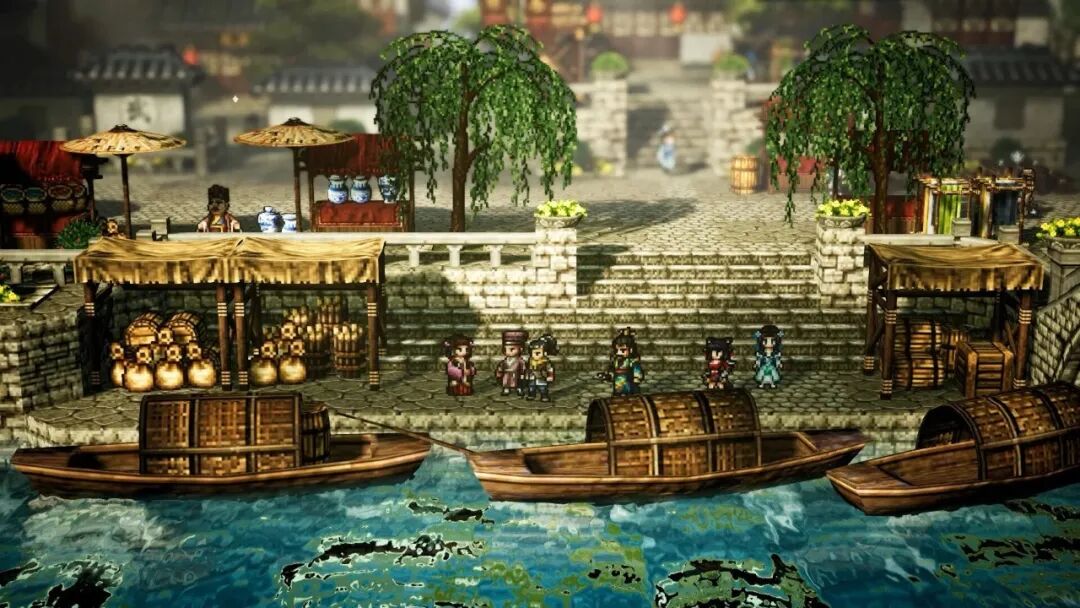
*Swords of Legends: The Wuxia Chronicles*
He believes that future wuxia products will likely continue to segment into subgenres. However, RPGs and action games like *Phantom Blade Zero* offer completely different experiences and cannot directly compete with each other. For wuxia RPGs specifically, we won't see meaningful competition until the market reaches the density of Japanese RPGs back in the 1990s. Considering that developing a wuxia game typically takes several years, this scenario is extremely unlikely to happen in the next three to five years.
Banping Shenxiancu agrees with this perspective, adding that no single work can satisfy every individual's full imagination of wuxia. Players who want a complete, classic wuxia storyline can play *Swords of Legends: The Wuxia Chronicles*, while those seeking higher freedom can choose *Hero's Adventure: Road to Passion*.
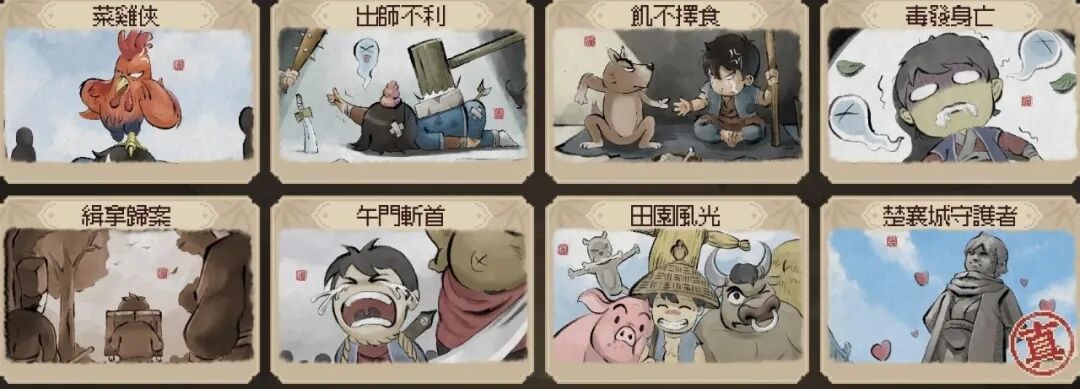
*Hero's Adventure: Road to Passion*
The real limiting factor is players' own time. He shared that many users of *Hero's Adventure: Road to Passion* never actually completed the game, or only unlocked one simple ending. When new major titles launch, their attention quickly shifts to the next game.
ZPP acknowledges that there is objective competition in the wuxia game market, but competition among indie games is more about quality comparison rather than the cutthroat fight for players' time and budget that mobile games engage in. As long as you make a good game, the players who want to play it will still find it.
All three creators agree that at this stage, more wuxia products are definitely better. A larger variety of games can aggregate scattered, niche demands and collectively expand the overall market.
However, the absence of competition only means that products are easier to be noticed by their target users. A blue ocean market does not automatically translate to a massive, thriving market.
As mentioned earlier, both *Swords of Legends: The Wuxia Chronicles* and *Hero's Adventure: Road to Passion* have sales in the order of millions of copies. If we take these numbers as the benchmark for top-tier standalone wuxia indie games, the current commercial ceiling of this market is not particularly high.
But Banping Shenxiancu says that from 2023 to the present, he has felt the wuxia player base growing and the market expanding.
He analyzed that this does not necessarily mean a flood of completely new wuxia players. It may simply be that there were not enough good products in the past to attract these players out of obscurity. At the same time, many users are cross-genre players who enjoy Xianxia, Chinese-style fantasy, and similar themes. They will try wuxia games when they see new, high-quality releases.
Wu Di's judgment is more optimistic. In his view, the perceived limited size of the wuxia player base is largely due to insufficient supply. As the number of products increases and their quality improves, a single breakout hit will inevitably bring in a wave of new players.
He also believes that wuxia is not necessarily a barrier for younger players. While wuxia may seem like an old-fashioned concept to his generation, it feels fresh and new to young people who grew up immersed in ACG (anime, comics, games) culture. Every time Wu Di releases a major update, he sees a significant influx of new users.
ZPP is more cautious in his assessment of the market and user base.
Since the audience for standalone wuxia indie games is inherently core enthusiasts, ZPP believes this group is growing steadily but slowly. He notes that if you remove the "indie" and "standalone" restrictions, the overall wuxia player base is actually very large. Blockbuster titles from major studios like *Where Winds Meet* and *Naraka: Bladepoint* have far higher ceilings and attract massive numbers of players.
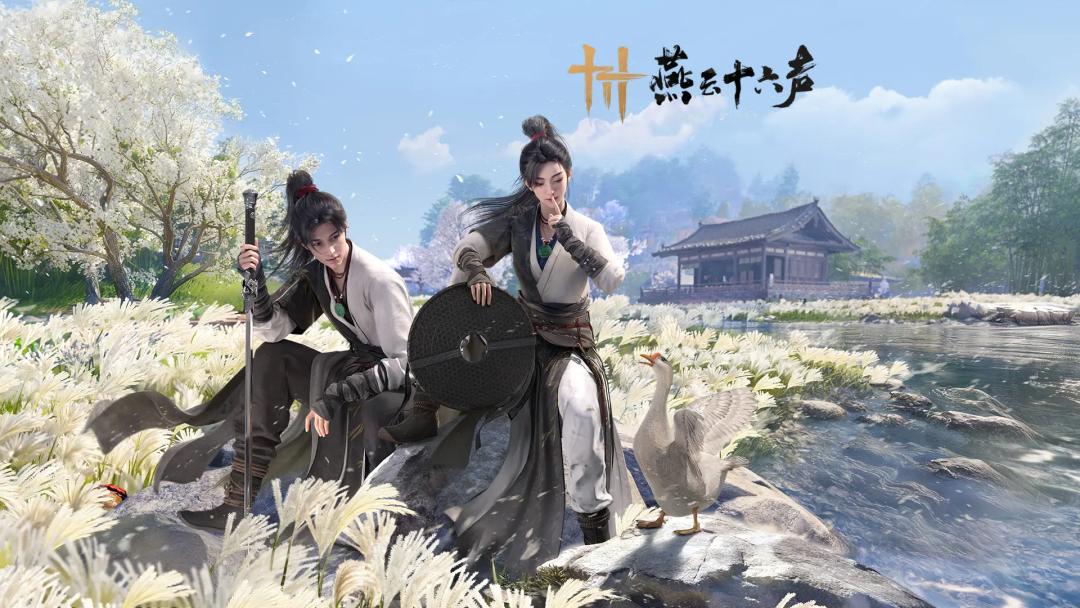
Of course, for small teams, the overall size of the entire wuxia market is of limited relevance. But even within the standalone indie market, significant gaps in team scale and resources still exist.
ZPP told us, "For small teams of fewer than five people, wuxia may not be a particularly wise choice."
02 Making wuxia games is no easy task for small teams
This statement seems contradictory at first glance. *Dragon Heir's Ambition* was developed by a 2-person husband-and-wife team, and the product has achieved impressive sales results.
But when ZPP reviewed the development of *Dragon Heir's Ambition*, he admitted that the "wuxia version of *Taikou Risshiden*" concept placed an overwhelming burden on their small team.
The biggest challenges in developing *Dragon Heir's Ambition* were designing and balancing complex systems. Typically, small, polished indie games have one core system plus a simple outer loop. But the *Taikou Risshiden* structure itself contains many interconnected systems, and adding wuxia elements required integrating character progression, NPC interactions, and more. In the end, if one system in the game had a problem, five or six other systems could malfunction as a result.
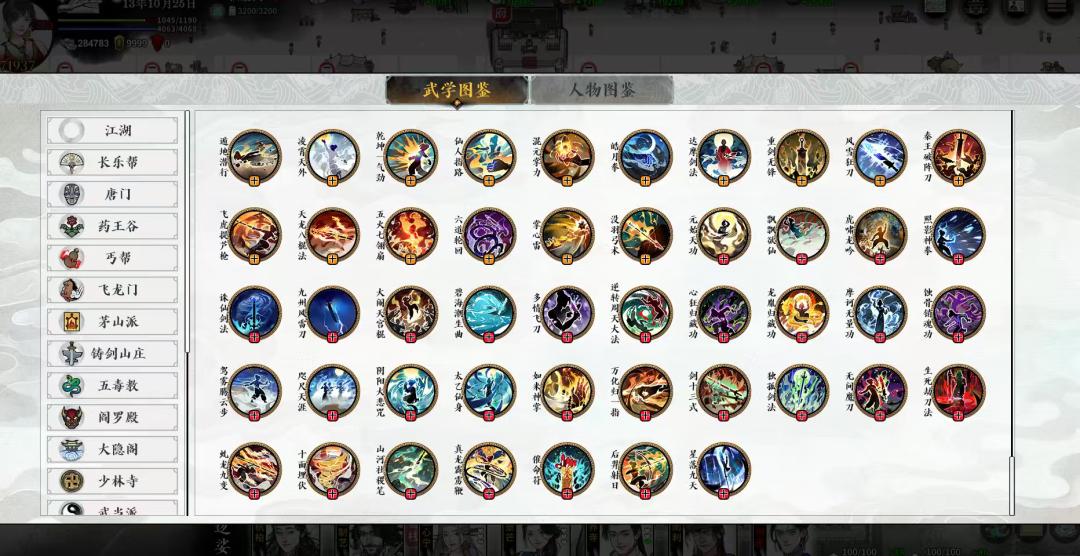
The martial arts system in *Dragon Heir's Ambition*
In reality, *Dragon Heir's Ambition* is already the third game from TPP Studio after their *Home Behind* series, but the team has always remained just two people, with only the music outsourced. ZPP handled gameplay and programming, while TPP was responsible for art. The two worked from home almost every day, only taking half a day to a full day off on weekends.
Even with the experience accumulated from their previous two games, the pair still underestimated the scale of *Dragon Heir's Ambition*. Combining sandbox elements, an open world, and complex systems created an enormous workload, stretching the development cycle from the initial estimated 2 years to 4 full years.
"We spent the first two years building the framework, and the next two years filling in content. In terms of design, we always prioritized reusing existing art assets. If adding a system required creating a large amount of new art from scratch, we would cut it immediately."
Wu Di shares a similar experience when it comes to underestimating project scale.
Originally, *Swords of Legends: The Wuxia Chronicles* was designed to let players join multiple sects. But as development progressed, the team realized this goal exceeded their capabilities, and all their early investment in that feature became sunk costs. Wu Di says the middle phase of development is the easiest to lose control: when designers add new features while laying out details, the workload for every other department doubles.
When we asked how much additional cost adding just one more sect would incur, Wu Di replied, "Based on the normal workflow for a single sect in our game, adding one more sect would increase costs by at least one-third to one-half, even if we reuse some existing content from earlier and later stages."
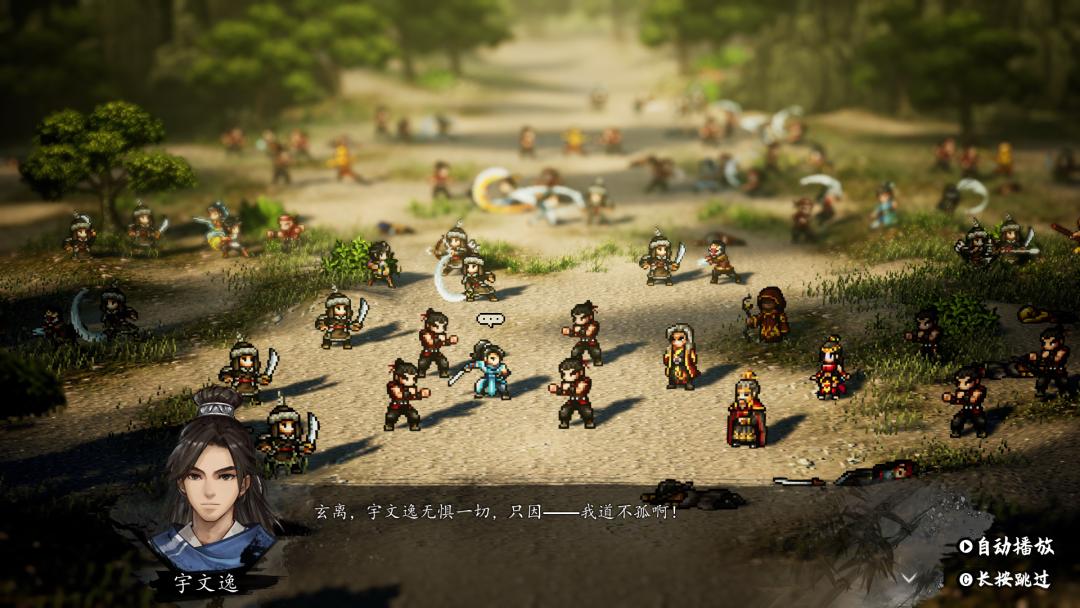
For small and medium-sized teams, choosing the right art style is also critical. *Swords of Legends: The Wuxia Chronicles* uses HD-2D, which still turned out to be very costly in practice. 3D art would involve a whole host of additional issues like rendering and optimization. Therefore, he advises small and medium teams to prioritize polished 2D art when making wuxia games.
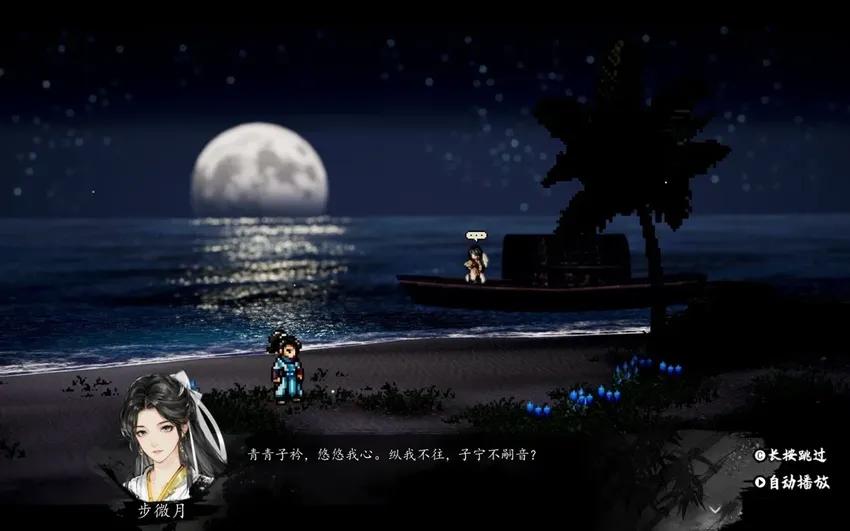
From Banping Shenxiancu's perspective, the cost element that small and medium teams most often underestimate is actually the storyline. The most important part of a wuxia game is immersion, and currently RPGs primarily build the jianghu (wuxia world) atmosphere through narrative. Everything the player does in the jianghu, how different choices trigger chain reactions and butterfly effects, all need to be carefully polished by developers.
He feels that the wuxia game genre is still maturing, and no one has found the perfect entry point yet. Especially, even a modest wuxia game often balloons into a medium-to-large scale project, which small teams struggle to manage effectively.
*Hero's Adventure: Road to Passion* was originally planned on a very grand scale, but during actual implementation, many problems proved unsolvable, and the final product might not even be fun to play.
Overall, wuxia games have a tendency to grow far larger than initially planned. Faced with this scale pressure, small and medium teams often need to narrow their scope first, for example, moving away from traditional RPGs and focusing on gameplay-driven wuxia titles like *Where Winds Meet* and *Backpack Jianghu*.
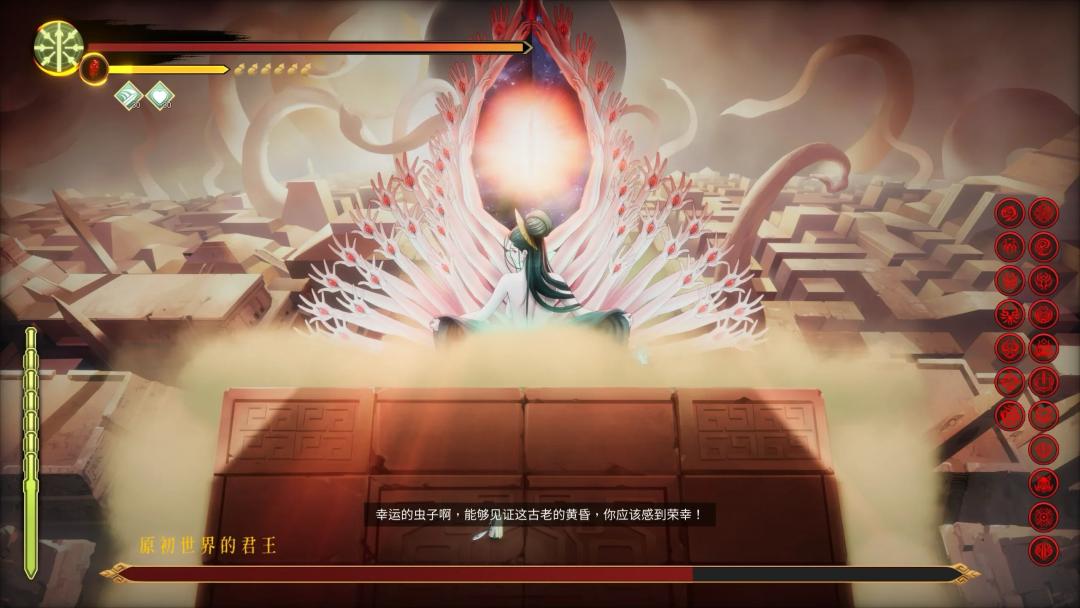
*Where Winds Meet*
These types of products are usually built around a clear core gameplay loop, wrapped in a wuxia theme. For small and medium teams, the "Wuxia +" model seems like a much more realistic path to enter the market.
But the experience of *Dragon Heir's Ambition* shows that combining different gameplay elements can introduce new layers of complexity. Whether "Wuxia +" can actually keep costs under control depends entirely on what you add to the wuxia foundation.
Wu Di also agrees that combining wuxia with a smaller, self-sustaining gameplay loop makes development costs much easier to manage.
However, after narrowing the scope, you need to re-evaluate how many users your product can actually reach. Banping Shenxiancu reminds us that wuxia gameplay is generally limited to action, tactical RPG, and turn-based systems. If you extend further into directions like simulation management, while you can create unique differentiation, your audience will shrink accordingly. *Hero's Adventure: Road to Passion* once released a DLC focused on sect management and development, but actual market feedback showed that the audience for this type of content is relatively small.
Among the three interviewees, ZPP's TPP Studio is the smallest, and *Dragon Heir's Ambition* itself is a typical "Wuxia +" product. His insights on how small teams can succeed with this model are particularly valuable.
In his view, small teams that want to stand out in the wuxia market can explore previously rare gameplay combinations.