On the road toward physical AI, Tesla has sold several more cars.
After two consecutive years of decline, Tesla's car sales have finally rebounded.
Tesla's vehicle deliveries have been on the rise for two consecutive quarters. In the first quarter of this year, Tesla's vehicle deliveries increased by 6% year-on-year, and the year-on-year growth rate expanded to 25% in the second quarter.
However, Tesla's recently released Q2 2026 financial report shows that on the flip side of rising sales and total revenue, automotive gross margin has declined again, operating profit has decreased by 57% year-on-year, and free cash flow has turned negative.
While maintaining its position in the automotive market through price cuts and promotions, Tesla continues to invest heavily in Robotaxi, Optimus, and AI infrastructure. The company is trading current profits for future growth.
The decline in sales has been temporarily halted, but the company's real challenges are just beginning.
1
Tesla has finally delivered a financial report showing that "car sales are picking up again".
Earlier this month, Tesla announced that it delivered 480,100 vehicles in the second quarter of 2026, representing a 25% year-on-year increase and a roughly 34% quarter-on-quarter growth. This figure sets a new all-time record for the company's second-quarter deliveries and is far higher than the market expectation of 406,000 units before the earnings release.
This number is particularly significant for Tesla.
In 2024, Tesla's annual deliveries dropped from 1.8086 million units to 1.7892 million units, and further fell to 1.6361 million units in 2025, marking two consecutive years of decline.
In the first quarter of this year, Tesla delivered 358,000 vehicles, up 6% year-on-year. By the second quarter, the growth rate further expanded to 25%.
At least based on the performance in the first half of the year, the two-year sales decline that plagued Tesla has been temporarily stopped.
According to the newly released Q2 2026 financial report, the increase in deliveries has translated into tangible revenue.
Tesla's total revenue in the second quarter reached $28.236 billion, up 26% year-on-year, exceeding market expectations.
Among this, automotive business revenue was $20.516 billion, a 23% year-on-year increase, also slightly higher than expectations.
Judging solely from delivery volume and revenue, this is a fairly respectable performance report.
The problem is that Tesla's rising sales are very likely the result of "trading price for volume".
Tesla's adjusted earnings per share in the second quarter was only $0.33, down 18% from the same period last year. Operating profit was only $398 million, a 57% year-on-year decrease, pushing the operating margin down to 1.4% compared to 4.1% in the same period last year — all these figures fell short of Wall Street expectations.
The failure of sales growth to smoothly translate into profits has a direct cause: the drop in vehicle selling prices.
Tesla explicitly stated in its financial report that lower average vehicle selling prices and changes in model structure simultaneously dragged down both revenue and operating profit.
Roughly calculated based on automotive business revenue and delivery volume, Tesla's automotive revenue per delivered vehicle dropped from approximately $45,300 in the first quarter of this year to around $42,700 in the second quarter.
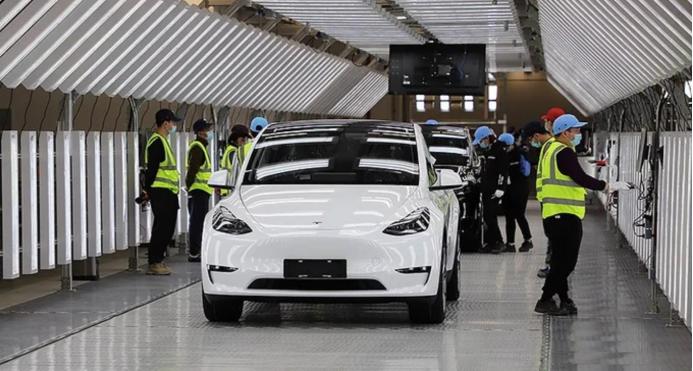
The model mix is also shifting toward lower-priced products.
Of the 480,100 vehicles delivered in the second quarter, Model 3 and Model Y accounted for 467,800 units, making up over 97% of the total. Meanwhile, Tesla previously launched more streamlined, lower-priced versions of the Model 3 and Model Y, and continued to use financial incentives and other promotional measures to stimulate demand.
With high-priced models gradually fading out and core models continuing to move down in price, Tesla's current rebound in deliveries clearly bears the traces of "trading price for volume".
In the second quarter, Tesla's automotive business gross margin was 16.9%. After excluding regulatory credit revenue, the gross margin stood at 16.3%, a 2.9 percentage point decrease from the 19.2% in the first quarter, and also lower than the market's previous expectation of around 18%.
The margin recovery that just emerged in the first quarter did not continue; instead, the gross margin dropped again in a quarter with a substantial increase in deliveries.
It is worth noting that Tesla reduced per-vehicle costs, offsetting part of the impact of price cuts, but it also faced a sharp decline in regulatory credit revenue.
On the other side, Tesla's spending speed is rising rapidly.
In the second quarter, R&D expenses reached $2.371 billion, up 49% year-on-year. Total operating expenses increased to $4.353 billion, a 47% year-on-year rise. Meanwhile, the company's capital expenditures on factories, AI computing power, and new products reached $5.789 billion, 2.4 times the figure from the same period last year. The former suppressed current profits, while the latter directly put pressure on cash flow.
Tesla generated $4.697 billion in cash from operating activities this quarter, which still could not cover its capital investments. As a result, it recorded negative free cash flow of $1.092 billion, marking the first time it has turned negative in more than two years.
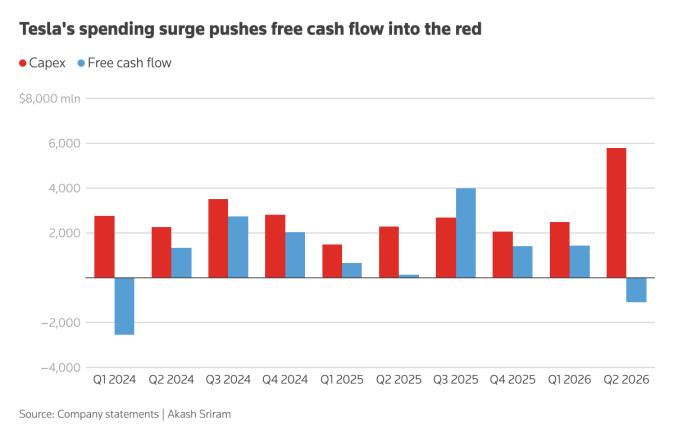
At a time when the automotive business margin is under pressure, Tesla has entered a phase of extremely high investment intensity, with the money spent in the quarter exceeding the cash generated by its main business.
Elon Musk also acknowledged on the earnings call that 2026 will be a year of extremely high capital expenditures for Tesla, but he believes these investments will eventually bring considerable returns.
Tesla expects full-year capital expenditures to exceed $250 billion, and this high level will continue in the coming years.
This figure is almost three times that of last year. Musk is betting on Tesla's AI autonomous driving technology, driverless taxis, and humanoid robots, rather than its automotive business, even though the automotive business remains its core source of revenue.
However, the transformation comes at a high cost. Tesla's valuation largely depends on potential high-profit revenue sources, and these expenditures are intensifying scrutiny from investors.
"Capital expenditures this year are huge, but I believe all our investments will bring amazing returns," Musk told analysts on the earnings call.
After the earnings release, Tesla's stock price once fell by about 4.5% in after-hours trading.
2
Automotive remains Tesla's largest business, but other segments are the ones that truly bring new growth opportunities.
Specifically, in the second quarter, Tesla's automotive business revenue was $20.52 billion, accounting for about 73% of total revenue. Energy generation and storage revenue reached $3.14 billion, and services and other revenue hit $4.58 billion. The latter two together contributed more than a quarter of the total revenue.
It should be noted that a large part of the services and other business still revolves around automobiles, so it cannot be said that Tesla has got rid of its dependence on car sales.
At least in this financial report, the fast-growing businesses are no longer limited to the automotive sector.
The most prominent one is energy storage.
In the second quarter, Tesla deployed 13.5 GWh of energy storage products, representing a roughly 41% year-on-year increase and a 53% quarter-on-quarter growth, setting a new all-time quarterly record. This figure is close to the market's previous expectation of 13.8 GWh.
Tesla's energy storage products mainly include Powerwall for households, and Megapack for power utilities, new energy projects, industrial facilities, and data centers. These products charge when electricity is abundant or electricity prices are low, and discharge during peak hours, helping the power grid absorb volatile wind and solar power, as well as providing more stable power for power-hungry data centers.
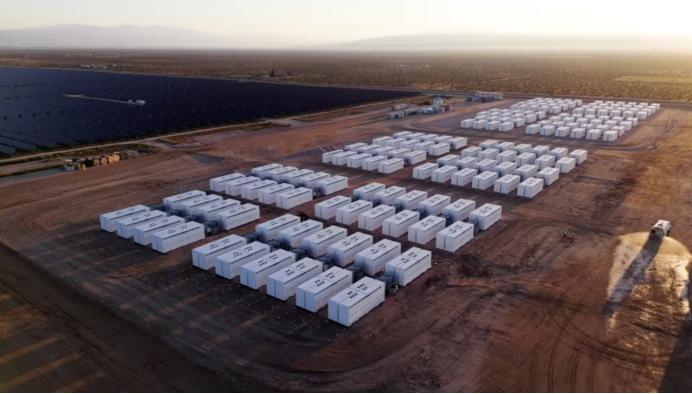
The expansion of AI data centers has further boosted this business. Data centers require a large and stable power supply, and AI training and reasoning also bring rapidly changing electricity loads.
The International Energy Agency predicts that global data center electricity consumption will increase from approximately 485 TWh in 2025 to around 950 TWh by 2030, pointing out that the drastic power changes brought by AI workloads have made energy storage an important tool to ensure continuous power supply.
Tesla has also separately listed data centers as an application scenario for Megapack, which is used to maintain power supply during power outages and grid fluctuations.
Therefore, Tesla's energy storage business benefits from two streams of demand: one is the grid energy storage demand driven by the development of wind and solar power, and the other is the new demand for electricity consumption and power supply stability brought by AI data centers. This business shares similar battery, power electronics, and software capabilities with the automotive business, but its customer base is completely different.
While automobiles are mainly sold to individual consumers, Megapack's buyers are usually power utilities, energy developers, and large enterprises, where a single project may deploy hundreds of units.
The revenue performance of energy storage is not as impressive as its deployment volume. This business generated $3.14 billion in revenue in the second quarter, up 13% year-on-year, but lower than the market expectation of $3.77 billion.
Large-scale energy storage projects involve large amounts of capital and long construction cycles. The delivery time and revenue recognition rhythm of different projects also vary, making it inevitable for single-quarter results to fluctuate. The fact that 13.5 GWh was not fully converted into revenue in the quarter already indicates that Tesla's energy storage order backlog and delivery capabilities have reached a new level.
This business is becoming a segment that can stably contribute billions of dollars in revenue beyond the automotive sector.
Another easily overlooked source of growth comes from "services and other". This segment's revenue reached $4.58 billion, up about 50% year-on-year, significantly higher than the market expectation of $3.76 billion. According to Tesla's recently filed 10-Q form, this category mainly includes used car sales, non-warranty repair and body shop services, paid Supercharging, and automotive insurance. As the number of Tesla vehicles on the road increases, the company can continue to generate profits from charging, repairs, insurance, and used car transactions after selling the vehicles.
FSD also released a more specific figure.
As of the end of the second quarter, the number of active users with FSD enabled reached 1.48 million, a 56% year-on-year increase, including both monthly subscription users and owners who previously made one-time full purchases. Tesla also stated that over 55% of new vehicles delivered in North America in the second quarter came with FSD subscriptions at the time of delivery.
With the rapid growth of the user base, software fees have begun to generate tangible revenue.
3
While the financial report shows how much money Tesla is currently making, the focus of the earnings call quickly shifted to the future.
At a time when automotive margins continue to face pressure, Robotaxi, Optimus, and AI infrastructure are undertaking more important tasks: justifying why Tesla will spend over $250 billion in a single year, and explaining why the company deserves to maintain a valuation far higher than traditional automakers.
Reuters pointed out before the earnings release that a large part of Tesla's market value is built on the prospects of autonomous driving and humanoid robots, and investors now need to see that these huge investments are translating into tangible progress.
The most anticipated segment is still Robotaxi.
This business has indeed made progress.
Tesla stated that Robotaxi has now entered 7 metropolitan areas in the United States, completing a cumulative total of approximately 380,000 miles of driverless operation without safety drivers. The Cybercab, specially designed for driverless taxis, has also started production in Texas and entered the phase of engineering validation and employee testing. The FSD version used by Robotaxi has been upgraded to V15, which is more advanced than the V14 version currently used by regular vehicle owners.
However, there is still a long way to go before achieving true large-scale commercialization.
Tesla did not disclose the size of the Robotaxi fleet, order volume, number of rides, or revenue in its financial report. The existing operating vehicles are mainly modified Model Y units. The offline Cybercab has not officially entered the paid operation network, and safety personnel are still present in the vehicle during public road tests.
In other words, Tesla has proven that driverless taxis can operate in a few areas, but it has not yet demonstrated that it can quickly replicate this model to dozens of cities and build a large-scale, profitable business.
This explains why investors are paying increasing attention to Musk's past promises.
When Robotaxi was first launched in Austin, he predicted that the service would cover half of the U.S. population by the end of 2025. In January this year, Tesla announced plans to enter 7 new cities in the first half of the year.
The actual expansion pace is significantly slower than these targets.
Musk attributed this to safety validation, stating that Tesla intentionally adopts a cautious launch approach to avoid a single serious accident that could destroy the public's trust in the entire project. This explanation is not entirely unreasonable, but it also means that Robotaxi will hardly expand as quickly as previously promised in the short term.
The situation with Cybercab is similar. While starting production is definitely a substantial progress, this new vehicle without a steering wheel and pedals needs to face entirely new manufacturing processes, component supply chains, and regulatory approvals.
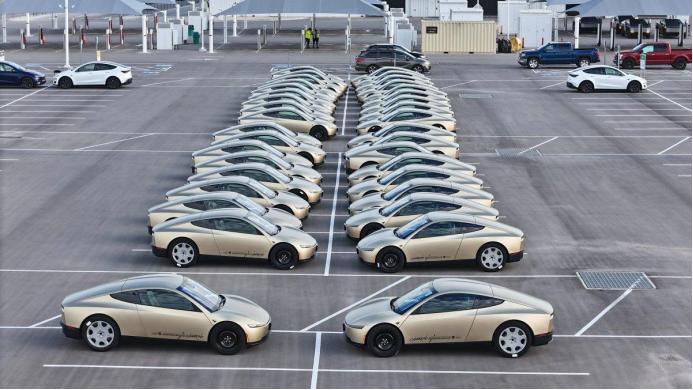
Musk previously gave an early warning, stating that Cybercab's early production volume will be "painfully slow" before it can potentially accelerate. No specific production volume for this year was provided at this earnings call, nor was there a clear timeline for when it will officially start carrying paying passengers.
At least Robotaxi is already operating on public roads, while Optimus is even further away from generating revenue.
Tesla stated that Optimus will begin production at the Fremont factory later this year. The first batch of robots will not be sold directly to external customers; instead, they will enter the company's so-called "Optimus Academy" to perform tasks within Tesla, collect training data, and continue developing new features.
The company did not announce the initial production volume, per-unit cost, or external selling price, nor did it provide a clear date for the official debut of the new-generation Optimus or its sale to external customers.
This indicates that Optimus is moving from laboratory prototypes to small-scale production, but it has not yet become a true commercial product.
Musk still calls Optimus one of Tesla's most important future products, even believing that it could eventually surpass the automotive business in scale. While the