6 commercial properties of Vanke Fangshan Changyang Tiandi were auctioned, with a listing price of about 65 million yuan
Recently, multiple sets of Vanke's held commercial assets in a project in Fangshan, Beijing have been listed on the Ali Judicial Auction Platform.
Public information from the platform shows that the assets up for auction are part of the ground-floor shops in Wuhe Vanke Changyang Tiandi, totaling six properties with a combined area of 4,479.58 square meters, all designated for commercial use.
For these six commercial properties, the appraisal agency gave a total estimated value of about 116.2 million yuan, but the listed total auction price is approximately 64.978 million yuan, equivalent to a 56% discount.
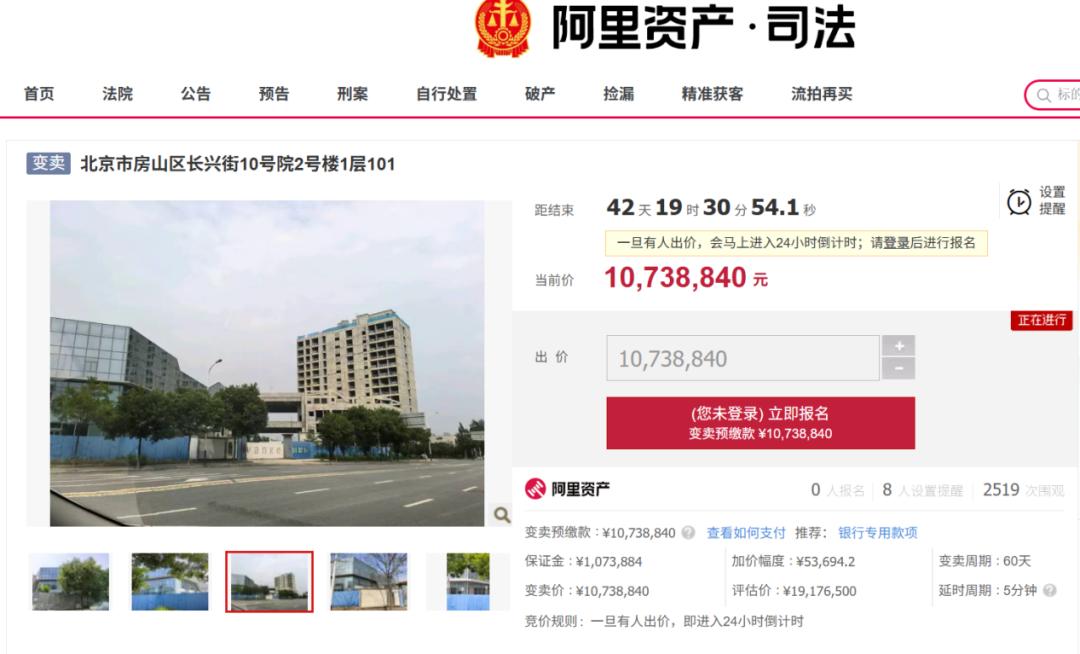
Source: Official website of Ali Assets
No bids have been placed on these assets yet, and the property rights temporarily remain with Beijing Wuhe Vanke Real Estate Development Co., Ltd. (hereinafter referred to as "Wuhe Vanke"). The major shareholder behind Wuhe Vanke is Beijing Vanke — holding a 69% stake.
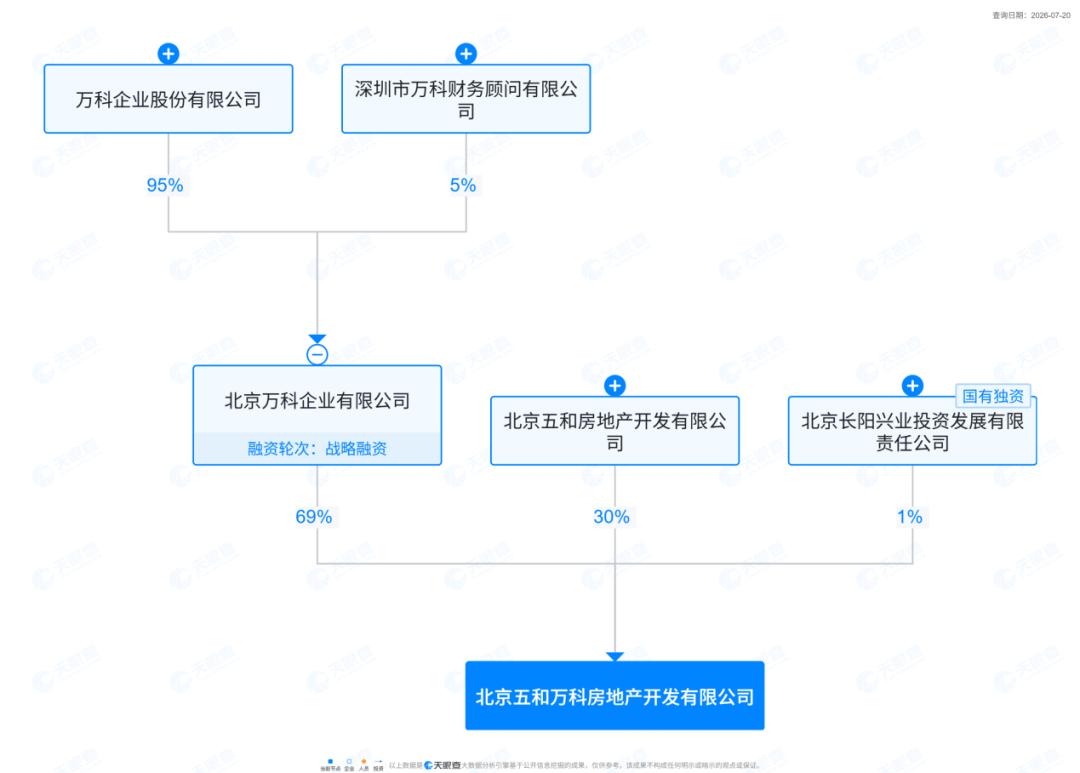
Source: Tianyancha
The Changyang subdistrict in Fangshan is an area where Vanke has made heavy investments in Beijing. Vanke has developed multiple large-scale projects here, including COFCO Vanke Changyang Peninsula, Wuhe Vanke Changyang Tiandi, Vanke Jinyu Tixiang, and Jingtou Vanke Jinyu Park. Some of the supporting commercial properties were retained by Vanke as held assets.
In the early stage of Vanke's transformation to become a "urban supporting service provider", the company planned to package these scattered community malls and individual ground-floor shops into asset portfolios. By introducing foreign investment or strategic investment from state-owned enterprises, or converting them into community commercial REITs, Vanke aimed to increase asset liquidity through capital operations on one hand, and enhance the value of these community businesses on the other, ultimately boosting Vanke's total assets.
This strategy was designed to adapt to the previous phase where an increasing number of residential land parcels were bundled with non-residential land for commercial and office use during the transfer process, resulting in a large number of held commercial assets remaining in the hands of real estate developers.
Now, these assets have become "debt-settlement tools" targeted by creditors.
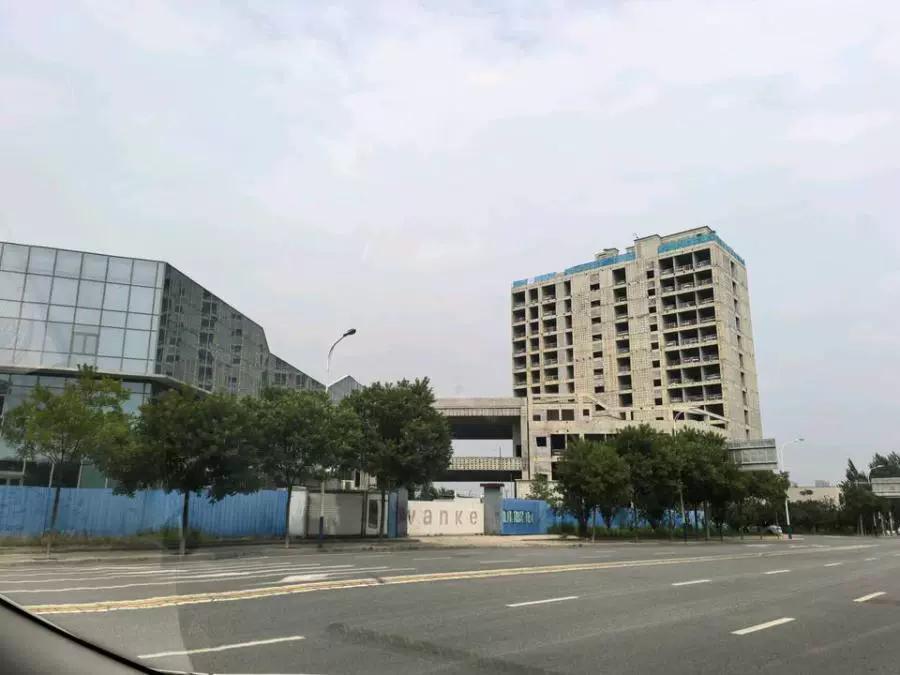
Source: Official website of Ali Assets
In fact, the assets of Wuhe Vanke Changyang Tiandi in Fangshan, Beijing that have been "frozen" are not limited to the six properties listed for auction. This batch of assets totals 23 properties, with an overall value ranging from 200 million to 300 million yuan.
Back in 2024, these assets were sealed due to a contract dispute between Wuhe Vanke and the First Construction Engineering Co., Ltd. of China Construction Second Engineering Bureau. The dispute remained unresolved by the end of 2025, after which the assets were appraised, and judicial auctions began in 2026.
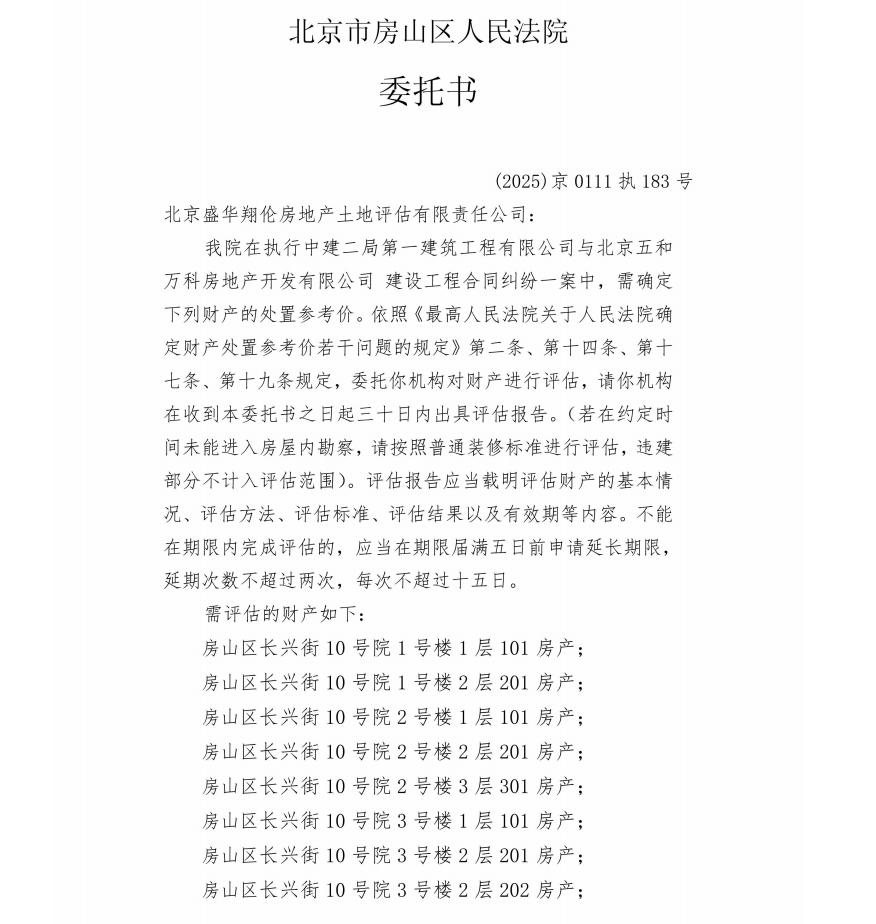
Source: People's Court of Fangshan District, Beijing
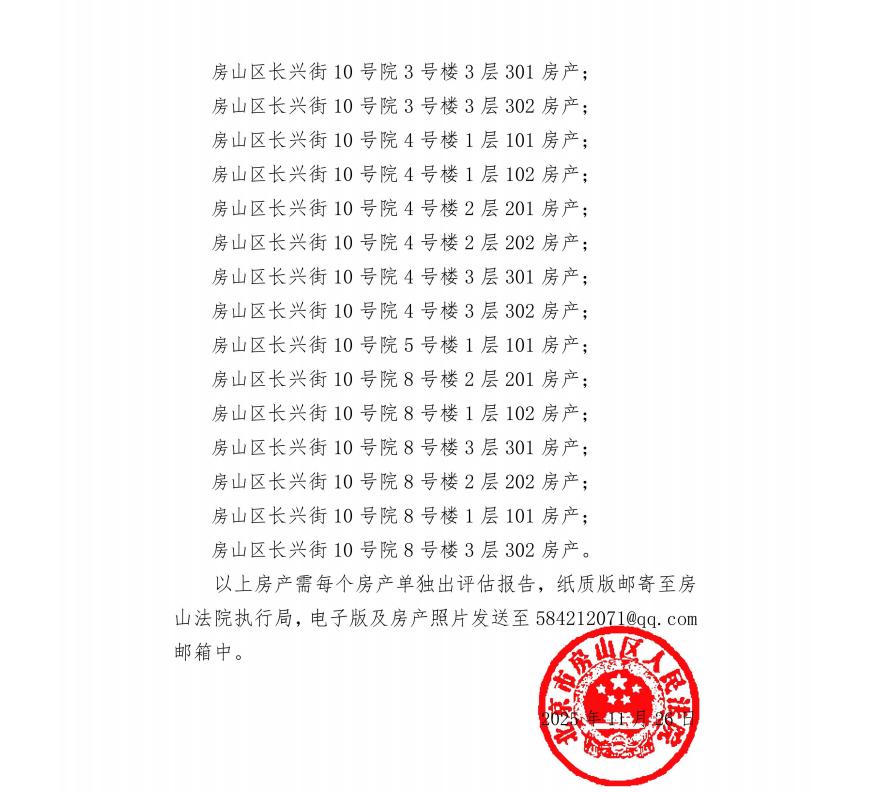
Source: People's Court of Fangshan District, Beijing
The disposal of assets at Wuhe Vanke Changyang Tiandi in Fangshan is a reflection of Vanke's current operational status. According to statistics from Tianyancha, there have been as many as 1,487 directly related lawsuits involving Vanke since October 2021. Among them, there are up to 1,018 litigation updates since 2025.
The majority of these lawsuits are related to outstanding payments along Vanke's supply chain.
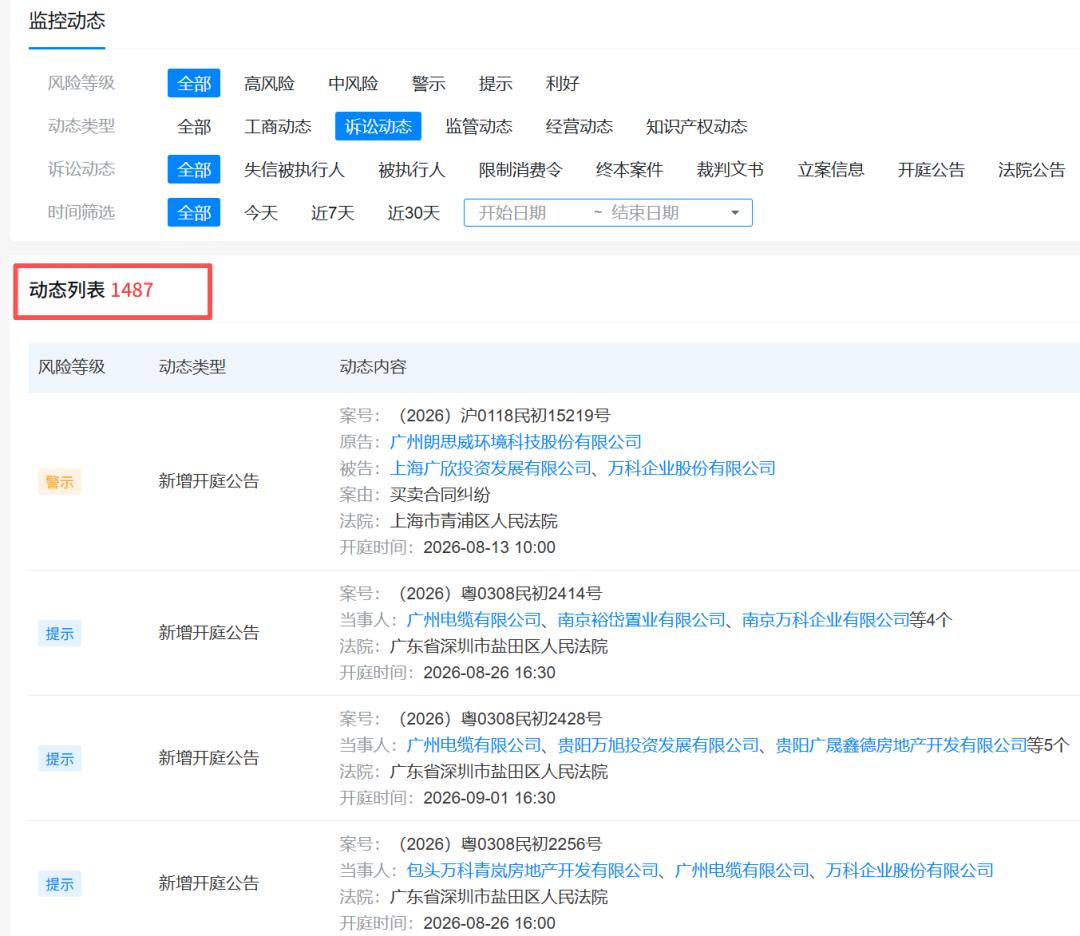
Source: Tianyancha
Debt pressure is currently the biggest challenge facing Vanke. Vanke's debt can be divided into two levels:
The first level is public debt at the group level. According to information released by Vanke, the company still faces a total of 14.68 billion yuan in maturing public debt in 2026, with 11.27 billion yuan due from April to July, creating particularly prominent repayment pressure. This portion of debt needs to be resolved through revenue from property sales, property and commercial operations, new borrowings, or the sale of large-scale property assets;
The second level is outstanding payments owed to suppliers by Vanke's project companies. According to Vanke's 2026 first-quarter report, this portion of outstanding payments still amounts to about 121 billion yuan. Among them, payments to general contractors like China Construction Second Engineering Bureau account for the largest share, followed by amounts owed to material and equipment suppliers.
There are currently two main ways to resolve the money owed to suppliers:
1. Installment cash repayment: Payments are made using cash generated from property sales, asset sales, and project equity disposals;
2. Settling debts with properties: Using residential properties, shops, parking spaces, and apartments valued at set prices to offset outstanding payments. Given the complex structure of the owed amounts, this method is the fastest to implement.
As a result, some financially strong suppliers will choose to take legal action to seize part of Vanke's physical assets, and then achieve "distressed" cash recovery through sales or auctions.
Therefore, Vanke's assets will continue to be listed on auction platforms across different regions. Recently, in addition to the commercial properties at Wuhe Vanke Changyang Tiandi in Fangshan, Beijing being listed for auction, Vanke's properties on floors 13 to 19 of Building 1, No.19 Anning Road, Chengzhong District, Xining City, Qinghai Province are also currently listed for auction. The property rights of these assets belong to Xining Wanhan Real Estate Co., Ltd., where Vanke holds a 40% stake, and Vanke's partners hold a 2% stake.
In addition, partial assets of the office building at Dongguan Vanke Tower, some office properties in Vanke Tianyu Central Plaza in Longgang, Shenzhen, and some shops in Vanke City in Nanning are all seeking buyers.
At the beginning of July, Vanke was successively listed as a person subject to execution in Yantai, with a total execution target exceeding 90 million yuan.
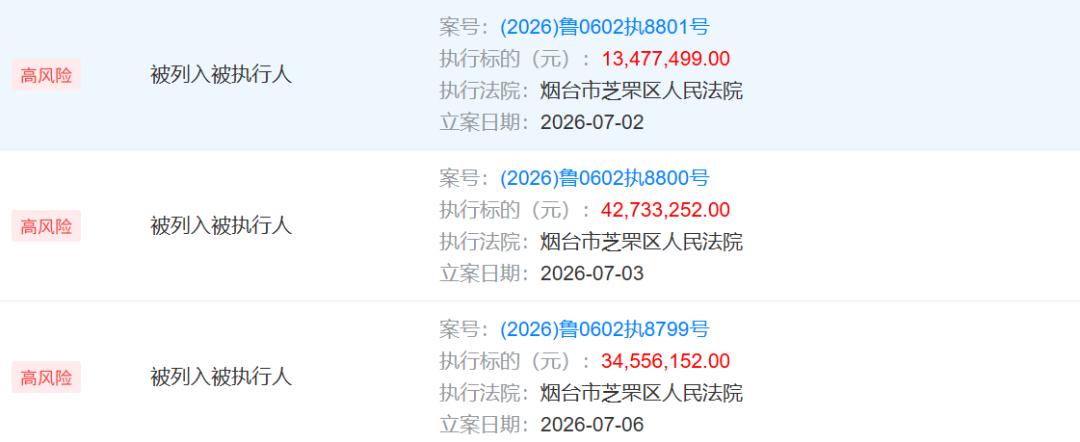
Source: Tianyancha
Vanke's development trajectory is one of the most closely watched events in the entire industry. Currently, the confidence of creditors and suppliers in Vanke heavily depends on the attitude of its major shareholder towards the company.
At the end of last year, after Shenzhen Metro Group announced that its support for Vanke had shifted from "unlimited backstop" to limited resources, the market immediately grew concerned about Vanke, and a few stakeholders began to take action against Vanke, applying for preservation or freezing of project assets and equity one after another. The concentrated emergence of this phenomenon dealt a fatal blow to Vanke, which was already on the verge of fragmentation.
However, the major shareholder Shenzhen Metro Group has recently changed its attitude, starting to "fully take over" Vanke, showing signs of integrating Vanke into the major shareholder's group system. Based on experience in enterprise reform, Vanke's thorough "transformation" will mark a new beginning. It is hoped that Vanke will gradually return to normal operations from here on.
This article is from the WeChat Official Account "Future Habitat", written by Wu Jian Da Wu, and published with authorization from 36Kr.