From social applications to the AI ecosystem, Soul aims to turn "multimodal interaction" into a next-generation technological capability.
From social apps to AI interaction, and then to hardware and industrial openness, Soul is expanding its business boundaries.
As the capabilities of large AI models begin to spill over from the cloud and seek a "physical body" in the real world, this has become one of the most crowded tracks in 2026. As a centralized showcase of cutting-edge AI trends, the 2026 World Artificial Intelligence Conference (WAIC) is almost everywhere answering the same question: How can AI "grow" a physical entity and truly step into human living spaces?
Among the debut lineups this year, a company that started out as a social app - Soul - has offered an unexpected answer.
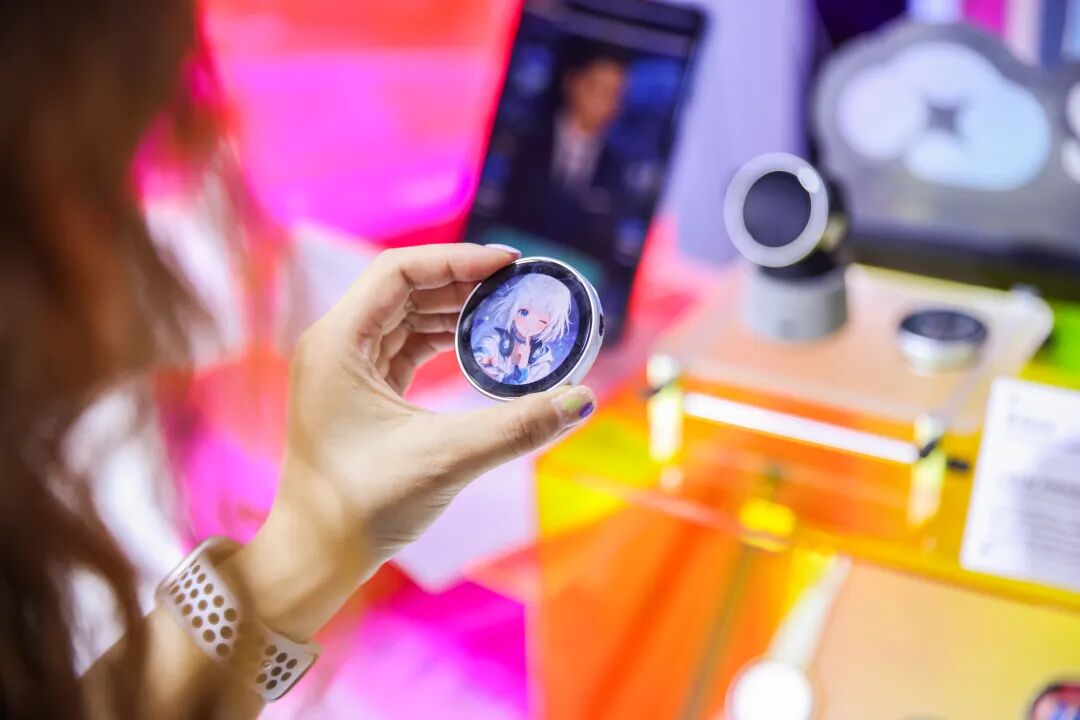
It has launched a new AI hardware product called B Soul. This product attempts to explore a new form of AI interaction: users can communicate with AI characters in real time via voice, and with the help of the screen, light effects and NFC accessories, the digital characters on its platform, which used to be virtual avatars in mobile apps, now have a tangible, companionable, and always-wakeable physical form for the first time.
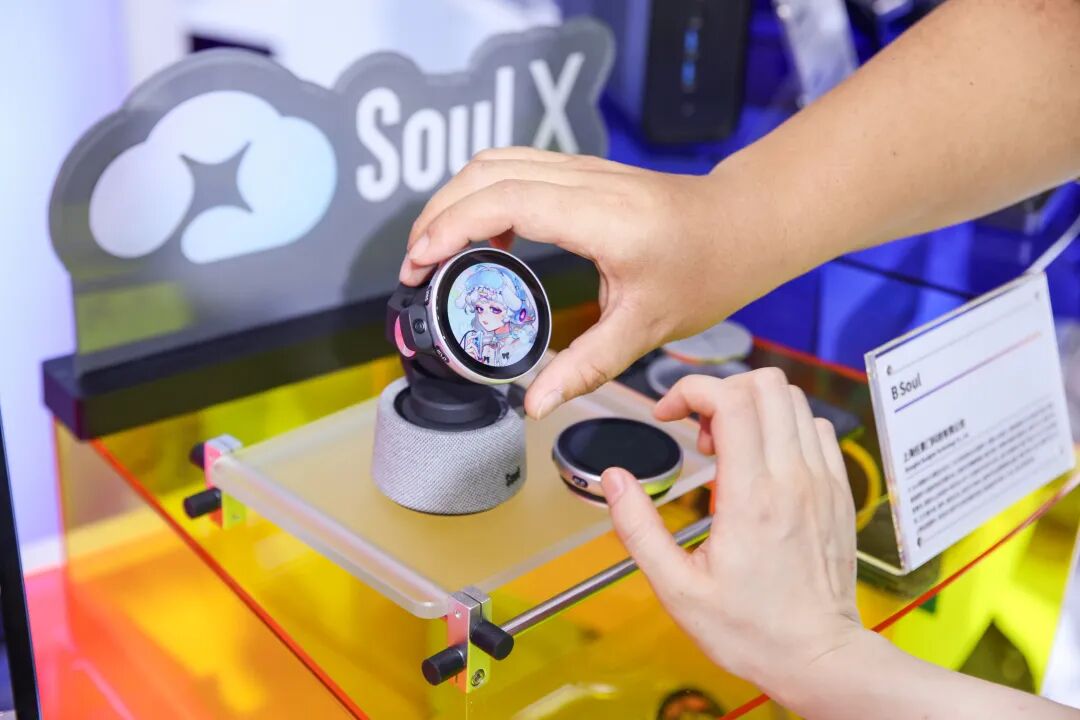
This is far more than a cross-border move in the product line. For Soul, behind this hardware is a platform with hundreds of millions of users and nearly a decade of deep cultivation in social scenarios, making new explorations of its own foundation in the AI era. Over the past decade, Soul has explored new ways of connecting people in the mobile Internet era; after entering the AI era, it is trying to further expand its capability boundary from "connecting people" to "understanding the interaction between humans and the digital world".
B Soul is the first physicalized answer put forward by Soul. In its new strategic plan, Soul App continues to play the role of verifying user scenarios and iterating models. Relying on its core technical capability SoulX - a large multimodal interaction model oriented to emotion perception, voice-first experience, and multimodal interaction, it hopes to further export these capabilities to broader industrial scenarios such as AI hardware, digital content, and embodied intelligence.
Under the spotlight of WAIC 2026, this company is undergoing an identity reconstruction, transforming from a social application company to an AI ecosystem enterprise centered on emotion perception, real-time interaction, and the integration of models and applications. The AI hardware and SoulX real-time digital human presented at the WAIC site are just the tip of the iceberg on this new voyage.
Why does Soul need to move towards hardware?
For a company like Soul that started with online social networking, entering the AI hardware sector is not a "counterintuitive" choice.
The past development logic of the Internet is essentially a continuous reduction of the cost of connection between people. The mobile Internet has broken the distance limit for interpersonal communication; social platforms have further enabled users to build new interactive relationships in the digital space through algorithm recommendation, interest matching and virtual identities. Soul grew up in this very process.
But AI is changing another thing: the digital world is no longer just a medium for information transmission, but has begun to have the capabilities of understanding, responding and continuous interaction. People's emotional connection relationships have expanded from interpersonal relationships to AI virtual characters.
Virtual characters are not a new concept. However, with the continuous enhancement of AI capabilities, virtual characters have become more enriched with the support of large model capabilities such as long-term memory and active interaction. As a result, social platforms are also facing new market demands: to find a foothold for digital relationships in real life.
This means that one of the core competitiveness in the AI era may not only be content generation, but how the digital world can more accurately understand people's needs, emotions and interaction states.
As an interaction carrier, AI hardware has thus entered Soul's business vision. Tao Ming, CTO of Soul, said in a recent interview, "Beyond mobile phones, we also hope to extend relationship connections, emotional value and companionship experience to real life through richer intelligent terminal devices, so that perception and interaction can be realized anytime and anywhere." In their view, mobile apps solve the problem of function entry, while hardware provides a more stable interaction scenario.
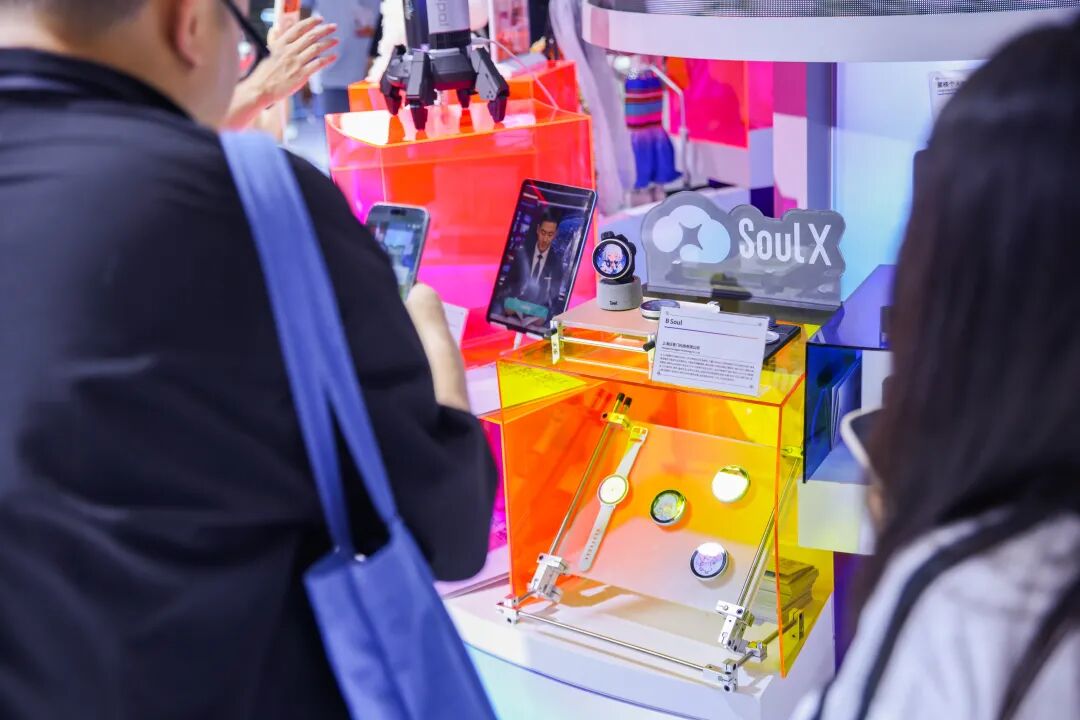
When AI capabilities are embedded in physical devices, they can be further extended into daily living spaces.
Different from task scenarios such as search and office work, a large amount of information in social interaction is difficult to be simply structured. The same expression, placed in different tones, pauses, contexts and relationship backgrounds, may convey completely different meanings. This also means that AI focusing on interaction scenarios needs stronger emotion perception and real-time communication capabilities.
Soul's long-operated high-frequency interactive social platform can exactly provide a real feedback and verification environment for such capabilities.
Under compliance and desensitization mechanisms, continuous interactions, voice intonations and interaction rhythms in social scenarios can provide feedback for the model to understand emotions and communication states; after the model capabilities are launched, feedback such as whether users use it and whether the conversation can be sustained can be fed back to the next round of training and product adjustment. According to data disclosed by Soul, as of the first eight months of 2025, Soul already had 4.6 million active AI users, accounting for a considerable proportion of the total number of users.
In this process, Soul has gradually built up technical capabilities centered on real-time interaction, including voice generation, multi-speaker transcription, full-duplex dialogue and real-time digital human, forming the AI technology base SoulX. In other words, Soul's exploration of hardware is not simply adding a new device entry, but hoping to bring the AI capabilities accumulated in social scenarios into more real-world applications. At the same time, the brand new hardware will also become a new carrier for Soul IP.
"When perception and interaction enter the physical space, they have the opportunity to become a more stable and more present relationship entry," said Tao Ming.
From the perspective of industrial trends, the competition in AI hardware may not ultimately be a competition of devices, but a competition of underlying model capabilities and interaction experiences. Hardware plays the role of an entry, and what really determines long-term user adoption is whether AI can continuously understand users, provide natural feedback, and form a stable experience.
At the same time, hardware also opens up new room for business imagination. As a carrier for virtual characters to enter real life, it can further connect value-added services such as character content, membership subscriptions, expanded accessories, and community interactions. This means that AI hardware may not just be a single device, but a new type of consumer ecosystem formed around digital characters.
In other words, hardware is only a real-world entry, AI capabilities determine the interaction experience, characters and content maintain stable user retention, and subscriptions and accessories actually account for the bulk of subsequent monetization.
More than just hardware, what about To B?
In addition to consumer-oriented hardware, Soul is also exploring the B-end market.
36Kr has learned that in the future, SoulX will not only serve Soul App and its own hardware, but plans to gradually provide AI interaction capabilities to external customers. According to the current arrangement, Soul will prioritize serving the domestic content industry in the second half of 2026, covering capabilities such as speech synthesis and digital human generation, and provide complete voice interaction solutions for different scenarios such as intelligent customer service and embodied intelligence; then it will further expand into overseas markets.
Compared with more application implementations in the domestic market, overseas business in Soul's plan puts more emphasis on platform-based capability export. It hopes to convert voice generation, real-time dialogue and multimodal interaction capabilities into AI solutions for global developers and enterprise customers.
This path has already had verified cases in overseas markets.
For example, voice AI company ElevenLabs first gained attention for its voice generation technology, and then continuously expanded its product boundaries, moving from content creation tools to the enterprise-level real-time voice agent market.
According to the disclosure from ElevenLabs, the company's annual recurring revenue exceeded 330 million U.S. dollars by the end of 2025; by the first four months of 2026, its ARR has exceeded 500 million U.S. dollars. In February 2026, ElevenLabs completed a 500 million U.S. dollars Series D financing, with a valuation of 11 billion U.S. dollars. In essence, what ElevenLabs has proved is that voice capabilities are gradually evolving from a single function to a critical infrastructure for human-AI interaction.
The opportunity seen by Soul also comes from a similar trend. As AI enters scenarios such as smart hardware, robots and digital humans, the market does not only need AI that "can speak", but a real-time interaction system that can understand context, recognize emotions and complete natural interactions.
However, the paths of Soul and ElevenLabs are not the same. ElevenLabs follows a more typical path: first building a global developer platform, then extending to enterprise-level solutions; while Soul tries to grow "new flesh and blood" from its existing social scenarios, iterating the model with real interaction scenarios, and then exporting the capabilities to hardware and industrial customers.
This also determines the leap that Soul needs to complete in the next stage: converting the capabilities that serve its own scenarios into products that can be accessed by external customers at low cost, deployed in a standardized manner, and used continuously; at the same time, supplementing capabilities such as multilingual adaptation, developer tools, overseas sales and local compliance.
From launching its own hardware, to industrial openness, and then to the planning of overseas markets, Soul has built a clear basic framework for its new growth curve. What needs to be proved next is whether this set of AI capabilities grown out of social applications can go beyond the original online social product system and complete commercial verification in a broader market.