Alibaba rushed to invest, and GLP followed up. With what did this professor from the University of Hong Kong secure four rounds of financing in the low-altitude sector within half a year?
In 2026, the overall sentiment in the primary market remains cautious. A large number of projects face extended financing cycles and valuation pressure, with LPs tightening their purse strings and GPs acting prudently.
In such an environment, what enables a startup established only half a year ago to attract an all-star lineup covering early-stage VCs, internet giants, established PE firms, and industrial capital?
The company, named SPARO Technology, offers an unconventional answer.
Having successfully completed four consecutive financing rounds within half a year, raising a cumulative total of hundreds of millions of yuan, its investor roster is undeniably impressive: the seed round was exclusively backed by Road Vision Capital, Jinqiu Fund finalized its leading investment decision in less than 10 days, followed by successive participation from Alibaba, Hony Capital, GLP J-Space, and Yunshi Capital. China Renaissance served as the exclusive financial advisor.
The answer lies in two key terms. The first is Zhang Fu, a tenured associate professor at the University of Hong Kong and the top-ranked Chinese scholar in global robotics research impact. The second is General Aerial Intelligence, which transforms aircraft from "remote-controlled tools" into "thinking aerial intelligent agents."
This is far more than a mere financial investment—it represents a strategic positioning battle centered on the "intelligent foundation" of the low-altitude economy.
The low-altitude economy is transitioning from policy pilots to a new stage of legal governance. At this critical juncture, the intelligent system layer represented by SPARO Technology is precisely the segment with the most lenient competitive landscape across the entire industrial chain. While aircraft manufacturers are as crowded as smartphone brands, players capable of developing an "Aerial Android System" are few and far between globally.
The Unprecedented Frenzy of Competing Investments in the Primary Market
SPARO Technology's financing pace stands as a remarkable spectacle in the 2026 primary market. As an investment banker involved in the round put it: "This isn't a project we had to chase—investors were scrambling to secure allocation."
In February 2026, the company completed its seed round financing in the very month of its registration, with exclusive investment from Road Vision Capital. As an early-stage VC focused on hard technology, Road Vision Capital laid out a highly technical investment rationale: "Professor Zhang Fu's team consists of top-tier scholars who possess the globally rare combined expertise in multi-modal SLAM underlying algorithms and end-to-end full UAV system capabilities. FAST-LIVO has already become one of the de facto industrial benchmarks in the global robotics field."
Jinqiu Fund moved even faster, completing its investment decision in less than 10 days from their first meeting. Jinqiu Fund noted that it has invested in over 10 enterprises in the embodied intelligence sector, and SPARO Technology, as a strategic complement in the aerial dimension, will help perfect its land-air-sea portfolio. "AI technology will become a new variable in the UAV industry, and Professor Zhang Fu leads the world-class academic team we have identified in this field."
In May 2026, the Pre-A round financing was completed. In July, the A round was finalized, with Alibaba, Hony Capital, GLP J-Space, and Yunshi Capital all participating.
Four financing rounds completed within five months, with investors continuously increasing their stakes—such a pace is extremely rare under the current market conditions.
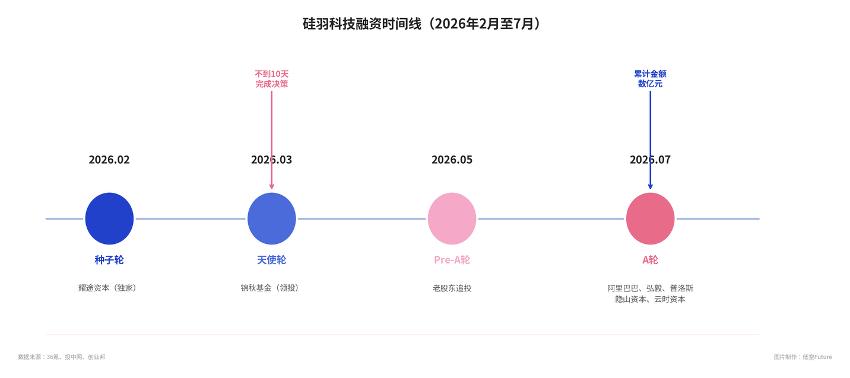
Figure 1: SPARO Technology Financing Timeline (February to July 2026)
Judging from the investor profiles, SPARO Technology's capital ecosystem exhibits clear characteristics of strategic synergy.
Road Vision Capital validated technical feasibility, Jinqiu Fund completed its embodied intelligence landscape, Alibaba provided scenario resources from Cainiao Logistics and Alibaba Cloud, GLP J-Space offered logistics park test sites and computing power infrastructure, Hony Capital valued its systematic technology accumulation, and Yunshi Capital bet on the technology's commercialization prospects.
With six institutional investors each holding clearly defined industrial positioning, their combined forces form a collaborative network covering computing power, logistics scenarios, distribution channels, and policy resources.
Tian Feng, Dean of the Fast & Slow Thinking Institute, offered a precise summary: This capital structure design is far more strategically layered than simply pursuing valuation maximization. Investors are not making isolated financial bets—they are assembling a resource puzzle where each party fulfills its own needs and complements others' shortcomings.
Amid the capital frenzy, Zhang Fu has remained consistently restrained.
"We will never burn cash for growth. Every investment we make corresponds to a verifiable technical or commercial milestone." Even before its official establishment, SPARO Technology had completed Demo validation and entered the pre-mass-production preparation phase. The next priority is to streamline small-batch deliveries and establish a solid engineering foundation for large-scale manufacturing.
Why Zhang Fu?
The capital rush to invest in SPARO Technology is essentially a race to back Zhang Fu himself.
From the perspective of a GP with 10 years of hard technology investment experience: "Zhang Fu is one of the very few people globally who has accomplished three things simultaneously: publishing a cover paper in Science Robotics, leading core product development at DJI, and founding a company that bridges academic research and industrial application."
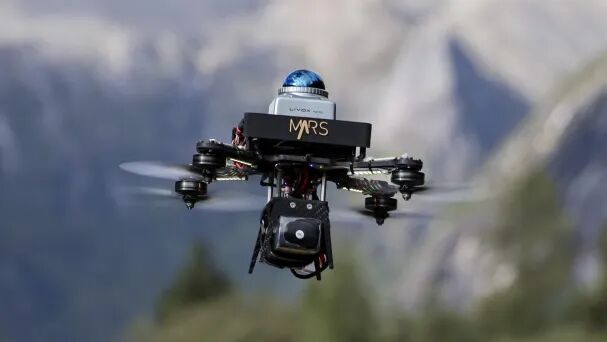
Zhang Fu is currently a tenured Associate Professor in the Department of Mechanical Engineering at the University of Hong Kong and the Director of the university's MaRS Lab (Mechatronics and Robotic Systems Laboratory). He has been selected as one of Clarivate's top 1% highly cited scientists globally. In ScholarGPS's global robotics scholar impact rankings over the past five years, he ranks 5th worldwide and 1st among Chinese scholars. His team's research has been published more than 20 times in top international academic journals including Science, Nature sub-journals, IJRR, TRO, and TPAMI.
On the industrial front, Zhang Fu has been deeply involved in DJI's core technology R&D and product implementation since 2016, serving as a Senior Advisor Scientist for eight years across key domains including flight control systems, multi-sensor fusion, and LiDAR. This means he is not just a scientist confined to the ivory tower—he is a seasoned industry veteran who personally participated in the entire journey from technology R&D to mass production at the world's most successful UAV enterprise. His team's open-source technologies have been adopted by dozens of industry players including DJI, Unitree, and Meituan, with the FAST-LIVO series accumulating approximately 9.1k Stars on GitHub.
In June 2026, Zhang Fu's team's FAST-LIVO2 won the IEEE TRO Fu King-Sun Memorial Best Paper Award, one of the highest honors in top-tier robotics journals, presented only once annually. This marked the second time in history that the award has been granted to a Chinese research team. The paper's first author, Zheng Chunran—one of Zhang Fu's PhD students—was selected into Huawei's "Genius Young Program" in 2025.
Zhang Fu's academic trajectory is equally remarkable. He built a solid mathematical and physical foundation in the Department of Automation at the University of Science and Technology of China in 2007, then pursued his PhD in Control Engineering at the University of California, Berkeley in 2011 under the supervision of Professor Li Zexiang. During his doctoral studies, he was exposed to early-stage UAV research. After returning to China in 2014, he joined the Hong Kong University of Science and Technology to learn UAV operating principles from scratch. In 2018, he joined the University of Hong Kong and established MaRS Lab, focusing on research in "autonomous UAVs and multi-modal localization and mapping."
In just six years, the lab has delivered impressive achievements ranging from FAST-LIVO2 to the autonomous navigation single-rotor spinning UAV "Pulsar."
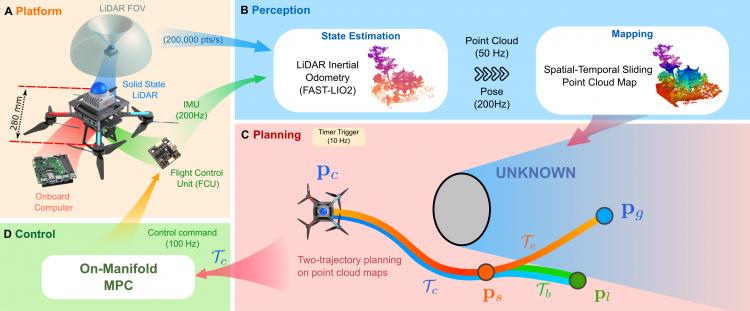
In May 2025, the team published its research on SUPER LiDAR (Safety-Assured High-Speed Aerial Robot) in Science Robotics, enabling UAVs to fly at speeds exceeding 20 meters per second while avoiding obstacles as thin as 2.5mm—equivalent to the thickness of a power line—using only on-board sensors.
SPARO Technology's core team is equally stellar.
Team members hail from top global research institutions and leading enterprises including DJI and Huawei, boasting over a decade of cutting-edge technology accumulation and industrialization experience. This hybrid "academic + industrial" DNA allows the team to not only publish cover papers in Science Robotics but also translate technologies into mass-producible products.
Zhang Fu himself defines the team's uniqueness this way: "We possess three core capabilities simultaneously: original technological innovation, especially foundational breakthroughs; the ability to convert cutting-edge technologies into mass-producible products; and the core technology expertise accumulated over the past decade."
General Aerial Intelligence: Beyond Flight Control
If traditional UAVs are essentially flying cameras or remote-controlled tools, what SPARO Technology is building is aerial intelligent agents—aircraft that can perceive their environment, make thoughtful decisions, and independently complete tasks.
In the past, aircraft relied on externally distributed capabilities to perform complex tasks: GPS provided positioning, communication links transmitted instructions, pre-existing maps defined routes, and human pilots handled environmental understanding and on-site judgment.
Once these conditions cease to exist—such as entering indoor spaces, underground environments, or areas with electromagnetic interference—the traditional model quickly reaches its limits.
As SPARO Technology describes it: "The real challenge is no longer whether an aircraft can fly along a predefined route, but whether it can independently build spatial awareness, make decisions based on real-time changes, and complete tasks in a closed-loop manner in environments with no clear 'correct answer'."
SPARO Technology is embedding these capabilities—previously dependent on humans and external infrastructure—directly into the aircraft itself. This represents the most fundamental distinction between traditional flying tools and aerial intelligent agents.
At the core of this paradigm shift lies SPARO Technology's four-layer coupled full-stack self-developed architecture.
The perception layer features multi-modal fusion enabling centimeter-level positioning without GPS. SPARO Technology deeply integrates multi-source information from LiDAR, vision sensors, and inertial navigation systems to achieve centimeter-level positioning in GPS-denied environments. Its algorithms reduce reliance on feature extraction, performing better in complex scenarios with weak textures or drastic lighting changes, while boosting computational efficiency by over 10 times compared to traditional solutions. This technology directly stems from the research accumulation of FAST-LIVO2. During tests at the University of Hong Kong Shenzhen Institute, a UAV equipped with SUPER LiDAR navigated through dense nighttime forests, nimbly avoiding tiny obstacles.
The cerebellum layer delivers end-to-end decision-making with obstacle avoidance response in 5 milliseconds. Based on an end-to-end cerebellum architecture, SPARO Technology compresses obstacle avoidance latency to under 5 milliseconds. For comparison, human pilots have a reaction time on the order of hundreds of milliseconds. This means the aircraft can make real-time judgments and evasive maneuvers against dynamic obstacles even when flying at high speeds of 20 meters per second. Zhang Fu's team has verified the feasibility of high-speed obstacle avoidance at this velocity in their SUPER LiDAR system published in Science Robotics, which uses a lightweight 3D LiDAR sensor to accurately scan obstacles up to 70 meters away while simultaneously calculating flight paths.
The cerebrum layer features the World Navigation Model, enabling "the more it flies, the smarter it gets"—the most forward-looking technological direction of SPARO Technology.
While traditional SLAM solves the problems of "where am I" and "what does my surroundings look like," the World Navigation Model addresses "how does this space operate" and "what will happen next." The aircraft not only maps the environment but also understands its geometric structure, semantic attributes, and dynamic changes—for instance, recognizing "this is a door that can be opened" or "this route gets congested during peak hours." Real flight data collected by physical aircraft undergoes iterative training in simulation environments before being redeployed in the real world, creating a data flywheel that makes the system "smarter with every flight."
This line of thinking is in the same vein as GPT in the large language model domain and end-to-end large models in autonomous driving, but its implementation in 3D space is far more challenging than both.
Zhang Fu explains: "General Aerial Intelligence has three core characteristics. First, universality—it must operate across scenarios and platforms, flying indoors, underground, and at extremely low altitudes near the ground. Second, cognitive capability—it does not require human remote control, and can reason about the world and make decisions on its own. Third, operability—it can not only observe but also interact with the environment, such as performing maintenance or cleaning tasks."
The swarm layer enables distributed collaboration at the scale of 1,000 aircraft.
Through a distributed architecture, SPARO Technology achieves coordinated operation of a thousand-unit UAV swarm. From agile individual maneuvers to collective intelligence, the aircraft learn to grasp objects, perch, and adjust their flight paths after collisions—like birds—equipping them for large-scale aerial operations.
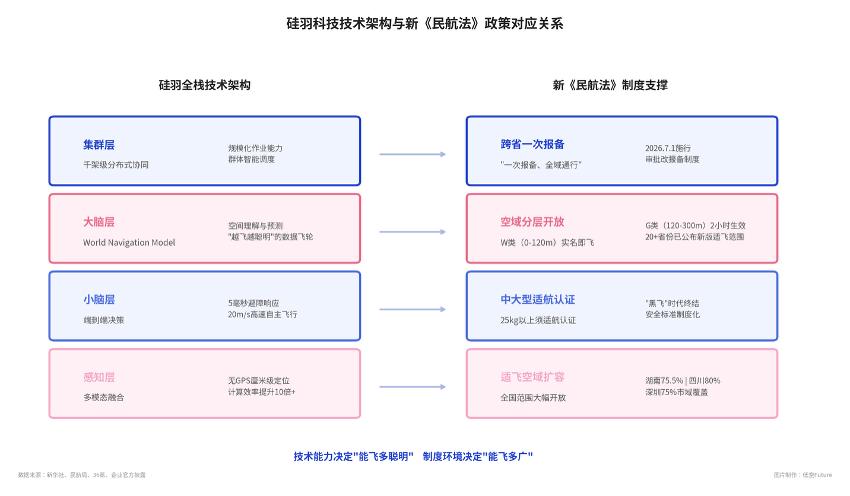
Figure 2: Correspondence Between SPARO Technology's Full-Stack Technical Architecture and the New Civil Aviation Law Policies
In terms of product form, SPARO Technology adopts a three-tier layout of "full aircraft + intelligent module + S2R simulation platform." The full aircraft validates the complete closed loop from perception to task execution in real-world environments first, verifying end-to-end system reliability. The Aerial Intelligence Module encapsulates positioning, perception, navigation, and obstacle avoidance capabilities in a lightweight form, enabling plug-and-play empowerment for various flight platforms including multi-rotors, eVTOLs, and fixed-wing aircraft. The S2R simulation platform targets developers and ecosystem partners, building a complete infrastructure that supports the entire lifecycle of aerial intelligent agents from technology R&D to large-scale deployment.
This product strategy echoes the essence of the Android model.
SPARO Technology's full aircraft acts as a reference product to demonstrate system capabilities; the intelligent module functions as an operating system that can be installed on hardware from any manufacturer; the S2R platform serves as the developer ecosystem.
Instead of manufacturing smartphones, it ensures every smartphone runs the Android system. Instead of monopolizing full aircraft production, it equips every flight platform with autonomous intelligence.
An Alternative Approach to Low-Altitude Logistics
According to data from the Civil Aviation Administration of China, the market size of China's low-altitude economy reached 1.5 trillion yuan in 2025, with the national daily average of UAV logistics orders exceeding 1.2 million across more than 80 cities.
SPARO Technology could not have chosen a more opportune moment to enter the market.
Currently, China's low-altitude logistics market has formed a clear competitive hierarchy.
