Youzu exits, Sina steps in: Nebula No.1 Building changes hands for 4 billion yuan
Recently, market sources revealed that Sina, through its subsidiary Beijing Weimeng Chuangke Venture Capital Management Co., Ltd., completed the acquisition of a 90.48% stake in the project company of Shanghai Nebula No.1 Tower (formerly Youzu Tower) for 4 billion yuan in January this year, while Shanghai Guosheng Group retained the remaining approximately 9.52% equity interest in the company. This means Sina has officially become the new owner of the building.
This transaction also propelled Sina to the top spot in Shanghai's large-scale commercial property transaction market in the first half of 2026.
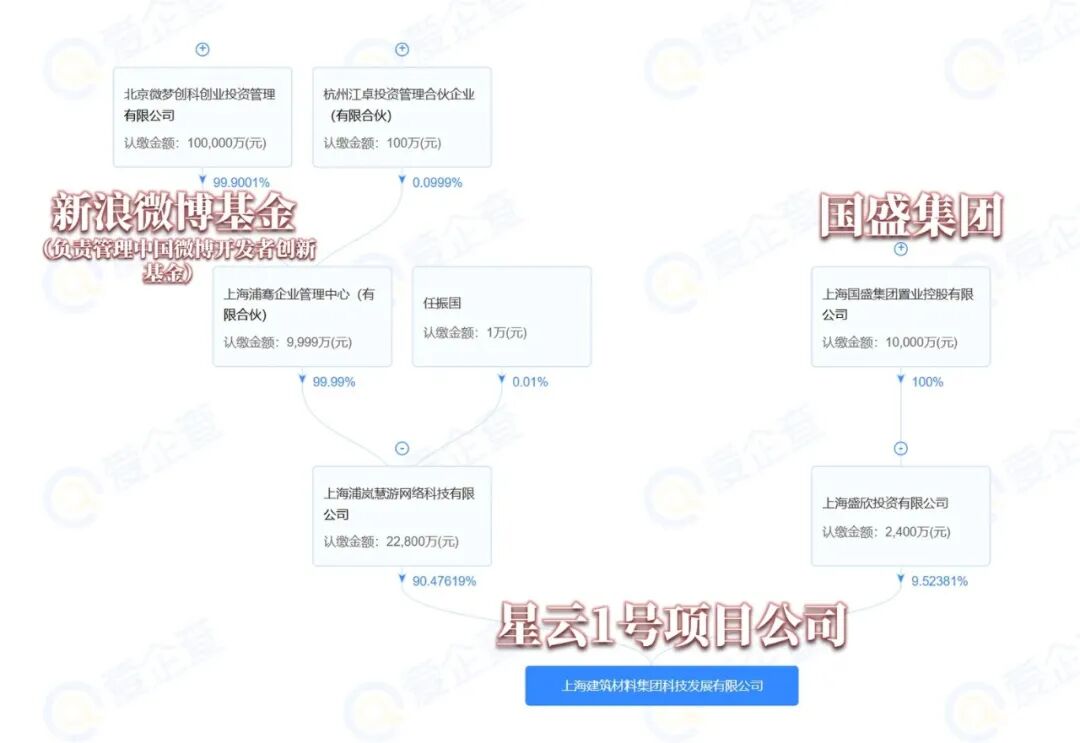
Image source: Internet
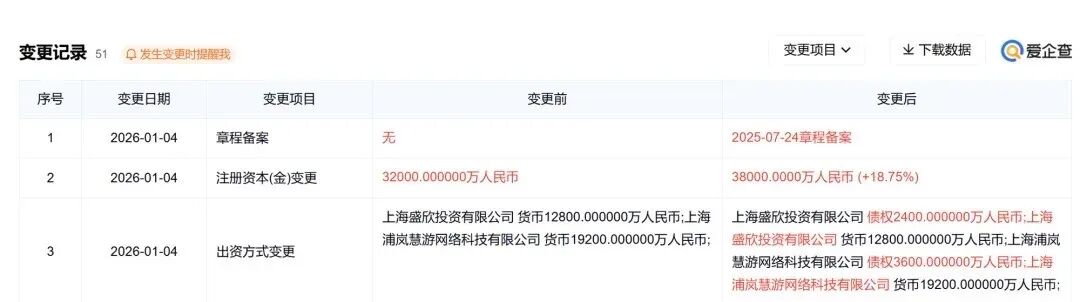
Image source: Internet
Nebula No.1 Tower is located at No.1 Yunshi Road, Xuhui District, Shanghai. The total floor area of the project is approximately 76,000 ㎡, including 66,000 ㎡ of office space and 10,000 ㎡ of commercial space. It consists of a 31-story above-ground tower (with a building height of 157.5 meters) and a 4-story commercial podium.
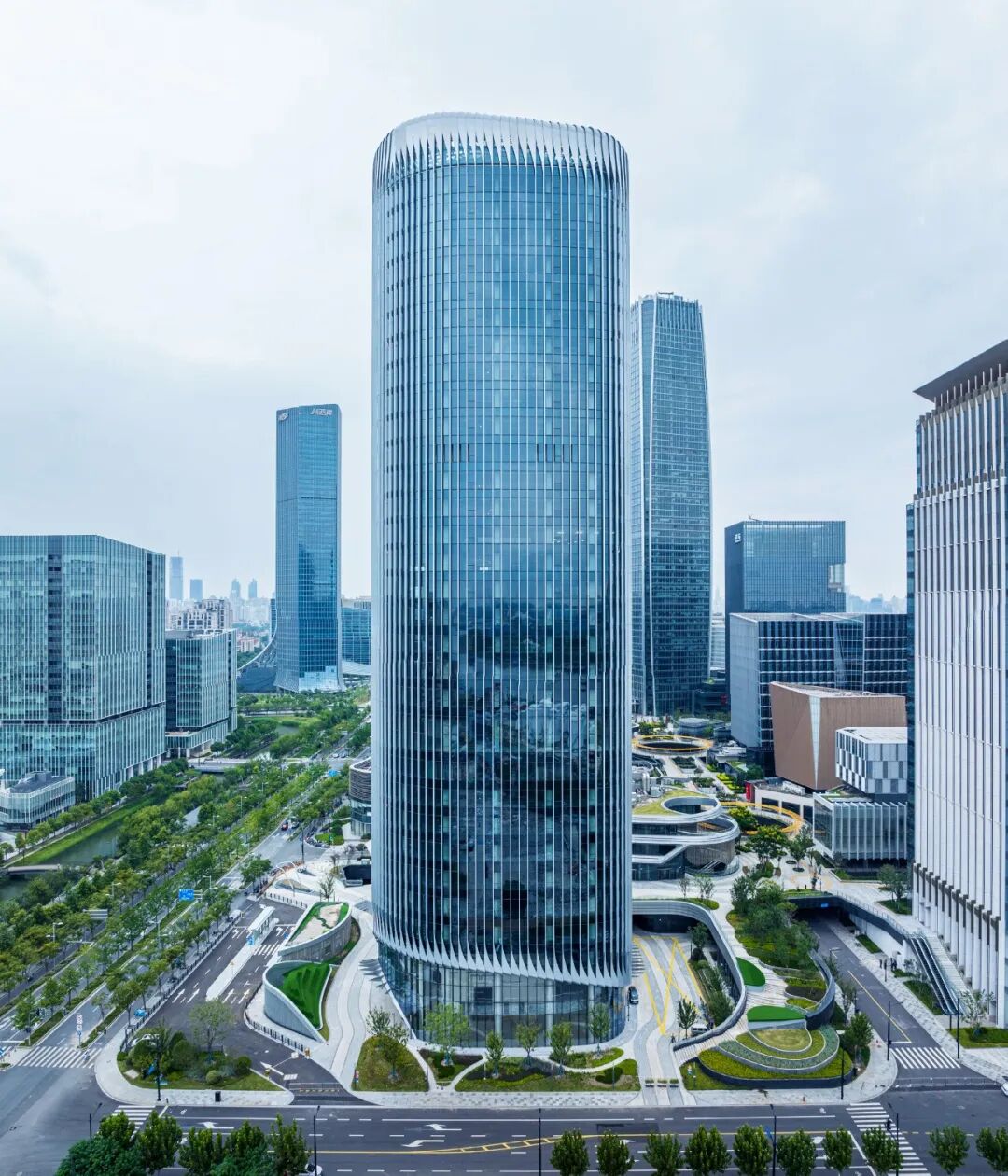
Image source: Internet
According to relevant media reports, Sina will carry out internal renovations on Nebula No.1 Tower, planning to add professional studios, game testing laboratories and an IP copyright operation center, aiming to build it into an East China cultural and creative headquarters integrating Weibo games, film and television IP, and live streaming content. At that time, teams such as Shanghai Sina Culture Media and Sina Shanghai Station, which were originally scattered in leased venues like the Bund Financial Center, may move into this building.
The area where the building is located is the Riverside West Bund Media Port developed by Shanghai, which focuses on industries such as social media, short videos, games, and AI. The building itself is also one of the core landmarks in the "Nine Squares" of the area, with regional headquarters of leading enterprises including Alibaba, Tencent, and NetEase distributed in the surrounding area.
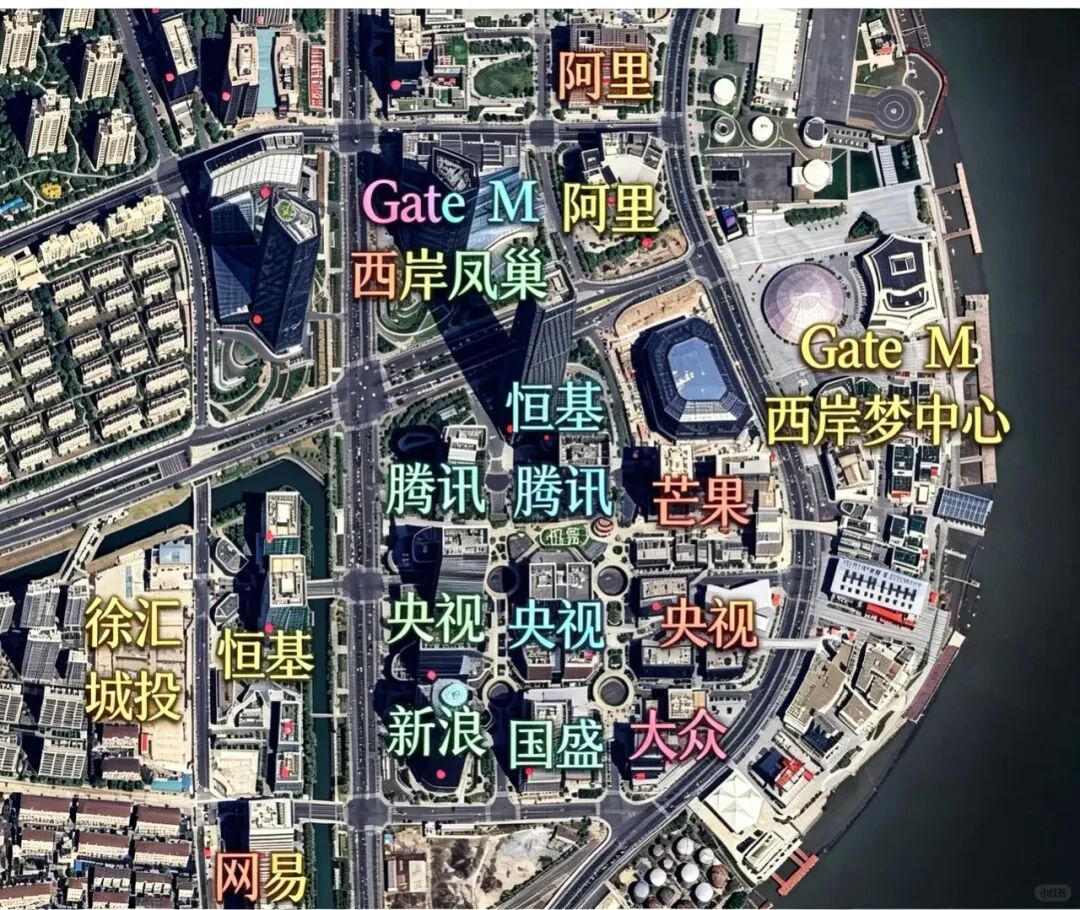
Image source: Internet
From an industrial perspective, Sina's settlement here is a highly compatible move. Sina itself has a wealth of creator resources and traffic from platforms such as Weibo, and the West Bund Media Port area gathers upstream and downstream cultural and entertainment enterprises in games, film and television, and media. In the future, Sina can leverage this digital cultural and entertainment industry chain to expand its business scope.
Speaking of Nebula No.1 Tower, the more familiar name to the public might be Youzu Tower. In 2015, Lin Qi, the then founder of Youzu Network, established Youzu Real Estate in his personal name and acquired Plot 188S-G-1 in the Riverside West Bund Media Port for the construction of the "Youzu Tower", planning to build the company's global headquarters integrating game R&D, IP operation, and film production.
In 2018, the Youzu Tower project officially started construction. At the end of 2019, after the main structure of the building was capped, interior decoration began. Unfortunately, after the unexpected passing of founder Lin Qi in 2020, the construction of the building came to a halt, and it was not completed and delivered until 2022.
Rumors of the building changing hands emerged one after another after the founder's death. In 2021, there were reports that Bilibili planned to acquire a 24% stake in Youzu Network and its headquarters building for 5 billion yuan, but the deal fell through due to reasons such as the complex property rights structure and disagreements over the consideration.
In the second half of 2025, the building, which had been renamed Nebula No.1 Tower, was officially put up for public listing transfer by the original property owner as rental income could hardly cover the costs, with a listed base price of 4.36 billion yuan.
Some media stated that Sina directly set up four special teams covering real estate, legal affairs and other fields to participate in the process. After multiple rounds of negotiations, Sina finally secured the building for 4 billion yuan — a direct reduction of 360 million yuan from the listed price — through solutions such as no equity swap and no installment loans, as well as leveraging factors like the vacancy status and subsequent renovation investment to negotiate a lower price.
According to media reports, the building has now resumed normal operations, and the lease contracts of existing tenants have also been smoothly transitioned.
Against the backdrop of the continuously rising transaction heat in Shanghai's large-scale commercial property market, Sina's large-scale building acquisition is just a microcosm of the trend.
Data from CBRE (Coldwell Banker Richard Ellis) shows that in the first half of the year alone, 62 transactions were recorded in Shanghai's property investment market, with a total transaction value of 27.35 billion yuan, an increase of 18% compared to the same period last year. Among them, office assets continued to lead with a 50% share of transaction volume, and over 60% of the transactions were for self-use purposes. Many industry giants have been actively acquiring assets based on their positive expectations for Shanghai's development prospects.
In addition to Sina and Pinduoduo mentioned earlier, a number of leading industrial enterprises and local state-owned enterprises also acquired core commercial properties in Shanghai in the first half of the year. For example, Shandong Rare Earth Group spent 2 billion yuan in January to acquire the entire office building of Huangpu Zhongganghui; Xiamen-based Xiangyu Group purchased approximately 99% equity of Xianlesi Plaza on Nanjing West Road for 2.1 billion yuan in February to serve as its second headquarters in Shanghai; in May, the financial entity under Haier completed the acquisition of a standalone office building in the Qiantan Business District of Pudong for about 700 million yuan.
Entering the second half of 2026, supported by this warming trend, new large-scale buyers may be waiting for opportunities to make layouts in Shanghai.
This article is from the WeChat public account "Future Can Habitat", author: Future Can Habitat, published by 36Kr with authorization.