This year's peak ice cream season has seen a collective slump. Why are fewer people eating ice cream?
In previous years, the arrival of May marked the peak sales season for ice cream.
But this year, the summer vacation has begun, yet the ice cream market remains in a "slump".
Many convenience store owners, supermarket operators, and frozen dessert wholesalers have collectively reported that:
"Ice cream is hard to sell this year."
"Our store freezers run around the clock, electricity bills stay high, but there are barely any customers."
"This year's ice cream business is tougher than the struggles of the character Yiping in the classic drama!"
"People selling ice cream this year are losing every last penny of their profits"
The owner of a dedicated frozen dessert shop even posted a short video with the caption: "I'd like to dedicate the song 'Desolated' to this year's ice cream market."
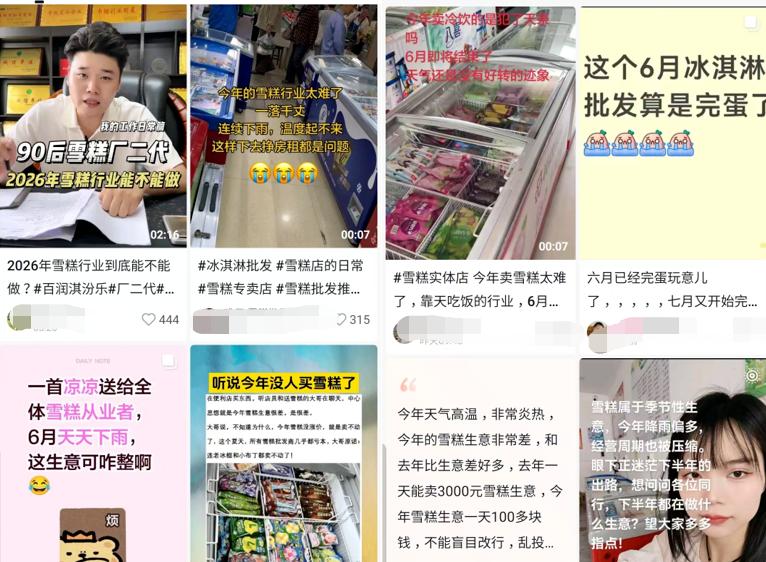
The arrival of summer should have been the lucrative golden peak season for the industry, yet the peak season fails to deliver strong sales, and the entire market faces a collective downturn. This doesn't mean people no longer love frozen treats, but rather it stems from multiple underlying factors including shifting consumer attitudes, fierce market competition, industry bubbles, and broader economic trends.
Let's talk about this together below!
Why can't ice cream sell well this year?
According to market research data from Mai Shang Ying: the average price per 100 grams of combined ice cream products dropped from 2.92 yuan per 100 grams between June 2023 and May 2024 to 2.22 yuan per 100 grams between June 2025 and May 2026, a decline of roughly 24%.
A community store wholesaler in Nanchang also provided intuitive comparative data: last May, his store's revenue was around 20,000 yuan, and around 40,000 yuan in June; this May, revenue was only about 10,000 yuan, and just over 20,000 yuan in June.
"Virtually all community stores in our area have seen their sales cut by half," the wholesaler stated.
In addition, an ice cream wholesale store in Hubei shared its anxiety over electricity bills on social media:
"The forecast said heavy rain would fall today, but it never came. We've been running the shop for over ten hours, and we can barely afford the electricity bill." According to the store owner, ten freezers in the shop operate nonstop, costing roughly 150 yuan per day in electricity, and on workdays with few customers, the profit from ice cream sales can't even cover the electricity cost.
As a result, many small shop owners have started offering discounts and promotions.
For example:
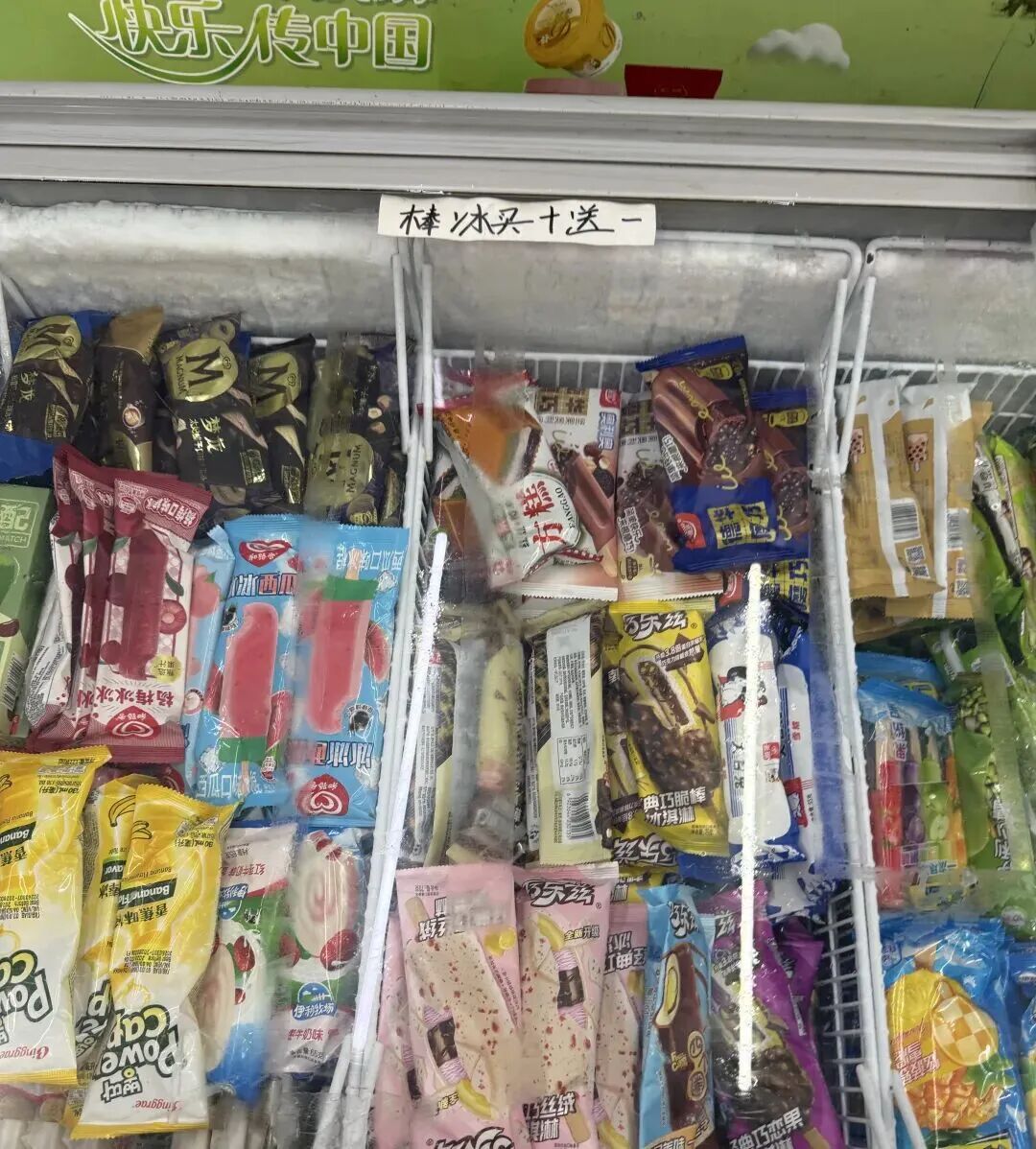
At a snack shop near the Hangzhou Asian Games Park, a handwritten note was taped to the freezer: "Buy 10 popsicles, get 1 free".
"There's no other way. Sales aren't picking up, so we have to run promotions during the peak season," the owner said with a hint of helplessness, looking at the freezer full of ice cream and popsicles.
So why is no one buying popsicles and ice cream this year?
1. Consumers aren't stopping eating frozen treats, they're just changing how and where they buy them.
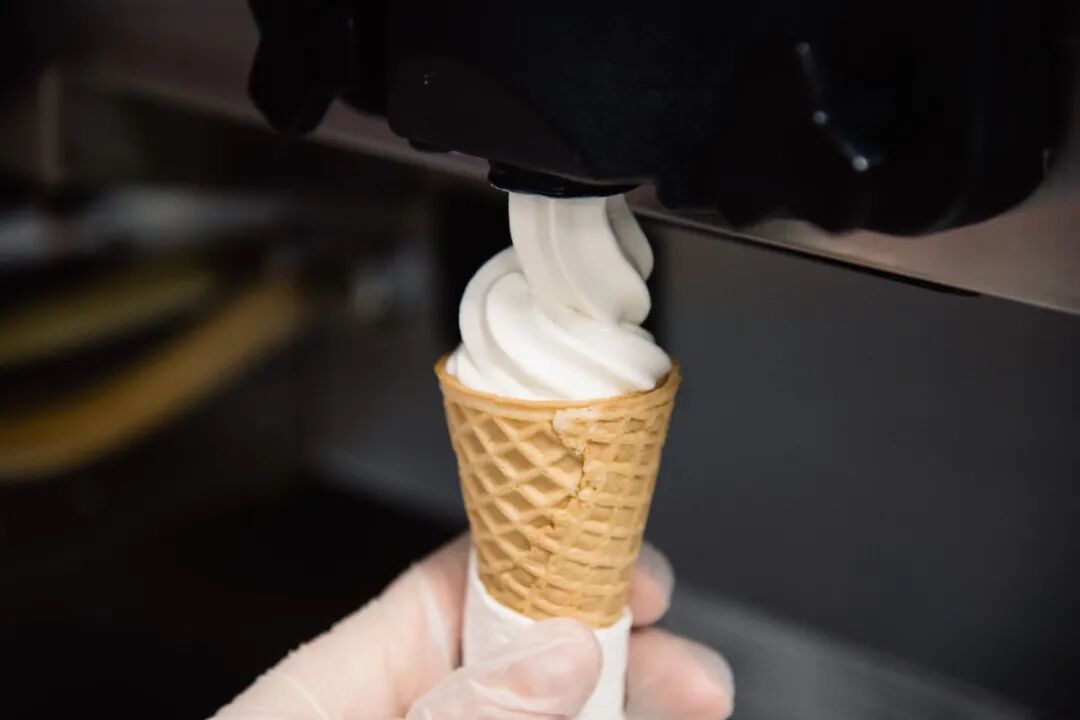
In the first half of 2026, over a dozen new tea drink brands including Heytea, Bawangchaji, Mixue, and Moji Yogurt launched nearly a hundred freshly made ice cream products, directly competing for customers with convenience store ice cream.
Moreover, consumers can find alternatives for both affordable ice cream and premium ice cream priced over 20 yuan at these tea shops.
For example:
In the affordable market segment, Mixue offers fresh ice cream for 3 yuan each; Tianlala sells original flavor and yogurt ice cream for only 2 yuan each; Cha Yan Yue Se's "Su Shan - Osmanthus Oolong" ice cream is priced at just 2.9 yuan.
In the premium market segment, brands like Starbucks, KOI, and Moji Yogurt sell ice cream products that are generally priced over 20 yuan, creating competition for traditional high-end ice cream.
Compared to pre-packaged ice cream, these freshly made frozen treats at tea shops have extremely obvious advantages.
For instance, they are fresh with no excessive additives, and they are more shareable on social media than pre-packaged ice cream from freezers.
Beyond that, ice cream is no longer the only option for cooling down in summer.
Iced milk tea, iced Americano, homemade frozen fruit, bottled cold water, and sugar-free cold-brewed tea are all diverting consumption away from ice cream.
Let's also talk about distribution channels. Now, online channels are continuously eroding the business of physical stores.
For example, through community group buying and ice cream wholesale delivery services, the unit price for purchasing a whole case of ice cream can be half that of convenience stores in some areas.
As a result, many households stock up directly online, leading to a sharp, cliff-like drop in foot traffic for neighborhood small shops.

2. The rising health trend makes consumers more cautious when choosing ice cream.
The ice cream industry has had a stable customer base for decades, relying heavily on the post-80s and post-90s generations, who grew up eating ice cream and were the core group of repeat customers.
But now this group has generally entered the 30-45 age range, and their consumption habits have undergone fundamental changes.
As people reach middle age, their metabolism slows down, their stomachs are sensitive to cold, sugar control and dampness regulation have become daily priorities. Many people admit that eating a single ice cream gives them stomach discomfort and toothaches.
When it comes to giving ice cream to children, parents are now stricter with their kids, and high-sugar, high-fat frozen desserts are strictly restricted.
Naturally, the amount of frozen treats households stock up on in summer has significantly decreased.
In fact, people are now paying closer attention to ingredient lists than ever before.
Traditional ice cream contains large amounts of white sugar, cream, and additives, which runs counter to the current consumer trend of low-sugar, low-fat, and natural ingredients. There are very few low-sugar or sugar-free ice cream products on the market, which cannot fill the market gap left by declining traditional ice cream sales.
According to data from Mai Shang Ying, the number of new ice cream product launches dropped sharply in 2026.
From January to March 2025, nearly 1800 new ice cream products hit the market, but during the same period in 2026, that number was less than 900, almost cut in half.

3. Consumers have become more rational and mature, placing greater emphasis on the "quality-price ratio" of products.
Nestlé China stated in an interview:
There is a clear change in China's frozen dessert market this year: consumers are making more rational, mature choices, shifting from focusing solely on price to comprehensively evaluating a product's "quality-price ratio".
In the past, viral internet-famous ice cream was sold for dozens of yuan, with fancy packaging, cross-brand collaborations, and heavy marketing storylines, while the raw material cost was extremely low.
Now consumers are no longer willing to be ripped off. The premium bubble has completely eroded public trust.
The most typical example is Zhong Xue Gao, which achieved annual sales of one billion yuan at its peak, with each bar priced at dozens of yuan, only to become insolvent and enter bankruptcy liquidation within a few short years;
Moutai Ice Cream has completely suspended production, and many ice cream brands that focused on high-end cultural and creative designs and co-branding have drastically cut production capacity, completely shattering the myth of the high-priced ice cream segment.
Traditional high-end brands such as Magnum and Haagen-Dazs are also actively cutting prices and launching affordable products to save their businesses.
According to market data, from 2023 to 2026, the average price of ice cream continued to fall, with the average wholesale price per case dropping from 9.14 yuan to 8.46 yuan; the market share of high-priced products over 30 yuan plummeted from 7.71% to 4.67%; the 3-5 yuan affordable price range firmly holds 45% of total sales, becoming the absolute mainstream.
Classic affordable products like old-fashioned popsicles, mini milk ice blocks, and mung bean flavored ice cream, which use solid ingredients and have transparent pricing, were snapped up immediately upon arrival at many wholesale stores this year.
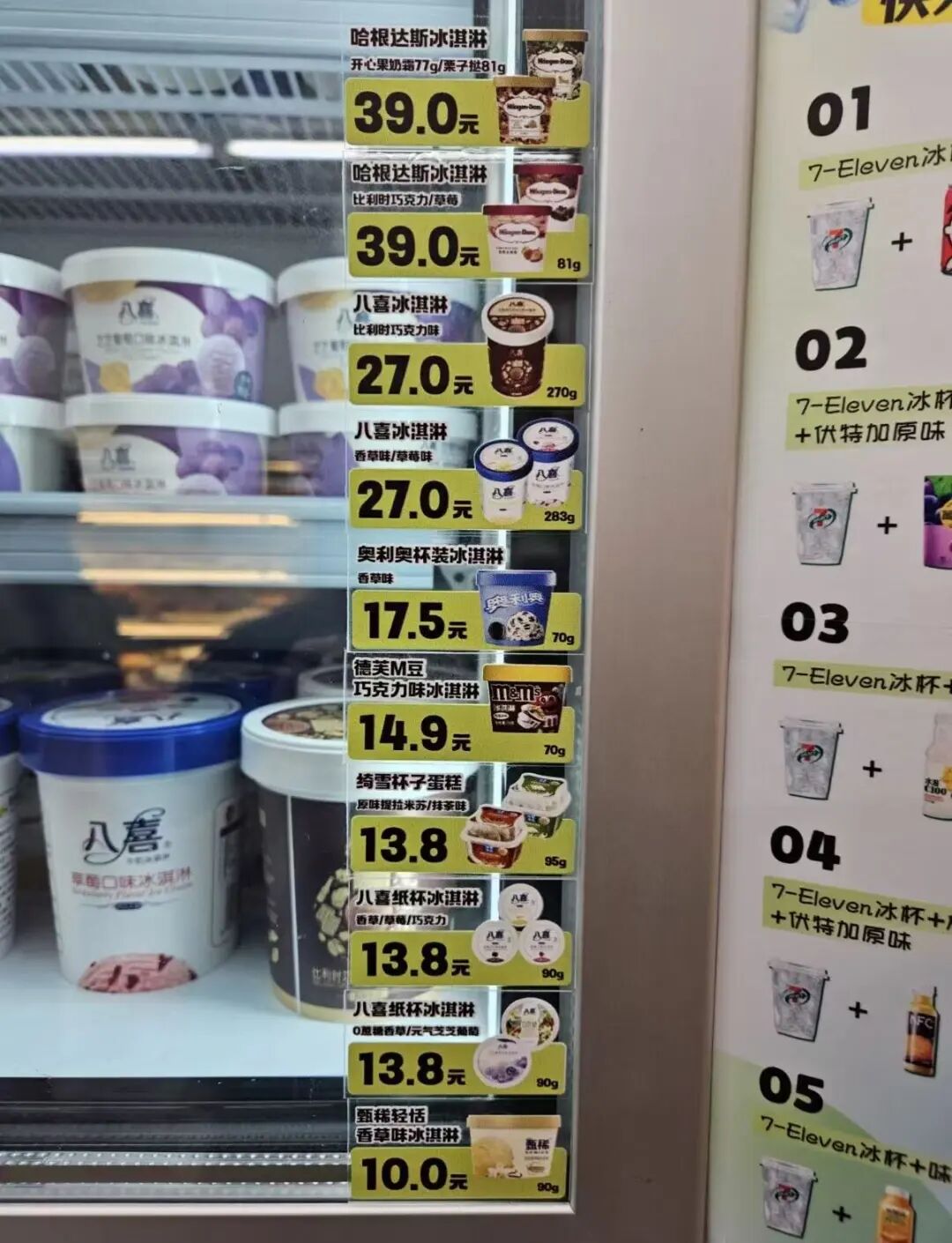
Widespread rational consumer behavior leads to a collective cool-down for overpriced products
When talking about the underperforming peak season, many shop owners' first reaction is that there has been more rain and fewer hot days this year, so naturally people don't buy ice cream when it's not hot.
But industry insiders know clearly: the frozen dessert market is never as simple as "depending on the weather". Even last year when there was also rainy weather, affordable old-fashioned popsicles still maintained strong sales, while only high-priced internet-famous products couldn't sell.
Therefore, the underperformance of the ice cream peak season is not an isolated problem of a single industry, but a microcosm of the current shift in the general public's consumption attitudes.
In recent years, consumers have generally moved away from impulsive buying, no longer paying high premiums for brand stories, viral marketing gimmicks, or fancy packaging, making quality-price ratio the primary evaluation standard.
Beyond ice cream, sales of viral internet-famous cosmetics, overpriced cultural and creative products, luxury snacks, and high-priced themed merchandise have all declined.
Amid uncertainty in the economic environment, ordinary people have actively cut down on unnecessary impulsive spending.
Since ice cream is a non-essential snack, it naturally becomes the first expense to be reduced.
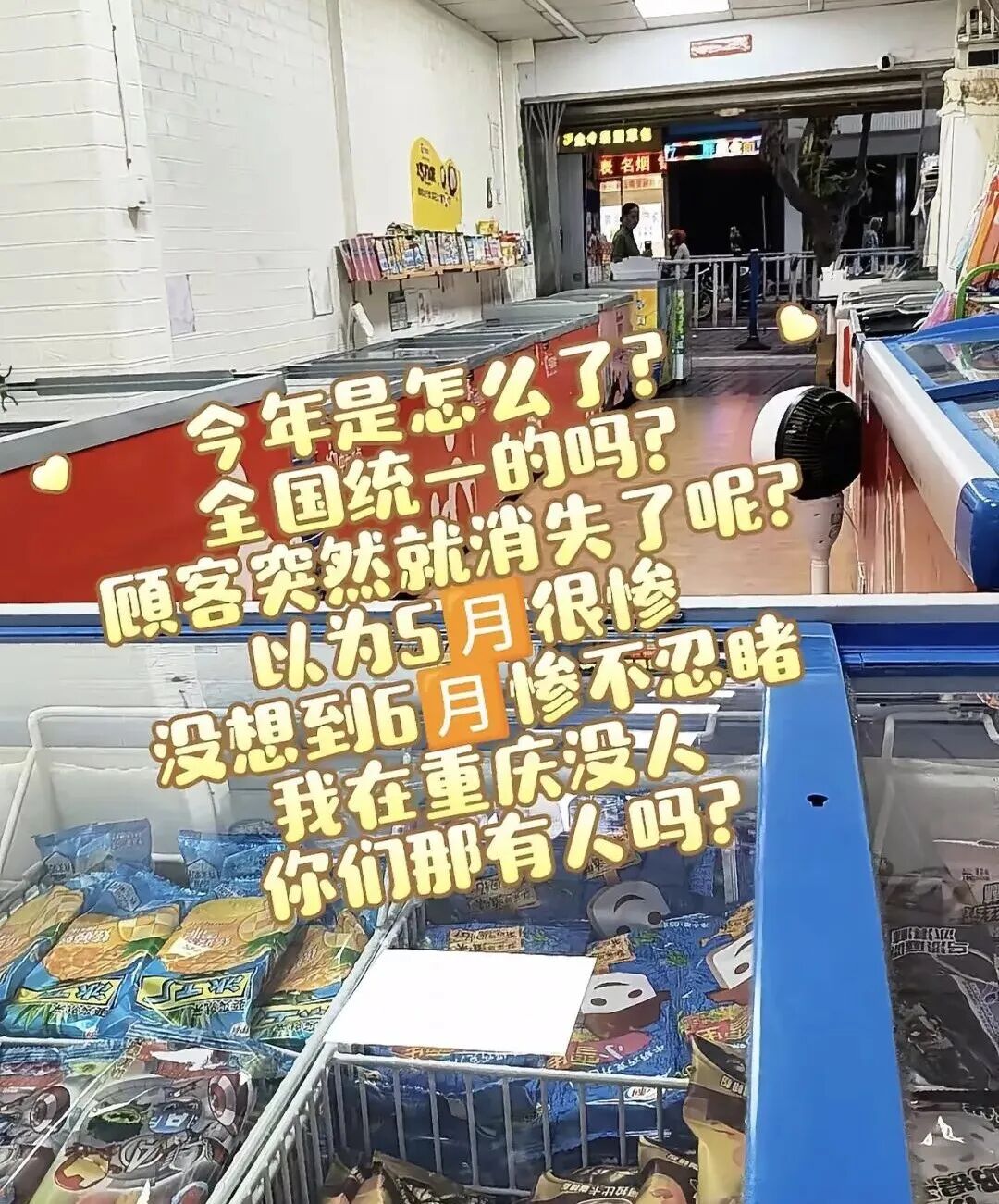
For ordinary consumers, this is a good thing: the industry has shed its impetuousness, prices have returned to reasonable levels, and people no longer have to fear the "ice cream assassin" hidden in freezers.
But for industry practitioners, the era of making money through hype and arbitrary price hikes is gone forever.
Only by understanding the real needs of the public can businesses survive this industry downturn.
Summer is still here, but the golden age of high-priced internet-famous ice cream has come to an end.
This article is from the WeChat Official Account "Xiaofeng Talks About Career" (ID: XF-SZC), written by Wang Xiaofeng's team, published by 36Kr with authorization.