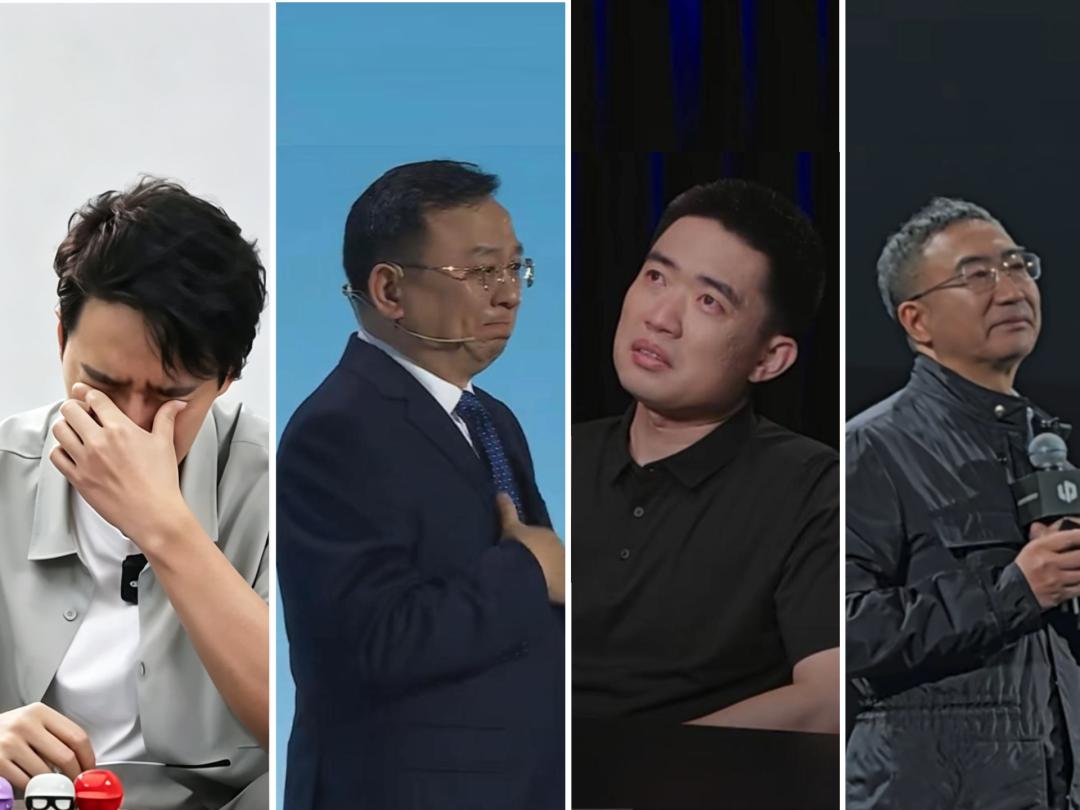
The men in the automotive industry are shedding more and more tears.
"I wasn't choking up, but if the media says I was, then fine — it's all just for views."
At the MG07 design communication meeting a few days ago, Chen Cui, General Manager of MG Brand Division, responded to the incident where she was "criticized to tears by netizens" during her first live stream, and joked: Although my name is Chen Cui, I'm not that fragile; I'm actually quite tough.
Looking back to June 29, during that controversial live broadcast, Chen Cui was explaining the design philosophy of the MG07, when comments flooded in from netizens questioning that the car's appearance looked strikingly similar to a Porsche and bore a strong resemblance to the Xiaomi SU7.
Faced with a screen full of doubts, Chen Cui immediately denied the plagiarism claim, stating that "not a single detail was copied." But the arguments in the bullet comments did not subside; instead, they grew increasingly intense.
Under the continuous pressure of public opinion, this post-90s rising star eventually had no choice but to end the live stream early.
This was not the first time Chen Cui lost emotional control in public. At the overseas version of the MG4 pre-launch event in August 2025, the scene where she quietly wiped tears behind the stage was also captured by the on-site camera.
Looking back over recent years, it is not uncommon to see auto industry executives shedding tears in public like Chen Cui did.
[A Carefully Crafted Persona, or True Unfiltered Emotion?]
Some media once conducted a survey to rank which auto industry leader's tears left the most unforgettable impression, and Wang Chuanfu, Chairman of BYD, ranked at the top. This "technical engineering man" known for being calm and reserved has choked up and shed tears in public at least three times in recent years.
The first time was at the ceremony marking the 5 millionth new energy vehicle rolling off BYD's production line in August 2023. Wang Chuanfu looked back on his 20-year journey of building cars: the cold reception from the capital market when BYD crossed into the auto industry by acquiring Qinchuan Auto in 2003, the controversies surrounding its first model F3, and the darkest moments when the company persisted on the new energy vehicle path for years but received little recognition.
"Once upon a time, we were also afraid that we would never live to see the spring." Wang Chuanfu said, "2019 was the most difficult year for BYD. Back then, we only had one goal, and that was to survive. The bitterness and hardships behind that period are known best only to us." As he said these words, he covered his face with one hand, eyes moist.
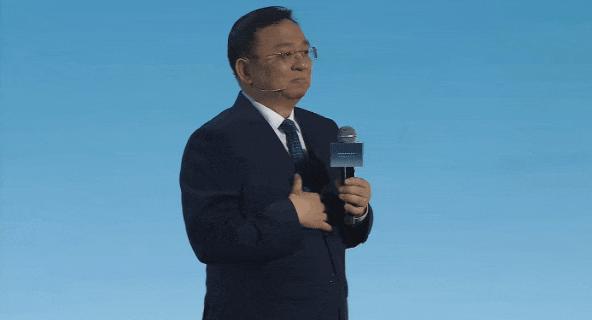
The ceremony for BYD's 5 millionth new energy vehicle rolling off the production line
The second time was at the 30th anniversary of BYD and the ceremony for the 10 millionth new energy vehicle rolling off the production line on November 18, 2024. Stroking the 10 millionth new car that had just come off the assembly line, Wang Chuanfu choked up again. He recalled the darkest moment of 2019 once more: that year, BYD's net profit for the whole year was only 1.6 billion yuan, while its R&D investment reached as high as 8.4 billion yuan, and the company was on the verge of going out of business. Some car companies even set up recruitment booths right at the gate of BYD. Many of the comrades and core technical backbones who had fought alongside BYD for years left in droves.
The third time was at BYD's shareholder meeting on June 6, 2025. When a shareholder recounted on the spot that he had sold off all his other stocks and bet everything on BYD, Wang Chuanfu choked up several times and said in a trembling voice: "BYD is my life. This is the only company I have."
That year, BYD was under multiple pressures: Berkshire Hathaway, a company under Warren Buffett, liquidated all its BYD shares, bringing its 17-year investment to an end and triggering fluctuations in stock price and market sentiment. At the same time, public opinion storms such as "atmospheric pressure fuel tank", "the Evergrande of the auto industry" and "financial fraud" emerged one after another. However, against such headwinds, BYD's global sales for the whole year reached 4.6 million units, surpassing Tesla for the first time and claiming the title of the world's best-selling electric car brand.
Yin Tongyue, Chairman of Chery Automobile, who also comes from Anhui, also choked up twice in public at the ceremony for Chery's 15 millionth vehicle rolling off the production line in 2024.
The first time he choked up stemmed from his feelings about the passage of time and the fact that his entrepreneurial partners were growing old.
Seeing many familiar old faces in the audience, Yin Tongyue recalled the scene when Chery's first car rolled off the production line in 1999. He said emotionally: "The scene where everyone was so excited and tears welled up in their eyes feels like it happened just yesterday. But looking around today, many people, just like me, have seen their black hair turn white, young guys become middle-aged men, and middle-aged men become old men."
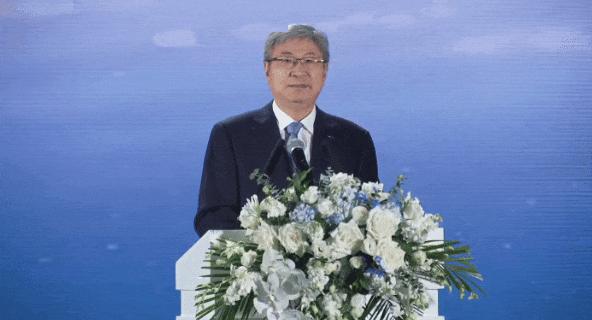
The ceremony for Chery's 15 millionth vehicle rolling off the production line
Before he could finish his words, his voice was already choked with sobs. Behind this sentiment lies Chery's arduous journey: starting from a team of only 8 people in 1997, the company began its business in a "small thatched hut" in an abandoned brick and tile factory. Back then, to buy a second-hand engine production line, the money spent was "the money we scraped together by selling everything we owned, the money saved by rural old ladies selling eggs". It was the youth and sweat of this generation that brought about the leap from 0 to 15 million units.
The second time he choked up came from the mixed emotions of seeing the "boastful words" he once said finally come true.
Yin Tongyue mentioned that it took Chery 10 years to achieve its first million-unit sales milestone. Back then, I made a boast: in the future, we will sell 1 million units every year.
He said with emotion: "At that time, no one believed me except myself."
But in 2024, Chery achieved its 15th million-unit milestone in just 6 months. What was once considered impossible has now become a reality. He then set a new goal: in the future, Chery will achieve 1 million units in a single quarter, or even 1 million units in a single month, and enter the top 10 global automakers at a faster pace.
Both Wang Chuanfu and Yin Tongyue are among the first generation of Chinese auto industry pioneers who started their businesses in the 1990s and persisted through the most difficult conditions. The moments when they shed tears all coincided with important milestones of their respective companies. Through those tears, it is not hard to see that what truly excited them was not a single sales breakthrough or production milestone, but witnessing with their own eyes that the dream they had pursued for half their lives — building a world-class Chinese automotive brand — was no longer a slogan hanging on the wall, but a reality unfolding before them.
From surviving in the cracks of joint-venture brands back then, to today when China ranks first in the world for annual auto exports, BYD claims the top spot in global electric vehicle sales, and Chery enters the Fortune Global 500 list, they know better than anyone how hard this journey has been, and they also saw earlier than anyone else that the once "unimaginable" goal was approaching. Those tears were more shed for this era, and for the achievements of China's automotive industry today.
[Tears from China's EV Newcomers]
On the first day of July, it was time for China's EV new forces to release their monthly sales reports. For Zhu Jiangming, Chairman of Leapmotor, his mood at this moment should be relaxed and pleasant.
In June, Leapmotor continued its growth momentum, delivering 93,376 vehicles, a year-on-year increase of 94.51%, once again setting a new single-month delivery record for the brand. In the first half of the year, Leapmotor's cumulative deliveries approached 360,000 units, of which overseas exports were nearly 100,000 units, exceeding the total export volume for the whole year of 2025.
However, this calm-looking "engineering man" who always wears a smile on his face once had red eyes and could not speak a word.
On December 28, 2025, at the rehearsal site for Leapmotor's 10th anniversary celebration, Zhu Jiangming paused several times and his voice trembled as he read a thank-you letter to the team and users. Later, he smiled and explained to the media that the background music on the spot was too emotional and touching.
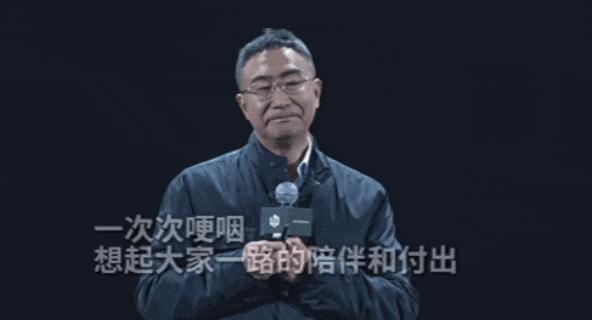
Source: Zhu Jiangming's Leapmotor WeChat Channel
Leapmotor can be said to be one of the typical representatives of the brand that "everyone doubted it, but it ended up performing the best".
In 2015, just because he took a second glance at a Renault electric car on the streets of Spain, Zhu Jiangming, who started his career in the security industry, announced that he would cross into the auto manufacturing business, which was met with widespread ridicule from the outside world. Four years later, the annual sales of its first model S01 were only a little over a thousand units, leaving Leapmotor with only 200 million yuan in cash on its books in 2020, on the verge of a cash flow collapse. The company struggled to survive relying on its low-cost mini car T03, but fell into the dilemma of "losing money on every car sold", with total losses exceeding 14 billion yuan from 2019 to 2023.
The turning point came from its persistence in full-stack self-development. Mid-to-large-sized models such as the C11 and C01 opened up the market with a strategy of high configuration at low prices, and the company's deliveries reached 293,000 units in 2024; it also reached a 1.5 billion euro investment and overseas cooperation deal with Stellantis.
In the auto manufacturing industry, "snatching victory from the jaws of death" seems to be a shared memory engraved in the bones of many entrepreneurs, and Li Xiang is no exception.
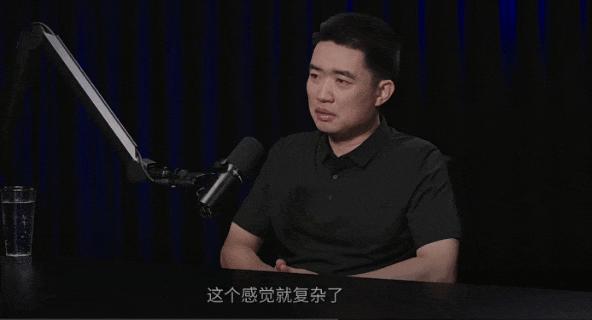
In August 2025, Li Xiang, founder of Li Auto, was a guest on Luo Yonghao's podcast interview. When talking about the darkest moment in 2018, this serial entrepreneur known for being calm and rational lost his composure, a rare sight.
That was the most dangerous moment for Li Auto. During the R&D and critical development phase of its first model Li ONE, the national subsidy policy was suddenly tightened. Li Xiang ran around everywhere, meeting 150 investors in a row, but all of them turned him down. The money on the company's books was running out day by day, and the road to building cars seemed to be coming to an end.
In this desperate situation, Wang Xing, founder of Meituan, injected a life-saving strategic investment into Li Auto, pulling the company directly back from the brink of bankruptcy. What made Li Xiang most emotional afterwards was an episode behind this life-saving money: a year earlier, Wang Xing had taken the initiative to propose participating in Li Auto's Series B financing, but Li Xiang had politely declined for various reasons. A year later, when he had nowhere to go and knocked on the door again, this investor who had been turned down did not hold a grudge, overcame all dissent, and extended a helping hand.
Source: "Luo Yonghao's Crossroads" WeChat Channel
Talking about this, Li Xiang's eyes turned red, and he said in a trembling voice: "He is the greatest benefactor in my entire entrepreneurial journey... I am so grateful to him."
The tears that He Xiaopeng shed were tears of grievance in the face of external doubts.
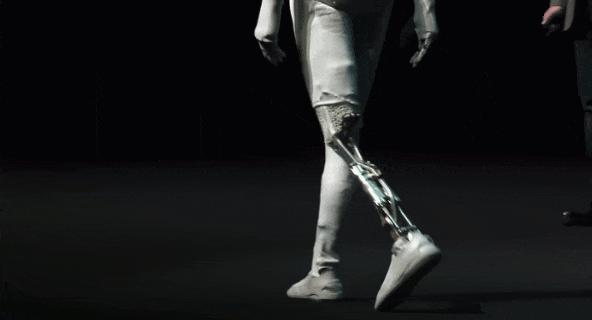
The cause was a public opinion storm. The new generation of humanoid robot "Iron", which made its debut at XPeng's "Tech Day", had an extremely human-like gait, even with a sense of rhythm similar to a catwalk. After the video was released, doubts that "there was a real person hidden inside the robot" flooded the comment section and became a trending topic on various platforms. Although XPeng released a one-shot uncut disassembly video, the doubts did not subside.
"Why when Chinese companies do a good job in technology, the first reaction of people is always to doubt them?" At the XPeng X9 Kunpeng Extended-Range Technology Launch event, He Xiaopeng choked up for a moment and said helplessly with emotion: Prejudice in people's hearts is like a huge mountain. I hope this is the last time we need to prove that "the robot is operating on its own".
To completely dispel all doubts, he let the powered-on Iron walk onto the stage, and asked his team members to cut open the bionic skin and exterior panels on the robot's legs to expose the internal mechanical structure.
Source: XPeng Motors WeChat Channel
This is just like the absurd scene in the movie "Let the Bullets Fly" — in order to prove his innocence, Liu Zizi cut open his stomach, just to prove that he only ate a bowl of noodles. It is so helpless, yet so real, that technical self-verification has to go to such lengths.
If the auto industry were to select the "executive most qualified to shed tears", Li Bin, founder of NIO, would definitely win by a large margin.
He has multiple labels attached to him: the unluckiest, the hardest-working, the one who endured the most hardships, the most optimistic... Since NIO was founded, its journey has been a roller coaster of highlights and low points.
The most widely circulated footage of Li Bin shedding tears on the internet did not happen when he encountered financing setbacks, nor when the stock price plummeted, but in the CCTV show "Meeting Big Names".
That day, Li Bin was sitting in the car, recalling the last time he saw his two young children: "I haven't seen my kids for more than ten days. The last time I saw them, my eldest child was having breakfast, looked at me and asked, 'Dad, you've